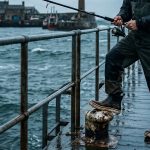
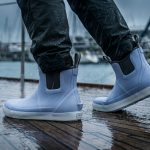
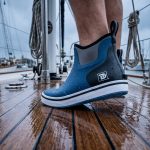

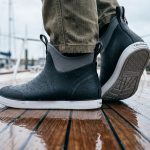
Introduction: The Changing of the Guard on America’s Docks
For the better part of half a century, the hierarchy on America’s fishing docks was visually unambiguous. If you were a serious angler—or wanted to look like one—you wore the same brown-and-yellow boots that had been a staple since the 1950s. Those boots earned their reputation honestly, keeping Alaskan crabbers and Gulf shrimpers upright on decks slicked with ice, fish oil, and diesel. They became so culturally embedded that a pair worn aboard the Alaska Ocean factory trawler in 2007 now sits in the Smithsonian’s collections, a genuine artifact of American maritime history.
But reputations are leased, not owned. Over the past decade, the unthinkable happened. As manufacturing for many legacy brands shifted overseas, a quiet rebellion began simmering in fishing forums and marina parking lots. “Xtratuf used to be decent but they’re crap now,” became a common lament. “Durability is terrible.” Another angler cataloged a series of failures across multiple brands: boots cracking at the toe crease within months, soles separating from uppers, and what was once a five-season workhorse barely surviving a single year. When boots engineered for the Bering Sea start failing on recreational boats, something fundamental has broken. Meanwhile, those same legacy boots—the ones that were supposed to be the gold standard—saw their prices climb relentlessly. One prominent forum thread documented a 60% price increase in a single year. Anglers were being asked to pay more for a product that, by broad consensus, was no longer delivering.
This twin crisis—declining quality and rising prices—cracked open a market that had been essentially monopolized for decades. Into that opening stepped a new generation of brands, many of them direct-to-consumer (DTC), that were no longer asking anglers to pay a premium for a legacy logo. Trudave Gear is among the most aggressive of this new wave. Its deck boot lineup—the insulated WaveLock for men and the lightweight DeckFlow for women—is built on the same premium materials as the legacy brands (vulcanized natural rubber, aggressive siping, and EVA midsoles) but sells them at prices that reflect the materials and construction rather than the cost of a retail middleman and a massive marketing budget.
This article is about that structural shift. We’ll explore the economics that kept deck boot prices artificially high for decades, the specific quality failures that eroded trust in the old guard, the new hierarchy forming in the DTC era, and exactly where Trudave’s WaveLock and DeckFlow boots fit in the 2026 landscape—and on your feet.
Part 1: The “Logo Tax” — Why That $150 Legacy Boot Suddenly Feels Like a Scam
To understand why a pair of Trudave deck boots can deliver premium performance for a fraction of the cost of a legacy brand, you have to understand the economics that have governed outdoor footwear for decades. It’s simpler—and more frustrating—than you might think.
When you buy a pair of boots from a traditional brand at a retail store, your money is split across multiple layers that have nothing to do with the boot itself. The brand manufactures the boot, then sells it to a retailer at a wholesale price. The retailer doubles that price before putting it on the shelf. On top of that, the brand has spent millions on TV commercials, magazine spreads, and professional sponsorships—all of which get baked into the final price tag. And somewhere in this equation, the actual materials and construction quality have to compete with all those other line items for budget priority. When a brand is spending more on marketing than on materials, the product suffers, and the consumer pays for both.
The direct-to-consumer model eliminates those layers. By bypassing the retail middlemen entirely, brands like Trudave Gear take the same premium materials used by the 200brandsanddeliverthemstraighttoyourdoor.It′snota“budget“approach—it′savalue−engineeringapproach.Themoneygoesintotheboot,notthebrandname,thedistributormargin,ortheretailshelfspace.Thisdistinctionbetween“budget“and“directvalue“iscritical.Ifyoubuya30 pair of PVC boots from a big-box store, you are buying garbage. They will crack in the cold, boil your feet in the sun, and the soles will peel off in the mud. But direct value is completely different. A properly engineered DTC boot uses the same vulcanized natural rubber, the same neoprene insulation, and the same EVA midsole architecture as the premium brands—it just doesn’t charge you for a logo.
Market data confirms that consumers are increasingly comfortable with this model. In the broader footwear industry, direct-to-consumer net sales grew by 13.2% in the most recent fiscal year, with comparable DTC sales up 8.2%. The same disruption that reshaped mattresses, razors, and eyeglasses is now reshaping how anglers buy their boots—and Trudave is positioned squarely in the middle of it.
Part 2: The Decline of the Legacy Brands — A Trust Deficit Decades in the Making
The deck boot market in 2026 is more competitive than it has ever been, and the story of that competition is largely the story of a legacy brand’s decline. Xtratuf, founded in 1951 and for decades synonymous with Alaskan commercial fishing, earned its dominance through genuine performance in the world’s harshest marine environments. Its boots were made with triple-dipped latex neoprene, creating a barrier between feet and “all kinds of acids and corrosives you’ll find on a commercial fishing vessel”. For a long time, there simply wasn’t a credible alternative.
But the brand has shifted focus in recent years. While Xtratuf is still a presence on commercial decks, it is increasingly targeting lifestyle and outdoor markets, with a diversified customer base that now skews roughly half male adults. Its new Ankle Deck Boot (ADB) Pro, released in 2026, “incorporates elements of the trusted Legacy Boot” and represents an effort to bring the durability of its commercial-grade products to a wider audience—all while maintaining a premium price point that reflects its heritage. Yet the user complaints about the core products persist. Forum threads and product reviews continue to fill with reports of cracking at the toe crease and soles that separate in under a year. The trust that took decades to build has eroded much faster.
Grundens, meanwhile, has emerged as perhaps the most credible alternative among established brands. Its Deck-Boss series delivers commercial-grade durability with a razor-cut siped outsole for maximum wet traction and is a favorite among professional fishermen who need boots that last through tough seasons. Huk’s Rogue Wave collection, built for anglers who live on wet decks and slick docks, pairs durable neoprene and rubber construction with waterproof protection and all-day comfort in a slip-on design. The competitive landscape has fragmented. The old default—”just buy the brown-and-yellow boots”—no longer applies, because the brown-and-yellow boots are no longer the only game in town, and by many accounts, they’re no longer the best.
This fragmentation is exactly what created the opening for Trudave. When the market leader’s quality declines while its prices rise, and credible alternatives exist but command their own premium prices, there is a gap for a brand that can deliver the same premium materials at a fraction of the cost by selling directly to the angler. That gap is where the WaveLock and DeckFlow live.
Part 3: The 2026 Deck Boot Landscape — Where Trudave Fits
To understand Trudave’s position, it helps to map the 2026 deck boot market by what you’re actually paying for at each tier.
At the top, Xtratuf and Grundens represent the premium legacy tier. The Xtratuf Ankle Deck Boot Sport ($150) delivers true waterproofness, low weight, and plush comfort—”almost like a sneaker”. Grundens offers comparable commercial-grade performance at a similar price point. These are excellent boots with proven track records in the world’s toughest marine environments. But they come with the “logo tax”—the premium that a brand with six decades of history and a retail distribution network can command.
In the middle, a new generation of specialist brands has emerged. Huk’s Rogue Wave features a Grip X Slice outsole with microchannel traction and a breathable mesh liner. Aftco’s deck boots feature an eco-friendly, quick-drying inner neoprene liner and compression-molded antimicrobial insole. These are credible alternatives with genuine performance features, but they still operate through traditional retail channels with the associated markups.
At the value-engineering tier, direct-to-consumer brands like Trudave and TIDEWE are delivering comparable materials and construction at significantly lower prices. Footwind’s 2026 roundup of the best deck boots notes that compared to pricier models from Xtratuf and Huk, brands in this tier “punch above their weight, offering 90% of the performance at half the cost—making them a smarter pick than premium options for budget-conscious anglers who still demand reliability”.
Trudave specifically has earned recognition alongside TIDEWE in independent rankings for their waterproof neoprene construction and cold-weather performance. Their boots use premium natural rubber, not petroleum-based PVC, and feature sealed vulcanized construction that can’t delaminate at the seams—the same construction method that premium brands rely on. The difference is the distribution model, not the materials.
An independent review captured the value proposition well: “Trudave boots deliver surprisingly solid value. If you’re hunting, working long shifts outdoors, or just need a reliable pair of waterproof boots that won’t break the bank, Trudave delivers—just don’t expect premium-brand polish. What you trade in price, you gain in honest, dependable performance.”
Part 4: WaveLock and DeckFlow — Two Boots, Two Bodies of Work
Trudave doesn’t try to build one boot for everyone. Their deck boot lineup is a system of two purpose-built tools.
WaveLock Series: Born from Salt and Storm
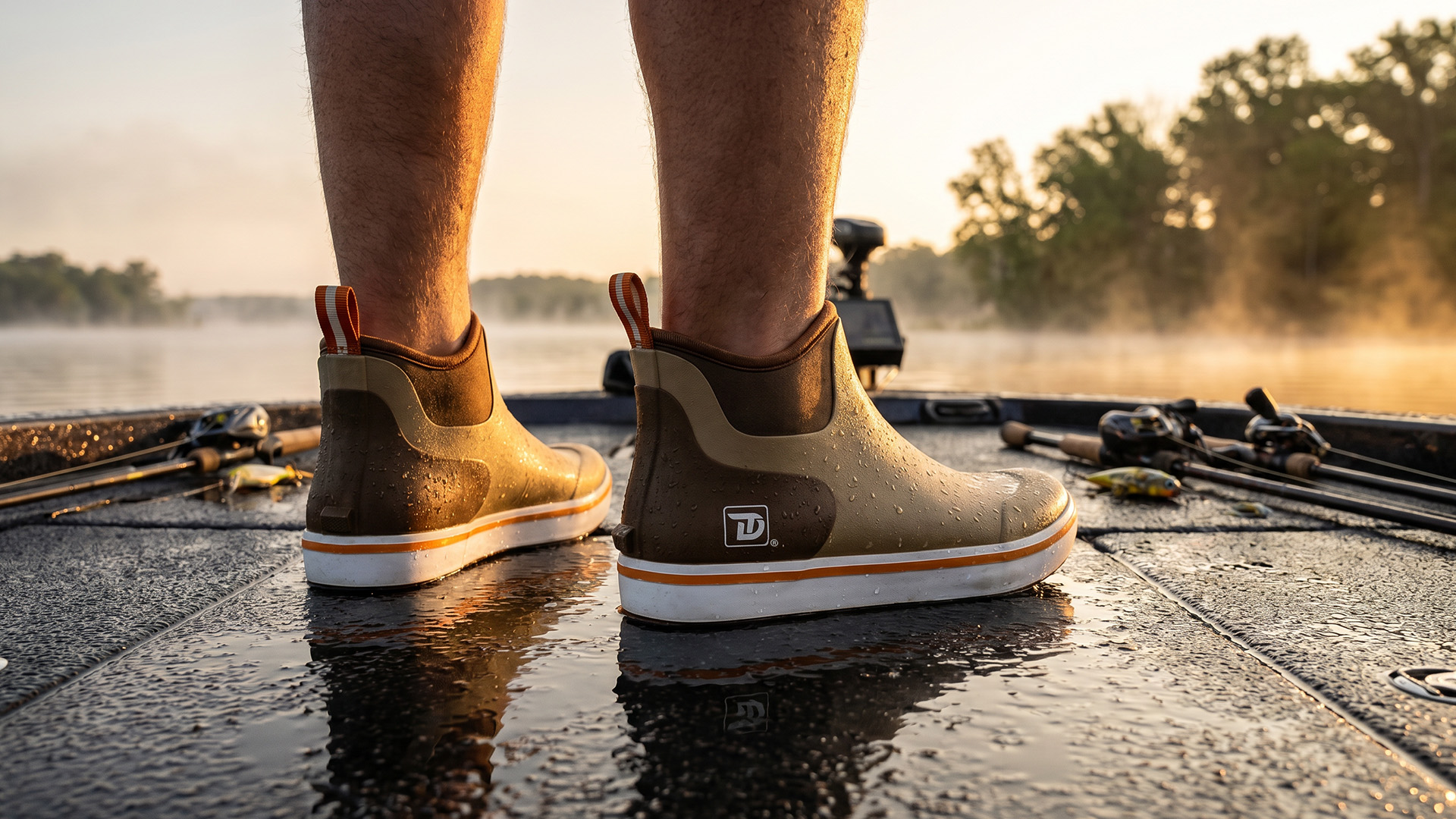
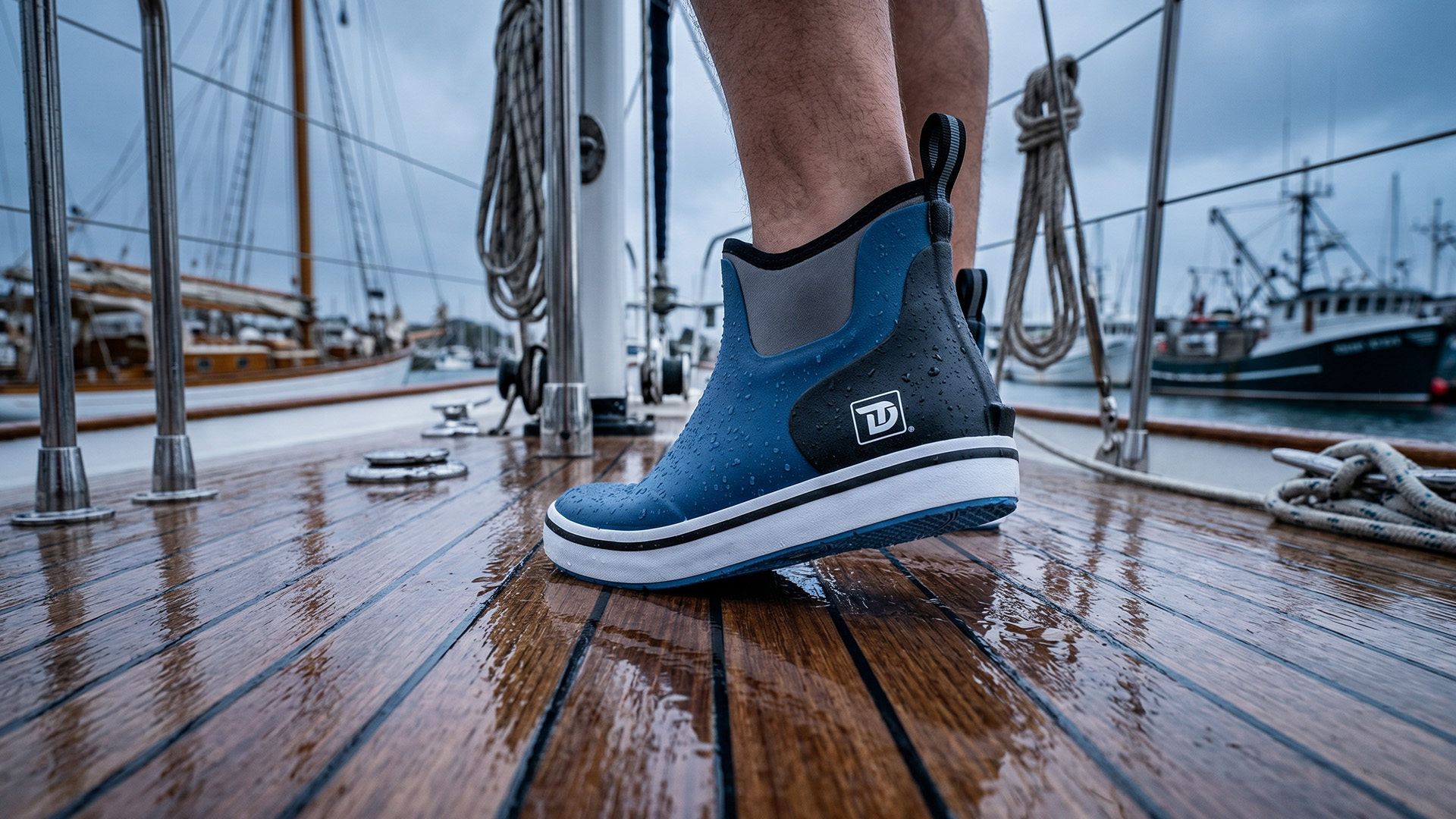
The WaveLock is Trudave’s flagship insulated deck boot for men, developed with input from marine testing partners who demanded footwear that could handle harsh marine environments season after season. “We engineered the deep-tread outsole to grip wet surfaces, while the reinforced rubber shell takes on harsh marine environments,” explains one of Trudave’s marine testing partners. “This is footwear that performs when you need it most, season after season”.
The boot is 100% waterproof, made from premium natural rubber with sealed construction to keep feet dry while fishing, boating, or working in wet conditions. The defining feature is the WaveLock Traction Outsole—an exclusive micro-channel siping pattern that disperses water instantly, keeping your footing solid even on wet fiberglass or metal surfaces.
Flexible side panels allow for quick slip-on comfort while maintaining a snug fit without pressure points. Reinforced heel armor adds support and includes an easy-off heel tab for hands-free removal. A waterproof toe shell guards against impact from dropped gear. These men’s insulated waterproof boots feature a soft lining and thermal insulation that retain heat while allowing breathability—perfect for cold mornings on the boat or dock.
DeckFlow Series: Coastal Living Meets Marine Performance
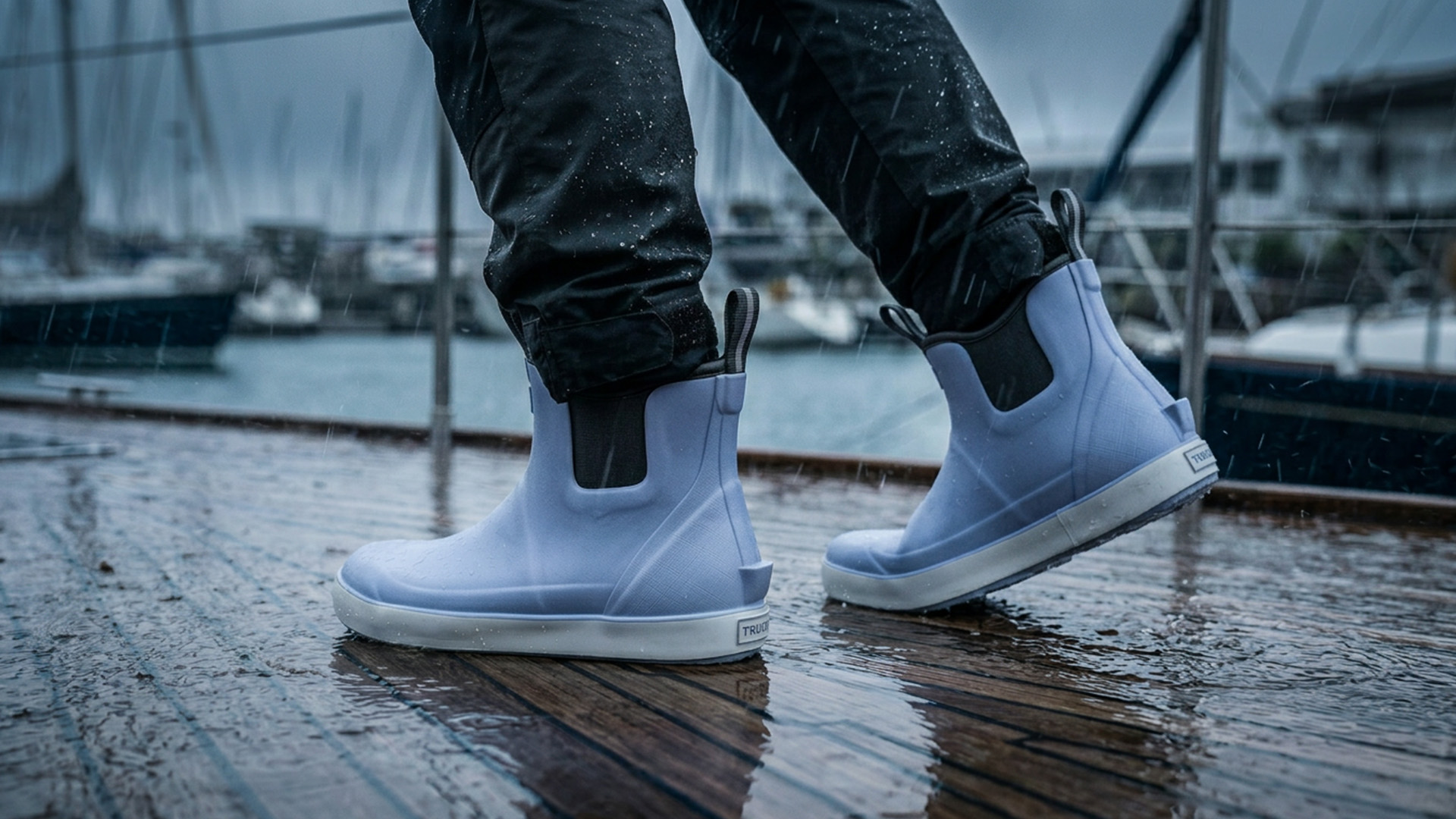
The DeckFlow is Trudave’s women’s deck boot, built for the angler who wants full marine-grade performance in a lighter, more versatile package. It combines a fully waterproof shell with a soft, breathable lining, keeping feet dry and comfortable while on the water. Lightweight and versatile, its clean low-cut design transitions effortlessly from dockside lounging to daily errands—perfect for those who love laid-back coastal living.
The non-marking siped outsole channels water away and grips securely on wet wood and fiberglass decks. Reinforced toe and heel panels extend durability in high-wear zones, while the sleek, minimalist design offers a balance of practicality and everyday style. Importantly, the DeckFlow is engineered on dedicated women’s lasts to account for a narrower heel and different arch geometry. These ankle-length waterproof boots feature cushioned insoles and breathable lining, offering all-day comfort for women who spend hours on the dock, at work, or on fishing trips.
Part 5: The DTC Deck Boot Revolution — What It Means for Anglers
The rise of direct-to-consumer deck boots represents more than just a lower price tag. It represents a structural shift in how anglers evaluate and purchase their gear.
In the old model, you walked into a tackle shop and bought what was on the shelf. The selection was limited to whatever brands the retailer had chosen to stock—typically the legacy players with the distribution networks and marketing budgets to secure shelf space. You paid whatever the retailer was charging, and you had limited ability to compare materials, construction methods, or true value across brands.
In the DTC model, you research online. You compare materials: vulcanized rubber versus glued, siped versus unsiped, EVA midsole versus steel shank. You read user reviews from anglers who have put the boots through real abuse. You evaluate the price in the context of what the boot is actually made of—not what a retail store needs to charge to cover its overhead. And you buy directly from the brand, with the savings from the eliminated middlemen reflected in the price.
This shift puts pressure on legacy brands in ways they haven’t experienced before. When an angler can buy a vulcanized natural rubber deck boot with micro-channel siping and an EVA midsole for roughly half the cost of a comparable legacy boot, the question becomes unavoidable: what exactly am I paying for when I buy the legacy brand? If the answer is “a logo and a retail markup,” a growing number of anglers are deciding that’s not enough.
The fishing apparel and equipment market is massive—valued at US22billionin2024andprojectedtoreachUS25.6 billion by 2030. Within that market, the deck boot segment is small but fiercely contested, and the DTC disruption that has reshaped other categories is now playing out here in real time. Trudave, with its WaveLock and DeckFlow series, is one of the brands leading that disruption.
Part 6: Real-World Feedback — What DTC Anglers Are Saying
Product pages can promise anything. The truth about DTC deck boots lives in the reviews of the anglers who have worn them through genuine conditions.
On Trustpilot, where Trudave maintains a “Great” rating of 4.1 out of 5, a farmer who purchased boots for daily outdoor work captured the core experience: “We purchased waterproof boots back in May for working on our little farm as we were constantly dealing with wet, muddy and otherwise soiled shoes while tending our livestock. The boots have made our jobs and lives sooo much better and easier. And best of all, our feet stay DRY!!! It has been about two months now and these boots are still going strong and keeping our feet protected”. That two-month durability marker is significant—it’s enough time for glued seams to start separating and for cheap rubber to crack at the flex points. The fact that these boots were “still going strong” validates the vulcanized construction.
The sizing feedback is consistent and important for first-time DTC buyers. One reviewer noted: “These boots are well made and comfortable. The size is slightly larger, but with socks they fit well and comfortably. A size smaller would be too tight”. Another intentionally planned around this design: “I sized up because I want to be able to wear thick handmade socks in the fall and winter. They fit beautifully”. The extra volume is an intentional feature designed for sock insulation, not a sizing error.
On the comfort front, one reviewer noted that the Trudave boots were “very well made” and “do a good job of keeping my socks dry,” adding that “the tabs help a lot to get them on”. Another user, who tested the boots in Arctic expedition conditions—zodiac landings, saltwater immersion, hiking—reported: “Fit perfectly. Warm in arctic expedition. On and off zodiacs and in water. They are waterproof. Hiked in them and all. These boots were perfect. No sore feet or legs. No blisters.”
An independent review of Trudave’s neoprene models echoed the comfort theme, describing “Exceptional all-day comfort, often compared to slippers or tennis shoes” with “Guaranteed 100% waterproofing and effective 6mm neoprene insulation”. Users consistently confirmed that these boots are “waterproof as advertised” and keep feet “warm and dry,” with traction described as “on par with snow tires.”
Part 7: How to Buy DTC Deck Boots the Right Way
If you’re new to buying boots direct-to-consumer, the process is a little different than walking into a tackle shop. Here’s how to get it right.
Measure Your Foot, Not Your Shoe Size: Sizing charts are notoriously inconsistent across the footwear industry. Measure your foot from heel to longest toe in inches, and compare that measurement to the specific insole length on Trudave’s size chart. Your foot should be slightly shorter than the listed insole length.
Account for Your Sock System: Trudave boots are designed with intentional volume to accommodate thick insulating socks. If you plan to wear heavyweight merino wool socks for cold-weather fishing, order your standard size. If you’re between sizes, size up for thick socks, size down for thin socks. The “runs slightly large” feedback is a feature, not a flaw—it’s the room your insulation needs.
Try Them On Indoors First: Wear them with your intended socks. Walk around on carpet for 15 minutes. Your toes should not touch the front of the boot. Your heel should not slip excessively. If the fit is wrong, exchange them. It’s better to wait a week for the right size than to suffer through a season in the wrong one.
Care for Your Investment: Trudave’s care protocol is simple: rinse with clean water after each use, wipe off dirt with mild soap, and let them air dry naturally. Avoid sunlight or heat to preserve waterproof seal and rubber durability. The “avoid heat” rule is the one most often violated—leaving boots to dry next to a radiator or in direct sun breaks down the polymer cross-links in vulcanized rubber and shortens boot life dramatically.
Conclusion: The Logo Doesn’t Keep Your Feet Dry
The deck boot market has changed more in the last five years than it did in the previous fifty. The old assumption that you had to pay $150 or more for a boot that could handle a wet deck is no longer true—not because the materials have changed, but because the way boots are sold has changed. Direct-to-consumer brands like Trudave Gear have demonstrated that premium vulcanized natural rubber, aggressive micro-channel siping, EVA midsole architecture, and genuine thermal insulation can be delivered at prices that reflect the boot rather than the brand.
The legacy brown-and-yellow boots earned their place in fishing history. But the market has moved on. Today’s angler has options that didn’t exist a decade ago—options built on the same materials and construction methods as the premium brands, sold without the premium markup. The question is no longer “Which brand has been around the longest?” but “Which boot keeps my feet dry, grips the deck, and lasts more than a season?” Those are the questions that Trudave’s WaveLock and DeckFlow series were built to answer.
To explore the complete Trudave Gear deck boot lineup and find the right pair for your next day on the water, visit trudavegear.com.