
Introduction: The Deck You Stand On Is Trying to Throw You
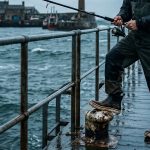
Ask any seasoned angler about the most treacherous moment on a boat, and they won’t tell you about the 6-foot swell or the sudden squall. They’ll tell you about the time they took a single step across a seemingly dry deck, their boot lost contact, and they hit the gunwale before their brain even registered the slip. The deck was wet. It always is. But the deck was also fiberglass—a surface so smooth and frictionless when wet that a boot designed for mud has the grip of a hockey puck on a frozen pond.
The truth is, different boat deck materials present radically different traction challenges. The sticky, soft-rubber siping that grabs a glossy fiberglass deck like a gecko on glass behaves differently on a diamond-plate aluminum deck, and differently again on the salt-scarred wooden planks of a classic lobster boat. A single “all-terrain” outsole can’t be great on all of them, because the physics of water displacement and surface interaction change with the material.
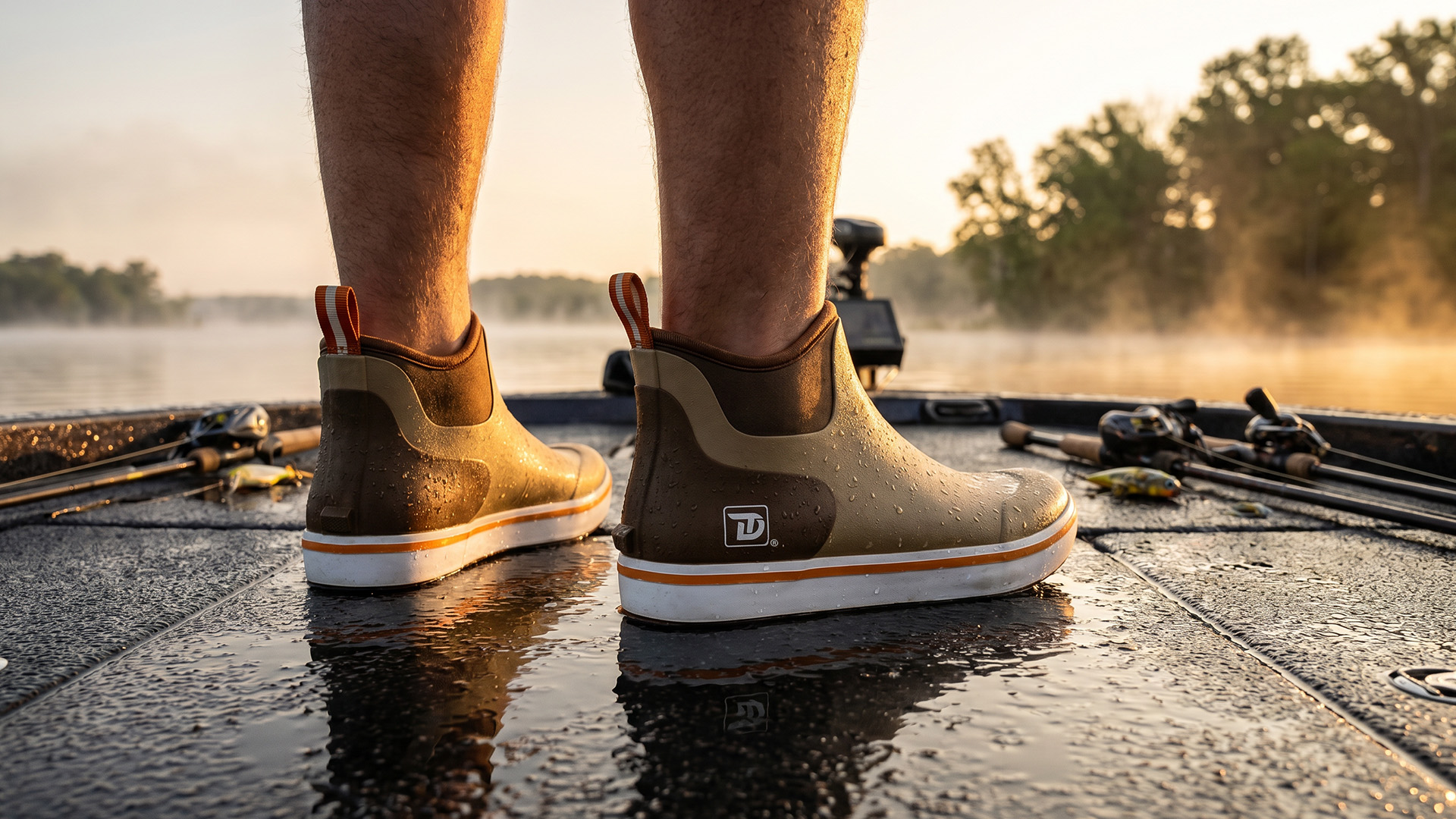
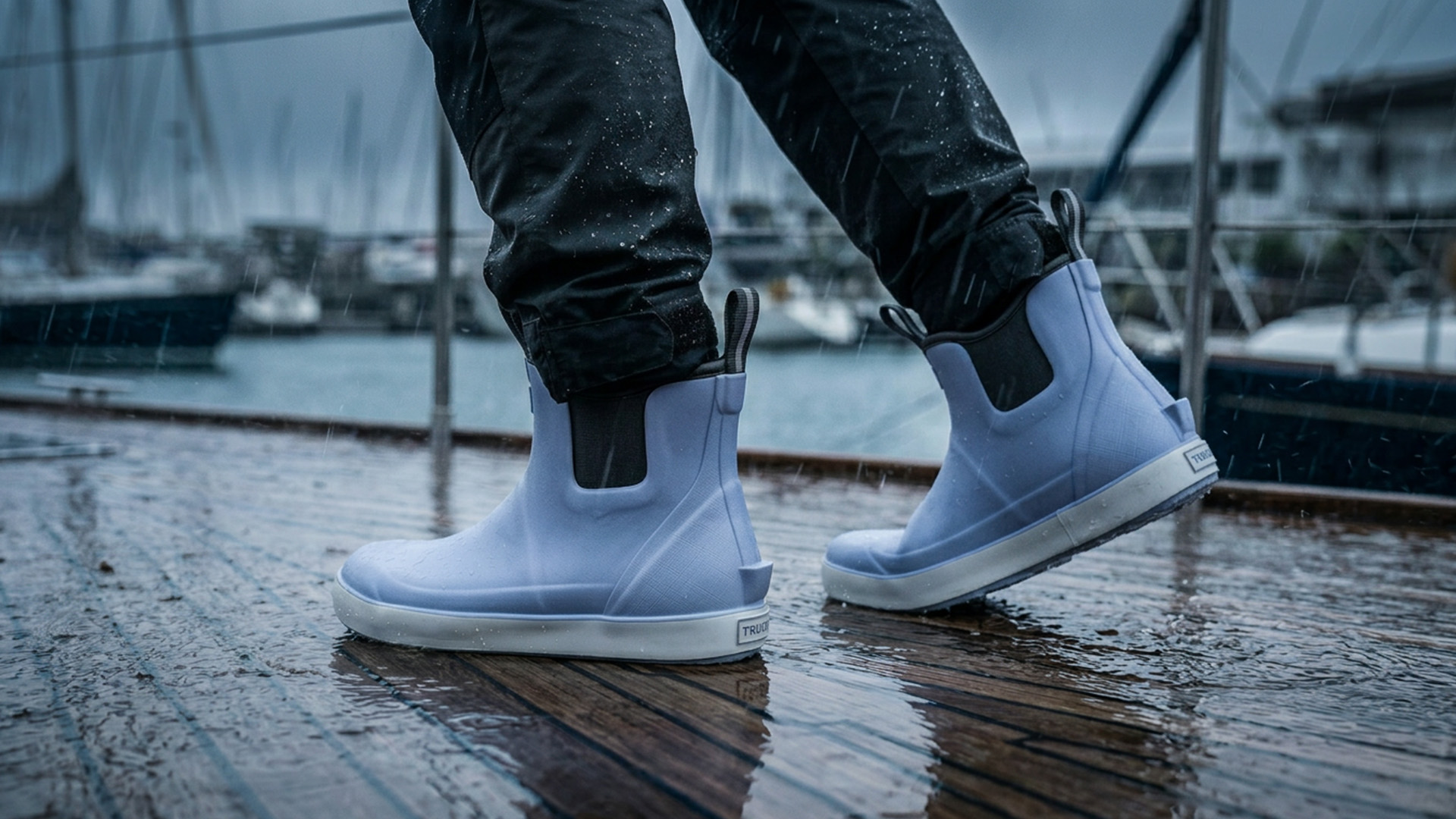
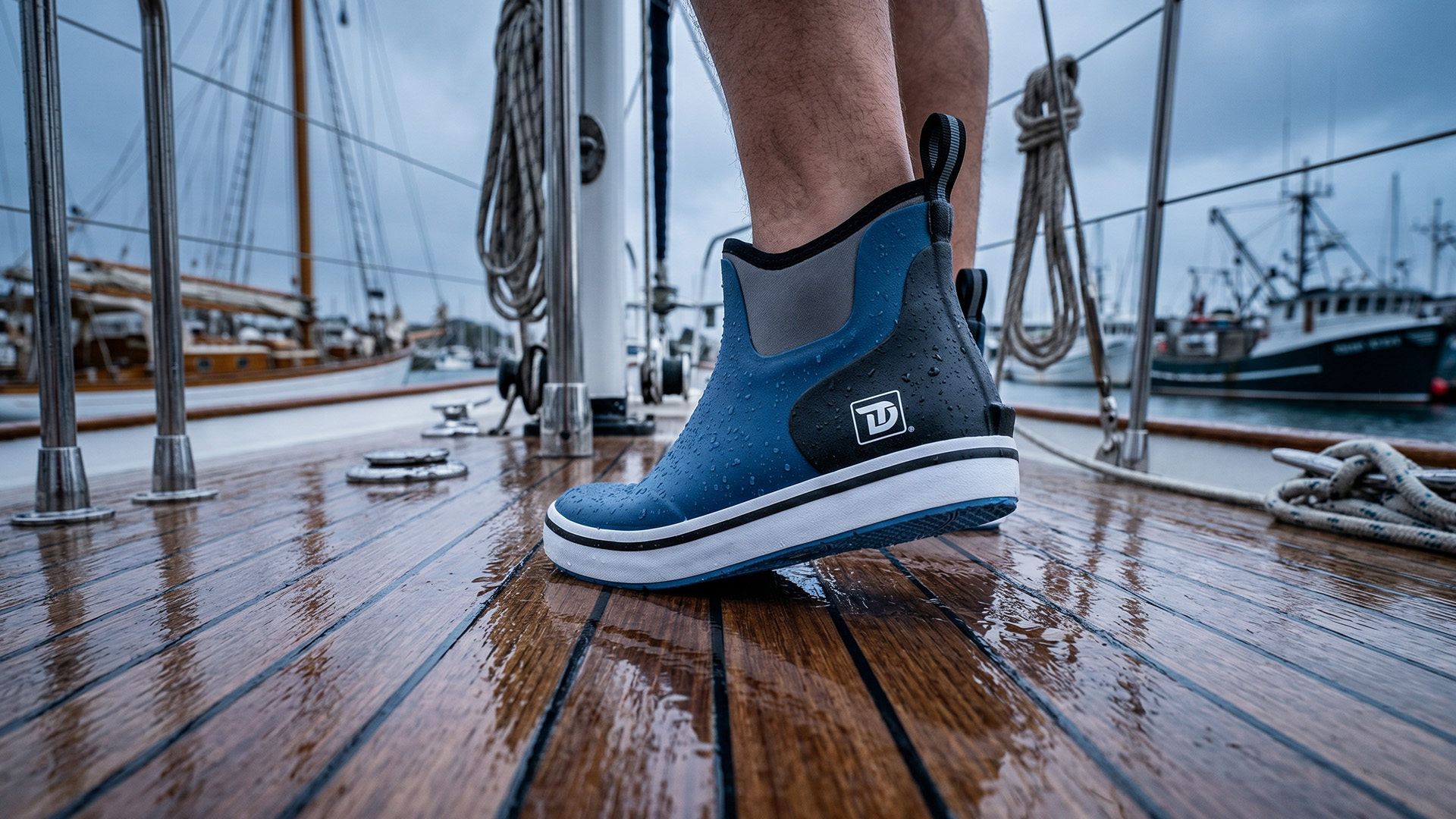
Trudave Gear’s WaveLock and DeckFlow deck boots have been engineered with a deep understanding of this problem. They don’t just feature “siped outsoles”—a technology first patented in 1923 that uses thousands of tiny slits to channel water away. They feature specific siping architectures and rubber compounds tuned for the surfaces serious anglers actually stand on. This guide breaks down the science of what makes a wet fiberglass deck slippery, why an aluminum deck behaves like sandpaper in disguise, and how Trudave boots provide unshakeable grip on every one of them.
Part 1: Fiberglass—The Hydroplaning Hazard
Fiberglass is the most common boat deck material in the recreational fishing world, and it is, from a traction standpoint, the most deceptive. A fiberglass deck with a gelcoat finish is extraordinarily smooth. When you add water, the fluid fills in microscopic imperfections and creates a nearly uniform film. Your boot sole never actually touches the solid surface unless the water can be pushed away.
This is why deep, chunky “mud lugs” are so dangerous on a fiberglass boat. The deep channels between the lugs trap water, forming a lubricating layer that causes the boot to hydroplane. The same boot that bites into a muddy riverbank will skate across a wet deck with zero control.
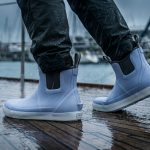
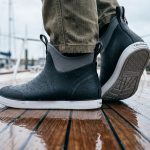
The solution, perfected by Trudave, is micro-channel siping. On the WaveLock Series, the exclusive WaveLock Traction Outsole uses razor-thin cuts that open under body weight. This action sucks up water and squirts it out the sides, allowing the remaining rubber to make direct, dry contact with the gelcoat. The resulting friction is immense. For the DeckFlow Series, a non-marking siped outsole achieves the same goal without leaving black scuffs on a pristine white deck—a detail any boat owner with a freshly waxed gelcoat will deeply appreciate.
Part 2: Aluminum—The Hidden Abrasive
Aluminum decks, common on jon boats, bass boats, and many commercial vessels, present a different challenge. Here, the metal surface is often painted, unpainted, or coated with a non-skid texture. While a textured aluminum deck offers more mechanical grip than smooth fiberglass, it has a hidden catch: it acts like a giant metal file.
Every time you pivot your foot or brace against a wave, the sharp peaks of that non-skid texture shear off microscopic particles of rubber. A soft, grippy outsole that performs brilliantly on fiberglass can be shredded to a smooth, slippery surface on aluminum in a matter of months.
Trudave addresses this with a carefully calibrated rubber compound. The WaveLock and DeckFlow outsoles are formulated to be soft enough to engage the micro-texture of aluminum but dense enough to resist rapid abrasion. The strategic placement of the siping channels also serves a secondary purpose: they capture the rubber dust and grime generated by abrasion and eject it, preventing a slick layer of powdered rubber from building up between the boot and the deck. This self-cleaning action is just as important on a dusty aluminum surface as it is in mud.
Part 3: Wood—The Classic, Unpredictable Surface
From the teak decks of classic sportfishers to the oak planks of a New England lobster boat, wood is the traditional deck surface that never really went away. Wood behaves unlike any other deck material. When wet, the grain of the wood swells, creating a raised, slick surface. Algae and fish slime penetrate the grain, turning a weathered deck into a slip hazard that rivals ice. And let’s not forget the nail heads and splinters that can puncture a softer sole.
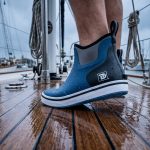
On wood, two properties of a deck boot become paramount: the outsole compound’s hardness and the depth of the siping. The rubber needs to be firm enough to bridge nail heads without puncturing, yet pliable enough to deform into the swollen wood grain. Trudave’s siping once again proves its worth. The micro-channels in the WaveLock outsole evacuate the thick mixture of water, slime, and algae that sits on a wood deck, while the flexible compound conforms to the irregular grain, finding grip where a harder, unsiped boot would simply slide. For the DeckFlow, the non-marking compound is a blessing on beautifully varnished wooden decks, where black rubber streaks would be a cardinal sin.
Part 4: The Rubber Compound—The Unsung Hero of Grip
Tread pattern is what you see. Rubber compound is what you feel. The two must work together, especially when temperature fluctuates. A boat deck left in the summer sun can reach 140°F, while a winter deck in the morning can be near freezing. In the cold, cheap rubber hardens, becoming a hockey puck that loses all grip. In the heat, it can become too soft, causing it to wear down in a single season and feel squirmy underfoot.
Trudave’s engineers have selected a vulcanized natural rubber compound with a high hysteresis—meaning it’s “tacky” and energy-absorbing—that remains stable across a wide temperature range. This is why the WaveLock and DeckFlow outsoles maintain their pliable grip from a frigid Maine morning to a sweltering Florida afternoon. The vulcanization process itself, which chemically cross-links the rubber, also ensures that this compound doesn’t degrade or peel away from the boot’s upper, a common failure point on cheaper boots with glued-on soles.
Part 5: Real-World Feedback—The Grip That Anglers Feel
The science of traction is validated not in a lab, but on a wet deck with a fish on the line. Across Trustpilot reviews and independent gear tests, Trudave users consistently describe the grip as “confidence-inspiring” and “like snow tires for your feet.” One reviewer who wore the WaveLock on a season-long charter in Alaska noted that even when the deck was slimed with halibut and cod, the boots “never once slipped, which is more than I can say for my old leather-soled work boots.”
The DeckFlow has earned similar praise from inshore guides and flats anglers who need to silently and securely move across skiffs. A female guide from the Florida Keys reported that the non-marking sipes on her DeckFlows kept her absolutely planted while poling her skiff across turtle grass flats, without leaving a single black mark on her meticulously maintained deck.
Part 6: Care for Maximum Traction Over Time
Even the best outsole loses its magic if it isn’t maintained. The primary enemy of a siped deck boot is clogging. Mud, dried fish blood, sand, and salt crystals can pack into the micro-channels, rendering the siping useless. Trudave’s care protocol is simple and essential: after every trip, blast the outsoles with fresh water, using a soft brush to clear any debris from the siping grooves. A once-a-month deep clean with mild soap removes the oily film that builds up on the soles. Never leave the boots to dry in direct sunlight or near a heater, as extreme heat will accelerate the hardening of the rubber compound, permanently diminishing its grip.
Periodically inspect the siping. If the fine slits are worn away and the outsole is smooth in high-wear areas like the ball of the foot, the boot has lost its primary safety function and should be replaced—regardless of how good the upper still looks.
Part 7: The Decision Framework—Choosing Your Deck Grip
For most anglers, the choice between WaveLock and DeckFlow comes down to two things: climate and deck type.
- Choose the WaveLock if: You fish in cold water, on larger fiberglass or aluminum center-consoles, and you want the maximum possible grip from an aggressive, micro-channel siped outsole, combined with the warmth of thermal insulation. It is the boot of choice for serious offshore and inshore anglers who demand absolute, no-compromise traction on slick, fish-slimed gelcoat or aluminum.
- Choose the DeckFlow if: You fish in warm weather, on wooden or lighter fiberglass skiffs, and you need a lighter, nimbler boot with a non-marking sole that won’t damage a beautifully finished deck. It’s the ideal boot for guides, flats anglers, and anyone whose “boat shoe” needs to perform equally well at the dock bar as it does on a wet deck.
And for the angler who owns a heavy aluminum jon boat for winter catfishing and a fiberglass bay boat for summer speckled trout, a two-boot system isn’t overkill—it’s the smart application of material science.
Conclusion: Stand Your Ground
The water will always be slippery. The deck will always be wet. But a slip doesn’t have to be inevitable. By understanding the surface you stand on and choosing a boot whose outsole was engineered for that specific challenge, you turn one of the most unpredictable elements of fishing into a non-issue.
Trudave Gear built the WaveLock and DeckFlow to solve the real-world traction problems that anglers face every day. The micro-channel siping that defeats the hydroplaning of gelcoat. The dense, abrasion-resistant compound that stands up to gritty aluminum. The flexible, non-marking rubber that grips swollen wood grain without leaving a trace. These are not marketing gimmicks. They are the result of materials science applied to the three most common decks in the world.
To explore the complete Trudave Gear deck boot lineup and find the pair that will keep you upright on your next trip, visit trudavegear.com.