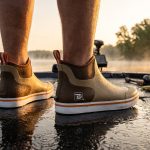
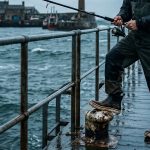
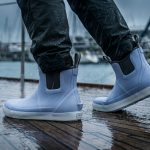
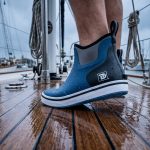

Introduction: Feet in the Water, Mind on the Fish
Kayak fishing is a different kind of dance. You’re inches from the water, your legs extended, your feet often braced against the hull or dangling over the side. Every paddle stroke sends a drip down your ankle. A playful redfish can splash a gallon of saltwater into your lap. And when you launch from a muddy bank or a slick boat ramp, your feet are the first part of you to get wet. In this world, footwear isn’t just about staying dry—it’s about safety, agility, and the freedom to focus entirely on the fish.
A clunky, knee-high rubber boot is a liability in a kayak. It restricts your ankles, makes bracing awkward, and fills with water like a bucket if you take a wave over the side. A pair of soggy sneakers is even worse—no grip, no support, and a guaranteed case of trench foot by the end of the day. What a kayak angler needs is the sweet spot in between: a boot that’s low-profile enough to move with you, waterproof enough to keep the paddle drip out, and grippy enough to keep you upright on a slick boat ramp or a muddy shoreline.
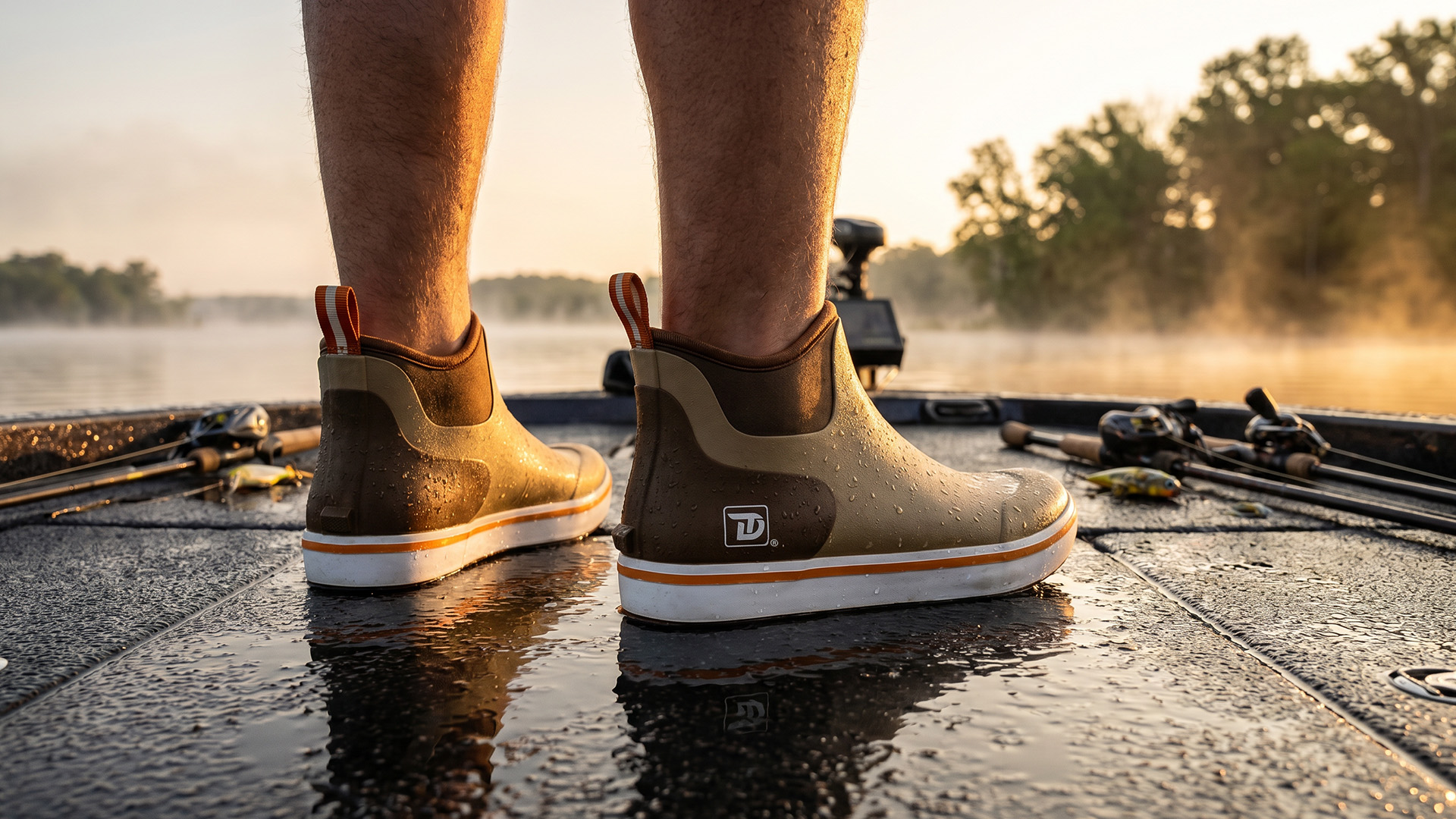
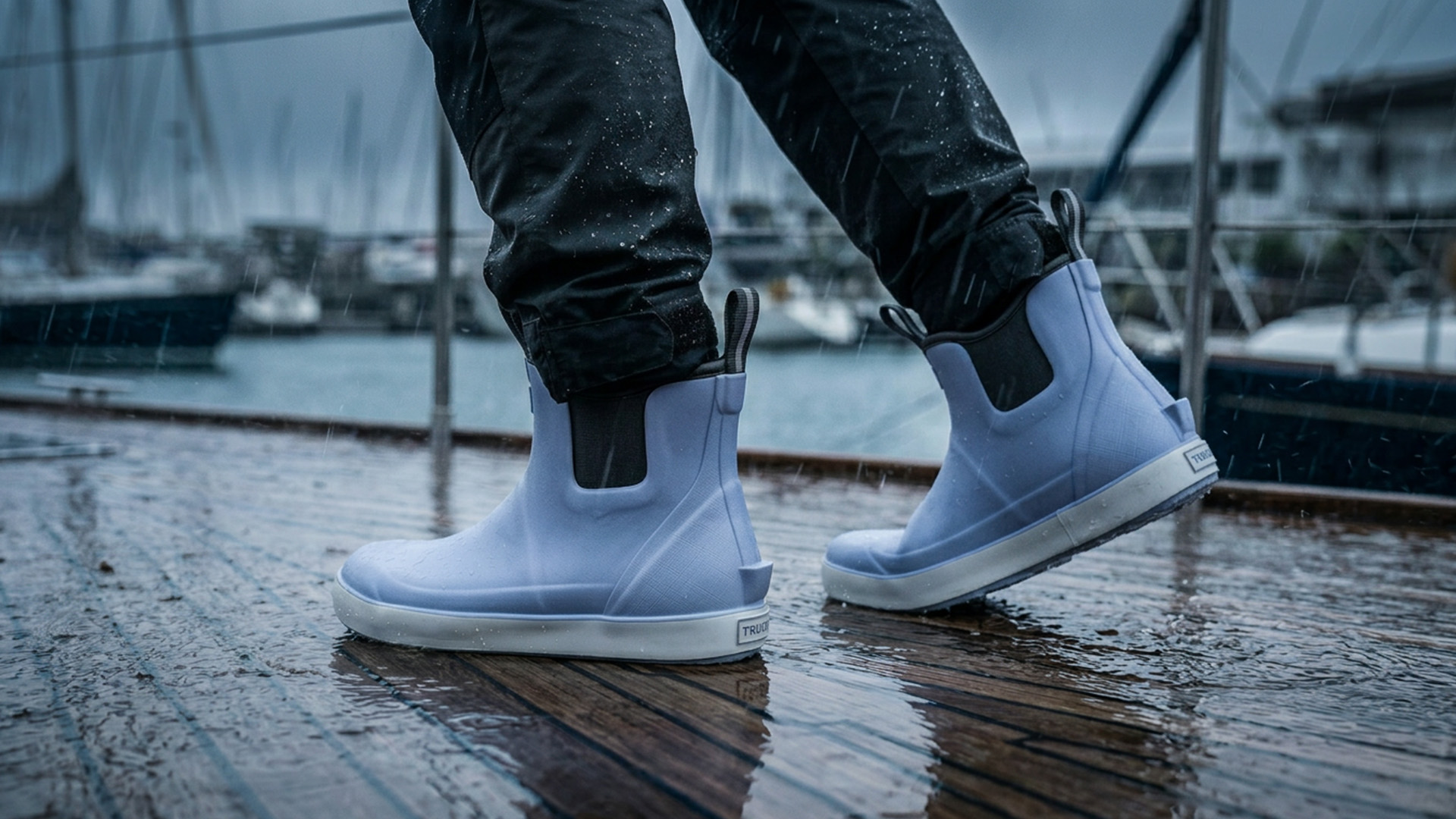
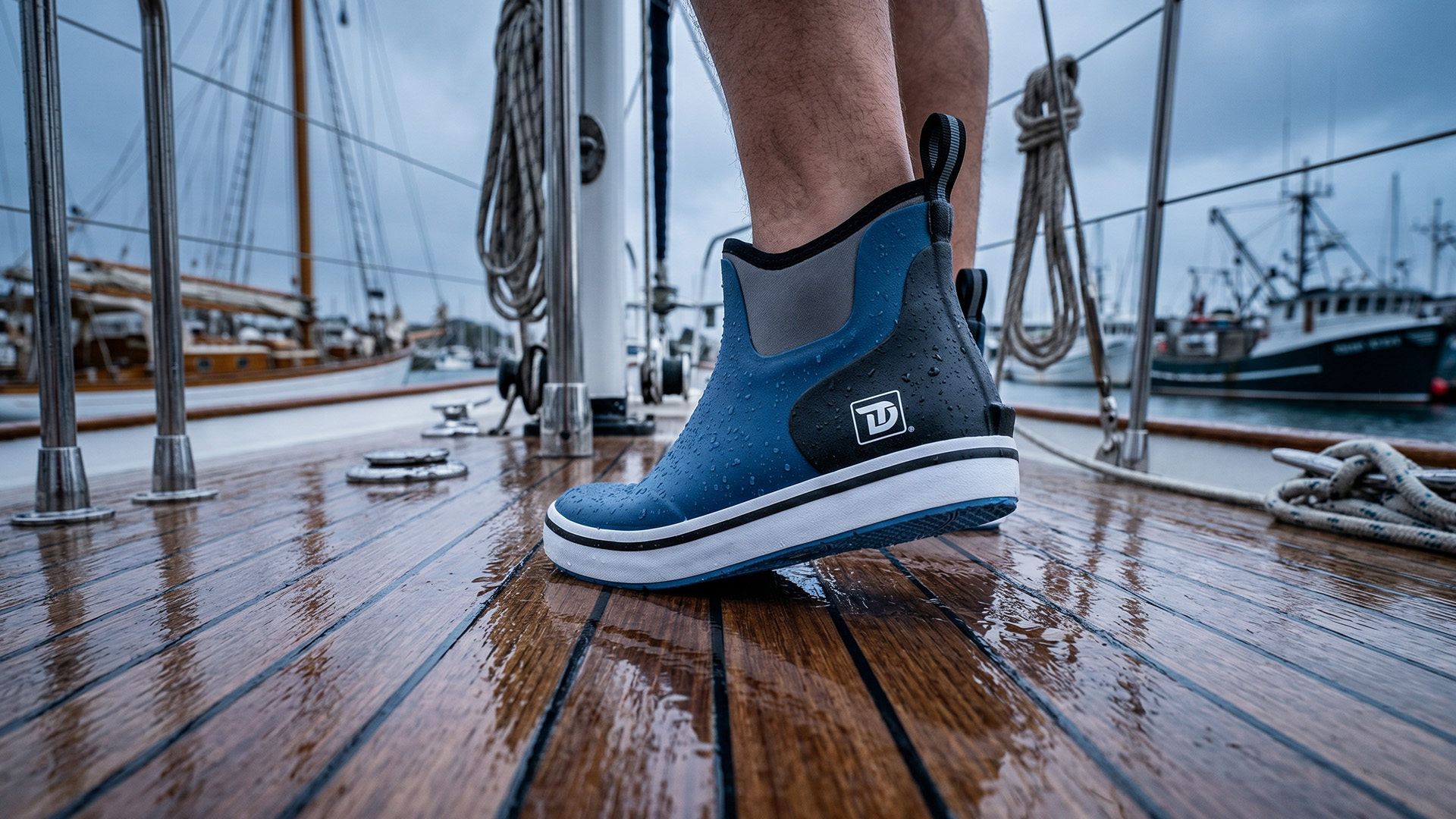
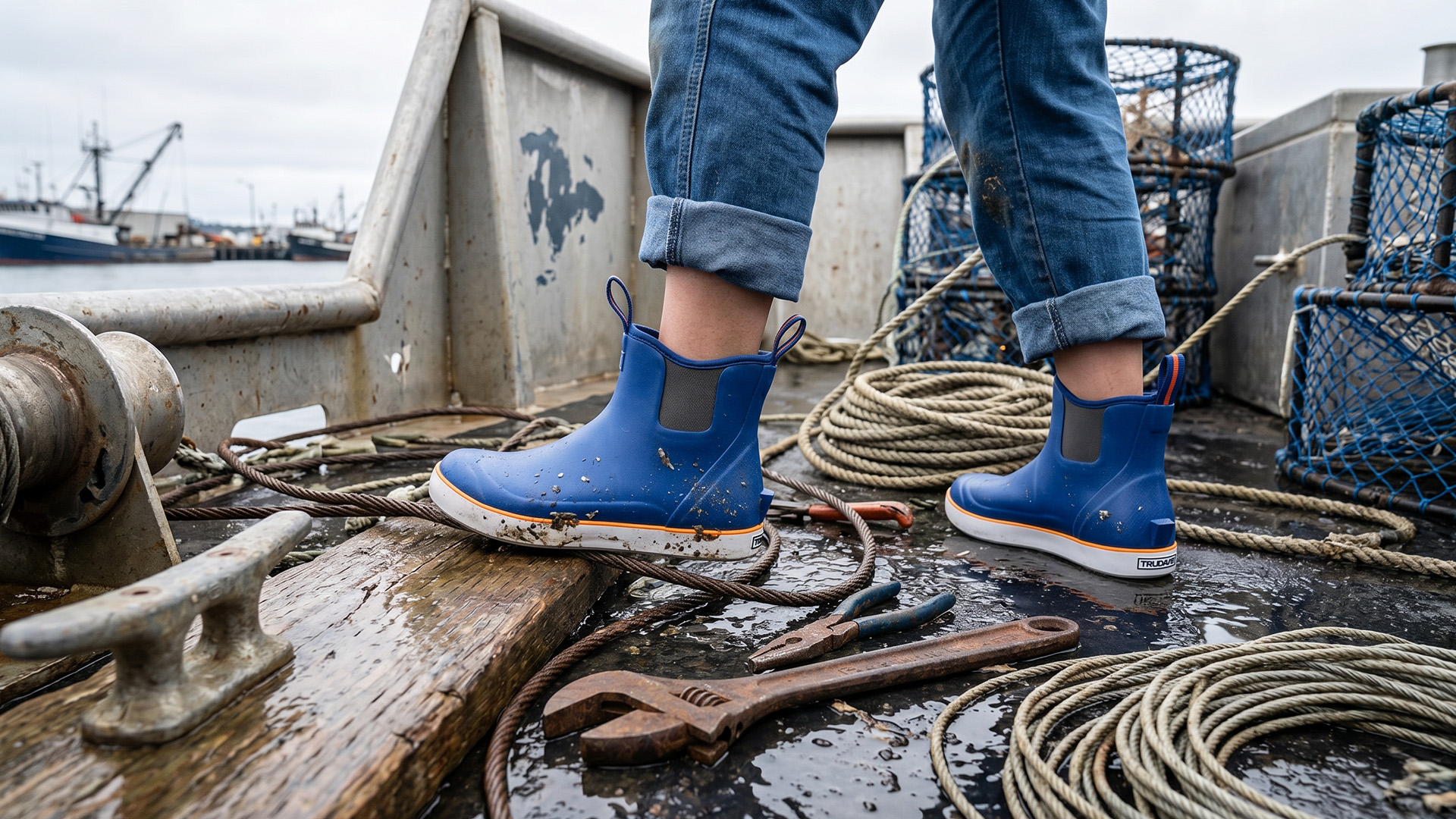
Trudave Gear may not market a “kayak-specific” deck boot, but their DeckFlow and WaveLock series fit the bill almost perfectly. They’re built on premium vulcanized natural rubber, with siped, non-marking outsoles that grip on wet polyethylene and slimy concrete. They’re lightweight, flexible, and designed for the kind of all-day comfort that a long paddle demands. This guide will walk you through the unique footwear demands of kayak fishing, which Trudave boot is right for your conditions, and how to pair them with the right socks and gear to stay dry, safe, and focused on the strike.
Part 1: The Kayak Fisher’s Footwear Dilemma
Kayak fishing presents a set of challenges that no other type of angling quite matches. The first and most obvious is the proximity to water. Your feet are at or below the waterline much of the time. In a sit-inside kayak, they’re tucked under the deck where paddle drip and the occasional splash pool. In a sit-on-top, they’re exposed to sun, spray, and the wash of waves against the hull. Water ingress is constant but rarely deep—it’s not about wading, it’s about staying dry in a persistently wet environment.
The second challenge is space. A kayak cockpit or deck has very little room. Bulky, heavy boots make it hard to adjust your footing, brace against the hull, or exit quickly in an emergency. You need a boot that’s low-profile and flexible, almost like a water shoe but with real traction and protection.
The third challenge is the launch. Kayak launches are rarely from pristine boat ramps. They’re muddy banks, rocky shorelines, oyster beds, and slick concrete spillways. The walk from the car to the water, carrying a 60-pound kayak, is when a bad slip can ruin your day—and your gear. You need a boot that grips on wet grass, mud, sand, and algae-slicked rocks with equal confidence.
The fourth challenge is temperature. You might start paddling in a cool 50-degree morning and be sweating under the sun by noon. In colder months, water that’s 45 degrees can make your feet ache within minutes if your boots aren’t insulated. In summer, a boot that traps heat will cook your feet like a slow-roaster.
Standard rain boots solve the waterproofing but are too tall, heavy, and clunky. Sneakers or water shoes solve the weight and flexibility but offer zero waterproofing and poor traction on slime. What you need is a marine-grade deck boot cut low, built flexible, and engineered for wet-surface grip. Trudave makes exactly that.
Part 2: The DeckFlow—The Warm-Weather Kayak Specialist
For kayak anglers in warm to moderate climates—the Southeast, the Gulf Coast, southern California, or anywhere fishing in summer—the DeckFlow is the standout choice. It’s Trudave’s lightest, most breathable deck boot, built on a women’s-specific last but with a fit that works well for many men, particularly in smaller sizes.
Why It Works for Kayaking
The DeckFlow is an uninsulated, ankle-height boot made from vulcanized natural rubber. It’s 100% waterproof, so the paddle drip and the occasional splash stay on the outside. The soft, breathable lining wicks moisture and helps keep your feet from overheating during a long day under the sun. The low-cut design won’t restrict your ankle, which is critical when you need to brace against the foot pegs or maneuver in and out of the cockpit.
Traction Where You Need It
The non-marking siped outsole is engineered for wet surfaces. The thousands of razor-thin siping channels bite into the polyethylene deck of a sit-on-top or the slick bottom of a sit-inside, while also gripping on muddy banks and slimy concrete ramps. Because the sole is non-marking, you won’t leave black streaks on your kayak or your friend’s boat.
Lightweight and Packable
One of the underrated features of the DeckFlow for kayakers is how light it is. When you’re pulling your kayak on a cart or carrying it to the water, every ounce on your feet counts. The DeckFlow is significantly lighter than an insulated rubber boot, reducing fatigue before you even get on the water.
Pairing with Socks
For warm-weather kayaking, pair the DeckFlow with a lightweight merino wool or synthetic moisture-wicking sock. This will manage sweat and keep your feet comfortable even after hours in the sun. Merino is particularly good because it resists odor—a bonus when you’re storing your boots in a hot car between trips.
What Kayakers Are Saying
While Trudave doesn’t market the DeckFlow specifically to kayakers, reviews from anglers in the Florida Keys and the Louisiana marsh consistently mention how well the boot works for poling skiffs and navigating small boats. One angler wrote: “They’re so light I forget I’m wearing them, but I never slip on a wet deck or a muddy launch. Perfect for the kayak.”
Part 3: The WaveLock—For Cold Water and All-Weather Kayakers
If your kayaking season stretches into the colder months, or you fish waters where the temperature rarely climbs above 60°F, the WaveLock is a better match. It’s Trudave’s insulated deck boot, built for cold mornings, cold water, and the kind of all-day wear that demands more protection.
Insulation Without the Sweat Trap
The WaveLock has a soft thermal insulation lining that retains heat while allowing breathability. This is important in a kayak, where you may not be generating much body heat while sitting and paddling, but you’re also not working hard enough to sweat through your socks. The insulation is calibrated to keep feet warm in temperatures down into the 40s without the suffocating bulk of a winter boot.
Grip and Protection
The WaveLock’s exclusive micro-channel siping is the most aggressive in Trudave’s lineup. It grips relentlessly on wet fiberglass, plastic, and metal—perfect for the slick hatch covers, foot braces, and gunwales of a kayak. The reinforced toe shell protects against dropped tackle boxes and the inevitable kick against a submerged rock while launching. The flexible side panels make it easy to slide the boot on and off, which matters when you’re on a windy beach and don’t want to sit down to wrestle with your footwear.
The Volume Advantage
The WaveLock has a roomier toe box than the DeckFlow, designed to accommodate thicker socks. For cold-water kayakers wearing a 3mm neoprene sock inside the boot—a common strategy when water temperatures dip into the 30s and 40s—this extra volume is essential. You can wear a thick insulating layer without cutting off circulation.
Pairing with Neoprene Socks
In water below 50°F, a neoprene sock inside the WaveLock is a game-changer. The neoprene traps a thin layer of water against your skin that your body warms up, much like a wetsuit. The WaveLock’s waterproof shell keeps that system contained, and the insulation in the boot adds a second thermal barrier. Even if you take a wave over the side and your boot gets flooded (which can happen in rough conditions), the neoprene sock will keep your feet warm, and the WaveLock will prevent the constant influx of cold water that would sap your heat.
What Cold-Water Kayakers Say
An angler in the Pacific Northwest who kayaks for lingcod and rockfish in the spring reported: “I pair my WaveLocks with a 3mm neoprene sock when the water’s in the 40s. My feet stay warm and dry even after hours on the water. The grip on the foot pegs is solid, and I never worry about slipping when I land on a rocky beach.”
Part 4: The Kayak Launch—Traction That Saves Your Season
The most dangerous moment for a kayak angler isn’t on the water. It’s on the bank, carrying a heavy kayak over slippery ground. Trudave’s siped outsoles excel in these transitional zones, where a fall can crack a hull, destroy a rod, or send you to the emergency room.
Whether you choose the DeckFlow or the WaveLock, you’re getting a siped rubber outsole that channels water away and grips on wet grass, mud, sand, and algae-covered rocks. The DeckFlow’s non-marking compound is especially useful if you’re launching from a marina with light-colored concrete—no black streaks left behind. The WaveLock’s deeper siping provides an extra margin of safety on the slickest surfaces.
A quick rinse after the trip removes mud, sand, and salt, and the boots will be ready for the next launch. Trudave’s vulcanized rubber construction is non-porous and won’t absorb odors, so you don’t have to worry about your boots smelling like low tide after a few trips.
Part 5: The Sock System for Kayak Anglers
The right sock inside your Trudave boot can make the difference between a comfortable day on the water and a miserable one. Here’s the framework:
- Warm Water (65°F and above): Lightweight merino wool or synthetic moisture-wicking sock. Pair with the DeckFlow. The sock manages sweat and prevents blisters without adding bulk.
- Cool Water (50°F to 65°F): Midweight merino wool sock. Pair with the DeckFlow or the WaveLock depending on your cold tolerance. The merino insulates even when damp.
- Cold Water (35°F to 50°F): Heavyweight merino wool sock or a 3mm neoprene sock. Pair with the WaveLock, which has the extra volume and insulation to handle the thicker sock.
- Frigid Water (Below 35°F): A neoprene sock inside the WaveLock is the best defense. If you’re in a sit-inside kayak and your feet are enclosed, chemical toe warmers can add a final layer of heat.
Avoid cotton socks at all costs. Cotton absorbs water, collapses into a cold, abrasive cloth, and accelerates both heat loss and blister formation. In a kayak, where your feet are often damp from the start, cotton is a disaster waiting to happen.
Part 6: Quick-Dry and Storage
Kayakers know that gear needs to dry fast between trips. Trudave boots, with their EVA insoles and breathable linings, are designed to air-dry quickly. After a day on the water, remove the insoles and let them dry separately. Stuff the boots with crumpled newspaper to wick moisture from the lining. Never put them near a heater or in direct summer sun—heat is the mortal enemy of vulcanized rubber. Store them upright in a cool, dry place, and they’ll be ready to go for your next outing.
The Decision Matrix for Kayak Anglers
| Your Kayaking Conditions | Recommended Trudave Boot | Key Reason |
|---|---|---|
| Warm weather, southern waters, summer fishing | DeckFlow | Lightweight, uninsulated, non-marking |
| Cool to cold water, shoulder seasons, windy days | WaveLock | Insulated, aggressive grip, roomy for thicker socks |
| Mixed conditions, year-round kayaking | Two-boot system | DeckFlow for summer, WaveLock for winter |
Conclusion: The Right Boot for the Paddle
Kayak fishing is about simplicity. You strip away the big boat, the motor, the extra gear, and you get as close to the water as an angler can get. Your footwear should match that philosophy: simple, effective, and out of the way. Trudave’s DeckFlow and WaveLock deck boots do exactly that. They’re light, they grip, they keep your feet dry, and they don’t ask for anything in return except a quick rinse and a dry place to sit overnight.
For the warm-water paddler, the DeckFlow is the boot you’ll forget you’re wearing—until you glance down at a slippery ramp and realize you haven’t slipped once. For the cold-water warrior, the WaveLock wraps your feet in insulation and traction that keep you fishing long after the fair-weather crowd has pulled their yaks out of the water. Either way, you’re getting a boot built from premium vulcanized rubber, with sealed seams and an honest direct-to-consumer price.
Grab your paddle, slip on your Trudaves, and get on the water. The fish are waiting.
To explore the complete Trudave Gear deck boot lineup and find the right pair for your kayak, visit trudavegear.com.