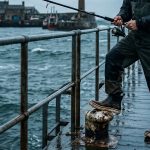
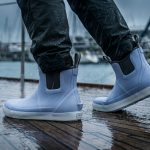
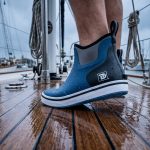

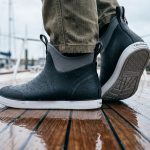
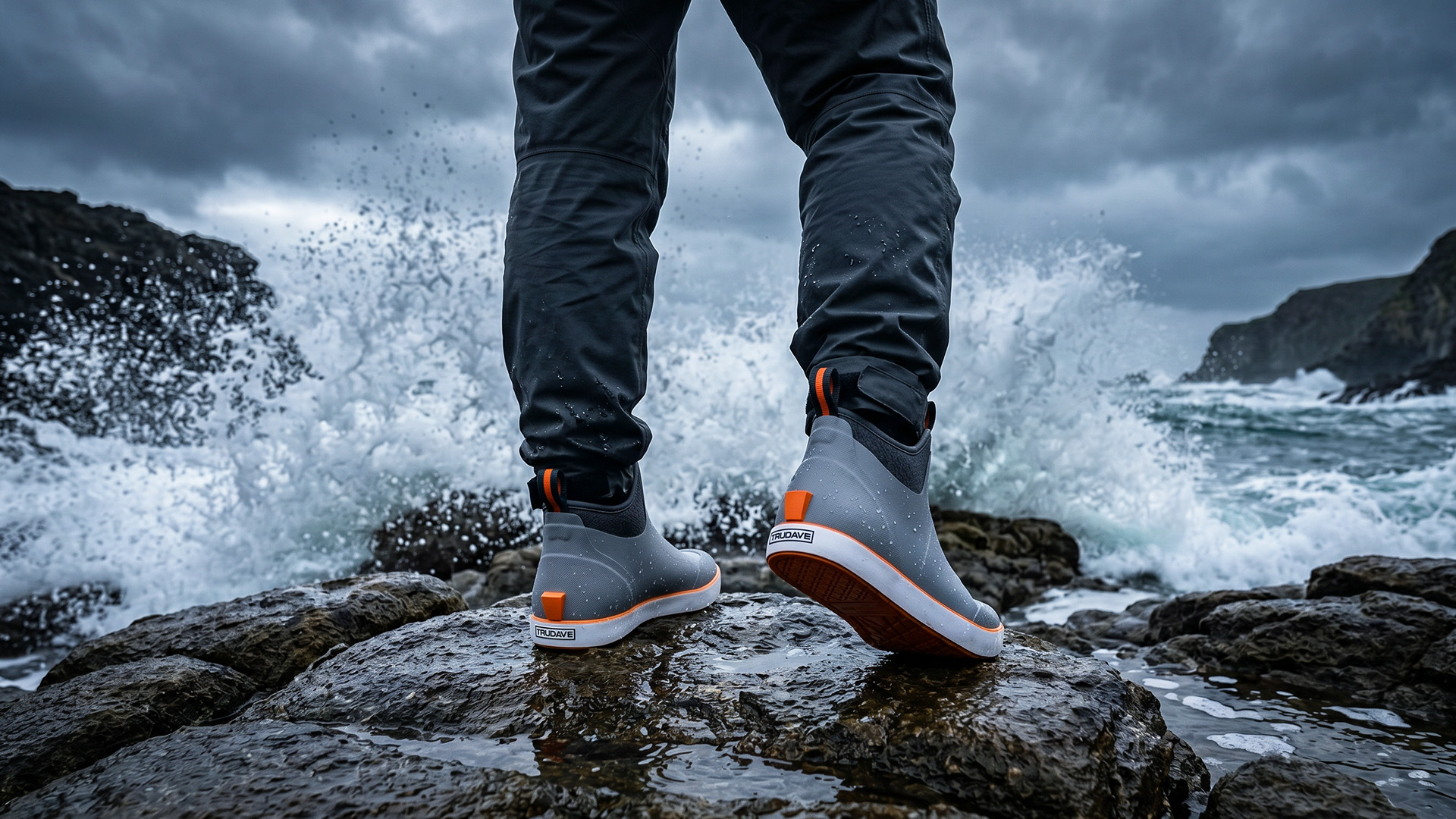
Introduction: The Fit That Keeps You Fishing
The slickest deck, the coldest spray, and the longest days on the water all have one thing in common: they punish boots that don’t fit. A boot that’s too tight cramps your toes, cuts off circulation, and leaves you with numb, aching feet by the time the bite turns on. A boot that’s too loose has your heel slipping with every step, generating the friction that turns into blisters by noon. And a boot with the wrong arch support can make standing on a hard fiberglass deck for eight hours feel like a form of torture rather than a day of fishing.
Most anglers blame their feet. “My feet are too wide.” “My heels are too narrow.” “My arches are too high.” But the problem isn’t your feet—it’s a boot industry that has spent decades building footwear for a hypothetical “average” foot that almost nobody actually has. The good news is that Trudave Gear’s deck boot lineup is built with the adjustability, flexibility, and customization options that make it possible to fit nearly any foot comfortably and securely. This guide will walk you through how to match your foot type to the right Trudave boot, and how to dial in the perfect fit with socks, insoles, and a few simple tricks.
Part 1: Know Your Feet—The Four Angler Archetypes
Before you can choose the right boot, you need to understand what you’re working with. Most anglers fall into one of four broad foot categories, each with its own challenges.
Wide Feet
If your forefoot feels pinched in standard shoes, you likely have wide feet. In a deck boot, width is critical because a cramped toe box restricts circulation, making your feet colder in winter and more prone to numbness. The solution is a boot with a naturally roomy toe box or a flexible upper that can stretch to accommodate width.
Narrow Feet
If you experience heel slip—your heel lifting inside the boot with each step—you probably have narrow feet. Heel slip creates friction, and friction creates blisters. It also forces your toes to unconsciously grip the footbed for stability, leading to arch fatigue. The solution is a boot with a secure heel cup and the ability to take up excess volume with thicker socks or insoles.
High Arches
A high arch means the middle of your foot doesn’t make full contact with a standard insole. Without proper support, your plantar fascia can become inflamed and painful after hours of standing—a condition known as plantar fasciitis. The solution is a boot with removable insoles that can be swapped for a high-arch aftermarket insert.
Flat Arches (Low Arches)
Flat feet tend to overpronate, rolling inward with each step. In a boot with aggressive arch support, this can create a painful pressure point. The solution is a cushioned, low-contour insole that provides shock absorption without pushing up into the arch.
The key insight is that no boot fits every foot perfectly right out of the box. But the right boot, paired with the right adjustments, can fit nearly any foot perfectly.
Part 2: How Trudave Deck Boots Accommodate Different Feet
Trudave’s three deck boot series—WaveLock, DeckFlow, and AquaGuard—each have distinct fit characteristics based on their intended use. Understanding these differences is the first step to matching a boot to your feet.
WaveLock: The Roomy All-Weather Performer
The WaveLock is built with an intentionally generous toe box and overall volume. This isn’t a design flaw—it’s a deliberate choice to accommodate the thick merino wool socks that cold-weather anglers need. The flexible neoprene side panels add stretch, making the boot forgiving for wider feet. For anglers with wide feet, the WaveLock is often the best out-of-the-box fit in the Trudave lineup. For narrow feet, the extra volume can be managed with thicker socks and a volume-filling insole. The soft thermal insulation lining adds a bit of interior plushness without compromising the boot’s structure.
DeckFlow: The Precision Women’s Fit
The DeckFlow is engineered on a dedicated women’s last, meaning it’s narrower in the heel and has a different arch profile than a unisex boot. For women with average to narrow feet, this is the most secure, blister-free fit available. The uninsulated, breathable lining keeps the overall volume lower than the WaveLock. For women with wider feet, the DeckFlow’s rubber upper has some give, but it won’t stretch as much as neoprene. If you’re a woman with wider feet and the DeckFlow feels snug, sizing up and adding a thick insole can help, or you may prefer a smaller size in the men’s WaveLock, which has more width.
AquaGuard: The High-Volume Work Boot
The AquaGuard is built for heavy-duty commercial work, and its interior volume reflects that. It’s designed to accommodate thick work socks and provide all-day support. For anglers with wide feet or high-volume feet, the AquaGuard offers plenty of room. For narrow feet, the same sock-and-insole strategies apply. The industrial-grade rubber upper doesn’t stretch as much as neoprene, so the fit is more fixed, but the generous interior gives you space to customize.
The Removable Insole Advantage
Every Trudave deck boot comes with a removable EVA insole. This is the single most important feature for fitting difficult feet. Because the insole can be taken out, you can replace it with an aftermarket insole that matches your arch height, or you can add a thicker insole to take up volume for narrow feet. This modular design means the boot’s comfort architecture is fully customizable.
Part 3: Dialing In the Perfect Fit—Insoles, Socks, and Simple Fixes
A boot that’s 90% right can become 100% right with a few inexpensive adjustments. Here’s the toolkit.
For Wide Feet
- Boot Choice: Start with the WaveLock or AquaGuard, both of which have generous volume. The WaveLock’s neoprene side panels add forgiving stretch.
- Socks: Wear lightweight to midweight merino wool socks. Thinner socks take up less volume, leaving more room for your feet.
- Insoles: Use the stock EVA insole, which is relatively low-volume. Avoid thick aftermarket insoles that cramp your foot.
- Break-In: The neoprene panels on the WaveLock will stretch slightly over the first few wears, conforming to your foot shape.
For Narrow Feet
- Boot Choice: The DeckFlow (for women) offers the most secure heel fit. For men, the WaveLock can work well if you fill the extra volume.
- Socks: Wear heavyweight merino wool socks. The thicker sock fills excess space and locks your heel in place. In warm weather, a midweight sock paired with a thicker insole can achieve the same result.
- Insoles: Upgrade to a thicker insole like Trudave’s ToughCush Comfort Insole. It adds volume, provides superior arch support, and takes up the space that causes heel slip.
- Heel Grips: If heel slip persists, an inexpensive adhesive heel grip (about $7 at any drugstore) applied to the inside back of the boot shaft can eliminate the problem entirely.
For High Arches
- Boot Choice: Any Trudave deck boot will work, as the insole is removable and can be replaced.
- Insoles: Replace the stock insole with a high-arch aftermarket insole. Trudave’s ToughCush Comfort Insole provides pronounced arch support and a deep heel cup. For even more aggressive support, a podiatrist-prescribed orthotic can be used—just ensure it fits within the boot’s volume. If you need a very thick orthotic, consider sizing up by half a size to accommodate it.
- Socks: Midweight merino wool provides cushioning without bulk. Avoid overly thick socks that might crowd the arch support.
For Flat Arches
- Boot Choice: Any Trudave deck boot, with the insole swapped.
- Insoles: The stock insole has moderate arch support which may feel intrusive on flat feet. Replace it with a flat, cushioned aftermarket insole designed for low arches. Look for insoles with minimal contour and maximum shock absorption.
- Socks: Midweight merino wool provides cushioning without adding arch pressure.
The Sock System as a Seasonal Adjustment
Sock thickness is the easiest variable to adjust, and it can extend the temperature range of a single boot significantly. For cold-weather fishing, heavyweight merino socks fill the boot’s volume and add insulation. For warm-weather fishing, lightweight merino or synthetic socks keep feet cooler and take up less space. Avoid cotton socks entirely—they absorb moisture, collapse, and cause blisters.
Part 4: What Anglers with Tricky Feet Are Saying
The best evidence that these fit strategies work comes from the anglers who’ve tried them. On Trustpilot, where Trudave maintains a “Great” rating of 4.1 out of 5, the theme of customizable fit appears again and again.
One angler with wide feet who chose the WaveLock wrote: “I’ve always struggled with deck boots pinching my toes, but these have plenty of room in the toe box. With a midweight sock, they’re the most comfortable boots I’ve owned for fishing.”
A female angler with narrow heels switched to the DeckFlow: “For the first time, my heel doesn’t slip. I can pole my skiff all day without blisters. The women’s fit is real—it’s not just a smaller men’s boot.”
A commercial fisherman with high arches upgraded his AquaGuards with ToughCush insoles: “The arch support in the stock insole wasn’t enough for my feet. I put in the ToughCush insoles, and now I can stand on a steel deck for 12 hours without my arches screaming.”
These are not isolated cases. They’re examples of a simple, systematic approach: identify your foot type, choose the right Trudave boot as a starting point, and adjust with insoles and socks until the fit disappears from your awareness.
Part 5: Maintaining the Fit Over Time
A boot that fits perfectly on day one should still fit perfectly on day 300, but only if you maintain it. Heat, improper storage, and neglect can all warp the shape of a rubber boot.
- Never dry your boots with direct heat. Radiators, campfires, and hot summer sun can cause vulcanized rubber to warp, changing the boot’s fit and potentially creating pressure points.
- Remove the insoles after each trip to let them dry separately. This prevents them from compressing unevenly and extends their cushioning life.
- Store boots upright in a cool, dry place. Never fold or crumple them, which creates permanent creases that can alter the boot’s shape and cause discomfort.
- Rinse with fresh water after each use, especially after saltwater exposure. Salt crystals can work into the rubber and degrade its structure over time.
- Replace insoles annually if you wear your boots heavily. Even the best EVA foam compresses over time, losing its ability to support your arches and cushion your stride.
With proper care, a well-fitted pair of Trudave deck boots will maintain its shape and comfort for multiple seasons of hard fishing.
Part 6: The Decision Matrix—Which Boot for Which Feet?
| Your Foot Type | Best Trudave Boot | Key Adjustment |
|---|---|---|
| Wide Feet | WaveLock or AquaGuard | Wear lightweight to midweight socks; let neoprene stretch |
| Narrow Feet (Men) | WaveLock | Heavyweight socks + ToughCush insole + heel grips if needed |
| Narrow Feet (Women) | DeckFlow | Women’s-specific last; add heel grips if needed |
| High Arches | Any (with insole swap) | Replace stock insole with high-arch aftermarket or ToughCush |
| Flat Arches | Any (with insole swap) | Replace stock insole with flat, cushioned aftermarket insole |
| Wide Calves | WaveLock | Flexible side panels accommodate; adjustable gusset on some models |
Conclusion: The Fit That Lets You Forget Your Feet
The best deck boot in the world is the one you forget you’re wearing. When your feet are dry, supported, and blister-free, your mind stays on the water, the fish, and the horizon. The wrong fit pulls your focus back to your body—the pinch in your toes, the rub on your heel, the ache in your arch. That distraction can ruin a day on the water, and it’s completely avoidable.
Trudave Gear’s WaveLock, DeckFlow, and AquaGuard series are built with the flexibility and adjustability that make a custom fit possible for nearly any foot. The generous toe boxes, the removable EVA insoles, the neoprene stretch panels, and the intentional volume for thick socks are not design flaws—they’re the features that let you take a boot that’s 90% right and make it 100% yours. Add the right socks. Swap the insole. Stick in a heel grip if you need it. In ten minutes and for less than the cost of a new lure, you can turn a good boot into a great fit.
Your feet aren’t the problem. They never were. The problem is a boot industry that treats “average” as the only shape worth making. Trudave doesn’t.
To explore the complete Trudave Gear deck boot lineup and find your perfect fit, visit trudavegear.com.