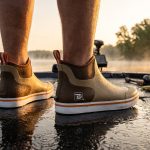
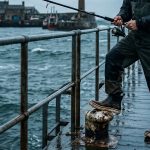
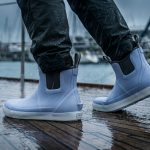
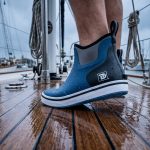
Introduction: The Boat Decides the Boot
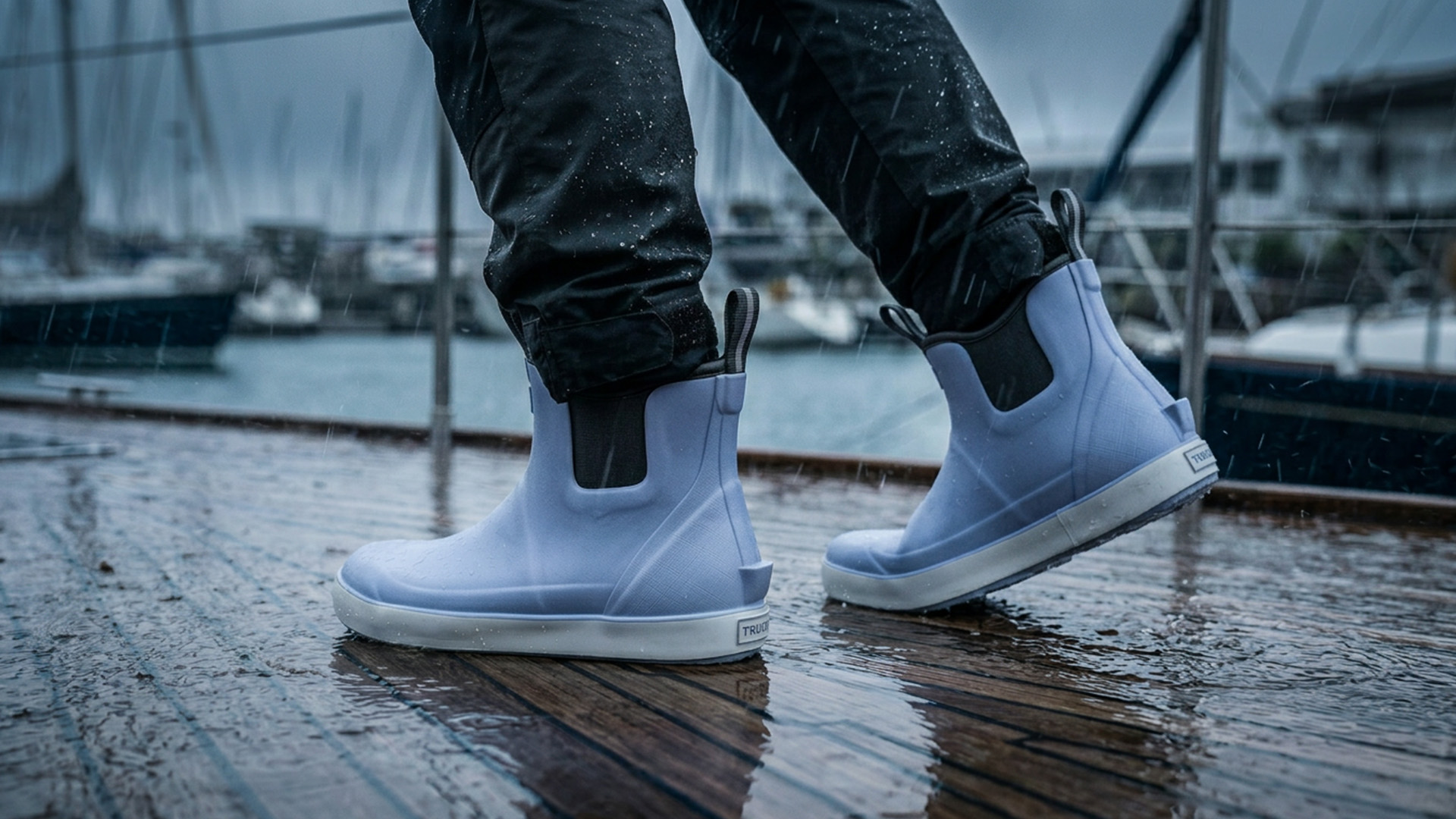
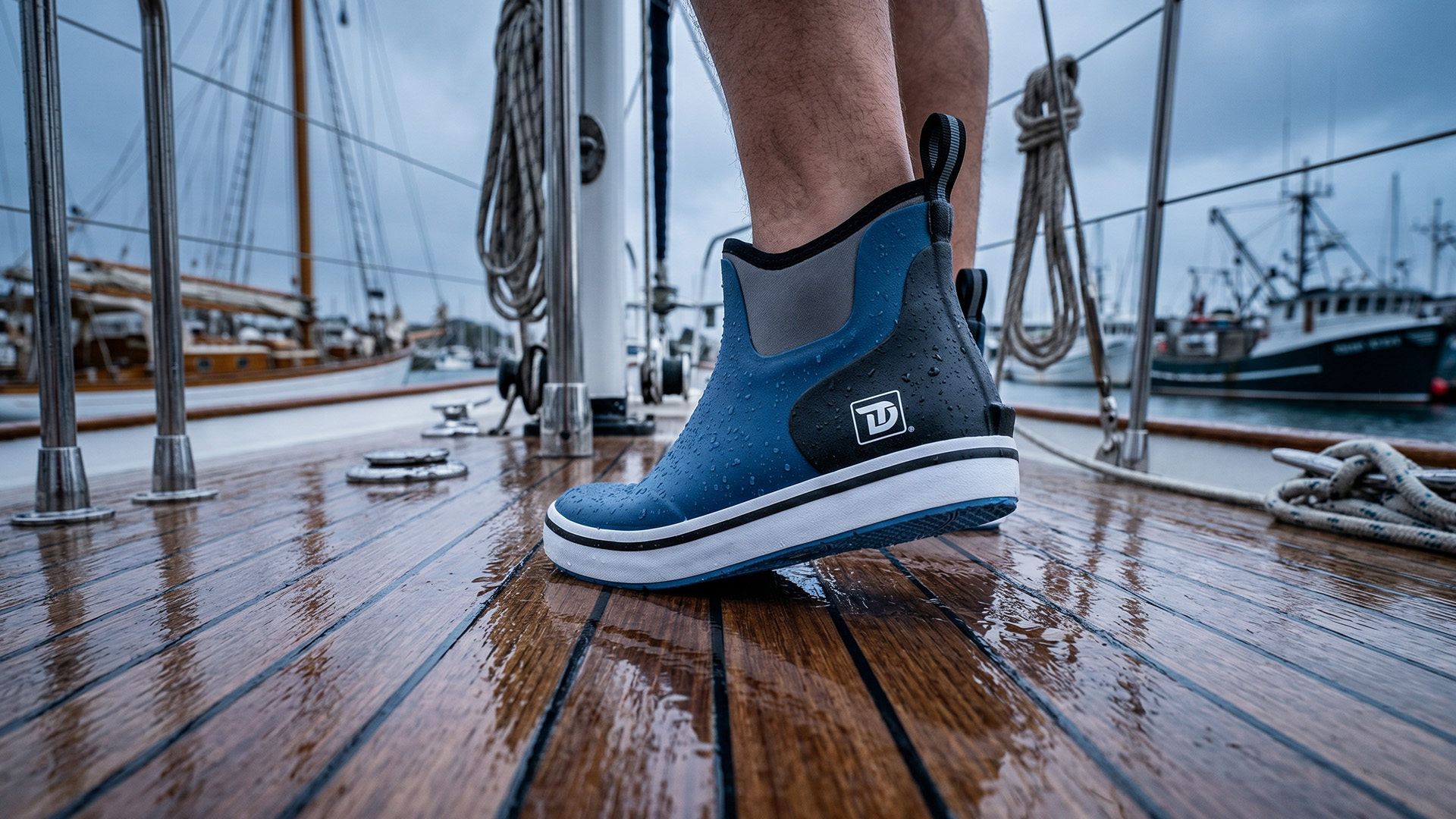
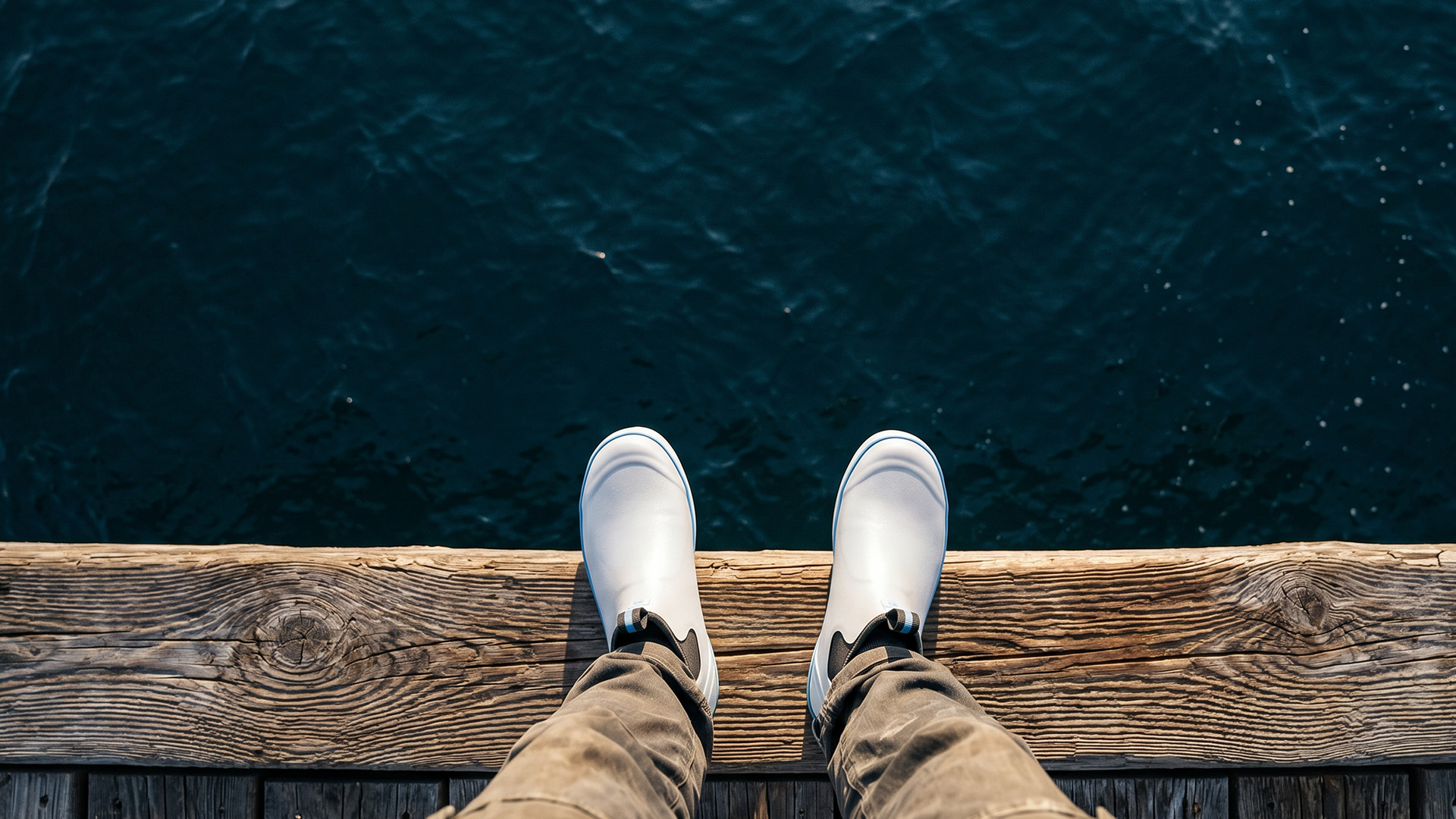
Most anglers choose deck boots based on the weather—insulated for cold mornings, uninsulated for summer heat. That’s smart, but it’s only half the equation. The other half is the boat beneath your feet. A center console slamming through a 3-foot chop at 30 knots makes different demands on your footwear than a poling skiff gliding silently across a glassy flat. A pontoon boat with a wet aluminum deck is a different animal entirely from an offshore sportfisher with a molded fiberglass cockpit. And a commercial crab boat? That’s a world unto itself.
The surface you stand on, the motion of the vessel, the kind of spray and slime you encounter, and the length of your typical day all dictate what a deck boot needs to do. Trudave Gear’s three deck boot series—DeckFlow, WaveLock, and AquaGuard—are each built on the same premium vulcanized natural rubber foundation, with siped, non-marking outsoles and sealed waterproof construction. But their differences in insulation, flexibility, weight, and protection make them better or worse matches for specific boats and fishing styles. This guide will walk you through the most common vessel types, the unique footwear challenges each one presents, and which Trudave boot belongs on your feet when you step aboard.
Part 1: The Center Console — All-Purpose, All-Weather Demands
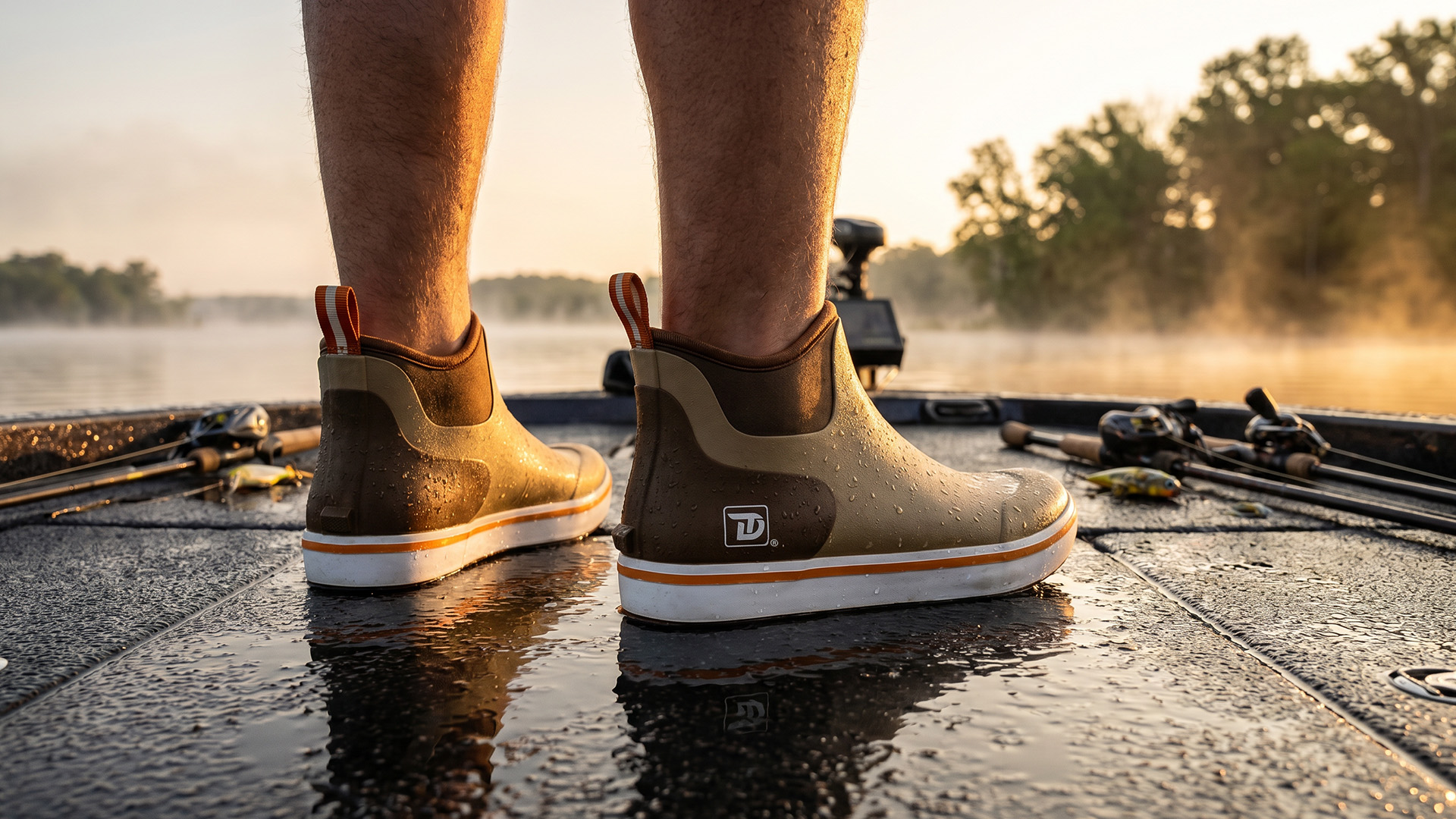
The center console is the Swiss Army knife of fishing boats. It can drift for flounder in a shallow bay at sunrise and run 40 miles offshore for tuna by noon. The deck is almost always wet—spray from the hull, splash from a thrashing fish, the constant washdown from the livewell. You’re standing, bracing, and moving for hours on a hard fiberglass surface that’s slick with saltwater and fish slime.
The Challenge: You need a boot that grips relentlessly on a wet deck, provides enough cushioning to stand all day, and adapts to whatever the weather throws at you. If you fish year-round in the Northeast or Pacific Northwest, you also need insulation for those pre-dawn launches when the air is in the 40s and the wind chill cuts through everything.
The Trudave Solution: WaveLock
The WaveLock is the center console angler’s boot. Its exclusive micro-channel siped outsole disperses water instantly, creating a dry contact zone that sticks to a wet fiberglass deck like a racing tire on a rain-soaked track. The aggressive siping is the star here—it’s the reason you can walk across a deck slimed with bunker chunks and not end up in the gunwale.
The WaveLock’s soft thermal insulation lining keeps your feet warm on those cold morning runs without overheating when the sun finally breaks through. Flexible side panels make it easy to slide on and off, which matters when you’re gearing up in the dark at a crowded ramp. A waterproof toe shell and reinforced heel add protection against dropped tackle and the general chaos of a busy boat.
Who It’s For: The inshore and offshore angler who fishes a center console in variable conditions, from chilly spring mornings to brisk fall afternoons. If you launch before dawn and don’t head back until the fish stop biting, the WaveLock is your one-boot solution.
Pair With: Midweight merino wool socks for most days; heavyweight socks when the mercury drops below 40°F. The WaveLock’s roomy toe box is designed to accommodate that extra sock volume without pinching.
Part 2: The Flats Skiff — Stealth, Sensitivity, and Shallow Water
A poling skiff is a silent hunter. The guide stands on a raised platform, scanning the water for the faintest shadow of a bonefish or redfish. The deck is fiberglass, usually white or light-colored, and the slightest sound or vibration can spook fish in inches of water. The angler is constantly moving—poling, casting, releasing, and repositioning. It’s athletic, demanding, and hot.
The Challenge: You need a boot that’s light, flexible, and quiet. A heavy insulated boot will cook your feet under the Florida sun and leave you exhausted by noon. A stiff, clunky sole will transmit noise through the hull. And you cannot leave black scuff marks on a pristine white deck.
The Trudave Solution: DeckFlow
The DeckFlow is the flats angler’s dream. It’s Trudave’s lightest, most breathable deck boot—completely uninsulated, with a soft, moisture-wicking lining that keeps your feet as cool as a waterproof rubber boot can manage. The clean, low-cut design won’t restrict your ankle when you’re balancing on the poling platform or hopping out to wade a shallow flat.
The non-marking siped outsole gives you the same wet-surface grip as the WaveLock, but without leaving a single black streak on a white gelcoat deck. It’s also engineered on a women’s-specific last, making it the best-fitting option for female guides and anglers who have spent years enduring sloppy unisex boots. For men, the sizing still works well when paired with the right socks, though those with wider feet may prefer the WaveLock’s roomier fit.
Who It’s For: The inshore guide, the flats angler, and anyone who fishes in warm weather from a poling skiff or a small bay boat. If your home water is the Florida Keys, the Louisiana marsh, or the Texas coast, and your season runs from spring through fall, the DeckFlow is your boot.
Pair With: Lightweight merino wool or synthetic moisture-wicking socks to manage sweat and keep your feet blister-free through a long day of poling and casting.
Part 3: The Pontoon and Deck Boat — Mixed Surfaces and Casual Cruising
Pontoon boats and deck boats are the family haulers of the fishing world. They’re stable, comfortable, and often used for a mix of fishing, cruising, and watersports. The deck might be aluminum with a textured non-skid coating, fiberglass with a diamond pattern, or even marine carpet in the seating areas. You’re not usually battling 6-foot seas, but you are dealing with wet swim platforms, slippery ladders, and the inevitable mud and sand tracked aboard from the shoreline.
The Challenge: You need a boot that grips reliably on aluminum and textured surfaces, provides comfort for a full day on the water, and looks good enough to wear to the dockside restaurant afterward. Insulation is rarely necessary unless you’re an early-spring or late-fall boater.
The Trudave Solution: DeckFlow or WaveLock (Depending on Climate)
For warm-weather pontoon and deck boat owners, the DeckFlow is again the ideal choice—lightweight, non-marking, and styled to transition seamlessly from boat to boardwalk. For those who boat in cooler weather or want a bit more cushioning and protection, the WaveLock adds insulation and a more substantial sole, which can be welcome on a long day of lounging and fishing.
Both boots feature siped outsoles that grip well on textured aluminum and coated surfaces—surfaces that can be deceptively slick when wet. And because neither boot has deep, chunky lugs (which trap water and hydroplane on hard decks), you’re not sacrificing safety for comfort.
Who It’s For: The recreational boater and family angler who uses a pontoon or deck boat for mixed activities in fair weather. Choose the DeckFlow for summer, the WaveLock for the shoulder seasons.
Pair With: Lightweight to midweight merino socks for the DeckFlow; midweight for the WaveLock. A casual, comfortable fit that doesn’t compromise on safety.
Part 4: The Offshore Sportfisher — Long Days, Big Water, and Heavy Gear
A sportfisher is a serious machine for serious fishing. Tuna, marlin, swordfish—the quarry is large, the gear is heavy, and the days are long. The deck is molded fiberglass, often with a textured non-skid pattern, and it’s constantly awash with saltwater, bait slime, and blood. You’re standing, bracing against the boat’s motion, and occasionally scrambling to clear lines or gaff a fish. A dropped sinker or a thrashing billfish can do real damage to unprotected feet.
The Challenge: You need a boot that provides maximum traction on a wet, slimy deck, protects your feet from impact, and supports your body through 12-hour days of standing and bracing. Insulation is a plus for early-morning runs and chilly offshore breezes.
The Trudave Solution: WaveLock
The WaveLock is built for exactly these conditions. The micro-channel siping is the most aggressive in Trudave’s lineup, designed to grip when the deck is slicked with everything the ocean can throw at it. The reinforced toe shell protects against dropped tackle and gear, and the cushioned EVA midsole reduces the lower back fatigue that comes from standing on a hard, pitching deck all day.
The flexible side panels and easy-off heel tab are not just conveniences—they’re safety features. When you’re exhausted after fighting a fish for an hour, being able to kick off your boots without bending over is a small mercy that prevents a stumble on a wet deck.
Who It’s For: The offshore angler who runs a sportfisher or larger center console beyond sight of land, chasing big game in big water. If your day starts before dawn and ends after dark, the WaveLock is the tool for the job.
Pair With: Midweight to heavyweight merino wool socks, depending on the season. The WaveLock’s thermal insulation works in concert with your socks to keep your feet warm during those cold offshore runs.
Part 5: The Commercial Vessel — Industrial Abuse and Unforgiving Conditions
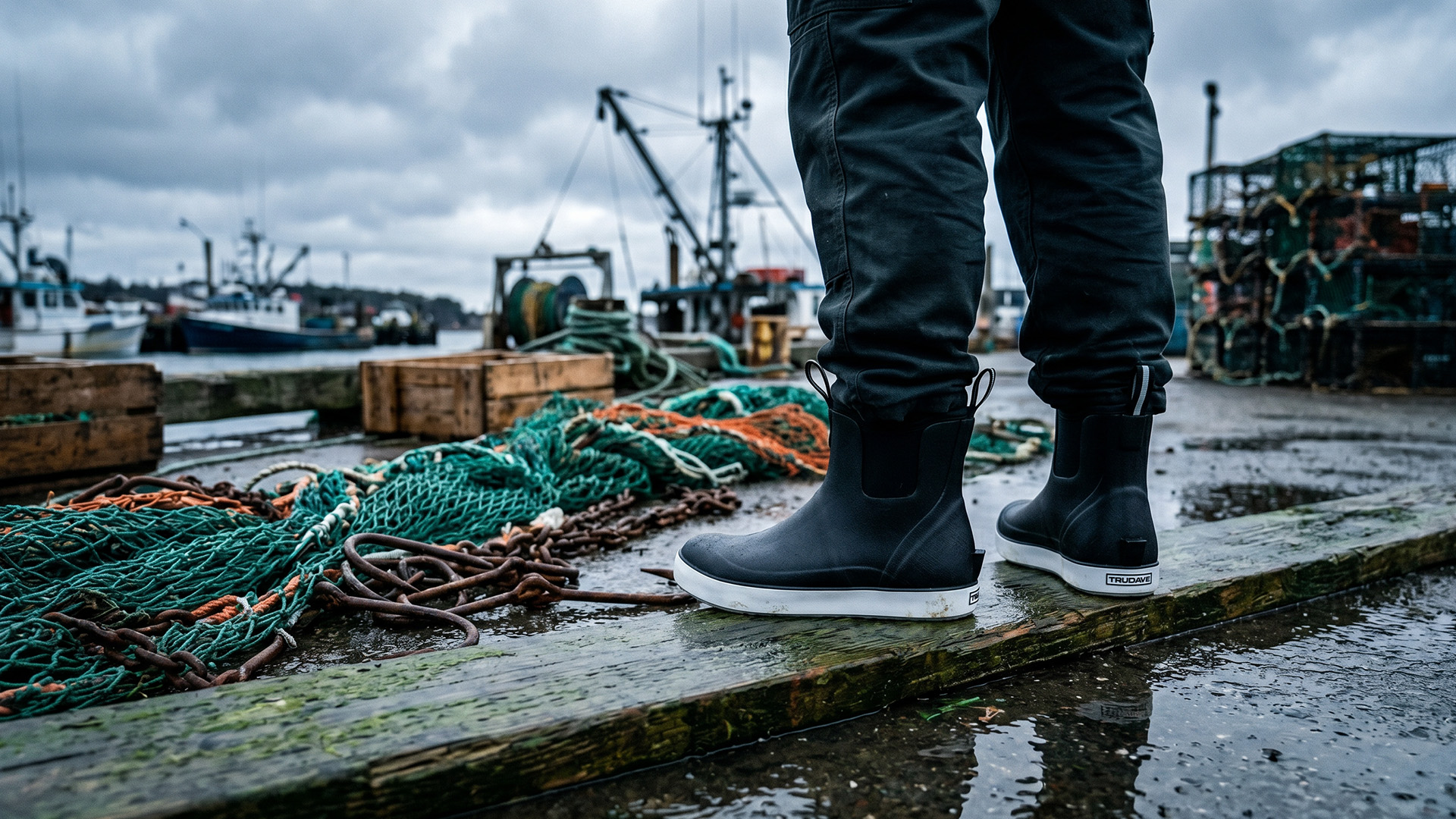
A commercial fishing boat—whether a lobster boat in Maine, a crabber in the Bering Sea, or a trawler in the Gulf—is a floating factory. The deck is steel or heavily coated aluminum, slick with diesel, hydraulic fluid, and fish processing waste. You’re working 14-hour shifts, often in freezing spray, hauling heavy gear, and surrounded by equipment that can crush a foot in an instant. Recreational boots don’t survive here.
The Challenge: You need a boot that’s chemically resistant, impact-resistant, and built to withstand conditions that would destroy a standard deck boot in a week. Traction on steel and metal grating is critical. All-day support is non-negotiable.
The Trudave Solution: AquaGuard
The AquaGuard is Trudave’s industrial-grade workhorse. Its rubber compound is thicker and denser than that of the WaveLock or DeckFlow, formulated to resist degradation from diesel, gasoline, hydraulic fluid, and the caustic cleaners used on commercial vessels. The deep, self-cleaning outsole lugs provide traction on steel decks, metal grating, and concrete docks—surfaces that siped outsoles alone can’t handle optimally.
The AquaGuard’s cushioned EVA midsole and ergonomic arch support are engineered to reduce the cumulative fatigue of standing on hard surfaces for an entire shift. There is no heavy, cold-conducting steel shank. The toe and heel are reinforced with extra rubber overlays to protect against dropped traps, anchor chains, and the general punishment of a working waterfront.
Who It’s For: The commercial fisherman or woman, the dock worker, the fish farm operator—anyone who makes a living on the water and needs a boot that’s as tough as the job. If your boots need to survive diesel, ice, and 16-hour days, the AquaGuard is the only choice in the Trudave lineup.
Pair With: Heavyweight merino wool work socks for maximum cushioning, moisture management, and warmth in cold conditions.
Part 6: The Kayak and Paddleboard — Lightweight, Compact, and Close to the Water
Kayak and stand-up paddleboard (SUP) fishing have exploded in popularity. These small, human-powered craft put you inches from the water. Your feet are often wet—either from paddle drip, waves lapping over the side, or wading launches from sandy beaches. The deck of a kayak is usually molded polyethylene, which can be slick when wet, and space is extremely limited.
The Challenge: You need a boot that’s lightweight, low-profile, and comfortable when sitting for hours with your legs extended. It must grip on wet plastic and muddy launch sites, dry quickly, and not take up too much space in your hatch or on your deck.
The Trudave Solution: DeckFlow
The DeckFlow is the natural choice for kayak and SUP anglers. Its low ankle height and lightweight construction won’t restrict your legs or add unnecessary bulk. The siped, non-marking outsole grips on wet polyethylene and sandy launches. Because it’s uninsulated, it won’t overheat you on warm days, and if it does get swamped, it dries relatively quickly.
For kayak anglers who fish in cold water—winter steelhead, early-spring bass—the WaveLock adds insulation that can be welcome when your feet are resting in a cold hull or splashed with near-freezing water. The trade-off is additional weight and bulk, so consider your priorities.
Who It’s For: The kayak or SUP angler who values lightweight, low-profile footwear that grips on wet plastic and mud. Warm-weather paddlers should choose the DeckFlow; cold-water paddlers may prefer the WaveLock.
Pair With: Neoprene socks or lightweight merino socks, depending on water temperature. Neoprene socks can provide additional insulation without adding significant bulk.
Part 7: The Decision Matrix — Matching Your Boat to Your Boot
| Your Vessel | Primary Conditions | Best Trudave Boot | Key Reason |
|---|---|---|---|
| Center Console | Wet fiberglass, variable weather, long days | WaveLock | Maximum siped traction, insulation, all-day comfort |
| Flats Skiff / Bay Boat | Hot weather, white decks, stealth required | DeckFlow | Lightweight, non-marking, breathable |
| Pontoon / Deck Boat | Mixed surfaces, casual use, family outings | DeckFlow (warm) or WaveLock (cool) | Versatility, comfort, non-marking outsoles |
| Offshore Sportfisher | Big water, heavy gear, slimy decks | WaveLock | Aggressive grip, toe protection, cushioned support |
| Commercial Vessel | Steel decks, chemicals, heavy impacts | AquaGuard | Industrial-grade rubber, chemical resistance, all-day support |
| Kayak / SUP | Wet plastic, tight spaces, close to water | DeckFlow | Lightweight, low profile, non-marking grip |
Part 8: The Two-Boat, Two-Boot System
Many serious anglers own more than one boat, or fish from a variety of vessels throughout the year. You might run a center console for offshore tuna in the fall and pole a skiff on the flats in the summer. You might captain a sportfisher on the weekends and fish from a kayak on weekday evenings. In these cases, a two-boot system makes sense: a DeckFlow for the warm, stealthy days on the flats or in the kayak, and a WaveLock for the cold, wet, demanding days on the center console or sportfisher. If commercial work is part of your life, the AquaGuard is the third leg of the stool.
At Trudave’s direct-to-consumer pricing, owning two purpose-built deck boots costs less than a single pair of premium boots from a legacy brand sold through traditional retail. You’re not paying for extra boots. You’re paying for the right tool for each boat, each season, and each body of water.
Conclusion: The Right Boot for the Right Deck
The water beneath your hull doesn’t care what’s on your feet. But the boat you’re standing on does. A flats skiff demands stealth and a light touch. A center console demands relentless grip and all-day stamina. A commercial vessel demands industrial toughness and chemical resistance. The DeckFlow, WaveLock, and AquaGuard are engineered to meet these distinct challenges with the same premium vulcanized natural rubber, sealed waterproof construction, and honest direct-to-consumer pricing that define Trudave Gear.
Match the boot to the boat. Match the sock to the season. And then focus on what matters—the fish, the water, and the horizon.
To explore the complete Trudave Gear deck boot lineup and find the right pair for your vessel, visit trudavegear.com.