
Introduction: The Footprint You Don’t See
Every time you step onto a boat, you’re thinking about the fish. The tide, the wind, the bait, the cast. What you’re probably not thinking about is the environmental footprint of the boots on your feet. But maybe you should be. The global footwear industry produces over 20 billion pairs of shoes each year, and a staggering number end up in landfills within 12 months. Deck boots are no exception. A cheap pair of PVC boots that cracks at the toe crease after a single season gets tossed, replaced, and tossed again. Over a lifetime of fishing, that’s a small mountain of plastic that will outlive the angler who wore it.
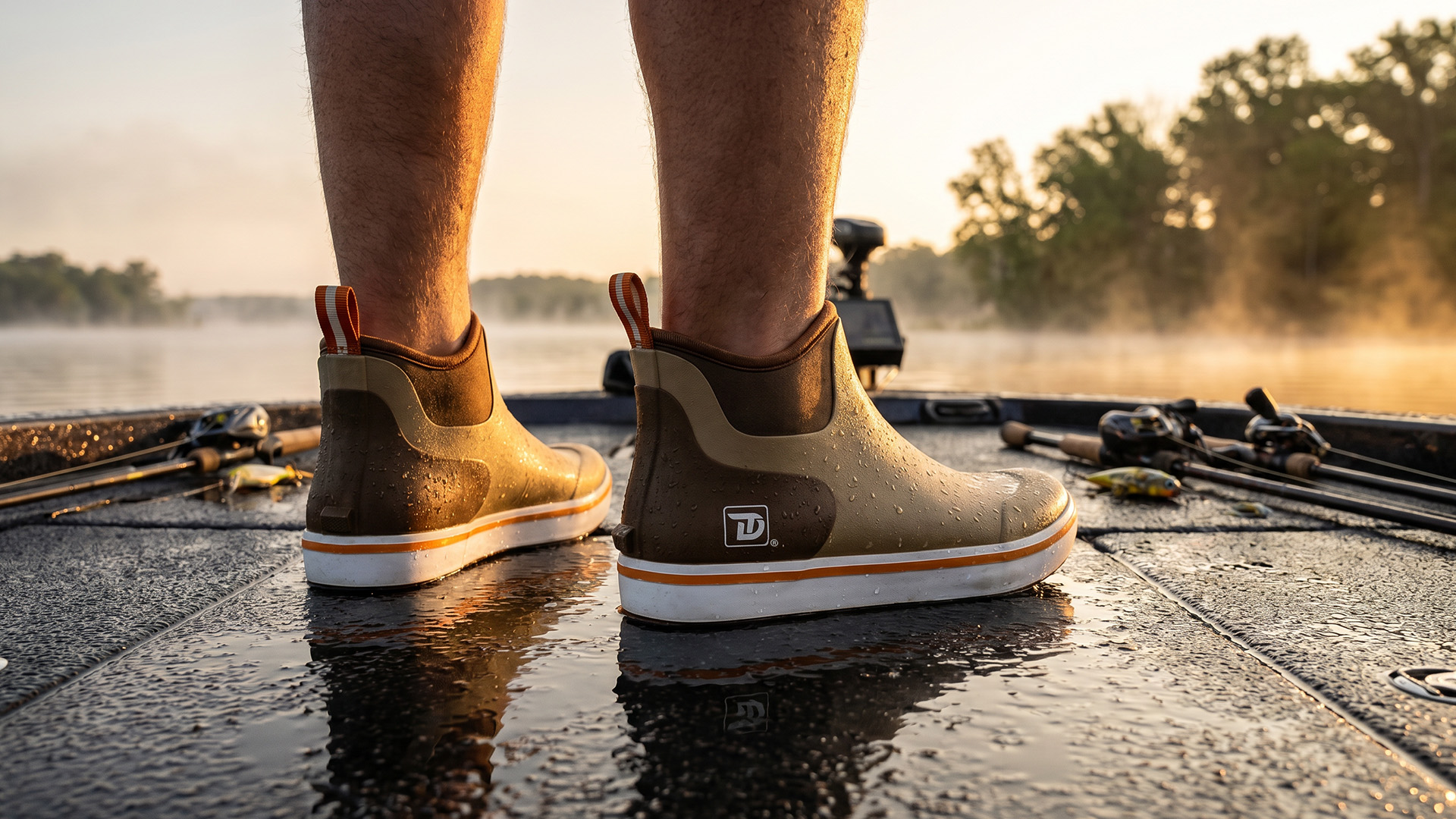
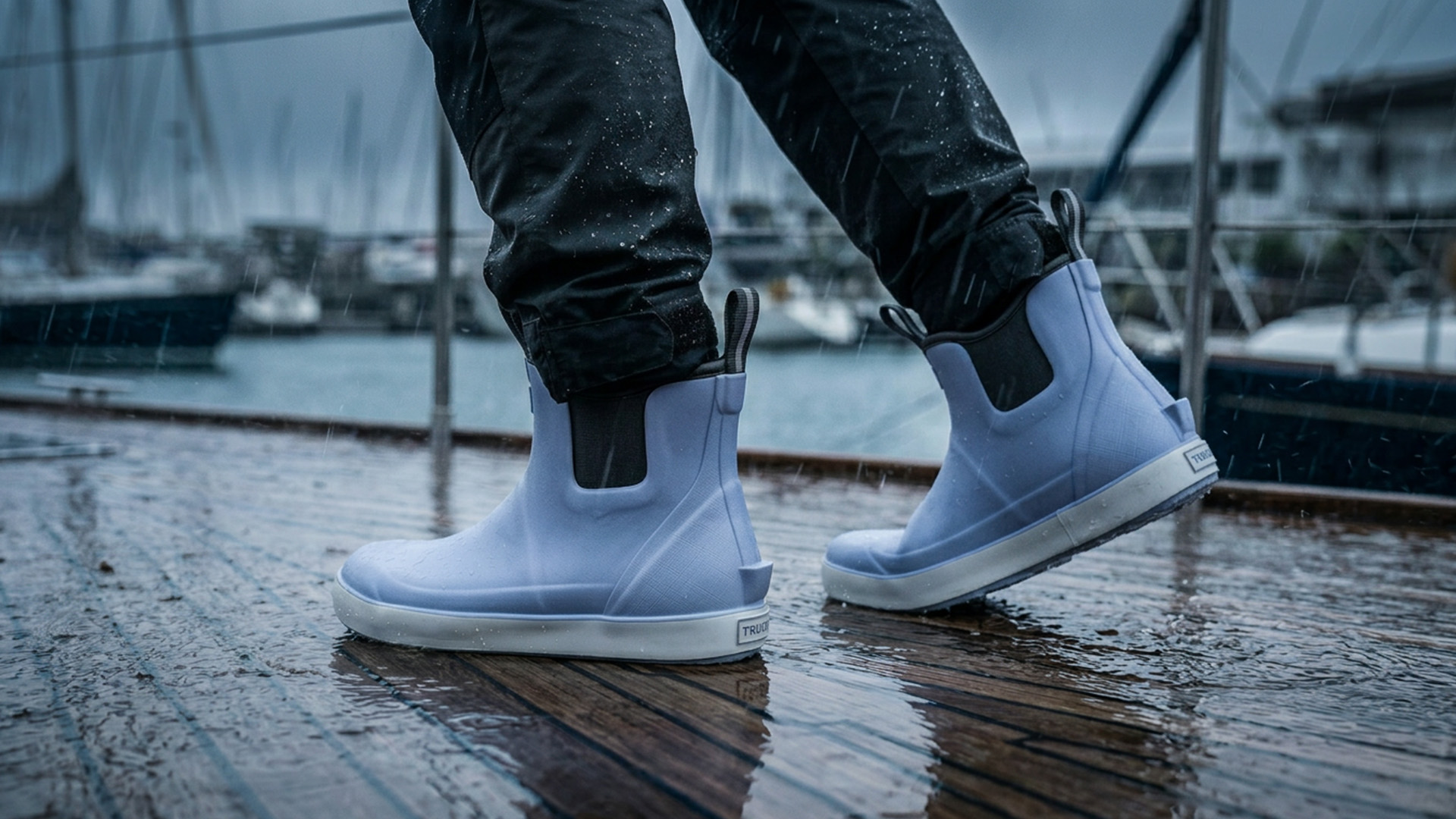
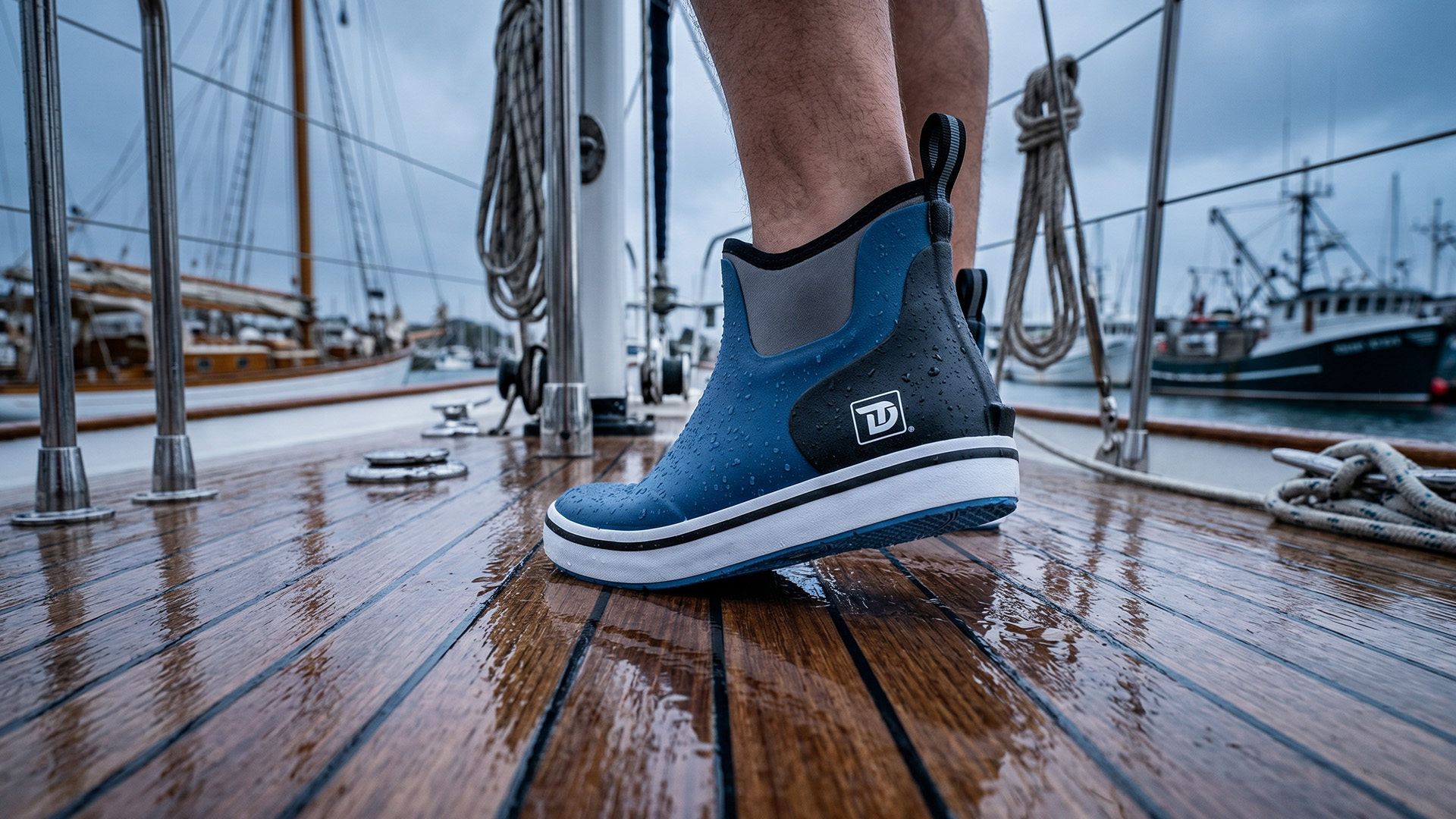
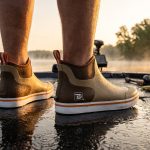
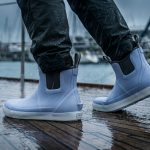
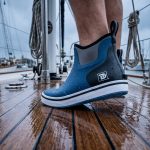
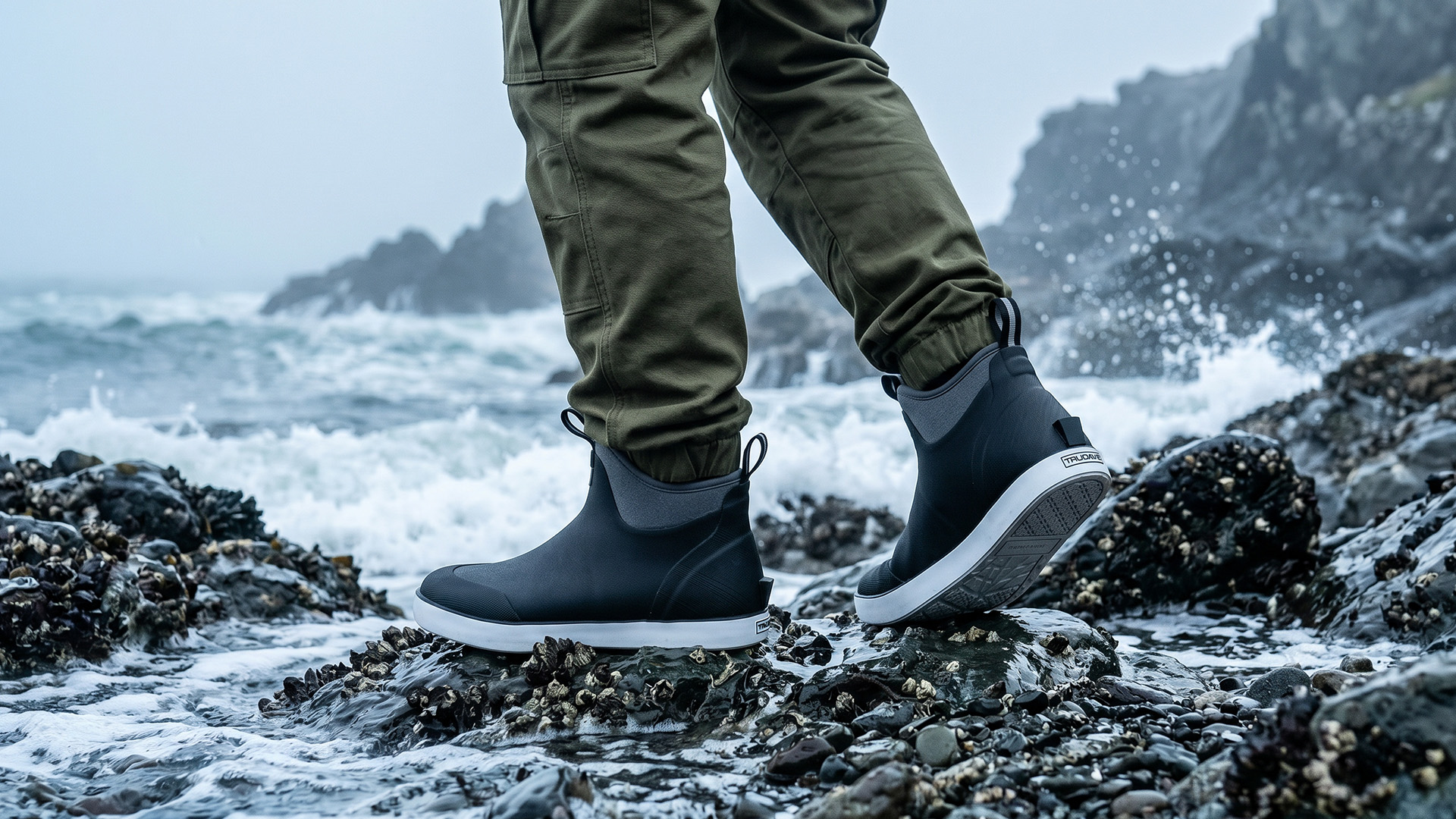
But there’s a better way, and it doesn’t require sacrificing performance. Trudave Gear builds its deck boots—the insulated WaveLock, the lightweight DeckFlow, and the heavy-duty AquaGuard—around materials and manufacturing choices that make them inherently more sustainable than the budget alternatives. Vulcanized natural rubber instead of petroleum-based PVC. Modular, replaceable insoles that extend the boot’s useful life. A direct-to-consumer model that cuts out the carbon-heavy retail supply chain. None of this requires you to compromise on grip, comfort, or waterproofing. It just requires you to choose a boot that’s built to last rather than one that’s built to be replaced.
Part 1: The Problem with PVC
To understand the environmental advantage of a Trudave deck boot, you first have to understand the problem with the cheap boots that dominate the market. Most budget rain and deck boots are made from polyvinyl chloride, or PVC—a petroleum-based plastic. It’s cheap to manufacture, which is why it’s everywhere. But PVC’s environmental cost is hidden in its lifecycle.
The production of PVC releases dioxins, some of the most potent carcinogens known, into the air and water. The material itself is notoriously difficult to recycle. Because it contains hazardous plasticizers like phthalates and heavy metal stabilizers, PVC cannot be safely incinerated and is rarely accepted by municipal recycling programs. A pair of PVC deck boots that cracks at the flex point after a season ends up in a landfill, where it will sit for centuries, slowly breaking down into microplastics that leach into groundwater and eventually find their way into the oceans we fish.
Trudave takes a fundamentally different approach. Every boot in their deck lineup is made from vulcanized natural rubber, derived from the latex of the Hevea brasiliensis tree. Natural rubber is a renewable resource. The trees can be tapped for latex for 25 years or more without being cut down, and responsibly managed rubber plantations can function as carbon sinks. The vulcanization process itself—discovered by Charles Goodyear in 1839—uses heat and sulfur to cross-link the rubber molecules into a stable, waterproof, elastic material that doesn’t need the toxic additives that PVC does. The result is a boot that’s stronger, more flexible, and dramatically less impactful on the planet.
Part 2: Built to Last—The Antidote to Throwaway Culture
The single most sustainable thing you can do with a pair of boots is not buy new ones. The longer a boot lasts, the fewer raw materials are extracted, the less energy is consumed in manufacturing, and the less waste is generated over your lifetime. Trudave deck boots are engineered for longevity in ways that cheap PVC boots simply are not.
The vulcanized natural rubber shell is, at the molecular level, a single continuous waterproof barrier. There are no glued seams to separate after a season of flexing in saltwater. There are no stitches to rot. The traction siping—the thousands of razor-thin slits that channel water away on a wet deck—is molded into the rubber, not glued on as a separate layer. This means the outsole can’t delaminate, a common failure point on cheaper boots.
The interior is built with equal attention to durability. The EVA (ethylene-vinyl acetate) midsole provides cushioning and arch support, but unlike the cheap foam footbeds in PVC boots, it doesn’t compress into a flat pancake within a few months. And when it eventually does wear down—as all cushioning does, eventually—it’s removable and replaceable. You can swap in a new Trudave ToughCush insole or an aftermarket orthotic, giving the boot a second life without sending the whole thing to a landfill. This modular design philosophy—separating the durable shell from the replaceable comfort layer—is one of the quietest but most powerful sustainability features in the Trudave lineup.
How much longer does a Trudave boot last? With proper care—a freshwater rinse after saltwater use, air-drying away from direct heat—a pair can deliver five or more seasons of hard fishing. A cheap PVC boot might last one. Over a decade, that’s two pairs of Trudaves versus ten pairs of PVC. Fewer boots manufactured, fewer shipped, fewer landfilled. That’s sustainability that doesn’t show up on a spec sheet but matters every time you step on the deck.
Part 3: Repair, Don’t Replace
Even the best boot can suffer a puncture or a cut—a sharp gaff hook, a stray piece of coral, an unlucky encounter with a dock cleat. When a PVC boot gets a hole, it’s trash. When a vulcanized natural rubber boot gets a hole, it’s an afternoon project.
Because Trudave boots are made from a single, homogeneous material, they are eminently repairable. A small puncture can be sealed with a flexible waterproof adhesive like Shoe Goo or Aquaseal. Clean the area with isopropyl alcohol, apply the adhesive, let it cure for 24 hours, and the boot is back in service—waterproof and structurally sound. This is not a temporary patch. A properly repaired vulcanized rubber boot can last for years beyond the initial damage.
This repairability is a direct consequence of the material choice. PVC is a rigid plastic; adhesives don’t bond well to it, and repairs tend to fail quickly. Natural rubber, with its inherent flexibility and surface chemistry, forms a strong bond with rubber-based adhesives. Trudave’s construction—no separate layers, no fabric linings that can rot, no complex internal structures—makes accessing and repairing damage straightforward. For an angler who’s invested in a quality pair of boots, a $7 tube of adhesive is all it takes to turn a potential replacement into a five-minute fix. That’s good for your wallet and good for the planet.
Part 4: The Direct-to-Consumer Advantage—Cutting Carbon, Not Corners
The environmental impact of a product isn’t just in its materials. It’s also in how it gets to you. Traditional retail involves a long, energy-intensive supply chain: factory to central warehouse, warehouse to regional distribution center, distribution center to retail store, and finally to the consumer’s vehicle and home. Every step burns fuel. Retail stores themselves consume electricity for lighting, heating, and cooling.
Trudave’s direct-to-consumer model shortens this chain dramatically. Products move from the factory to a fulfillment center and then directly to the customer’s doorstep. By eliminating the wholesale and retail middlemen, Trudave reduces the transportation emissions associated with each pair of boots. And because DTC brands are not competing for shelf space in crowded retail environments, they don’t produce the huge volumes of unsold inventory that plague traditional retail—shoes and boots that are manufactured, shipped, and never bought, eventually ending up in clearance bins or, too often, landfills.
This lean model also allows Trudave to invest more in quality materials and less in marketing and overhead. The money you spend goes into the boot, not the brand’s advertising budget. That’s a sustainability win that aligns perfectly with the values of anglers who care about the waters they fish.
Part 5: The End-of-Life Question
Eventually, even the best boot reaches the end of its useful life. When that happens, the material choice matters once again. Natural rubber, unlike PVC, is theoretically biodegradable over very long timescales—the same microorganisms that break down leaves and wood can eventually consume natural rubber. It’s not a fast process, and it requires the right conditions, but it’s fundamentally different from PVC, which persists essentially forever.
In practice, the best end-of-life solution for a worn-out pair of Trudave boots is not the trash can. Rubber boots can be ground up and used as a filler material in playgrounds, running tracks, and other industrial applications. Specialized recycling programs, like those offered by TerraCycle, accept rubber footwear and process it into new materials. Trudave encourages customers to explore these options rather than defaulting to the landfill.
The boot’s modular design—with removable insoles and a single-material rubber shell—makes recycling easier. Mixed-material products (rubber bonded to leather, fabric linings glued in place) are far more difficult to recycle because the components can’t be separated. Trudave’s simplicity is an advantage here, whether you’re repairing, repurposing, or eventually recycling the boot.
Part 6: What You Can Do
Sustainability is a partnership between the company that makes the product and the angler who uses it. Trudave provides the foundation: renewable natural rubber, durable vulcanized construction, repairability, and a DTC model that reduces carbon. You provide the care that turns a durable boot into a decade-long companion.
Rinse your boots with fresh water after every trip. Salt crystals left on rubber will work their way into microscopic pores and accelerate cracking. Use mild soap and a soft brush weekly. Remove the insoles and let them dry separately. Never dry your boots with direct heat—a radiator, a campfire, or a hot car dash—because heat breaks down the polymer cross-links in vulcanized rubber. Store them upright in a cool, dark place. When the insole compresses after a season or two, replace it with a ToughCush or an aftermarket orthotic rather than replacing the whole boot. When a small puncture happens, repair it. These small habits cost nothing and pay off in years of additional service from your boots—and years of boots not being manufactured, shipped, and landfilled because you bought a new pair.
The reward isn’t just environmental. A boot you’ve maintained for five seasons is a boot you trust. You know its fit, its flex, its grip on a wet deck. There’s a quiet confidence that comes from stepping onto a boat in boots you’ve repaired and cared for, knowing they’ll keep you dry and upright no matter what the day brings.
Conclusion: Fish Like You Mean It
Anglers are, by nature, conservationists. We spend our lives on the water, chasing fish, and we understand—maybe better than anyone—that healthy fisheries depend on healthy ecosystems. The choices we make on land, including the gear we buy, ripple outward into the bays, estuaries, and oceans we love.
Trudave Gear’s deck boots—WaveLock, DeckFlow, and AquaGuard—are built for the angler who wants to minimize that ripple. Renewable natural rubber instead of petroleum-based PVC. A modular, repairable design that extends the boot’s life for years. A direct-to-consumer model that cuts carbon and waste. And the performance you need—waterproofing, traction, comfort—without any of the compromises that cheap boots force on you.
The water doesn’t care what’s on your feet. But it does care what ends up in it. Choose a boot that’s built to last, take care of it, and keep it out of the landfill. That’s fishing like you mean it.
To explore the complete Trudave Gear deck boot lineup and make a choice that’s better for your feet and the water, visit trudavegear.com.