
Introduction: The Danger We Don’t Talk About
A fishing boat is one of the most hazardous workplaces in America. According to the U.S. Coast Guard, falls on deck are the leading cause of non-fatal injuries in commercial fishing, accounting for nearly a third of all reported incidents. The National Institute for Occupational Safety and Health (NIOSH) consistently ranks commercial fishing among the highest-risk occupations in the country. And those statistics only capture what happens on commercial vessels. They don’t include the thousands of recreational anglers who slip on a wet dock, drop a tackle box on their foot, or suffer the slow, cumulative damage of standing on hard fiberglass for eight hours without proper support.
Every one of these injuries has a common element: footwear that wasn’t engineered to prevent it. A sneaker on a wet deck guarantees a slip. A cheap rain boot with a thin sole guarantees bruised arches and aching knees. A soft-toed shoe on a boat with anchors, traps, and heavy gear guarantees a crushed toe. The right boots turn these preventable injuries into near-misses. The wrong boots turn them into Coast Guard reports.
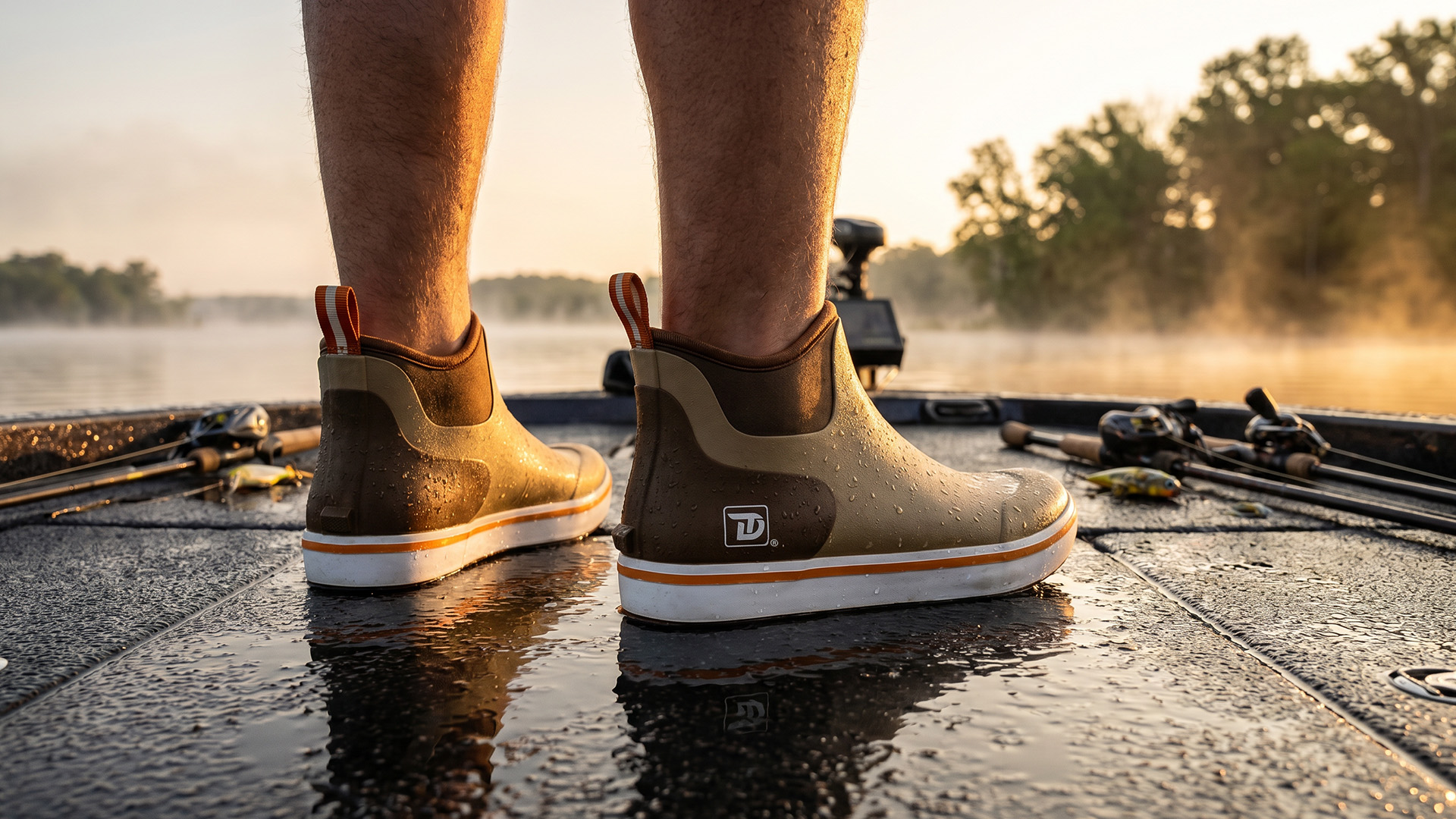
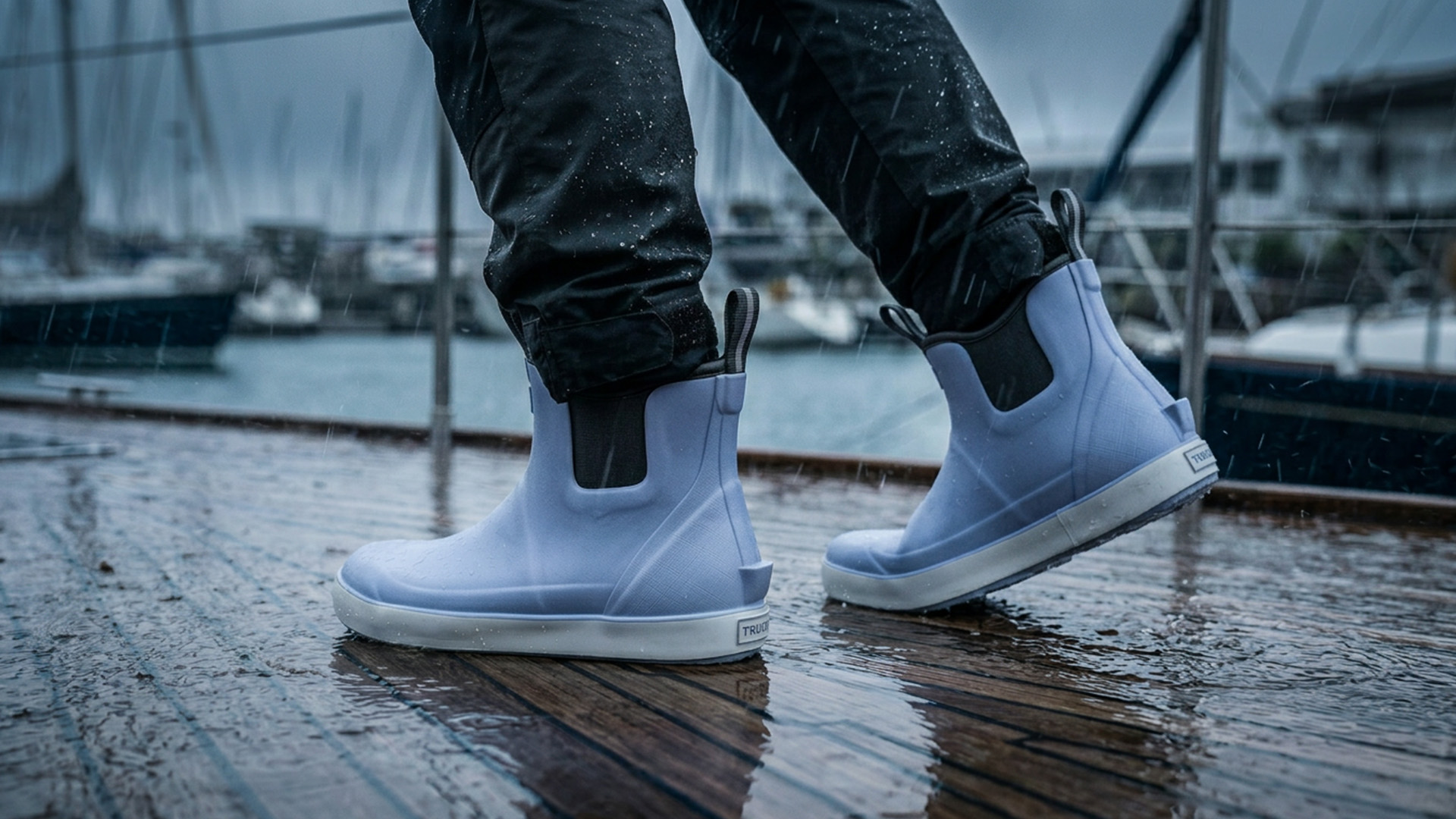
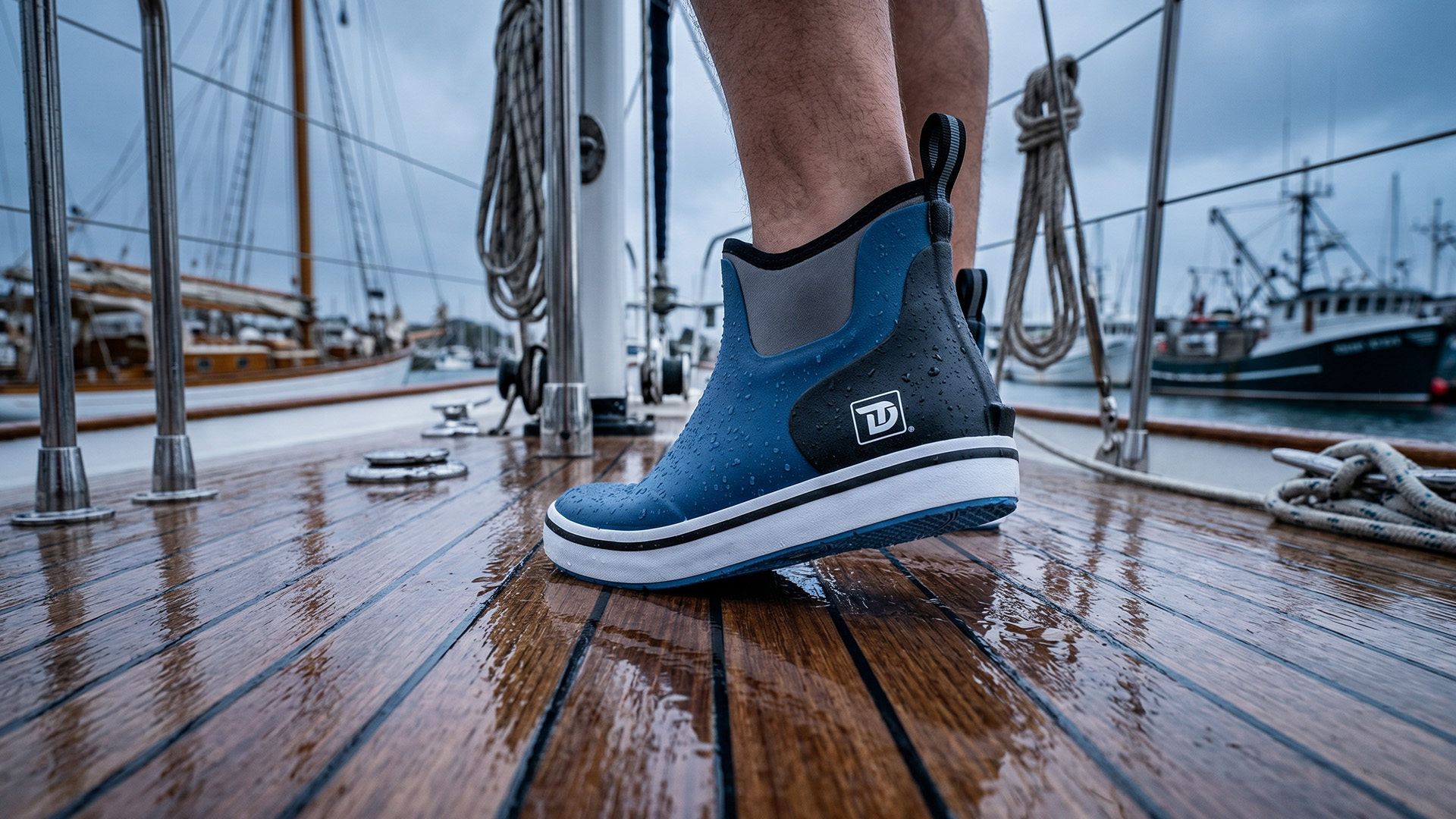
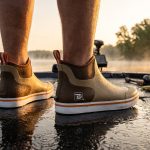
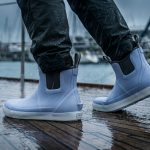
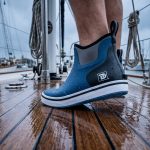
Trudave Gear’s deck boot lineup—the WaveLock, DeckFlow, and AquaGuard series—is built on a simple principle: safety isn’t a feature. It’s the foundation. The vulcanized rubber shells, the micro-channel siped outsoles, the EVA midsoles with no steel shanks, the reinforced toes and heels—these aren’t marketing bullet points. They’re the specific engineering responses to the three most common ways anglers get hurt on the water.
Part 1: The Slip — How Siping Keeps You Vertical
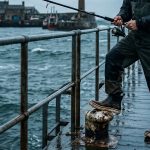
The single most common injury on a fishing boat is the fall caused by a slip on a wet deck. It’s not dramatic. There’s no rogue wave or catastrophic gear failure. It’s just a foot losing contact with the deck on a surface that looked fine. The result can be a twisted ankle, a broken wrist, a concussion, or worse—falling overboard into cold water.
The physics are simple. Water on a smooth fiberglass deck creates a thin film that separates your boot’s outsole from the deck surface. If your outsole can’t channel that water away, you hydroplane. The rubber never makes contact with the deck. You might as well be stepping onto ice.
This is why siping matters. Siping—the thousands of razor-thin slits cut into a rubber outsole—was invented in 1923 and perfected over the following century for wet, hard surfaces. When you put weight on a siped boot, those slits open up and channel water away from the contact patch, allowing the rubber to grip the microscopic texture of the deck itself. It’s the same principle that makes winter tires grip ice, scaled down to the sole of a boot.
Trudave’s WaveLock Series features the exclusive WaveLock Traction Outsole with micro-channel siping that disperses water instantly, keeping your footing solid even on wet fiberglass or metal surfaces. The DeckFlow Series features non-slip rubber outsoles designed for superior traction on slick boat decks, docks, and marinas. Both are engineered to do the same thing: evacuate water and create a dry contact patch where your foot meets the deck.
Deep, chunky lugs—the kind found on hiking boots and cheap rain boots—are actually a liability on a wet boat deck. They trap water under the sole and reduce the rubber-to-deck contact patch to almost nothing. The best fishing boots use non-marking, siped rubber outsoles that act like high-performance rain tires, constantly channeling water away to maintain grip.
Beyond the siping, a deck boot needs to allow the wearer to feel the boat. A rigid, heavy boot with a steel shank numbs the foot’s ability to sense the pitch and roll of the deck. Trudave eliminates the steel shank entirely, replacing it with an EVA midsole that provides cushioning without sacrificing proprioception—the body’s ability to sense its position and movement. When you can feel the deck, you can react to it instinctively, adjusting your balance before a slip becomes a fall.
Part 2: The Impact — Protecting the Most Vulnerable Part of Your Body
The second common injury on a fishing boat is impact trauma to the foot. A dropped anchor, a shifted crab pot, a tackle box that slips off the gunwale, a heavy cooler that lands wrong. The toes and the top of the foot are vulnerable in ways that hikers and office workers never have to think about. On a boat, heavy objects are constantly being moved, lifted, and set down on wet, pitching surfaces. Drops happen.
A standard deck boot or rain boot offers zero protection against these impacts. The soft rubber toe cap will collapse under weight, transferring the full force of the impact directly to the toes. The result is broken bones, crushed nails, and injuries that can end a season.
Trudave addresses this directly in the WaveLock Series, which features a waterproof toe shell built into the boot’s structure. This reinforced toe protection guards against impact from dropped tackle, tools, and gear. It’s not a steel-toe boot—it’s not certified for industrial safety standards—but it provides a layer of structural protection that a standard rubber boot entirely lacks.
The AquaGuard Series takes this protection further. Built from industrial-grade rubber that seals out water and mud, the AquaGuard is designed for the commercial operator and the serious outdoor worker whose feet face daily impact hazards. The thicker, more robust rubber compound provides impact resistance that lighter recreational boots can’t match. For the angler who works around crab pots, anchors, heavy outboards, or construction equipment on docks and piers, this added protection is not optional—it’s essential.
Even the reinforced heel armor on the WaveLock, designed to make the easy-off heel tab functional, serves a protective purpose. It shields the heel from the abrasion and impact of working on rough surfaces, extending the boot’s life and protecting one of the most injury-prone areas of the foot.
Part 3: The Slow Injury — Fatigue and the Damage You Don’t Feel
The third common injury doesn’t happen in a single moment. It accumulates over years. Standing on a hard fiberglass deck for hours—bracing against waves, casting, hauling lines—transmits impact through the soles of your feet and up through your skeleton. Without proper cushioning and support, this impact causes microfractures in the bones of the foot, inflammation of the plantar fascia, and chronic lower back pain. Anglers accept these aches as part of the sport. They shouldn’t.
This is where the midsole—the layer between the outsole and the insole—does its work. In a cheap boot, there is no midsole. Your foot is essentially standing on a thin layer of rubber over a hard surface. Every wave impact, every step, every hour of standing, transmits directly into your joints.
Trudave builds EVA (ethylene-vinyl acetate) midsoles into the WaveLock, DeckFlow, and AquaGuard series. EVA is the same shock-absorbing foam used in high-performance running shoes. It compresses slightly under impact, absorbing the energy that would otherwise travel through your skeleton. The WaveLock and DeckFlow cushioned insoles provide all-day comfort for long hours on hard surfaces. The AquaGuard includes ergonomic arch support that reduces fatigue during long shifts of standing and walking on hard surfaces.
But cushioning alone isn’t enough. Arch support is equally critical. The plantar fascia—the band of tissue that runs along the bottom of the foot—can become inflamed when the arch collapses repeatedly under load. An EVA midsole with built-in arch support prevents this collapse, maintaining the foot’s natural shock-absorbing structure throughout the day. The reduction in fatigue isn’t something you’ll notice in the first hour. By the eighth hour, it’s the difference between feeling tired and feeling broken.
Part 4: The Sock System — The Invisible Safety Layer
No boot—no matter how well-engineered—can keep you safe if your socks are wrong. The sock is the layer that directly contacts your skin. It determines whether moisture is wicked away or trapped, whether friction causes blisters or is absorbed between sock layers, and whether the boot’s insulation can do its job.
For safety on the water, the right sock does three things. First, it manages moisture. A wet foot inside a waterproof boot is a foot that will blister, lose sensation, and become vulnerable to impact injury. Merino wool socks wick moisture away from the skin and continue to insulate even when damp. Synthetic moisture-wicking socks are a lighter alternative for warm conditions. Cotton socks—which absorb water, collapse, and accelerate heat loss—should never be worn inside deck boots.
Second, the right sock prevents blisters. Blisters are not just a comfort issue. A blister on the heel or toe changes how you walk. You compensate, placing uneven pressure on other parts of your foot. Over hours of standing and moving on a pitching deck, that compensation creates instability that increases your risk of a fall. For long, active days, a two-layer sock system—a thin synthetic liner under a merino wool outer sock—is the most effective blister prevention available. Friction occurs between the sock layers rather than between the sock and the skin.
Third, the right sock fills the boot correctly. Trudave boots are designed with intentional volume for thick socks. A boot that’s too loose allows the foot to slide inside, creating friction and reducing stability. A boot that’s filled with the right sock weight secures the foot, improving balance and reducing the risk of ankle rolls on uneven surfaces. As one Trustpilot reviewer confirmed, “The size is slightly larger, but with socks they fit well and comfortably. A size smaller would be too tight.”
Part 5: The Boot-by-Injury Prevention Framework
Every Trudave deck boot is engineered to prevent the three most common on-board injuries, but each series emphasizes different aspects of the protection spectrum.
WaveLock Series: The All-Around Protector
- Slip prevention: Micro-channel siped outsole channels water for maximum wet-surface grip.
- Impact protection: Waterproof toe shell protects against dropped gear; reinforced heel armor shields against abrasion.
- Fatigue reduction: EVA midsole with cushioned insole; flexible neoprene side panels prevent chafing.
- Best for: The year-round angler who faces cold mornings, wet decks, and varied gear-hauling tasks.
DeckFlow Series: The Warm-Weather Specialist
- Slip prevention: Non-slip siped outsole engineered for wet wood and fiberglass.
- Fatigue reduction: Cushioned EVA insole with breathable lining; lightweight construction reduces leg fatigue.
- Best for: Warm-weather boating, dockside work, and anglers who prioritize lightweight agility and moisture management.
AquaGuard Series: The Heavy-Duty Fortress
- Slip prevention: Industrial-grade rubber outsole designed for varied surfaces including metal grating and wet concrete.
- Impact protection: Thicker, chemical-resistant industrial-grade rubber shell protects against heavy impacts and abrasion.
- Fatigue reduction: Ergonomic arch support and cushioned EVA midsole built for 12-hour shifts on hard surfaces.
- Best for: Commercial deckhands, dock workers, aquaculture staff, and anyone whose feet face daily impact and chemical hazards.
A Note on Steel Shanks
Many traditional work boots include a steel shank in the midsole. On a boat, this is a liability. A steel shank adds weight, eliminates deck feel, and transmits impact directly through the skeleton. It can also become a conduction point for cold, drawing heat out of the foot in cold conditions. Trudave’s zero-steel-shank EVA midsole architecture reduces weight, preserves proprioception, and provides insulation from the cold deck.
Part 6: The Care Protocol That Preserves Safety
A boot that’s worn down or poorly maintained loses its safety features. Worn siping doesn’t channel water effectively. Cracked rubber can fail under impact. A compressed midsole no longer absorbs shock.
Trudave’s official care guidance is consistent across all three series, and it directly impacts safety. Rinse the boots with clean water after each use, especially after saltwater exposure. Salt crystals left to dry on the rubber create microscopic stress fractures. Use mild soap and a soft brush for stubborn grime. Remove the insoles and let them dry separately. Air dry the boots upright at room temperature—never near a heater, radiator, or in direct sunlight, as heat breaks down the polymer cross-links that give vulcanized rubber its strength and flexibility.
Inspect boots regularly. If the siping channels have worn smooth, the slip prevention is compromised. If cracks are developing at the toe crease or anywhere on the rubber shell, the waterproof integrity and impact resistance are degrading. If the EVA midsole feels flat and unresponsive under thumb pressure, the shock absorption is gone and your joints are absorbing every impact directly. Boots in this condition should be retired, regardless of how the exterior looks.
A small puncture or cut can be repaired with a flexible waterproof adhesive, but only if addressed immediately. Clean the area with alcohol, apply the adhesive, and allow 24 hours to cure. This restores the waterproof barrier and prevents the tear from spreading. Ignoring a small cut turns a repairable boot into a disposable one—and creates a vulnerability that could fail at exactly the wrong moment.
Part 7: The Pre-Trip Safety Checklist
Before every trip, whether you’re running a charter or heading out for a casual day on the water, take thirty seconds to run through a quick safety check of your boots.
- Check the siping. Run your thumb across the outsole. The siping slits should feel sharp and distinct. If they’re worn smooth in any area, traction is compromised. Replace the boots.
- Flex the boot. Bend the toe upward. Look for any cracks developing at the toe crease, the most common failure point. Small cracks can be sealed. Deep or multiple cracks mean the structural integrity is failing.
- Inspect the seams. On a vulcanized boot, the bond between the rubber lower and any neoprene upper should be seamless. If you see separation or peeling, the waterproof barrier is compromised.
- Check the midsole. Press your thumb hard into the footbed. It should feel resilient and slightly springy. If it feels flat, hard, or permanently compressed, the shock absorption is gone.
- Check your socks. Are they cotton? Swap them for merino wool or synthetic moisture-wicking socks. Cotton inside a waterproof boot is a safety hazard in cold or wet conditions.
Thirty seconds. That’s all it takes to identify a boot that’s becoming a safety liability before it fails at a critical moment on the water.
Conclusion: The Foundation of Safety
When the U.S. Coast Guard investigates a fall on deck, they look at dozens of factors: sea state, vessel stability, crew training, fatigue. Rarely do they ask what boots the victim was wearing. But on a wet deck, in a rough sea, at the end of a long day, the difference between a safe recovery and an injury is often the two square inches of rubber between a foot and the deck.
Trudave Gear’s WaveLock, DeckFlow, and AquaGuard series are engineered for those two square inches. The siped outsoles that channel water away. The EVA midsoles that absorb impact and preserve balance. The reinforced toes that protect against dropped gear. The vulcanized rubber shells that won’t delaminate or crack after a season of hard use. These aren’t comfort features. They’re safety features. They’re the difference between a close call and a call to the Coast Guard.
A fishing boat is never perfectly safe. The sea is always stronger than the vessel. But every angler can control what’s on their feet. And the right boots—properly fitted, properly maintained, and properly checked before every trip—are the foundation on which every other safety decision rests.
To explore the complete Trudave Gear deck boot lineup and find the right safety platform for your time on the water, visit trudavegear.com.