
Introduction: The Other Side of the Marina
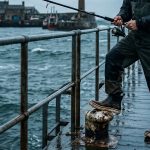
Not everyone who wears deck boots is a weekend warrior chasing stripers on a center console. There’s a whole world of anglers and water workers for whom a boat deck is an office, a factory floor, and sometimes a battlefield. The commercial deckhand hauling traps in the predawn Atlantic. The fish farm worker standing for hours in chemical-treated water. The dock master who spends a 12-hour shift on concrete and metal grating, in and out of a skiff, in every kind of weather the coast can throw at them.
For these people, a deck boot isn’t just about keeping feet dry. It’s about surviving a work environment that chews up lesser footwear in a single season. The threats are different. It’s not just seawater and fish slime—it’s diesel fuel, hydraulic fluid, pressure-washed debris, and the constant abrasion of metal decks. It’s the crushing weight of a dropped trap or a shifted cargo crate. It’s the fatigue that accumulates from standing on hard surfaces for 14 hours straight, day after day.
This is the world that Trudave Gear has quietly been engineering for, beyond the well-known WaveLock and DeckFlow series. For the industrial angler, the offshore worker, and the serious commercial operator, Trudave has built a line of boots—specifically the AquaGuard Series—that bridge the gap between a recreational fishing boot and a certified work boot. They’re not fashion statements. They’re tools. This guide is for the watermen and women who need those tools.
Part 1: Beyond the Basics — The Industrial Waterfront
The demands of a recreational fishing trip—a few hours of spray, some fish blood on the deck, a careful walk on a wet surface—are nothing compared to the relentless abuse of a commercial operation.
The primary enemy on an industrial deck isn’t just water. It’s a cocktail of contaminants. Diesel and gasoline can degrade standard rubber, causing it to soften and lose its structural integrity. Hydraulic fluid and lubricants create a film on the deck that is far slipperier than water alone. In aquaculture, cleaning chemicals and saltwater slurry can dry out and crack a boot’s shell in months. A standard boot’s outsole, designed for wet fiberglass, can become a liability on a metal grating or a concrete dock coated in algae and oil.
Then there’s the physical danger. A recreational angler might drop a pair of pliers. A commercial deckhand risks a crab pot or a heavy chain. Toe protection, shank support, and heel stabilization aren’t luxuries in this world. They’re as essential as a hard hat on a construction site. Trudave recognized this gap and engineered the AquaGuard not just as a rain boot, but as a piece of industrial safety equipment that happens to be fully waterproof.
Part 2: The AquaGuard Series — The Commercial Workhorse
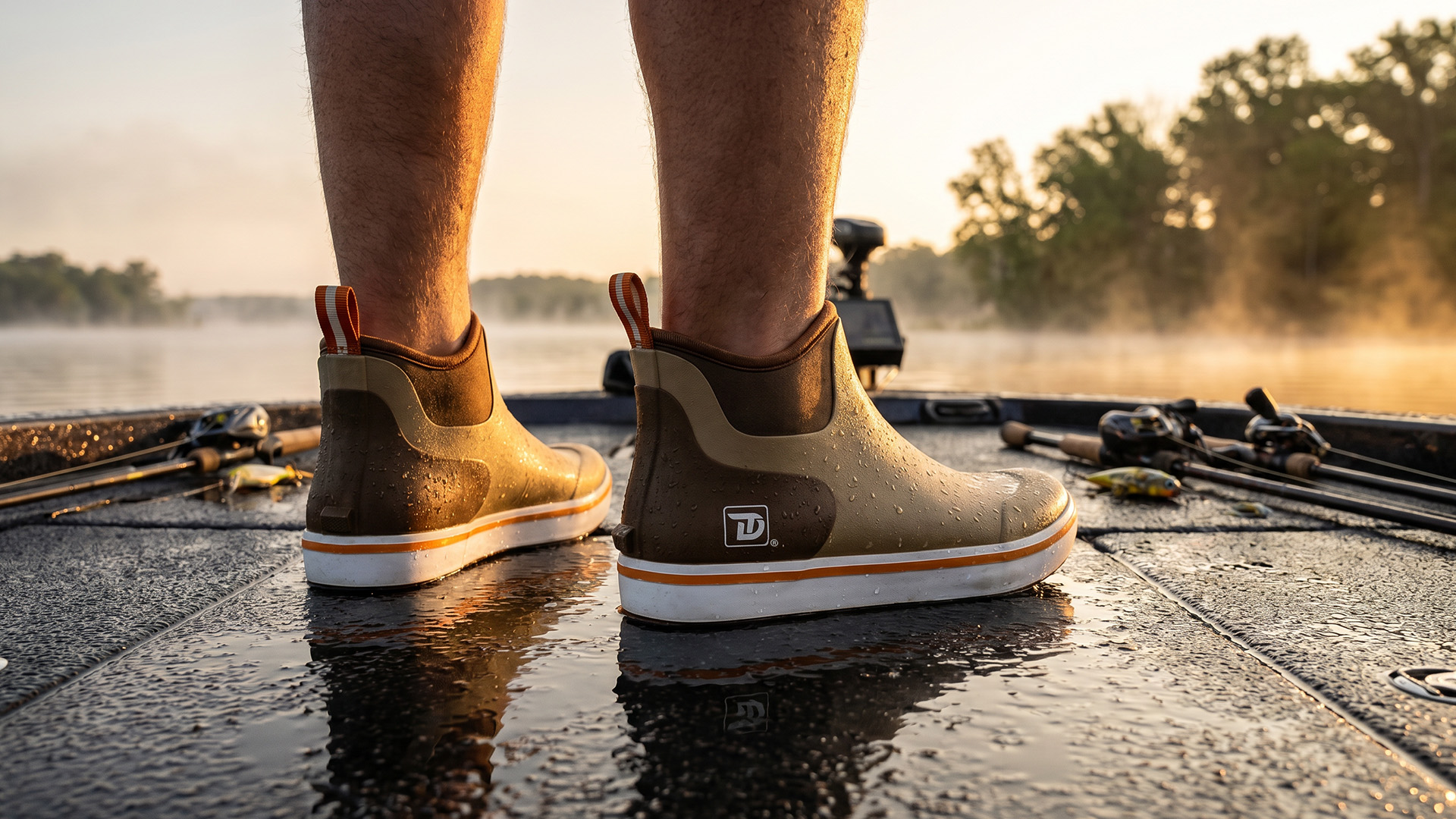
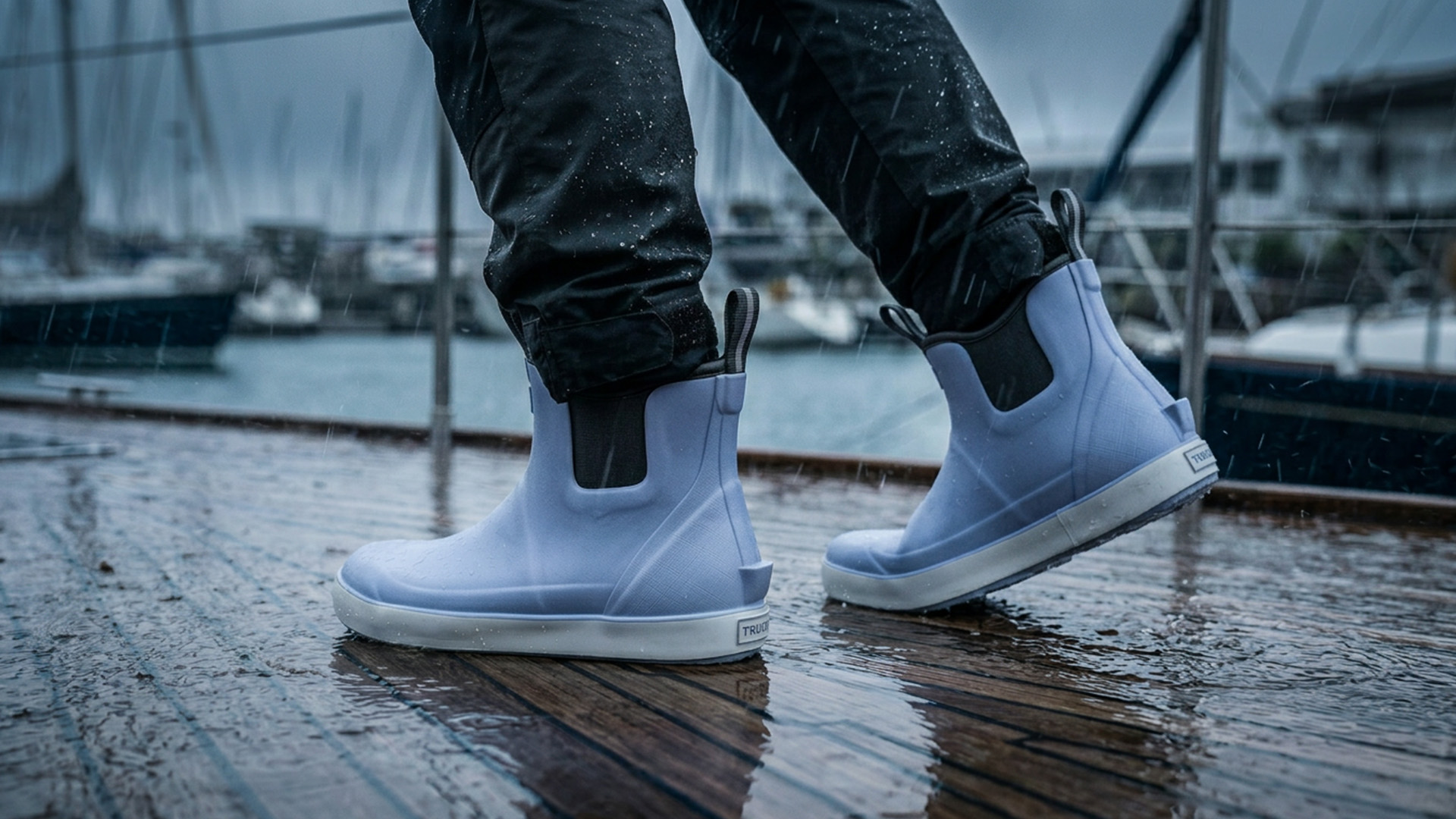
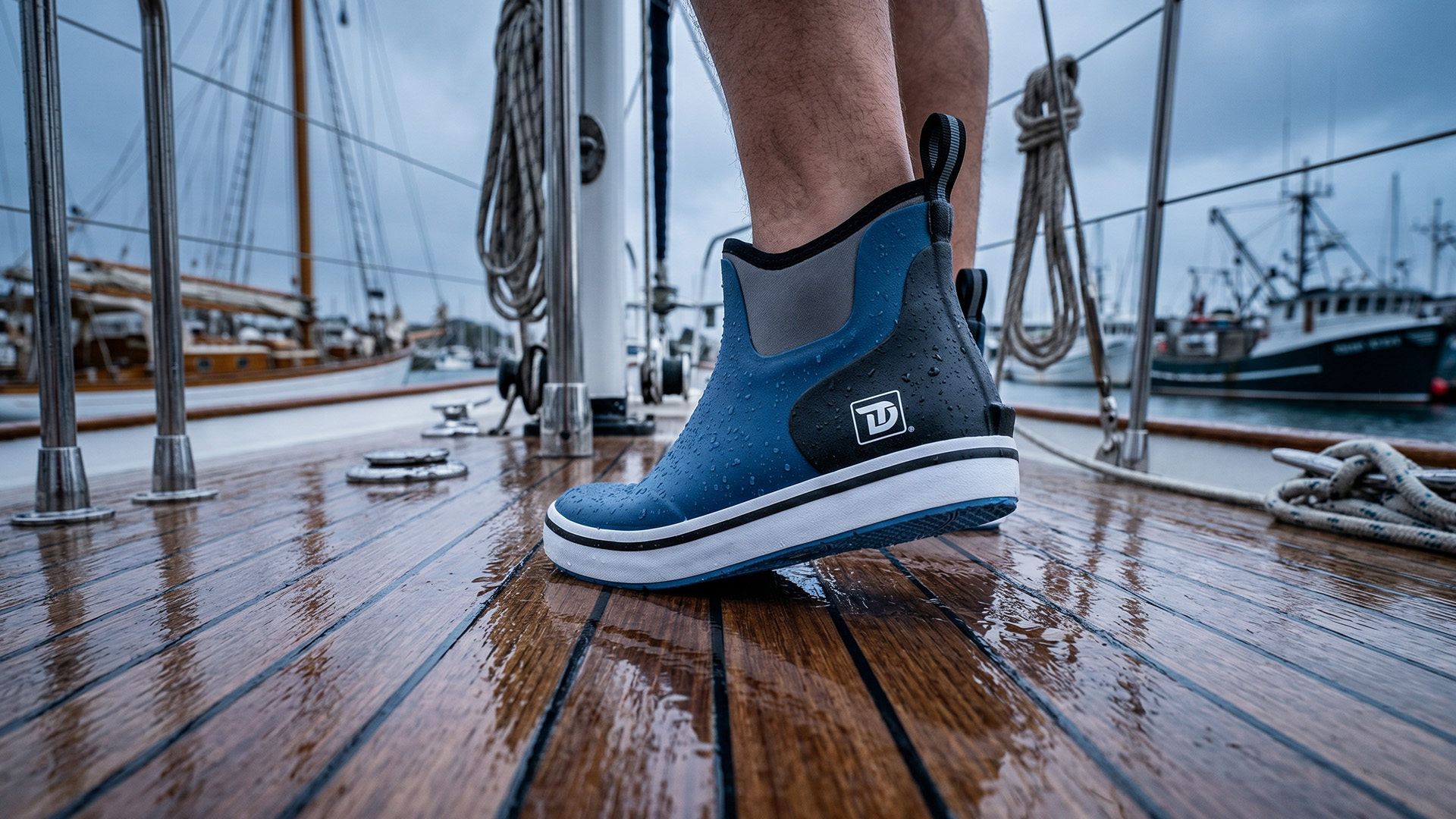
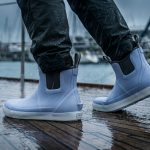
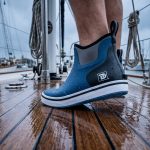
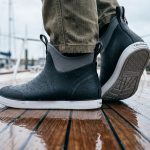
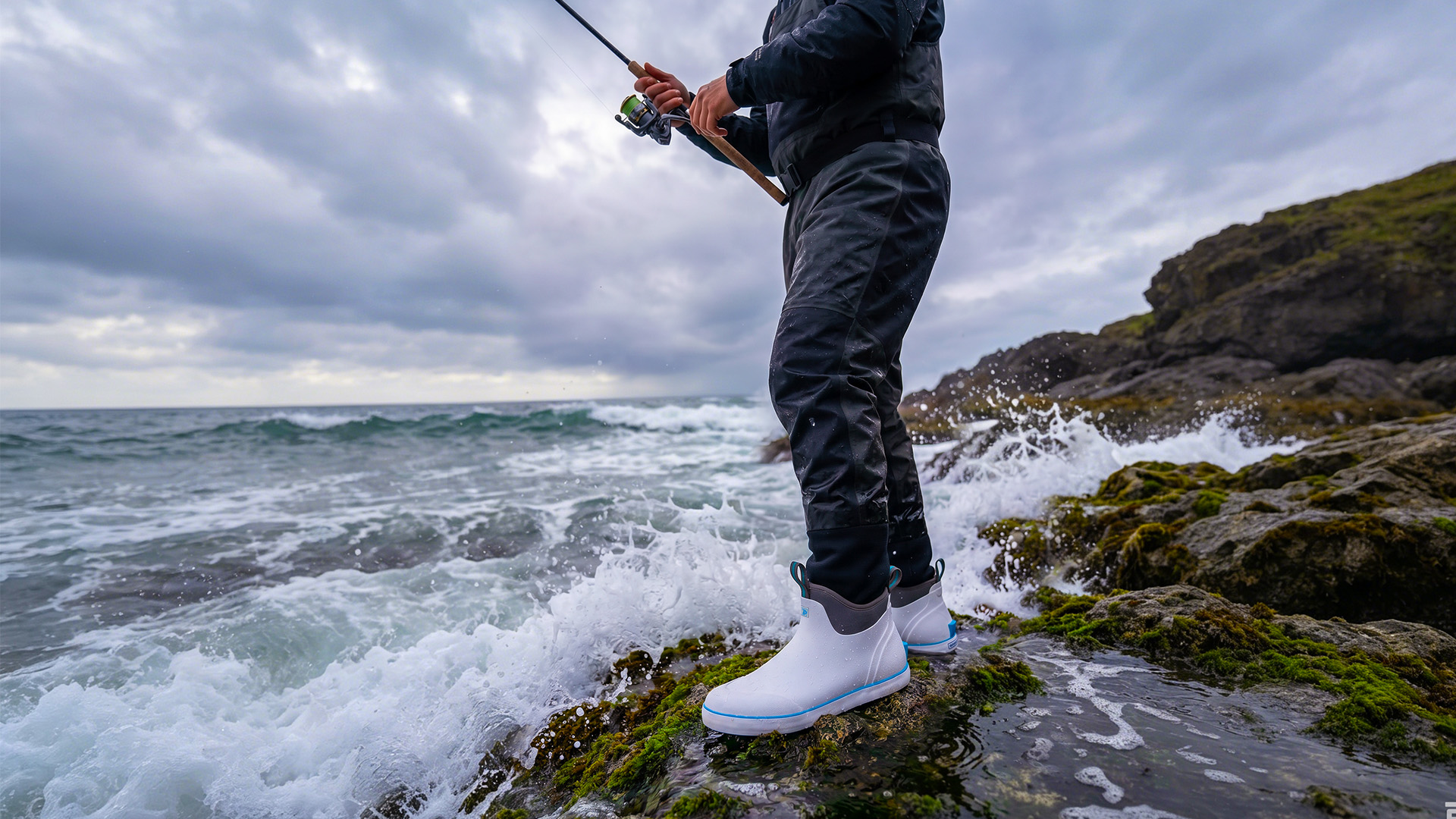
The Trudave AquaGuard Series men’s rain boots are 100% waterproof, crafted from industrial-grade rubber that seals out water and mud—perfect for outdoor work, farming, or rainy days. But that description only scratches the surface.
These mid-calf rain boots are designed with cushioned insoles, breathable lining, and ergonomic arch support, providing long-lasting comfort for work or daily outdoor use. The key differentiator here is the industrial-grade rubber compound. This isn’t the same formulation as a lightweight garden boot. Industrial-grade rubber is thicker, more resistant to chemical degradation, and specifically engineered to resist the flex-point cracking that happens when a boot is worn for 10-14 hours a day, every day. The molecular cross-linking is tighter, making the rubber inherently more resistant to oils, fuels, and the acidic byproducts of fish processing.
The non-slip outsole of the AquaGuard is designed for varied surfaces. On a boat deck, it channels water away to maintain grip. But on a metal dock plate or a wet concrete ramp, the tread pattern is also deep and open enough to bite in and self-clean, preventing the build-up of mud and muck. This versatility is critical for workers who transition from a boat to a dock to a processing shed multiple times a day. The reinforced toe and heel areas provide crucial structural protection, giving the boot a longer life in high-abrasion environments where kicking a metal cleat or dragging a heel across a deck would shred a softer boot.
The comfort infrastructure is just as vital. The industrial angler isn’t sitting down. The EVA cushioned midsole absorbs the punishing shock of standing on hard metal and concrete all day, reducing the lower back fatigue that can make a long shift unbearable. The breathable lining works to mitigate the sweat that inevitably builds up inside a 100% waterproof boot when you’re working hard.
Part 3: The Right Tool for the Toughest Jobs
The AquaGuard represents a specific philosophy: that a work boot built for the water needs to be as tough and protective as anything on a construction site, but with the waterproof integrity and chemical resistance of a marine boot. It’s the right tool for a specific set of users and tasks.
For the commercial fisherman or deckhand, the AquaGuard provides industrial-grade rubber protection against the diesel, hydraulic fluid, and bait residue that destroy standard boots. The reinforced structure offers a measure of protection against the dropped traps and heavy gear that are part of the daily routine.
For the aquaculture or fish farm worker, the AquaGuard’s waterproofing extends to protection from the chemically treated water common in hatcheries and farm pens. The chemical-resistant rubber compound holds up where standard materials would degrade.
For the dock and marina staff who are on their feet for 12-hour shifts, loading boats, repairing piers, and working on surfaces that alternate between wet wood, slick concrete, and metal grating, the AquaGuard’s non-slip outsole and fatigue-reducing EVA midsole are essential safety and comfort features.
Even beyond the waterfront, the AquaGuard is built for farmers and ranchers whose daily chores involve deep mud, manure, and standing water that would overwhelm a lighter boot. The same industrial-grade construction that stands up to a fishing boat’s deck protects against the corrosive environment of a farm.
Part 4: The System Around the Boot
For the industrial user, the boot is just the foundation. The system around it—the socks, the insoles, and the care routine—is what keeps a worker comfortable and safe through a long shift and across multiple seasons.
Moisture management is the first priority. When you’re working hard in a waterproof rubber boot, your feet will sweat. A heavy-duty merino wool sock is essential. It wicks moisture away from the skin, provides cushioning, and critically, continues to insulate even when damp. In colder conditions on deck, a thicker sock may be needed. The extra volume in the AquaGuard is designed to accommodate this. One Trudave reviewer noted: “The size is slightly larger, but with socks they fit well and comfortably. A size smaller would be too tight.” This is by design.
For those who need even more support—a common need when standing on hard surfaces for an entire shift—the AquaGuard’s removable insoles can be replaced with an even more supportive orthotic or Trudave’s own ToughCush Comfort Insoles. These are engineered with ergonomic cushioning and arch support to reduce fatigue. A high-density foam and shock-absorbing heel pad help reduce impact on the feet, knees, and lower back.
The care protocol for industrial boots is even more critical than for recreational ones. The contaminants they face are aggressive. Trudave’s guidance to rinse with clean water and mild soap, then air dry away from heat and direct sunlight, isn’t just a suggestion—it’s essential maintenance. Diesel, fish oils, and salt will eat away at the rubber if left to sit. A post-shift rinse extends the boot’s life, and conditioning the rubber with a silicone-free product every few months will prevent drying and cracking.
Part 5: The Value of Industrial-Grade Engineering
There’s a difference between a product that’s “good enough” for a weekend and one that’s engineered for a profession. The AquaGuard sits on the industrial side of that line.
It’s designed for a world where a boot failure isn’t just an inconvenience—it’s a safety issue and a financial liability. A boot that delaminates or cracks in the middle of a season represents a cost to replace it and the danger of an injury. The industrial-grade rubber and reinforced construction of the AquaGuard are built to minimize that risk.
The direct-to-consumer model that Trudave employs for all its boots, including the AquaGuard, makes this industrial-grade protection more accessible. By eliminating the traditional retail markups, a boot built with this level of material durability is available at a price point that makes sense for an independent waterman or a small operation to outfit a crew. It’s not a “cheap” boot, but it’s an honest value, delivering performance that rivals more expensive, legacy-brand work boots without the added “logo tax.”
Conclusion: The Boot That Works as Hard as You Do
The recreational fishing market has no shortage of deck boots. But for the men and women who make their living on the water—the ones who measure their days in tides and their seasons in tonnage—the options have historically been thin. Either you wore a recreational boot and replaced it constantly, or you wore a heavy, non-marine work boot that was never quite right for a wet environment.
Trudave’s AquaGuard Series occupies that middle ground. It’s a purpose-built tool for the industrial waterfront: 100% waterproof with industrial-grade rubber that resists the fuels, chemicals, and abrasion of commercial work, non-slip traction for varied surfaces, and an EVA midsole built for all-day standing. It’s not a boot for a lazy Sunday of trolling. It’s a boot for hauling gear, pressure-washing decks, and working a shift where your feet are as critical as your hands.
To explore the complete Trudave Gear industrial boot lineup and find the right tool for your work on the water, visit trudavegear.com.