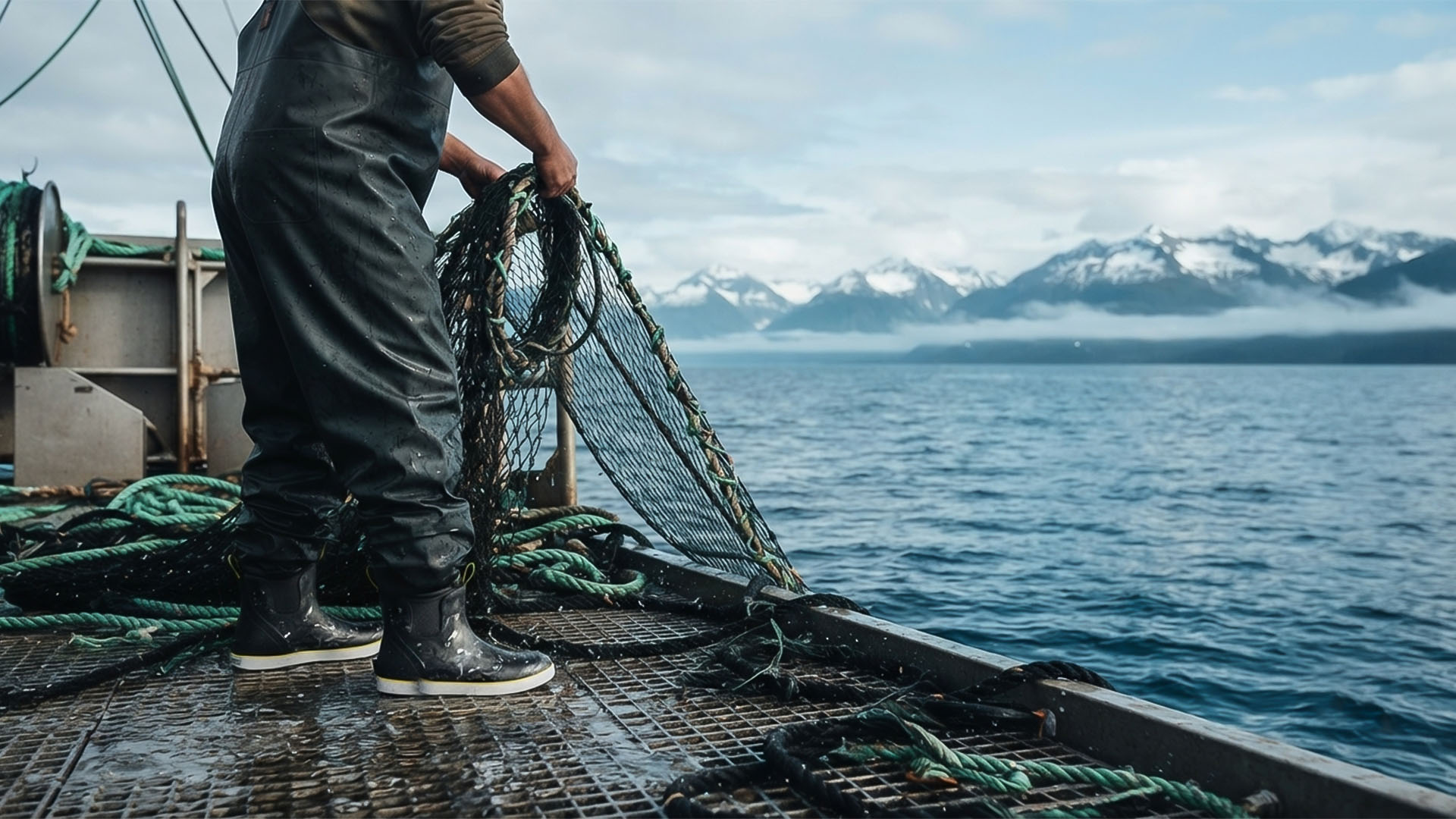


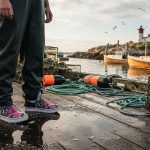
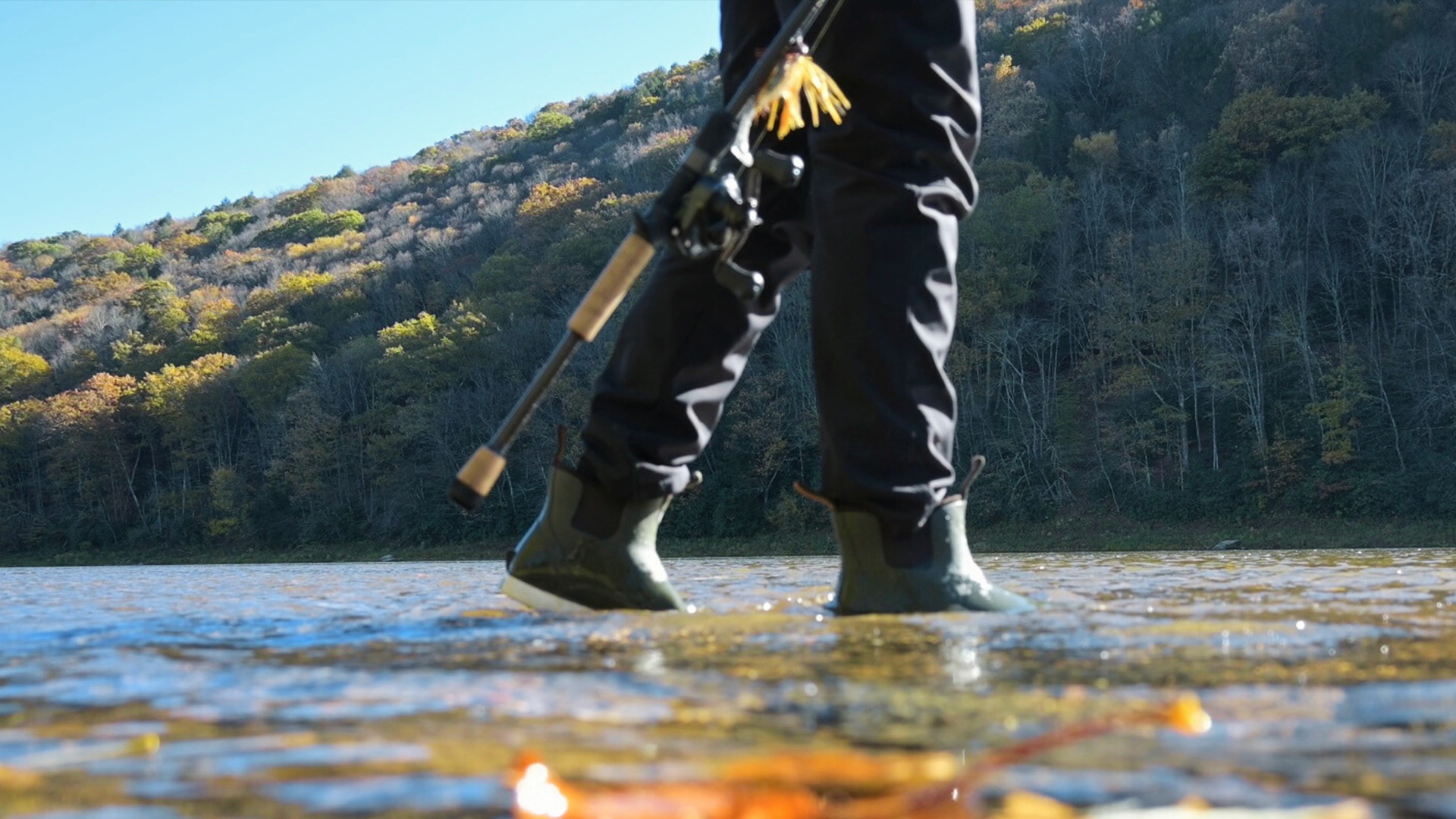
There’s a saying that’s been passed around the docks of Dutch Harbor and Kodiak for as long as anyone can remember: “There are two types of fishermen — those who wear deck boots, and those who wish they had.” Walk onto any commercial boat from the Bering Sea down to the Gulf, and you’ll see the same scene: crews standing ankle-deep in a slurry of saltwater, fish slime, crushed ice, and diesel exhaust. No one is wearing sneakers. No one is wearing hiking boots. They’re wearing vulcanized rubber boots, the uppers rolled down just below the knee or pulled up tight, outsoles gripping fiberglass that hasn’t been dry in weeks. Deck boots aren’t a fashion statement on these boats. They’re a survival tool.
Over the past four decades, the deck boot has evolved from a purely commercial necessity into a staple of recreational fishing culture. What started as a piece of gear designed to keep Bering Sea crabbers alive has become the default footwear for weekend bass anglers, inshore guides, dock workers, and coastal retirees who just want to walk the dog on a rainy morning without soaking their socks.
But here’s what’s changed: the brand that defined the category for 40 years — the boot that commercial fishermen swore by, the one you still see in every tackle shop from Seattle to Key West — has quietly become a different product. Manufacturing moved overseas. Prices jumped 60% in a single year. Forum threads and product reviews filled up with complaints about cracked rubber, delaminated soles, and boots that lasted one season instead of five. Meanwhile, a new generation of anglers started asking a question that would have been unthinkable a decade ago: “Is there anything as good for less money — or maybe even better?”
This is where Trudave Gear enters the conversation. Built by hunters, anglers, and outdoor workers who got tired of overpriced gear that couldn’t keep up, Trudave’s deck boot lineup takes direct aim at the recreational fishing market with two purpose-built series: the DeckFlow and the WaveLock. One is a lightweight, versatile ankle boot designed for dockside lounging, light-duty fishing, and everyday wet-weather wear. The other is an insulated, aggressively treaded workhorse built for cold mornings, slick decks, and the kind of serious angler who measures their day in tides, not hours.
This guide is the complete breakdown. We’ll look at what makes a deck boot actually work on wet fiberglass — not just in a marketing PDF but on a boat that’s been hosed down with fish blood and salt spray. We’ll walk through the materials, the tread patterns, the insulation, the fit, the care, and the specific fishing scenarios where each Trudave series belongs. And we’ll do it honestly — because the worst thing a gear guide can do is pretend every product is for every person.
Part 1: What a Deck Boot Actually Needs to Do — The Physics of Staying Upright on a Wet Boat
Before comparing specific models, let’s talk about the environment. A fishing boat deck is one of the most unforgiving surfaces in the outdoor world. It’s not just wet — it’s wet with a purpose, slicked by things that are far more treacherous than plain water. Fish slime creates a lubricating film that’s different from rain. Saltwater leaves behind a crystalline residue that turns smooth surfaces into skating rinks. Diesel and oil from the bilge add a chemical slickness that regular rubber soles can’t handle. And all of this is happening on a surface that’s moving — pitching, rolling, sometimes violently.
There’s a specific term in the commercial fishing world for what happens when a boot fails this environment: “going for a swim.” It’s not said with humor. When a deckhand loses footing on a rolling deck in 40-degree water, the consequences are measured in minutes. Recreational anglers rarely face those stakes, but the physics are identical. A slip on a wet boat ramp can mean a broken wrist. A slide on a dock can dump thousands of dollars of gear into the water. And even the minor slips — the ones you catch before falling — accumulate over a day, creating fatigue in your ankles, knees, and lower back that you don’t notice until you’re driving home and everything hurts.
Ask any fisherman what matters most in a pair of boots, and you’ll probably hear the same three things: keep my feet dry, keep me upright, and don’t wreck my feet by noon. That’s because fishing puts your footwear through a different kind of punishment. You’re stepping on wet fiberglass, slimy docks, muddy banks, slick ramps, and boat decks that never really dry out. Regular shoes are out of their league in that kind of environment.
A good fishing boot isn’t just waterproof. It needs reliable grip, enough support for long hours on your feet, and the kind of comfort that still feels good after a full day of casting, hauling gear, netting fish, and washing down the deck. And if you’re fishing in cold water or cold weather, it needs to do all of that while keeping your feet warm — because cold feet don’t just feel bad, they actively degrade your balance and reaction time.
The Traction Problem Nobody Talks About
Here’s something most boot reviews skip over: tread pattern matters enormously, but not in the way most people think. Deep, aggressive lugs that work beautifully in mud can be actively worse on a wet fiberglass deck. Why? Because on a hard, smooth surface that’s been wetted, traction comes from surface area contact — the more rubber touching the deck, the more friction. A deep-lug mud boot on a boat deck is essentially balancing on the tips of its tread blocks, dramatically reducing the contact patch.
This is why purpose-built deck boots use siping — thousands of tiny slits cut into the rubber that act like miniature squeegees, channeling water away from the contact surface and creating multiple biting edges. Siping increases surface area and water displacement simultaneously. It’s the same technology that makes winter tires grip ice, scaled down to the sole of a boot.
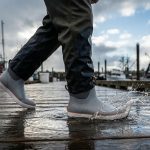
Deck boots are designed to keep your feet dry from spray, rain, and deck wash while providing maximum grip on wet boat decks. For many fishermen, deck boots hit the sweet spot. They’re lighter than tall rubber boots, easier to move in, and made specifically for wet, slippery surfaces. That’s why they’ve become a favorite for inshore fishing, coastal trips, dock work, marina use, and everyday wet-weather wear.
The Waterproofing Challenge
Waterproofing sounds simple — just make the boot out of rubber, right? — but the reality is more complicated. The most common failure point for deck boots isn’t the rubber shell; it’s the seams. Cheaper boots use glued seams that start separating after a season of flexing. Mid-range boots might use stitched seams with a waterproof membrane, but stitches create holes, and holes eventually leak. Premium deck boots use vulcanized construction, where the rubber components are chemically bonded at a molecular level, creating a permanent waterproof seal that can’t delaminate.
Trudave builds both the DeckFlow and WaveLock series on this principle. The boots are crafted with 100% waterproof protection, made from premium natural rubber with sealed construction to keep your feet dry while fishing, boating, or working in wet conditions. The vulcanized natural rubber compound also resists the cracking and degradation that plague cheaper synthetic rubber blends, especially when exposed to saltwater, sunlight, and temperature swings.
The Comfort Factor Nobody Budgets For
A fishing day sounds relaxing until you’ve spent eight hours standing, bracing, and moving on hard, wet surfaces. Good boots should feel supportive without being clunky, and cushioned without feeling soft and unstable.
Here’s a detail most anglers learn the hard way: the deck of a boat is harder than almost any surface you walk on land. It doesn’t flex. It doesn’t absorb impact. Every step, every brace against a wave, every hour of standing transfers directly into your joints. This is why the insole and midsole of a deck boot matter enormously — they’re the only suspension system between your skeleton and a surface that offers zero forgiveness. Trudave equips both their deck boot series with cushioned insoles and supportive midsoles designed specifically for long hours on hard, wet surfaces, as confirmed in their product specifications.
Part 2: The DeckFlow Series — Laid-Back Coastal Living Meets Purpose-Built Performance
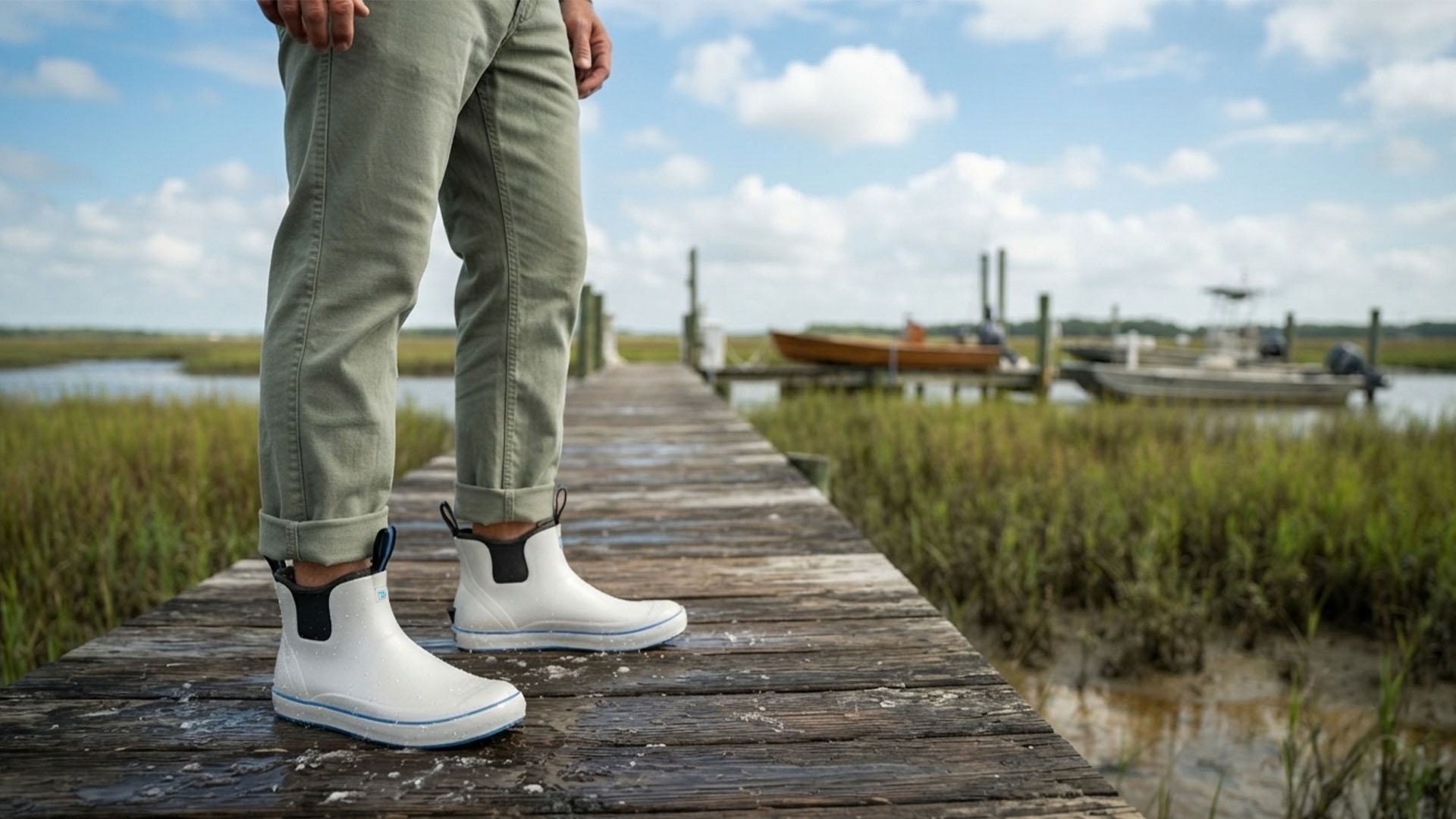
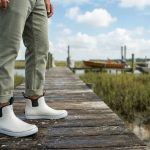
The DeckFlow is Trudave’s answer to a question a lot of anglers don’t think to ask: “What if my deck boots didn’t look like deck boots?” Designed primarily for women but built with a unisex appeal, the DeckFlow combines a fully waterproof shell with a soft, breathable lining, keeping your feet dry and comfortable while relaxing by the water.
The Philosophy: From Dockside to Daily Wear
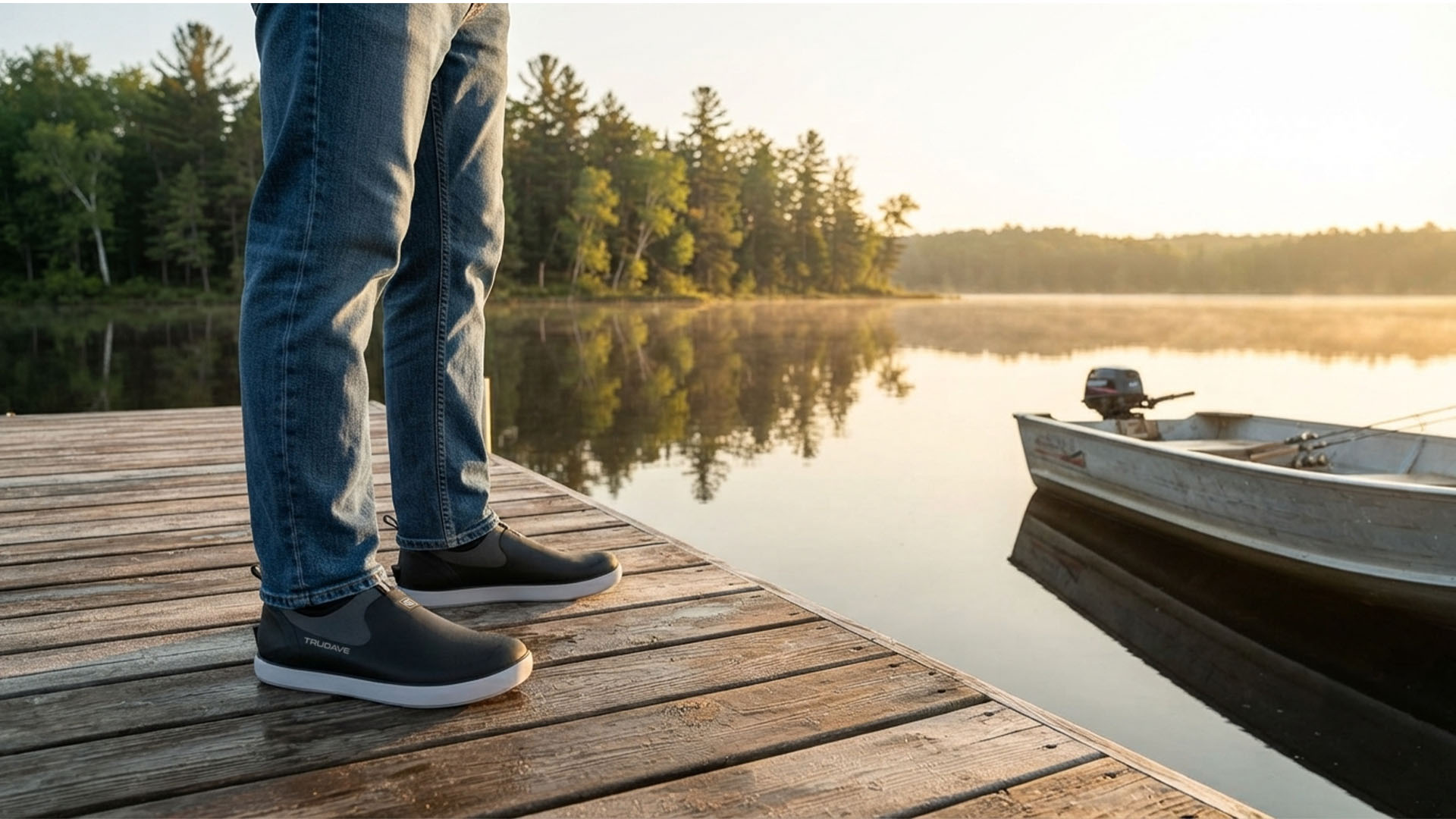
Lightweight and versatile, the DeckFlow’s clean low-cut design transitions effortlessly from dockside lounging to daily errands — perfect for those who love laid-back coastal living. This is a boot that understands something important: not every fishing trip is a grueling 12-hour offshore marathon. Sometimes you’re just casting off a dock at sunset, or taking the boat out for a couple of hours on a Sunday morning, or walking the marina with a coffee in hand while the fog burns off. The DeckFlow is built for those moments — and for everything that happens between them.
The Grip: Siped for Slick Decks
The DeckFlow’s non-marking siped outsole channels water away and grips securely on wet wood and fiberglass decks. “Siped” is the key word here — those thousands of tiny channels cut into the rubber sole act as water-evacuation pathways, dramatically increasing the contact patch between the boot and the deck. This is especially important on fiberglass boats, where standing water can create a near-frictionless surface. The non-marking rubber also means you won’t leave black streaks on a white deck — a small detail that any boat owner who’s ever scrubbed sole marks off their gelcoat will appreciate deeply.
Durability Where It Counts
Reinforced toe and heel panels extend durability, while the sleek, minimalist design offers a balance of practicality and everyday style. The toe reinforcement is particularly important for anglers who spend time on their knees — unhooking fish, rigging lines, stowing gear in low compartments — because the toe cap is almost always the first part of a boot to wear through.
The Comfort Equation
These ankle-length waterproof boots feature cushioned insoles and breathable lining, offering all-day comfort for women who spend hours on the dock, at work, or on fishing trips. The “breathable lining” component deserves special attention: one of the biggest complaints about rubber boots is that they trap sweat, leaving your feet feeling clammy by midday even if they’re technically dry. The DeckFlow’s breathable lining helps manage internal moisture, which extends comfortable wear time significantly.
Who It’s For — and Who It Isn’t
The DeckFlow is ideal for recreational anglers, dock workers, and anyone whose “wet” means spray, rain, and puddles rather than ankle-deep standing water. It’s a boot you can wear from the boat to the tackle shop to a casual dockside lunch without feeling like you’re still in work gear. These waterproof deck boots are stylish enough for daily wear and practical for gardening, light outdoor work, or rainy-day errands.
It’s not the right boot for cold-weather fishing, heavy offshore work, or situations where you need insulation. For those conditions, you step up to the WaveLock.
Part 3: The WaveLock Series — Born from Salt and Storm
If the DeckFlow is designed for coastal relaxation, the WaveLock is built for the kind of fishing where conditions don’t care about your comfort. Designed for anglers, hunters, and outdoor workers, the WaveLock Deck Boots deliver reliable traction and waterproof protection when conditions get wet and unpredictable.
The Origin Story: “Born from Salt and Storm”
Trudave describes the WaveLock as being “born from salt and storm” — and that’s not just marketing language. The boot was developed with input from marine testing partners who needed footwear that could handle harsh marine environments, season after season. As one of Trudave’s marine testing partners put it: “We engineered the deep-tread outsole to grip wet surfaces, while the reinforced rubber shell takes on harsh marine environments. This is footwear that performs when you need it most, season after season.”
The Traction Technology: WaveLock Micro-Channel Siping
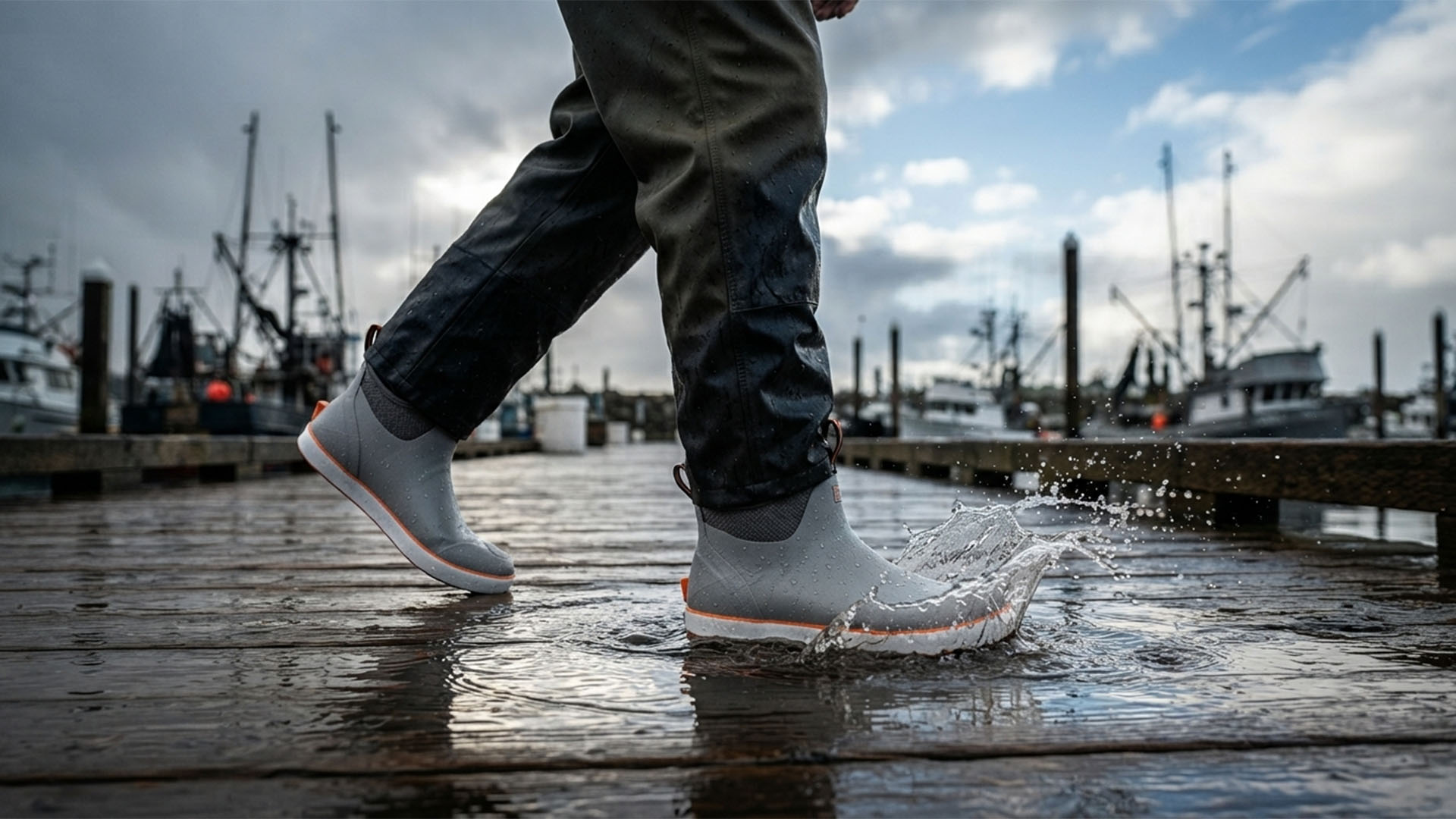
The WaveLock’s signature feature is Trudave’s exclusive WaveLock Traction Outsole with micro-channel siping that disperses water instantly, keeping your footing solid even on wet fiberglass or metal surfaces. This is a step beyond standard siping. Where regular siped outsoles rely on passive water displacement, the WaveLock’s micro-channel system actively channels water outward from the sole, creating a dry contact zone directly underfoot. On a boat deck that’s been hosed down or a dock ramp slicked with morning dew, this active water dispersion provides noticeably better grip than standard siped soles.
The non-slip rubber outsole provides excellent traction on slick decks, docks, and other wet surfaces, ensuring safety during fishing or marine work. This traction is achieved through the combination of deep tread and siping technology that grips wet surfaces securely.
Insulation: Warmth for Cold Mornings on the Water
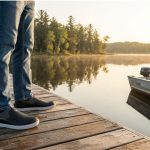
The WaveLock’s insulated design features a soft lining and thermal insulation that retain heat while allowing breathability — perfect for cold mornings on the boat or dock. This is a critical differentiator from the DeckFlow. Cold feet aren’t just uncomfortable; they reduce blood flow to your extremities, which degrades balance, reaction time, and fine motor control — all things you need when handling hooks, knots, and rods.
The WaveLock’s insulation is designed to be effective without being overbuilt. It’s not a sub-zero winter boot — it’s a fishing boot that keeps your feet warm during those 40-degree mornings when the water temperature is still in the 50s and the wind is cutting across the deck. For inshore anglers who fish year-round, this level of insulation is the difference between calling it a day at 10 AM and staying out until the bite turns on at noon.
Easy-On Design: When Every Second Counts
Their slip-on design with pull tabs lets you gear up fast and stay focused on the catch, not your boots. The flexible side panels ensure a snug fit without pressure points, and the reinforced heel armor adds support while the easy-off heel tab allows quick removal. These “lazy design” features — the pull tabs, the flexible side panels, the kick-off heel — sound like minor conveniences on a product page. In practice, they’re the difference between getting on the water five minutes faster and spending that time wrestling with stiff rubber in a dark parking lot at 4:30 AM.
These ankle waterproof deck boots are ideal for fishing, boating, outdoor chores, and rainy-day wear. They combine comfort, insulation, and traction for all-weather performance. The reinforced toe protection guards against impact, and the fully sealed rubber shell keeps water out.
Part 4: Side-by-Side — How to Choose Between DeckFlow and WaveLock
Here’s the decision framework, broken down into the categories that actually matter when you’re standing in the fishing aisle or staring at a product page on your phone:
| Feature | DeckFlow Series | WaveLock Series |
|---|---|---|
| Primary User | Women (unisex appeal) | Men |
| Waterproofing | 100% natural rubber, sealed construction | 100% natural rubber, sealed construction |
| Traction Technology | Non-marking siped outsole | WaveLock micro-channel siping |
| Insulation | None (breathable focus) | Thermal insulation + soft lining |
| Best For | Dockside lounging, light fishing, daily errands | Serious fishing, cold mornings, marine work |
| Height | Low-cut ankle | Ankle |
| Easy-On Features | Clean slip-on design | Pull tabs + flexible side panels + kick-off heel |
| Comfort Focus | Cushioned insoles + breathable lining | Cushioned support + thermal comfort |
| Style | Sleek, minimalist, coastal lifestyle | Rugged, performance-oriented |
| Ideal Conditions | Warm weather, light spray, casual use | Cold mornings, wet decks, all-day wear |
The quick decision tree:
- Go DeckFlow if: You want a lightweight, stylish waterproof boot that can go from the dock to the coffee shop without looking out of place. You fish in warm weather, deal with spray and puddles rather than standing water, and value all-day breathability over insulation.
- Go WaveLock if: You’re a serious angler who fishes in cold conditions, needs reliable traction on consistently wet decks, and wants insulation that keeps your feet warm during those pre-dawn launches. You also appreciate the convenience of pull tabs and a kick-off heel when your hands are wet and you’re tired.
- Get both if: You fish year-round and your conditions swing from warm, casual dock days to cold, serious inshore trips. At Trudave’s direct-to-consumer pricing, owning both series costs less than a single pair of premium-brand deck boots.
Part 5: Care, Maintenance, and Longevity
Rubber boots aren’t maintenance-free, especially when they’re exposed to saltwater, fish blood, and sun. Proper care extends the life of your boots significantly — and poorly maintained rubber can crack, stiffen, or delaminate within a single season.
The recommended care routine for both series is straightforward: rinse with clean water after use, gently wipe dirt with mild soap, and air dry naturally. Avoid direct sunlight or heat to preserve the rubber flexibility and waterproof durability. Saltwater is particularly aggressive on rubber compounds — the salt crystals that form as water evaporates can work their way into microscopic surface pores and accelerate degradation. A thorough freshwater rinse after every saltwater trip is the single most effective thing you can do to extend boot life.
Two additional tips that product pages rarely mention: first, store your boots upright rather than folded or compressed, which can create permanent crease points in the rubber that eventually crack. Second, if your boots develop that white, chalky film on the surface (called “bloom” — it’s the natural waxes in rubber rising to the surface), don’t panic. It’s cosmetic, not structural. A wipe-down with a damp cloth and mild soap restores the finish.
The Bottom Line: Trudave Deck Boots in the 2026 Landscape
Here’s the honest reality of the deck boot market right now. The legacy brands that defined the category for decades are charging more money for products that, according to consistent user reports across multiple fishing forums, aren’t lasting as long as they used to. One long-term user noted that when manufacturing moved overseas, there were several years of quality control issues. Forum discussions have captured the problem directly: “Thought Xtratuf was the obvious choice, but 70% of the most recent reviews are negative and say the quality has gone to crap.”.
Trudave has entered this space with a clear strategy: deliver purpose-built deck boots using premium natural rubber, vulcanized construction, and thoughtful design features — then price them through a direct-to-consumer model that cuts out the retail markup. The DeckFlow for the casual angler and coastal lifestyle. The WaveLock for the serious fisherman who needs insulation, aggressive traction, and boots that can handle real marine environments.
For anglers who are tired of paying premium prices for declining quality, Trudave’s deck boot lineup represents a genuine alternative — not a “budget” option that compromises on materials, but a direct-value approach that puts the money into the boot rather than the brand name. On a wet deck, that’s the only thing that matters.