




Meta Description: Learn why boat decks become slippery from fish slime, soap, algae, oil, and standing water, plus how to improve traction without damaging fiberglass, aluminum, teak, or synthetic decking.
Suggested URL Slug: why-are-boat-decks-so-slippery
Primary Keyword: why are boat decks so slippery
Secondary Keywords: how to make a boat deck less slippery, slippery fiberglass boat deck, remove fish slime from boat deck, improve boat deck traction, clean non-skid boat deck, safe footwear for wet boat decks
Search Intent: Informational / Commercial Investigation
A boat deck may look rough and textured while still becoming dangerously slippery once fishing begins.
Rain and ocean spray are obvious causes, but plain water is rarely the only problem. Fish slime, bait oil, blood, sunscreen, soap, algae, fuel residue, mud, cooler drainage, and cleaning products can create a thin film between your footwear and the deck.
That film may fill the texture of a molded non-skid surface and reduce direct contact with the outsole.
The result is a deck that feels secure when dry but becomes unpredictable during a fish fight, washdown, sudden turn, or rough boat ride.
Improving traction requires more than buying footwear with aggressive tread.
Anglers also need to understand the deck material, remove contaminants quickly, maintain drainage, use compatible cleaning products, and avoid treatments that leave behind a smooth or oily coating.
This guide explains why boat decks become slippery, how different contaminants affect traction, and how to clean fiberglass, aluminum, teak, synthetic decking, rubber mats, and painted surfaces without creating additional damage.
Why a Textured Boat Deck Can Still Be Slippery
Many fishing boats use textured or molded non-skid surfaces.
The texture is designed to create additional contact edges beneath your feet. It may also provide small channels that allow water to move away from the outsole.
However, the texture only works effectively when it remains exposed.
Traction can decrease when the low areas become filled with:
- Fish slime
- Bait residue
- Soap
- Wax
- Oil
- Sunscreen
- Mud
- Algae
- Fine sand
- Organic debris
Once these substances fill the pattern, the deck may behave more like a smooth coated surface.
A deck does not have to look dirty to become slippery. A thin transparent film can significantly change the way footwear contacts the surface.
Water Alone Can Reduce Traction
Even a clean deck may feel less secure when wet.
Water creates a layer between the outsole and the deck. A suitable marine outsole uses grooves and flexible contact areas to push water aside.
Problems increase when:
- Water cannot drain
- The deck is nearly smooth
- The footwear tread is worn
- The outsole has packed debris
- The boat changes angle suddenly
- The wearer takes long or fast steps
Standing water is more difficult than a lightly damp surface.
Clear drains and scuppers help prevent water from collecting in walking areas.
Fish Slime Is a Major Deck Hazard
Fish slime is one of the most difficult contaminants found on a fishing boat.
It is naturally slick and spreads easily.
A fish moving across the cockpit can leave slime on:
- Molded fiberglass
- Cooler lids
- Synthetic decking
- Rubber mats
- Fish-box covers
- Aluminum floors
- Steps
- Transom areas
Once stepped on, the slime may also transfer to footwear and spread to other parts of the vessel.
Remove fish slime as soon as conditions allow.
Do not wait until the end of the trip when multiple anglers are moving around the deck.
Why Fish Slime Is Harder Than Plain Water
Plain water can often move through outsole channels.
Fish slime is thicker and more adhesive.
It may:
- Coat surface texture
- Fill tread grooves
- Remain after a quick rinse
- Mix with blood and bait oil
- Spread when brushed incorrectly
- Dry into a difficult residue
A brief spray may dilute slime without fully removing it.
Mechanical agitation with a compatible deck brush is often necessary.
Blood, Scales, and Fish Oil
Fish blood is usually accompanied by other organic material.
The combined contamination may include:
- Slime
- Scales
- Fat
- Oil
- Bait
- Ice water
- Tissue
- Salt
Oily species may leave a particularly difficult film.
Pay close attention around:
- Fish boxes
- Cleaning tables
- Landing areas
- Gaff stations
- Transom doors
- Cooler drains
- Tuna doors
- Bait-preparation surfaces
Frequent small cleanups are generally easier and safer than one major cleanup at the end of the day.
Bait Can Make a Deck Slippery
Common bait materials include:
- Squid
- Shrimp
- Sardines
- Menhaden
- Mackerel
- Cut fish
- Chum
- Bait oil
- Artificial scent
Small bait fragments may become nearly invisible after being crushed into a wet deck.
Bait can also become packed into footwear tread.
Keep bait inside appropriate containers and remove scraps from walking areas.
Do not leave open packaging, loose hooks, or cut bait near active foot traffic.
Soap Can Be More Slippery Than Water
Boat owners often become most vulnerable while cleaning the vessel.
Soap reduces surface tension and may create a slick film across the deck.
Even a product labeled for marine cleaning can reduce traction before it is fully rinsed away.
During cleaning:
- Work in small sections
- Use only the recommended amount
- Keep one area available for stable footing
- Rinse thoroughly
- Control the hose
- Avoid stepping backward
- Keep other people away from active cleaning zones
More soap does not always mean better cleaning.
Excess cleaner may require more water and more time to remove.
Cleaner Residue Can Remain After Rinsing
Some products leave residue when:
- Too much concentrate is used
- The surface dries before rinsing
- Dirty water is spread instead of removed
- The deck texture traps foam
- Hard water leaves deposits
- The wrong product is used
After cleaning, rinse until:
- No foam remains
- The surface does not feel slick
- Water no longer forms unusual oily patterns
- Texture is visible
- Drainage runs clear
A clean deck should not feel polished or coated unless the surface manufacturer specifically requires a compatible treatment.
Sunscreen and Tanning Products
Spray sunscreen, lotion, tanning oil, and skin products can create small slippery spots.
These products may land on the deck when passengers apply them near:
- Seating
- Consoles
- Bow areas
- Swim platforms
- Cockpit benches
Apply sunscreen before boarding when practical or use a designated area away from active walkways.
Wipe overspray promptly.
A thin sunscreen film may be difficult to see, especially on white fiberglass.
Fuel and Oil Residue
Fuel, engine oil, hydraulic fluid, grease, and other petroleum products create serious slipping hazards.
They may appear around:
- Fuel fills
- Engines
- Bilges
- Hatches
- Steering systems
- Pumps
- Maintenance areas
- Fuel docks
These substances may also damage certain deck materials and footwear.
When a spill occurs:
- Stop unnecessary movement.
- Keep people away from the area.
- Follow vessel and environmental procedures.
- Use approved absorbent and cleaning materials.
- Prevent the contamination from spreading.
- Inspect affected footwear.
Do not wash fuel or oil directly into the water.
Follow applicable marina and environmental rules.
Mud From Boat Ramps
Mud can reduce traction in two ways.
First, it can make the ramp itself slippery.
Second, it can become packed into footwear tread and transfer to the boat.
Common ramp contaminants include:
- Clay
- Silt
- Algae
- Gravel
- Trailer grease
- Grass
- Sand
Before boarding, rinse or brush mud from your footwear.
A marine outsole cannot perform as intended when every groove is filled with clay.
Algae and Biological Growth
Algae commonly develops around:
- Boat ramps
- Dock edges
- Swim platforms
- Permanently wet areas
- Shaded steps
- Waterlines
Green or dark biological growth may be extremely slippery.
Avoid intentionally stepping on visible algae.
Deck cleaning products that remove biological growth must be compatible with the surface and used according to local environmental requirements.
Do not assume a pressure washer alone will provide a safe or lasting solution.
Ice, Frost, and Cold-Weather Decks
Cold-weather anglers may encounter:
- Frost
- Freezing spray
- Ice
- Snow
- Frozen washdown water
- Slush
Marine non-skid texture does not eliminate ice hazards.
Standard deck boots designed for wet fiberglass should not automatically be considered ice footwear.
During freezing conditions:
- Remove ice using approved methods
- Limit deck movement
- Use handrails
- Follow captain instructions
- Keep drainage open
- Wear weather-appropriate footwear
- Avoid metal traction devices that could damage the deck unless specifically permitted
Cold temperatures may also harden some outsole compounds, reducing flexibility.
Slippery Fiberglass Boat Decks
Molded fiberglass is one of the most common recreational boat surfaces.
Its non-skid pattern may include:
- Raised diamonds
- Pebbled texture
- Molded lines
- Crosshatching
- Textured gelcoat
Fiberglass becomes slippery when the pattern is filled with contaminants.
Use cleaning methods that remove material from the low areas without damaging the gelcoat.
A suitable soft- or medium-bristle deck brush often works better than a cloth because the bristles reach into the pattern.
Avoid aggressive abrasive pads unless the boat manufacturer approves them.
How to Clean Molded Fiberglass Non-Skid
A general cleaning process includes:
- Remove loose hooks, tools, and tackle.
- Rinse away sand and scales.
- Apply a compatible diluted marine cleaner.
- Allow only the recommended contact time.
- Agitate gently with a suitable brush.
- Focus on low areas in the pattern.
- Rinse completely.
- Inspect for remaining slick spots.
- Allow normal drainage.
Do not allow cleaner to dry on the deck.
Test unfamiliar products in a small hidden area first.
Avoid Excessive Abrasion on Fiberglass
Hard brushes, aggressive compounds, and repeated abrasive scrubbing may:
- Dull gelcoat
- Damage texture
- Create uneven appearance
- Hold dirt more easily
- Wear high points
- Expose underlying material
The goal is to remove contamination, not grind away the surface.
Use the least aggressive method that works.
Consult the boat manufacturer for difficult staining or damaged non-skid.
Wax on Non-Skid Fiberglass
Some waxes and polish products are intended for smooth hull or topside areas, not walking surfaces.
Applying ordinary wax to non-skid decking may reduce traction.
Never assume a product is safe for the deck because it works on the hull.
Use only a treatment specifically approved for non-skid walking surfaces.
Keep wax, polish, silicone, and gloss products away from active deck areas unless the manufacturer clearly states they preserve traction.
Oxidized Fiberglass
Older fiberglass may become:
- Chalky
- Faded
- Rough
- Stained
- Difficult to clean
Restoration may require more than ordinary washing.
Aggressive restoration can alter the non-skid pattern.
When the deck is worn, cracked, polished smooth, or badly oxidized, professional evaluation may be appropriate.
Do not attempt to recreate texture with random coatings or household materials.
Painted Boat Decks
Painted decks vary according to:
- Paint type
- Added aggregate
- Application quality
- Age
- Surface preparation
- Wear
- Cleaning history
A painted deck may become slippery when:
- Aggregate wears away
- Paint becomes polished
- Oil is absorbed
- The coating peels
- Soap residue remains
- Incompatible cleaners soften the finish
Follow the coating manufacturer’s care instructions.
Avoid strong solvents that may remove or soften the paint.
Recoating Painted Non-Skid
Recoating a deck is more complex than applying ordinary paint.
A proper marine non-skid system may require:
- Surface cleaning
- Degreasing
- Sanding
- Repairing damaged areas
- Correct primer
- Compatible topcoat
- Proper aggregate
- Controlled application
- Curing time
Poorly applied non-skid coating may create:
- Uneven traction
- Sharp texture
- Water traps
- Peeling
- Difficult cleaning
- Inconsistent appearance
Use a marine-compatible system and follow manufacturer instructions.
Professional application may be appropriate for large or safety-critical areas.
Aluminum Boat Floors
Aluminum decks are common in:
- Jon boats
- Utility boats
- Workboats
- Small fishing boats
Bare, painted, or coated aluminum may become slippery from mud, algae, fish slime, and oil.
Avoid cleaners that are incompatible with aluminum.
Some strong acidic or alkaline products may stain, corrode, or damage the surface.
Use a cleaner approved for the particular finish.
Rinse thoroughly and dry or drain as the design allows.
Diamond Plate Aluminum
Raised diamond plate may look aggressive but can still become slippery.
The raised pattern can collect:
- Mud
- fish slime
- Grease
- Bait
- algae
Clean the low areas around the pattern.
Be cautious with pressure washing around:
- Electrical connections
- Fasteners
- Seams
- Hatches
- Coatings
Raised metal texture also does not replace appropriate footwear and controlled movement.
Teak Decks
Teak requires different care from molded fiberglass and painted aluminum.
Aggressive scrubbing across the grain may damage the softer wood between harder grain lines.
Harsh cleaners may:
- Discolor wood
- Damage fibers
- Affect sealants
- Harm nearby metals
- Create runoff concerns
Follow the boat or decking manufacturer’s instructions.
Use teak-compatible products and gentle cleaning methods.
Avoid ordinary household oils or polishes on walking surfaces.
Scrubbing Teak Safely
When approved by the manufacturer:
- Use a suitable soft brush
- Follow the grain
- Use minimal pressure
- Rinse thoroughly
- Avoid prolonged soaking
- Prevent cleaner from drying
Heavy scrubbing may create raised grain and shorten the life of the deck.
Seek professional guidance for badly worn, blackened, or damaged teak.
Synthetic Teak and Foam Decking
Synthetic marine decking may resemble teak while using foam or polymer materials.
These surfaces can be comfortable and provide useful traction, but they may be damaged by:
- Strong solvents
- Fuel
- Harsh brushes
- Pressure washers
- Sharp tools
- Excessive heat
- Unapproved stain removers
Check the manufacturer’s cleaning instructions.
Do not use teak-cleaning chemicals merely because the synthetic product looks like wood.
Pressure Washing Synthetic Decking
High pressure may lift edges, damage texture, force water beneath material, or weaken adhesive.
Maintain the recommended distance and pressure when pressure washing is allowed.
Avoid directing the nozzle at:
- Seams
- Edges
- logos
- Repairs
- Adhesive joints
- Damaged areas
A hose and brush may be safer for routine cleaning.
Rubber Deck Mats
Rubber mats can provide cushioning and traction, but they require regular maintenance.
Remove and clean beneath removable mats.
Hidden areas may collect:
- Water
- Fish residue
- Mold
- Sand
- Oil
- Algae
Inspect the underside for slick buildup.
Make sure the mat remains flat and does not shift during turns or rough water.
Replace mats with curled edges, tears, or permanent contamination.
Carpeted Fishing Boats
Marine carpet can provide traction when clean, but it may hold:
- Fish slime
- hooks
- bait
- mud
- water
- odor
- scales
Clean spills promptly.
Inspect carefully for hidden hooks before touching the carpet or walking barefoot.
Use cleaning products approved for marine carpet and the underlying adhesive.
Dry thoroughly to prevent odor and mildew.
Why a Deck Brush Matters
A deck brush reaches into surface texture more effectively than a flat sponge.
Choose brush stiffness according to the material.
Soft Bristles
Useful for:
- Sensitive coatings
- Synthetic decking
- Light routine cleaning
- Delicate finishes
Medium Bristles
Useful for:
- Molded fiberglass
- Textured aluminum coatings
- Rubber mats
- General fishing residue
Stiff Bristles
Use only when approved for the surface.
They may damage coatings, wood, foam decking, or gelcoat.
Rinse brushes after use so fish residue and soap do not transfer during the next cleaning.
Keep Separate Brushes for Different Jobs
A brush used around oil, fuel, or harsh chemicals should not be used on ordinary deck areas.
Consider separate, clearly labeled brushes for:
- General deck cleaning
- Fish boxes
- Bait areas
- Bilge or mechanical areas
- Hull cleaning
Cross-contamination can spread slippery residue.
Store brushes where they can dry completely.
Use the Correct Amount of Cleaner
Follow dilution instructions.
Overconcentrated cleaner may:
- Leave residue
- Damage finishes
- Require excessive rinsing
- Affect nearby materials
- Increase environmental impact
- Create stronger slipping hazards
More product is not always more effective.
Allow the recommended contact time rather than increasing concentration without guidance.
Do Not Mix Cleaning Products
Never mix unknown cleaning chemicals.
Dangerous combinations may produce toxic gases or violent reactions.
Particularly dangerous examples include combinations involving:
- Bleach
- Ammonia
- Acids
- Vinegar
- Multiple disinfectants
Use one compatible product at a time.
Rinse fully before switching products.
Pressure Washing Boat Decks
Pressure washing can remove dirt quickly, but careless use may damage the boat.
Potential problems include:
- Damaged gelcoat
- Lifted paint
- Water forced beneath synthetic decking
- Damaged seals
- Water in electrical components
- Injured skin
- Spread of fish residue
- Damage to decals
- Material separation
Follow manufacturer instructions for pressure, nozzle type, and distance.
Keep the spray away from people, pets, electrical equipment, and exposed openings.
Improve Drainage
Standing water increases slipping risk.
Inspect:
- Scuppers
- Drains
- Channels
- Cockpit outlets
- Fish-box drains
- Cooler drains
- Bilge systems
Remove:
- Bait
- scales
- leaves
- fishing line
- plastic packaging
- seaweed
Do not push debris into drains.
Collect and dispose of it properly.
Slow drainage may indicate a blockage or vessel-maintenance issue.
Boat Trim and Water Collection
A deck may collect water because of:
- Boat trim
- Passenger distribution
- Heavy gear
- Blocked drains
- Improper loading
- Vessel design
- Pump failure
Do not attempt to solve significant drainage or stability problems only through cleaning.
Follow vessel loading guidance and inspect drainage systems.
Professional service may be necessary when water consistently collects in unexpected areas.
Keep Coolers and Fish Boxes From Leaking
Cooler and fish-box water can spread unnoticed.
Check:
- Drain plugs
- Lid seals
- Overflow
- Cracks
- Loose hoses
- Improper closures
Position coolers securely.
Do not allow loose containers to slide across the deck.
Clean spills promptly.
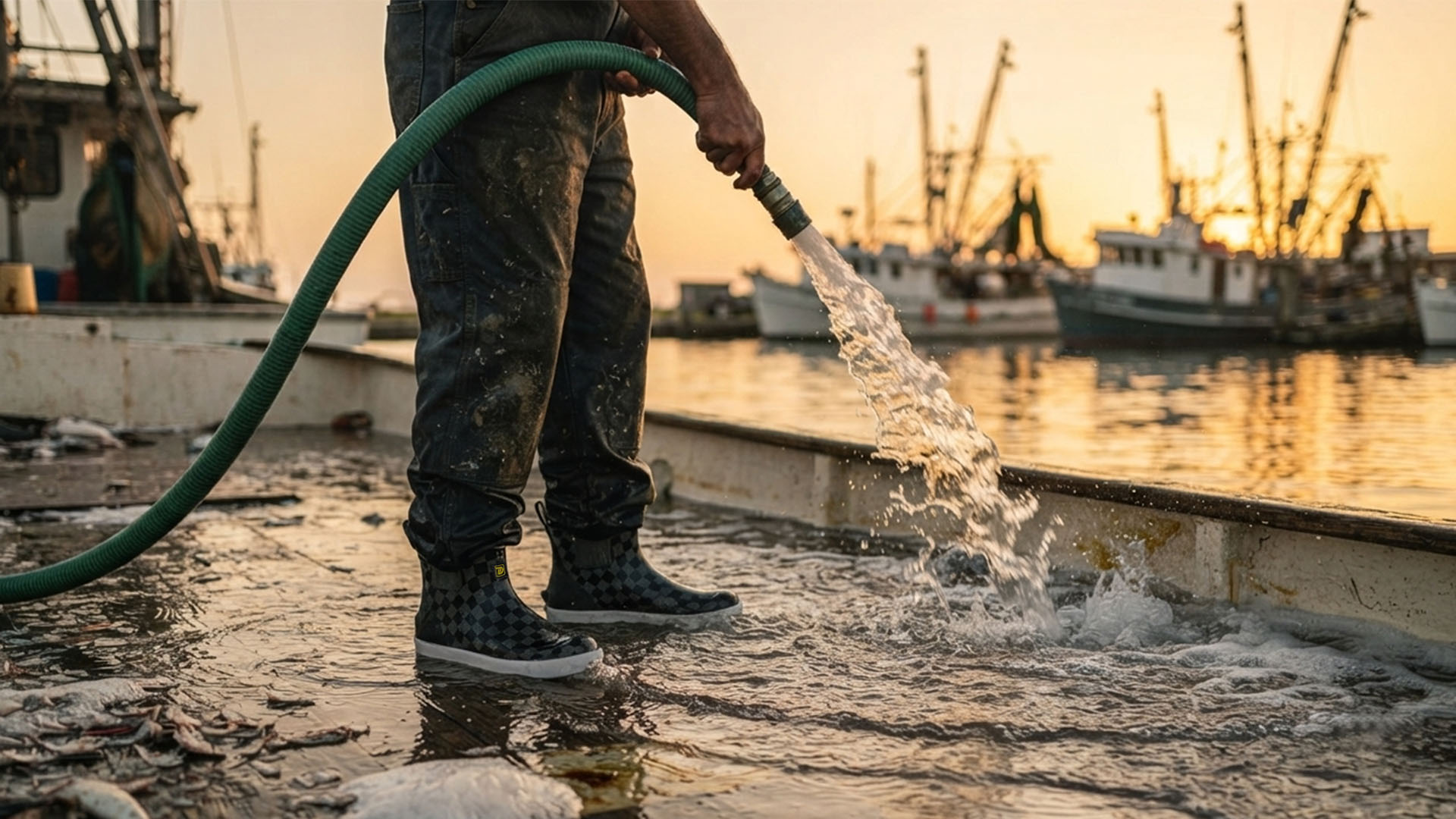
Organize Washdown Hoses
A hose creates both a wet surface and a tripping hazard.
After use:
- Shut off the water
- Drain the hose
- Coil it neatly
- Keep it away from walkways
- Avoid loops around feet
- Store the nozzle securely
Do not leave the hose stretched across the cockpit during active fishing.
Footwear Is Part of the Traction System
Even a clean non-skid deck needs appropriate footwear.
Fishing footwear should provide:
- Secure fit
- Closed-toe protection
- Stable cushioning
- Marine-focused outsole
- Clean tread
- Appropriate water height
- Manageable weight
Waterproof ankle deck boots work well for many recreational fishing boats because they protect against rain, spray, fish slime, and shallow standing water.
Anglers comparing marine footwear can evaluate TruDaveGear waterproof deck boots alongside other fishing-specific options based on outsole design, fit, cushioning, boot height, and expected deck conditions.
Clean Footwear Before Boarding
Inspect the outsole for:
- Mud
- gravel
- bait
- fish scales
- oil
- soap
- seaweed
- hooks
- fishing line
Remove contamination before stepping onto a clean boat.
A high-quality marine outsole cannot contact the deck properly when its grooves are packed with debris.
Do Not Apply Tire Shine or Silicone to Boot Soles
Some appearance products create a glossy finish on rubber.
They should not be applied to fishing boot outsoles or active deck surfaces.
Avoid:
- Tire shine
- Silicone spray
- Petroleum oil
- General rubber gloss
- Wax
- Furniture polish
These products may make the deck or footwear slippery.
Use only manufacturer-approved care products, and keep them away from traction surfaces unless specifically designed for that purpose.
Fit Affects Foot Control
Oversized footwear may allow the foot to move while the outsole remains planted.
This can reduce stability during:
- Side steps
- Turns
- Boarding
- stairs
- rough water
- fish fights
Deck boots should fit securely through the heel and midfoot while leaving comfortable toe room.
A small amount of heel movement may be normal.
Large heel lift, foot rotation, or sock movement indicates poor fit.
Walking Technique on Slippery Boat Decks
Use controlled movement.
Helpful techniques include:
- Take shorter steps
- Keep feet beneath the body
- Avoid crossing the feet
- Maintain slight knee flexion
- Use handholds
- Face ladders
- Avoid sudden turns
- Do not run
- Watch for lines and hoses
- Communicate before moving behind another angler
A boat may change direction without warning.
Keep one hand available for support during rough conditions.
Do Not Lock Your Knees
Locked knees make it harder for the body to absorb boat movement.
Maintain a relaxed stance with slight flexion.
This helps the legs respond to:
- Waves
- Wakes
- Speed changes
- Turns
- Shifting deck angles
Good footwear supports balance, but body position remains important.
Keep Walkways Clear
Remove or secure:
- Tackle boxes
- bags
- clothing
- towels
- bait containers
- fishing line
- hooks
- sinkers
- hoses
- coolers
- cleaning tools
Many incidents involve a combination of slipping and tripping.
A clean deck is not safe when equipment blocks the path.
Remove Loose Fishing Line
Transparent fishing line may be difficult to see.
It can wrap around:
- Boots
- ankles
- hoses
- cleats
- equipment
Dispose of used line in a designated container.
Do not leave rigs or leaders on the floor.
A line may also contain an exposed hook.
Secure Landed Fish
A large fish moving on the deck can create multiple hazards.
It may:
- Spread slime
- Strike ankles
- Move hooks
- Damage equipment
- Cause people to step backward suddenly
Follow the captain’s instructions for controlling landed fish.
Keep unnecessary passengers away from the landing area.
Clean the deck after the fish is secured.
How Often Should a Boat Deck Be Cleaned?
Cleaning frequency depends on use.
During the Trip
Clean immediate hazards such as:
- Fish slime
- blood
- bait
- oil
- loose scales
After Each Trip
Rinse and clean:
- Cockpit
- fish-box lids
- bait stations
- drains
- steps
- swim platform
- footwear
Periodically
Deep-clean:
- Surface texture
- removable mats
- hidden drainage areas
- cooler supports
- hatch edges
- under-seat areas
Frequent light cleaning reduces the need for aggressive restoration.
Inspect the Deck for Wear
A deck may become slippery because its texture has worn down.
Look for:
- Polished high points
- Smooth traffic paths
- peeling coating
- exposed substrate
- cracks
- soft areas
- raised edges
- worn aggregate
- damaged mats
Cleaning cannot restore missing texture.
Worn or damaged surfaces may require repair, recoating, or replacement.
High-Traffic Areas
Wear often appears first around:
- Helm
- transom
- fish boxes
- console sides
- cockpit entrance
- steps
- bow casting area
- bait stations
Compare these zones with less-used sections.
A visibly polished pathway may indicate that the non-skid surface is losing effectiveness.
When Professional Repair Is Appropriate
Seek professional evaluation when the deck has:
- Structural cracks
- soft spots
- delamination
- widespread coating failure
- exposed fiberglass
- corrosion
- lifting synthetic decking
- severe teak damage
- drainage problems
- repeatedly slippery worn texture
Do not cover structural damage with an ordinary traction mat or household coating.
A temporary cover may hide the problem rather than solve it.
Adding Traction Without Damaging the Deck
Possible solutions depend on the surface.
They may include:
- Manufacturer-approved non-skid coating
- Professionally installed synthetic decking
- Properly secured marine mats
- Surface repair
- Restored molded non-skid
- Replacement of worn materials
Avoid improvised solutions such as:
- Loose household rugs
- adhesive sandpaper
- random paint mixed with sand
- unsecured rubber sheets
- indoor anti-slip tape
- sharp abrasive coatings
Marine environments require materials that handle water, sunlight, salt, movement, and cleaning.
Marine Anti-Slip Tape
Marine-grade traction tape may be appropriate in selected areas such as:
- Steps
- ladders
- hatch edges
- access points
It must be compatible with:
- Surface material
- Curvature
- water exposure
- cleaning products
- heat
- ultraviolet light
Poor installation may create lifted edges, trapped water, difficult cleaning, or a tripping hazard.
Follow product and boat-manufacturer guidance.
Non-Skid Coatings
A non-skid coating may restore or improve traction when applied correctly.
Important factors include:
- Surface preparation
- material compatibility
- curing conditions
- aggregate size
- application thickness
- drainage
- cleaning requirements
Texture that is too aggressive may injure bare skin, damage clothing, or become difficult to clean.
Texture that is too mild may provide little improvement.
Professional application is often worthwhile for large deck areas.
Removable Marine Mats
Marine mats may add cushioning and grip.
Choose mats designed for boating.
They should be:
- Properly sized
- Secure
- Drainable
- Easy to clean
- Resistant to fuel and fish residue where required
- Free from curling edges
Remove and clean beneath mats regularly.
Standing water and slime under a mat can create hidden problems.
Avoid Loose Household Mats
Household mats are not designed for boat movement, saltwater, drainage, or fish contamination.
They may:
- Slide
- curl
- trap water
- retain odor
- block drains
- become heavy
- create trip hazards
Use only marine-appropriate products installed safely.
Common Boat Deck Traction Mistakes
Using Too Much Soap
Excess cleaner leaves more residue to rinse.
Waxing a Walking Surface
Ordinary wax can reduce traction.
Ignoring Fish Slime Until the Trip Ends
The contaminant spreads across the deck.
Pressure Washing Too Aggressively
High pressure may damage coatings and seams.
Wearing Mud-Filled Footwear
Packed tread cannot contact the deck effectively.
Applying Tire Shine to Boots
Gloss products may create a slippery outsole.
Leaving Hoses Across Walkways
Hoses create tripping and sliding hazards.
Using Loose Mats
An unsecured mat may move beneath the wearer.
Failing to Clear Drains
Standing water increases risk.
Assuming Texture Means the Deck Is Safe
Contaminants can fill or cover the pattern.
Boat Deck Traction Checklist
Before Departure
- Inspect deck condition
- Clear drains
- Secure mats
- Remove oil residue
- Confirm washdown equipment works
- Wear suitable footwear
- Clean mud from outsoles
During Fishing
- Remove fish slime
- Control bait
- Secure landed fish
- Keep hooks and line off the floor
- Coil hoses
- Clean spills
- Keep walkways open
During Cleaning
- Use compatible products
- Follow dilution instructions
- Work in small sections
- Rinse completely
- Avoid walking backward
- Keep others clear
After the Trip
- Clean textured surfaces
- Rinse salt and organic residue
- Clear drains
- inspect high-traffic areas
- Dry removable mats
- Clean footwear
Periodic Maintenance
- Inspect worn non-skid
- Check coating adhesion
- Look for cracks
- Inspect synthetic decking edges
- Evaluate mat condition
- Arrange repair when needed
Final Thoughts
Boat decks become slippery when water, fish slime, bait oil, soap, sunscreen, fuel residue, algae, mud, or ice creates a layer between footwear and the walking surface.
Even a textured non-skid deck can lose traction when its pattern becomes filled with contamination.
The first step is prevention.
Keep bait contained.
Control landed fish.
Clean slime and blood promptly.
Remove mud from footwear before boarding.
Keep hoses, fishing line, coolers, and tackle out of walkways.
Use only cleaning products compatible with the deck material.
Follow the recommended dilution.
Work in small areas and rinse every trace of soap away.
Avoid ordinary wax, silicone, tire shine, household polish, and other products that may leave slippery coatings on the deck or footwear.
Different surfaces require different care.
Molded fiberglass, painted aluminum, teak, synthetic decking, rubber mats, and marine carpet should not all be cleaned with the same chemicals or brushes.
Follow the boat or decking manufacturer’s instructions.
When the surface texture is polished smooth, peeling, cracked, lifting, or structurally damaged, cleaning alone will not restore traction.
Use an approved marine repair, non-skid coating, secured marine mat, or professional restoration.
Footwear also matters.
Choose secure, closed-toe fishing footwear with a marine-focused outsole.
Keep the tread clean and replace boots when the outsole becomes worn or hardened.
No footwear or deck coating is completely slip-proof.
The safest system combines a clean surface, proper drainage, suitable marine footwear, organized equipment, controlled movement, and regular maintenance.
Frequently Asked Questions
Why is my fiberglass boat deck so slippery?
Fish slime, soap, sunscreen, oil, wax, algae, or worn gelcoat may be covering or filling the molded non-skid pattern.
How do I make a boat deck less slippery?
Remove contaminants, keep drains clear, use compatible cleaning products, wear marine footwear, and repair or recoat worn non-skid surfaces when necessary.
What removes fish slime from a boat deck?
Fresh water, a compatible mild marine cleaner, and a suitable deck brush usually work. Clean the slime before it dries and rinse thoroughly.
Can I use dish soap on a boat deck?
Use only products recommended for the deck material. Some dish soaps may create excessive foam, leave residue, or affect coatings.
Should I wax a non-skid boat deck?
Do not apply ordinary wax to a walking surface. Use only a product specifically approved for non-skid marine decking.
Why is the deck slippery after cleaning?
Cleaner residue may remain, too much product may have been used, or the surface may not have been rinsed thoroughly.
Can I pressure-wash a fiberglass deck?
Pressure washing may be allowed at appropriate pressure and distance, but it can damage gelcoat, seals, decals, and fittings. Follow manufacturer instructions.
How do I clean synthetic boat decking?
Use the decking manufacturer’s approved cleaner and method. Avoid harsh solvents, aggressive brushes, and excessive pressure.
Are rubber mats good for boat traction?
Marine mats can improve comfort and grip when they are secured, clean, flat, and able to drain. Loose or contaminated mats create hazards.
Can I put anti-slip tape on a boat deck?
Marine-grade tape may work on compatible steps or access points. Correct preparation and installation are essential to prevent lifting edges and trapped water.
Why are boat ramps so slippery?
Submerged algae, mud, trailer grease, wet concrete, and steep slopes create poor traction. Move carefully and avoid algae-covered sections.
Do deck boots help on slippery boats?
Marine deck boots can improve wet-surface traction and protect against water, but they cannot eliminate slipping on fish slime, oil, soap, or ice.
What footwear is best for a wet boat deck?
Choose secure closed-toe footwear with a marine-focused outsole, stable heel, appropriate cushioning, and tread suited to hard wet surfaces.
Should I use deep-lug boots on a boat?
Deep lugs are useful in mud but may reduce contact on hard decks and collect debris. Marine tread is generally better for fiberglass and aluminum.
How often should I clean fish slime from the deck?
Remove it as soon as practical during the trip rather than waiting until the end, especially in active walking areas.
When should boat non-skid be replaced or recoated?
Repair or restoration may be needed when the texture becomes smooth, coating peels, cracks appear, synthetic decking lifts, or cleaning no longer restores dependable traction.