Introduction: The Drift Boat Dilemma
Fly fishing from a drift boat or raft is a dance between two worlds. One moment you’re standing on a dry casting platform, scanning the water for rising trout. The next, the guide has beached the boat on a gravel bar, and you’re stepping over the side into a swift, icy current, wading toward a pod of feeding fish. Your feet go from the relative safety of a textured deck to the slick, uneven rocks of a riverbed in a single step. The wrong footwear leaves you with soaked, frozen feet, precarious balance, and a growing dread of every gravel bar you see ahead.
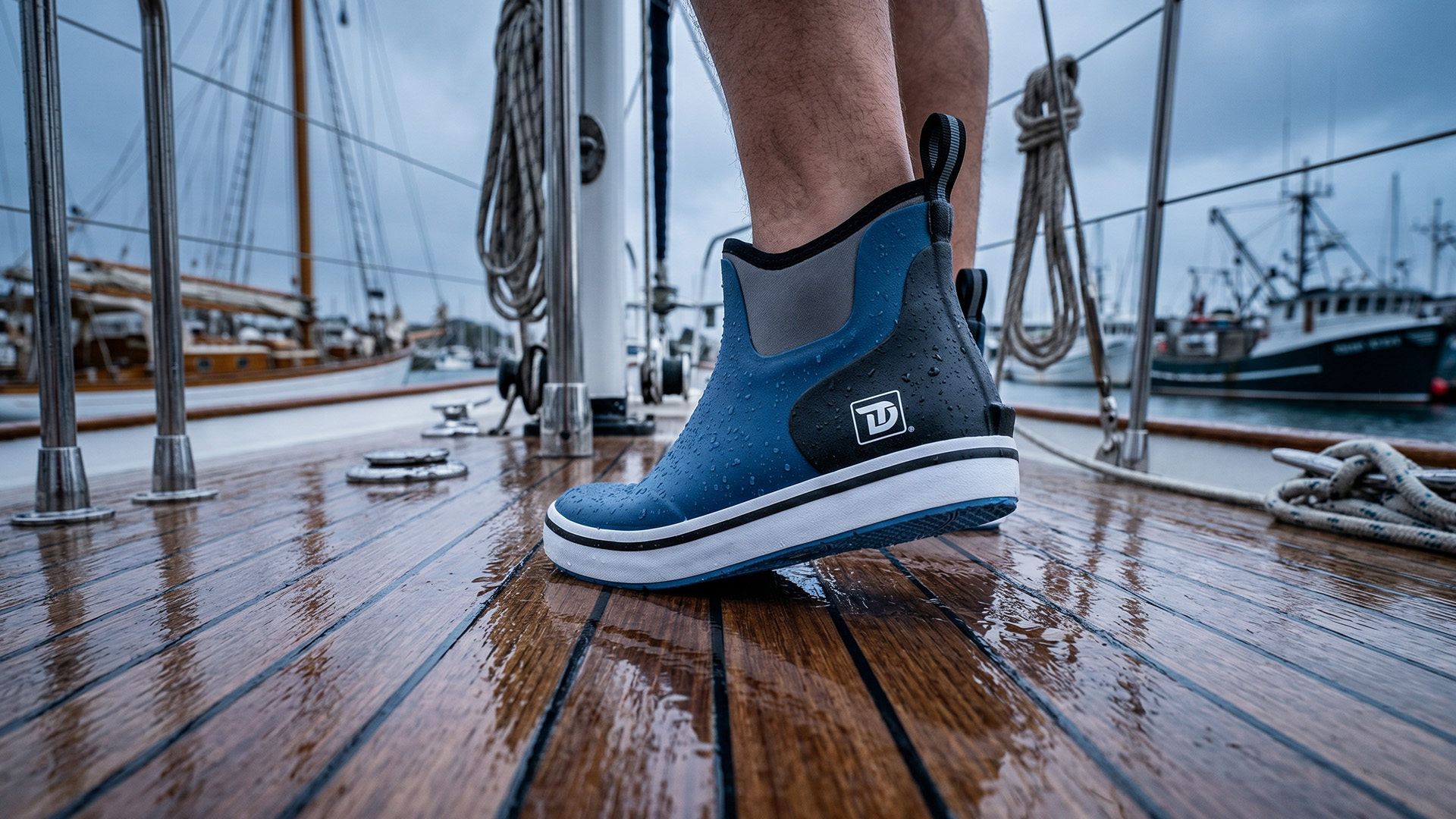
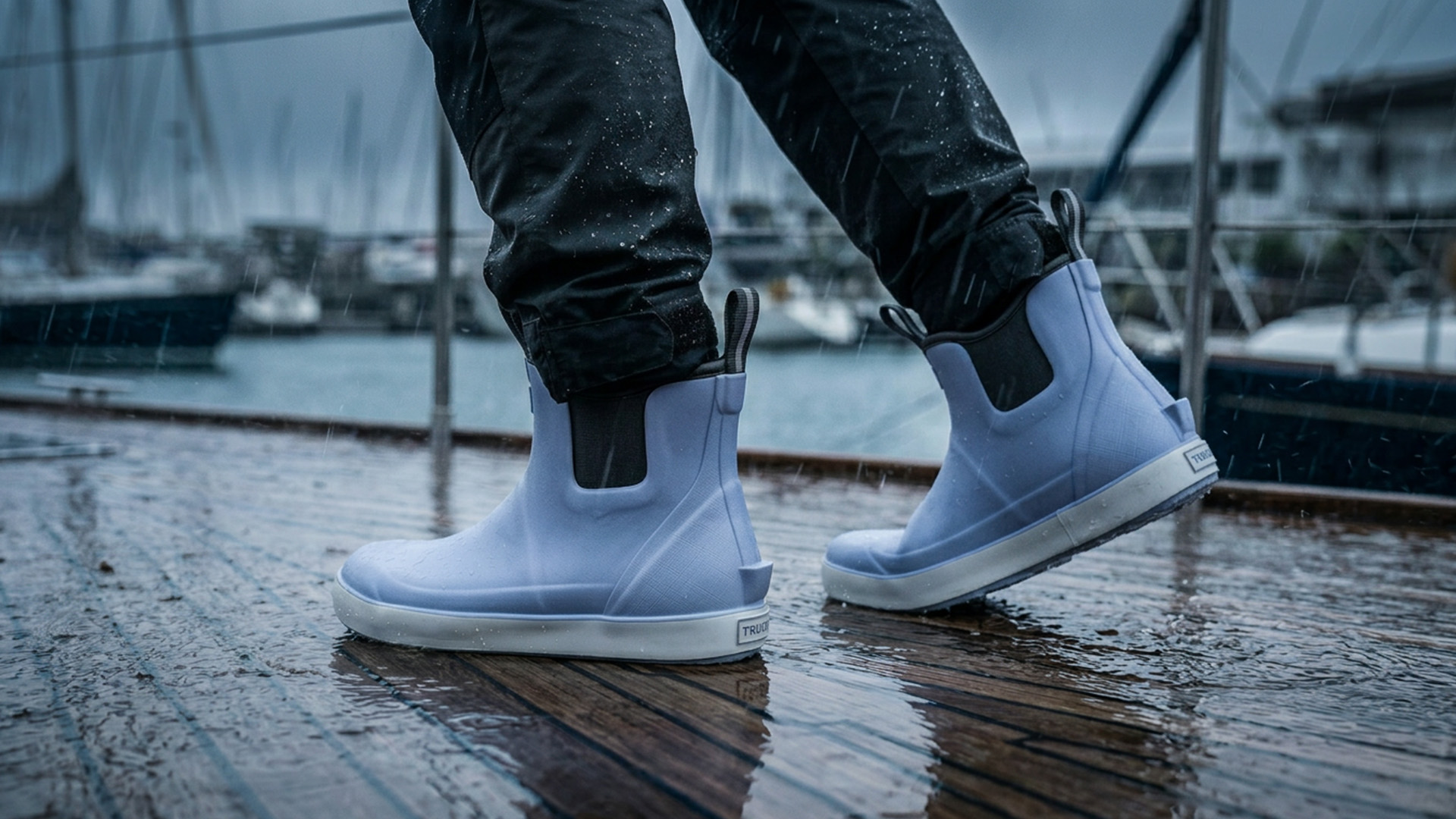
Trudave Gear’s deck boots—the lightweight DeckFlow and the insulated WaveLock—are purpose-built to solve this exact problem. They combine the siped, non-marking grip of a premium deck boot with the waterproof integrity, quick-drying capability, and flexible fit that fly fishers need when they’re half in the boat and half in the water. Whether you’re casting from a raft on the Madison or floating the Delaware in a drift boat, the right Trudave boots keep you sure-footed through every stage of the day.
1. The Fly Fisher’s Unique Demands
A fly fisher in a drift boat faces a set of challenges that neither a pure wading angler nor a pure boat angler fully shares.
The Wading Transition: You’ll be in and out of the boat a dozen times a day. The boot must be easy to get on and off, with a fit that’s secure enough to wade a thigh-deep run but flexible enough to let you comfortably brace against a casting brace. Tall, bulky wading boots are overkill for the quick wades between floats; standard deck boots often lack the ankle support and drainage needed for even short wades.
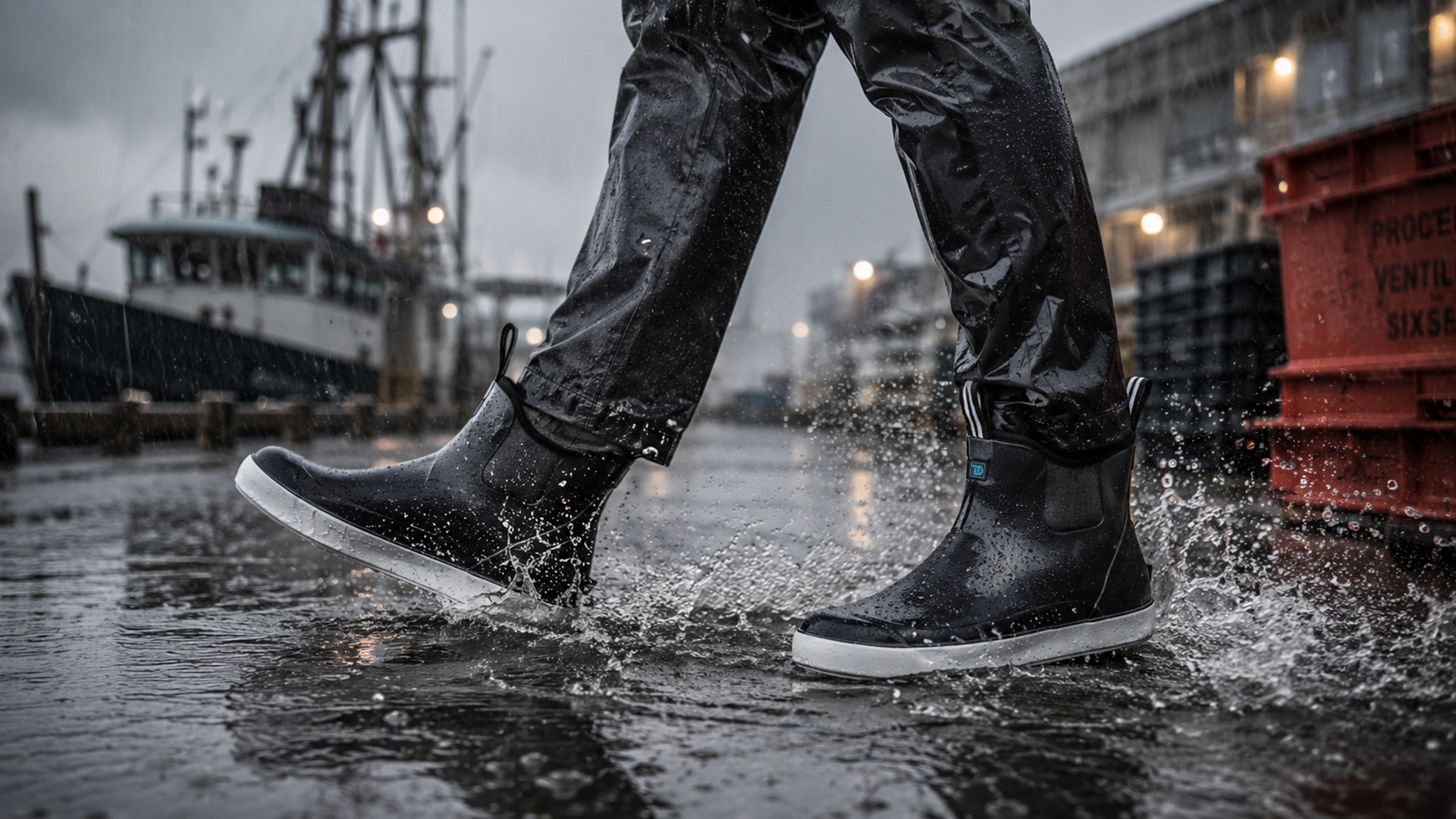
Constant Wetness: Fly fishing decks are perpetually wet from dripped oars, splash, and the wet line and net. When you step over the side, the boot is fully submerged. It needs to drain quickly once you’re back in the boat, rather than holding a pint of river water around your foot.
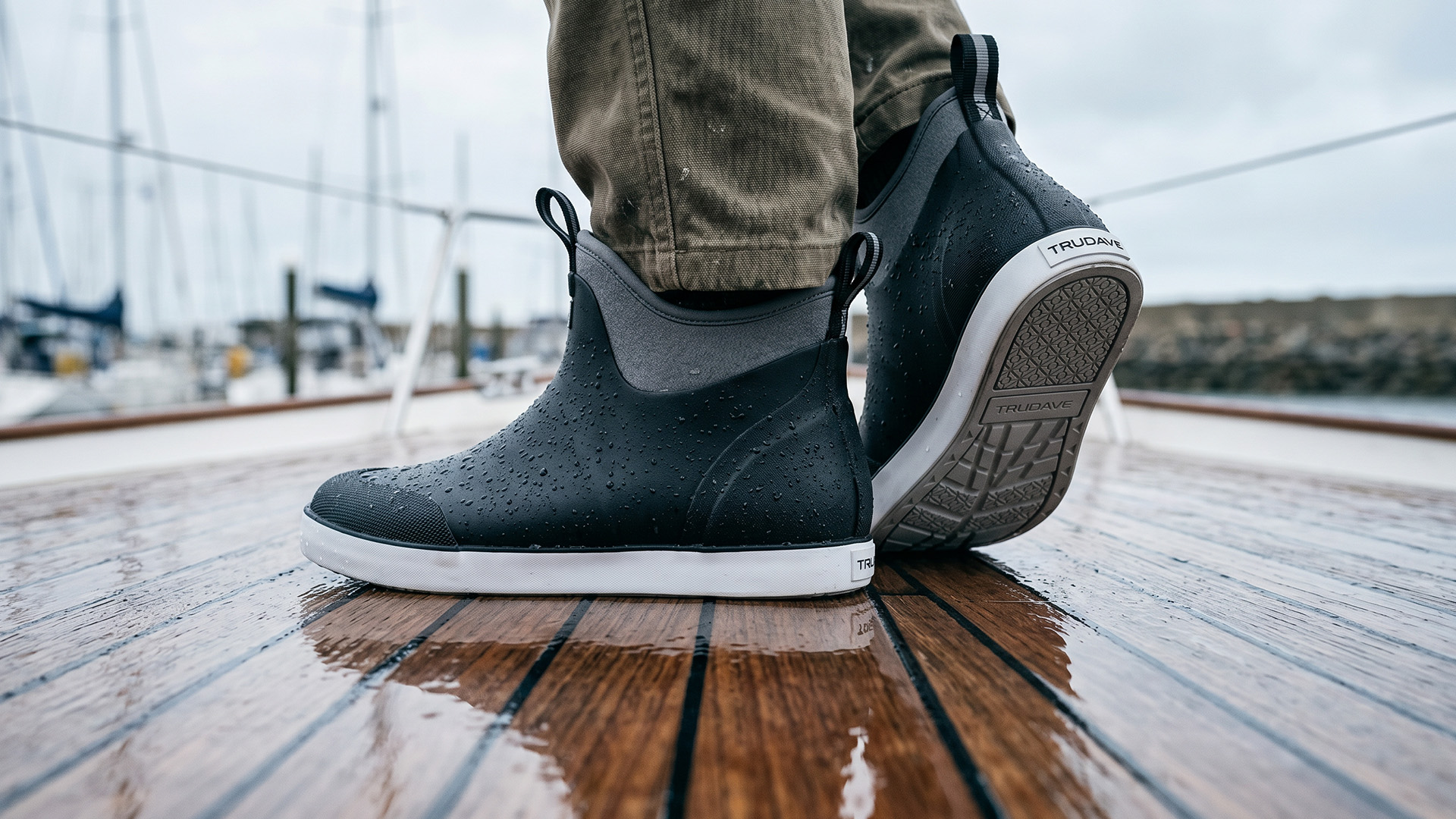
Sensitive Surfaces: Many drift boats have polished fiberglass or painted aluminum interiors that are scratched easily. Non-marking soles are a must. You also need grip on the slimy, algae-slicked rocks of a trout stream, a surface that can bring even the most sure-footed angler down.
All-Day Comfort: A float trip can last 8 to 10 hours. You’re standing, casting, and bracing for much of that time. Cushioning, arch support, and a lightweight build are non-negotiable for avoiding fatigue.
2. The Trudave Advantage: DeckFlow and WaveLock for Fly Fishers
Trudave’s two primary deck boots each serve a different piece of the fly fishing season.
The DeckFlow: The Warm-Weather Wading Deck Boot
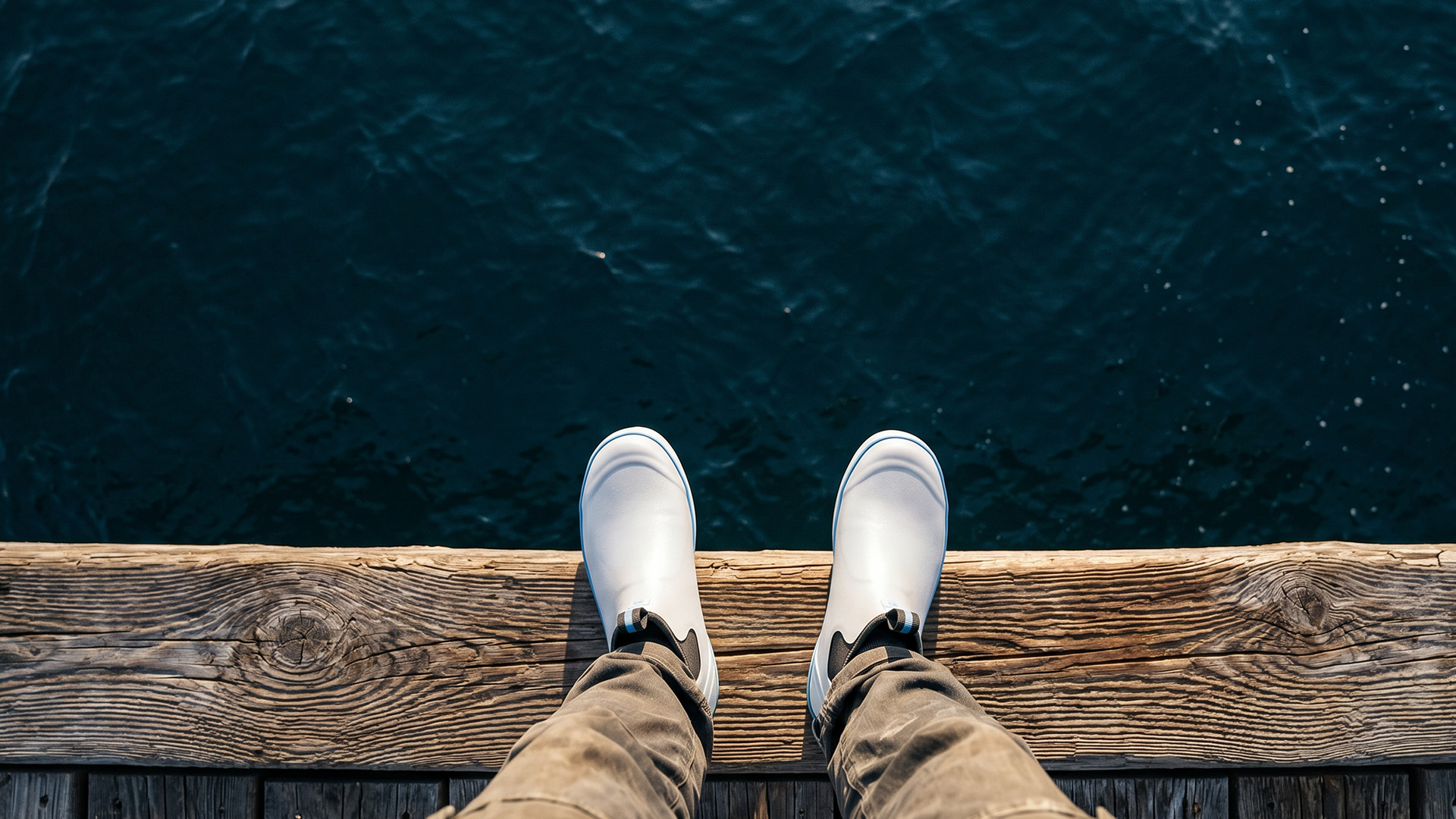
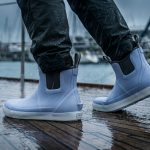
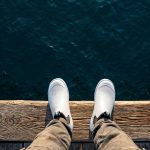
For spring creeks, summer floats, and tailwaters where the air is warm and the water is merely cool, the DeckFlow is the ideal tool. It’s completely uninsulated, with a breathable, moisture-wicking lining. This keeps your feet from overheating during a long drift, and when you hop out to wade, the boot won’t become a sodden, heavy sponge. The low-cut, ankle-height shaft allows full flexibility for scrambling over rocks and logs. The non-marking, siped outsole grips wet fiberglass and slick river rock with equal tenacity.
The WaveLock: The Cold-Water Sentinel
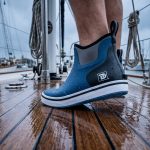
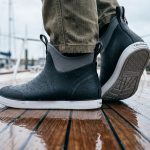
For spring and fall floats, tailwater fisheries where the water temperature hovers in the 40s, or any day when the air has a bite, the WaveLock is the boot you want. Its soft thermal insulation lining and 5mm neoprene construction trap body heat, keeping your feet warm during prolonged wading and chilly boat rides. The mid-calf height provides more splash protection when the wind kicks up and waves slap the hull. The micro-channel siping on the outsole is the most aggressive in the Trudave lineup, providing a vice-like grip on slick, rocky riverbeds.
Key Features for Fly Fishers:
- Non-Marking Siped Outsoles: Channel water away instantly, providing grip on both a wet fiberglass deck and the mossy stones of a trout stream. No black scuffs on the boat.
- Vulcanized Natural Rubber: Completely waterproof. The chemically fused seams won’t separate or leak, even after hundreds of submersions.
- Removable EVA Insoles: Provide cushioning during long hours of standing and casting, and dry quickly when removed after a deep wade.
- Easy On/Off: The DeckFlow’s clean slip-on design and the WaveLock’s flexible side panels and easy-off heel tab make transitioning from boat to water effortless. You don’t have to sit down and fight with stiff rubber while the guide waits.
3. Gearing Up: The Fly Fisher’s Trudave System
Pairing with Wading Socks: For maximum comfort, wear a pair of lightweight merino wool or neoprene wading socks inside your Trudave boots. The merino wicks moisture and adds a layer of insulation; a thin neoprene sock provides a wetsuit-like warmth that’s ideal for cold water. The generous toe box of both the DeckFlow and WaveLock accommodates these thicker socks without pinching.
The Quick-Dry Routine: After a deep wade, simply step back into the boat, lift each foot, and let the water drain out of the boot top. The non-absorbent rubber shell and EVA insole mean the boot will feel dry again within minutes, not hours. At the end of the day, remove the insoles and stuff the boots with newspaper to wick away any remaining moisture.
Protection and Traction: For fly fishers who spend most of the day wading rather than riding, the AquaGrip (with its suction-pod outsole) is a specialized alternative for navigating algae-covered boulders. But for the classic float trip, the DeckFlow and WaveLock deliver the versatile, boat-to-bank performance that keeps you fishing comfortably all day.
4. A Day on the Water with Trudave Deck Boots
Picture a September float on the Missouri River. The morning air is crisp, in the low 40s, and the water is a chilly 50 degrees. The angler pulls on a pair of WaveLocks over heavyweight merino socks at the boat ramp. During the morning drift, the boots’ insulation keeps her feet warm and comfortable as she stands, casting to rising fish. When the guide anchors on a gravel bar near a pod of feeding trout, she steps over the side into the current without hesitation. The micro-channel siping grips the slick, rounded stones. She wades into position, makes the cast, and lands a fat brown trout. Back in the boat, she kicks her heels onto the gunwale, letting the water drain away. By the time the boat drifts to the next run, the boots are dry and warm again. At the take-out, the boots are rinsed, the insoles pulled, and the whole system is ready for tomorrow.
5. Care That Protects Your Investment
River water carries silt and organic acids that can degrade rubber over time. Rinse your boots with fresh water after every trip, especially if you’ve been in silty or muddy water. Remove the insoles and let them dry separately. Stuff the boots with newspaper to draw moisture from the lining. Never dry them with direct heat; a shaded, airy spot is all you need. A silicone-free rubber conditioner applied every couple of months will keep the rubber flexible and resistant to cracking.
Conclusion: One Boot, Two Worlds
Fly fishing from a boat doesn’t require a quiver of specialized footwear. It requires one pair of boots that bridges the gap between a dry deck and a wet riverbed, between a long, comfortable float and a short, secure wade. Trudave Gear’s DeckFlow and WaveLock deck boots are built for that bridge. They grip the boat, they grip the river, they keep your feet dry and warm, and they slip on and off as effortlessly as the day flows by. Focus on the hatch, the drift, and the rise—your feet are already taken care of.
To explore the complete Trudave Gear deck boot lineup and find the right pair for your next float, visit trudavegear.com.