

Introduction: The Dance on Deck
Sailing asks more from your feet than almost any other sport on the water. It’s not just standing at the helm or bracing against a wave. It’s ducking under the boom as the boat tacks, scrambling to the high side to balance a gust, and coiling a wet sheet line while the deck tilts beneath you. One moment you’re wedged against a lifeline; the next, you’re stepping lightly across a slippery coachroof to adjust a fender. Every movement is a negotiation with a surface that is rarely flat and never truly dry.
A sailing deck is a unique environment. It can be a gleaming, varnished teak cockpit on a classic cruiser, a textured fiberglass sole on a modern racer, or the weathered non-skid of a family daysailer. What they all share is an absolute demand for sure-footedness. A slip on a wet deck during a maneuver can mean a twisted knee, a lost winch handle overboard, or worse. And unlike a powerboat, a sailboat often heels sharply, turning a horizontal deck into a steeply angled ramp.
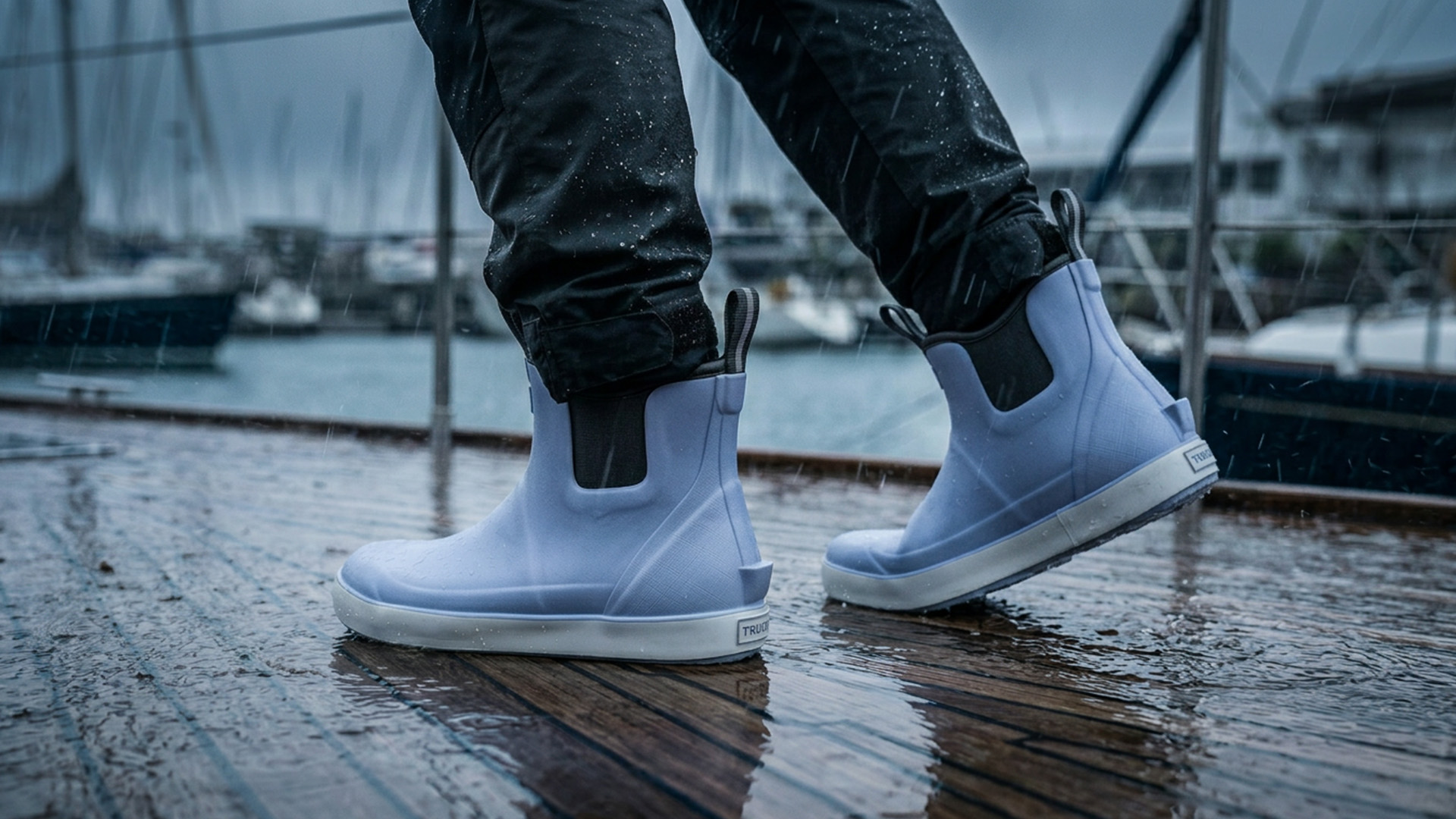
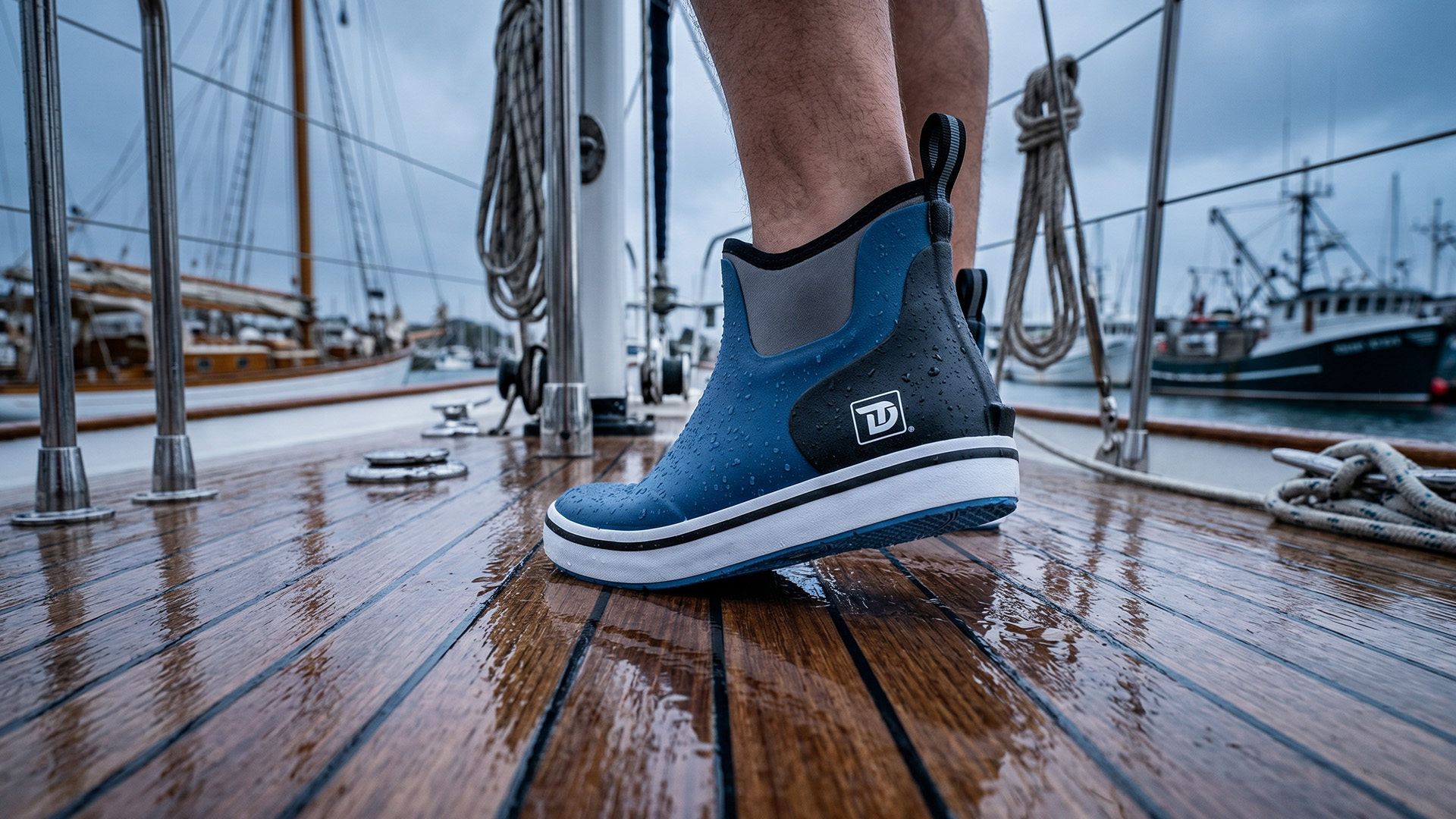
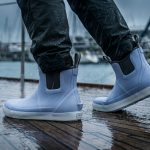
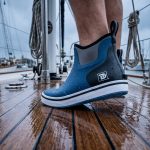
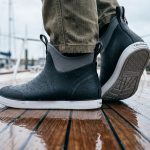
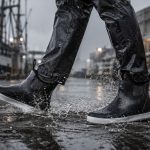
Trudave Gear’s deck boots—the lightweight, uninsulated DeckFlow and the insulated, all-weather WaveLock—are built to meet the precise demands of sailors. They combine non-marking, siped outsoles that grip relentlessly on wet gelcoat and wood, with flexible, low-profile designs that let your ankles move naturally as you shift weight and brace. This guide will walk through what makes a great sailing boot, how to choose between the DeckFlow and WaveLock for your kind of sailing, and how to keep your boots shipshape for seasons of silent, secure movement on the water.
1. The Sailor’s Footwear Demands: Why Sailing Boots Are Different
Sailing decks are not fishing decks. A powerboat’s cockpit is relatively flat and stable, and the main challenge is standing for long hours on a hard surface. A sailboat’s deck is dynamic. It moves in three dimensions—pitch, roll, and heel. Your boots need to provide traction on a surface that can be horizontal one moment and angled at 20 degrees the next. They need to be flexible enough to allow your ankles to adapt to that angle, yet supportive enough to prevent injury when you’re bracing with all your weight on one foot.
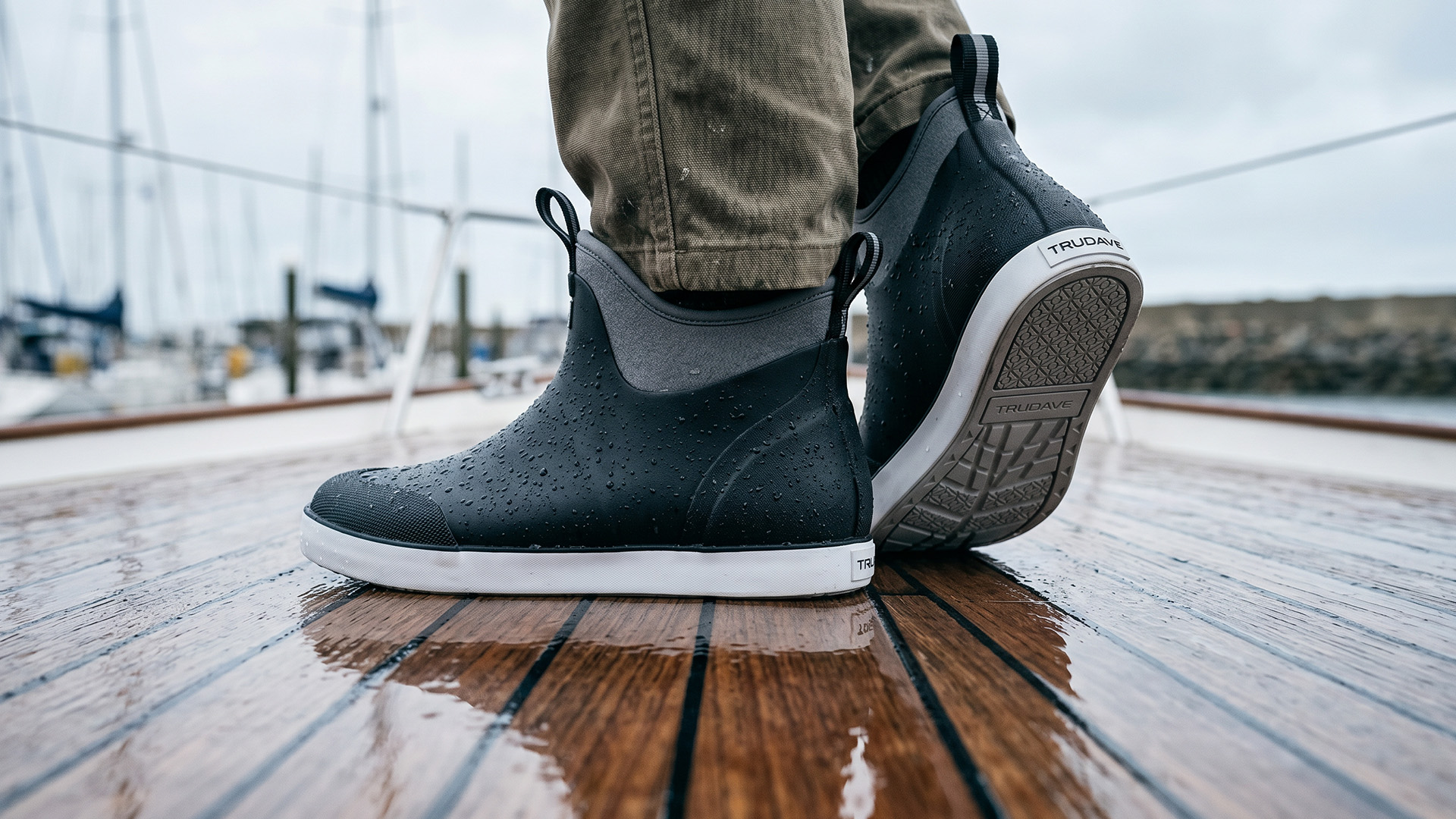
The second demand is non-marking soles. This is non-negotiable. A black rubber scuff on a white fiberglass deck or a varnished teak cockpit is an eyesore and a maintenance headache. Trudave’s DeckFlow and WaveLock both feature non-marking rubber compounds that will not leave streaks, even on the most pristine gelcoat or brightwork.
The third demand is drainage and quick drying. Sailors frequently step in and out of the cockpit, onto side decks awash with spray, and back again. While you don’t want a boot that constantly admits water, a low-cut design that can be easily drained if swamped is a practical necessity. The DeckFlow’s ankle-height profile and the WaveLock’s mid-calf height both allow for quick water evacuation and feature removable EVA insoles that dry rapidly.
The fourth demand is silent movement. On a cruising sailboat at anchor, or during a quiet night watch, the loud clomp of a heavy boot on a fiberglass deck disturbs the peace and can wake off-watch crew. Trudave’s rubber outsoles and flexible uppers produce a muted, confident footfall—quiet enough to move around the boat without sounding like a carpenter at work.
2. The DeckFlow: The Agile Insulator for Warm-Weather Sailing
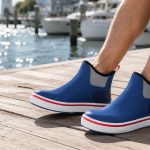
For the sailor whose season is defined by sun, warm winds, and the occasional soaking from a summer squall, the DeckFlow is the ideal companion. It’s Trudave’s lightest, most breathable deck boot, built with an uninsulated design and a moisture-wicking liner that keeps your feet comfortable when the temperature climbs.
Why It Works on a Sailboat:
The DeckFlow’s low-cut, ankle-height shaft provides unrestricted ankle flexion—critical when you’re hopping from the cockpit seat to the side deck, crouching to trim a sheet, or climbing the companionway ladder. The lack of a tall, bulky shaft means you can move with the agility of a deck shoe, while still enjoying the 100% waterproof protection of a vulcanized natural rubber shell. The non-marking siped outsole grips tenaciously on wet fiberglass, textured non-skid, and wooden decks, channeling water away with thousands of razor-thin slits.
The Women’s Fit Advantage:
The DeckFlow is engineered on a dedicated women’s last. For female sailors, this is a revelation. A unisex boot often slips at the heel and lacks proper arch support. The DeckFlow’s narrower heel cup and adjusted arch geometry lock the foot in place, preventing the blisters and fatigue that come from compensating for a poor fit. On a boat, where every step counts, that security is a safety feature.
Real-World Sailing:
Imagine a daysailer cutting through a sparkling bay on an August afternoon. The wind is 12 knots, the boat is heeled comfortably, and spray occasionally mists the deck. The sailor in DeckFlows moves confidently from the helm to the jib sheet, bare legs above the boot tops, feet planted securely. When the boat returns to the mooring, the boots are rinsed with a quick splash of fresh water and kicked off, the feet inside still dry and cool.
Sock Pairing: A lightweight merino wool or synthetic moisture-wicking sock is perfect for summer sailing. It prevents sweat buildup and keeps the foot comfortable inside the waterproof shell.
3. The WaveLock: The Cold-Weather and Offshore Sentinel
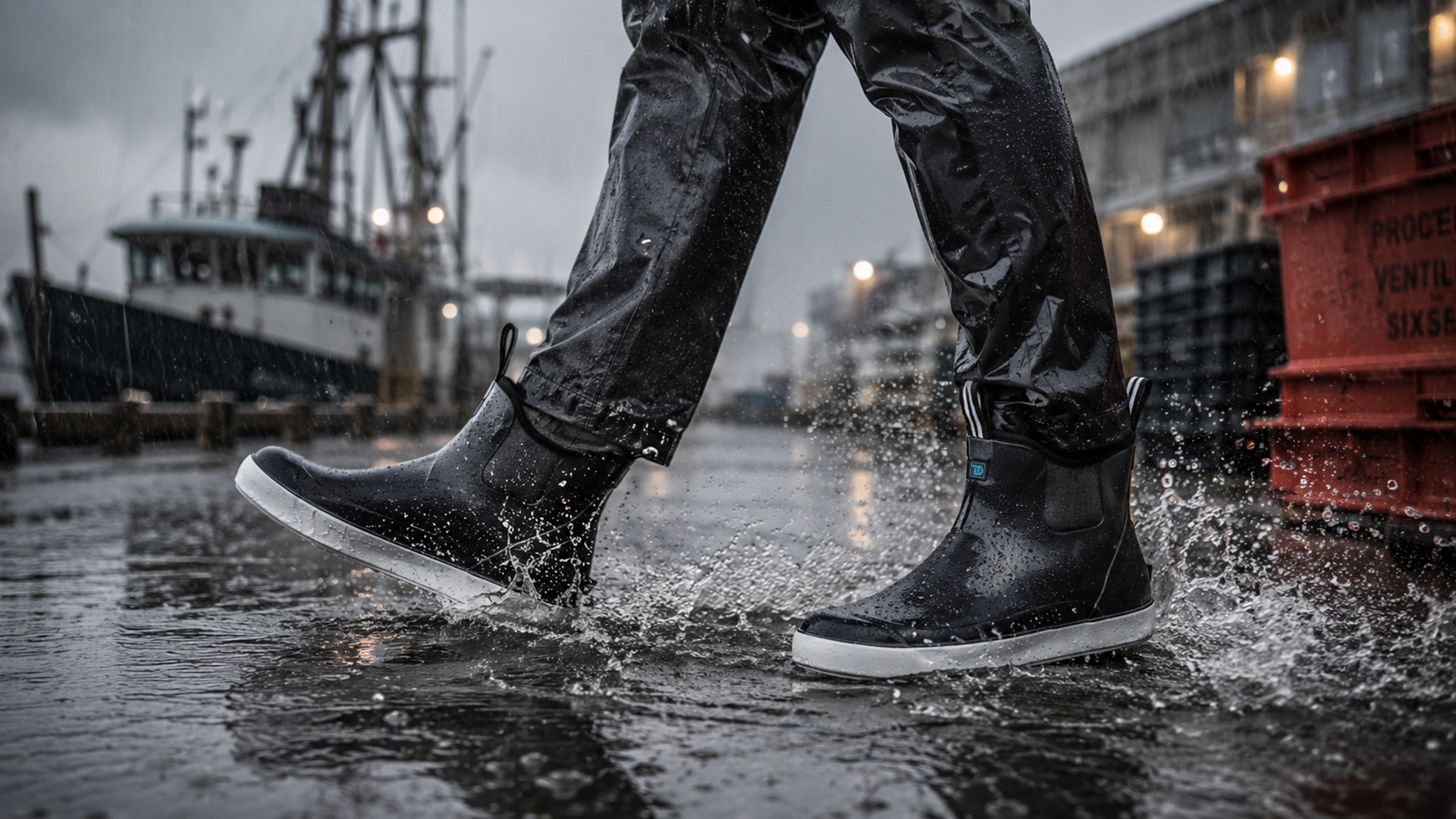
When the sailing season stretches into the chilly months, or when the voyage takes you offshore where the wind bites and the decks are perpetually wet, the WaveLock becomes the boot of choice. Its insulated design and aggressive micro-channel siping are built for conditions that demand more protection.
Why It Works on a Sailboat:
The WaveLock’s soft thermal insulation lining retains heat while allowing breathability. On a brisk autumn morning when the air is in the 40s and the deck is cold and damp, this insulation keeps your feet warm without the suffocating bulk of a heavy winter boot. The flexible neoprene side panels allow the boot to slide on easily—no wrestling with stiff rubber while the boat rocks—and they conform to your ankle for a snug, secure fit. The exclusive WaveLock Traction Outsole disperses water instantly, providing the same grip on a wet, heeling deck that it does on a fish-slimed cockpit sole. The reinforced toe shell and heel armor protect against the inevitable bumps and scrapes of handling gear, winch handles, and anchor chain.
The Mid-Calf Advantage:
The WaveLock’s mid-calf height offers a bit more splash protection than the ankle-height DeckFlow. If you’re sailing a wet boat—a sporty dinghy, a beach catamaran, or an offshore racer that frequently puts the rail under—this extra height can keep your socks dry when green water washes over the deck. The pull-on design and easy-off heel tab make it simple to shed the boots when you go below to the dry, warm cabin.
Real-World Sailing:
Picture a crewed charter in the San Juan Islands in October. The wind is a steady 20 knots, the sky is gray, and the deck is slick with rain and salt spray. The sailor on watch, wearing WaveLocks with heavyweight merino wool socks, stands a comfortable, warm vigil at the helm. When a squall hits, they move quickly to reef the main, feet planted securely on the angled side deck. The boots never slip. When the watch is over, they’re kicked off at the companionway, and the feet inside are dry and warm.
Sock Pairing: Midweight to heavyweight merino wool socks, depending on the temperature. The boot’s generous volume is designed to accommodate thick socks without cutting off circulation, which is critical for cold-weather comfort.
4. The Non-Marking Promise: Why It Matters to Every Boat Owner
Any sailor who has spent an hour on their knees scrubbing black rubber scuffs out of a white gelcoat deck knows the pain of a marking sole. Trudave formulates the outsoles of both the DeckFlow and the WaveLock to be entirely non-marking. You can walk across a gleaming deck, a varnished teak cockpit, or a light-colored non-skid without leaving a trace. This is not just about aesthetics; on some charter boats, non-marking soles are a contractual requirement. Trudave boots meet that standard without sacrificing grip, which is often the trade-off with softer marking compounds.
The siping technology in both boots is the key to this balance. By using thousands of razor-thin slits to channel water away, Trudave creates a dry contact patch that grips the deck without requiring a sticky, soft rubber that would leave marks. It’s the same principle that makes winter tires grip ice without leaving rubber on the road. The result is a boot that’s safe for the boat and confident for the sailor.
5. Sailing Scenarios: Matching the Boot to the Voyage
Daysailing and Weekend Cruising (Warm Weather): The DeckFlow is your boot. It’s light, flexible, and feels like a deck shoe. It won’t overheat your feet, and you can wear it from the dock to the cockpit to the post-sail barbecue without missing a beat. Its non-marking sole keeps the boat pristine.
Club Racing and Sporty Dinghy Sailing: A mix of agility and occasional splash protection is needed. Depending on the temperature, both the DeckFlow and the uninsulated WaveLock can serve well. The key is a boot that allows fast, sure movement across a heeling deck. The WaveLock’s extra grip and mid-calf height provide confidence during aggressive maneuvers when the deck is often awash.
Offshore Passages and Cold-Weather Cruising: The WaveLock is the clear choice. Insulation for long night watches, maximum siped traction for a constantly wet deck, and a taller shaft to keep spray out of your boots. Paired with heavy merino socks, it’s a system that will keep you comfortable and safe hundreds of miles from land.
The Liveaboard or Long-Term Cruiser: Space is limited, and gear must be versatile. A cruiser might carry one pair of WaveLocks for cold-weather and wet-deck work, and a pair of DeckFlows for warm-weather exploring and trips ashore in the dinghy. Both are lightweight and packable, and at Trudave’s direct-to-consumer pricing, owning a two-boot sailing system is an affordable investment in comfort and safety.
6. Care at Sea and Ashore
Salt spray, sun, and the constant motion of a boat demand a simple care routine. After every sail, rinse your Trudave boots with fresh water—especially if you’ve been in saltwater. The salt crystals left behind by evaporation are the mortal enemy of rubber, working their way into pores and creating cracks over time. Use a mild soap and a soft brush for stubborn grime. Remove the insoles and let them dry separately. Stuff the boots with crumpled newspaper to wick moisture from the liner, and let them air dry in a shaded, well-ventilated spot. Never leave them to dry in direct sun or near a heater; heat degrades vulcanized rubber.
A silicone-free rubber conditioner applied every couple of months will keep the rubber supple and UV-resistant. The blooming that sometimes appears—a white, chalky film—is a normal characteristic of high-quality natural rubber and can be wiped away with a damp cloth and conditioner. Properly cared for, a pair of Trudave sailing boots will stand watch with you for many seasons.
Conclusion: The Quiet Partner on Every Tack
Sailing is a partnership between the sailor, the boat, and the water. Your boots are the silent partner in that dance, grounding you to the deck, absorbing the shock of a sudden lurch, and keeping you sure-footed when the world tilts. Trudave Gear’s DeckFlow and WaveLock are built for this life—non-marking, relentlessly grippy, comfortable, and easy to care for. They let you forget about your feet and focus on the trim of the sails, the set of the wind, and the horizon ahead.
Whether you’re a weekend daysailor or a bluewater cruiser, choose the boot that matches your sailing, care for it simply, and it will carry you safely through every tack, jibe, and peaceful sunset at anchor.
To explore the complete Trudave Gear deck boot lineup and find the right pair for your next voyage, visit trudavegear.com.