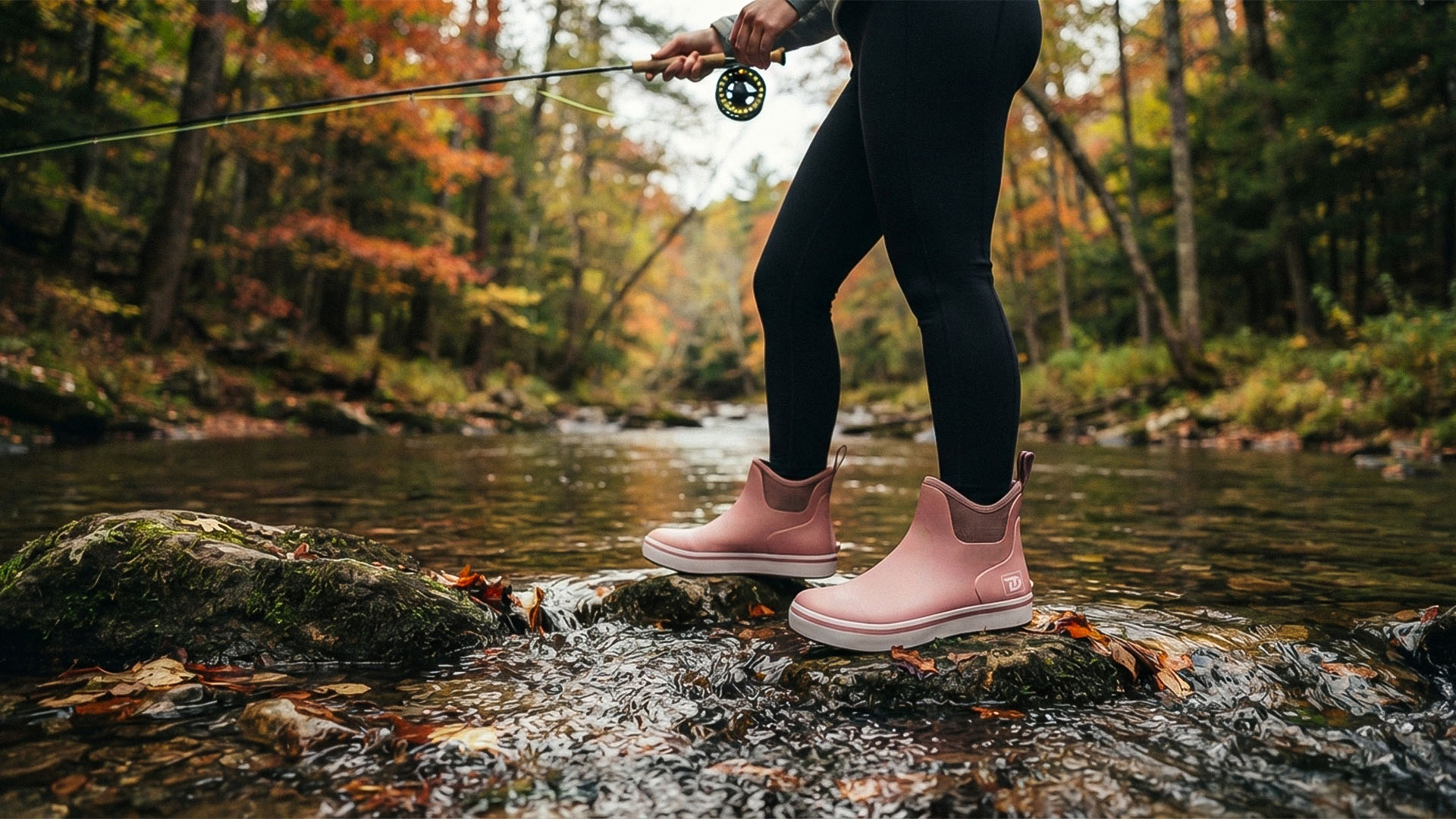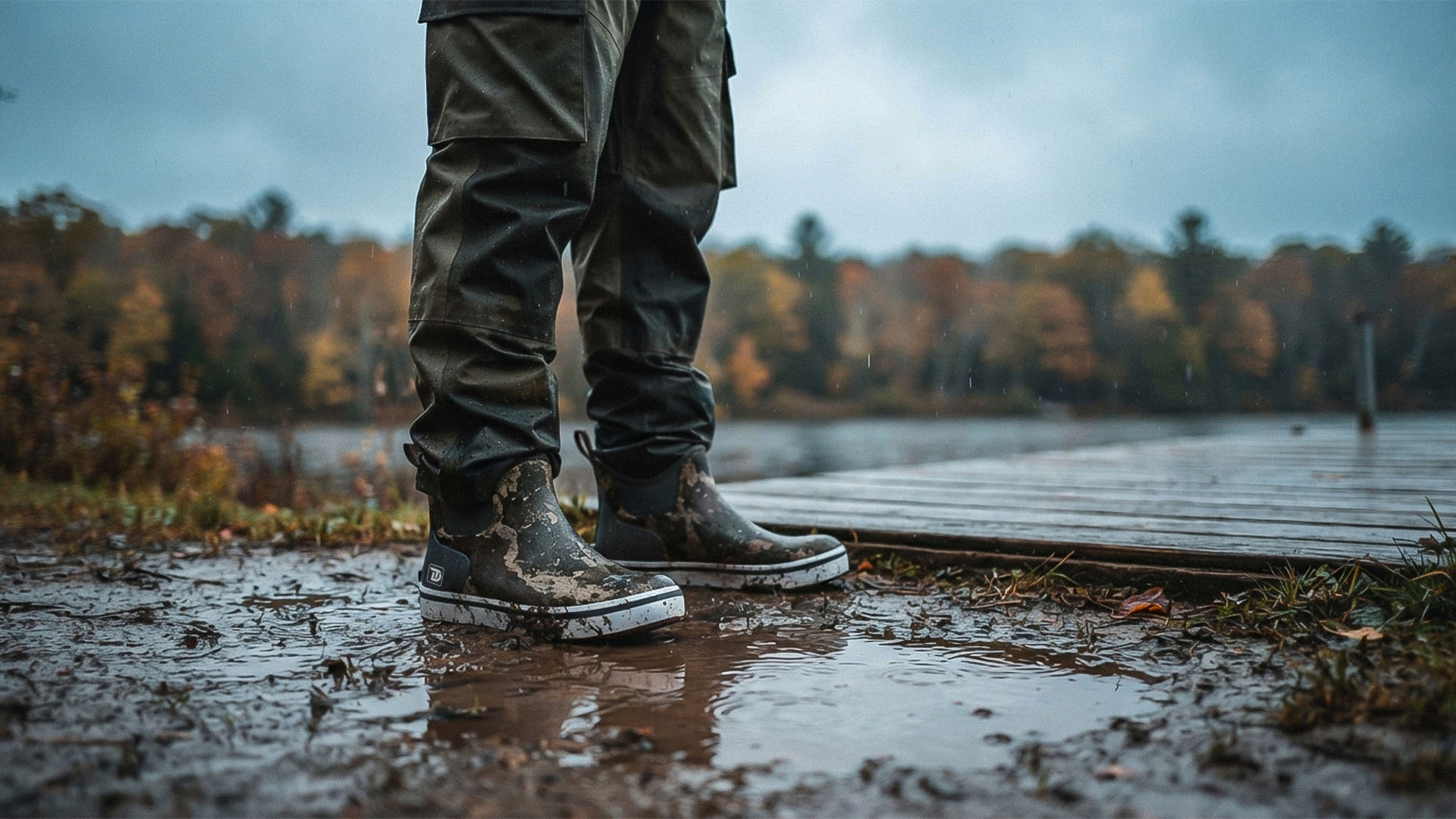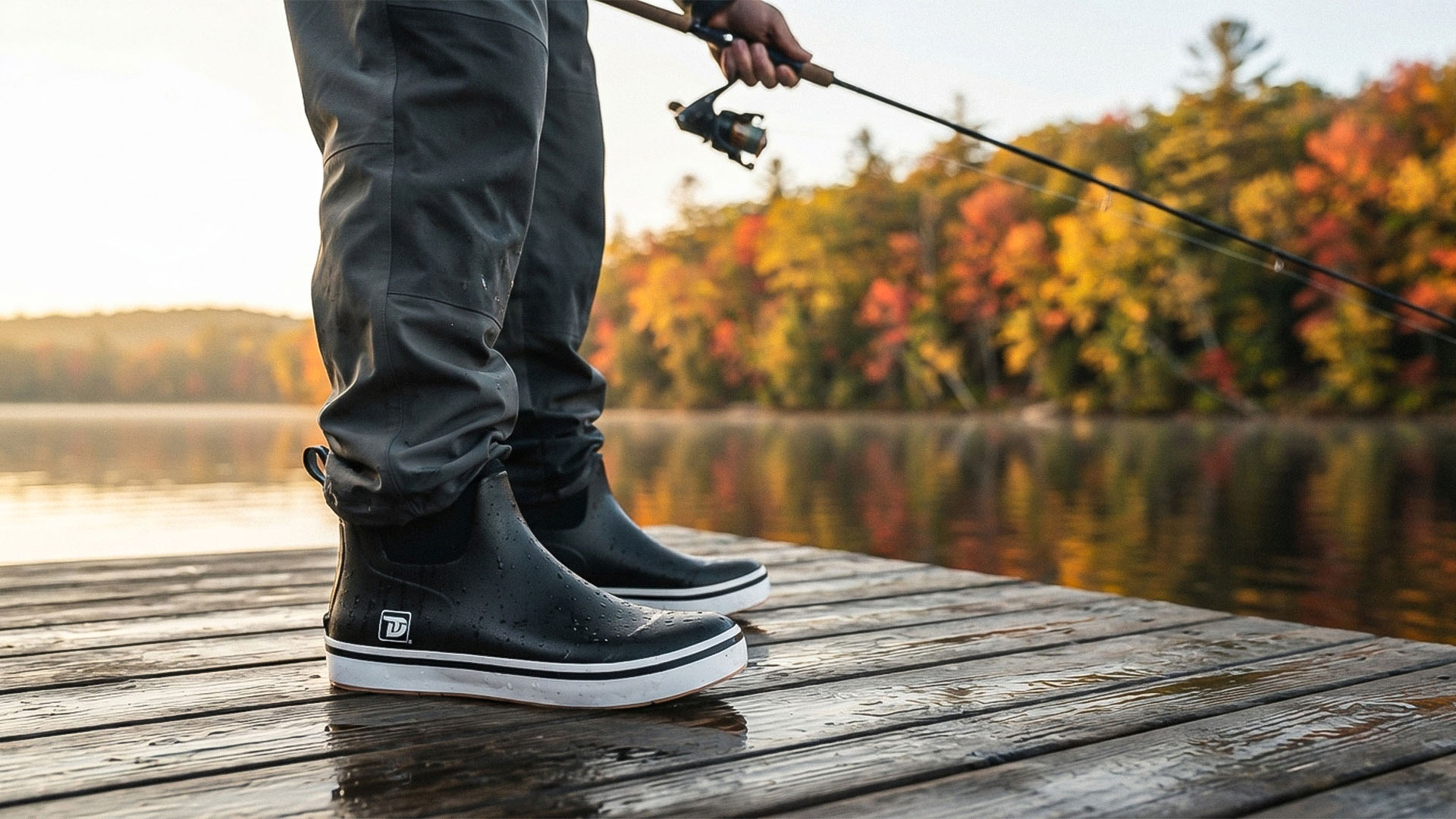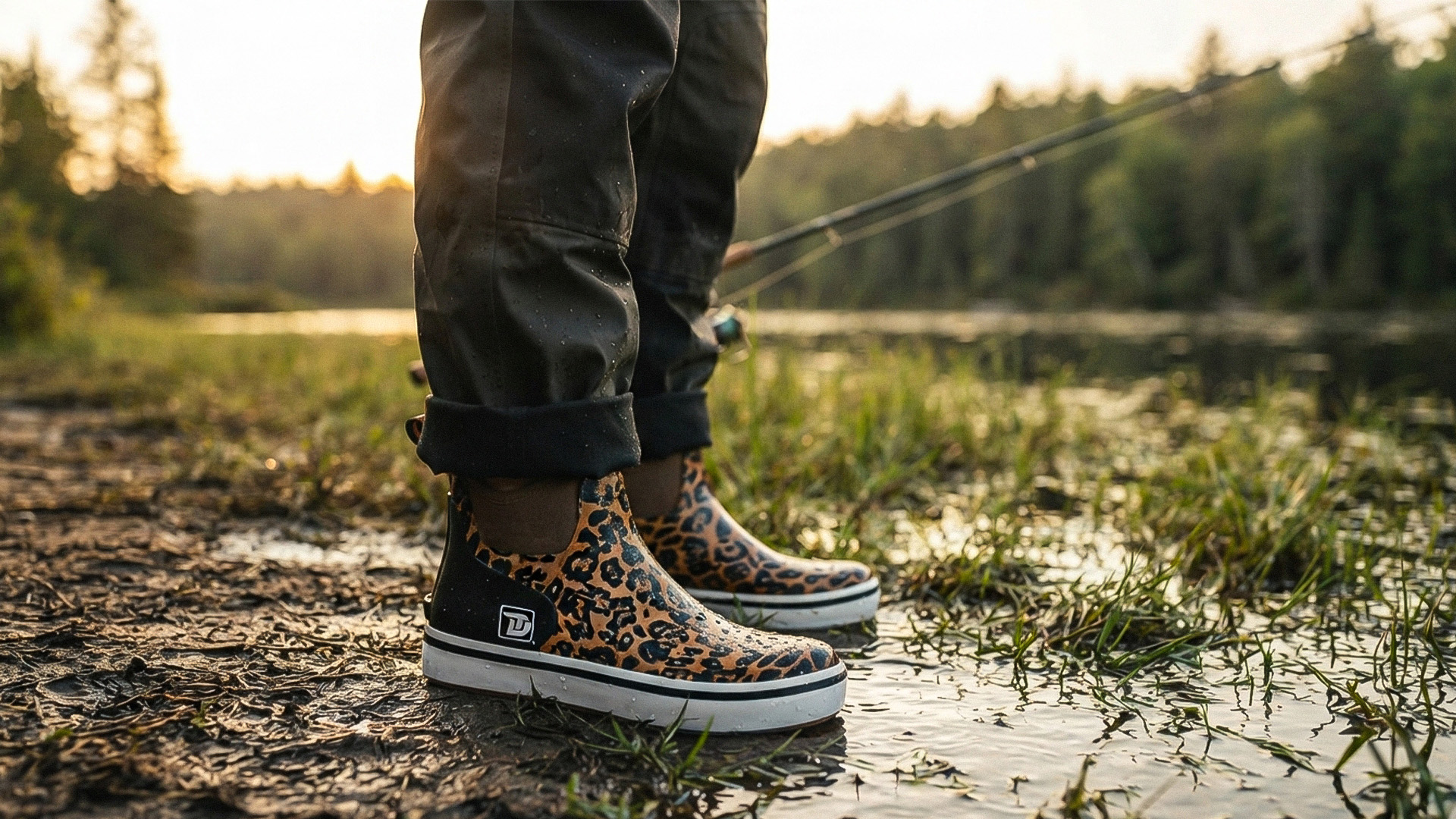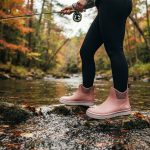
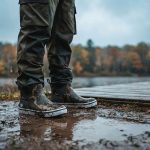
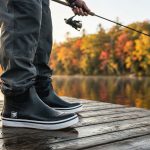
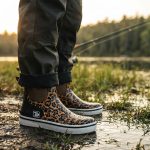
Shrimping can turn a clean boat into a wet, muddy workspace in a hurry.
Whether you are throwing a cast net from a boat, dipping around dock lights, working tidal creeks, or launching before dark from a muddy ramp, your feet may deal with saltwater, mud, shrimp slime, bait, wet rope, cooler drainage, and constant spray.
That makes footwear more important than many first-time shrimpers expect.
The best deck boots for shrimping should be waterproof, easy to rinse, stable on wet hard surfaces, comfortable for repeated casting, and secure enough for moving around a boat after dark.
They should also match the type of shrimping you actually do.
A cast-net angler working from a center console needs different footwear from someone wading a tidal flat or pulling a small skiff through soft mud.
This guide explains how to choose deck boots for shrimping, when ankle boots work best, when taller footwear is necessary, what socks to wear, and how to handle wet boats, muddy ramps, cast nets, and nighttime conditions.
Why Shrimping Is Hard on Footwear
Shrimping combines several conditions that are tough on ordinary shoes.
Your footwear may be exposed to:
- Saltwater
- Mud
- Shrimp slime
- Bait residue
- Cast-net water
- Wet rope
- Cooler drainage
- Boat washdowns
- Algae
- Marsh grass
- Sand
- Rain
- Dock grime
A single cast net can bring a surprising amount of water back onto the deck.
After several throws, the cockpit may stay wet for the rest of the trip.
Sneakers absorb that water.
Flip-flops provide little protection.
Waterproof deck boots are often the cleaner and more practical option.
Why Deck Boots Work Well for Shrimping
Deck boots are designed for wet marine environments.
For shrimping, they offer several advantages:
- Waterproof protection
- Closed-toe coverage
- Easy-rinse surfaces
- Stable wet-deck contact
- Comfortable standing
- Easy pull-on design
- Better cleanup after mud and shrimp residue
They are especially useful for boat-based shrimping where the goal is to keep your feet dry rather than allow water to drain through your shoes.
For many recreational shrimpers, ankle-height waterproof deck boots provide the best balance of protection and mobility.
Deck Boots for Cast-Net Shrimping
Cast-net fishing involves repeated body movement.
You may:
- Rotate your torso
- Step forward
- Shift your weight
- Gather the net
- Bend at the knees
- Pull wet mesh aboard
- Sort the catch
- Repeat dozens of times
Your footwear needs to move with you.
A good deck boot for cast-net shrimping should feel secure enough that your foot does not slide inside during the throwing motion.
Look for:
- Secure heel fit
- Stable forefoot
- Comfortable toe room
- Flexible outsole
- Manageable weight
- Wet-deck tread
Oversized boots can feel especially awkward while throwing a net because your foot may rotate inside the boot.
Why Wet Cast Nets Matter
A wet cast net adds more water to the deck every time you retrieve it.
The net may drip across:
- Cockpit floor
- Gunwale
- Cooler lids
- Casting area
- Your clothing
- Your footwear
This is one reason waterproof boots make sense even when the weather is warm and dry.
The shrimping method itself creates wet conditions.
Fabric shoes may become soaked long before the trip is over.
Deck Boots for Boat Shrimping
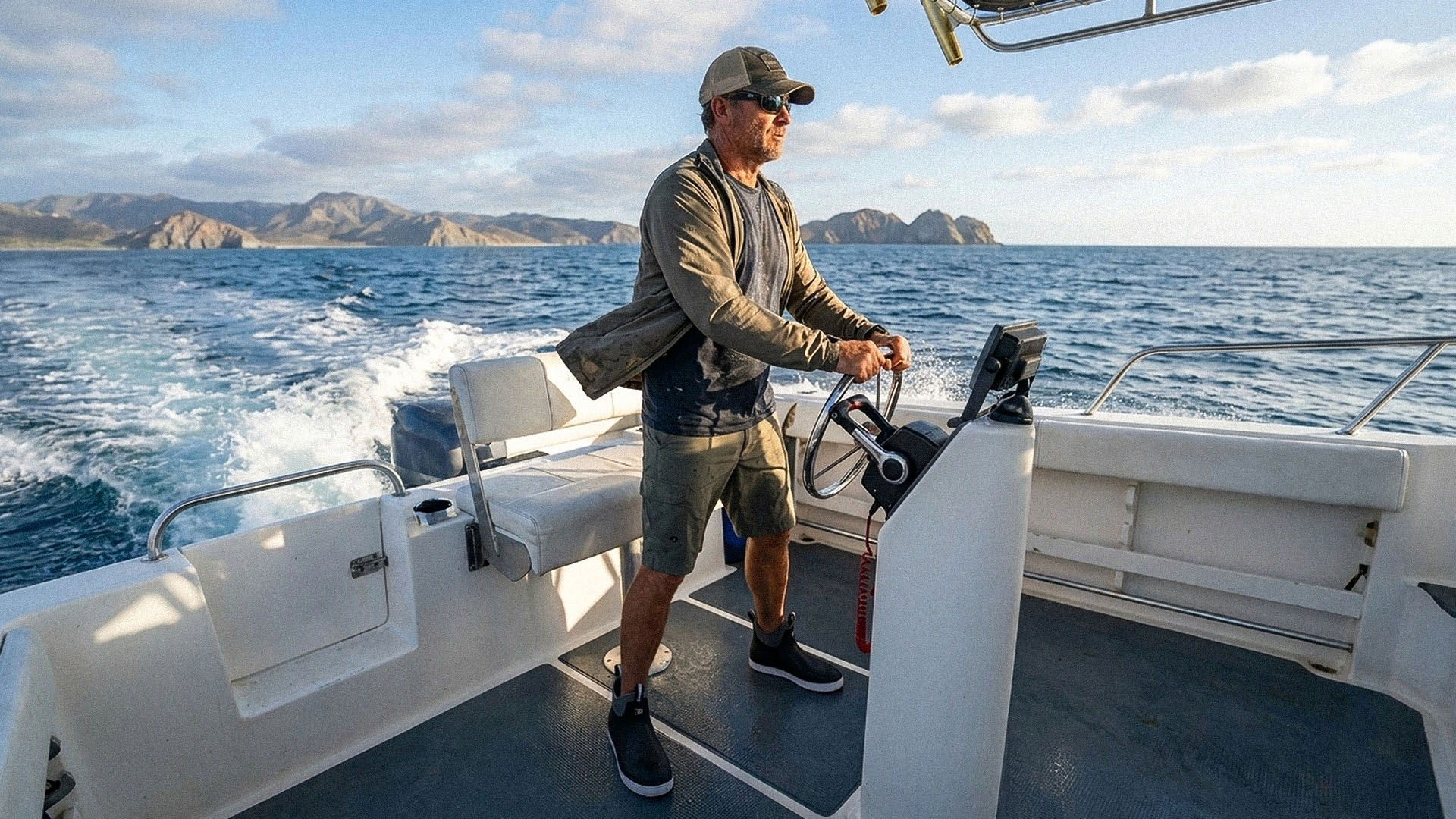
Boat-based shrimping is where deck boots are most useful.
A working shrimping boat may have:
- Wet fiberglass
- Aluminum flooring
- Cast nets
- Buckets
- Coolers
- Shrimp baskets
- Wet rope
- Lights
- Washdown water
Waterproof deck boots protect your feet while remaining easy to rinse after the trip.
Anglers comparing marine footwear can evaluate TruDaveGear waterproof deck boots alongside other options based on fit, outsole design, boot height, removable insoles, and expected water exposure.
Deck Boots for Night Shrimping
Shrimping often happens after sunset.
Nighttime changes footwear needs because visibility is reduced.
You may not immediately see:
- Wet spots
- Loose rope
- Cast-net weights
- Hooks
- Shrimp shells
- Cooler water
- Mud
- Fish slime
- Open hatches
Secure closed-toe footwear becomes even more important.
Deck boots help protect your feet from common deck hazards, but lighting and organization still matter.
Use:
- Headlamp
- Deck lights
- Flashlight backup
- Clear walkways
- Organized rope and nets
Do not rely on footwear alone.
Cast-Net Weights Are a Foot Hazard
Cast nets often have weighted edges.
Those weights may fall near your feet when:
- Gathering the net
- Loading the boat
- Sorting tangles
- Repacking after a throw
Closed-toe footwear provides more protection than sandals or bare feet.
However, recreational deck boots are not safety-toe boots.
If heavy commercial gear is involved, use footwear appropriate to the hazard.
Shrimp Slime and Wet Decks
Shrimp can leave a slick organic residue on the deck.
Combined with water, this may create slippery areas around:
- Sorting bins
- Coolers
- Buckets
- Net retrieval zones
- Washdown areas
Rinse residue before it builds up.
A marine-focused outsole helps, but no deck boot is completely slip-proof.
Keep the deck and tread clean.
Muddy Boat Ramps
Shrimping trips often begin and end at ramps near tidal creeks or coastal marshes.
Ramp conditions may include:
- Mud
- Algae
- Sand
- Wet concrete
- Marsh grass
- Shell fragments
- Trailer grime
Deck boots protect against shallow mud and puddles.
However, algae-covered ramps can be extremely slippery.
Move carefully and avoid assuming wet-deck traction will perform the same way on submerged algae.
Deck Boots vs. Tall Rain Boots for Shrimping
Both can work.
Deck Boots Are Better For:
- Boat decks
- Cast-net fishing
- Warm weather
- Long standing
- Easy movement
- Quick cleanup
Tall Rain Boots Are Better For:
- Deep mud
- Deeper puddles
- Wet marsh access
- More lower-leg protection
- Heavy shore-based work
If most of your shrimping happens from a boat, deck boots are usually more comfortable.
If you regularly walk through deep mud, taller waterproof boots may be better.
Are Deck Boots Good for Shrimping From Shore?
Yes, in some situations.
Deck boots work well for:
- Firm shoreline
- Docks
- Piers
- Boat ramps
- Shallow wet areas
- Light mud
They are less suitable for:
- Deep tidal mud
- Repeated wading
- Water above the boot opening
- Soft marsh bottoms
- Shell-heavy areas
For deeper water or unstable mud, use taller specialized footwear.
Shrimping Around Dock Lights
Dock-light shrimping may involve standing for long periods while using nets or dip nets.
Common surfaces include:
- Wooden docks
- Composite docks
- Concrete
- Aluminum platforms
These areas may become wet from:
- Rain
- Net water
- Sea spray
- Cooler drainage
- Algae
Deck boots are useful because they provide waterproof protection without the bulk of tall rubber boots.
Comfort matters when you may stand for several hours waiting for shrimp movement.
Deck Boots for Dip-Net Shrimping
Dip-net shrimping usually involves less dramatic casting but more walking and repeated leaning over the dock or boat edge.
Footwear should provide:
- Stable stance
- Closed-toe protection
- Comfortable heel
- Secure fit
- Wet-surface traction
- Enough cushioning
A loose boot may feel unstable when leaning or shifting weight.
Choose fit carefully.
Warm-Weather Shrimping
Many shrimping seasons occur in warm or humid coastal conditions.
For hot-weather trips, choose:
- Uninsulated deck boots
- Lightweight socks
- Ankle-height design
- Removable insoles
- Manageable weight
Avoid heavily insulated boots unless conditions are actually cold.
Waterproof footwear can trap heat, so sock choice matters.
Best Socks for Shrimping
Wear moisture-wicking socks made from:
- Synthetic fibers
- Lightweight merino wool
- Merino-synthetic blends
Avoid cotton.
Cotton holds sweat and water, then dries slowly.
For ankle deck boots, crew-height socks work well because they protect the ankle from collar rubbing.
Bring a spare pair during long or humid trips.
Should You Wear Deck Boots Barefoot While Shrimping?
It is generally not recommended.
Barefoot deck boot use can increase:
- Sweat buildup
- Odor
- Heel rubbing
- Blisters
- Skin irritation
A lightweight moisture-wicking sock provides a washable layer between your foot and the boot.
That is especially useful when humidity and warm weather increase sweating.
Cold-Weather Shrimping
Some shrimping trips happen during cooler months or at night when temperatures drop.
For cold conditions:
- Wear merino or synthetic socks
- Choose enough toe room
- Keep boots waterproof
- Consider insulation when needed
- Bring spare socks
- Keep pants outside the boot opening
Do not force thick socks into tight boots.
Compressed footwear can reduce comfort and circulation.
Night Temperature Changes
A warm afternoon may become much cooler after dark.
If you plan to shrimp through the evening, bring:
- Light jacket
- Dry socks
- Dry shirt
- Waterproof layer
- Warm hat when needed
Your footwear may stay the same, but clothing layers should adapt.
Boot Height for Shrimping
Choose height based on water exposure.
Ankle Deck Boots
Best for:
- Boat shrimping
- Dock lights
- Cast-net fishing
- Warm weather
- General wet-deck use
Mid-Height Boots
Best for:
- More spray
- Rain
- Wetter cockpits
- Muddy shore access
Tall Boots
Best for:
- Deep mud
- Marsh access
- Repeated shallow wading
- Heavy washdowns
For most recreational boat shrimping, ankle-height deck boots are enough.
Traction on Wet Fiberglass
Many shrimping boats use fiberglass.
Fiberglass may become slick from:
- Water
- Shrimp slime
- Sunscreen
- Soap
- Fish residue
Look for a deck boot outsole with:
- Broad surface contact
- Water channels
- Flexible rubber
- Stable heel
- Cleanable grooves
Keep the outsole free from mud and algae.
Tread packed with ramp mud will not contact the deck properly.
Traction on Aluminum Boats
Small skiffs and jon boats used for shrimping may have aluminum decks.
Aluminum can become slick from:
- Mud
- Rain
- shrimp residue
- algae
- bait
- fuel contamination
Deck boots can work well when the sole is clean.
Avoid bringing heavy mud onto the boat.
Rinse or brush the outsole before boarding when possible.
Nighttime Rope and Net Management
Loose netting and rope create tripping hazards.
Keep:
- Cast nets coiled
- Hand lines organized
- Buckets secured
- Coolers positioned
- Walkways open
Do not stand inside loops of rope or net.
A weighted net can tighten or move unexpectedly.
Footwear helps protect your feet, but organization prevents the problem.
Shrimp Sorting Areas
After a good cast, shrimp may be sorted on:
- Deck
- Cooler lid
- Sorting tray
- Bucket
- Table
This area can become wet and slick.
Keep the working zone organized.
Rinse shrimp residue when needed.
Avoid leaving shell fragments or bycatch on the deck.
Handling Bycatch
Cast nets may bring up more than shrimp.
Possible bycatch may include:
- Small fish
- Crabs
- Shells
- Debris
- Jellyfish
- Vegetation
Some bycatch may have sharp spines.
Wear closed-toe footwear and gloves as appropriate.
Do not step on unfamiliar marine life.
Return bycatch according to local regulations and safe handling practices.
Shrimp Shells and Sharp Debris
Shrimp shells are not usually a major puncture hazard, but mixed debris can be.
Cast nets may collect:
- Oyster shell
- Crab shell
- Broken shell fragments
- Fishing hooks
- metal debris
- glass
- rocks
Check the deck before walking barefoot.
Standard deck boots provide basic protection but are not puncture-resistant footwear.
Waterproofing Matters Even in Summer
Summer shrimping is still wet.
Your boots may encounter:
- Net water
- Spray
- rain
- cooler drainage
- washdowns
- muddy ramps
Waterproof boots keep your socks from becoming soaked.
Quick-draining shoes may be better only when water entry is unavoidable.
For boat shrimping, staying dry is usually the better goal.
Deck Boots vs. Fishing Shoes for Shrimping
Choose Deck Boots When:
- The boat stays wet
- You cast nets repeatedly
- Mud and shrimp residue are common
- Washdowns happen
- You want easy cleanup
- You prefer dry feet
Choose Fishing Shoes When:
- The weather is extremely hot
- The boat stays mostly dry
- Water entry is unavoidable
- Quick drainage matters
- You walk long distances
For most boat-based cast-net shrimping, deck boots are the better overall choice.
Deck Boots vs. Sneakers
Sneakers are usually a poor choice for messy shrimping trips.
They may:
- Absorb saltwater
- Hold shrimp odor
- Stay wet
- Trap mud
- Become heavy
- Dry slowly
Deck boots rinse more easily and keep water away from the foot.
If you care about your sneakers, leave them in the vehicle.
What About Flip-Flops?
Flip-flops are not recommended for active shrimping.
They provide little protection from:
- Cast-net weights
- Sharp bycatch
- wet surfaces
- shells
- cooler corners
- deck hardware
They also offer poor heel security.
A moving boat requires footwear that stays attached to your foot.
Footwear for Kids While Shrimping
Children should wear secure closed-toe footwear.
Good options include:
- Lightweight deck boots
- Closed-toe marine shoes
- Water-ready fishing shoes
Avoid:
- Flip-flops
- Bare feet
- Loose slides
Children may not notice wet areas, net weights, or deck debris as quickly as adults.
Fit Matters for Cast-Net Fishing
Cast-net throwing uses rotation and foot placement.
Your footwear should not:
- Rotate around your foot
- Slide at the heel
- Feel too long
- Make you grip with your toes
A good fit should provide:
- Secure heel
- Stable midfoot
- Comfortable forefoot
- Enough toe room
Test side steps and turning motions before your first trip.
Wide Feet
Wide-footed shrimpers should look for:
- Roomy toe box
- Comfortable forefoot
- Secure heel
- Enough instep volume
Do not simply size up to gain width.
Extra length can reduce control during casting.
Removable Insoles
Removable insoles are especially useful in humid shrimping conditions.
They allow you to:
- Dry the boot faster
- Reduce odor
- Remove sweat
- Replace worn cushioning
- Add support
After a warm night trip, remove the insoles even if the boots did not visibly get wet.
Sweat can remain trapped underneath.
Cleaning Shrimp Residue From Boots
After shrimping:
- Check for hooks or sharp debris.
- Rinse with fresh water.
- Remove shrimp residue.
- Brush the outsole.
- Use mild soap if necessary.
- Remove the insoles.
- Dry everything separately.
Do not allow organic residue to remain overnight.
Warm coastal temperatures can make odor develop quickly.
Removing Mud From Tread
Mud from ramps and marsh access can become packed into outsole grooves.
Before returning to the boat deck, clean as much mud as practical.
After the trip:
- Rinse tread
- Use a boot brush
- Remove gravel
- Check for shell pieces
- Remove algae
Clean tread improves deck contact.
Saltwater Care
Always rinse deck boots after saltwater shrimping.
Salt may collect around:
- Tread grooves
- Sidewalls
- Pull tabs
- Collar
- heel area
Freshwater rinsing helps keep salt residue from building up.
This is especially important for frequent shrimpers.
Drying Boots After Night Trips
Do not throw wet boots into the garage and forget them after getting home late.
Night trips often end when everyone is tired, which makes gear maintenance easy to skip.
At minimum:
- Remove insoles
- Open the boots
- Place them in airflow
- Remove dirty socks
- Keep them out of sealed bags
You can finish deeper cleaning the next morning, but do not leave everything wet and closed overnight.
Preventing Shrimp Smell in Boots
Shrimp and bait residue can create strong odor.
To prevent it:
- Rinse immediately
- Clean tread grooves
- Remove insoles
- Dry fully
- Wear clean socks
- Clean boot trays
- Avoid hot car storage
Fragrance spray does not remove the source.
Cleaning and drying do.
Vehicle Storage After Shrimping
Use a washable container for dirty footwear.
Good options include:
- Rubber boot tray
- Plastic tote
- Cargo liner
- Washable bin
Change into clean shoes for the drive home if practical.
This helps keep:
- Mud
- shrimp residue
- saltwater
- odor
out of vehicle carpet.
Best Deck Boot Features for Shrimping
Look for:
Waterproof Construction
Protects against net water, spray, and washdowns.
Closed Toe
Helps protect against weights, shells, and deck equipment.
Stable Outsole
Useful for wet boat decks and docks.
Secure Heel
Important during cast-net rotation.
Lightweight Design
Reduces fatigue during repeated throwing.
Removable Insoles
Improves drying and odor control.
Easy-Clean Upper
Useful after shrimp slime and mud.
Comfortable Cushioning
Helps during long night trips.
Appropriate Boot Height
Matches your actual water exposure.
Features to Avoid
Avoid shrimping footwear that is:
- Open toe
- Too loose
- Heavily insulated in hot climates
- Smooth-soled
- Difficult to clean
- Excessively heavy
- Too low for expected wading
- Too tall for ordinary boat use
- Worn out
- Unable to dry properly
The best footwear should match the shrimping environment, not just look waterproof.
Shrimping Gear Checklist
Along with footwear, many recreational shrimpers may need:
- Cast net or dip net
- Bucket
- Cooler
- Headlamp
- Backup flashlight
- Gloves
- Appropriate license
- Measuring device when required
- Dry bag
- Drinking water
- Insect repellent
- Sun protection
- Rain jacket
- Spare socks
Always check current local fishing regulations before harvesting shrimp.
Rules can vary by state, season, location, net type, and harvest method.
Pre-Trip Footwear Checklist
Before shrimping:
- Check outsole tread
- Remove mud and gravel
- Test fit
- Wear moisture-wicking socks
- Bring spare socks
- Confirm boots are dry
- Check for cracks
- Inspect pull tabs
- Bring clean shoes for the drive home
Do not discover worn tread after stepping onto a wet ramp at night.
Common Shrimping Footwear Mistakes
Wearing Flip-Flops
Poor protection and poor heel security.
Wearing Sneakers
They absorb saltwater and shrimp odor.
Choosing Oversized Boots
Loose footwear reduces control during net casting.
Wearing Cotton Socks
Cotton holds sweat and dries slowly.
Going Barefoot
Sharp debris and cast-net weights create unnecessary risk.
Ignoring Mud in the Tread
Mud reduces deck contact.
Leaving Boots Dirty Overnight
Organic residue smells quickly.
Wearing Insulated Boots in Hot Weather
This creates excess heat and sweat.
Using Ankle Boots for Deep Mud
Choose taller footwear when conditions require it.
Forgetting Lighting
Good footwear cannot compensate for poor nighttime visibility.
Final Thoughts
Deck boots are an excellent choice for many types of shrimping, especially cast-net fishing from boats, docks, and piers.
Shrimping creates wet conditions even when the weather is clear.
Every cast brings seawater back onto the deck.
Mud comes aboard from ramps.
Shrimp residue, bycatch, cooler drainage, and washdowns add more moisture throughout the trip.
For most recreational boat shrimpers, uninsulated ankle deck boots provide a strong balance of waterproofing, mobility, easy cleaning, and long-standing comfort.
Choose boots with a secure heel, stable wet-deck outsole, comfortable toe box, removable insole, and manageable weight.
Wear moisture-wicking socks instead of cotton.
Bring a spare pair for long or nighttime trips.
If your shrimping requires deep mud, repeated wading, or water above the ankle, move to taller waterproof footwear instead of relying on short deck boots.
At night, keep nets, ropes, buckets, and weights organized.
Use reliable lighting.
No boot can prevent a trip over a loose cast net.
After the trip, rinse saltwater and shrimp residue, brush mud from the tread, remove the insoles, and dry everything completely.
The right shrimping footwear should let you concentrate on timing the tide, throwing a clean net, and putting shrimp in the cooler instead of worrying about wet socks or slippery shoes.
Frequently Asked Questions
Are deck boots good for shrimping?
Yes. Deck boots are excellent for boat, dock, pier, and cast-net shrimping because they are waterproof, easy to clean, and designed for wet marine surfaces.
What boots should I wear for cast-net shrimping?
Waterproof ankle deck boots are a strong choice for boat-based cast-net shrimping because they provide secure fit, water protection, and easy cleanup.
Are rain boots good for shrimping?
Yes, especially for muddy shore access and deeper puddles. Deck boots are usually more comfortable for active boat use.
Can I wear sneakers while shrimping?
You can, but sneakers absorb saltwater, mud, and shrimp odor and may remain wet for the rest of the trip.
Can I wear flip-flops while shrimping?
Flip-flops are not recommended for active shrimping because of cast-net weights, wet decks, shells, and poor heel security.
Should shrimping boots be insulated?
Usually not in warm coastal climates. Choose insulated boots only for genuinely cold conditions.
What socks should I wear with deck boots for shrimping?
Wear lightweight synthetic or merino-blend moisture-wicking socks. Avoid cotton.
Are deck boots good for night shrimping?
Yes. Closed-toe waterproof deck boots are useful at night, but good lighting and organized gear remain essential.
What boot height is best for shrimping?
Ankle deck boots are ideal for boats and docks. Mid-height or tall boots are better for deep mud, wading, or heavy water exposure.
Are deck boots good for muddy boat ramps?
They help with shallow mud and puddles, but algae-covered ramps can remain extremely slippery.
Are deck boots good for shrimping from shore?
They work on firm shorelines and shallow wet areas. Deep mud or water may require taller waterproof footwear.
Can I wear deck boots barefoot while shrimping?
It is not recommended for long trips because barefoot use can increase sweat, odor, rubbing, and blisters.
How do I clean shrimp smell from deck boots?
Rinse with fresh water, remove shrimp residue, brush the tread, use mild soap if needed, remove the insoles, and dry everything fully.
Should I clean saltwater off my boots after every shrimping trip?
Yes. A freshwater rinse helps remove salt before it builds up around the tread, collar, sidewalls, and pull tabs.
Are fishing shoes better than deck boots for shrimping?
Fishing shoes may be better in extremely hot or quick-draining situations. Deck boots are better when you want waterproof protection and easier cleanup.
Why are removable insoles useful for shrimping?
They help the boots dry faster, reduce odor, and allow cushioning or support replacement.
What is the biggest footwear mistake when shrimping?
Wearing loose, open-toe, or absorbent footwear on a wet boat is one of the most common mistakes.