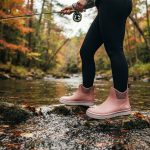
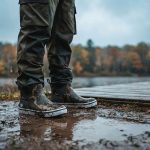
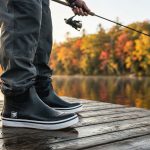
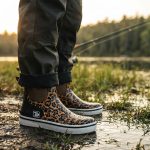
Crabbing is one of those outdoor activities that looks simple until you actually spend a few hours doing it.
You set traps or rings, handle bait, pull wet lines, work around seawater, move across docks, and repeatedly deal with equipment that drips all over your feet.
By the end of the day, the dock may be wet, your gloves may smell like bait, and your shoes may be covered with saltwater, mud, crab debris, or fish residue.
That makes footwear more important than many first-time crabbers expect.
The best deck boots for crabbing should keep your feet dry, provide stable footing on wet hard surfaces, clean up easily after bait handling, and remain comfortable while standing for long periods.
They should also match the type of crabbing you actually do.
Pulling pots from a boat is different from crabbing from a public pier. Clamming on tidal flats is different from standing at a marina. Winter Dungeness crabbing in the Pacific Northwest requires different footwear than blue crab fishing on a humid summer morning along the Chesapeake Bay.
This guide explains what to look for in deck boots for crabbing and shellfishing, where they work best, when taller boots may be necessary, and how to stay comfortable around wet docks, bait, saltwater, mud, and cold coastal weather.
Why Crabbing Is Hard on Footwear
Crabbing creates a combination of water, bait, and hard surfaces.
Your footwear may come into contact with:
- Saltwater
- Fish heads
- Chicken bait
- Squid
- Bait oil
- Crab slime
- Mud
- Sand
- Wet rope
- Trap drainage
- Rain
- Dock algae
- Seaweed
- Cooler water
Unlike regular boating, crabbing often involves repeated wet work.
Every time you pull a crab ring or pot, seawater drains onto the deck or dock.
Every time you rebait a trap, fish oils and organic residue may reach the ground.
That makes waterproof, easy-clean footwear especially useful.
Why Deck Boots Work Well for Crabbing
Deck boots are a strong choice because they are designed for wet marine environments.
They typically provide:
- Waterproof protection
- Closed-toe coverage
- Easy-rinse surfaces
- Wet-deck outsole design
- Comfortable standing support
- Simple pull-on construction
These features are valuable when you are repeatedly moving between dry and wet areas.
A regular sneaker may feel comfortable at first, but once it absorbs seawater or bait juice, it may stay wet for the rest of the day.
Deck boots are much easier to rinse after the trip.
Deck Boots for Boat Crabbing
Boat crabbing is one of the best uses for deck boots.
A boat used for crabbing may have:
- Wet fiberglass
- Trap lines
- Crab pots
- Bait containers
- Coolers
- Saltwater washdown
- Mud from launches
- Fish residue
When pots come aboard, seawater may drain across the deck.
Deck boots help protect your feet while allowing you to move between traps, storage areas, and bait stations.
For recreational boat crabbing, ankle-height waterproof deck boots are often enough.
They provide protection without the bulk of tall rubber boots.
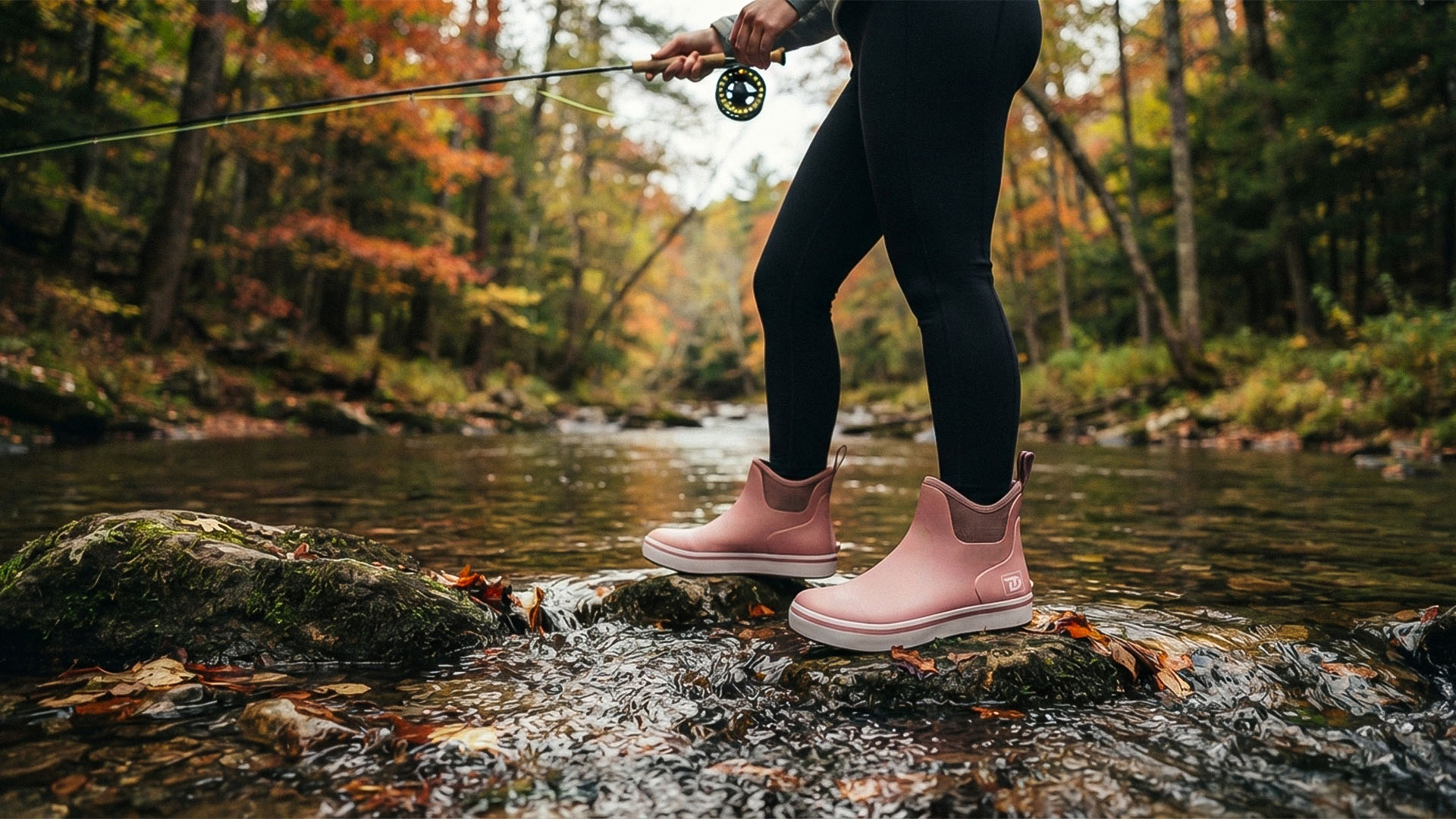
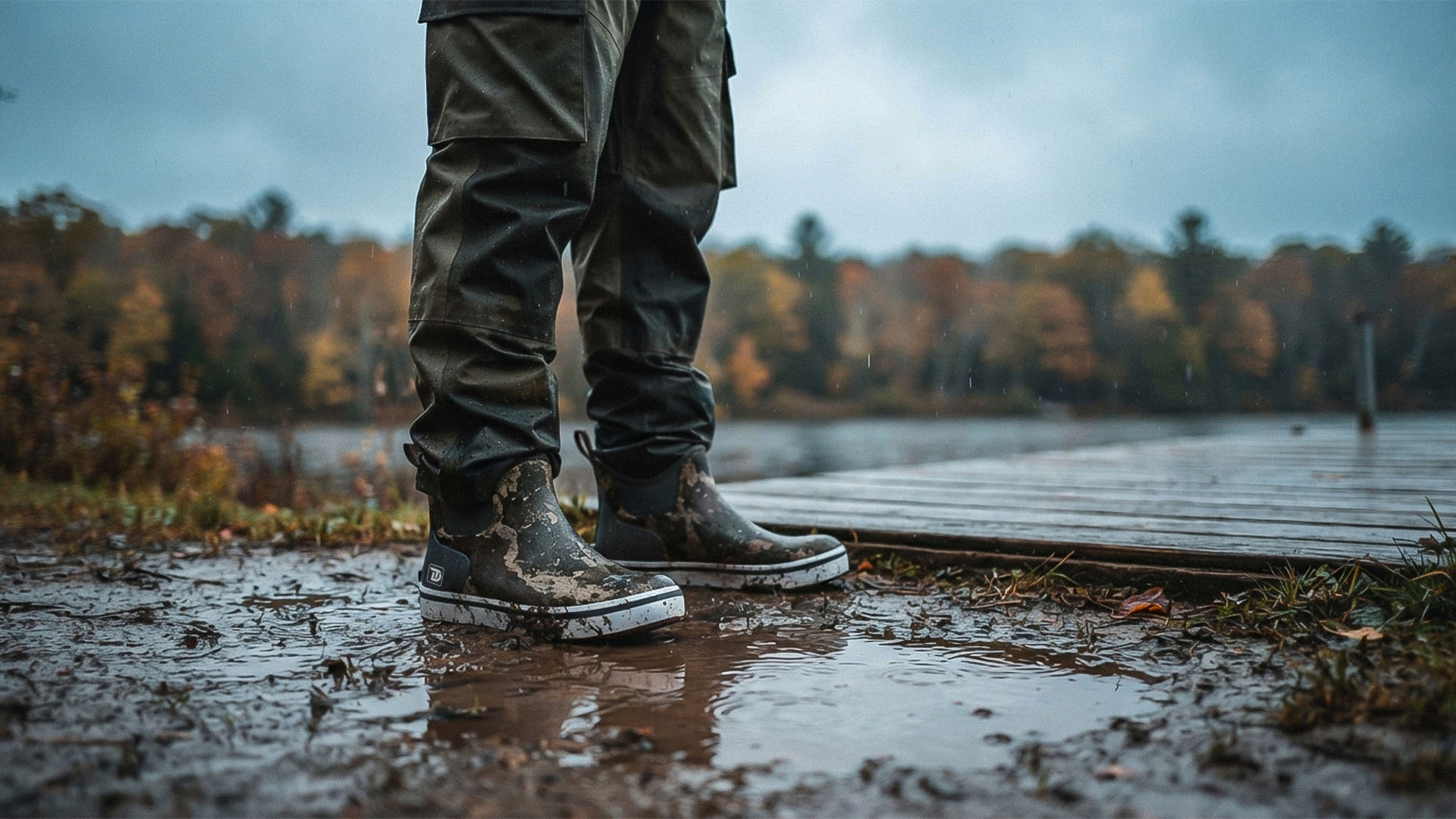
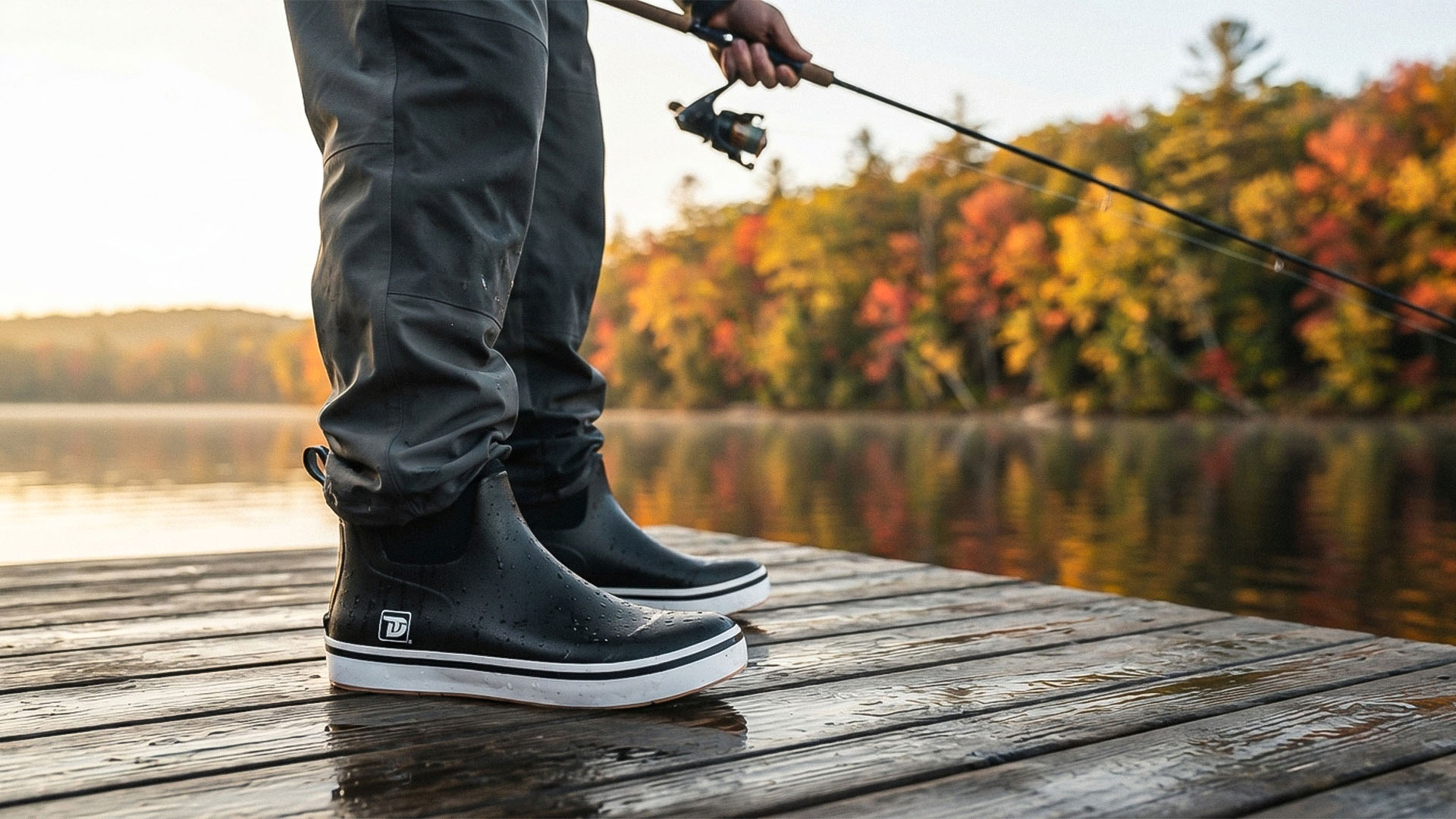
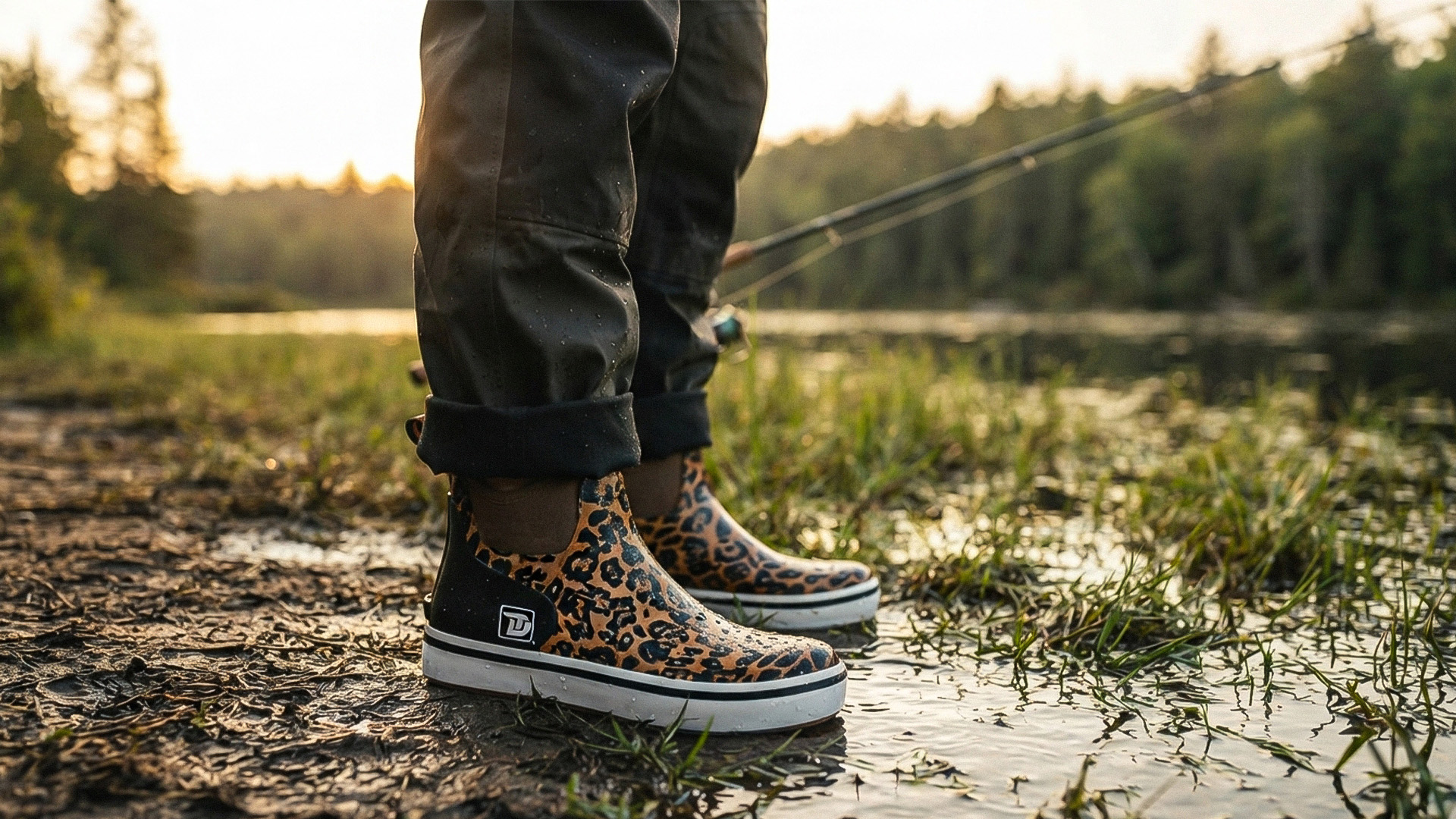
Anglers and crabbers comparing marine footwear can review TruDaveGear waterproof deck boots alongside other coastal options based on waterproofing, outsole design, fit, boot height, and expected water exposure.
Deck Boots for Pier Crabbing
Pier crabbing is popular because it requires less equipment than boat fishing.
But piers create their own footwear challenges.
You may encounter:
- Wet wooden boards
- Concrete
- Bait residue
- Fish scales
- Rain
- Seawater splash
- Seaweed
- Mud near shoreline access
- Crab shells
- Cooler drainage
Deck boots work well because they protect against ordinary splash and make cleanup easier.
However, piers can be rough on marine outsoles.
Concrete and abrasive surfaces may wear tread faster than fiberglass boat decks.
If you crab from piers frequently, inspect outsole wear regularly.
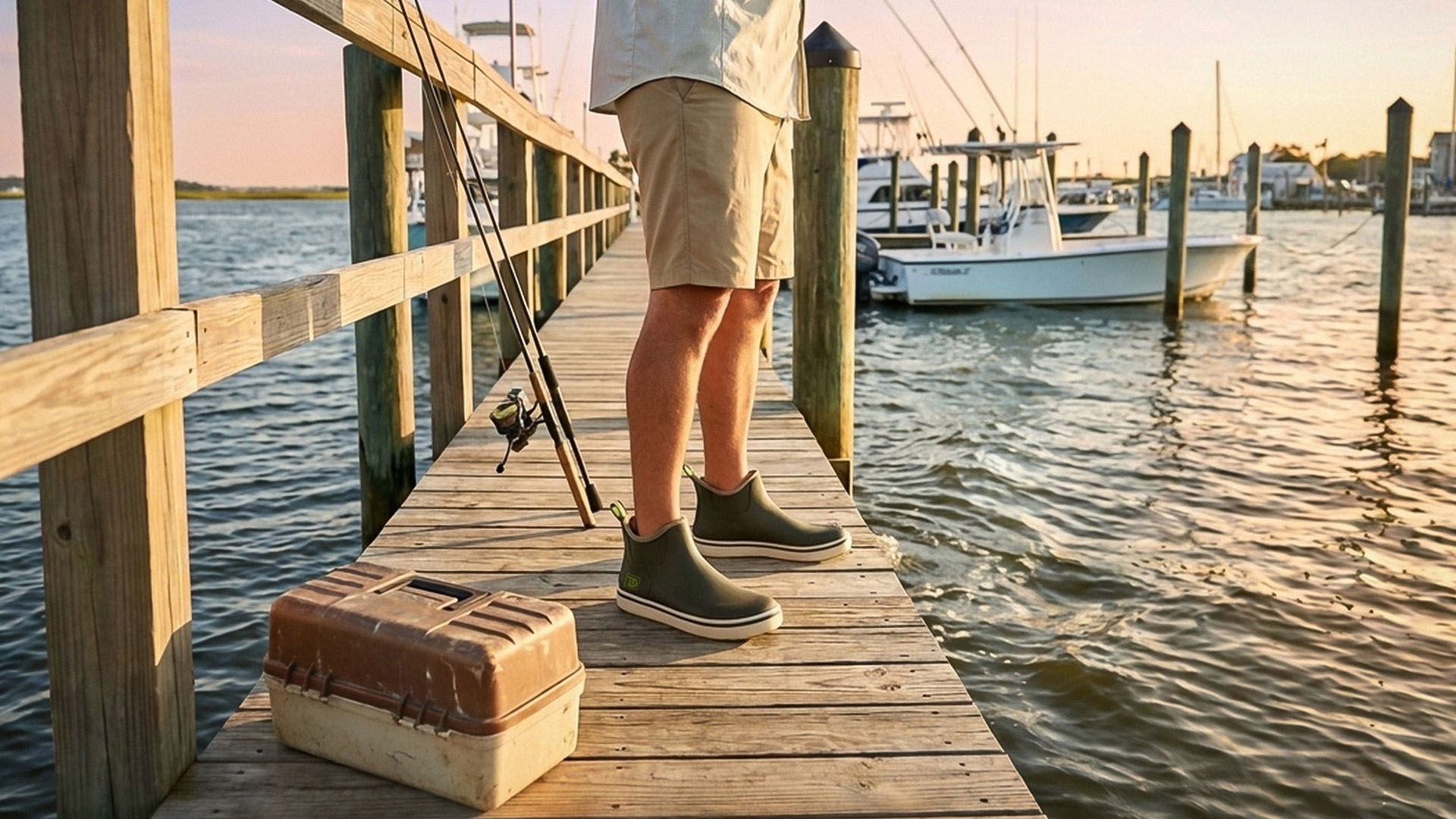
Deck Boots for Dock Crabbing
Private docks and marina docks are another common setting.
These surfaces may be:
- Wood
- Composite
- Concrete
- Aluminum
- Floating dock material
They can become slick from:
- Rain
- Algae
- Fish slime
- Bait
- Salt spray
A good deck boot should provide stable wet-surface contact without deep aggressive lugs designed only for mud.
Keep the outsole clean.
Mud or bait packed into tread grooves can reduce contact with the dock surface.
Are Deck Boots Good for Clamming?
Sometimes.
Deck boots work well for clamming when you stay near firm shoreline, wet sand, or shallow tidal areas.
They are useful for:
- Wet sand
- Muddy access trails
- Rain
- Light surf
- Shallow puddles
- Shellfish-cleaning areas
However, ankle deck boots are not ideal when you need to walk through deeper mud or water.
For deeper tidal flats, taller rubber boots, hip boots, or appropriate waders may be better.
Choose footwear based on expected depth.
Do not rely on ankle boots if water will rise above the opening.
Deck Boots for Oyster Harvesting
Oyster harvesting introduces additional hazards.
Oyster shells can be sharp.
Recreational deck boots may protect against water and ordinary contact, but they are not necessarily puncture-resistant.
If you are harvesting oysters in areas with sharp shell beds, choose footwear appropriate for:
- Sharp shells
- Mud
- Deep water
- Uneven ground
- Local harvest conditions
Specialized wading footwear or protective boots may be more appropriate than standard deck boots.
Deck boots remain useful for:
- Boat handling
- Dock work
- Sorting oysters
- Rinsing gear
- Marina use
Use specialized footwear where puncture risk is high.
Blue Crab Fishing
Blue crab fishing is popular along much of the Atlantic and Gulf coasts.
Common methods include:
- Hand lines
- Crab traps
- Trotlines
- Rings
- Pots
Footwear may be exposed to bait such as:
- Chicken necks
- Fish
- Eel
- Menhaden
- Clams
These baits create strong odor.
Waterproof deck boots are valuable because molded surfaces are easier to clean than fabric shoes.
After a blue crab trip, rinse boots before bait residue dries.
Dungeness Crabbing
Dungeness crabbing often involves cooler temperatures and colder water.
Common conditions may include:
- Cold mornings
- Rain
- Ocean spray
- Wet docks
- Heavy traps
- Long boat rides
For colder conditions, footwear should provide:
- Waterproof construction
- Enough room for warm socks
- Stable cushioning
- Secure heel fit
- Appropriate boot height
Uninsulated deck boots may work with merino socks in mild weather.
Insulated boots may be preferable for very cold trips.
Stone Crab Fishing
Stone crab fishing often takes place in warmer climates.
That means insulation is less important.
Look for:
- Uninsulated construction
- Lightweight design
- Waterproof upper
- Moisture-wicking sock compatibility
- Easy-clean materials
Hot-weather comfort matters.
A heavily insulated boot may cause excessive sweat.
For warm coastal climates, ankle-height uninsulated deck boots are usually the better choice.
Crabbing From a Kayak
Kayak crabbing requires a different footwear approach.
Deck boots may work if:
- The kayak stays mostly dry
- Water entry is limited
- Footwell space is sufficient
- The launch is relatively dry
But quick-draining fishing shoes may be better when:
- Water entry is expected
- You wet-launch
- Pedal clearance is tight
- The weather is hot
- Your feet will get wet anyway
Waterproof boots are useful when the goal is staying dry.
Quick-drain shoes are better when getting wet is unavoidable.
Crabbing From a Small Skiff
Small skiffs often get wet quickly.
Crab pots, bait buckets, and wet rope can cover the deck with water.
Deck boots are useful because they are:
- Compact
- Waterproof
- Easy to rinse
- Comfortable for standing
- Less bulky than tall rubber boots
A small boat also requires careful movement.
Choose boots that fit securely and do not feel oversized.
Loose footwear can make side steps and boat movement less controlled.
What Makes a Good Crabbing Boot?
A good crabbing boot should include several practical features.
Waterproof Construction
Saltwater and trap drainage are unavoidable.
Secure Fit
The boot should stay controlled during pulling, stepping, and turning.
Closed Toe
Helps protect against traps, rope hardware, shells, and equipment.
Wet-Surface Outsole
Important on docks and boat decks.
Easy-Clean Upper
Bait and crab residue should rinse away easily.
Comfortable Cushioning
Crabbing can involve long periods of standing.
Removable Insole
Useful for drying, odor control, and support.
Appropriate Height
Choose ankle, mid-height, or taller protection based on water depth.
Why Closed-Toe Footwear Matters
Crabbing equipment can be heavy.
You may work around:
- Metal traps
- Lead weights
- Bait cages
- Rope
- Hooks
- Crab claws
- Shells
- Coolers
- Dock cleats
Open-toe sandals provide limited protection.
Flip-flops are especially poor because they can twist or come off while pulling equipment.
Closed-toe deck boots offer more protection and better water control.
However, recreational deck boots are not necessarily safety-toe footwear.
Use work-rated footwear when occupational requirements demand it.
Wet Rope Creates Extra Water
Crab lines hold a surprising amount of seawater.
As rope comes aboard, water may run:
- Across the deck
- Over your gloves
- Onto your boots
- Into bait containers
- Around trap storage areas
This is one reason deck boots are useful even when it is not raining.
The fishing method itself creates wet conditions.
Bait Makes Crabbing Messier Than Regular Boating
Crab bait often produces oils and strong odor.
Common bait may include:
- Fish carcasses
- Menhaden
- Chicken
- Squid
- Clams
- Eel
- Sardines
These materials can spill on footwear.
Molded waterproof boots are easier to rinse than mesh shoes.
After bait handling, clean your boots with fresh water and mild soap when necessary.
Do not allow bait oil to dry into tread grooves.
Crab Slime and Shell Debris
Crabs may leave slime, shell fragments, and organic residue around the deck or cooler.
This can create:
- Odor
- Slick areas
- Sharp debris
- Dirty tread
Rinse the work area as needed.
Inspect boot tread before cleaning by hand.
Small shell fragments can be sharp.
Use a brush rather than bare fingers when possible.
Wet-Dock Traction
A crabbing dock may be more slippery than it looks.
Hazards include:
- Algae
- Fish slime
- Bait oil
- Rain
- Saltwater
- Mud
- Wet wood
- Smooth concrete
No boot is completely slip-proof.
Marine-focused traction helps, but careful movement matters just as much.
Use short controlled steps and keep work areas clear of loose rope.
Rope Is a Tripping Hazard
Crabbing involves more rope than many other fishing activities.
Loose line can become tangled around:
- Boots
- Coolers
- Traps
- Cleats
- Other anglers
Keep rope organized.
Do not stand inside loops.
Avoid placing your feet where the line may tighten suddenly.
Good footwear cannot protect against poor rope handling.
Deck organization is a major part of crabbing safety.
Choose the Right Boot Height
Boot height should match your water exposure.
Ankle Deck Boots
Best for:
- Boat crabbing
- Pier crabbing
- Dock use
- Warm weather
- Light rain
Mid-Height Boots
Best for:
- More spray
- Colder weather
- Wetter cockpits
- Rain-heavy trips
Tall Rubber Boots
Best for:
- Deeper mud
- Shallow wading
- Heavy washdowns
- Very wet work
Do not choose tall boots automatically.
Extra height adds weight and heat.
Use only as much coverage as you need.
Warm-Weather Crabbing
Warm-weather crabbers should prioritize:
- Uninsulated boots
- Lightweight socks
- Ankle-height design
- Moisture management
- Easy drying
Waterproof footwear can trap heat.
Wear synthetic or lightweight merino-blend socks rather than cotton.
Bring spare socks if you expect a long day.
Cold-Weather Crabbing
Cold-weather crabbing requires more attention to warmth.
Choose:
- Waterproof footwear
- Merino or synthetic socks
- Enough toe room
- Secure heel fit
- Warm insoles when appropriate
- Insulated boots if conditions require them
Do not force thick socks into tight boots.
Compression can reduce circulation and make toes feel colder.
Best Socks for Crabbing Boots
Socks affect comfort, warmth, and odor.
Good materials include:
- Synthetic performance fibers
- Merino wool
- Merino-synthetic blends
Avoid cotton.
Cotton holds sweat and water, then dries slowly.
For ankle deck boots, crew-height socks also reduce collar rubbing.
Bring a spare pair in a dry bag during long or cold trips.
Should You Wear Deck Boots Barefoot?
It is generally not recommended for long crabbing sessions.
Barefoot use can increase:
- Heel rubbing
- Sweat buildup
- Odor
- Blisters
- Skin irritation
Socks create a washable moisture-management layer.
This becomes especially useful when bait and saltwater are involved.
Removable Insoles Matter
Crabbing can leave the interior damp even when boots do not leak.
Moisture may come from:
- Sweat
- Rain entering from above
- Trap water
- Condensation
- Wet socks
Removable insoles allow you to:
- Dry boots faster
- Reduce odor
- Clean sweat
- Replace worn cushioning
- Add support
Remove footbeds after wet trips and dry them separately.
Comfort During Long Pier Sessions
Crabbing can involve long periods of waiting.
You may stand on a pier while checking traps every few minutes.
Hard concrete can create foot fatigue.
Look for deck boots with:
- Heel cushioning
- Stable footbed
- Supportive insole
- Secure fit
- Enough toe room
If you regularly crab from concrete piers, comfort may matter as much as waterproofing.
Crabbing With Wide Feet
Wide-footed crabbers should avoid simply sizing up.
A longer boot may create:
- Heel slip
- Foot rotation
- Instability
- Toe gripping
Instead, look for:
- Roomy toe box
- Wide forefoot
- Comfortable instep
- Secure heel
Test boots with the socks you actually plan to wear.
Crabbing With High Instep
Pull-on boots can feel tight over high insteps.
Look for:
- Enough internal volume
- Functional pull tabs
- Comfortable opening
- Removable insoles
- No top-of-foot pressure
If the boot is extremely difficult to put on, it may not match your foot shape.
Do not assume it will stretch dramatically.
Bait Odor and Boot Care
Crabbing boots can smell stronger than ordinary fishing footwear because bait is often oily.
After every trip:
- Rinse with fresh water.
- Brush the outsole.
- Remove bait residue.
- Remove insoles.
- Wipe damp interiors.
- Air dry completely.
- Clean the storage tray.
Do not leave dirty boots inside a hot vehicle.
Heat intensifies bait odor.
Cleaning Crab Bait From Deck Boots
If bait gets on the boots:
- Rinse loose material.
- Use mild soap.
- Brush oily areas.
- Clean tread grooves.
- Rinse completely.
- Dry with airflow.
Check manufacturer instructions before using stronger cleaners.
Avoid harsh chemicals that may damage waterproof materials or outsole rubber.
Saltwater Care
Crabbing boots should be rinsed after saltwater exposure.
Fresh water helps remove salt from:
- Tread
- Sidewalls
- Collar
- Pull tabs
- Heel area
Do not leave salt crust on the boots for days.
Consistent rinsing helps keep the footwear cleaner and ready for the next trip.
Dry Boots Properly
After crabbing:
- Remove insoles
- Drain water
- Wipe interior moisture
- Dry with gentle airflow
- Keep openings unobstructed
- Dry footbeds separately
Avoid:
- Clothes dryers
- Radiators
- Space heaters
- Open flames
- Extreme direct heat
High heat can damage materials, foam, adhesives, and boot shape.
Cleaning the Vehicle After Crabbing
Crabbing gear can bring strong bait odor into a vehicle.
Use:
- Boot tray
- Rubber cargo liner
- Plastic tote
- Washable cooler mat
Change into clean shoes before driving when practical.
Keep dirty boots separate from:
- Clean clothing
- Food
- Personal bags
- Vehicle carpet
Remove wet gear as soon as you get home.
Deck Boots vs. Rain Boots for Crabbing
Both can work.
Deck Boots Are Better For:
- Boats
- Docks
- Piers
- Marine surfaces
- Long standing
- Easy movement
Rain Boots Are Better For:
- Deep mud
- Wet fields
- More lower-leg coverage
- Shoreline puddles
If most of your crabbing happens from a boat or pier, deck boots are usually more comfortable.
If you walk through deep mud to reach the water, taller rain boots may be better.
Deck Boots vs. Fishing Shoes for Crabbing
Fishing shoes may feel cooler, but they allow more water exposure.
Choose fishing shoes when:
- Weather is extremely hot
- The dock stays dry
- Maximum airflow matters
- Quick drainage is preferred
Choose deck boots when:
- Traps drip water
- Rain is possible
- Bait is messy
- Saltwater frequently reaches your feet
- Easy cleaning matters
For most boat and pier crabbing, deck boots offer better protection.
What Not to Wear While Crabbing
Avoid:
- Flip-flops
- Loose slides
- Bare feet
- Expensive fabric sneakers
- Smooth-soled shoes
- Fashion sandals
- Boots with worn tread
Crabbing involves wet surfaces, traps, rope, bait, and shell debris.
Choose footwear that can get wet and dirty.
Crabbing Footwear Checklist
Before your trip, check:
- Waterproof upper
- Clean tread
- Secure fit
- Closed toe
- Comfortable insole
- Appropriate boot height
- Moisture-wicking socks
- Spare socks
- Clean shoes for the drive home
After the trip:
- Rinse saltwater
- Remove bait residue
- Brush tread
- Inspect for shell fragments
- Remove insoles
- Dry everything
- Clean the boot tray
- Store footwear ventilated
Common Crabbing Footwear Mistakes
Wearing Flip-Flops
They provide poor toe protection and poor stability.
Wearing Fabric Sneakers
They absorb bait odor and saltwater.
Choosing Boots Too Tall
Extra height adds heat and weight when it is not needed.
Choosing Boots Too Short for Wading
Ankle boots are not designed for deeper water.
Wearing Cotton Socks
Cotton stays wet and increases friction.
Sizing Up Too Much
Loose boots reduce control.
Ignoring Rope Around Your Feet
Rope can create serious tripping hazards.
Forgetting to Rinse Saltwater
Salt and bait residue become harder to remove later.
Leaving Insoles Inside
Boots dry more slowly.
Storing Dirty Boots in the Car
Heat and bait residue create strong odor.
Best Deck Boot Features for Crabbing
Look for:
- Waterproof construction
- Wet-dock outsole
- Closed toe
- Secure heel
- Comfortable cushioning
- Removable insole
- Easy-rinse upper
- Manageable weight
- Appropriate boot height
- Good sock compatibility
The best crabbing boot should feel like useful equipment, not something you constantly notice.
Final Thoughts
Deck boots are an excellent choice for many types of crabbing.
They are especially practical for boat, pier, dock, marina, and coastal crabbing where saltwater, wet rope, bait, trap drainage, and slippery hard surfaces are part of the experience.
Choose waterproof boots with a secure fit, marine-focused outsole, comfortable cushioning, removable insoles, and enough toe room for the socks you plan to wear.
Ankle-height deck boots are usually the best balance for recreational boat and pier crabbing.
Taller boots are better when you need protection from deeper mud or water.
Use lightweight uninsulated boots for warm-weather blue crab or stone crab trips.
Consider warmer socks or insulated footwear for cold-weather Dungeness crabbing.
Remember that deck boots are not puncture-proof and no outsole is completely slip-proof.
Oyster shells, crab traps, rope, algae, fish slime, and wet docks still require careful movement.
After the trip, rinse saltwater and bait residue, brush the tread, remove the insoles, and let everything dry fully with airflow.
Good crabbing footwear should make wet work easier, cleanup faster, and long hours around the dock or boat more comfortable.
Frequently Asked Questions
Are deck boots good for crabbing?
Yes. Deck boots are excellent for boat, pier, and dock crabbing because they are waterproof, easy to clean, and suited to wet marine surfaces.
What boots should I wear for crabbing?
For boat and pier crabbing, waterproof ankle deck boots are a practical choice. For deep mud or wading, taller boots may be better.
Are rain boots good for crabbing?
Yes, especially around mud and deeper puddles. Deck boots are usually more comfortable for boat and dock use.
Are deck boots good for Dungeness crabbing?
Yes. Waterproof deck boots work well, especially when paired with warm moisture-wicking socks in cold conditions.
What shoes should I wear for blue crab fishing?
Wear secure closed-toe waterproof footwear. Deck boots are useful around wet docks, traps, bait, and saltwater.
Are deck boots good for clamming?
They work for shallow wet sand and shoreline access, but deeper tidal flats may require taller waterproof boots or waders.
Are deck boots good for oyster harvesting?
They are useful on boats and docks, but sharp shell beds may require more specialized protective footwear.
Can I wear sneakers while crabbing?
You can, but fabric sneakers absorb seawater and bait odor and are harder to clean than deck boots.
Can I wear flip-flops while crabbing?
They are not recommended because crabbing involves wet surfaces, heavy traps, rope, shells, and slippery bait residue.
Should crabbing boots be insulated?
Only for cold-weather trips. Uninsulated boots are usually better for warm climates and summer crabbing.
What socks should I wear with crabbing boots?
Wear synthetic or merino-blend moisture-wicking socks. Avoid cotton.
Do deck boots smell after crabbing?
They can if bait residue or moisture is left behind. Rinse them, remove the insoles, and dry everything thoroughly.
How do I clean crab bait from deck boots?
Rinse with fresh water, use mild soap if needed, brush the tread and oily areas, rinse completely, and air dry.
What boot height is best for crabbing?
Ankle-height deck boots work well for boats and piers. Mid-height or tall boots are better for deeper water and mud.
Are deck boots safe on algae-covered docks?
They can improve traction, but algae remains very slippery. Move carefully and do not assume any boot is completely slip-proof.
Should I bring extra socks while crabbing?
Yes, especially on cold or long trips. Wet socks can quickly reduce comfort.
Are deck boots good for crabbing from a kayak?
Sometimes, but quick-draining fishing shoes may be better if water entry is expected or pedal clearance is limited.