Introduction: The Forecast That Lies to Your Feet
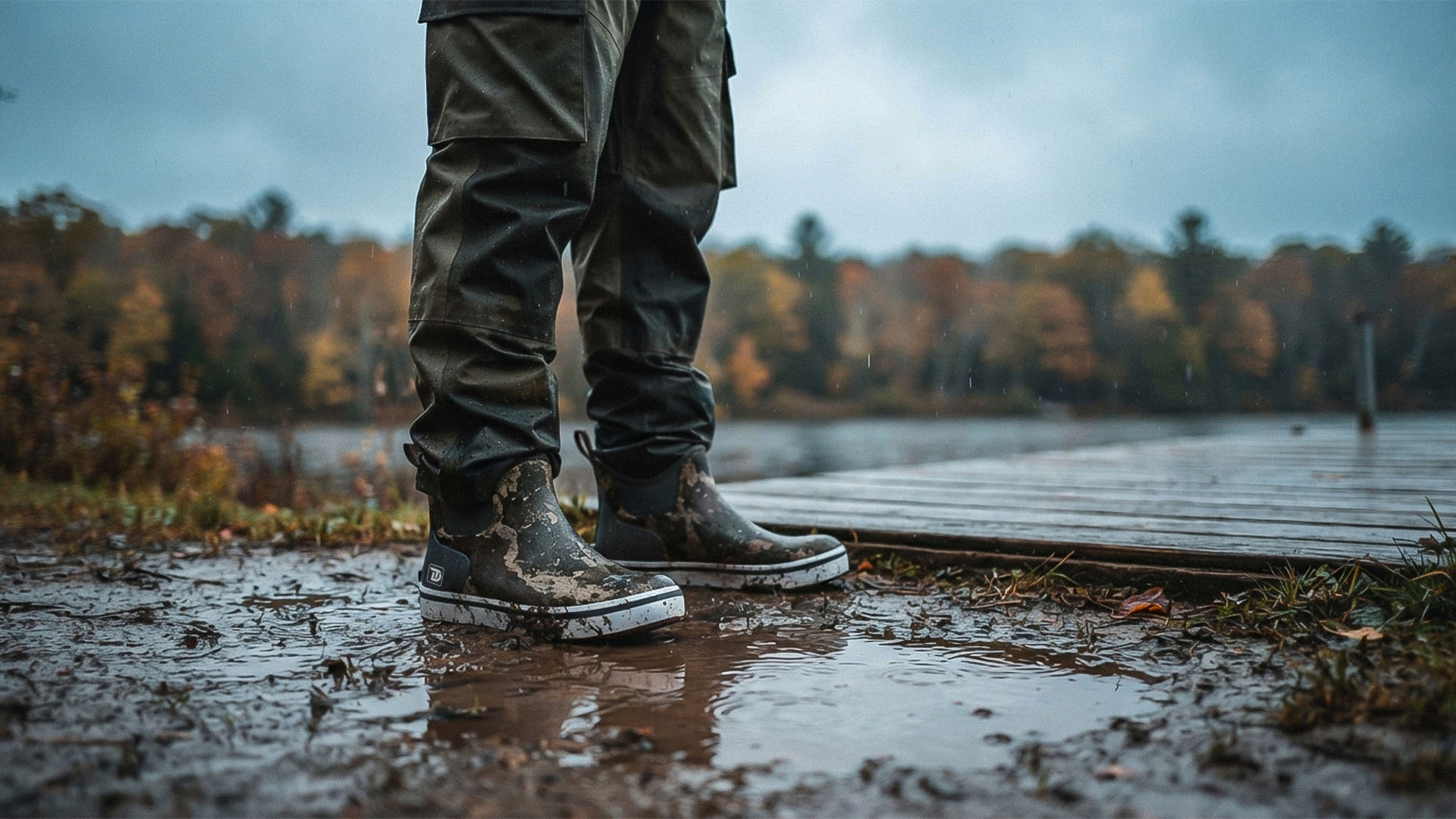
If you live anywhere in the northern half of the United States or Canada, you know the struggle of February and March. It has many names: “False Spring,” “Mud Season,” or simply “The Slush.” You wake up and it’s 28°F with frost on the windshield. You scrape the ice, head to the marina, and by 2 PM, the sun is out, it’s 55°F, and the deck has turned into a slick, muddy mess. It is the most confusing time of year for your feet.
This is the season when anglers get the same question constantly: “Should I get insulated deck boots for the warmth, or standard deck boots for breathability?” The answer isn’t just about the temperature outside. It’s about biology and physics — how your body generates heat, how moisture behaves inside a sealed rubber boot, and what happens when those two forces collide during a single unpredictable day on the water.
Trudave Gear has built two purpose-specific deck boots for exactly this dilemma: the insulated WaveLock and the breathable DeckFlow. One isn’t a “better” version of the other. They are engineered for two fundamentally different thermal profiles, and the wrong choice on a transitional day will leave you either sweating through your socks by noon or freezing by 8 AM. This guide walks you through the science of that choice, the materials that make each boot work, and the honest framework for matching the boot to your body of work — so that the next time the forecast swings 27 degrees between dawn and lunch, your feet don’t have to swing with it.
Part 1: The Enemy Is Moisture, Not Just Cold
Before choosing a boot, we have to understand why your feet actually get cold. In rubber boots, the number one cause of cold feet isn’t usually the outside air — it’s sweat. If your feet sweat in a sealed rubber boot and that moisture can’t escape, it cools down rapidly as soon as you stop moving. This creates a “refrigerator effect” inside your boot.
Here’s the physics: water is roughly 25 times more thermally conductive than air. The moisture that accumulated inside your boot during the hike from the truck or the scramble across the deck now serves as a direct thermal bridge between your skin and the cold rubber shell. Your body stops generating heat because you’re standing still, the moisture cools, and your feet turn into ice blocks — even though the boots never leaked a drop.
Therefore, choosing the right boot is about managing that moisture balance based on your activity level. An insulated boot that keeps your feet toasty while you’re standing still on a cold morning will become a sweat trap if the sun comes out and you start moving. A breathable boot that feels perfect during active fishing will leave your toes numb if you’re sitting motionless in 40-degree spray. The decision isn’t about finding a magic boot that does both. It’s about honestly assessing your activity pattern and matching the boot to your dominant condition.
Part 2: The WaveLock — Built for the Static Cold
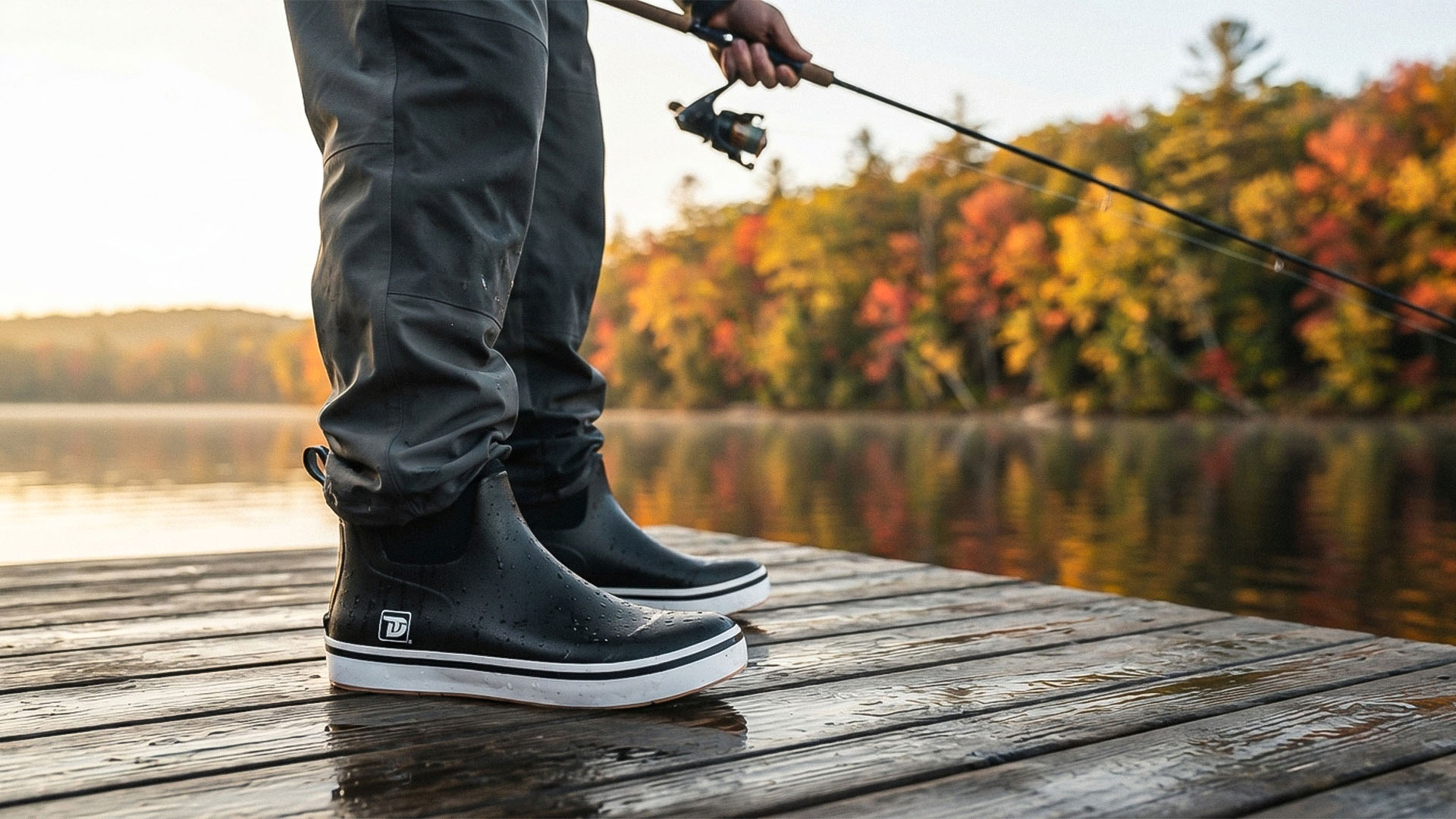
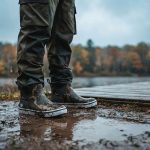
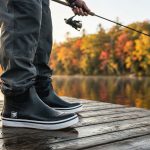
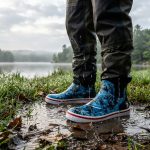
The WaveLock is Trudave’s insulated deck boot, purpose-built for the angler who faces cold mornings, cold water, and long periods of relative stillness. “Crafted with 100% waterproof protection that stands up to sea spray and slippery decks,” the boot was developed with input from marine testing partners who needed footwear that could handle harsh environments season after season.
The WaveLock Series men’s deck boots are fully waterproof, made from premium natural rubber with sealed construction to keep your feet dry while fishing, boating, or working in wet conditions. The waterproof integrity is built into the material itself — vulcanized natural rubber, not the PVC found in budget boots — meaning the waterproof barrier is permanent and cannot delaminate at the seams over time.
Insulation Profile
The WaveLock’s defining feature is its thermal insulation. These men’s insulated waterproof boots feature a soft lining and thermal insulation that retain heat while allowing breathability — perfect for cold mornings on the boat or dock. The insulation is calibrated for the specific thermal challenge of transitional-season fishing: those 28-degree launches when you’re standing on a concrete pier waiting for the bite, or the 30-mph boat run in March air that strips heat from your feet faster than any stationary cold could.
In these situations, your body isn’t generating much heat because you aren’t moving. The cold from the ground — or the fiberglass deck — creeps up through the sole. The insulated deck boot acts as a barrier. The neoprene lining traps your body heat, essentially functioning like a wetsuit for your feet.
Traction Profile
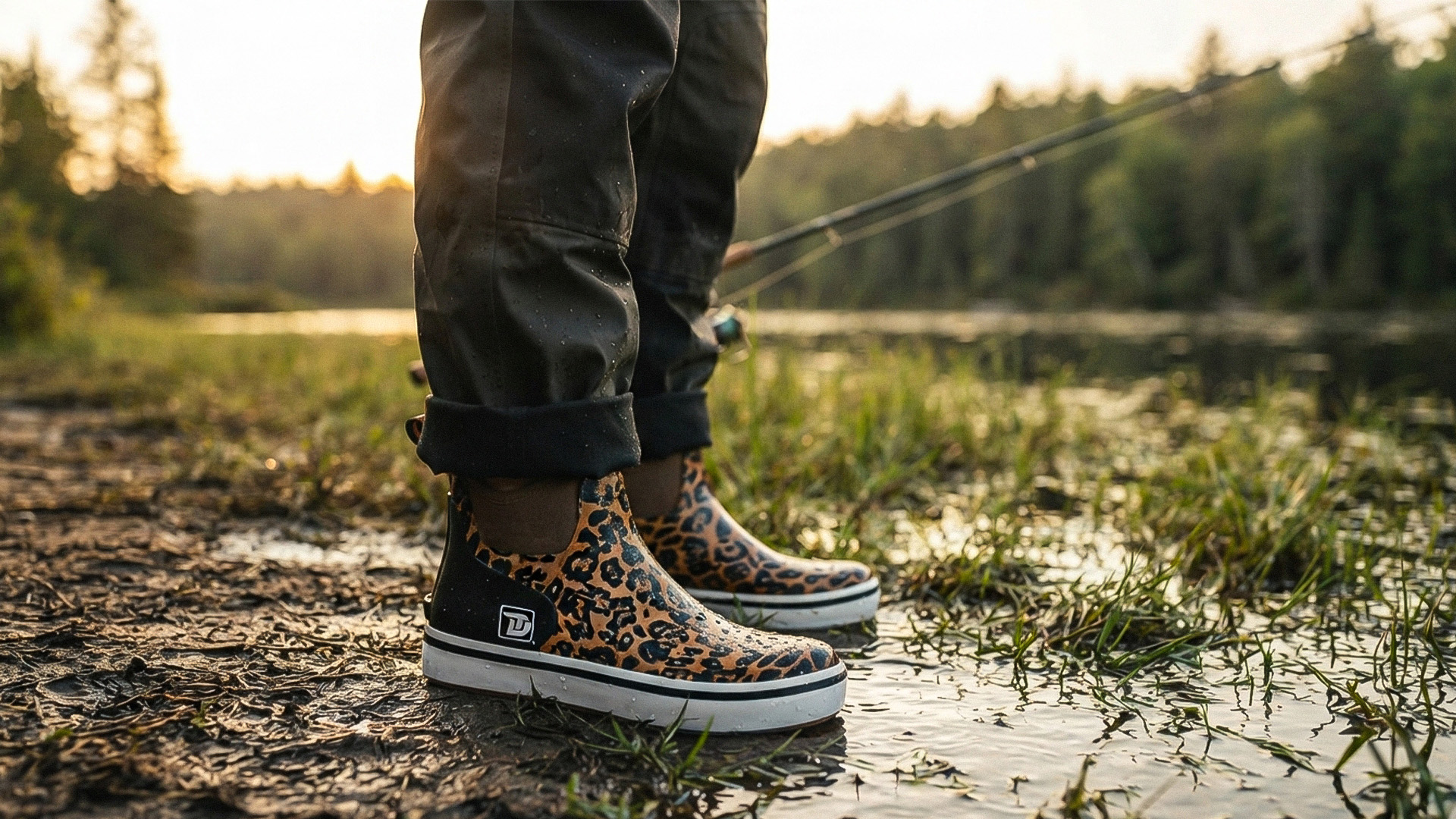
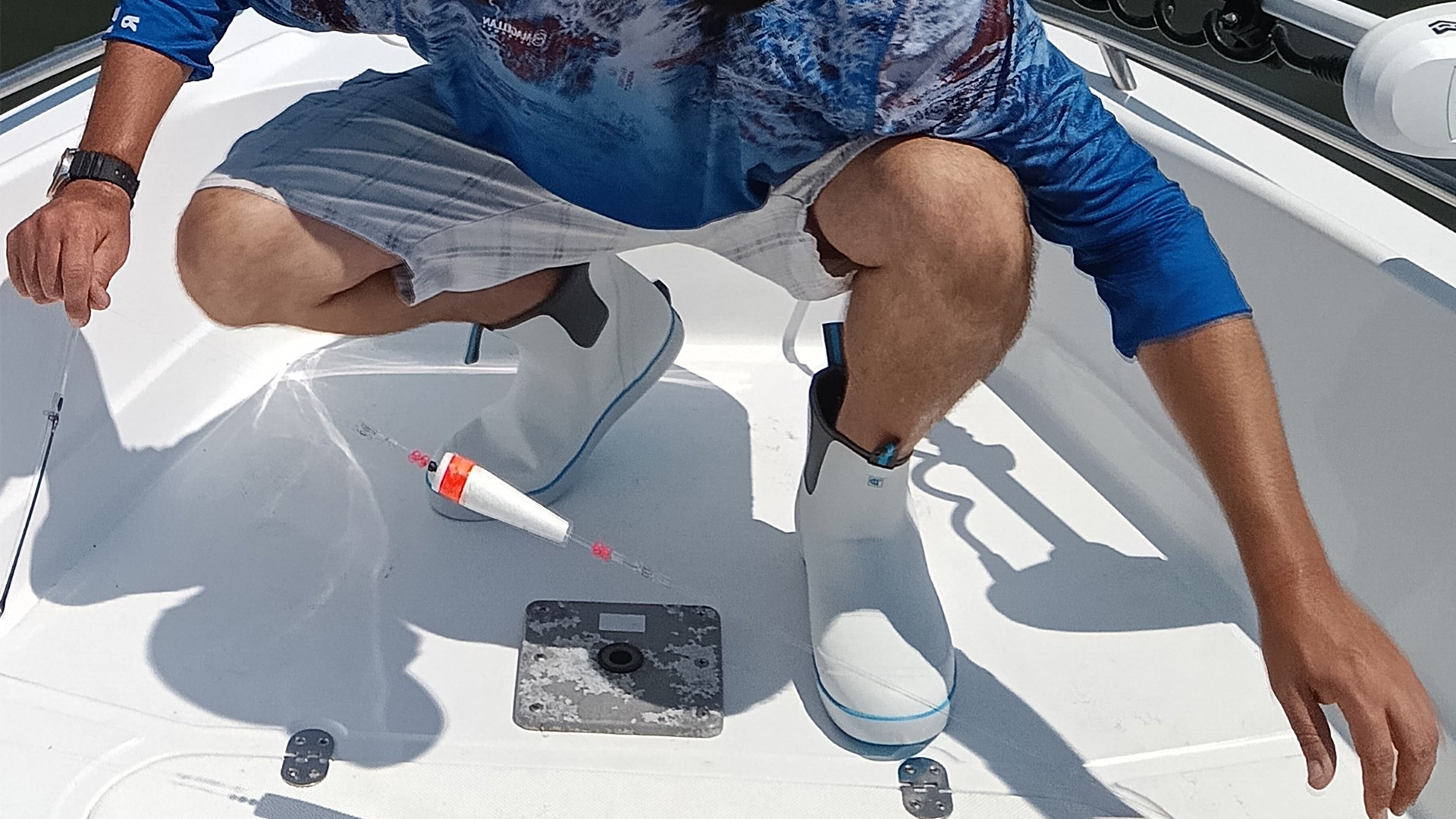
The WaveLock Series features Trudave’s exclusive WaveLock Traction Outsole with micro-channel siping that disperses water instantly, keeping your footing solid even on wet fiberglass or metal surfaces. The non-slip rubber outsole provides excellent traction on slick decks, docks, and other wet surfaces, ensuring safety during fishing or marine work. On a transitional day when thawed mud and refrozen slush alternate unpredictably, this siped traction provides the confidence that generic lug patterns cannot match.
The Trade-Off
The insulated boot has one honest limitation: if the sun comes out and you decide to hike three miles, your feet will sweat, and you will get uncomfortable. The insulation that was an asset at dawn becomes a liability by noon. This isn’t a design flaw — it’s the unavoidable physics of insulation, and it’s why Trudave makes a second boot for the other half of the transitional-season problem.
Who It’s For
Choose the WaveLock if you hate cold toes and spend more time standing or sitting than walking. You’re the angler launching before sunrise in 28-degree air. You’re standing on the bow of a boat moving at speed in March wind. You’re sitting in a duck blind or standing on a concrete pier waiting for a bite. Your body isn’t generating much heat, and you need your boots to provide the warmth your metabolism isn’t.
These ankle waterproof deck boots are ideal for fishing, boating, outdoor chores, and rainy-day wear. They combine comfort, insulation, and traction for all-weather performance.
Part 3: The DeckFlow — Built for Active Warmth
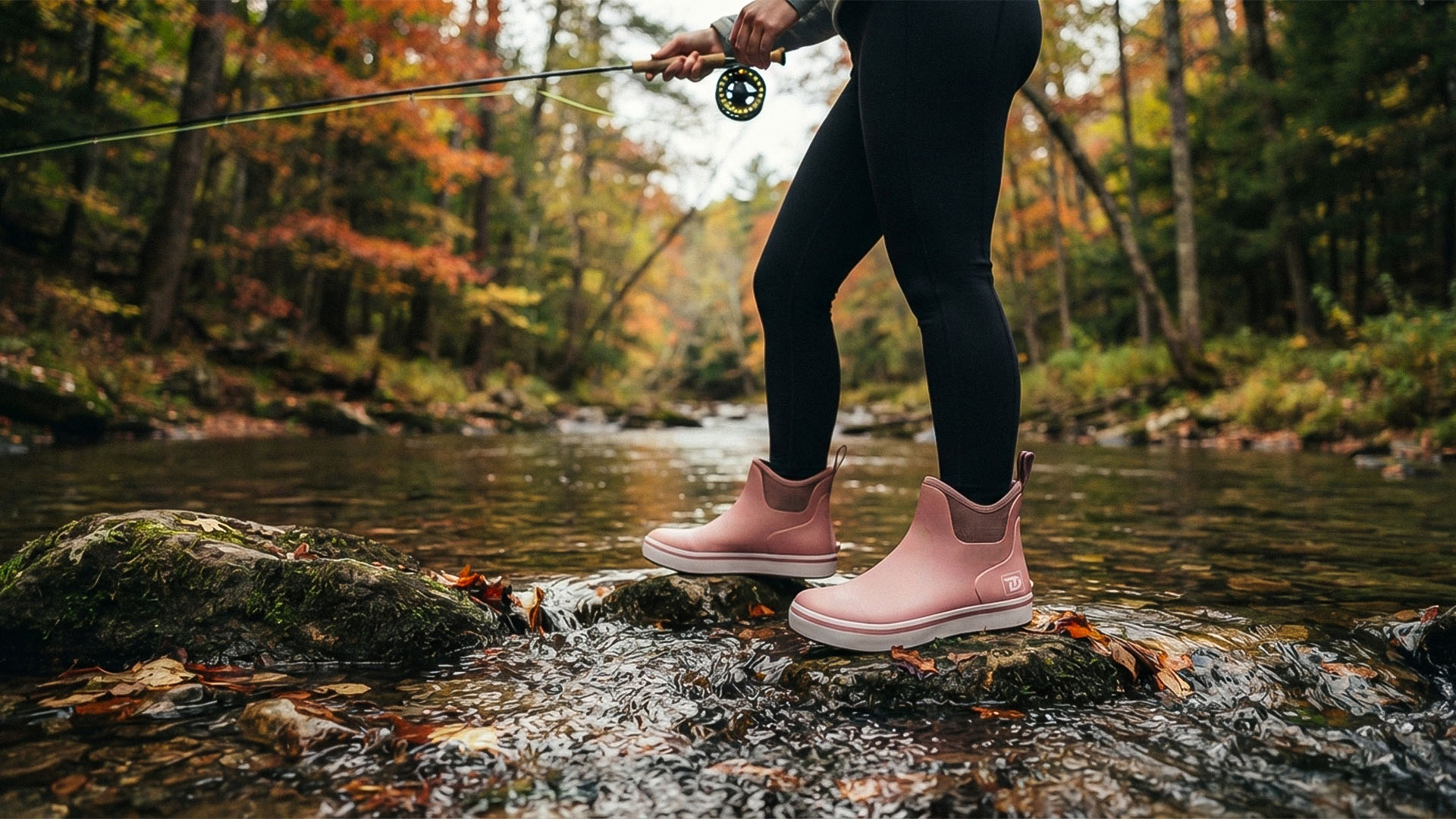
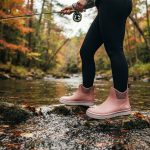
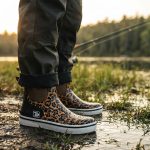
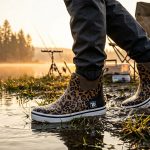
If the WaveLock is a thermal fortress for the stationary angler, the DeckFlow is a moisture-managing shell for the active one. The DeckFlow combines a fully waterproof shell with a soft, breathable lining, keeping your feet dry and comfortable while relaxing by the water. It is lightweight and versatile, with a clean low-cut design that transitions effortlessly from dockside lounging to daily errands.
The DeckFlow Series women’s deck boots are fully waterproof, made from premium natural rubber that keeps feet dry on wet decks, docks, or rainy outdoor conditions — ideal for boating and fishing trips. But where the WaveLock adds insulation for warmth, the DeckFlow prioritizes breathability and moisture management for active use.
The Standard Deck Boot Philosophy
The standard deck boot is a shell. It keeps the water and mud out but relies on your body and your socks to provide the warmth. This is not a cost-saving measure — it’s a deliberate engineering decision for the angler whose body is a furnace. Your blood is pumping. You’re washing the boat, walking the dog briskly through the park, launching a kayak, or working the deck carrying gear. In this scenario, insulation is actually your enemy. You need a boot that allows heat to dissipate so your feet stay dry.
The standard deck boot’s temperature range is best for 45°F to 80°F+, but it can go lower with wool socks. This versatility is the DeckFlow’s core advantage: it covers the widest range of conditions because it doesn’t lock you into a single thermal profile. On a 55-degree afternoon when the morning frost has burned off, the DeckFlow won’t overheat you. On a 40-degree morning, a pair of heavyweight merino wool socks transforms it into a capable cool-weather boot.
Women’s-Specific Fit
The DeckFlow is engineered on dedicated lasts to account for a narrower heel and different arch geometry. These ankle-length waterproof boots feature cushioned insoles and breathable lining, offering all-day comfort for women who spend hours on the dock, at work, or on fishing trips. The non-slip rubber outsoles are designed for superior traction on slick boat decks, docks, and marinas — perfect for fishing, sailing, or any wet environment.
Who It’s For
Choose the DeckFlow — or the standard non-insulated boot — if you’re active and your body generates its own heat. You’re the angler who moves constantly: casting, netting, repositioning the boat. You’re the person washing the car, walking the dog briskly, or working in the yard. Your body is a furnace, and insulation would trap heat you’re trying to shed.
These waterproof deck boots are stylish enough for daily wear and practical for gardening, light outdoor work, or rainy-day errands. They combine function and fashion in one.
Part 4: The Material Foundation — What Both Boots Share
While the WaveLock and DeckFlow diverge on insulation, they share a common material foundation that explains why both perform at a level that competes with legacy brands commanding significantly higher prices.
Vulcanized Natural Rubber
Both boots are made from premium natural rubber — not the petroleum-based PVC that dominates the budget market. Natural rubber, when properly vulcanized, creates an impermeable waterproof barrier that flexes with the foot and resists cracking in freezing temperatures. The vulcanization process chemically cross-links the rubber polymers into a single continuous unit, eliminating the glued seams that are the most common failure point in cheaper boots.
Siped Outsoles
Both feature non-slip rubber outsoles with siping — the thousands of razor-thin slits that channel water away from the contact surface. On a wet fiberglass deck, this siping is the difference between confident footing and hydroplaning. The WaveLock uses Trudave’s exclusive micro-channel siping pattern; the DeckFlow uses a non-marking siped outsole optimized for mixed surfaces including docks, decks, and pavements.
EVA Midsole Architecture
Both boots use EVA (ethylene-vinyl acetate) midsoles rather than the steel shanks found in traditional work boots. Steel shanks add weight and transmit impact directly through the skeleton. EVA absorbs shock and provides arch support without the weight penalty. For anglers who spend hours standing on hard fiberglass decks, this difference compounds with every hour.
Care Protocol
Trudave’s recommended maintenance is consistent across both series: rinse the boots with clean water after use, wipe off dirt with mild soap, and let them air dry naturally. Avoid direct sunlight or heat to preserve the waterproof seal and rubber durability. The “avoid heat” instruction is the one most often violated — leaving boots to dry next to a heater or in direct summer sun breaks down rubber polymers and shortens boot life dramatically.
Part 5: Real-World Feedback — What Anglers Are Saying
Product pages can promise anything. The truth lives in the experience of people who have worn these boots through genuine transitional-season abuse. Across Trustpilot, Trudave maintains a “Great” rating of 4.1 out of 5, with users consistently validating the waterproofing, comfort, and durability of their boots.
One reviewer who purchased boots for regular outdoor work captured a sentiment that applies directly to the transitional-season problem: “It has been about two months now and these boots are still going strong and keeping our feet protected.” That two-month durability marker is significant — it’s enough time for glued seams to start separating and for cheap rubber to develop hairline cracks at the flex points. The fact that these boots are “still going strong” after two months of hard use in wet, muddy conditions validates the vulcanized construction approach.
The sizing feedback is equally consistent and directly relevant to the thermal management question. Multiple reviewers note that the boots run “slightly larger, but with socks they fit well and comfortably. A size smaller would be too tight.” This intentional volume is designed to accommodate the thick wool socks that cold-weather fishing demands. For the transitional season, this means you can wear midweight merino wool socks on cold mornings and lighter socks on warmer afternoons — using the same pair of boots — without the fit becoming sloppy or constricting. The extra room is a feature designed for thermal adaptability, not a sizing error.
Part 6: The Decision Framework — Match the Boot to Your Body of Work
By now the pattern should be clear: the right boot for transitional-season fishing depends on an honest assessment of your activity pattern and thermal profile. Here’s the framework, distilled from Trudave’s own guidance and validated by the materials science behind each boot.
The Two-Boot Solution
Here’s the honest truth that most gear guides won’t tell you: no single boot optimally covers the full transitional-season spectrum. A boot that keeps your feet warm at 28°F will overheat you at 65°F. A boot that breathes comfortably at 70°F will leave your toes numb during a 30-mph boat run at 35°F. These are not minor trade-offs — they are direct physical contradictions.
For the angler whose season spans both cold mornings and warm afternoons, owning both a WaveLock and a DeckFlow is not gear obsession. It’s matching the right tool to the right job. At Trudave’s direct-to-consumer pricing, owning two purpose-built boots costs less than a single pair of premium-brand deck boots from a legacy manufacturer sold through traditional retail.
Part 7: The Direct-to-Consumer Reality — Why These Boots Cost What They Cost
There’s no honest way to discuss the WaveLock and DeckFlow without addressing the business model that makes their pricing possible. The traditional outdoor footwear industry operates on a layered markup structure: the brand manufactures the boot, sells it to a retailer at wholesale, and the retailer doubles that price before it reaches the shelf. On top of that, the brand spends millions on sponsorships, advertising, and retail display fees. When you pay 130to180 for a pair of deck boots from a legacy brand at a tackle shop, a significant portion of that cost has nothing to do with the boot itself.
Trudave operates on a direct-to-consumer model that eliminates the retailer markup, the wholesale distributor margin, and the shelf-space fees. The money that would have gone to those middlemen goes into the materials instead: premium natural rubber instead of PVC blends, vulcanized sealed construction instead of glued seams, EVA midsole architecture instead of flat rubber footbeds, and micro-channel siping instead of generic tread patterns.
This is not a “budget alternative” strategy. It’s a value-engineering strategy — delivering the same material quality and construction methods as premium legacy brands at a lower price by eliminating the layers of markup between the factory and the customer. For the angler who cares about what’s on their feet rather than what logo is on the side, that distinction is the difference between paying for performance and paying for a brand name.
Conclusion: Know Your Body, Know Your Boot
The False Spring dilemma isn’t going away. As long as the sun comes out and turns frost into slush by noon, anglers will face the same thermal choice every morning: insulate against the cold, or breathe through the heat? The mistake isn’t choosing wrong — it’s assuming that one boot should be able to handle both conditions equally well.
Trudave Gear’s WaveLock and DeckFlow series represent an honest acknowledgment of this reality. The WaveLock is built for the static angler who battles cold mornings and needs insulation that works when the body isn’t generating much heat. The DeckFlow is built for the active angler whose own metabolism provides the warmth and who needs a boot that stays out of the way. Both are fully waterproof. Both are siped for wet-deck traction. Both are built on premium natural rubber with EVA midsole architecture. The difference is in the thermal profile — and that difference determines whether your feet stay comfortable from dawn to dusk, or whether they give up on you somewhere around lunch.
The right boot for transitional-season fishing isn’t the one with the highest price tag or the longest brand heritage. It’s the one whose insulation profile matches your activity profile. Know which kind of angler you are. Choose accordingly. And when the forecast lies to your feet, your boots will tell the truth.
To explore the complete Trudave Gear deck boot lineup — both the insulated WaveLock and the breathable DeckFlow — and find the right pair for your fishing season, visit trudavegear.com.