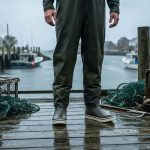
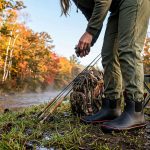
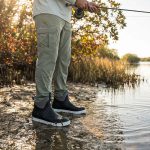
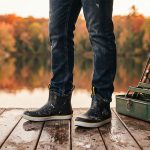
There’s a particular frustration that only arrives when you open a brand-new pair of hunting boots — the pair you researched for weeks, spent your money on, waited for — and discover, standing in your living room at 9 PM the night before opening day, that they don’t fit. Too tight across the toes with your hunting socks on. Too loose in the heel, promising blisters before you reach the stand. Too snug around the calf, or too cavernous. The boots are exactly what you ordered. They’re just not the size you should have ordered.
Online boot buying has made this scenario far more common than it used to be. You can’t try them on. You can’t walk around the store. You’re making a hundred-dollar-plus decision based on a number you’ve worn in sneakers for years and a size chart you glanced at for five seconds. And here’s the thing most hunters don’t realize until it’s too late: that sneaker size is almost certainly wrong for a vulcanized rubber-and-neoprene hunting boot. The sizing chart is inconsistent across the footwear industry — a “Size 10” in a running shoe rarely translates to a “Size 10” in a vulcanized rubber boot.
Trudave Gear builds their hunting boot lineup — the WildGuard, TrailGuard, and DryFlow series — around a sizing philosophy that’s fundamentally different from what most hunters are used to. These boots are engineered with intentional room for thick socks, foot swelling, and the layered clothing that cold-weather hunting demands. But that intentional room also means that ordering your casual shoe size without checking the insole length chart is a recipe for boots that are too large, boots that are too small, or boots that fit just wrong enough to ruin a hunt.
This guide is the honest, measurement-backed conversation about Trudave hunting boot fit that should happen before you click “buy.” We’ll walk through the three sizing traps that catch even experienced hunters, break down how each Trudave series fits differently, explain how to measure your feet for the specific boot you want, give you the sock-system framework for different temperature ranges, and address the common foot-type questions that determine whether a boot works for you or against you. No marketing fluff. Just the information that turns “I hope these fit” into “these fit exactly right.”
Part 1: The Three Sizing Traps — Why Your Sneaker Size Is Lying to You
Every hunter who has ever bought boots online has an opinion about how they fit. But opinions are shaped by expectations, and expectations are usually wrong. Here are the three mental traps that lead to sizing mistakes — and how Trudave’s design philosophy addresses each one.
Trap #1: The Sneaker Size Assumption
This is the most common sizing error, and it’s completely understandable. You’ve worn a size 10 in running shoes for ten years, so you order a size 10 in hunting boots. Then the boots arrive and feel too roomy, or too tight, and you assume the brand’s sizing is off.
The reality is more nuanced. Sizing charts are notoriously inconsistent across the footwear industry. A vulcanized rubber boot is built on a completely different last — the three-dimensional foot-shaped mold around which the boot is constructed — than a running shoe. Running shoes are designed to fit snugly with thin socks. Hunting boots are designed to accommodate thick, insulating socks and the natural foot swelling that occurs during a long day in the field.
Trudave’s official guidance cuts through this confusion with a straightforward principle: “Stop ordering by arbitrary numbers. True anatomical fit requires prioritizing actual foot measurements in inches. Measure your foot from heel to longest toe in inches, and map that exact metric to the manufacturer’s specific sizing chart to eliminate volume and length confusion.” This means the number on the box matters far less than the insole length measurement on the size chart.
Trap #2: The “Runs Large” Misunderstanding
Multiple Trustpilot reviews mention that Trudave boots “run slightly larger” — and that observation is accurate, but the interpretation is often wrong. One reviewer captures the design intent precisely: “Bought some boots from Trudave, These boots are well made and comfortable. The size is slightly larger, but with socks they fit well and comfortably. A size smaller would be too tight.”
That last sentence is the key. The boots aren’t “too big” — they’re sized to accommodate the sock system that cold-weather hunting requires. If you size down to eliminate that intentional room, you’ll find the boots too tight with the thick wool socks you’ll actually be wearing in the field. The extra volume is a feature, not a flaw.
Trudave’s product blog for the StreamTrek series — which shares the same sizing philosophy as the hunting boot lineup — explains this explicitly: “Roomy for Warmth: We designed these with a little extra volume to accommodate thick wool socks.” For half-size buyers, they recommend a specific decision rule: “If you are a Half Size (e.g., 9.5): We usually recommend sizing up to a 10 if you plan on wearing heavy hunting socks.” The logic is simple: the extra volume is there to be filled by insulation. Without the sock, the boot feels loose. With the right sock, it fits.
Trap #3: The One-Size-Fits-All Season Fallacy
Many hunters buy boots for the coldest day of the year, wear them with the thickest socks they own, and then wonder why the same boots feel too roomy during early bow season in September when they’re wearing lightweight socks. Or vice versa — they buy for early season and then can’t fit their heavy wool socks inside when late November arrives.
This isn’t a sizing problem. It’s a sock-system problem. The same boot can work across multiple seasons if you adjust your sock thickness accordingly. Trudave’s design approach — building intentional volume into the boot — actually makes this sock-system strategy more effective because the boot accommodates a wider range of sock thicknesses than a snugger-fitting leather boot would.
The DryFlow Series sizing guidance reinforces this: “If you wear thick work socks (like Carhartt or heavy wool), consider sizing up if you are between sizes.” The implication is that the boot is designed to work with different sock weights, and your size choice should be driven by the sock you’ll wear most often.
Part 2: How Trudave’s Boot Architecture Shapes the Fit Experience
Fit isn’t just about length and width. It’s about how the entire boot structure interacts with your foot and lower leg during the specific movements of hunting — walking, standing still, climbing, kneeling. Trudave’s three hunting boot series share core design features that influence fit across the entire lineup, plus series-specific elements that create meaningfully different fit experiences.
The No-Steel-Shank Philosophy
Traditional work and hunting boots often incorporate a steel shank — a rigid metal plate running through the midsole under the arch. The idea is that a steel shank provides arch support and torsional rigidity for uneven terrain. In practice, it adds weight, eliminates the foot’s natural ability to feel the ground (proprioception), and creates a stiffness that numbs the feedback loop between your foot and the surface you’re walking on.
Trudave eliminates the steel shank entirely, replacing it with a high-density composite EVA midsole. As their product blog explains: “Traditional work boots use heavy steel shanks that drag you down on long hikes. By engineering a supportive EVA midsole with no steel shank, we cut the weight significantly. You get sneaker-like agility with the armor of a mud boot.”
This has direct implications for fit. Without the rigid steel plate, the boot flexes more naturally with your foot, reducing the break-in period and eliminating the stiff, clunky feeling that defines cheap rubber boots. The 7-day continuous wear test Trudave conducted on their boots documented this: “I laced them up at 5:30 AM. There’s always a dreaded ‘break-in’ period with hardcore outdoor footwear, where you expect blistered heels and aching arches for the first 20 miles. Surprisingly, right out of the box, the flexibility of the upper and the EVA midsole felt completely dialed in. Spent 8 hours loading gear on hard concrete, followed by a 2-mile scouting hike on gravel trails. By 8 PM, my feet were fatigued, but zero hot spots or blisters.”
The Mid-Calf Height Sweet Spot
Boot height directly affects how the boot feels on your leg, and there’s a widespread instinct to go taller for more protection. Trudave’s product guidance pushes back on this: “There is an instinct to buy the tallest boot possible to maximize waterproof protection. However, knee-high boots severely restrict calf mobility, trap excess body heat, and make crouching or climbing unnecessarily difficult. The optimal profile for 90% of outdoor applications is the mid-calf design.”
The WildGuard and TrailGuard series both use this mid-calf profile, which provides ample water clearance for creek crossings and marsh hunting without the mobility penalty of knee-high rubber. The DryFlow has a slightly different profile — still mid-calf but optimized for work environments — with “a structured heel cup that locks your foot in place” to prevent heel slip during long shifts on hard surfaces.
The Neoprene Upper: Flexibility Where It Counts
The neoprene shaft on Trudave’s WildGuard and TrailGuard boots provides a flexibility advantage that directly affects fit comfort. Unlike a pure rubber boot shaft, which is stiff and unyielding, neoprene conforms to the shape of your calf and flexes with your ankle. The 5mm neoprene upper “provides flexibility and protection through brush and wetlands,” meaning the boot moves with you rather than fighting against you when you kneel, climb, or squat.
For the TrailGuard specifically, the neoprene is premium high-density material — “the same material used in deep-sea diving suits” — that “traps your body heat, creating a warm pocket of air around your legs while remaining flexible. No more walking like a robot in stiff boots.” This flexibility is both a comfort feature and a safety feature: a boot that flexes with your ankle reduces the risk of twisted ankles on uneven terrain compared to a boot that holds your ankle rigid.
Part 3: Series-by-Series Fit Breakdown — How Each Boot Fits Differently
Not all Trudave hunting boots fit the same way. The material choices and design features that distinguish the WildGuard, TrailGuard, and DryFlow series also create different fit experiences. Here’s what you need to know about each one before ordering.
TrailGuard Series: The Insulated Stand Boot
The TrailGuard is Trudave’s maximum-warmth hunting boot, built with 5mm neoprene insulation and a fleece lining. That fleece liner is the key variable in how the TrailGuard fits compared to the other series. The fleece adds a small amount of interior volume that makes the boot feel slightly snugger than the WildGuard at the same marked size, particularly around the foot and ankle. If you’re on the borderline between two sizes, this is the series where sizing up becomes more important — the fleece lining means a too-small boot feels constricting faster than a boot with a thinner liner.
The TrailGuard FAQ confirms the boot is “designed with cushioned EVA insoles, breathable lining, and shock-absorbing midsoles” that “provide lasting comfort and stability for all-day wear in rugged environments.” The reinforced kick-off heel tab allows hands-free removal without damaging the heel structure, which is especially useful when the boots are caked in frozen mud and you’re exhausted at the end of a late-season hunt.
The TrailGuard is fully waterproof, “made from premium rubber and sealed seams to keep your feet dry during hunting in wetlands, rain, or muddy terrain.” These boots “feature 5mm neoprene insulation and a fleece lining that provide excellent warmth and comfort during cold-weather hunts — ideal for deer, duck, or late-season hunting.”
WildGuard Series: The Camouflage Wet-Terrain Hunter
The WildGuard shares the 5mm neoprene upper and vulcanized rubber lower construction with the TrailGuard, but substitutes a breathable liner for the TrailGuard’s fleece. This makes the WildGuard feel slightly roomier at the same marked size — the breathable liner takes up less interior volume than fleece, so the boot has marginally more internal space. This is the series where the “runs slightly large” feedback is most applicable.
The WildGuard FAQ confirms the boots are “100% waterproof, made from 5mm neoprene and tough rubber shell” and “feature 5mm neoprene insulation with a breathable liner that traps warmth without overheating.” The boot includes “cushioned EVA midsoles and arch support that reduce fatigue on long treks,” and the tall neoprene upper “provides flexibility and protection through brush and wetlands.”
The camo finish is functional for concealment — it “keeps you hidden in timber, reeds, or brush” — and the deep-lug outsole “grips confidently on wet logs, rocky trails, and uneven ground.” For hunters who walk longer distances before settling into a stand, the WildGuard’s breathable liner and slightly roomier interior volume make it the more comfortable option for active approaches.
DryFlow Series: The Zero-Insulation Work/Active Boot
The DryFlow takes a completely different approach to fit than the WildGuard and TrailGuard. It’s a rubber work boot with no insulation and no neoprene shaft — built instead from industrial-grade waterproof rubber with sealed seams. The DryFlow FAQ states the boots are “made from industrial-grade waterproof rubber with sealed seams that keep your feet dry even in mud, rain, or standing water” and feature “non-slip, oil-resistant rubber outsoles that provide superior grip and stability on wet or oily surfaces.”
The fit characteristics are different from the insulated boots in several ways. The DryFlow is true to size with standard width, and the neoprene upper on the higher-cut version offers some stretch. The structured heel cup is a key fit feature: “We engineered the DryFlow to have a structured heel cup that locks your foot in place. This prevents ‘heel slip’ — the annoying friction that causes blisters and forces your toes to grip the bottom of the boot to keep it on.” This is particularly important for active hunters who are moving fast and covering ground — heel slip creates friction, and friction creates blisters, and blisters end hunts.
The DryFlow’s zero-insulation design means the boot is sized for standard work socks or lightweight wool socks rather than heavy cold-weather socks. If you’re ordering the DryFlow for cold-weather use with thick socks, the official guidance is straightforward: “If you wear thick work socks (like Carhartt or heavy wool), consider sizing up if you are between sizes.”
Part 4: The Measurement Protocol — How to Get the Right Size the First Time
The single most important thing you can do to get the right Trudave boot size is also the thing most hunters skip: measuring your actual foot. Here’s the protocol, distilled from Trudave’s official guidance and best practices.
Step 1: Measure Your Foot in Inches
Place a piece of paper on a hard floor against a wall. Stand on it with your heel touching the wall, your weight evenly distributed. Mark the tip of your longest toe — for most people, this is the second toe, not the big toe. Measure from the edge of the paper (the heel point) to the mark in inches. Do this for both feet; if they’re different sizes, use the larger measurement.
Step 2: Check the Insole Length on Trudave’s Size Chart
Trudave’s official size chart lists insole lengths for each size. For the StreamTrek series, which uses the same sizing framework as the hunting boots, the insole lengths range from 9.49 inches (Men’s 5) to 12.42 inches (Men’s 14). For a comfortable fit, “the recommended foot length should be slightly shorter than the insole length.” This is the critical data point: don’t order based on the US size number. Order based on whether your measured foot length is shorter than the listed insole length for that size, with enough margin for your intended sock system.
Step 3: Account for Your Sock System
This is the step that determines whether the boot fits perfectly or fits wrong. If you’ll primarily wear the boots with heavyweight merino wool socks (for late-season stand hunting), you need more interior volume. If you’ll wear them with lightweight or midweight socks (for early-season or active hunting), you need less. The half-size decision rule applies: if you’re between sizes, size up for thick socks, size down for thin socks.
Step 4: Check the Shaft Opening and Calf Fit
Trudave’s size charts list the boot opening circumference. Ensure this measurement accommodates your calf — especially if you have wider calves or plan to tuck pants into the boots. The neoprene upper on the WildGuard and TrailGuard provides natural stretch that adapts to different calf sizes, but it’s worth checking the numbers.
Part 5: Foot-Type Specifics — Wide Feet, Narrow Feet, High Arches, and More
Every hunter’s feet are different. Here’s how Trudave boots handle common foot-type concerns, based on user feedback and product design.
Wide Feet
Trudave boots are not offered in explicit wide widths, but the neoprene upper on the WildGuard and TrailGuard provides natural stretch that accommodates a range of foot widths. The intentional extra volume designed for thick socks also helps — if you have wide feet, order your standard size (based on foot measurement) and let the neoprene’s flexibility work in your favor. Multiple user reviews indicate the boots accommodate wider feet comfortably when paired with the right sock.
Narrow Feet
If you have narrow feet, the extra volume designed for thick socks can create excess space. The solution is not sizing down — that will make the boot too short. Instead, use a thicker sock or add an additional insole (or sock liner) to take up volume. This approach works because the boot’s length stays correct while the sock system fills the width and volume.
High Arches
The EVA midsole in Trudave hunting boots provides arch support that many users describe as noticeable but not aggressive. The WildGuard specifically includes “cushioned EVA midsoles and arch support that reduce fatigue on long treks.” If you have unusually high arches, aftermarket insoles can supplement the built-in support, but the EVA architecture provides a solid foundation.
Wide Calves
The neoprene upper on the WildGuard and TrailGuard stretches to accommodate different calf sizes. The size chart lists the boot opening circumference, and the neoprene’s natural flexibility means the boot will stretch beyond that measurement to some degree. An adjustable gusset on select models provides a customizable fit — this is a design feature that “accommodates various calf sizes” and “ensures a snug fit” to help prevent debris or water from entering the boots.
Part 6: The Sock-System Framework — Matching Thickness to Temperature and Activity
The right sock is not an afterthought — it’s the component that determines whether your correctly sized boot fits perfectly or sloppily. Here’s the framework for matching sock thickness to hunting conditions, tailored to Trudave’s boot sizing.
Early Season / Active Hunting (45°F to 70°F)
Lightweight merino wool socks. The boot’s interior volume is largely unfilled, so the fit will feel generous. This is fine for active hunting where your feet swell from movement. If the boot feels too roomy, a lightweight sock liner can fill the extra space without adding heat.
Mid-Season / Mixed Activity (25°F to 50°F)
Midweight merino wool socks. This is the sweet spot for the WildGuard’s breathable liner — enough sock to fill the intentional volume and provide insulation, but not so much that the boot feels tight or your feet overheat during active approaches. Merino wool is the default for the vast majority of hunting scenarios because it absorbs up to 30% of its weight in moisture without feeling wet, wicks actively, and continues to insulate while damp.
Late Season / Stationary Hunting (-10°F to 30°F)
Heavyweight merino wool socks, possibly with a thin synthetic liner sock underneath. This is the system the TrailGuard was designed for — maximum sock volume filling the boot’s interior, maximum insulation value from both the sock and the boot’s fleece lining. Cotton socks should be avoided entirely in cold conditions — cotton absorbs moisture, loses all insulating properties when wet, and becomes a heat sink against the skin. As Trudave’s guidance on waterproof boot care notes, “Absolute waterproofing means external moisture cannot get in, but internal perspiration struggles to get out. Cotton traps sweat against the skin, rapidly dropping your body temperature.”
Part 7: Care and Fit Longevity
How you care for your boots affects how they fit over time. Trudave’s official care guidance is consistent across all three hunting series: “Rinse off mud with water after each hunt, clean with mild soap, and air dry in the shade. Avoid heat or sunlight to maintain neoprene flexibility and waterproof performance.”
The “avoid heat” instruction is particularly important for fit longevity. Excessive heat — from radiators, fireplaces, or direct summer sun — accelerates the curing process of rubber, causing it to become brittle, crack, and permanently change shape. A boot that’s been baked dry next to a wood stove doesn’t just look worse — it fits worse, because the rubber has lost its elasticity and the midsole has lost its cushioning. The TrailGuard’s care guidance reinforces the same principle: “Avoid direct sunlight or heaters to preserve waterproof protection and neoprene flexibility.”
Rotating boots — letting them dry completely between uses — also preserves fit. The 7-day continuous wear test proved the boots could handle it, but the same blog post acknowledges the reality: “You should rotate your boots to let them dry and recover.” Damp insoles compress more easily and recover more slowly, gradually changing the interior fit over time.
Part 8: The Online Buying Decision Framework
Here’s the step-by-step framework for ordering the right Trudave hunting boot online, distilled into a checklist:
- Measure both feet in inches, heel to longest toe.
- Check the insole length on the size chart for the specific boot you want — TrailGuard, WildGuard, or DryFlow.
- Your measured foot length should be slightly shorter than the listed insole length.
- Decide on your primary sock weight — lightweight, midweight, or heavyweight.
- If between sizes: size up for heavy socks, size down for light socks.
- Check the shaft opening measurement against your calf size, especially if you have wider calves or plan to tuck pants in.
- Order. Try on indoors with your intended sock system. Walk around on carpet for at least 15 minutes. Your toes should not touch the front of the boot. Your heel should not lift significantly with each step.
- If the fit is wrong: exchange. Better to wait a week for the right size than to suffer through a season in the wrong one.
Conclusion: The Boot That Fits Is the Boot That Hunts
A hunting boot that doesn’t fit right doesn’t hunt right. It sits in the gear room while you reach for the old pair. It becomes the backup, then the afterthought, then the donation. And none of that has anything to do with whether the boot was well made — it has everything to do with whether the size on the box matched the foot inside it.
Trudave Gear builds their WildGuard, TrailGuard, and DryFlow series around a sizing philosophy that’s honest about what hunting boots actually need to do: accommodate thick socks, flex with movement, support arches without steel shanks, and stay comfortable through hours of stillness and miles of walking. But that philosophy only works if you work with it — if you measure your feet in inches rather than guessing from your sneaker size, if you match your sock system to your hunting conditions, if you understand that the extra volume is a feature designed for insulation, not a sizing error to be corrected by sizing down.
The right boot, in the right size, with the right sock, disappears from your awareness. You stop thinking about your feet and start thinking about the hunt. That’s the goal. And it’s achievable with five minutes of measuring, a size chart, and the willingness to trust the numbers over the number you’ve worn in sneakers for years.
To explore the complete Trudave Gear hunting boot lineup, check detailed size charts, and find the right pair for your next hunt, visit trudavegear.com.