
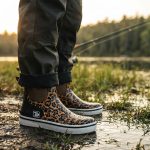
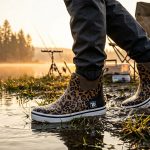
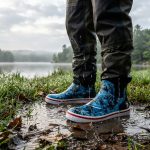
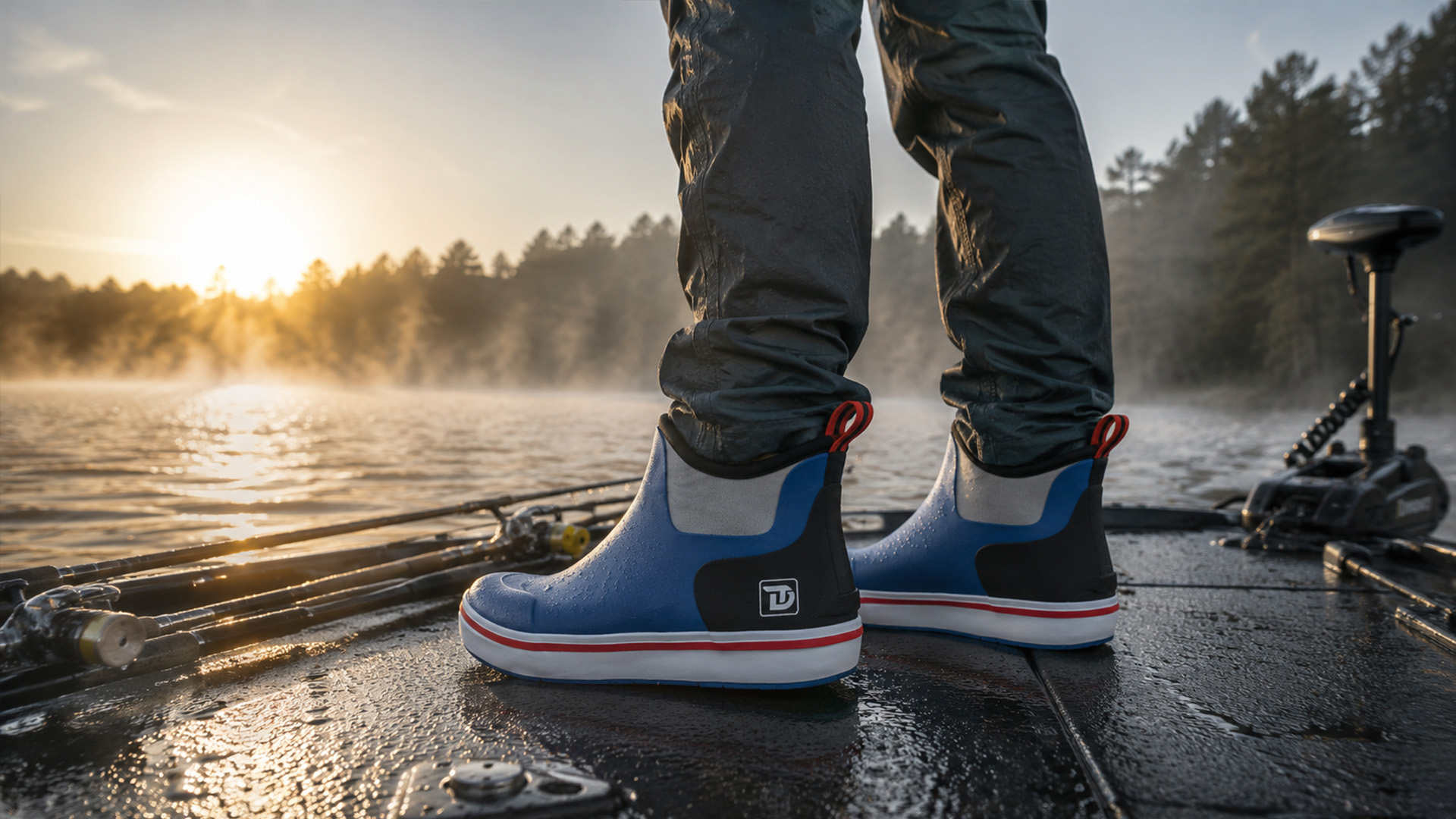
Five years ago, if you saw someone wearing low-cut rubber deck boots at a coffee shop, you’d assume they just got off a boat. They were specialized gear for a specific job: keeping saltwater and fish slime off your feet while providing grip on a pitching deck. Today, look around any city on a rainy Tuesday. You’ll see them everywhere. The secret is out: deck boots aren’t just for fishing anymore. They have quietly become the most practical, go-to footwear for anyone dealing with wet transitional weather.
This transformation didn’t happen by accident. It happened because the material science and design principles developed for commercial fishing decks — surfaces that are wet, slicked with fish blood and diesel, and never fully dry — turn out to solve the same problems that frustrate dog walkers, commuters, gardeners, and weekend boaters alike. Wet pavement. Slick subway stairs. Muddy parks. Dew-soaked grass at 6 AM when the dog needs to go out. The physics are identical.
Trudave Gear entered this space not by trying to build another brown-and-yellow legacy clone, but by asking a different question: what if a deck boot could transition seamlessly from the marina to Main Street without sacrificing the marine-grade performance that defines the category? The answer produced two purpose-built series — the insulated WaveLock for men and the lightweight DeckFlow for women — that are redefining what anglers and everyday users should expect from waterproof footwear.
This article is the complete guide to understanding the deck boot revolution that’s unfolding in 2026. We’ll trace the category’s evolution from commercial fishing decks to suburban sidewalks, examine the materials science that separates a real deck boot from a cheap rain boot, break down the specific technologies that make Trudave’s WaveLock and DeckFlow series competitive, and give you the honest framework for choosing the right pair — whether you’re chasing tuna 30 miles offshore or just chasing your golden retriever through wet grass.
Part 1: The Commercial Fishing Crucible — How a Survival Tool Became an Everyday Essential
To understand why deck boots work so well in everyday wet conditions, you have to understand the environment they were born in. Commercial fishing decks are among the most unforgiving surfaces on earth. They’re not just wet — they’re wet with purpose, slicked by substances far more treacherous than plain water. Fish slime creates a lubricating film. Saltwater leaves behind a crystalline residue that turns smooth fiberglass into a skating rink. Diesel and oil from the bilge add a chemical slickness that standard rubber soles can’t handle. And all of this is happening on a surface that’s moving — pitching, rolling, sometimes violently.
For decades, the commercial fishing industry relied on the same bulky, utilitarian designs. The brown-and-yellow legacy boot became synonymous with the profession — so much so that the Smithsonian Institution now holds a pair in its collections, worn by a deckhand aboard the Alaska Ocean factory trawler in the summer of 2007. But the materials and design philosophy behind those boots remained largely unchanged for half a century: vulcanized rubber, tall shafts, adequate but unremarkable traction.
Then something shifted. The market opened up. Manufacturing moved overseas for many legacy brands, and quality concerns began surfacing in fishing forums and product reviews. Anglers who had worn the same boots for twenty years started asking questions they’d never bothered to ask before. Is there a better option? Can I get the same waterproofing and traction without paying the legacy premium? Those questions created an entirely new market segment — the deck boot alternative — that barely existed a decade ago and is now one of the fastest-growing categories in fishing footwear.
At the same time, a parallel phenomenon was unfolding on land. People realized that the specifications required for a fishing boat — 100% waterproofing, slip-resistant outsoles, lightweight comfort for long hours on hard surfaces — perform perfectly in the suburbs and the city. The same boot that keeps a deckhand upright during a Bering Sea storm keeps a commuter stable on slick subway stairs. The same waterproof construction that seals out salt spray seals out the puddle you misjudged walking to the office.
This convergence — declining quality from legacy brands combined with growing awareness of deck boots’ everyday utility — created the opening that Trudave Gear has stepped into with both feet.
Part 2: The Material Science — What Separates a Deck Boot from a Cheap Rain Boot
Before we examine Trudave’s specific products, there’s a critical distinction that most buyers never learn until they’ve already wasted money on the wrong footwear: deck boots are not rain boots. They may look similar at a glance — rubber construction, slip-on design, waterproof claims — but the material science, outsole engineering, and comfort architecture are fundamentally different.
The most common beginner mistake, echoed across every fishing guide and forum, is buying cheap rain boots instead of real deck boots. Rain boots may look similar, but they lack the slip-resistant outsoles and comfort features designed for long days at sea.
Waterproofing: Vulcanized Natural Rubber vs. PVC
The first dividing line between a real deck boot and an impostor is the material itself. Trudave’s WaveLock Series uses premium natural rubber — not the petroleum-based PVC found in cheap rain boots. Natural rubber, when properly vulcanized, creates an impermeable barrier that flexes with the foot and resists cracking in freezing temperatures. PVC is stiffer, more brittle, and prone to developing hairline cracks at the flex points within a single season.
Trudave WaveLock Series men’s deck boots are fully waterproof, made from premium natural rubber with sealed construction to keep your feet dry while fishing, boating, or working in wet conditions. The DeckFlow Series women’s deck boots are similarly built: fully waterproof, made from premium natural rubber that keeps your feet dry on wet decks, docks, or rainy outdoor conditions — ideal for boating and fishing trips.
Traction: The Siping Revolution
The single most important technical detail most buyers overlook: a boat deck is not a hiking trail. A standard heavy-lugged sole is a liability on wet gelcoat. The geometry of a traditional lug traps water, causing the boot to hydroplane across the deck — the same way a bald tire hydroplanes on a wet road.
The solution is micro-siping — thousands of razor-thin slits cut into the rubber outsole. Under the pressure of your body weight, these slits expand and channel water away from the contact patch, allowing the rubber to literally grip the microscopic pores of the fiberglass. If a boot lacks a non-marking, siped outsole, it shouldn’t make any serious angler’s short list.
Trudave’s WaveLock Series features their exclusive WaveLock Traction Outsole with micro-channel siping that disperses water instantly, keeping your footing solid even on wet fiberglass or metal surfaces. The DeckFlow Series uses a non-marking siped outsole that channels water away and grips securely on wet wood and fiberglass decks. Both are non-marking — a detail that any boat owner who has spent an afternoon scrubbing black sole marks off white gelcoat will deeply appreciate.
Comfort Architecture: Why Steel Shanks Are Obsolete
Legacy work boots rely heavily on steel shanks for arch support. On a boat, this is dead weight that numbs your “deck feel” — your foot’s ability to intuitively gauge the pitch and roll of the vessel — and causes cumulative lower back fatigue over a long day.
Trudave replaced the steel shank entirely with an EVA (ethylene-vinyl acetate) midsole. The result: sneaker-like agility with the armor of a mud boot. When systematically tested against the old guard, the results were definitive: Trudave deck boots masterfully execute the trifecta of offshore footwear — the optimal mid-calf height, a ruthlessly aggressive siped outsole that refuses to slip, and a zero-steel-shank architecture that keeps you incredibly light on your feet.
Part 3: The WaveLock Series — Born from Salt and Storm
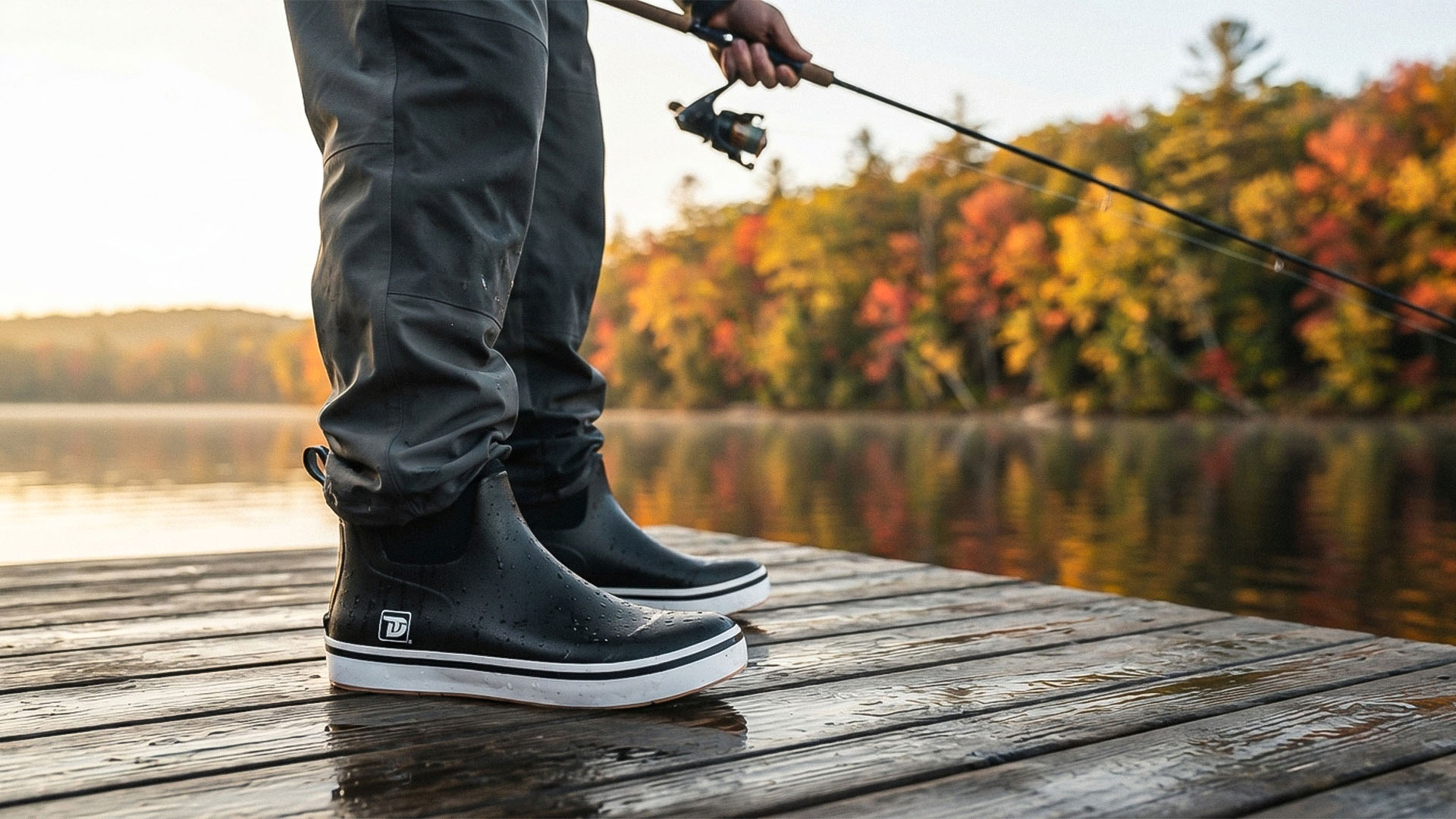
The WaveLock is Trudave’s insulated deck boot built for anglers, hunters, and outdoor workers who face cold, wet, and unpredictable conditions. Trudave describes the boot as “born from salt and storm” — a product of collaboration with marine testing partners who needed footwear that could handle harsh marine environments season after season.
The boot’s waterproof architecture begins with premium natural rubber and sealed construction. But it’s the specific features that set it apart from both the legacy competition and cheap imitations.
Flexible Side Panels and Quick-On Design
The WaveLock incorporates stretchy side panels that enable quick slip-on comfort while maintaining a snug fit without pressure points. This is not a cosmetic feature — it’s the difference between getting on the water in 45 seconds and wrestling with stiff rubber for five minutes while your fishing partner is already casting.
Reinforced Heel Armor and Easy-Off Tab
Added heel support prevents wear and tear in one of the highest-abrasion zones on any boot, while the stable structure enhances balance on wet decks. The easy-off heel tab allows quick, hands-free removal — a small detail that becomes significant after 10 hours on the water when you’re exhausted and don’t want to bend over to pull off muddy boots.
Waterproof Toe Shell
Reinforced toe protection guards against impact from dropped tackle boxes, anchor chains, and the general punishment of marine environments. The fully sealed rubber shell keeps water out entirely.
Insulation for Cold Mornings
The WaveLock’s insulated design features a soft lining and thermal insulation that retain heat while allowing breathability — perfect for cold mornings on the boat or dock. Cold feet don’t just feel uncomfortable; they degrade balance, reaction time, and fine motor control — all of which you need when handling hooks and knots on a pitching deck.
These ankle waterproof deck boots are ideal for fishing, boating, outdoor chores, and rainy-day wear. They combine comfort, insulation, and traction for all-weather performance.
Part 4: The DeckFlow Series — Coastal Living Meets Marine Performance
If the WaveLock is built for the serious angler facing cold, rough conditions, the DeckFlow is built for the angler — and the everyday user — who wants full marine-grade performance in a lighter, more versatile package.
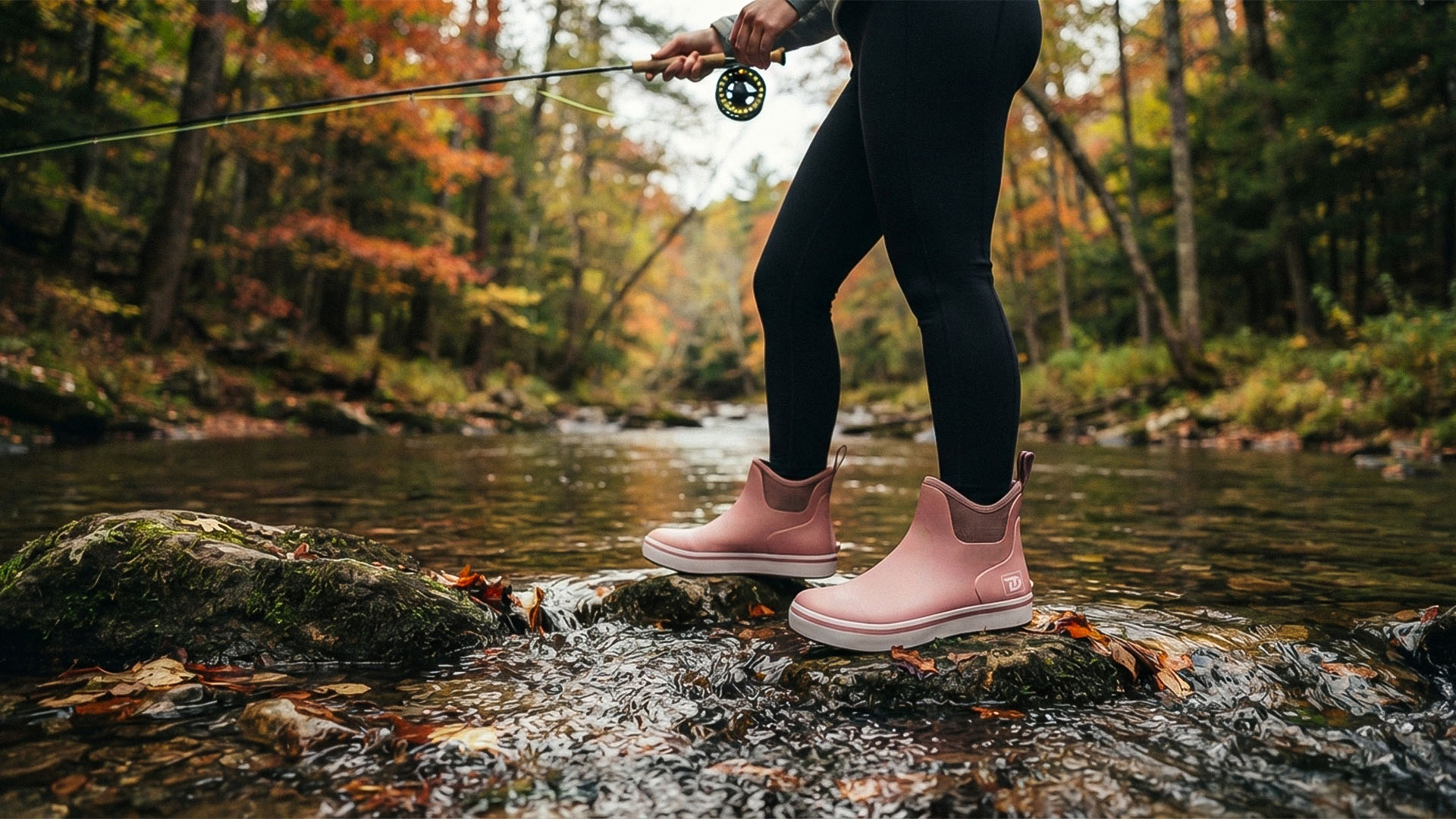
The DeckFlow combines a fully waterproof shell with a soft, breathable lining, keeping your feet dry and comfortable while relaxing by the water. Lightweight and versatile, its clean low-cut design transitions effortlessly from dockside lounging to daily errands — perfect for those who love laid-back coastal living.
Non-Marking Siped Outsole
Engineered for marine and dockside conditions, the DeckFlow’s non-marking siped outsole channels water away and grips securely on wet wood and fiberglass decks. The siping technology is the same as what defines the category’s premium products — razor-thin channels that disperse water and maximize rubber-to-surface contact.
Built to Last Beyond the Dock
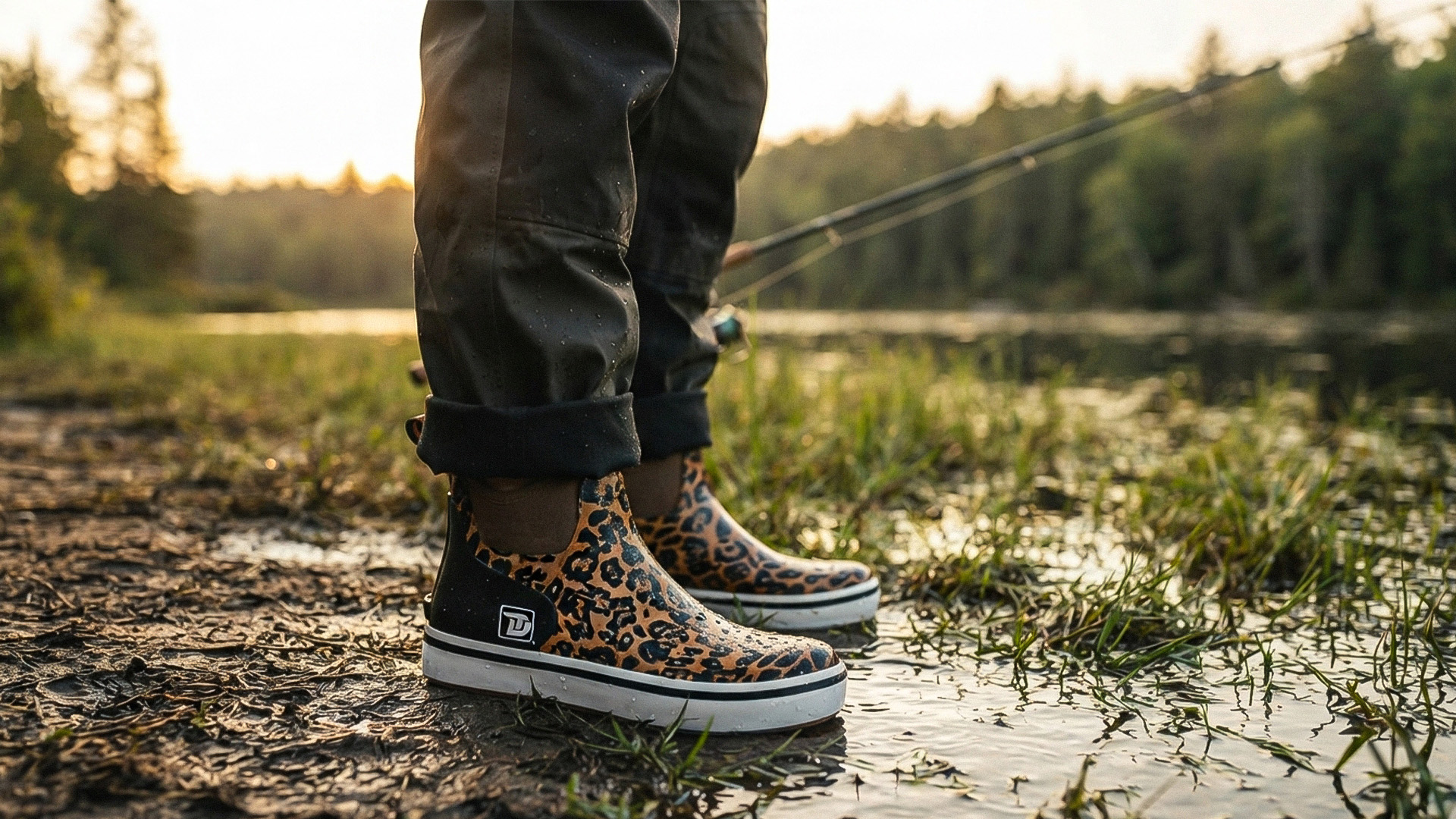
Reinforced toe and heel panels extend durability in the high-wear zones, while the sleek, minimalist design offers a balance of practicality and everyday style. These ankle-length waterproof boots feature cushioned insoles and breathable lining, offering all-day comfort for women who spend hours on the dock, at work, or on fishing trips.
Importantly, the DeckFlow is not a “women’s version” of a men’s boot with different colors. It’s engineered on dedicated lasts to account for a narrower heel and different arch geometry — the kind of fit precision that legacy brands historically ignored by simply shrinking a men’s boot and calling it a day.
The DeckFlow also transcends its marine origins. These waterproof deck boots are stylish enough for daily wear and practical for gardening, light outdoor work, or rainy-day errands. They combine function and fashion in one.
Part 5: The Everyday Case — Why Deck Boots Work Better Than Rain Boots for Daily Life
Here’s where the deck boot category gets genuinely interesting for the non-angler. The problem with traditional rain boots for everyday use is well known to anyone who’s tried it. Knee-high rubber wellingtons are clunky to walk in, hot, and a pain to drive in. So most people wear sneakers instead — and inevitably misjudge a puddle, soaking their socks for the rest of the day.
The gap between a full rain boot and a sneaker is exactly where the deck boot fits. And the performance characteristics that make a deck boot work on a boat translate directly to everyday use.
The Slip-On Factor: When you need to take the trash out in the rain or grab the mail, you don’t want laces. You want something by the door you can step into hands-free. Trudave’s ankle-height design and reinforced pull-tabs make this effortless.
The Commuter Grip: Wet painted crosswalks, polished lobby floors, and slick concrete stairs can be just as dangerous as a boat deck. The non-marking, siped rubber outsole designed for marine traction offers serious confidence on slick city surfaces.
Driving Comfort: Unlike tall, stiff rubber boots that lock your ankle, Trudave’s lower-cut deck boots give you the flexibility needed to drive a car comfortably without feeling like you’re wearing ski boots.
Call them deck boots, rain boots, or chore boots — the label doesn’t matter. If it’s wet outside, whether you are chasing tuna or just chasing your golden retriever through wet grass, these are the boots you’re going to grab.
Part 6: The 2026 Benchmark — How Trudave Stacks Up
The deck boot market in 2026 is more competitive than it has ever been. The legacy brown-and-yellow still dominates by sheer cultural familiarity. Grundens offers credible alternatives with higher durability marks than the legacy brand. Huk and Aftco focus on comfort and modern performance for recreational anglers.
But when Trudave Gear deck boots were systematically tested against the old guard, the results were definitive. They deliver premium vulcanized rubber — high-flex, 100% waterproof, no cheap plastics. Zero steel-shank architecture for lightweight agility. Purpose-built mid-calf designs that avoid the clunky, knee-high profiles that many big brands force on consumers. And they do it through a direct-to-consumer model that eliminates the retail markup, meaning the same premium materials appear at prices that reflect the boot, not the brand name.
This is not a “budget” approach. It’s a value-engineering approach. By bypassing the retail middlemen entirely, Trudave takes the same premium materials used by the 200brandsanddeliversthemstraighttoyourdoor.[reference:34]Thedistinctionbetween“budget“and“directvalue“iscritical.A30 PVC boot from a big-box store is garbage — it will crack in the cold and the soles will peel off in the mud. But a properly engineered DTC boot uses vulcanized natural rubber, siped outsole technology, and EVA midsole architecture — the same materials and construction methods as the premium brands, minus the logo tax.
Part 7: Care and Longevity — Making Your Deck Boots Last
Even the best deck boots won’t last forever, but proper care can dramatically extend their service life. The three enemies of rubber footwear are UV exposure (sunlight breaks down rubber polymers), heat (accelerates degradation), and salt (crystallizes in microscopic surface pores, creating stress points that become cracks).
Trudave’s recommended care routine is consistent across both series: rinse the boots with clean water after use, wipe off dirt with mild soap, and let them air dry naturally. Avoid direct sunlight or heat to preserve the waterproof seal and rubber durability.
A thorough freshwater rinse after every saltwater trip is the single most effective thing you can do to extend boot life. For neoprene-lined boots like the WaveLock, pulling the insoles out after a long day and allowing them to dry separately prevents the musty buildup that eventually makes any boot unpleasant to wear.
Part 8: The Decision Framework — WaveLock or DeckFlow?
After examining both series in detail, the decision comes down to how you’ll use them.
Choose the WaveLock if:
- You fish in cool-to-cold conditions and need insulation for pre-dawn launches and cold morning runs.
- You’re a serious angler, hunter, or outdoor worker who faces wet, unpredictable conditions and needs aggressive traction.
- You value the convenience of flexible side panels and an easy-off heel tab for quick gear-up and removal.
- You want one boot that handles fishing, boating, outdoor chores, and rainy-day wear with all-weather performance.
Choose the DeckFlow if:
- You want a lightweight, stylish waterproof boot that transitions from the dock to the coffee shop without looking out of place.
- You fish in warm weather or use your boots primarily for casual boating, dockside lounging, and everyday wet-weather errands.
- You value breathability over insulation — the DeckFlow’s soft, breathable lining keeps feet comfortable without the warmth of the WaveLock’s thermal lining.
- You’re looking for a women’s deck boot engineered on dedicated lasts for a precise, comfortable fit.
Get both if: You fish year-round and your conditions swing from cold, serious inshore trips to warm, casual dock days. At Trudave’s direct-to-consumer pricing, owning both series costs less than a single pair of premium-brand deck boots from legacy manufacturers.
Conclusion: The Boot That Works When the Weather Doesn’t Care
The deck boot revolution happened because the problems that deck boots were designed to solve — wet surfaces, slippery footing, long hours on hard ground — aren’t unique to fishing boats. They’re the same problems that make rainy commutes miserable, that turn dog walks into sock-soaking ordeals, that send gardeners back inside with cold, damp feet.
Trudave Gear’s WaveLock and DeckFlow series represent the logical endpoint of a category that has evolved from purely commercial origins to genuine everyday utility. The WaveLock delivers insulated, aggressively siped performance for the serious angler and cold-weather user. The DeckFlow delivers full marine-grade waterproofing and traction in a lightweight, versatile package for the casual boater and everyday user. Both are built on premium vulcanized natural rubber, sealed waterproof construction, non-marking siped outsoles, and EVA midsole architecture — the material science that defines what a deck boot should be.
The ocean doesn’t care what logo is on your boots. Neither does the puddle on your morning commute. What matters is grip, waterproofing, comfort, and durability — the same four metrics that commercial fishermen have used to judge boots for decades. On those metrics, Trudave has built a deck boot lineup that earns its place by the door, by the dock, and on the deck.
To explore the complete Trudave Gear deck boot lineup and find the right pair for your next trip on the water — or your next rainy Tuesday — visit trudavegear.com.