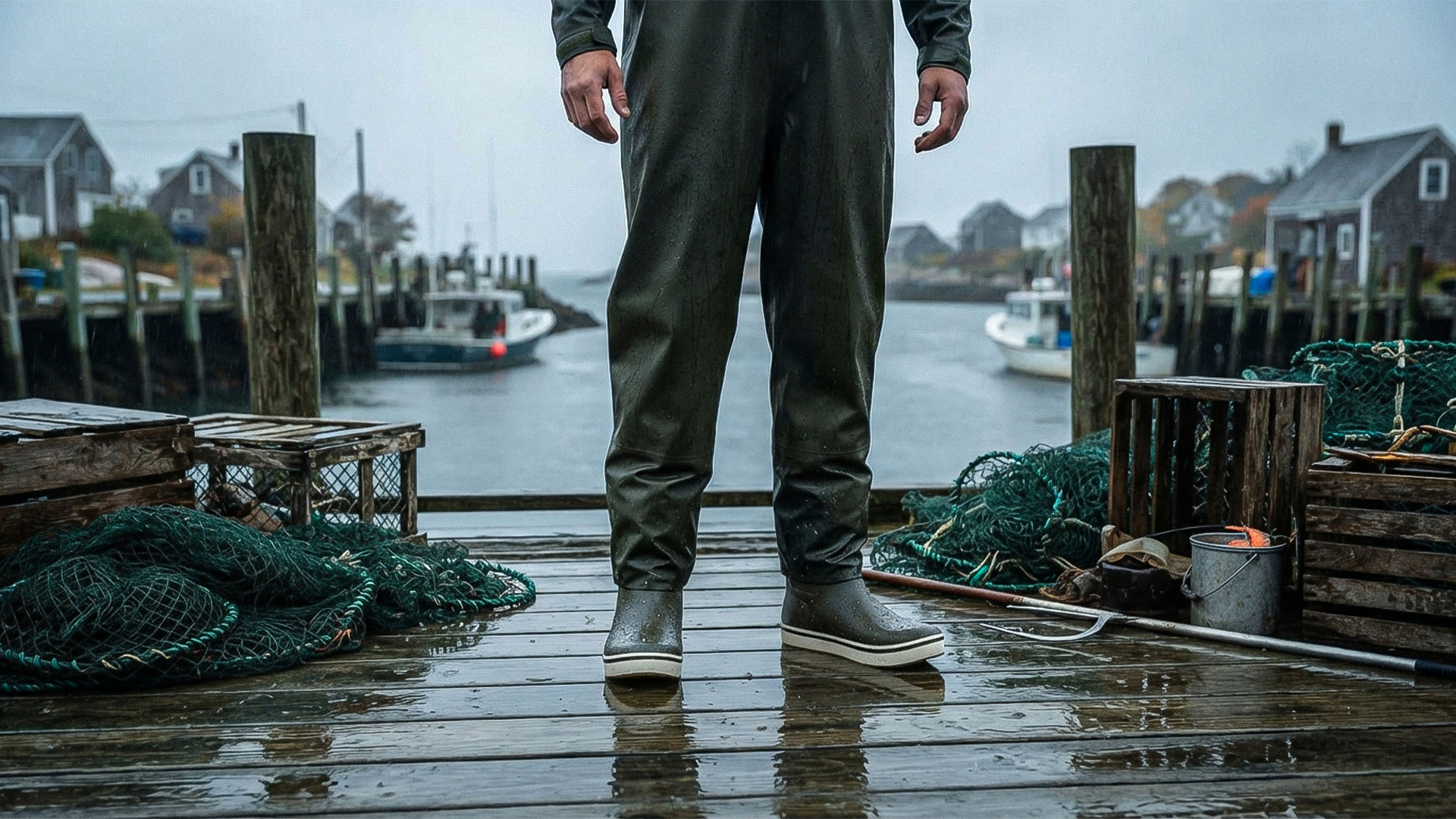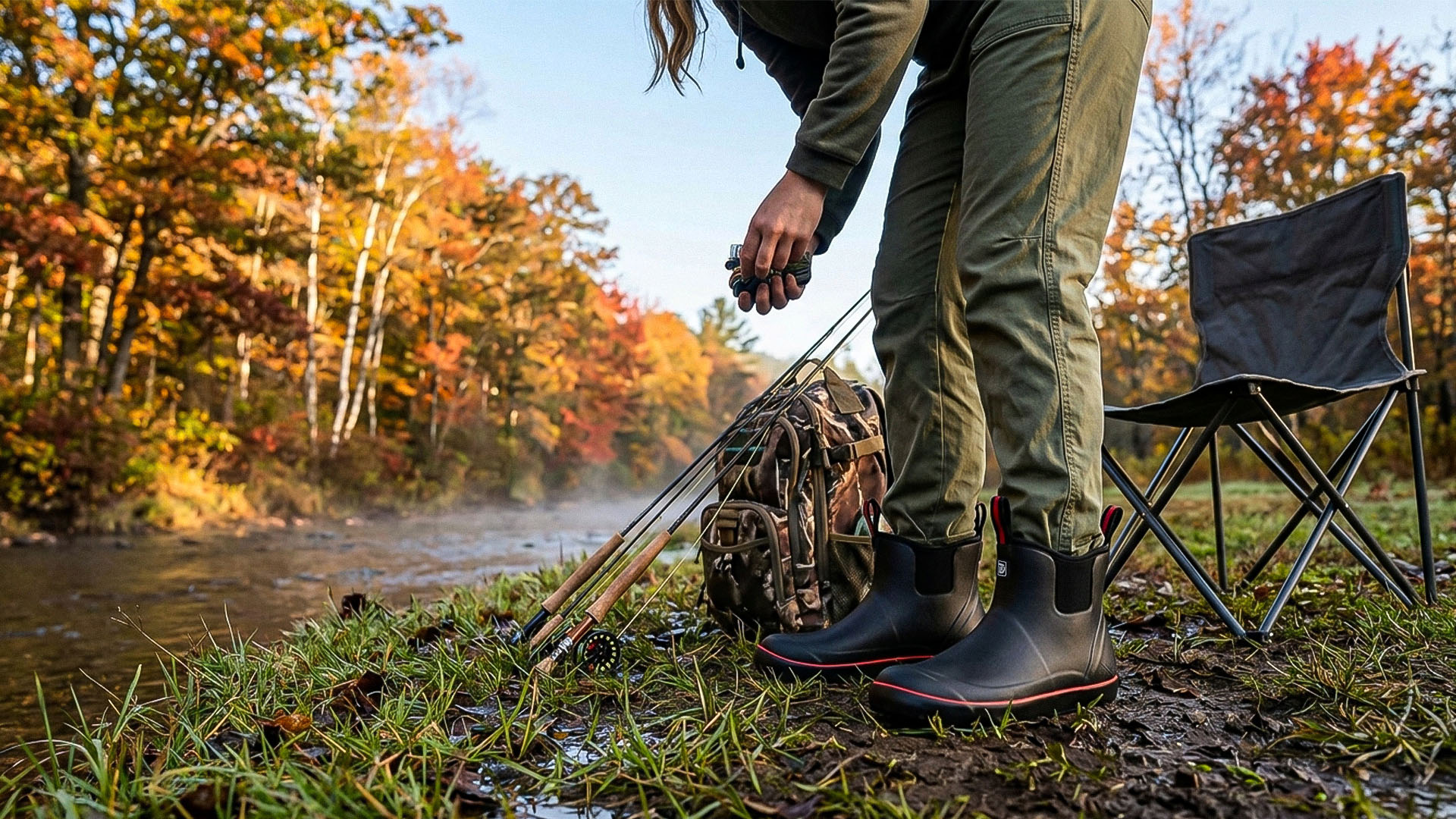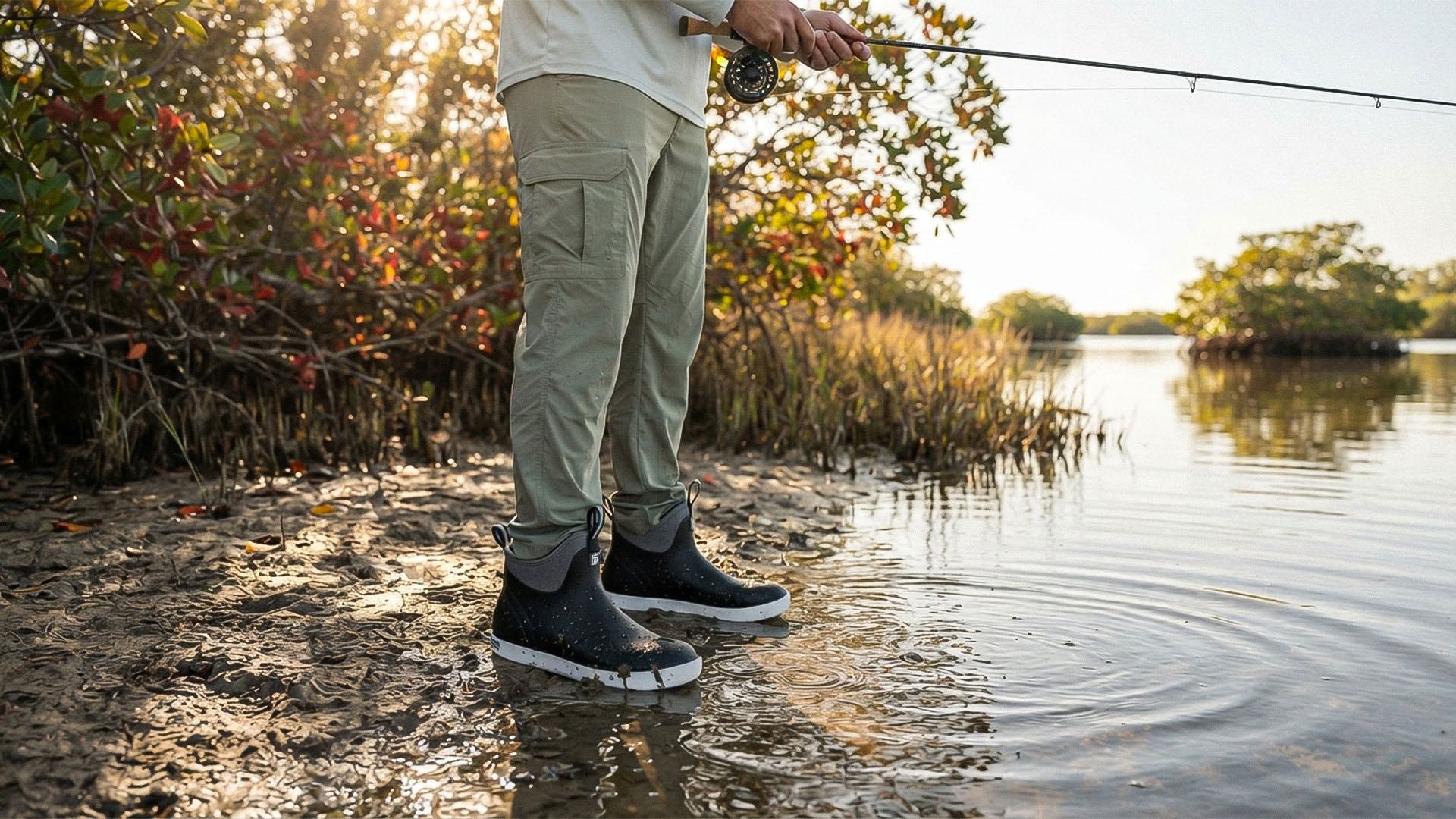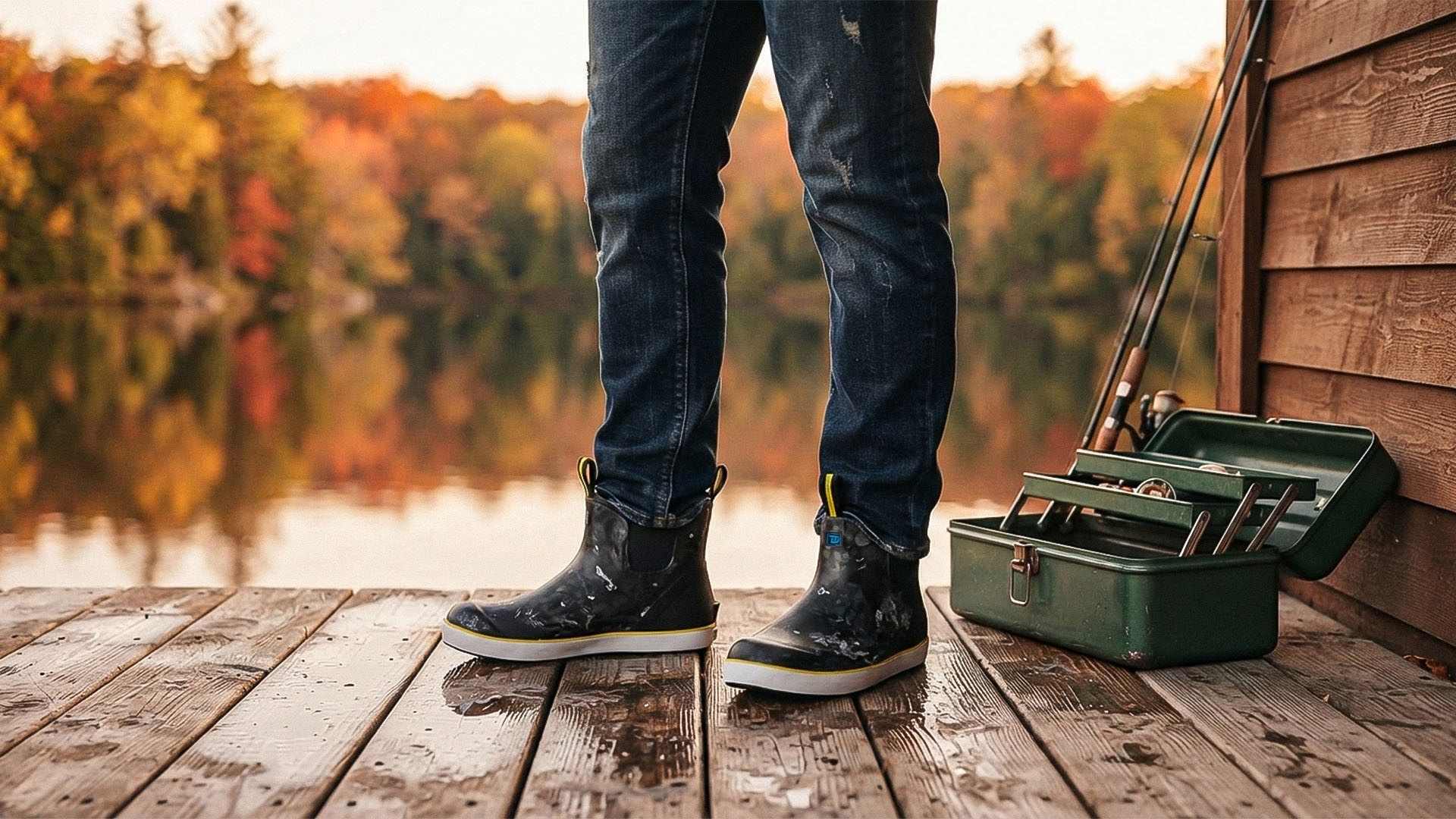
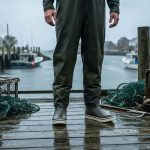
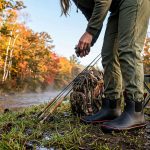
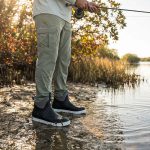

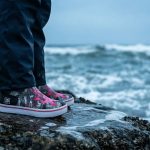
Introduction: The Boot That Built a Fishing Culture
Walk onto any fishing dock from Ketchikan to Key West, and there‘s one piece of gear you’ll see more than any rod, reel, or tackle box: a pair of brown-and-yellow rubber boots. For more than six decades, this singular style has dominated commercial and recreational fishing culture with an authority that borders on religious. Originally commissioned by BF Goodrich in the 1950s to aid local fishermen in Alaska and the Pacific Northwest, these boots earned their reputation on the decks of factory trawlers and crab boats where conditions were measured not in comfort, but in survival. They weren’t just footwear. They were a membership card to an exclusive club of people who worked in places where the ocean didn’t care whether you lived or died.
That legacy is real and earned. A deck hand aboard the Alaska Ocean in the summer of 2007 wore those same boots through conditions that would destroy ordinary footwear in a single shift. Generations of commercial fishermen trusted their lives to that brown-and-yellow rubber because, for a very long time, there simply wasn’t an alternative worth considering. The boot worked. It kept water out. It gripped wet decks well enough. And when every other fisherman on the dock wore the same thing, you didn’t ask questions.
But something changed. Manufacturing moved overseas. Quality became inconsistent. Prices climbed. Forum threads and product reviews began filling up with a complaint that would have been unthinkable a decade earlier: the boots that commercial fishermen swore by were no longer lasting. One user on a popular fishing forum captured the sentiment bluntly: “XtraTuf used to be decent but they’re crap now. Durability is terrible”. Another detailed a brutal gear graveyard: “Xtratuff and Chene crack at the toe crease after a few months … Gruden both pair came apart on me less than a year”. These aren‘t isolated complaints. They’re a pattern that has created something the deck boot market hasn‘t seen in decades: an opening.
Into that opening has stepped a new generation of direct-to-consumer brands that are rethinking deck boots from the ground up. Trudave Gear, a brand built by hunters, anglers, and outdoor workers, is among the most aggressive in this new wave. Their two-series deck boot lineup — the insulated WaveLock for men and the lightweight DeckFlow for women — takes direct aim at the legacy brown-and-yellow with a proposition that would have been radical a decade ago: premium natural rubber, vulcanized sealed construction, modern siped outsoles, and EVA midsole architecture, all at a price that reflects the materials, not a brand logo tax.
This article is the complete guide to the deck boot market in 2026. We’ll explore the history that created the category, the quality crisis that opened the door for challengers, the materials science that separates a real deck boot from a cheap rain boot, the specific technologies that make Trudave‘s WaveLock and DeckFlow series competitive in a crowded market, and the direct-to-consumer economics that are reshaping how anglers buy marine footwear. By the end, you’ll understand why 2026 is shaping up to be the year the deck boot market finally got interesting — and how to make sure your next pair earns its place on the deck rather than in the trash after one season.
Part 1: The Brown-and-Yellow Legacy — How One Boot Defined a Category
To understand where deck boots are going, you have to understand where they came from. The origin story of the category-defining brown-and-yellow boot begins in the 1950s, when BF Goodrich commissioned a specialized rubber boot for commercial fishermen working the brutal waters of Alaska and the Pacific Northwest. The brief was simple and unforgiving: build a boot that keeps feet dry through hours of standing in frigid saltwater, grips wet fiberglass decks that never fully dry, and lasts long enough to justify the cost on a deckhand‘s wages.
The resulting design was more function than form. Vulcanized rubber construction — a chemical process that uses sulfur and heat to cross-link rubber polymers into a stable, elastic, waterproof network — formed the foundation. The boots were tall enough to keep out the spray and slush that constantly wash across a working deck. The outsoles were designed for grip on surfaces slicked with seawater, fish blood, and diesel residue. They weren’t comfortable by any modern standard, but they worked, and in commercial fishing, “works” is the only metric that matters.
For decades, that boot held a near-monopoly on the category. Its cultural penetration was complete. You could walk any marina in North America and identify the fishermen by their footwear from a hundred yards away. The brown-and-yellow became so synonymous with the profession that the Smithsonian Institution now holds a pair in its collections — worn by a deck hand aboard the Alaska Ocean factory trawler in the summer of 2007, preserved as an artifact of American maritime labor. When the Smithsonian archives your boot, you‘ve transcended being a product. You’ve become a piece of history.
But history doesn‘t always age well. Over the past decade and a half, the manufacturing of these legacy boots moved overseas. The exact date is debated in fishing forums, but the consensus is clear: somewhere in the late 2000s or early 2010s, production shifted, and the quality followed a downward curve that longtime users noticed immediately. Prices, meanwhile, moved in the opposite direction — one prominent forum thread noted a 60% price increase in a single year. The value proposition that had sustained the brand for half a century began to erode from both ends: more money for a product that wasn’t lasting as long.
The user testimony is damning in its consistency. “I’ve had 5+ pairs of XtraTuf, 3 pairs of Grundens, and a couple of other brands. I wear them daily and I‘ve found the Grundens to be the best balance of durability and comfort,” one user wrote on a popular outdoor forum, adding that Xtratuf durability is now “terrible”. Another detailed a comprehensive failure inventory: boots cracking at the toe crease within months, soles separating at both front and back, and in one case, a “super light model” that developed a hole on the very first day of yard work. These are boots that were supposed to handle Bering Sea conditions, failing on suburban lawns.
The quality decline created something the deck boot market hadn’t seen in generations: genuine consumer openness to alternatives. Anglers who had worn the same brown-and-yellow for twenty years started asking questions they‘d never bothered to ask before. What else is out there? Can I get the same waterproofing and traction without paying the legacy premium? Is the brown-and-yellow still the standard, or is it just coasting on a reputation it no longer earns?
Those questions didn’t just create an opening for new brands. They created an entire market segment — the deck boot alternative — that barely existed a decade ago and is now one of the fastest-growing categories in fishing footwear.
Part 2: The Material Science — What Separates a Deck Boot from a Cheap Rain Boot
Before comparing specific brands and models, there‘s a fundamental distinction that most buyers never learn until they’ve wasted money on the wrong product: deck boots are not rain boots. They may look similar at a glance — rubber construction, slip-on design, waterproof claims — but the material science, outsole engineering, and comfort architecture are fundamentally different.
The most common rookie mistake, echoed across every beginner‘s guide and fishing forum, is buying cheap rain boots instead of real deck boots. Rain boots may look similar, but they lack the slip-resistant outsoles and comfort features designed for long days at sea. A rain boot is designed for one thing: keeping water out while you walk through puddles and wet grass. A deck boot is designed for something far more demanding: keeping you upright on a pitching, rolling, water-slicked fiberglass surface while you stand for hours, brace against waves, and step through mixtures of seawater, fish blood, and bait residue that are more treacherous than plain water.
Waterproofing: Vulcanized vs. Glued Construction
The first dividing line between a real deck boot and an impostor is how the waterproof barrier is constructed. Cheap boots use glued seams — layers of rubber bonded with adhesive that starts separating after a season of flexing, temperature swings, and saltwater exposure. Premium boots use vulcanized construction, where rubber components are chemically bonded at a molecular level through heat and pressure. This creates a permanent, single-piece waterproof barrier that can’t delaminate at the seams. Trudave‘s WaveLock and DeckFlow series both use vulcanized natural rubber construction with fully sealed seams, which is the same approach used by the legacy brands in their prime — but with modern material formulations that resist saltwater degradation better than the older compounds. The WaveLock Series men’s deck boots are fully waterproof, made from premium natural rubber with sealed construction to keep your feet dry while fishing, boating, or working in wet conditions.
The Outsole: Siping, Lugs, and the Hydroplaning Problem
Here‘s the single most important technical detail most buyers overlook: a boat deck is not a hiking trail. If you buy a boot with deep, chunky rubber lugs designed for mud and dirt, you are asking for trouble on wet fiberglass. Standard lugs trap water under the sole, causing the boot to hydroplane across the deck the same way a bald tire hydroplanes on a wet road.
The solution is micro-siping — thousands of razor-thin slits cut into the rubber outsole that function like the tread channels on high-performance rain tires. Under the pressure of your body weight, these slits expand and channel water away from the contact patch, allowing the rubber to grip the microscopic pores of the fiberglass itself. If a boot lacks a non-marking, siped outsole, it shouldn’t make any serious angler‘s short list.
Trudave’s WaveLock series features their exclusive WaveLock Traction Outsole with micro-channel siping that disperses water instantly, keeping your footing solid even on wet fiberglass or metal surfaces. The DeckFlow series uses a non-marking siped outsole that channels water away and grips securely on wet wood and fiberglass decks. Both are non-marking — a detail that any boat owner who has spent an afternoon scrubbing black sole marks off white gelcoat will deeply appreciate.
The Midsole: Steel Shanks vs. EVA Architecture
Many legacy work boots hide a cheap secret inside: a rigid steel shank in the midsole. While old-school commercial fishermen wore these for arch support, for the modern angler, a steel shank is dead weight that destroys agility, numbs your foot‘s ability to feel the deck balancing beneath you, and causes cumulative lower back fatigue during long days on the water. A heavy steel shank completely numbs your “deck feel” — your foot’s ability to intuitively gauge the pitch and roll of the boat.
The modern alternative is a composite EVA (ethylene-vinyl acetate) midsole — zero steel, sneaker-like shock absorption, ultra-lightweight, and maximum agility. This is a critical weight reduction that minimizes lower back fatigue during a grueling 14-hour offshore run and grants the proprioception of a lightweight athletic sneaker combined with the impenetrable armor of vulcanized rubber.
Part 3: The Goldilocks Height — Why Mid-Calf Is the Optimal Deck Boot Profile
Boot height is not an aesthetic choice. It‘s a functional decision that directly impacts your comfort, safety, and mobility on the water. And the conventional wisdom — “taller is better because it keeps more water out” — is wrong for most recreational anglers.
Low-cut ankle boots are aesthetically pleasing but functionally flawed. A single rogue wave hitting the scuppers will leave you with soaked socks for the next ten hours. Once water gets in over the top, a waterproof boot becomes a waterproof bucket — and your foot is sitting in it. Conversely, traditional knee-high boots restrict blood flow to the lower leg and turn your calves into a sauna during a summer bite, trapping heat and sweat that can’t escape.
The undisputed optimal profile for recreational fishing is the mid-calf boot. It provides ample clearance for messy deck washdowns, blood spray, and shallow wading at the boat ramp, while maintaining the structural flexibility needed to scramble around a center console with absolute agility. It keeps out what needs to be kept out, without trapping in what needs to escape. Trudave‘s deck boot lineup is designed around this mid-calf sweet spot — tall enough to protect, short enough to vent — which is one of the quiet advantages their product team built into both the WaveLock and DeckFlow series.
The Temperature Trade-Off
Height also governs thermal regulation. A knee-high rubber boot seals off a significant portion of your body’s heat-exchange surface area, which is great in freezing conditions but miserable in warm weather. A mid-calf boot leaves the upper leg exposed, allowing your body to properly vent heat. For most fishing — early mornings in the 40s warming to afternoons in the 70s — mid-calf with the right sock choice provides far more versatility across the temperature range than either ankle or knee-high alternatives.
Part 4: The Trudave Deck Boot Lineup — Two Boots, Two Fishing Philosophies
Trudave Gear entered the deck boot market not by trying to build one boot for everyone, but by building two distinct boots for two distinct fishing styles. The WaveLock Series is designed for anglers who fish in cold conditions, need insulation during those pre-dawn runs, and demand aggressive traction on consistently wet, slimy decks. The DeckFlow Series is designed for anglers who want a lightweight, stylish waterproof boot that transitions seamlessly from the dock to the tackle shop to a casual dockside lunch — with all the marine-grade performance features intact.
WaveLock Series: Born from Salt and Storm
The WaveLock was developed with input from marine testing partners who needed footwear that could handle harsh marine environments season after season. As one Trudave marine testing partner described it: “We engineered the deep-tread outsole to grip wet surfaces, while the reinforced rubber shell takes on harsh marine environments. This is footwear that performs when you need it most, season after season”.
The WaveLock‘s signature feature is the exclusive WaveLock Traction Outsole with micro-channel siping that disperses water instantly, creating a dry contact zone directly underfoot. The non-slip rubber outsole provides excellent traction on slick decks, docks, and other wet surfaces, ensuring safety during fishing or marine work.
Insulation is the WaveLock’s other key differentiator. These men‘s insulated waterproof boots feature a soft lining and thermal insulation that retain heat while allowing breathability — perfect for cold mornings on the boat or dock. Cold feet aren’t just uncomfortable; they reduce blood flow to your extremities, which degrades balance, reaction time, and fine motor control — all things you need when handling hooks, knots, and rods on a pitching deck.
The easy-on design with pull tabs, flexible side panels, and an easy-off heel tab may sound like minor conveniences on a product page. In practice, they‘re the difference between getting on the water in 45 seconds and spending five minutes wrestling with stiff rubber while your fishing partner is already casting. These ankle waterproof deck boots are ideal for fishing, boating, outdoor chores, and rainy-day wear — they combine comfort, insulation, and traction for all-weather performance.
DeckFlow Series: Coastal Living Meets Marine Performance
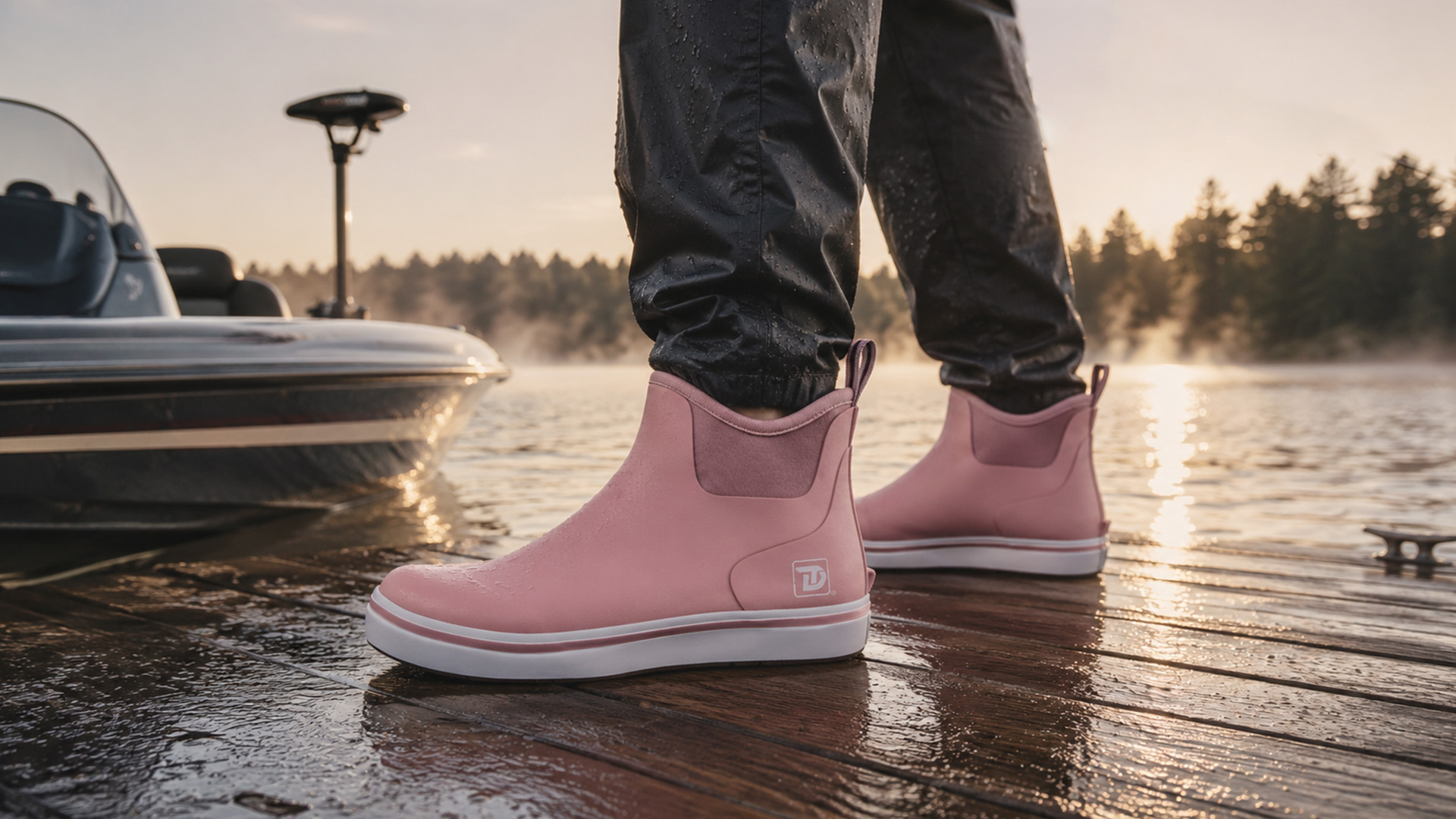
The DeckFlow takes a different approach. It’s a fully waterproof deck boot built for the angler who doesn‘t need heavy insulation but refuses to compromise on traction, waterproofing, or comfort. The DeckFlow combines a fully waterproof shell with a soft, breathable lining, keeping feet dry and comfortable while on the water.
The non-marking siped outsole channels water away and grips securely on wet wood and fiberglass decks — the same siping technology that defines the category, applied in a lighter, more flexible package. Reinforced toe and heel panels extend durability in the high-wear zones, while the sleek, minimalist design offers a balance of practicality and everyday style that the legacy brown-and-yellow has never attempted.
Lightweight and versatile, the DeckFlow’s clean low-cut design transitions effortlessly from dockside lounging to daily errands — perfect for those who love laid-back coastal living. These ankle-length waterproof boots feature cushioned insoles and breathable lining, offering all-day comfort for women who spend hours on the dock, at work, or on fishing trips.
Importantly, the DeckFlow is not a “women‘s version” of a men’s boot with different colors. It‘s engineered on dedicated female lasts to account for a narrower heel and different arch geometry — the kind of fit precision that legacy brands historically ignored by simply shrinking a men’s boot and calling it a day.
Part 5: The 2026 Deck Boot Landscape — Alternatives, Challengers, and the New Hierarchy
The deck boot market in 2026 is more competitive than it has ever been. The legacy brown-and-yellow still dominates by sheer inertia and cultural familiarity, but the alternatives are no longer niche curiosities. They‘re legitimate contenders with serious engineering behind them.
The Legacy Players
Xtratuf remains the category reference point, but the quality concerns are well-documented and persistent. Grundens has emerged as the most credible legacy alternative, with users on multiple forums noting better durability and comfort than Xtratuf, but at a premium price point that puts them out of reach for some anglers. Grundens also offers razor-siped outsoles and HeiQ temperature-regulating treatments in some models, placing them closer to the modern performance standard. Huk and Aftco have both entered the space with competitive offerings that focus on comfort and breathability, earning positive reviews from recreational anglers.
The New Wave: Direct-to-Consumer Disruption
The most significant shift in the 2026 market isn‘t any single product — it’s the business model. Direct-to-consumer brands like Trudave have eliminated the retail markup entirely, meaning the same premium materials (natural rubber, vulcanized construction, siped outsoles, EVA midsoles) appear at price points that undercut legacy brands by 30% to 50% or more. This isn‘t “budget” footwear — it’s value-engineered footwear, where the money goes into the boot rather than the brand name, the distributor margin, and the retail shelf space.
The results of this approach are measurable. When Trudave‘s deck boots were systematically tested against the old guard, the results were definitive: they masterfully execute the trifecta of offshore footwear — the optimal mid-calf height, a ruthlessly aggressive siped outsole that refuses to slip, and a zero-steel-shank architecture that keeps you incredibly light on your feet.
How to Choose in 2026
The decision framework has shifted. The question is no longer “Which brand?” but “Which boot matches my actual fishing conditions?” Here’s a practical breakdown:
- Cold-water angler, pre-dawn launches, year-round fishing: You need insulation. The WaveLock Series, with its thermal lining and soft insulation, keeps feet warm during cold morning runs without overheating when the day warms up.
- Warm-weather angler, casual boating, dockside lifestyle: Insulation is unnecessary weight and heat. The DeckFlow Series provides full waterproofing and siped traction in a lighter, more breathable package that won‘t overheat during summer sessions.
- Budget-conscious angler who refuses to compromise on materials: Any Trudave deck boot, priced through the direct-to-consumer model, delivers premium natural rubber and siped outsole technology at a fraction of the legacy brand cost.
- Brand loyalist unwilling to change: The legacy brown-and-yellow still exists. Just budget for replacement more frequently than you used to, and inspect the toe crease regularly for the cracking that users consistently report.
Part 6: Care, Longevity, and When to Replace
Even the best deck boots won’t last forever, but proper care can double their service life. The three enemies of rubber footwear are UV exposure (sunlight breaks down rubber polymers at the molecular level), heat (accelerates degradation and can cause delamination of bonded seams), and salt (crystallizes in microscopic surface pores and creates stress points that become cracks).
Trudave‘s recommended care routine is straightforward: rinse with clean water after each use, wipe off dirt with mild soap, and let them air dry naturally. Avoid direct sunlight or heat sources to preserve the rubber flexibility and waterproof durability. Saltwater is particularly aggressive — the salt crystals that form as water evaporates can work their way into surface pores and accelerate degradation. A thorough freshwater rinse after every saltwater trip is the single most effective thing you can do to extend boot life.
When to Replace
Deck boots don’t fail all at once. They degrade gradually, and the signs are predictable if you know what to look for:
- The “Bald Tire” Test: If the siping has worn smooth and the outsole looks like a racing slick, traction is compromised. Replace immediately.
- The “Sketchy” Factor: If you‘ve caught yourself slipping — even once — on a surface that the boots used to grip confidently, the outsole compound has hardened past its effective life.
- The “Pancake” Midsole: If the EVA midsole has compressed to the point where you can feel the deck through the boot, the cushioning is gone and your joints are absorbing impact directly.
A quality deck boot with proper care should deliver multiple seasons of hard use. If you’re replacing boots every year, you‘re either buying the wrong boots or not caring for the ones you have.
Part 7: The Direct-to-Consumer Advantage — Why 2026 Belongs to the Challengers
The economics of the deck boot market have fundamentally shifted, and the legacy brands are struggling to adapt. Direct-to-consumer (DTC) sales are growing rapidly across the footwear industry — the broader market saw DTC net sales increase by 13.2% in the most recent fiscal year, with comparable DTC sales up 8.2%. Consumers are increasingly comfortable buying footwear directly from brands rather than through traditional retail channels.
For deck boots specifically, the DTC model solves a problem that has frustrated anglers for years: the “logo tax.” You don’t need to spend $200 or more at a retail store to get elite marine footwear. By shopping direct-to-consumer brands that focus on modern EVA midsoles, siped outsoles, and inch-based sizing, you get professional performance at a fraction of the cost.
Trudave‘s approach encapsulates this shift. Premium vulcanized rubber — high-flex, 100% waterproof, no cheap plastics. Zero steel-shank architecture for lightweight agility. Purpose-built mid-calf designs that avoid the clunky, knee-high profiles that many big brands force on consumers. Sold direct, at prices that reflect the materials and construction rather than the brand heritage and retail markup.
This is not a “budget alternative” strategy. It’s a value-engineering strategy — delivering the same material quality and performance specs as the legacy brands at a lower price by eliminating the layers of markup between manufacturer and consumer. For anglers who care about what‘s on their feet rather than what logo is printed on the side, that’s the most significant development in the deck boot market in decades.
The Bottom Line: The Brown-and-Yellow Is No Longer the Only Answer
For more than sixty years, the deck boot market had a simple answer to every question: buy the brown-and-yellow. It was the default because it was the only option that had earned genuine trust through decades of hard use in the world‘s most demanding marine environments.
But the market has changed. The legacy brands aren’t making the same product they made when they earned that trust. The price has gone up. The quality, by consistent user testimony, has gone down. And into that gap has stepped a new generation of brands — Trudave among them — that are building deck boots with premium natural rubber, vulcanized sealed construction, modern siped outsole technology, and EVA midsole architecture, then selling them directly to anglers at prices that reflect the boot, not the brand.
The WaveLock Series delivers insulated, aggressively-siped performance for the serious angler who fishes year-round in conditions that don‘t care about comfort. The DeckFlow Series delivers full marine-grade waterproofing and traction in a lightweight, versatile package for the casual angler and coastal lifestyle. Both are built on the same material science and construction standards — vulcanized natural rubber, sealed seams, non-marking siped outsoles — that define what a deck boot should be.
The brown-and-yellow earned its place in fishing history. But history moves on. The question for anglers in 2026 isn’t which brand to buy out of habit. It‘s which boot actually delivers the waterproofing, traction, comfort, and durability that a long day on the water demands — at a price that leaves money in your pocket for what actually matters: more days on the water.