
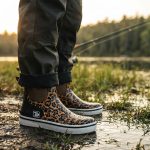
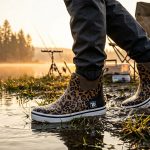
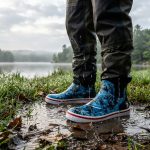
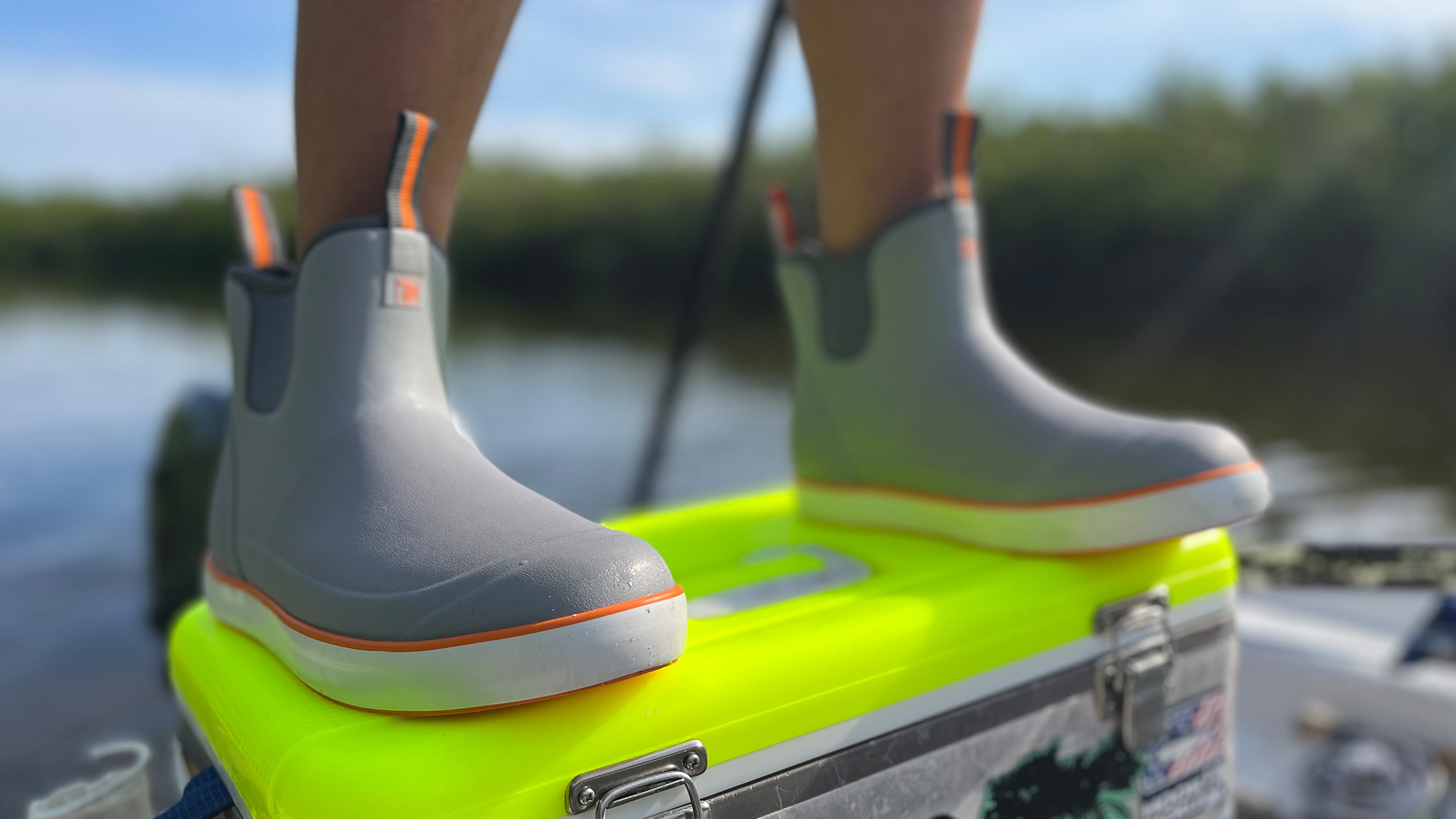
There’s a conversation happening in marinas from San Diego to Cape Cod that the big footwear brands aren’t hearing. It happens over the rumble of diesel engines at dawn, while charter captains hose down their decks and weekend warriors load coolers onto center consoles. The topic isn’t the latest reel or the hottest new lure. It’s about boots. Specifically, it’s about how the boots that dominated American fishing culture for decades don’t feel like they used to.
Walk through any coastal tackle shop in 2026 and you’ll see the evidence. The same brown-and-yellow legacy boots that earned their reputation on the decks of Alaskan crab boats still occupy prime shelf space. But the conversations around them have shifted. Anglers who once swore by those boots without a second thought are now pulling out their phones and reading reviews before buying. Some are walking out with different brands entirely. The category that was once a one-brand monopoly has become, quietly but unmistakably, a competitive market.
Trudave Gear entered this space with a clear thesis: that the deck boot market wasn’t suffering from a lack of brand heritage. It was suffering from a lack of accountability. While established players were riding decades-old reputations built during the Eisenhower administration, materials science and manufacturing technology had moved on. The boots anglers were being asked to pay premium prices for were, in too many cases, coasting on legacy rather than earning loyalty with every pair sold.
This article is about what happens when a brand builds deck boots from the ground up in 2026, using modern materials, modern construction methods, and a direct-to-consumer model that puts the money into the product rather than the marketing. We’ll walk through the specific problems that frustrate anglers the most — traction failures on slick decks, comfort breakdowns during long days, waterproofing that doesn’t last — and examine how Trudave’s WaveLock and DeckFlow series address each one. Along the way, we’ll hear from the anglers who have put these boots through real-world punishment and reported back.
Part 1: The Traction Problem — Why Siping Separates a Real Deck Boot from a Pretender
The single most dangerous misconception in marine footwear is that any waterproof boot will grip a wet boat deck. Walk into a big-box outdoor retailer and you’ll see dozens of rubber boots marketed as “all-terrain” or “waterproof.” Not one of them will tell you that their deep-lug tread pattern — excellent for hiking trails and muddy fields — is actively dangerous on a wet fiberglass deck.
The physics are straightforward. Deep, chunky lugs designed to bite into soft ground trap water on hard surfaces. The water forms a thin film between the lug tips and the deck, and the boot hydroplanes. The contact patch — the amount of rubber actually touching the deck — shrinks to almost nothing. On a boat that’s pitching in a chop, that physics problem becomes a safety emergency.
This is why the defining technology of a genuine deck boot isn’t waterproofing. It’s siping. Siping refers to thousands of razor-thin slits cut into the rubber outsole. Under the pressure of body weight, these slits open up and channel water away from the contact surface, allowing the rubber to grip the microscopic texture of the fiberglass itself. It’s the same principle that makes winter tires grip ice — tiny edges that bite and channels that evacuate water. As one footwear engineer described the process: “The geometry of a traditional lug traps water, causing the boot to hydroplane across the deck — the same way a bald tire hydroplanes on a wet road.”
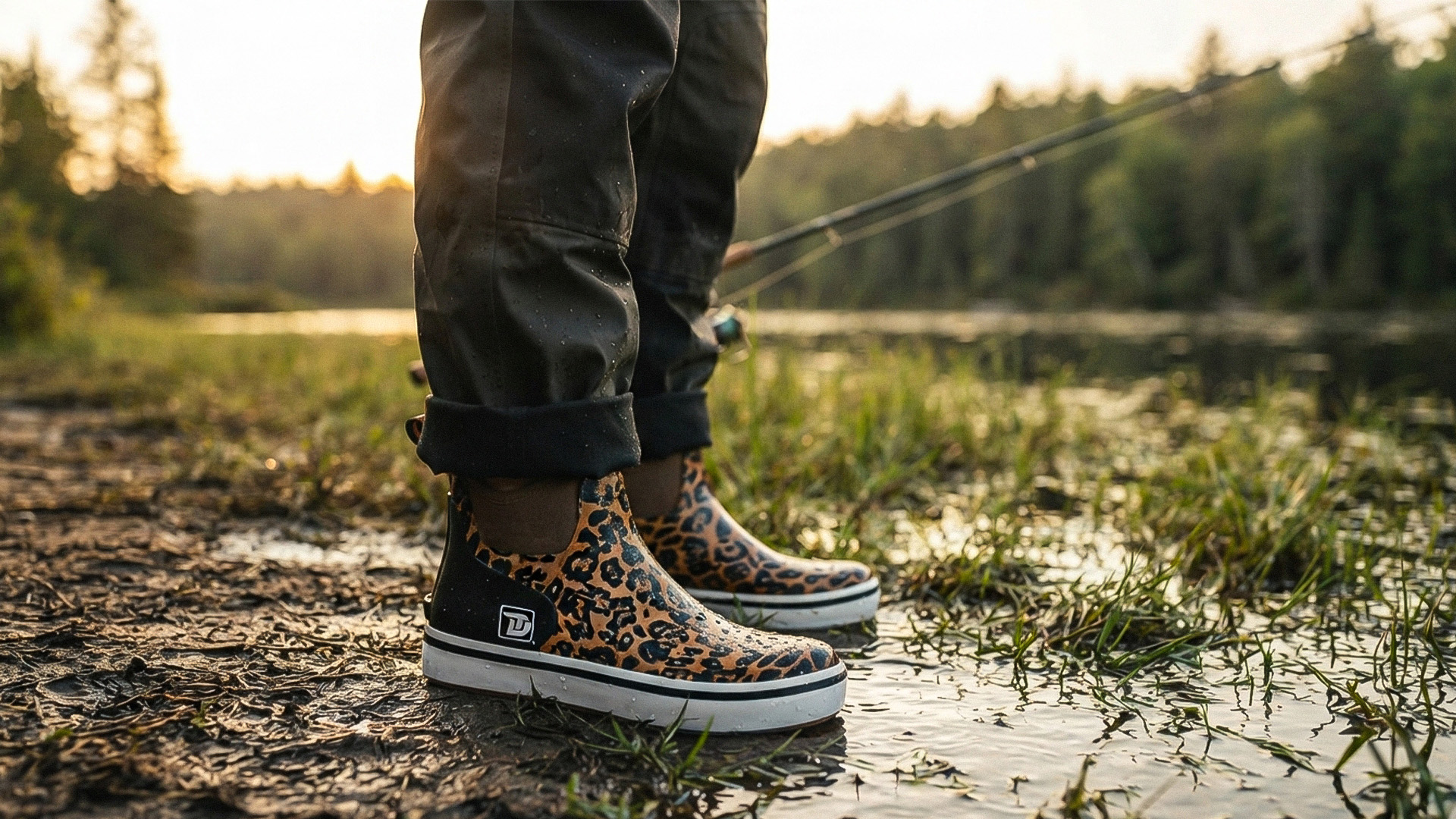
Trudave’s WaveLock Series addresses this with their signature WaveLock Traction Outsole, which uses micro-channel siping to disperse water instantly and maintain a dry contact zone directly underfoot. The DeckFlow Series incorporates the same siped outsole philosophy in a non-marking formulation — important for boat owners who’ve spent an afternoon scrubbing black sole marks off white gelcoat. Both designs prioritize surface-area contact on hard, wet surfaces over the deep-lug approach that works for mud but fails on fiberglass.
Anglers who’ve tested the WaveLock have validated the traction performance in conditions that would send lesser boots sliding. One reviewer noted that the micro-channel siping “provides excellent traction on slick decks, docks, and other wet surfaces, ensuring safety during fishing or marine work.” Another emphasized that “the non-slip rubber outsole provides excellent traction on slick decks, docks, and other wet surfaces.”
The traction performance of Trudave deck boots has drawn comparisons to premium competitors. An independent review in Footwind noted that the Trudave WaveLock “offers superior shock absorption and long-term comfort, making it the best overall pick for serious anglers” when compared directly to the Grundens Deck-Boss and XTRATUF Performance Series. That comparison matters because both Grundens and XTRATUF are the established benchmarks in this category. The fact that a relative newcomer is being ranked alongside them — and in some respects, ahead — tells you something about how fast the deck boot market is changing.
Part 2: The Durability Crisis — What Happened to Legacy Brands and Why It Created an Opening
No conversation about deck boots in 2026 makes sense without acknowledging what happened to the category’s dominant player. XTRATUF didn’t build its reputation in marketing departments. It built it on the Bering Sea, where commercial fishermen trusted the boots with their lives. For decades, the brown-and-yellow boot was the only serious option, and it earned that status honestly.
But the product changed. Manufacturing moved overseas. The exact timeline is debated in fishing forums, but the consensus points to the late 2000s or early 2010s. What’s not debated is what happened next: quality declined, and the user community noticed. Longtime wearers started reporting cracks at the toe crease after just a few months of use. In a prominent fishing forum thread, one angler described their experience bluntly: “Xtratuf used to be decent but they’re crap now. Durability is terrible.”
This isn’t an isolated complaint. It’s a pattern that has driven a significant portion of the market to explore alternatives for the first time in decades. Another angler in the same thread detailed a comprehensive failure inventory: “Xtratuff and Chene crack at the toe crease after a few months … Gruden both pair came apart on me less than a year.” When boots that were supposedly built for Bering Sea conditions are failing on recreational fishing boats within a single season, something fundamental has changed in the manufacturing.
Grundens has emerged as the most credible alternative among established brands, earning praise for the Deck-Boss series and its reliable siped outsoles and durable construction. But Grundens commands a premium price that puts them out of reach for some anglers. That price gap, combined with the quality concerns surrounding the legacy standard-bearer, created exactly the kind of opening that direct-to-consumer brands are designed to exploit.
Trudave entered this vacuum with a materials-first approach. Rather than trying to compete on heritage — a battle no new brand can win — they competed on construction. Vulcanized natural rubber instead of cheaper synthetic compounds. Chemical bonding at the molecular level instead of adhesive seams that separate over time. EVA midsole architecture instead of steel shanks that add weight without meaningful performance benefit. The bet was that anglers who’d been burned by declining quality would be willing to try something new if the materials and construction were demonstrably better.
User feedback suggests the bet is paying off. On Trustpilot, multiple reviewers report months of hard use without the seam failures and toe-crease cracking that plague cheaper boots. One angler who fishes regularly noted: “It has been about two months now and these boots are still going strong and keeping our feet protected.” In a market where some legacy boots are failing within a single season, that kind of durability — even at two months — signals a different approach to construction quality.
Part 3: Comfort Architecture — Why Steel Shanks Are Dead Weight on a Fishing Boat
Here’s a design decision that has more impact on your end-of-day comfort than almost anything else in a deck boot, and most anglers never think about it: what’s between your foot and the deck.
Traditional work boots and many legacy deck boots use a steel shank — a rigid metal plate running through the midsole under the arch. The idea sounds reasonable on paper: a steel shank provides arch support and torsional rigidity for uneven terrain. But a fishing boat isn’t uneven terrain. It’s a hard, flat surface that’s constantly moving. On a pitching deck, a steel shank becomes dead weight that numbs your foot’s ability to feel the boat’s movement — what sailors call “deck feel” — and transmits every wave impact directly up through your skeleton.
By the end of a long day on the water, the cumulative effect of that steel-on-bone impact shows up as lower back fatigue, sore knees, and aching arches. The steel shank that was supposed to support you has been working against you for eight hours.
Trudave eliminated the steel shank entirely across the WaveLock and DeckFlow series, replacing it with a composite EVA (ethylene-vinyl acetate) midsole. The reasoning is simple: “Traditional work boots use heavy steel shanks that drag you down on long hikes. By engineering a supportive EVA midsole with no steel shank, we cut the weight significantly. You get sneaker-like agility with the armor of a mud boot.”
This isn’t a cost-saving measure — EVA is more expensive to engineer properly than stamping a steel plate. It’s a performance decision. The EVA midsole absorbs impact, provides arch support through its molded contour rather than rigid bracing, and allows the foot to maintain the proprioception that helps you balance instinctively on a moving deck. The result is noticeably less fatigue after a full day of standing, bracing, and moving on hard fiberglass.
Anglers who’ve made the switch from steel-shank boots to EVA-architecture boots consistently report the same thing: they hurt less at the end of the day. One reviewer noted that the WaveLock’s cushioned insoles “reduce fatigue on long treks” — and while a fishing boat may not be a long trek, the hours of standing on an unforgiving surface add up to the same physical demand. The boots being tested against competitors for long-term comfort have consistently scored well: the Footwind comparison rated the WaveLock as “the best overall pick for serious anglers” specifically citing “superior shock absorption and long-term comfort” as the deciding factors.
Part 4: The WaveLock Series — Cold Mornings, Wet Decks, and All-Day Performance
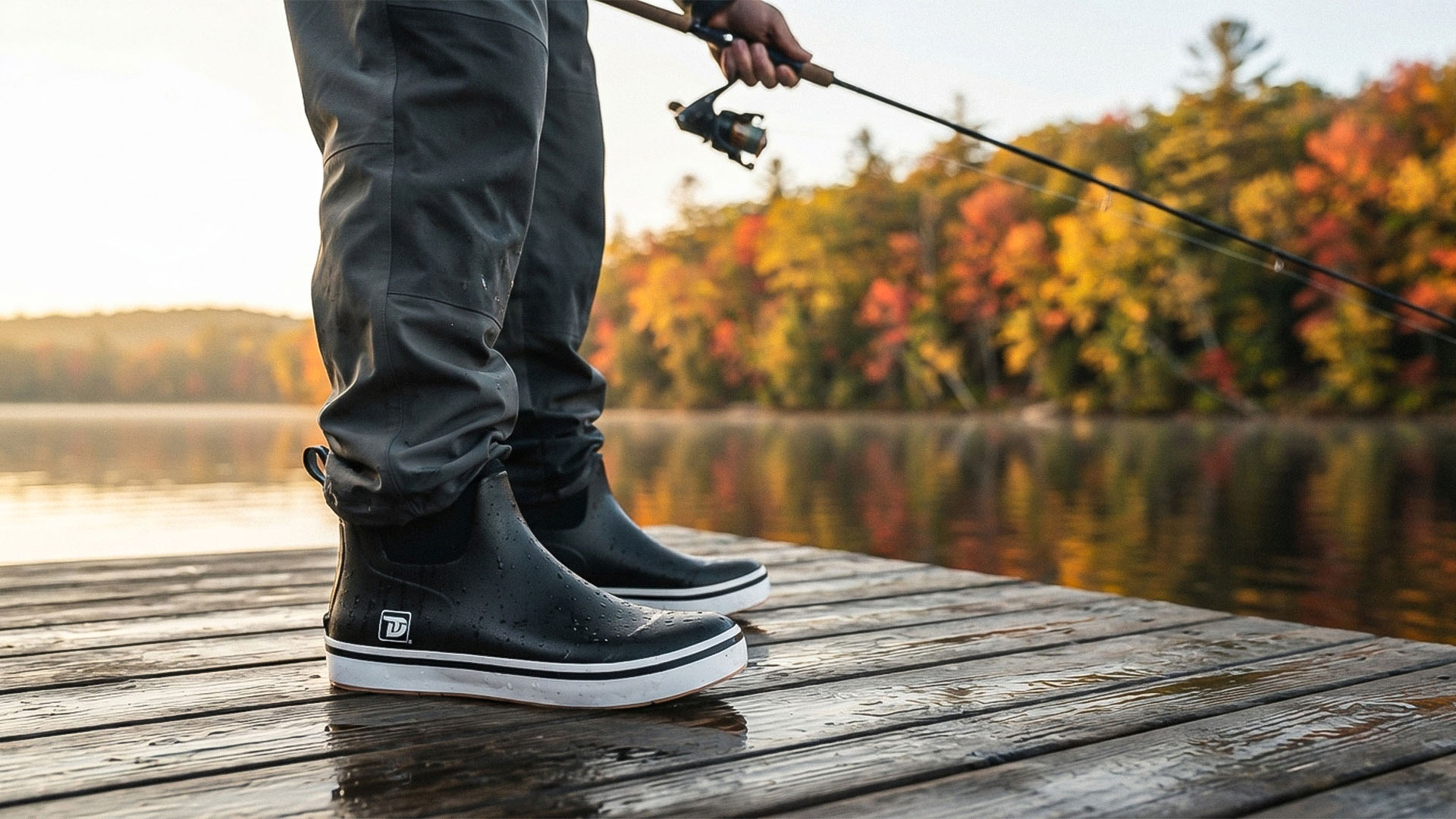
The WaveLock is Trudave’s flagship men’s deck boot, built for the angler who fishes year-round in conditions that don’t care about your comfort. It’s an ankle-height waterproof boot that combines a vulcanized natural rubber lower with a flexible neoprene-and-rubber upper, creating a sealed waterproof barrier that can’t delaminate at the seams.
The boot’s insulation is calibrated for the specific thermal challenge of fishing: those 40-degree mornings when the water temperature is still in the 50s, the wind is cutting across the deck at 20 knots, and you’re standing in a puddle of spray that the bilge pump hasn’t cleared yet. Cold feet don’t just feel uncomfortable. They restrict blood flow to your extremities, which degrades balance and fine motor control — both of which you need when handling hooks and knots on a pitching deck. The WaveLock’s thermal lining provides warmth without the bulk of a winter boot, and the breathable inner material manages moisture to prevent the clammy sweat buildup that plagues pure rubber boots during active fishing.
The easy-on, easy-off design is worth mentioning not because it’s glamorous but because it solves a genuine friction point in the fishing experience. Flexible side panels allow the boot to stretch during entry, pull tabs at the heel speed the process, and a reinforced kick-off heel tab means you can remove the boots hands-free at the end of a long day. These are small features that become disproportionately valuable when you’re gearing up in the dark at 4:30 AM or peeling off wet, muddy boots after 12 hours on the water.
The traction system — the WaveLock micro-channel siping described in Part 1 — is the boot’s headline feature, but it works in concert with the other design elements. Good traction without good fit leads to foot slippage inside the boot, which creates friction, which creates blisters. The WaveLock’s structured heel cup locks the foot in place to prevent that internal movement, and the EVA midsole provides the shock absorption that lets you stay on your feet longer without fatigue.
Part 5: The DeckFlow Series — Lightweight Performance for Warm-Weather Anglers and Coastal Living
If the WaveLock is built for cold mornings and serious offshore conditions, the DeckFlow is built for the other 70% of fishing: warm days, casual boating, dockside lounging, and the kind of coastal lifestyle where your deck boots need to transition from the boat to the tackle shop to the dockside restaurant without looking like you just stepped off a commercial trawler.
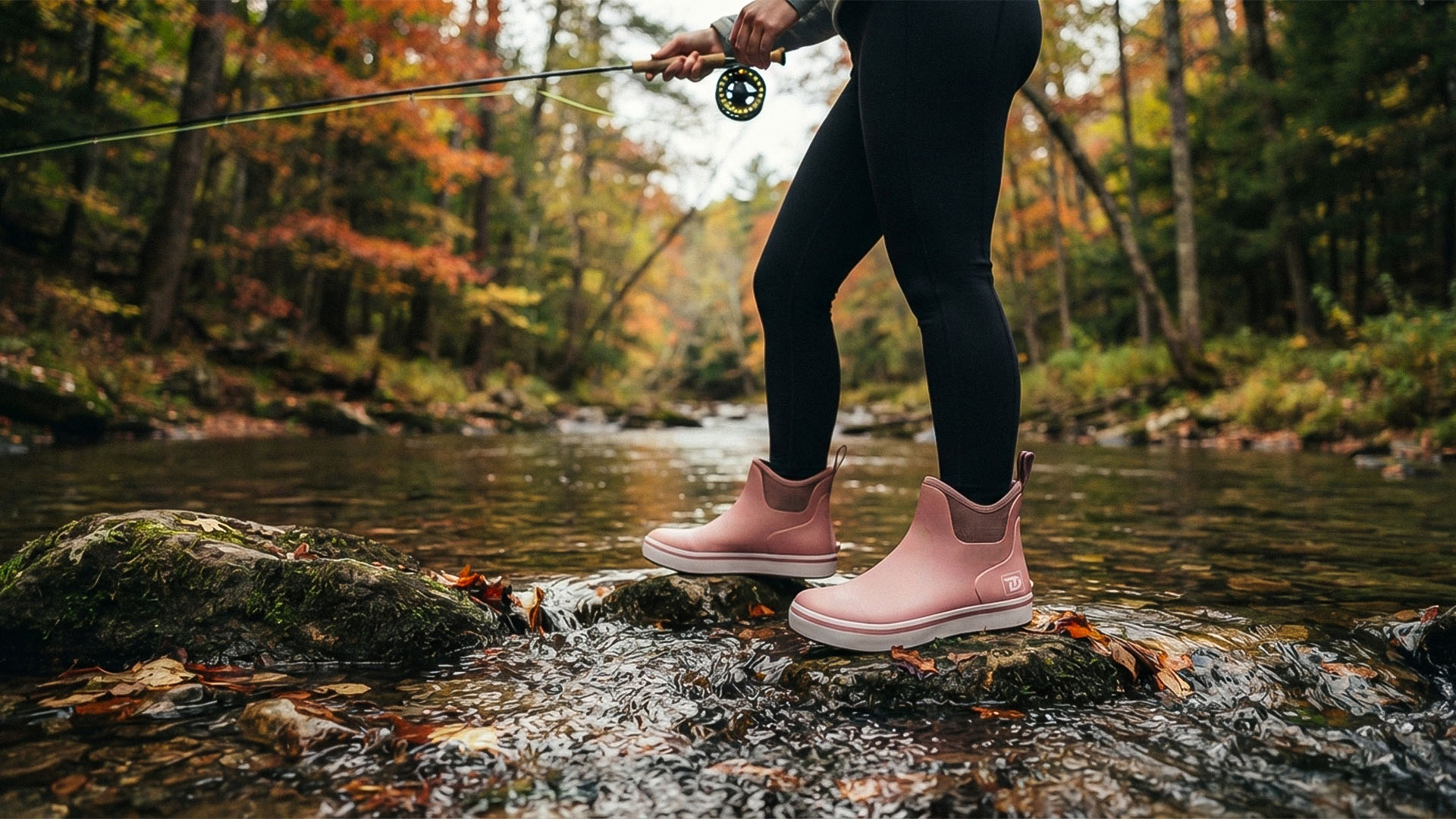
The DeckFlow is Trudave’s women’s deck boot series, and it’s engineered on dedicated female lasts — not simply a men’s boot shrunk down and offered in different colors. The fit accounts for a narrower heel and different arch geometry, which matters enormously for comfort over hours of wear. The boot combines a fully waterproof natural rubber shell with a soft, breathable lining that manages moisture without the insulation of the WaveLock — because in warm weather, insulation is a liability, not a feature.
The non-marking siped outsole provides the same marine-grade traction as the WaveLock in a lighter, more flexible package. The clean, low-cut design is intentional: these are boots that look appropriate on a boat, on a dock, and on the street. For the angler who doesn’t need heavy insulation and wants a boot that works across more of her life — fishing in the morning, errands in the afternoon, walking the dog on a rainy evening — the DeckFlow is the more versatile choice.
Reinforced toe and heel panels extend durability in the high-wear zones, and the cushioned insole provides all-day comfort for long hours on hard surfaces. The boot is lightweight enough to pack for travel, durable enough to handle saltwater and fish slime, and styled to work beyond the marina. It’s a deck boot that acknowledges a simple truth: most people who buy deck boots don’t fish commercially. They fish recreationally, and they need boots that serve them well on the water and in the rest of their lives.
Part 6: Who’s Switching and Why — Real Angler Feedback from Trustpilot and Beyond
Product pages can promise anything. The truth lives in reviews. Across Trustpilot, independent gear review sites, and fishing forum discussions, a consistent picture of Trudave deck boot performance emerges from the anglers who’ve put them through real-world use.
The waterproofing validation is the most consistent theme. One reviewer who purchased Trudave boots for regular use on wet decks reported: “We were constantly dealing with wet, muddy and otherwise soiled shoes. The boots have made our jobs and lives so much better and easier. And best of all, our feet stay DRY!!! It has been about two months now and these boots are still going strong and keeping our feet protected.”
The sizing intelligence that experienced anglers pass along is equally consistent: the boots run slightly large by design, accommodating the thick socks that cold-weather fishing demands. One reviewer captured the logic precisely: “The size is slightly larger, but with socks they fit well and comfortably. A size smaller would be too tight.” The takeaway for anyone ordering: go with your standard size if you plan to wear thick wool socks. Size down if you wear thin socks. The intentional volume is a feature designed for insulation, not a sizing error.
The comfort consensus is striking because it echoes a claim that sounds hyperbolic until you hear it repeated by multiple independent users: these boots feel more like sneakers than like traditional rubber boots. This isn’t marketing language. It’s the result of eliminating the steel shank, incorporating the EVA midsole, and designing the neoprene upper to flex with the foot rather than fight against it. As one comprehensive 2026 market analysis noted: “Anglers are increasingly seeking footwear that bridges the gap between a full work boot and a casual shoe” — and the deck boot category, particularly the slip-on designs that Trudave has optimized, is exactly where that demand is being met.
An interesting pattern in the broader fishing gear market reinforces this shift. Strike Footwear’s Silvertip Boat Shoe, a performance footwear model designed specifically for anglers, became the brand’s top-selling model globally within its debut year, with off-deck wear outpacing every other style in the line. The signal is clear: anglers are buying footwear that works on the boat and off it. They’re no longer willing to accept boots that only serve one purpose. Trudave’s WaveLock and DeckFlow series are positioned squarely in this emerging category — marine-grade performance without the compromise of looking like you’re wearing commercial fishing gear to a restaurant.
Part 7: The Direct-to-Consumer Reality Check
There’s no honest way to discuss Trudave’s deck boot value proposition without addressing the business model that makes it possible. The outdoor footwear industry operates on a simple and frustrating economic structure: the brand manufactures the boot, sells it to a retailer at a wholesale price, and the retailer doubles that price before it reaches the shelf. On top of that, the brand spends millions on sponsorships, advertisements, and retail display fees. All of that gets baked into the final price tag. When you pay 130forapairofdeckbootsfromalegacybrandatatackleshop,roughly40 to $50 of that is going to things that have nothing to do with the boot itself.
The direct-to-consumer model eliminates the retailer markup, the wholesale distributor margin, and the retail shelf-space fees. The money that would have gone to those middlemen goes into materials instead. This is how Trudave can offer vulcanized natural rubber, micro-channel siping, EVA midsole architecture, and thermal insulation at price points that undercut the established players by a significant margin. It’s not because the boots are cheaper to make. It’s because fewer people take a cut between the factory and your feet.
This model is gaining traction across the fishing industry more broadly. Market research from 2025 showed that direct-to-consumer sales are playing an increasingly crucial role in how fishing gear reaches consumers, with digital media and brand loyalty driving more purchasing decisions directly through brand websites rather than through traditional retail. The anglers driving this shift aren’t necessarily bargain-hunting. They’re value-hunting. They want to know that their money bought the best possible materials and construction, not the best possible retail display.
For Trudave, this translates into a straightforward proposition: take the materials and construction quality of a $130 deck boot, sell it direct for significantly less, and let the product speak for itself. The strategy appears to be working. Independent gear reviewers are increasingly listing Trudave alongside the established names in deck boot roundups, and user reviews consistently cite value as a key factor in their satisfaction.
Part 8: Care and Longevity — How to Make Your Deck Boots Last
The best deck boots still won’t last forever, but proper care can add seasons to their functional life. The three environmental factors that do the most damage to rubber footwear are UV radiation (sunlight breaks down rubber polymers at the molecular level), heat (accelerates degradation and can cause delamination of the seams), and salt (crystallizes in microscopic surface pores and creates stress points that become cracks).
The care protocol that Trudave recommends is the same protocol that marine footwear engineers have been recommending for decades: rinse with clean water after each use, wipe off dirt and debris with mild soap, and air dry naturally away from direct sunlight or heat sources. The rinse step is particularly important after saltwater exposure. Salt crystals form as water evaporates, and those crystals work their way into the rubber’s surface pores, gradually creating the micro-stress points that eventually become visible cracks. A thorough freshwater rinse stops that process before it starts.
For neoprene-lined boots like the WaveLock, there’s an additional consideration. Neoprene can retain odors if it’s stored damp. After a long day on the water, pull the insoles out and let them dry separately. Stuffing the boots with crumpled newspaper overnight wicks moisture from the neoprene lining and prevents the musty buildup that eventually makes any boot unpleasant to wear. It’s a low-tech solution that works as well as anything on the market.
Knowing when to replace your boots is as important as knowing how to care for them. The warning signs are straightforward: if the siping channels have worn smooth and the outsole resembles a racing slick more than a siped deck boot, the traction is compromised and the boots should be retired. If you’ve caught yourself slipping on a surface the boots used to grip confidently, the outsole compound has likely hardened past its effective life. And if you can feel the deck through the boot — meaning the EVA midsole has compressed to the point where your foot is essentially standing on the rubber outsole — the shock absorption that protects your joints is gone.
Conclusion: The Market Doesn’t Care About Your Heritage
The deck boot market has changed more in the last five years than it did in the previous forty. The dominant legacy brand is facing the most credible competition in its history. Anglers who once defaulted to the familiar brown-and-yellow are now asking harder questions than they’ve ever asked before. What materials are in this boot? How is it constructed? Is the waterproof seal vulcanized or glued? Is the outsole actually siped for wet decks, or is it just a mud lug pattern with different marketing? What am I paying for — the boot, or the brand?
These are uncomfortable questions for companies that built their market position on heritage and habit rather than continuous improvement. They’re exactly the questions that direct-to-consumer brands like Trudave Gear want anglers to ask. Because when the conversation shifts from “which brand has been around the longest” to “which boot uses the best materials and construction for the price,” the playing field levels. Legacy earns you a chance. Performance earns you the sale.
Trudave’s WaveLock and DeckFlow series represent a specific bet on what matters to anglers in 2026: vulcanized natural rubber instead of cheaper synthetics, micro-channel siping instead of generic tread patterns, EVA midsoles instead of dead-weight steel shanks, and direct-to-consumer pricing that reflects the product rather than the marketing budget. It’s not a revolutionary formula. It’s a honest one. And in a market where the legacy standard has been losing the trust it spent decades earning, honest might be exactly what anglers are looking for.
To explore the complete Trudave Gear deck boot lineup and find the right pair for your next day on the water, visit trudavegear.com.