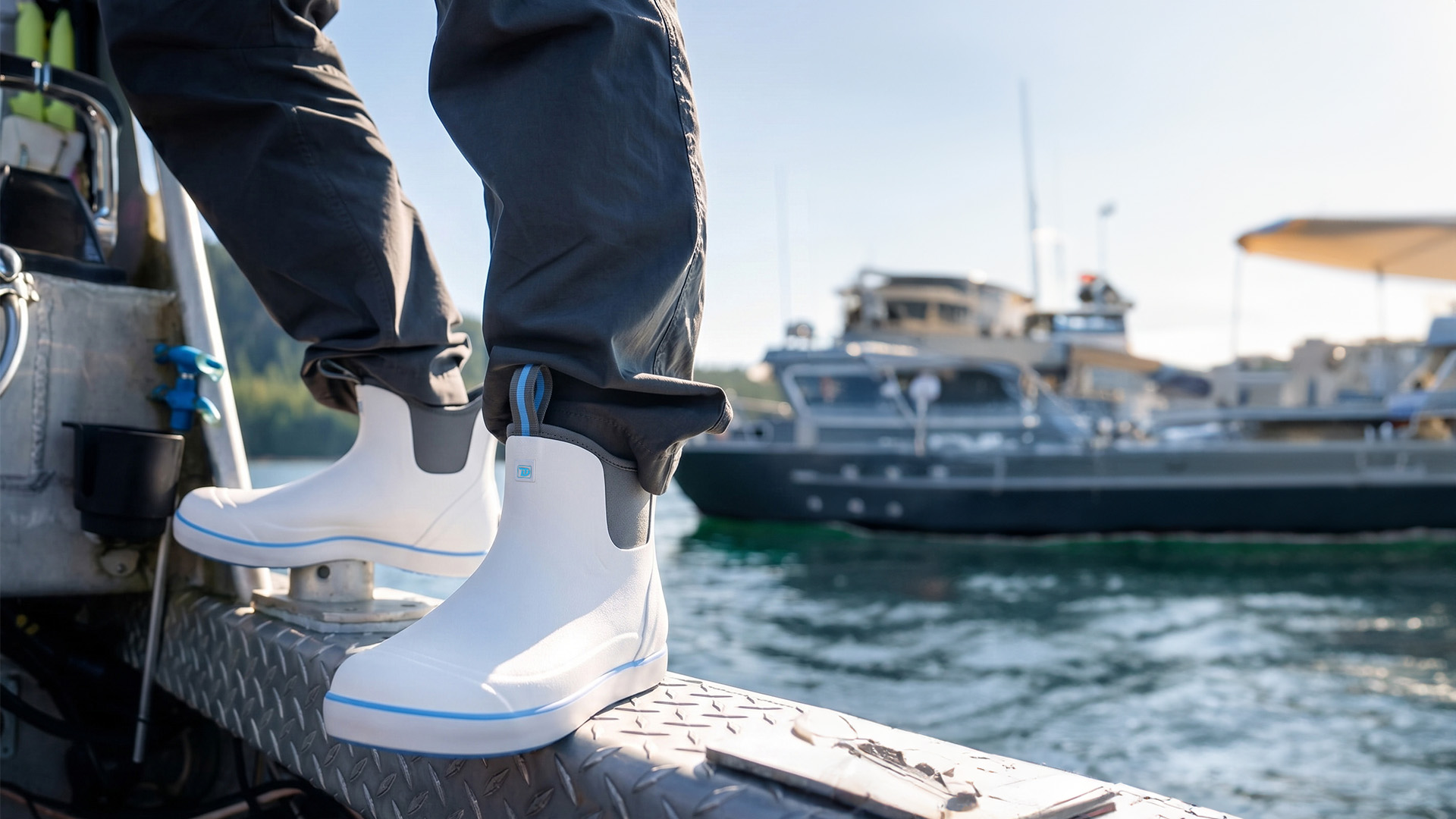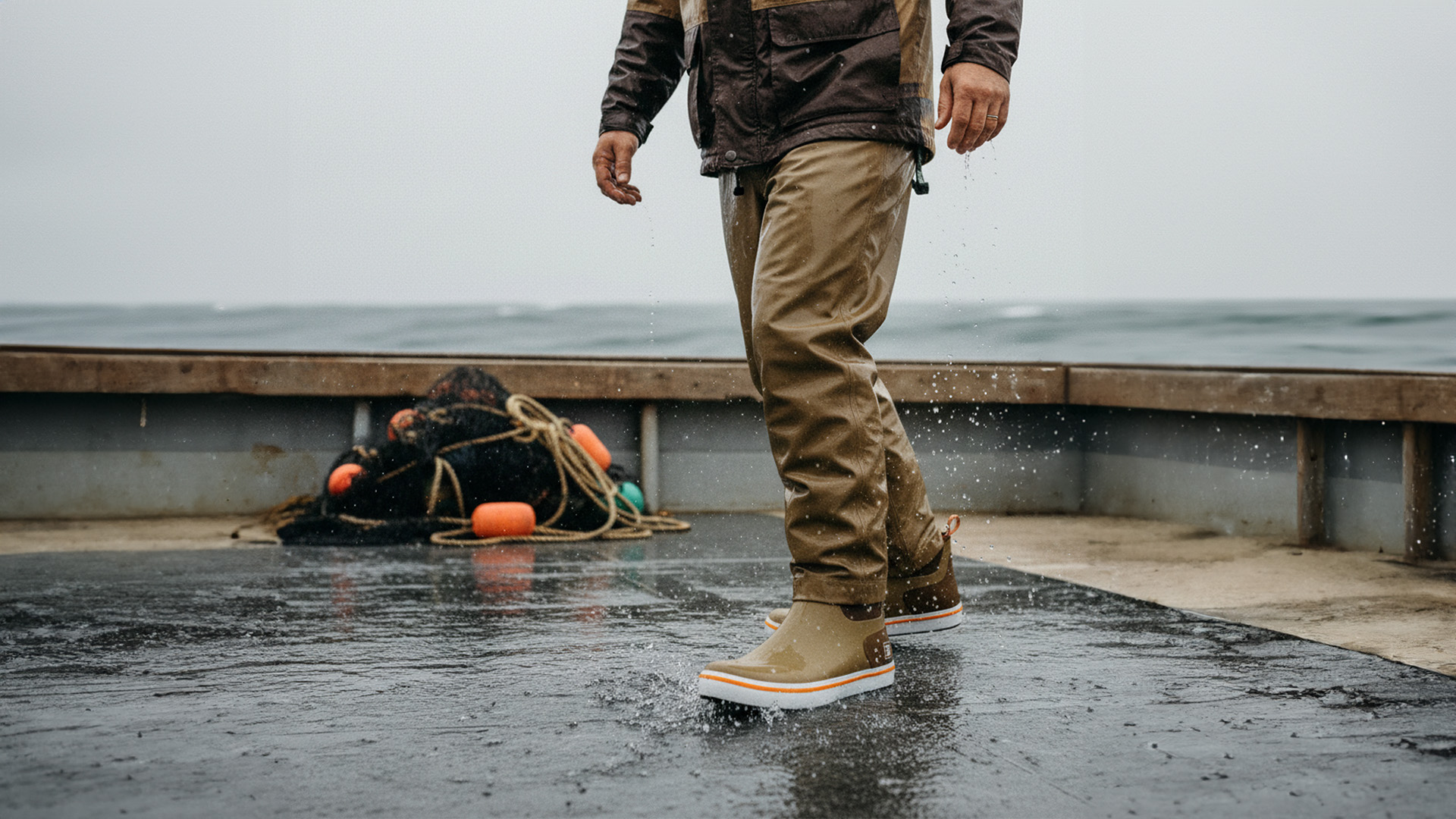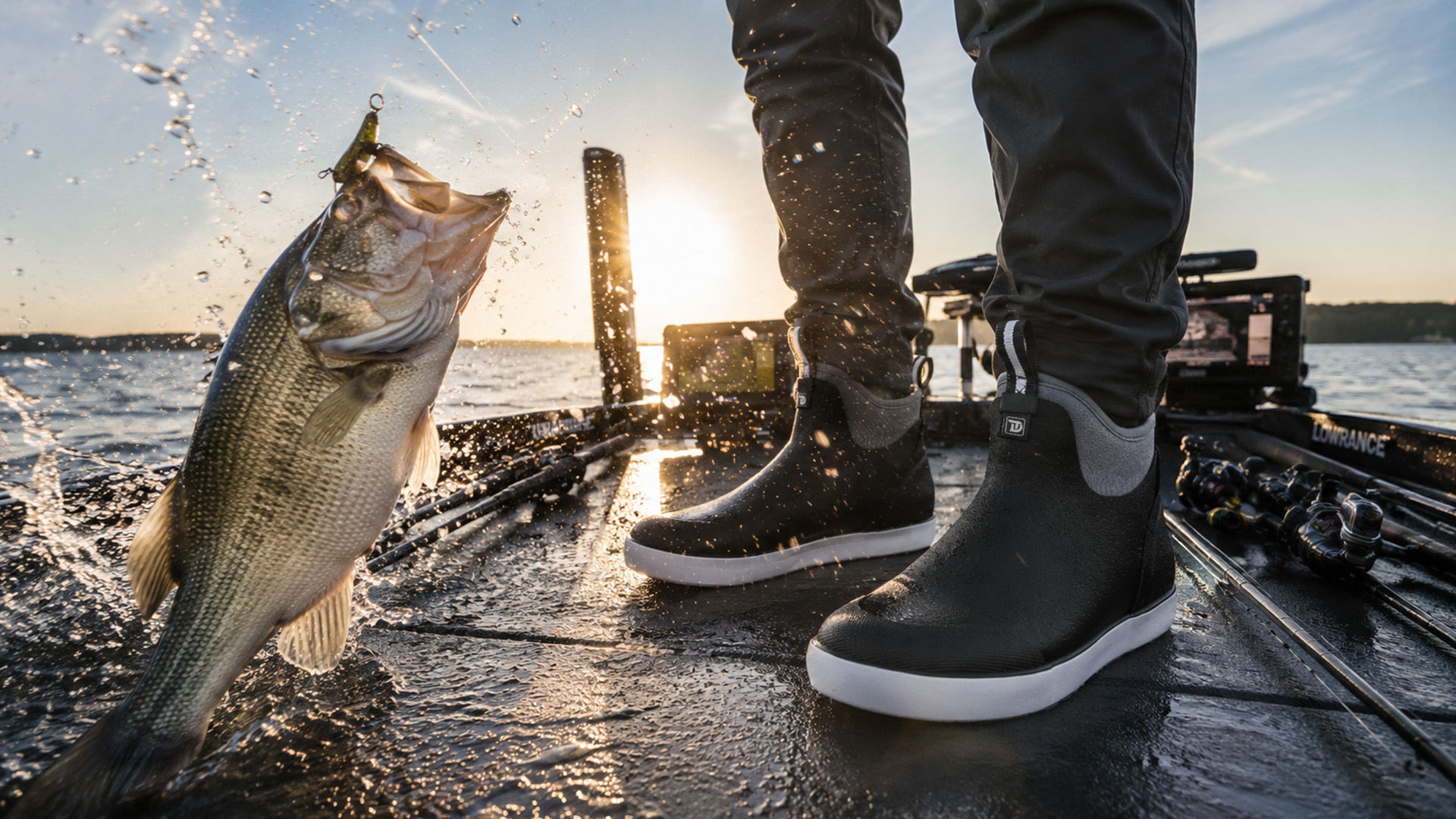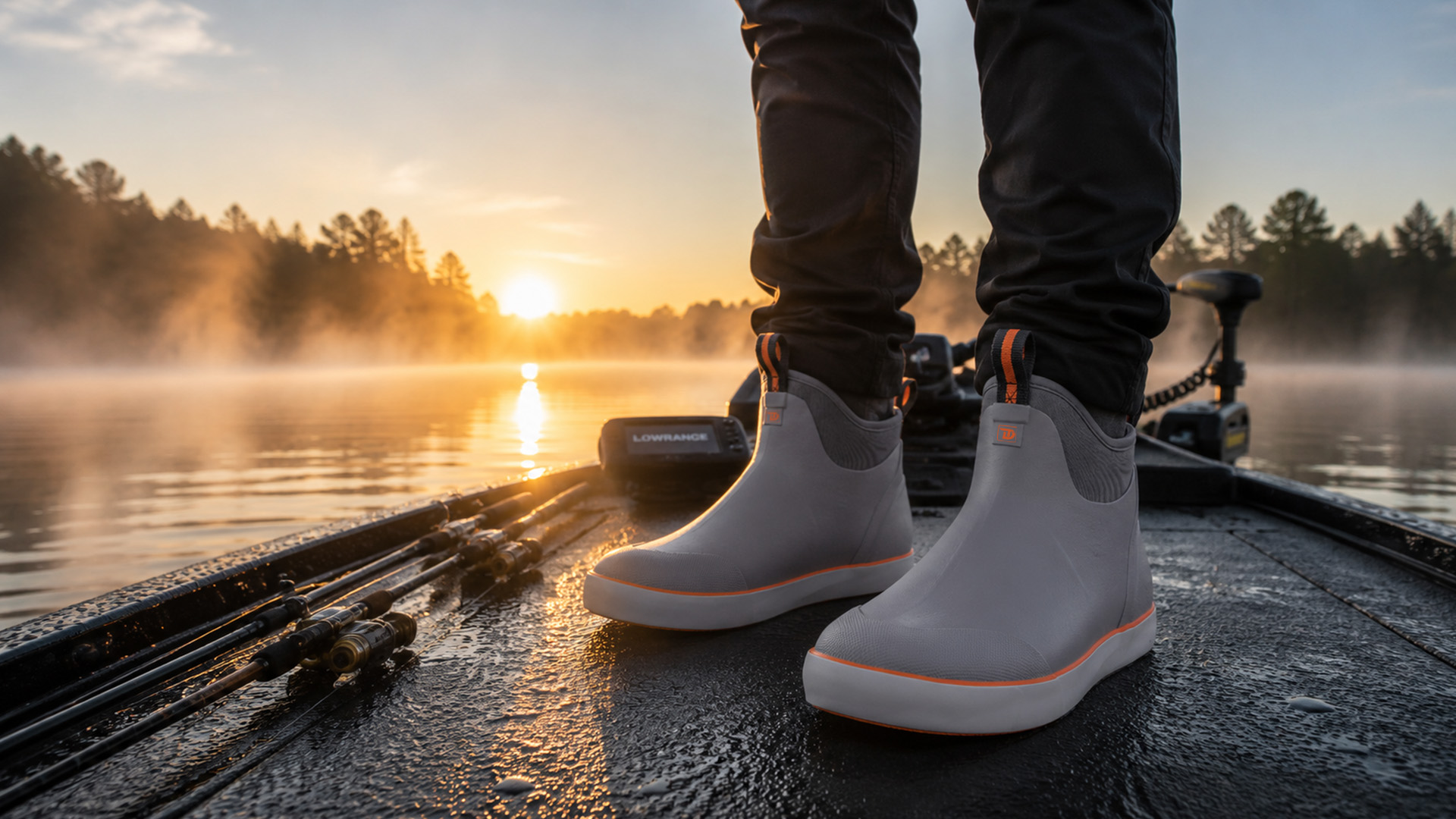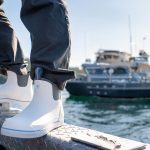
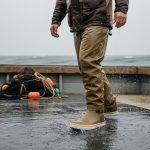
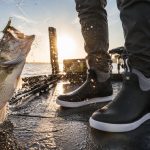
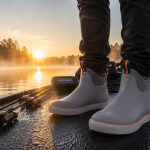
Introduction: The Advice That Sinks Boats
Walk the docks of any marina long enough, and you’ll hear it. The old-timer holding court by the bait tank, dispensing wisdom that’s been passed down for generations. “All rubber boots are the same,” he says. “Just buy the cheapest pair and replace ’em when they crack.” A younger angler nods, pulls out his phone, and orders a pair of $30 PVC boots that will be in a landfill before the first tarpon shows up.
The problem with dock wisdom is that it’s sticky. It sounds right. It’s been repeated so many times that nobody stops to question it. But a lot of what passes for common knowledge about deck boots is not just wrong—it’s dangerous. A slip on a wet deck can mean a broken wrist, a concussion, or a fall overboard into cold water. Wearing the wrong boots, or wearing the right boots the wrong way, isn’t a minor comfort issue. It’s a safety issue.
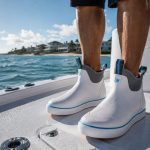
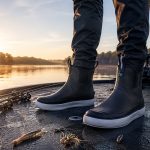
Trudave Gear’s WaveLock, DeckFlow, and AquaGuard deck boots are engineered to solve the real problems that anglers face, but to understand why they work, you first have to unlearn the myths that have been steering anglers toward wet feet, aching backs, and unnecessary risk. Here are five of the most persistent—and most dangerous—deck boot myths, and how Trudave has built a better boot by ignoring every one of them.
Myth #1: “Any Waterproof Boot Will Grip a Wet Deck”
This is the most common—and most costly—misconception in deck footwear. Walk into a hardware store, grab a pair of “waterproof” rubber boots with deep, chunky lugs, and head out on the water. What happens next is predictable: the first time you step on a wet fiberglass deck, your foot shoots out from under you like you’ve stepped on a banana peel.
The physics are simple. Deep, widely spaced lugs are designed to bite into soft ground—mud, dirt, loose gravel. On a hard, wet surface, those same lugs trap water beneath them. The rubber never actually contacts the deck. You’re hydroplaning, balancing on the tips of the tread blocks, with almost zero friction. It’s the same principle that makes a bald tire dangerous on a wet road, but applied to the two square inches of rubber that are keeping you upright on a pitching boat.
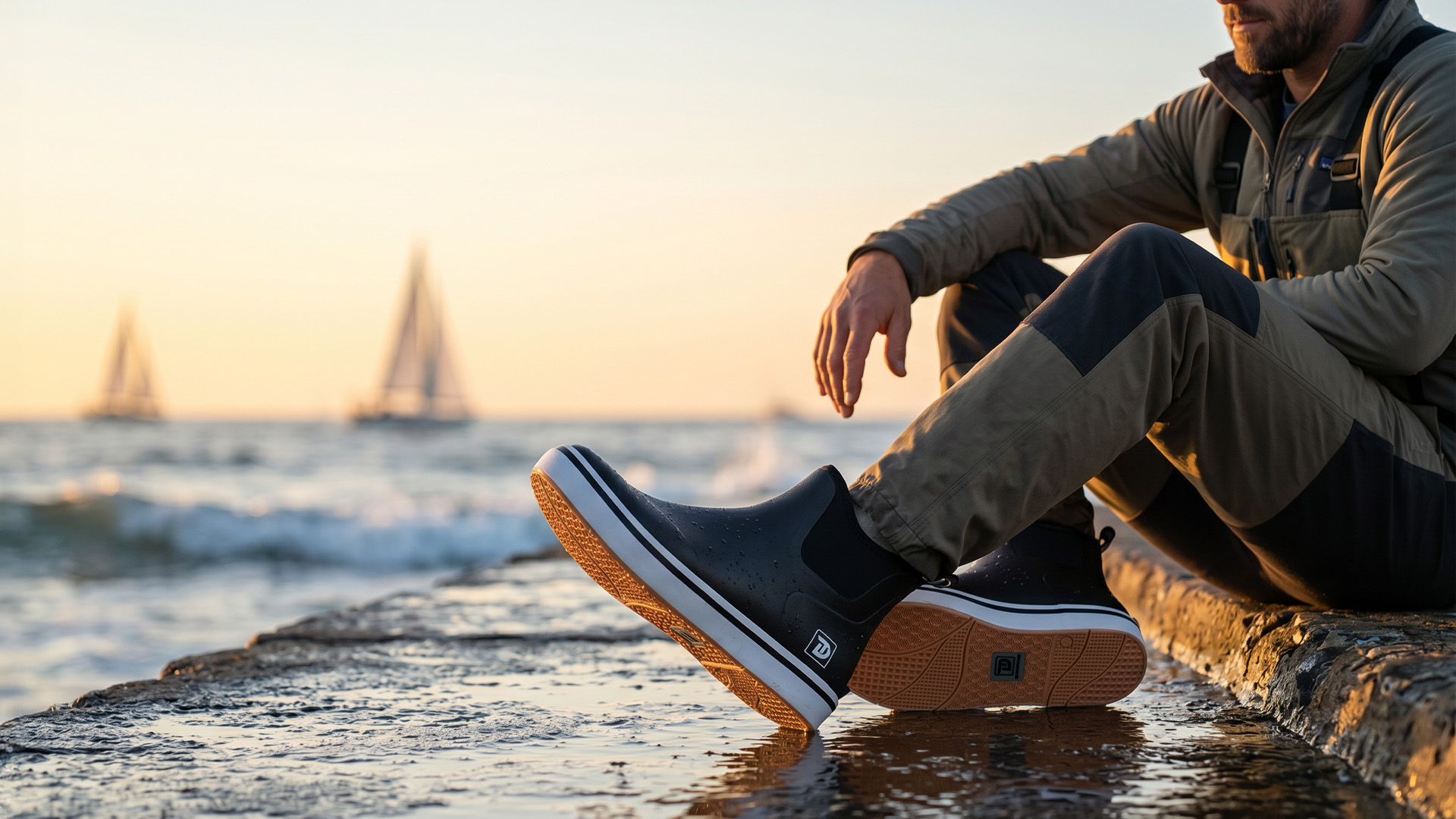
The solution is siping—thousands of razor-thin slits cut into the rubber outsole. When you put weight on a siped boot, those slits open up and channel water away from the contact patch, allowing the rubber to grip the microscopic texture of the deck itself. Trudave’s WaveLock Series uses their exclusive WaveLock Traction Outsole with micro-channel siping that disperses water instantly, creating a dry contact zone even on a deck slimed with bait and blood. The DeckFlow uses a non-marking siped outsole that performs the same function without leaving black streaks on a white gelcoat deck. Neither relies on deep lugs that trap water. Both are engineered specifically for the hard, wet surfaces that define marine environments.
Myth #2: “Insulated Boots Will Make Your Feet Sweat, So Just Wear Thin Socks”
This myth is born from experience with cheap, non-breathable insulation. If you’ve ever worn a pair of heavily insulated rubber boots on a warm day, you know the feeling: within an hour, your socks are soaked with sweat, your feet are sliding around inside the boot, and by midday you’re peeling them off with a sense of relief that borders on religious. The lesson many anglers take from this is that insulation is the enemy, and the solution is to wear the thinnest socks possible.
But the problem isn’t insulation. It’s bad insulation—the kind that traps moisture without wicking it away, turning your boot into a personal sauna. Trudave’s WaveLock, by contrast, features a soft thermal insulation lining that retains heat while allowing breathability. It’s calibrated for the specific chill of a cold morning on the water—not the suffocating heat of a winter work boot. When paired with a proper merino wool sock (which naturally wicks moisture), the system keeps your feet warm without the clammy sweat buildup that causes blisters and discomfort. For warm-weather fishing, the uninsulated DeckFlow uses a breathable, moisture-wicking liner that keeps feet cooler by actively managing sweat. The right insulation, paired with the right sock, doesn’t make your feet sweat. It keeps them dry and comfortable across a wide range of conditions.
Myth #3: “A Heavier Boot Is a Tougher Boot”
There’s a persistent belief that weight equals durability. A boot that feels heavy and substantial must be built to last, while a lighter boot must be flimsy. This logic made sense in the era of steel shanks and thick, heavy leather, but it’s been obsolete for decades.
What actually determines a boot’s durability is the quality of its materials and the integrity of its construction—not its poundage. A vulcanized natural rubber boot is chemically cross-linked at the molecular level. It is a single, continuous, permanently waterproof unit with no glued seams to separate. It can be surprisingly lightweight because it doesn’t need the heavy layers of leather, fabric, and adhesive that traditional boots rely on. Trudave’s AquaGuard, their heaviest-duty industrial boot, is built from dense, abrasion-resistant rubber and reinforced with toe and heel overlays, but it still relies on vulcanization, not bulk, for its strength.
Trudave replaces old-school steel shanks with EVA (ethylene-vinyl acetate) midsoles—the same shock-absorbing foam used in high-performance running shoes. This cuts significant weight while providing better cushioning and arch support than a rigid steel plate ever could. The result is a boot that fights fatigue instead of causing it, and that lasts for seasons without cracking or delaminating. As one reviewer put it, “You get sneaker-like agility with the armor of a mud boot.”
Myth #4: “Waterproof Boots Don’t Need Maintenance”
This is the silent killer of deck boots. They’re rubber. They’re waterproof. What could possibly need maintaining? The answer is: everything. The three mortal enemies of rubber are UV radiation, heat, and salt. Sunlight breaks down rubber polymers at the molecular level. Heat accelerates every chemical reaction that causes rubber to stiffen, crack, and lose its elasticity. Salt crystallizes in microscopic surface pores, expanding and contracting with temperature changes until those pores become visible cracks.
A boot that’s simply rinsed with fresh water after every trip will last years longer than one that’s left to marinate in dried salt and fish slime. Trudave’s care protocol takes two minutes: rinse with clean water, scrub with a soft brush and mild soap if needed, remove the insoles to dry separately, and let the boots air dry in the shade—never near a radiator, campfire, or in direct sun. Conditioning the rubber with a silicone-free conditioner every few months replenishes the natural oils that keep it supple. Maintenance is the cheapest, easiest way to keep a premium boot performing at its peak, and the myth that waterproof boots don’t need it has sent countless pairs to an early grave.
Myth #5: “Deck Boots Should Fit Like Sneakers”
This myth leads directly to blisters, numb toes, and the constant, nagging discomfort of a boot that’s simply the wrong size. Sneakers are designed to fit snugly with thin, lightweight socks. Deck boots are designed to accommodate thick, insulating socks—the kind you wear when you’re launching the boat before dawn in 40-degree weather. Trudave boots are intentionally built with extra volume for exactly this reason. That “runs slightly large” feedback you see in reviews is not a flaw; it’s the room your thermal protection needs.
When you try on Trudave boots with thin cotton socks, they feel roomy. When you put on the heavyweight merino wool socks you’ll actually wear on the water, the fit becomes secure and snug. The removable EVA insole allows you to further customize volume: for narrow feet, a thicker insole takes up extra space; for wide feet, a thinner sock or insole provides relief. The goal is a boot that locks the heel in place without pinching the toes, and that accommodates the sock system that matches your fishing conditions. The right size in a deck boot is not the same as your sneaker size—and that’s exactly as it should be.
Conclusion: Unlearn the Myths, Find the Right Boot
Dock wisdom has its place—usually in stories about the one that got away. But when it comes to the gear that keeps you safe, dry, and comfortable on the water, it’s worth questioning everything you think you know. The right deck boot isn’t the heaviest, the cheapest, or the one that fits like a running shoe. It’s the one engineered with the right materials—vulcanized natural rubber, breathable insulation, siped outsoles, EVA midsoles—and worn with the right socks, maintained with the right care, and sized with the right fit.
Trudave Gear’s WaveLock, DeckFlow, and AquaGuard boots are built to solve the real problems that myths like these create. They grip wet decks, not by accident, but by design. They insulate without suffocating. They’re lightweight without being flimsy. They’re waterproof and, yes, they need a rinse after a day in the salt. And they’ll fit beautifully—if you measure your feet, not just your assumptions. Leave the myths at the dock. Your feet will thank you.
To explore the complete Trudave Gear deck boot lineup and find the right pair for your next day on the water, visit trudavegear.com.