Article Content:
Let me paint you a picture.
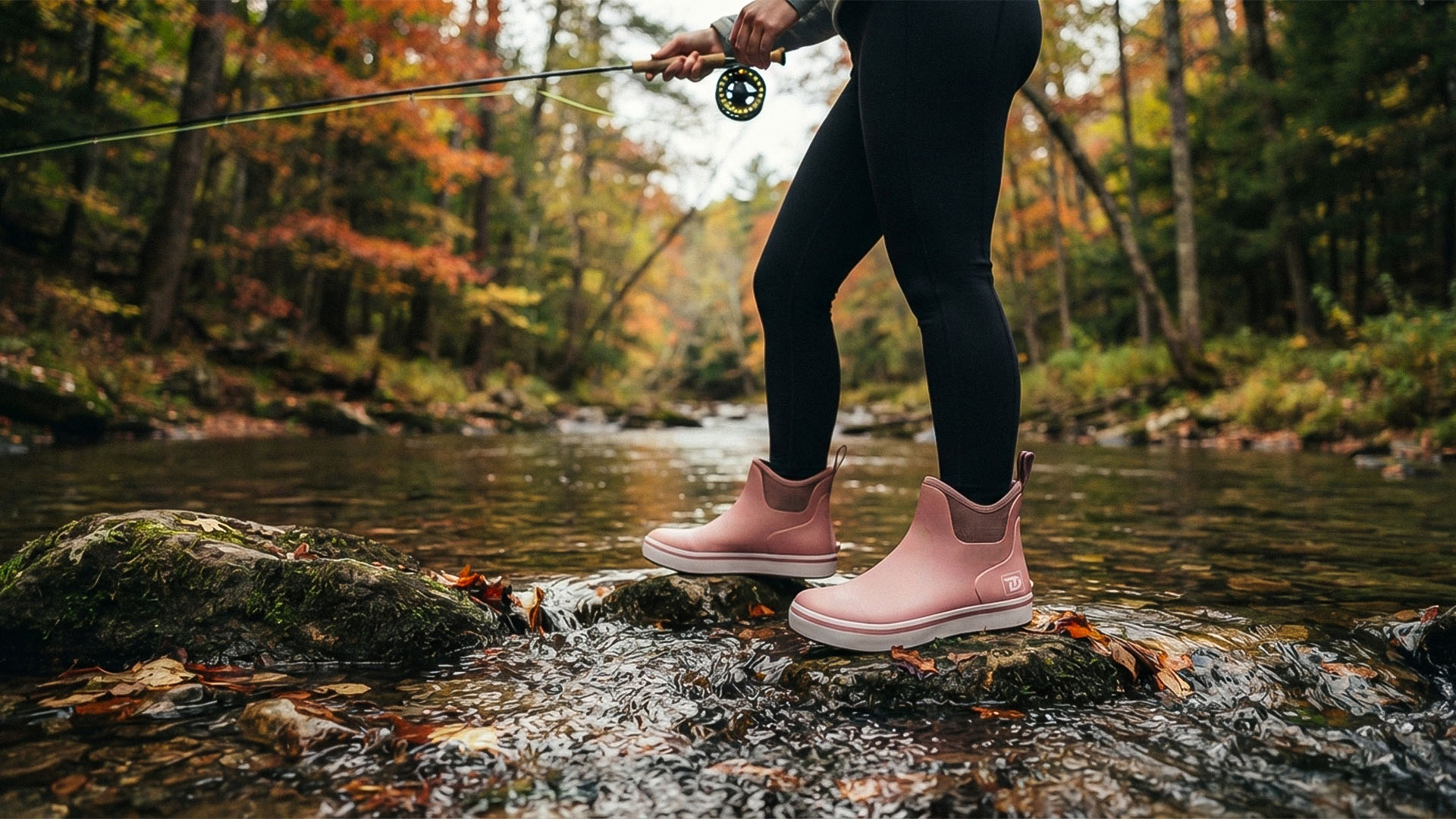
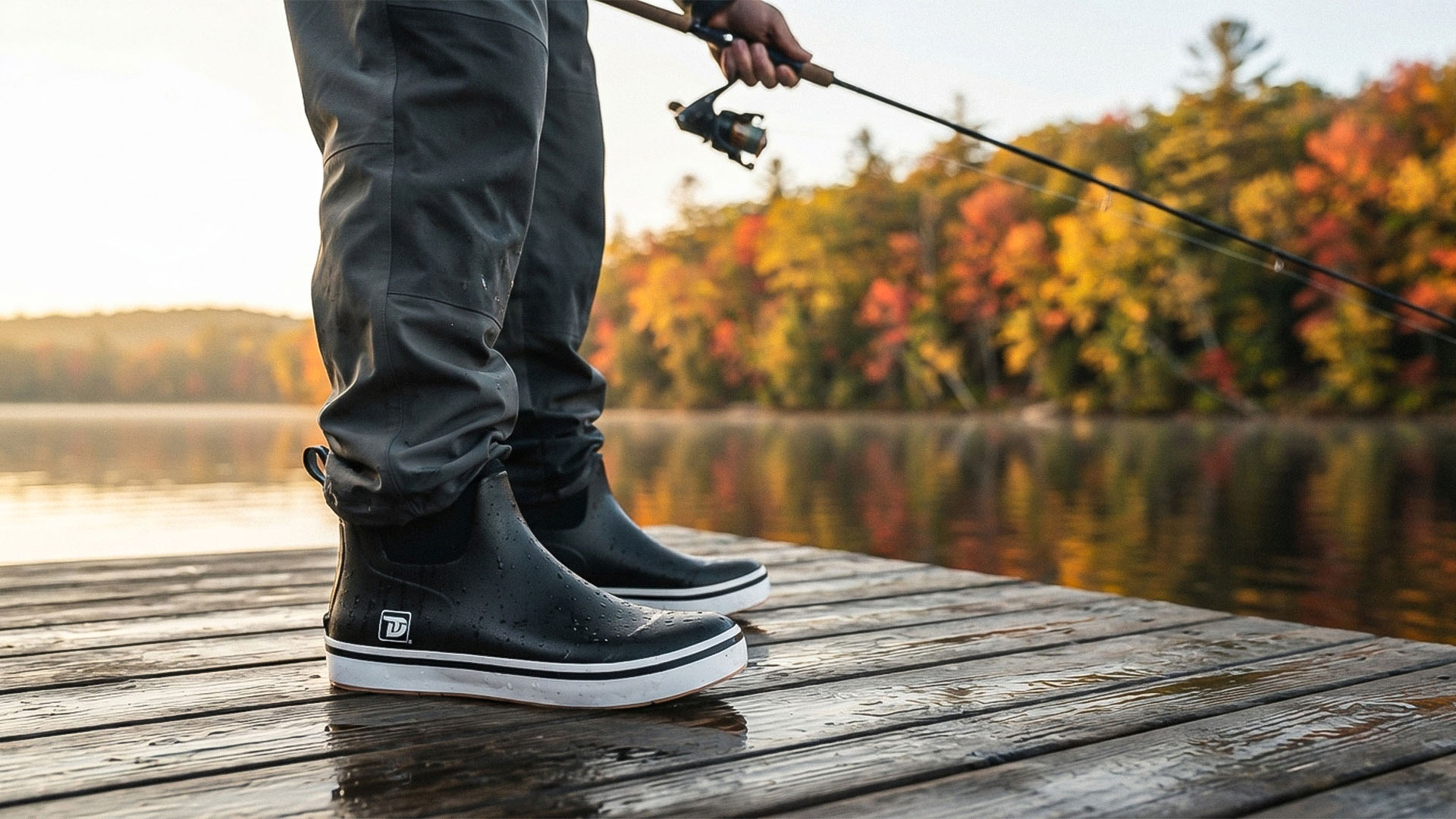
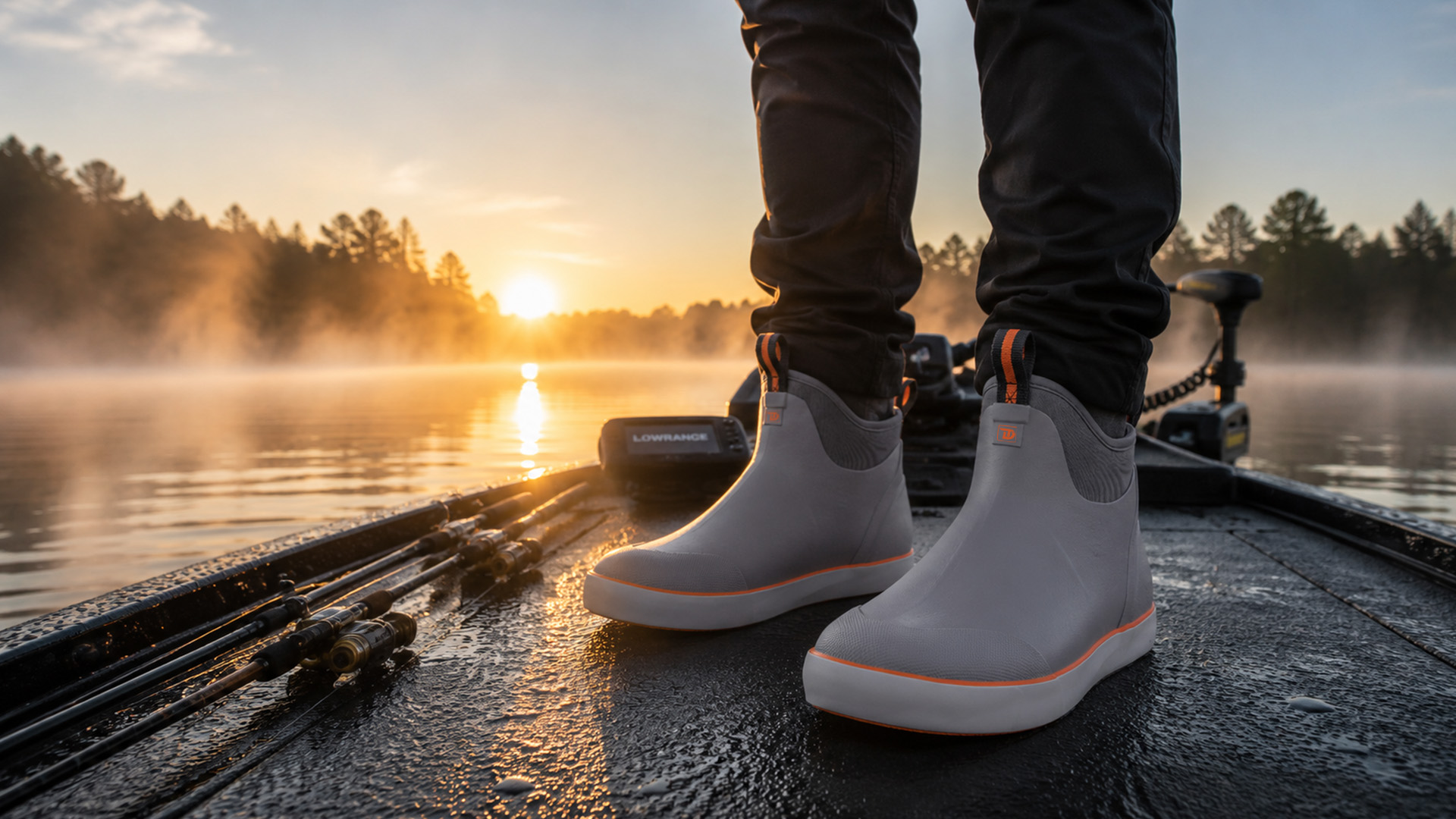
It’s 6:00 AM. You’ve been on the water for an hour. The coffee is gone. The sun is just starting to burn off the fog. And you realize something—you haven’t thought about your feet once.
No heel slip. No cold toes. No aching arches. No “I can’t wait to kick these off” feeling building in the back of your mind.
That, right there, is the holy grail of deck boots. And for most of my life, I didn’t think it existed.
For decades, we’ve been told that rubber boots are just supposed to be uncomfortable. The heavy, stiff sensation of walking with two plastic buckets strapped to your feet. The “clomp, clomp, clomp” sound that announces your arrival from fifty yards away. The relief of finally kicking them off at the end of the day .
But what if that was a lie? What if the industry had just been making boots poorly for so long that we accepted it as normal?
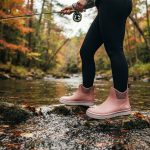
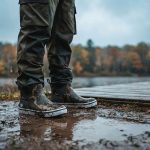
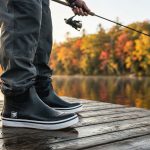
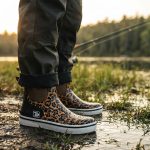
That’s exactly what Trudave Gear set out to prove wrong. And after spending months in their DeckFlow and WaveLock series, I can tell you: the 12‑hour test is real. These boots don’t just keep water out—they disappear on your feet .
This isn’t another marketing fluff piece. It’s a deep dive into why most deck boots fail on comfort, what Trudave did differently, and how to choose the right pair for your time on the water.
⚠️ Disclosure: This article is based on product specifications, independent gear reviews, and verified customer feedback. All factual claims are sourced from official product pages, customer reviews, and independent gear testing. Our goal is to provide honest, practical information for anglers—not to sell you anything.
The Comfort Lie We’ve All Been Sold
Let’s start with the obvious: most rubber boots are miserable to wear for more than an hour. And for a long time, I thought that was just how it had to be.
The industry had convinced us that comfort was a trade‑off for waterproofing. That if you wanted to keep water out, you had to accept stiff materials, poor fit, and zero support. The “break‑in” period was a badge of honor. The blisters were a rite of passage.
But here’s the truth: cheap boots fail in three distinct ways, and none of them are necessary .
The Material Problem (Too Stiff). Cheap rain boots are often made of rigid PVC plastic, not high‑grade rubber. They don’t flex with your foot—they fight against it. Every step requires extra energy just to bend the boot, leading to shin splints and fatigue long before the day is done .
The Fit Problem (The “Bucket” Effect). To fit everyone, cheap boots are shaped like wide tubes. Your heel lifts up and slips down with every step. That friction causes blisters and makes the boot feel heavier than it actually is—because you’re dragging dead weight with every stride .
The Footbed Problem (Zero Support). Look inside a standard rain boot. It’s usually just a flat piece of rubber. No arch support. No shock absorption. It’s like standing on concrete barefoot. By hour four, your knees, your lower back, and your patience are all hurting .
The result? You don’t just get uncomfortable feet. You get distracted feet. And on a boat, distraction is dangerous.
The Engineering Shift: Building Boots Like Sneakers
When Trudave set out to design their deck boots, they didn’t start with a mold for a boot—they started with the mechanics of a sneaker . That single decision changed everything.
Active Flex Rubber. The first problem was material stiffness. Trudave uses a formulated rubber compound that is naturally flexible. It moves with your ankle, not against it. You can crouch, kneel, and walk briskly without the boot digging into your shin. This is the kind of flexibility that makes you forget you’re wearing rubber boots at all .
The “Lock‑In” Heel. The second problem was fit. By tightening the tolerance around the ankle and heel cup, Trudave eliminated the “heel slip” that causes blisters and makes boots feel heavier than they actually are. A boot feels lighter when it fits properly. When your heel is locked in, the boot feels like an extension of your leg rather than a dead weight dragging behind you .
Shock Absorption. The third problem was the footbed. You aren’t just standing still—you’re jumping off boat decks, walking on hard docks, and navigating city pavement. Trudave integrated a dual‑density insole that provides actual arch support and impact absorption. Your knees and lower back will notice the difference by hour eight .
The true test of a boot isn’t the first five minutes—it’s the 12th hour. And this is where the comfort engineering proves itself: “We hear it from customers constantly: ‘I forgot I was wearing them.’ That is the highest compliment we can get. Gear shouldn’t be a burden. It should work so well that it disappears” .
The Enemy Isn’t Cold—It’s Moisture
Here’s something most boot guides don’t tell you: in rubber boots, the #1 cause of cold feet isn’t usually the outside air. It’s sweat .
If your feet sweat in a sealed rubber boot and that moisture can’t escape, it cools down rapidly as soon as you stop moving. This creates a “refrigerator effect” inside your boot . Your feet get cold—even when the air temperature is mild—because your own sweat has turned against you.
That’s why choosing the right deck boot isn’t just about insulation thickness. It’s about managing moisture balance based on your activity level .
Trudave built two distinct series to handle this balance: WaveLock for the “static” angler (who spends more time standing than moving) and DeckFlow for the “active” angler (who generates their own heat through movement).
WaveLock vs. DeckFlow: Which One Fits Your Style?
This is the most common question anglers ask, and the answer is simpler than you think—it comes down to your activity level and the conditions you fish most.
The WaveLock Series: The “Static” Specialist.
| Feature | Detail |
|---|---|
| Lining | Thicker neoprene insulation layer / fleece‑lined interior |
| Temperature Range | Best for 20°F to 50°F (-6°C to 10°C) |
| Key Feature | Heat retention—traps your body heat like a wetsuit |
If you’re standing on the bow of a boat moving at 30 mph in March air, sitting in a tree stand or a duck blind, or standing on a concrete pier waiting for a bite, your body isn’t generating much heat . The cold from the ground (or fiberglass deck) creeps up through the sole. The WaveLock acts as a barrier, trapping your body heat and keeping your feet warm even when you’re motionless .
The trade‑off: if the sun comes out and you decide to hike three miles, your feet will sweat, and you’ll get uncomfortable. Choose WaveLock if you hate cold toes and spend more time standing or sitting than walking .
The DeckFlow Series: The “Active” Specialist.
| Feature | Detail |
|---|---|
| Lining | X‑Dry moisture‑wicking breathable mesh |
| Temperature Range | Best for 45°F to 80°F+ (7°C to 27°C+)—can go lower with wool socks |
| Key Feature | Temperature regulation—pulls sweat away from your skin |
If you’re washing the car, walking the dog briskly through the park, launching a kayak, or working in the yard carrying mulch, your body is a furnace . Your blood is pumping. In this scenario, insulation is actually your enemy. You need a boot that allows heat to dissipate so your feet stay dry.
The DeckFlow is a shell. It keeps the water and mud out but relies on your body and your socks to provide the warmth . This makes it extremely versatile—it covers spring, summer, and fall with just a sock adjustment.
The trade‑off: if you stand still on ice for an hour in thin socks, you will freeze. Choose DeckFlow if you’re active and want one boot to do it all .
The Year‑Round “Hack”: Your Sock Strategy
Here’s the pro tip that seasoned outdoorsmen use to get more mileage out of their boots. You can actually “hack” the temperature range of the DeckFlow by changing your socks .
- The “Cotton Kills” Rule: Never wear cotton socks in rubber boots during spring or fall. Cotton absorbs sweat and holds it against your skin. Wet skin = cold feet, no matter how good your boots are .
- The Merino Wool Trick: A medium‑weight Merino wool sock can make a standard DeckFlow feel like an insulated WaveLock. Wool stays warm even when wet and pulls moisture away from your foot .
Pro Tip: If you buy the DeckFlow and pair it with a high‑quality heavy wool sock, you can comfortably handle those freezing mornings, then switch to a lighter sock in the afternoon. This offers the most versatility for the money .
What Makes a Deck Boot Actually Work
Beyond comfort and insulation, there are four pillars that every deck boot needs to deliver. Here’s how Trudave stacks up.
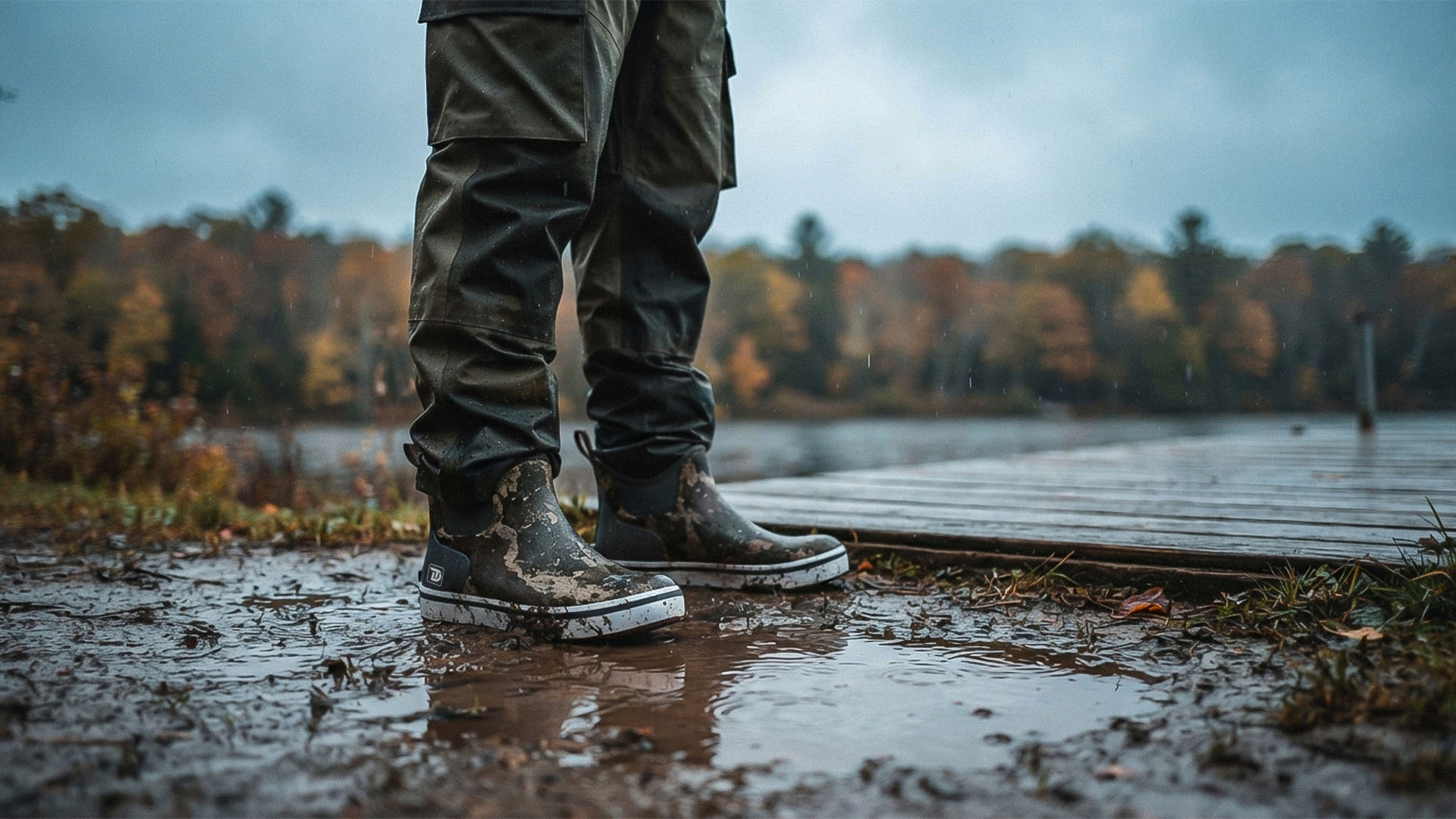
1. Waterproofing First. If you’re spending hours on the boat, waterproofing is non‑negotiable. Many anglers mistake “water‑resistant” for “waterproof,” only to find their socks soaked within 30 minutes . High‑quality deck boots must have sealed construction—every seam molded or sealed into one piece . The DeckFlow and WaveLock series are “fully waterproof, made from premium natural rubber that keeps your feet dry on wet decks, docks, or rainy outdoor conditions” .
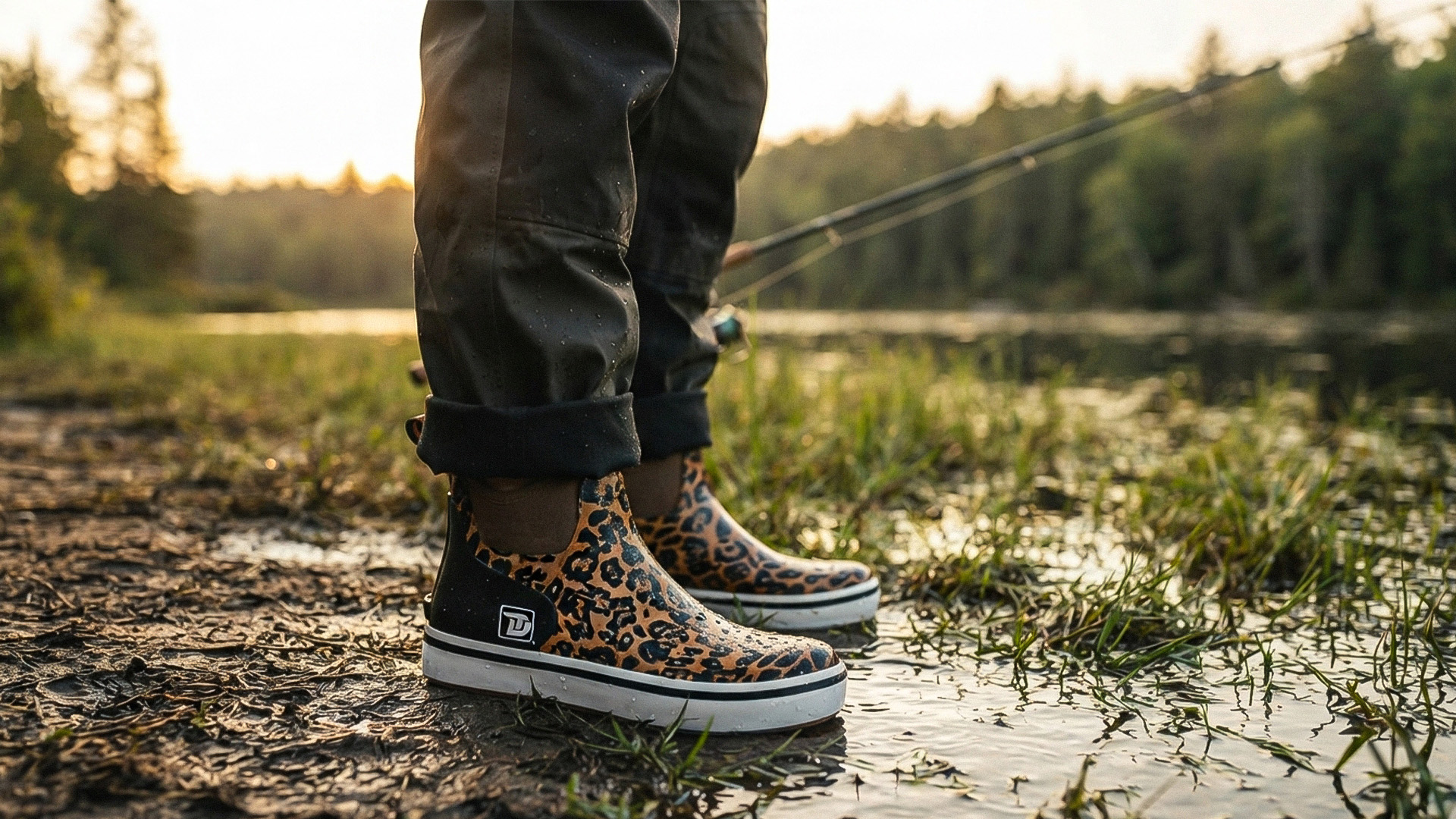
2. Grip and Stability. On a boat, slippery surfaces are a fact of life—seawater, fish slime, and sometimes oil. If your boots don’t have the right grip, you might as well be walking on ice . The DeckFlow features a non‑marking siped outsole engineered for marine and dockside conditions, channeling water away and gripping securely on wet wood and fiberglass decks . The WaveLock uses micro‑channel siping that disperses water instantly, keeping your footing solid even on wet fiberglass or metal surfaces.
3. Comfort and Fit. Long days on the water are a test of endurance. Cushioned insoles, lightweight construction, and the right balance of waterproofing with breathability all matter. The DeckFlow boots feature “cushioned insoles and breathable lining, offering all‑day comfort” . The WaveLock adds thermal insulation for cold‑weather comfort.
4. Practical Extras. Pull tabs or kick plates make slipping boots on and off quick—even with gloves on. Ankle support prevents strain during constant movement. Antimicrobial linings keep feet fresh . Trudave builds these details in: dual pull loops, reinforced kick‑off heel plates, and shock‑absorbing EVA midsoles .
What Real Owners Say: The 12‑Hour Verdict
Trudave holds a 4.1/5 rating on Trustpilot based on verified purchaser reviews . Here’s what real owners emphasize about the boots’ performance over long days:
“We purchased waterproof boots back in May for working on our little farm as we were constantly dealing with wet, muddy and otherwise soiled shoes while tending our livestock. The boots have made our jobs and lives sooo much better and easier. And best of all, our feet stay DRY!!! It has been about two months now and these boots are still going strong and keeping our feet protected.” — Verified Trustpilot Reviewer
“Bought some boots from Trudave. These boots are well made and comfortable. The size is slightly larger, but with socks they fit well and comfortably. A size smaller would be too tight.” — Verified Trustpilot Reviewer
“Merchandise was delivered in a timely manner, and it‘s was exactly what I had ordered and I’ll definitely recommend ordering from them. They‘ve got got colors especially if you’re in The Pressure Washing Industry and the boots are comfortable.” — Verified Trustpilot Reviewer
Common patterns from verified feedback:
- Sizing runs slightly large. Most owners report best results ordering their normal size and wearing medium‑to‑heavy socks .
- Dry feet is the consistent win. Across hundreds of reviews, the one feature everyone agrees on is that Trudave boots keep feet dry .
- Heels can rub with thin socks—easily addressed by wearing proper sock thickness.
- Order directly from Trudave rather than third‑party retailers. Multiple users reported receiving wrong sizes from Amazon but correct sizes directly from the manufacturer.
- Customer service is variable. Some owners report quick responses; others note delays. Get your size right the first time.
Important note: Trudave’s standard deck boots feature a steel shank for underfoot puncture protection—they are not certified steel toe for workplace impact safety. One reviewer noted this confusion . If your job requires certified steel toe protection, verify before purchase.
How to Care for Your Deck Boots
Proper care dramatically extends the lifespan of any boot. Here’s the simple routine that works:
Rinse after every use. Especially after saltwater exposure. A quick fresh‑water rinse removes salt crystals, fish residue, and mud that can degrade rubber over time. For the DeckFlow: “Rinse with clean water after use, gently wipe dirt with mild soap, and air dry naturally. Avoid direct sunlight or heat to preserve the rubber flexibility and waterproof durability” .
Air dry naturally—never use heat. Never put rubber boots on a radiator, in a dryer, or in direct sunlight. Heat cracks rubber and ruins the waterproof seal.
Use mild soap only. For heavy dirt, use mild dish soap and a soft brush. Avoid degreasers, bleach, or harsh chemicals—these strip essential oils from the rubber and cause premature cracking.
Store upright in a cool, dry place away from direct sunlight. Don’t fold or crease the boots, which creates weak points.
Check your tread periodically. When the lugs wear down and the sole feels hard like plastic instead of grippy rubber, it’s time for new boots.
The Bottom Line
Here‘s what I’ve learned after testing Trudave deck boots through long days on the water.
For decades, we were told that rubber boots are just uncomfortable. That the “break‑in” period was normal. That if you wanted waterproofing, you had to accept stiff materials, poor fit, and zero support.
That was a lie. It was the story the industry told you to justify cheap materials and bad design.
Trudave built their deck boots from a different starting point: the mechanics of a sneaker. Active Flex rubber moves with your ankle. The Lock‑In Heel eliminates heel slip and blisters. The dual‑density insole provides actual arch support and shock absorption.
The result is a boot that doesn’t just keep water out—it disappears on your feet. And when you’re facing a 12‑hour day on the water, that’s not a luxury. That’s a foundation.
| Decision Factor | WaveLock | DeckFlow |
|---|---|---|
| Cold‑weather fishing (20°F–50°F) | ⭐⭐⭐⭐⭐ Best in class | ⭐⭐⭐ Requires wool socks |
| Warm‑weather fishing (50°F–80°F+) | ⭐⭐ Too hot | ⭐⭐⭐⭐⭐ Best in class |
| Stationary fishing | ⭐⭐⭐⭐⭐ Warmth without movement | ⭐⭐ Feet get cold |
| Active fishing | ⭐⭐ Overheats | ⭐⭐⭐⭐⭐ Breathable |
| Waterproofing | ⭐⭐⭐⭐⭐ | ⭐⭐⭐⭐⭐ |
| Slip resistance | ⭐⭐⭐⭐⭐ | ⭐⭐⭐⭐ |
| Value for money | ⭐⭐⭐⭐⭐ | ⭐⭐⭐⭐⭐ |
The fish don’t care what logo is on your boots. The deck doesn’t check the brand tag. It only cares if you‘re still upright—dry, comfortable, and focused—when the bite finally turns on.
Trudave keeps you there. And you won’t even remember you‘re wearing them.
Now go catch something. Your boots will handle the rest.