
Introduction: The Invisible Threat
The deck boot on your foot looks solid. The rubber is unscuffed, the seams are tight, and the last time you wore them, your socks came out dry. But waterproofing is a property that degrades invisibly. A flex-point crack too small to see can wick moisture through capillary action. A seam that looks intact can separate at the molecular level, allowing water to seep through under pressure. The first sign of failure isn’t a dramatic gush—it’s a cold, damp sock after a long day on the water, and by then, the damage is done.
Deck boots live in a hostile environment. Saltwater crystallizes in microscopic surface pores. Diesel and fish oils chemically attack rubber compounds. Repeated flexing—thousands of steps on a pitching deck—works on seams like a fatigue-testing machine. Ultraviolet radiation from relentless sun breaks down polymer chains. Given enough time and exposure, every waterproof boot will eventually leak. The question is whether you catch the failure before it catches you.
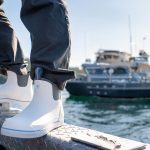
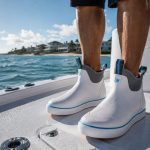
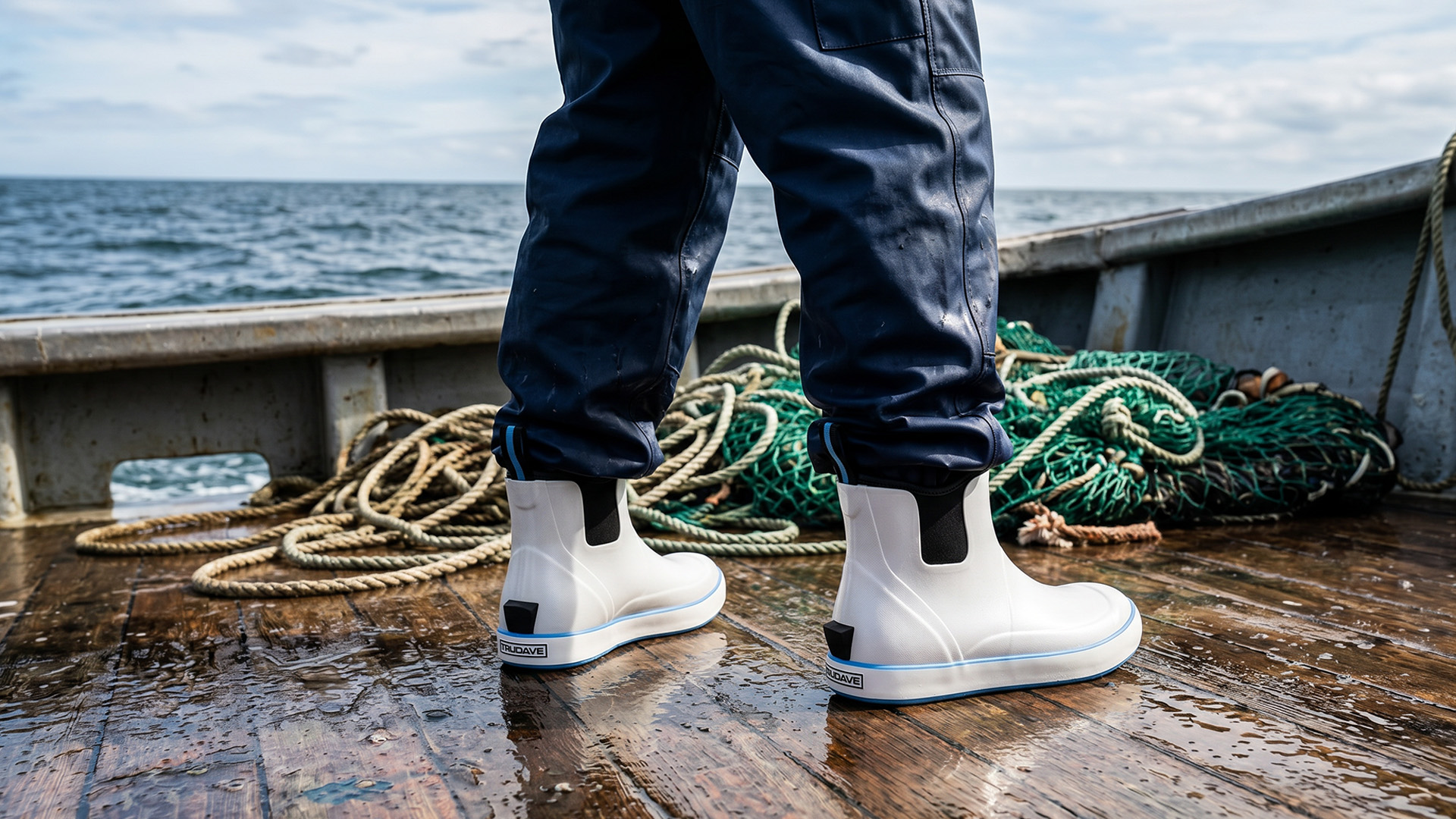
Trudave Gear’s WaveLock, DeckFlow, and AquaGuard deck boots are built with vulcanized natural rubber and sealed seams specifically to resist these failure modes. Vulcanization—a chemical process that cross-links rubber molecules with sulfur and heat—creates a single, continuous waterproof barrier. There are no glued seams to separate, no stitches to rot. But even the best materials need inspection, maintenance, and occasional repair. This guide covers the simple tests that verify your boots’ waterproof integrity, the common failure points to watch for, how to restore a compromised seal, and the preventative care that extends waterproof performance season after season.
1. Know Your Enemy: The Four Ways Water Gets In
Before testing your boots, it helps to understand the four most common pathways water takes past a deck boot’s defenses.
The Flex-Point Crack
The number one failure point on any rubber boot is the toe crease—the zone behind your toes where the boot bends with every step. Over hundreds of thousands of flex cycles, the rubber can develop hairline cracks. These are often invisible to the naked eye at first but will open under pressure, allowing water to seep through capillary action. This is especially common in boots made from PVC or lower-grade rubber that stiffens with age.
The Seam Separation
In boots built with glued construction, the bond between the upper and the outsole is the weakest link. Water, temperature swings, and repeated flexing degrade the adhesive over time. Trudave’s vulcanized construction eliminates this failure mode by fusing the rubber into a single unit, but damage from sharp objects or extreme abrasion can still create entry points.
The Puncture
A gaff hook, a dropped fillet knife, a stray nail on a dock—sharp objects can punch through even the toughest rubber. Punctures are usually obvious, but small ones can go unnoticed until water finds them.
The Top-Down Flood
This isn’t a boot failure—it’s a depth failure. Every boot has a maximum water depth determined by its shaft height. For Trudave’s mid-calf and ankle-height designs, that’s generally 8 to 12 inches. Water that comes over the top isn’t a leak; it’s an exceedance. Know your boot’s limits and plan crossings accordingly.
2. The At-Home Waterproof Test
The most reliable way to verify your boots are still waterproof is to test them in a controlled environment before they fail in the field. This takes five minutes and requires nothing more than a bucket or a bathtub.
Step 1: Clean and Dry
Start with clean, completely dry boots. Any existing moisture inside will confuse the test results.
Step 2: Stuff with Newspaper
Crumple several sheets of newspaper and stuff them loosely into each boot. The paper should fill the interior without stretching the rubber. Newspaper is highly absorbent and will show even the smallest amount of water intrusion as a visible wet spot.
Step 3: Submerge and Weight
Fill a bucket, tub, or sink with enough water to submerge the boot to just below the top of the shaft. Place the boot in the water. To simulate the pressure of walking, weight the boot down with a heavy object inside—a full water bottle or a small dumbbell wrapped in a plastic bag works well. The idea is to press the sole and lower shell against the bottom, slightly flexing the rubber as it would during a step.
Step 4: Inspect the Flex Points
With the boot weighted and submerged, manually flex the toe area up and down several times. This opens any hairline cracks that might otherwise stay sealed under static conditions. Watch for a stream of bubbles rising from the boot—escaping air is the telltale sign of a leak.
Step 5: Soak and Check
Let the boot sit submerged for 10 to 15 minutes. Remove it, dry the exterior thoroughly with a towel, and pull out the newspaper. Inspect the paper closely. Any dampness, discoloration, or—worst case—soaking wet spots indicate a leak. Note the location of the wetness relative to the boot; it will guide your repair.
Step 6: Test the Other Boot
Repeat the process on the second boot. Leaks don’t always happen symmetrically—your dominant foot may put more stress on that boot’s flex point, causing a crack that the other boot doesn’t have.
If the newspaper comes out bone dry after 15 minutes of weighted submersion with active flexing, your boots’ waterproof integrity is intact. You’re good for the season.
3. Common Leak Locations and How to Fix Them
If the test reveals a leak, don’t panic. Most failures in vulcanized rubber boots are repairable, especially if caught early.
Hairline Cracks at the Toe Crease
This is the most common leak and the easiest to fix. If you spotted a crack during the bubble test, or if the newspaper dampness is concentrated at the ball of the foot, you’ve got a flex-point crack.
The Fix: Clean the area with isopropyl alcohol and let it dry completely. Lightly rough the surface with fine-grit sandpaper to give the adhesive more grip. Apply a flexible waterproof adhesive like Shoe Goo or Aquaseal SR directly to the crack, pressing it in with a small tool or toothpick. Smooth a thin layer over the top, extending about a quarter-inch beyond the crack on all sides. Let it cure for 24 hours. The repair will be flexible, waterproof, and nearly invisible. Test again after curing to confirm the seal.
Small Punctures
A puncture from a sharp object creates a clean hole that’s straightforward to seal.
The Fix: The process is the same as for a crack: clean, dry, rough the surface, apply adhesive. For punctures that go all the way through, apply adhesive to both the inside and outside of the hole. A small patch of rubber or even a piece of a old inner tube, glued over the puncture on the inside of the boot, adds extra durability. Let it cure completely.
Sole Separation
On a vulcanized Trudave boot, the sole is chemically fused to the upper. Separation is rare, but it can happen if the boot is exposed to extreme heat (which breaks down the vulcanization bonds) or severe chemical attack.
The Fix: Clean the separated area thoroughly. Apply a flexible adhesive to both surfaces, press them firmly together, and use clamps or heavy weights to hold the bond while it cures. Leave it undisturbed for at least 24 hours. If the separation is extensive—more than an inch or two—the repair may not hold, and the boot should be retired.
When to Let Go
Some damage is terminal. If the boot has multiple deep cracks across different flex points, the rubber has fundamentally lost its elasticity and will continue to crack even with repairs. If the interior lining has rotted through or the EVA midsole has compressed into a hard, flat slab, the boot’s structural integrity is compromised. And if the outsole tread is worn smooth, traction is gone, and the boot is no longer safe for use on a wet deck. At that point, thank the boots for their service and replace them.
4. Preventative Care: Keeping the Seal Intact
The best repair is the one you never have to make. Preventative care keeps your boots waterproof for years, not months.
Rinse After Every Use
Salt is the silent killer of rubber. Salt crystals form as seawater evaporates, working their way into microscopic surface pores and gradually expanding those pores into cracks. A thorough freshwater rinse after every saltwater trip removes the salt before it can do damage. Mud, fish slime, and bait residue are also mildly acidic and will degrade rubber over time if left on the surface. Rinse them off. It takes 30 seconds.
Air Dry Away From Heat
Heat accelerates every chemical reaction that degrades rubber. Drying boots next to a radiator, in direct summer sun, or near a campfire causes the rubber to stiffen, lose its plasticizers, and become brittle. Brittle rubber cracks. Always air dry your boots at room temperature in a shaded, well-ventilated area. Remove the insoles and let them dry separately. Stuff the boots with newspaper to wick moisture from the interior.
Condition the Rubber
Every two to three months during active use, apply a silicone-free rubber conditioner to the exterior of the boots. This replenishes the plasticizers that keep rubber flexible and adds a layer of UV protection. Focus on the flex points. A conditioned boot is a boot that stays supple, resists cracking, and maintains its waterproof seal far longer than a neglected one.
Inspect Regularly
Make a habit of checking your boots for early signs of damage. Run your fingers along the toe crease and the seam between the upper and sole, feeling for cracks or separation. Check the outsole for embedded debris that could work its way through the rubber. Catching a problem early means a five-minute repair. Ignoring it means a ruined day on the water.
Store Properly in the Off-Season
If your boots spend months in storage, ensure they’re completely clean and dry before putting them away. Store them upright in a cool, dark place. Never fold or crush them—creases create permanent weak points. A boot stored properly will emerge from its off-season as waterproof as the day you put it away.
5. The On-the-Water Emergency Kit
Even with perfect care, accidents happen. A small kit in your boat bag can save a day on the water.
- A travel-size tube of flexible waterproof adhesive: For emergency crack or puncture repairs.
- Alcohol wipes: For cleaning the area before applying adhesive.
- A small piece of fine-grit sandpaper: For roughing the surface.
- A spare pair of socks: If your feet do get wet, dry socks prevent blisters and keep you comfortable for the rest of the day.
- A plastic bag: To isolate wet gear from dry gear.
In a pinch, a piece of duct tape pressed firmly over a crack or puncture will buy you a few hours of dryness. It’s not a permanent fix, but it’ll get you through the day and back to the dock.
Conclusion: Trust, But Verify
A deck boot is a promise. It promises to keep the water on the outside, to hold fast to the deck when conditions turn, and to protect your feet from the hazards of the marine environment. Like any promise, it should be verified from time to time.
The 15-minute bucket test, a monthly inspection, and a simple routine of rinsing and conditioning are all it takes to ensure your Trudave boots keep that promise season after season. When you find a small crack, fix it. When you notice the rubber starting to look dry, condition it. When the outsole wears smooth, accept that the boots have given you their best years and retire them with gratitude.
Water will always find a way in if you let it. Don’t let it.
To explore the complete Trudave Gear deck boot lineup and find the right pair for your next day on the water, visit trudavegear.com.