
Introduction: The Boots That Wouldn’t Quit
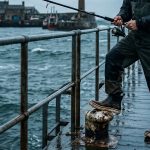
I’m a fishing guide. For six months out of the year, my office is a 23-foot center console, and my uniform is a pair of deck boots. Over the past decade, I’ve worn through more boots than I care to count. I’ve had 150pairsdelaminateinasingleseason,30 pairs crack at the toe crease before the first tarpon showed up, and one particularly memorable pair that literally peeled apart at the seams during a tripletail trip with clients on board.
I don’t care about brand names. I care about three things: Do they keep my feet dry? Do they grip the deck when it’s slimed with bait and blood? And do they last long enough to justify the price? Everything else is marketing.
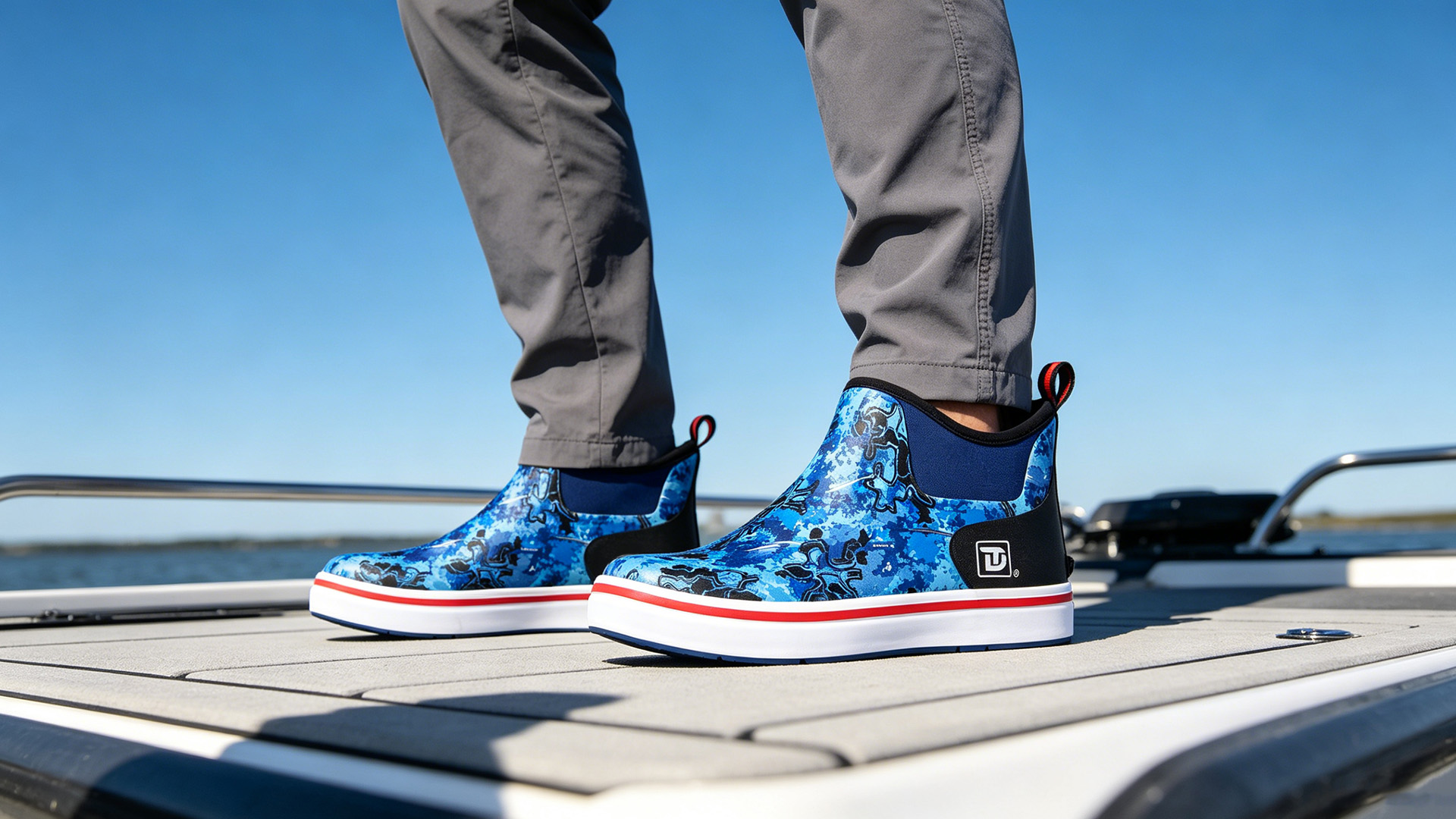
Last spring, I bought a pair of Trudave WaveLock deck boots. I didn’t expect much. The price was significantly lower than the legacy brands I’d worn for years, and I’d been burned by “value” boots before. I planned to wear them for a few weeks, confirm my skepticism, and go back to my usual boots.
I was wrong. Here’s what happened over three seasons of guiding, from spring tarpon through winter sheepshead, and why I’m still wearing the same pair.
The Setup: First Impressions
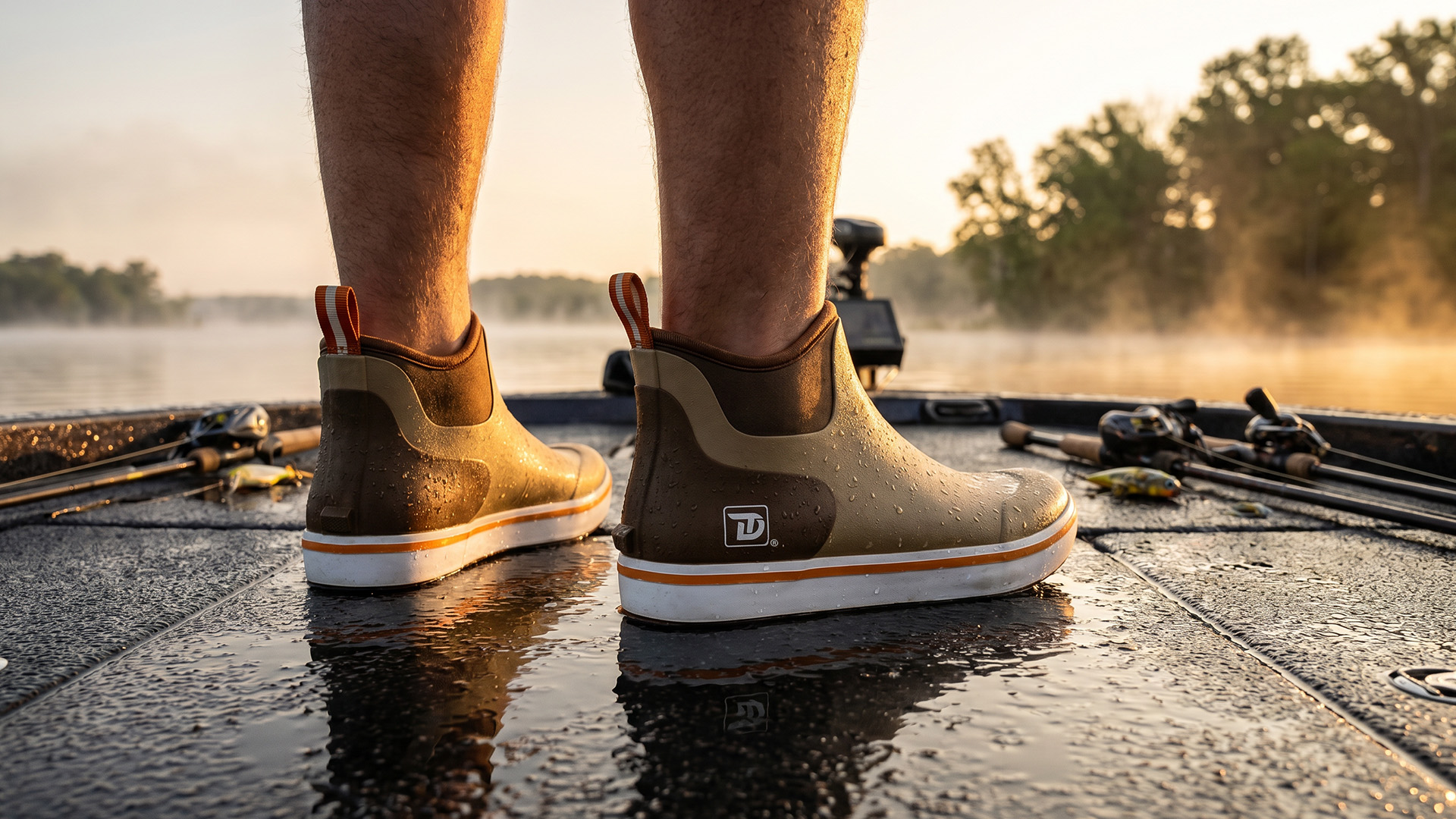
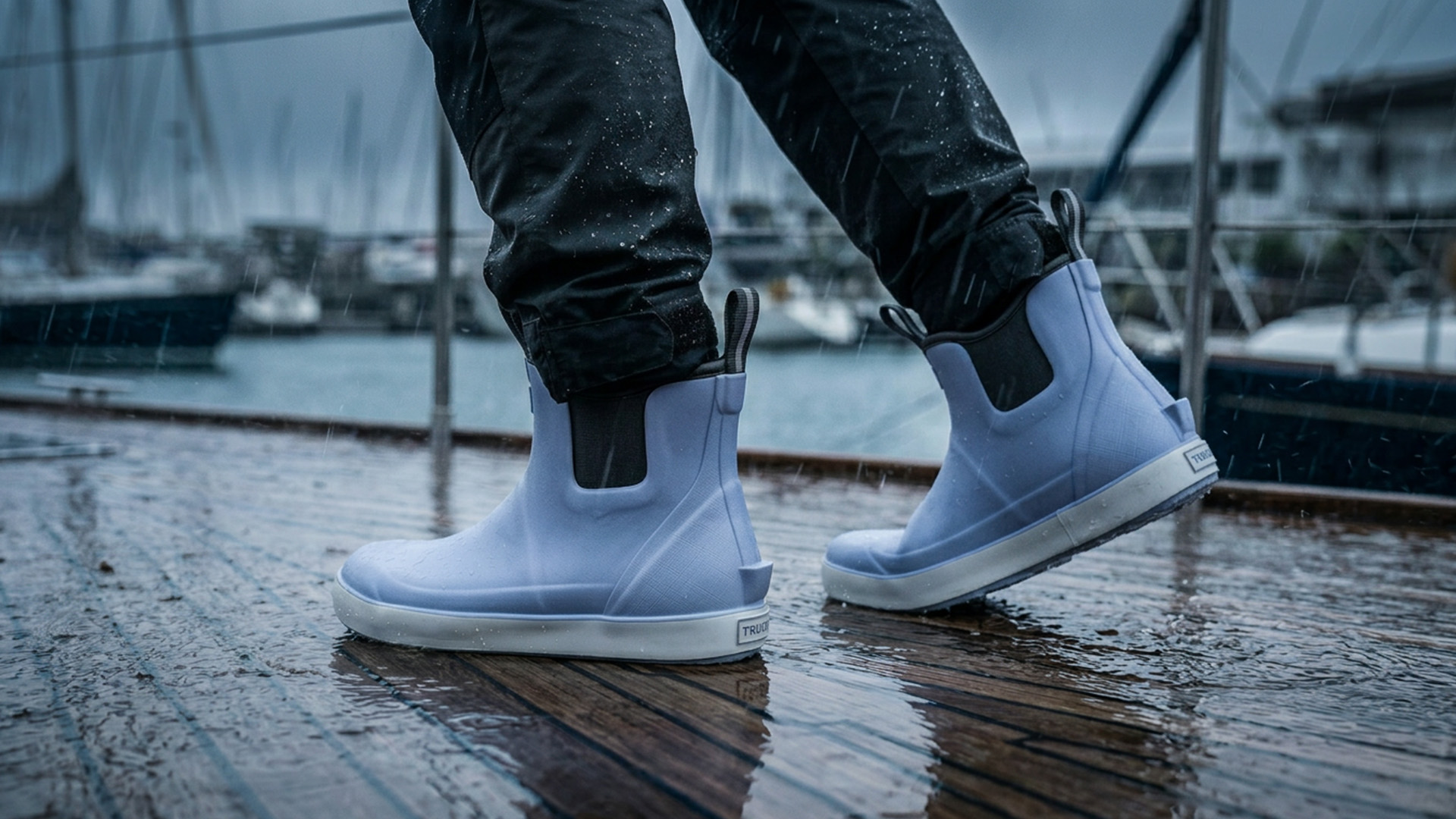
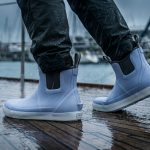
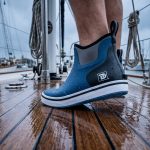
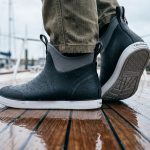
The WaveLocks arrived in late March, just before my spring season kicked off. Out of the box, the first thing I noticed was the weight—they’re substantial without being heavy. The 100% waterproof vulcanized natural rubber shell felt solid, not like the thin, plasticky PVC that budget brands use. The flexible side panels were an immediate standout: I could slide my foot in without sitting down, which matters at 5 a.m. when you’re loading gear and don’t have time to wrestle with stiff rubber.
The sizing advice I’d read was accurate. The boots run slightly large by design, which Trudave’s site explains is intentional—to accommodate thick socks for cold mornings. I wear a size 11 in sneakers, and the size 11 WaveLock fit perfectly with a midweight merino wool sock. With thin socks, they felt roomy. With heavyweight wool socks in December, they felt snug but not tight. This adjustability is a feature, not a flaw.
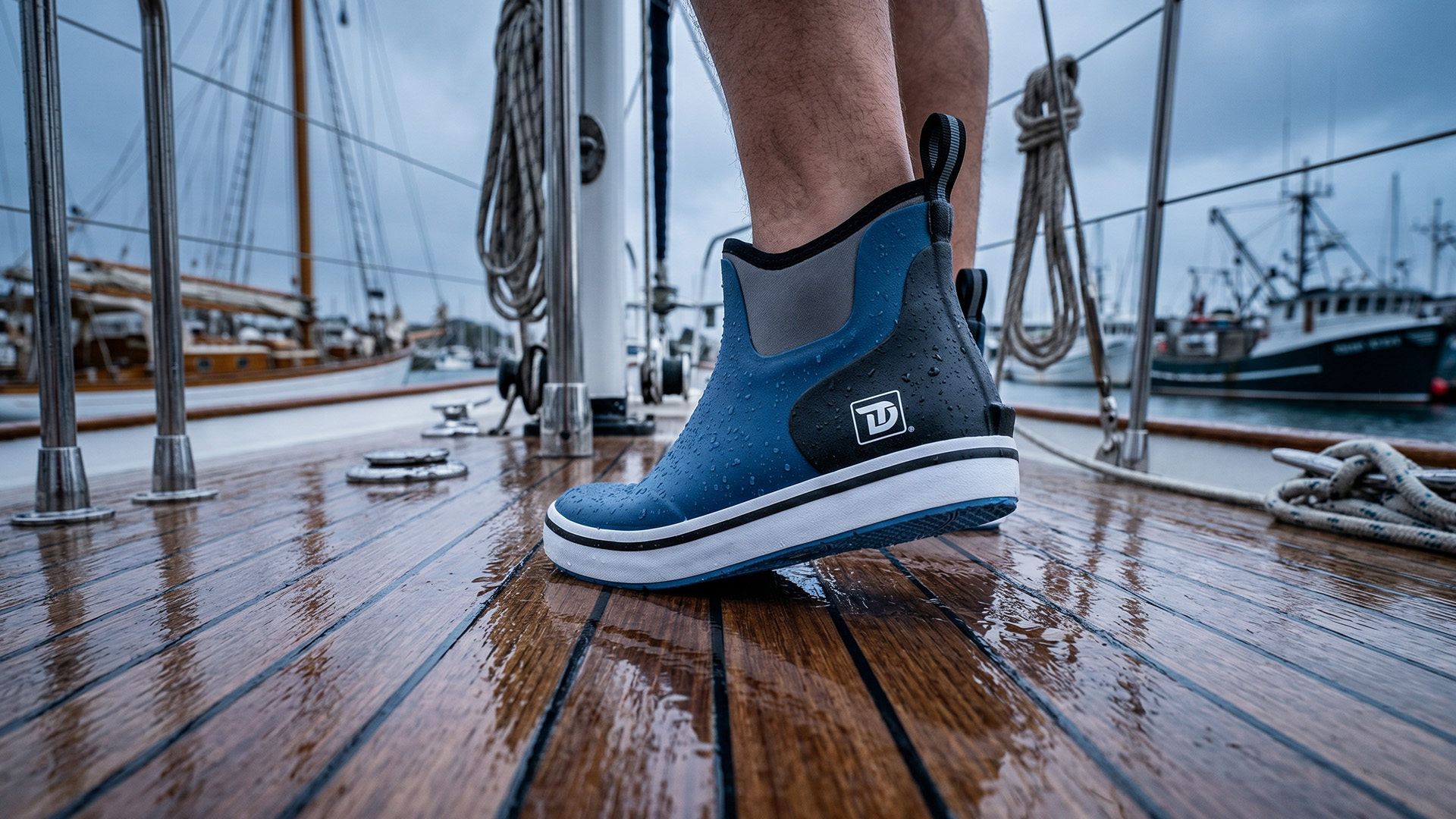
The micro-channel siping on the outsole was the most aggressive I’d seen on a boot at this price point. I’d read about siping—the thousands of razor-thin slits that channel water away from the contact patch—but I’d never felt it make such a visible difference on a boot sole. I was skeptical that it would hold up over time. More on that later.
Spring: Tarpon Season and the First Tests
April through June is tarpon season in my part of Florida. The days start early—launching before sunrise, running 20 miles offshore, and standing on a pitching deck for 10 to 12 hours. The deck is constantly wet from spray, bait slime, and the occasional green water over the bow when the afternoon chop kicks up.
The WaveLock’s traction was the first thing that won me over. The exclusive WaveLock Traction Outsole with micro-channel siping disperses water instantly, and I felt it from day one. On a slick, bait-slimed deck, these boots gripped like they were bolted down. I never slipped. Not once. Not when a client’s thrashing tarpon splashed a gallon of water across the deck. Not when I was leaning over the gunwale to release a fish with the boat pitching in a 3-foot chop.
The waterproofing held completely. I stood in ankle-deep water for 20 minutes while untangling a cast net from a prop. My socks were bone-dry when I pulled the boots off at the end of the day. The insulated design—a soft lining and thermal insulation—was overkill for Florida spring mornings in the 60s, but I didn’t overheat. The breathable liner managed moisture well enough that my feet weren’t swimming in sweat by noon.
The easy-off heel tab became a feature I didn’t know I needed. After a 12-hour day, the last thing I want to do is bend over and wrestle wet boots off my feet. Step on the heel, slide out, done. It’s a small thing that becomes significant when you’re exhausted.
By the end of tarpon season, the boots had roughly 40 days on the water. No cracks. No seam separation. The siping channels were still sharp. I was impressed but not yet convinced—boots always feel great when they’re new. The real test would be how they held up through the grueling summer months.
Summer: Heat, Sweat, and Daily Abuse
Summer in Florida is unforgiving on gear. The heat index pushes past 100°F by 10 a.m. The sun beats down on the deck, and anything made of rubber bakes. This is when cheap boots start to crack and delaminate. The glue softens in the heat, and the constant flexing from walking on a moving deck eventually separates the sole from the upper.
I guided nearly every day from June through August. Redfish, snook, trout, and the occasional shark trip. The WaveLocks were on my feet for 8 to 14 hours a day, six days a week. They sat in the sun on the deck when I wasn’t wearing them. They got doused in saltwater, slimed with fish blood, and rinsed with a hose at the end of every day.
The rubber shell showed no signs of cracking. This is where vulcanized natural rubber proves its worth. Unlike PVC, which becomes brittle with repeated heat exposure, vulcanized rubber maintains its flexibility and structural integrity because the polymer chains are chemically cross-linked at the molecular level. There are no glued seams to soften in the heat.
The insulated lining, which I’d worried might be too warm for summer, was surprisingly manageable. With thin moisture-wicking socks, my feet stayed comfortable enough—not cool, but not unbearably hot either. No rubber boot breathes well in 95-degree heat, and the WaveLock is no exception. But it wasn’t worse than any other rubber boot I’ve worn, and the trade-off was worth it for the traction and waterproofing.
One unexpected finding: the non-slip outsole provided excellent traction on slick boat ramps and docks as well as on the deck itself. I launch and retrieve my boat alone most days, and the ramp at my marina gets slick with algae in the summer. The WaveLocks never slipped on that ramp, which is more than I can say for some of my previous boots.
By the end of August, the boots had logged roughly 100 days on the water. The siping was still visible and functional. The rubber showed minor scuffing but no cracks. The side panels still flexed easily. I was starting to think I’d found a boot that could actually survive a full guiding season.
Fall and Winter: Cold Mornings and the Final Exam
September brought the first cold fronts, and by November, morning temperatures were dipping into the 40s. This is when the WaveLock’s insulation finally became a genuine asset rather than just a feature I tolerated.
The insulated waterproof boots feature a soft lining and thermal insulation that retain heat while allowing breathability. On 40-degree mornings running 30 miles offshore with the wind cutting across the deck, my feet stayed warm. Not toasty—that’s unrealistic in those conditions—but warm enough that I wasn’t thinking about them. That’s the threshold that matters: if you’re thinking about your feet, you’re not thinking about the fish.
December brought sheepshead season and mornings in the 30s. I paired the WaveLocks with heavyweight merino wool socks, and the combination kept me comfortable through full days on the water. The boots’ intentional sizing—the slightly larger fit I’d noticed back in spring—now made perfect sense. With thick socks, the fit was perfect. With thin socks, it would have been too roomy. The extra volume is a feature designed for exactly this scenario.
By late December, I’d been wearing the same pair of WaveLocks for nearly nine months, through roughly 150 days on the water. Here’s the honest condition report:
- Tread and siping: Still functional. The micro-channels are shallower than when new but still clearly visible and still channeling water effectively. I haven’t slipped.
- Rubber shell: Scuffed and faded from sun exposure but no cracks, no delamination, no separation at the seams. The vulcanized construction has held up better than any glued boot I’ve owned.
- Side panels: Still flexible. Still easy to slip on and off. No tearing or loss of elasticity.
- Waterproofing: Still 100%. I stood in calf-deep water last week untangling a dock line, and my socks came out dry.
- Insulation: The thermal lining is slightly compressed from months of wear but still provides noticeable warmth on cold mornings.
At this point, I’ve gotten more days out of these boots than any pair of legacy-brand deck boots I’ve owned at a significantly higher price point. That’s not hyperbole. That’s a logged fact.
What I’d Change: Honest Critiques
No boot is perfect, and the WaveLock has two limitations worth noting.
First, weight in wet conditions. When the neoprene upper and rubber shell get soaked—which happens constantly on a boat—the boots gain noticeable weight. They’re not unreasonably heavy, but they’re heavier than uninsulated rubber boots. This is a trade-off for the insulation and durability, and for my use case, it’s worth it. But if you’re looking for an ultralight summer boot, the DeckFlow series would be a better fit.
Second, breathability in extreme heat. As noted, no rubber boot breathes well in 95-degree Florida summer heat, and the WaveLock is no exception. With thin moisture-wicking socks, it’s manageable. But if you’re fishing primarily in hot climates, an uninsulated boot will serve you better. This isn’t a design flaw—insulation and breathability are directly opposed physical properties—but it’s a consideration for warm-weather anglers.
Who Should Buy the WaveLock
After three seasons and roughly 150 days on the water, here’s my honest recommendation.
Buy the WaveLock if:
- You fish in variable conditions, from chilly mornings to warm afternoons, and need a boot that handles both.
- You’re hard on your gear and need a boot that won’t delaminate or crack after a single season.
- You value traction above all else and want the most aggressive siped outsole Trudave offers.
- You appreciate the convenience of flexible side panels and an easy-off heel tab.
- You want premium vulcanized rubber construction at a direct-to-consumer price that doesn’t include the legacy-brand markup.
Look elsewhere if:
- You fish exclusively in hot, humid climates and never encounter cold water or cold mornings. The DeckFlow is a lighter, more breathable choice.
- You’re looking for an ultralight summer boot and are willing to sacrifice insulation and some durability for weight savings.
The Care Protocol That Kept These Boots Alive
A note on maintenance, because it matters. After every trip, I rinsed the boots with fresh water—thoroughly, not a cursory splash. Saltwater is a boot killer; the crystals left behind as water evaporates work into microscopic pores in the rubber and accelerate cracking. I used mild soap and a soft brush once a week to clean off fish slime and blood. I never left them in direct sunlight to dry, and I never put them near a heater. They dried upright, at room temperature, with the insoles removed.
That’s it. Two minutes after each trip. A brush-down once a week. No special conditioners, no complicated rituals. Just the basics that Trudave recommends: rinse with clean water, wipe off dirt with mild soap, and air dry naturally away from direct sunlight or heat.
I’m convinced this care routine is the reason the rubber hasn’t cracked and the seams haven’t separated. A boot built from vulcanized natural rubber will last if you treat it with minimal respect. Neglect it—leave salt on it, dry it in the sun, store it crumpled in a truck bed—and even the best boot will fail prematurely.
Conclusion: The Boot That Earned Its Place
When I started this season, I expected the Trudave WaveLocks to be a stopgap—something to get me through a few months until I could justify buying another pair of the legacy boots I’d always worn. Instead, they became my primary boot. Not because they were cheaper, but because they outperformed my expectations in the three metrics that actually matter to a working guide: waterproofing, traction, and durability.
The vulcanized rubber didn’t crack. The glued seams—of which there are none, because vulcanized boots are a single continuous unit—didn’t separate. The micro-channel siping kept me upright on decks slimed with bait, blood, and saltwater. The insulation kept me warm on cold mornings without making me miserable in the heat. And the direct-to-consumer pricing meant I paid for materials and construction, not a brand logo.
Would I buy another pair? I won’t need to for a while. But when these finally wear out—and all boots eventually do—I’ll be back on Trudave’s site, ordering the same boot in the same size. For a fishing guide who has been disappointed by more boots than I can count, that’s the strongest endorsement I can give.
To explore the complete Trudave Gear deck boot lineup and find the right pair for your time on the water, visit trudavegear.com.