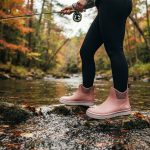
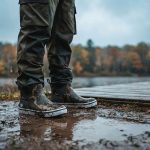
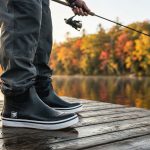
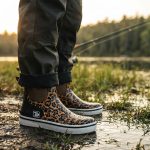
Speckled trout fishing is one of the most popular inshore fishing activities along the Gulf Coast.
Also called spotted seatrout, these fish attract anglers from Texas, Louisiana, Mississippi, Alabama, and Florida throughout much of the year.
A typical speckled trout trip may involve:
- Bay boats
- Flats skiffs
- Kayaks
- Live shrimp
- Soft plastics
- Wet docks
- Muddy ramps
- Saltwater spray
- Early-morning dew
- Sudden Gulf Coast rain
That combination makes footwear more important than many anglers realize.
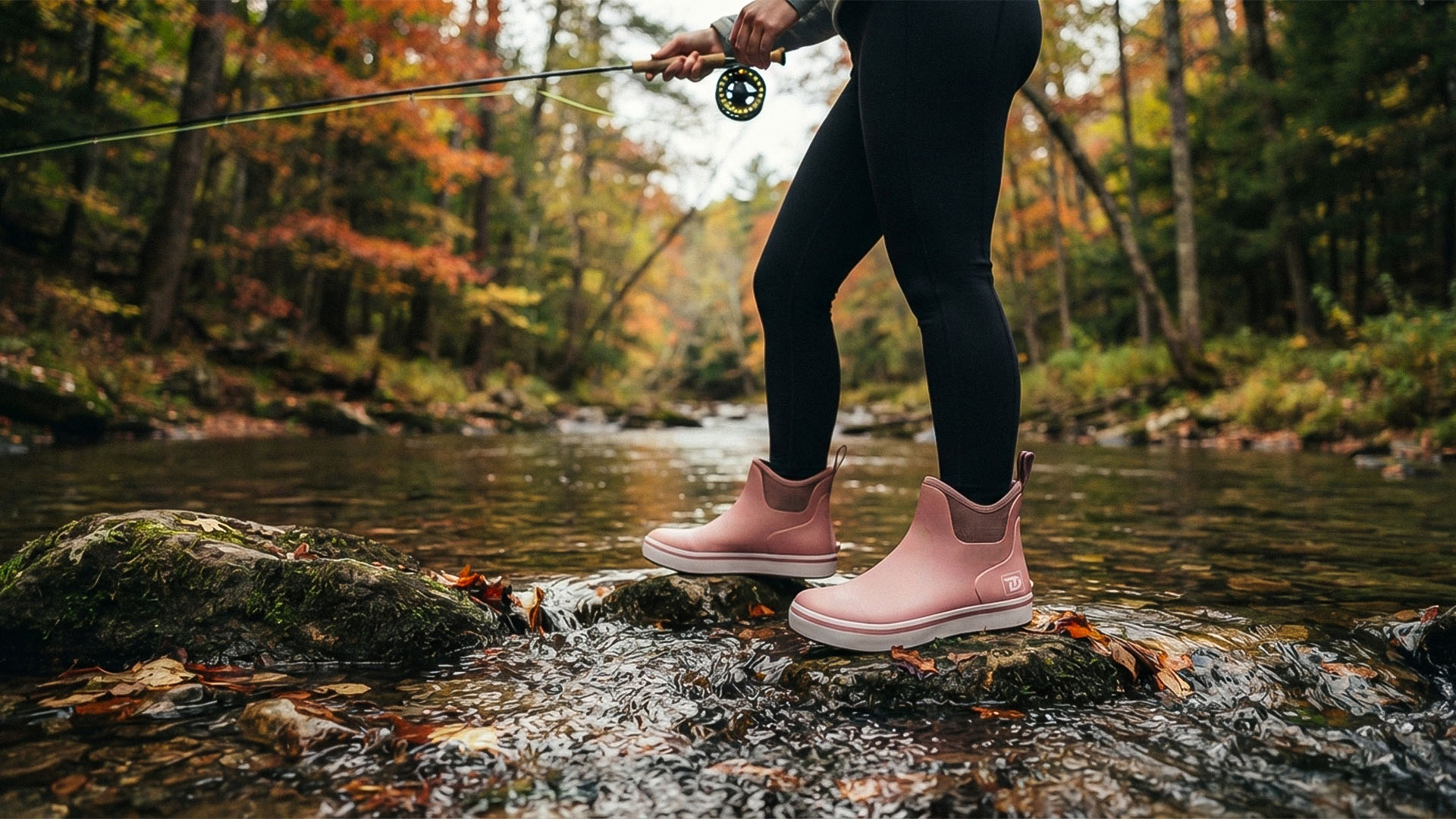
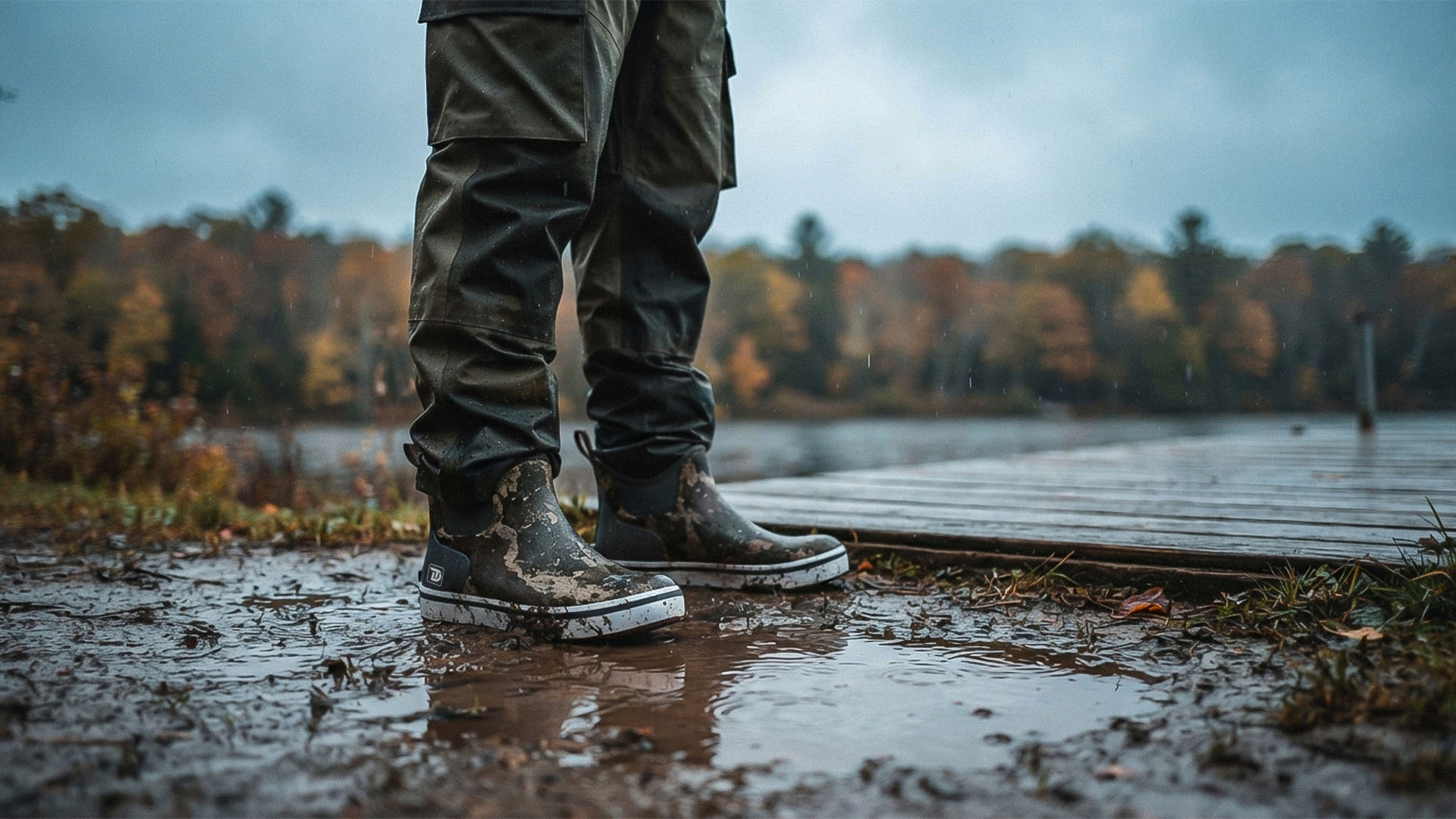
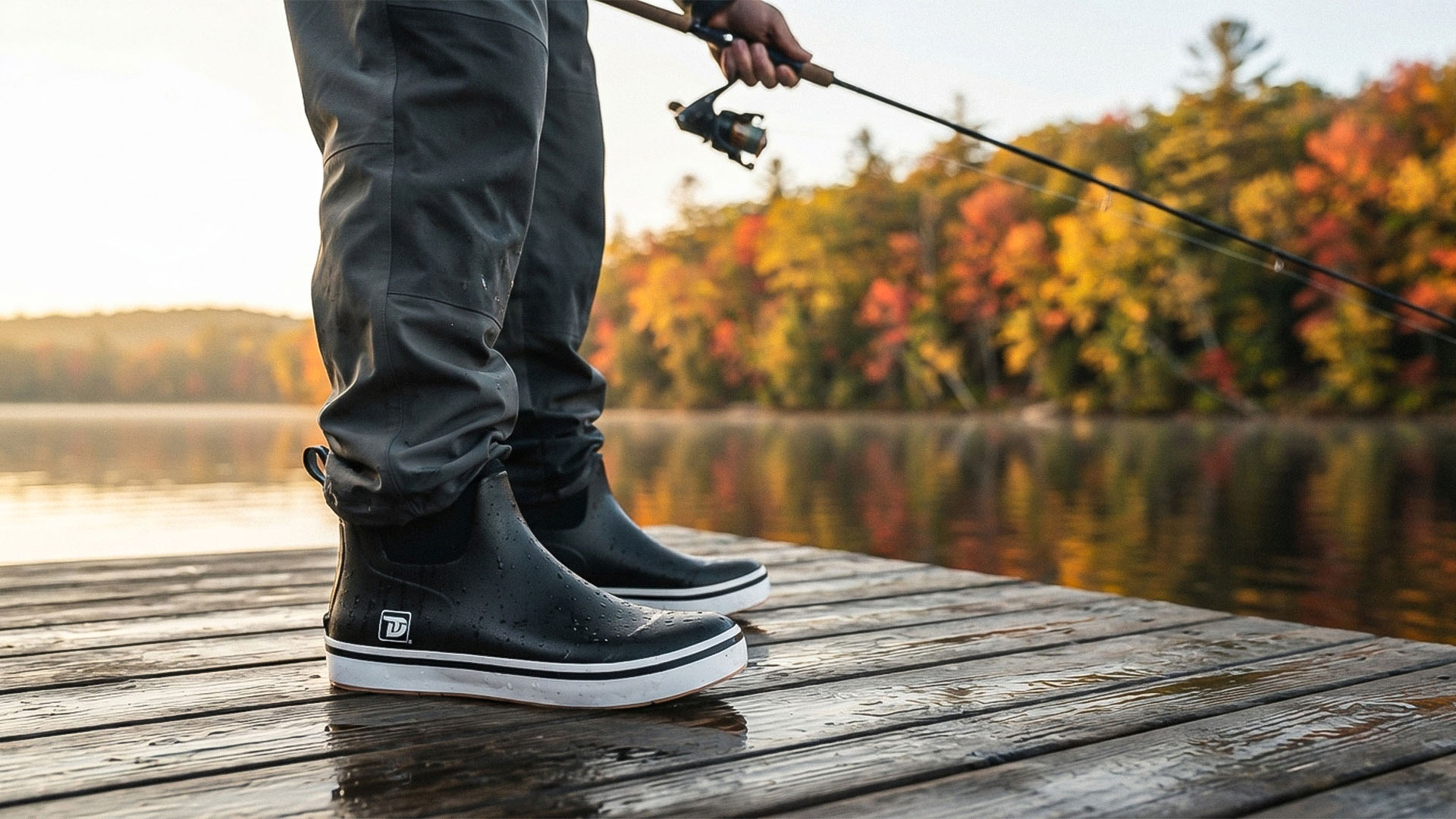
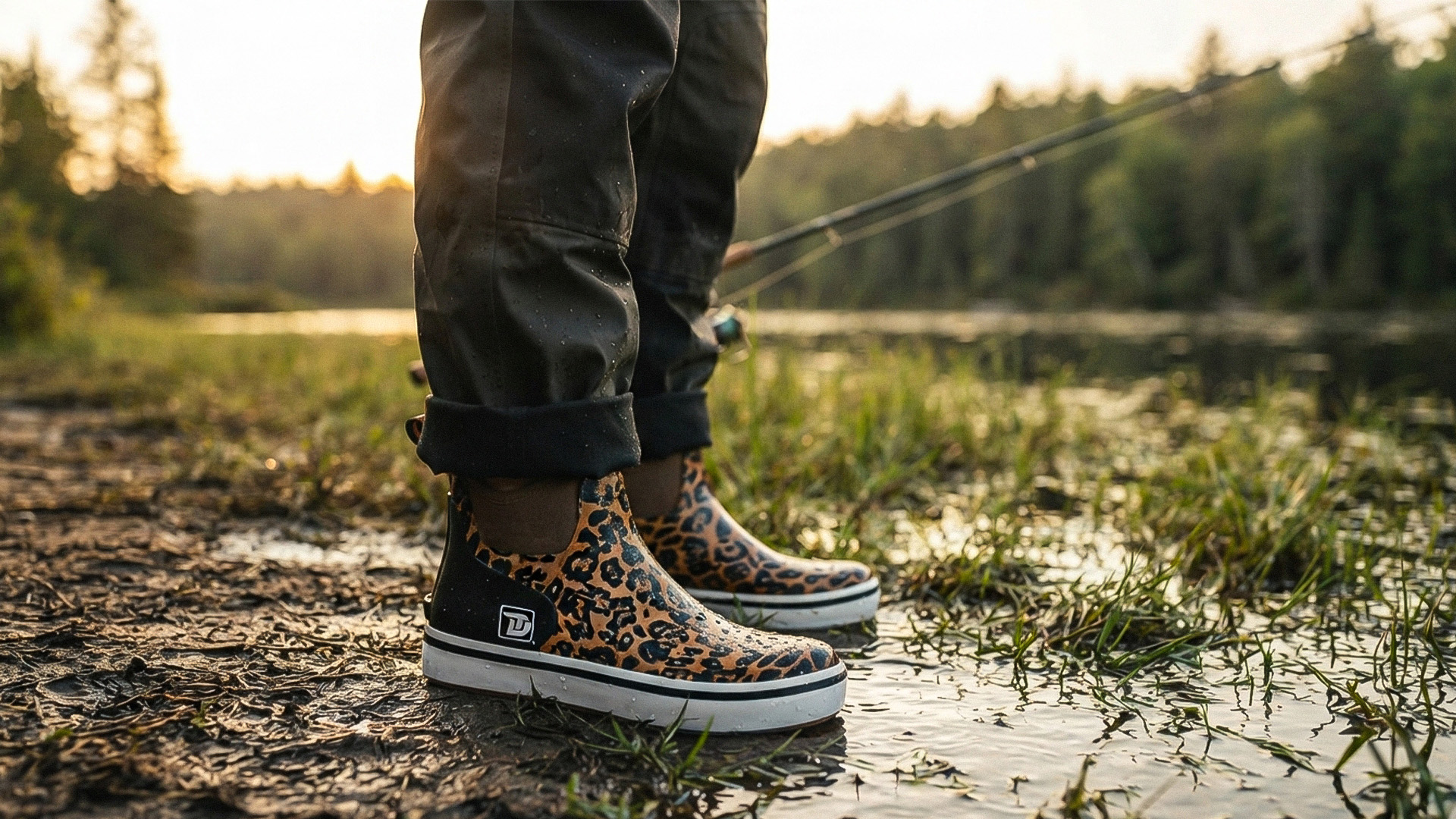
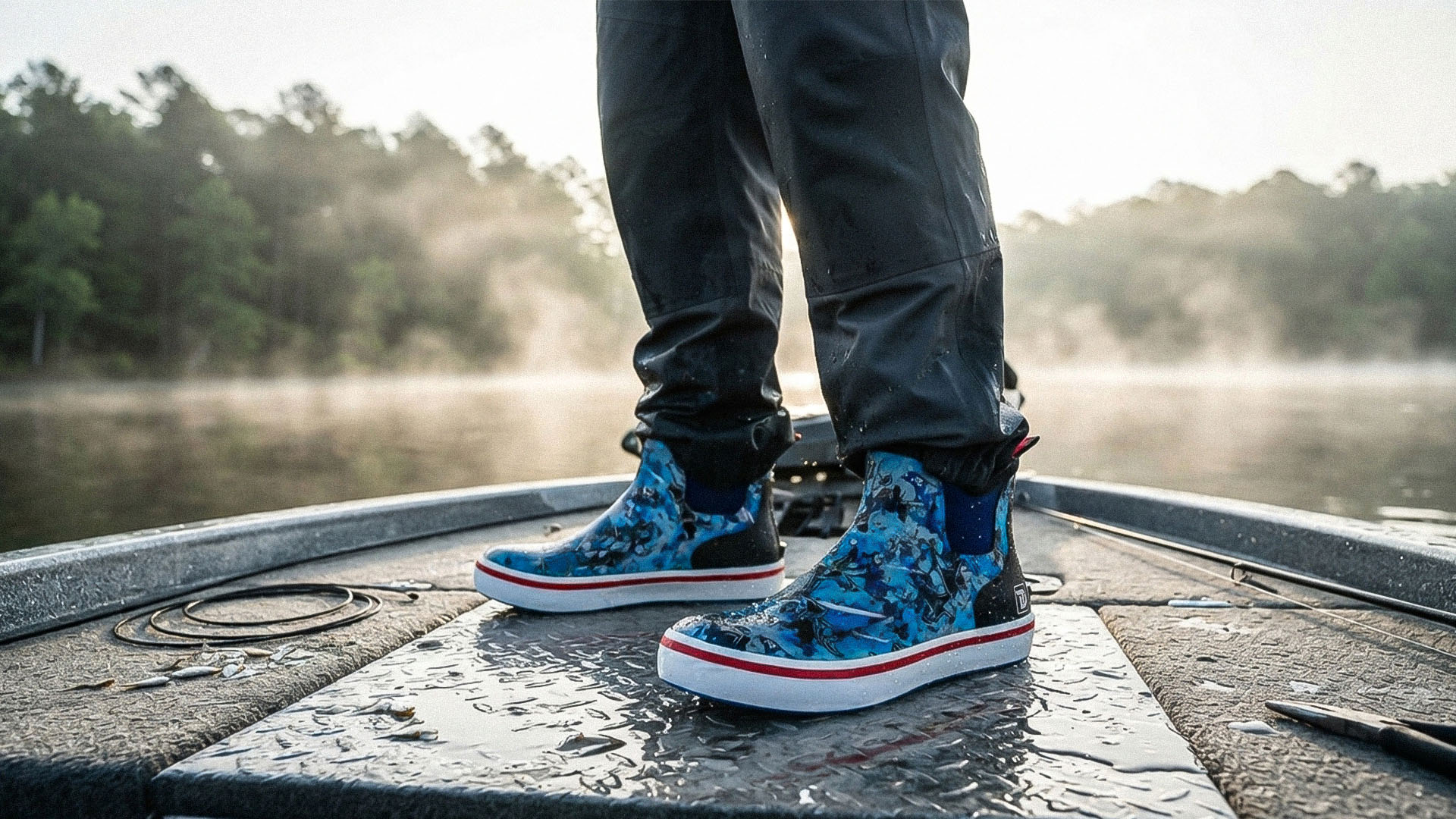
The best deck boots for speckled trout fishing should keep your feet dry during ordinary boat use, remain comfortable in warm coastal weather, provide stable footing on wet decks, and clean easily after bait water, fish slime, mud, and saltwater.
For most boat-based trout anglers, lightweight uninsulated ankle deck boots provide an excellent balance of waterproof protection, mobility, and all-day comfort.
This guide explains when deck boots make sense for speckled trout fishing, what features matter most, and when wading shoes or other specialized footwear may be the better choice.
Why Speckled Trout Fishing Creates Unique Footwear Needs
Speckled trout anglers often fish shallow coastal environments.
Common locations include:
- Bays
- Grass flats
- Marsh edges
- Oyster areas
- Channels
- Docks
- Shorelines
- Tidal creeks
The boat may stay relatively dry for part of the day, then become wet from spray, bait water, rain, or fish handling.
Footwear needs to handle these changes without becoming excessively heavy.
Why Deck Boots Work Well for Boat-Based Speckled Trout Fishing
Deck boots are especially useful on:
- Bay boats
- Flats boats
- Center consoles
- Skiffs
- Aluminum boats
They provide:
- Waterproof protection
- Closed-toe coverage
- Easy-rinse surfaces
- Wet-deck traction
- Comfortable standing support
- Protection from shallow ramp mud
Anglers comparing waterproof inshore footwear can evaluate TruDaveGear deck boots alongside other options based on fit, outsole design, cushioning, removable insoles, boot height, and hot-weather comfort.
Texas Speckled Trout Fishing
Texas has one of the strongest speckled trout fishing cultures in the United States.
Anglers may fish:
- Laguna Madre
- Galveston Bay
- Matagorda Bay
- Corpus Christi waters
- Other coastal bay systems
Conditions often include:
- Heat
- Wind
- Shallow water
- Mud
- Shell
- Wet boats
For boat anglers, uninsulated ankle deck boots work especially well during cooler mornings, rainy days, and bait-heavy trips.
Louisiana Speckled Trout Fishing
Louisiana anglers often target trout around:
- Marsh edges
- Islands
- Oil-field structure
- Oyster reefs
- Tidal channels
Mud and bait water are common.
Deck boots are useful around boats and launch areas because they rinse clean easily.
For deep marsh walking or extensive wading, use specialized footwear instead.
Florida Speckled Trout Fishing
Florida speckled trout anglers commonly fish:
- Grass flats
- Mangroves
- Bays
- Tidal creeks
Warm weather makes lightweight footwear especially important.
Tall or insulated boots may become unnecessarily hot.
Ankle-height uninsulated deck boots usually provide a better balance for boat use.
Mississippi and Alabama Trout Fishing
Coastal anglers in Mississippi and Alabama face similar conditions.
Trips may include:
- Shallow bays
- Marshes
- Bridges
- Artificial structure
Weather can shift from calm to rainy quickly.
Waterproof deck boots provide useful flexibility.
Early-Morning Trout Fishing
Many speckled trout anglers launch before sunrise.
Early mornings may include:
- Heavy dew
- Wet docks
- Cooler air
- Damp grass
- Fog
Mesh shoes can become wet before the fishing even begins.
Deck boots keep early moisture outside.
Topwater Speckled Trout Fishing
Topwater fishing is popular during low-light periods.
Anglers may spend hours:
- Standing on the bow
- Casting repeatedly
- Working plugs
- Repositioning
That makes lightweight construction and forefoot flexibility important.
A heavy stiff boot may create unnecessary fatigue.
Soft Plastic Fishing
Soft plastics are another major speckled trout technique.
Repeated casting requires:
- Weight transfer
- Side steps
- Trolling motor control
- Long standing
Look for boots with a secure heel and natural forefoot movement.
Live Shrimp Fishing
Live shrimp are commonly used for speckled trout.
Shrimp buckets and bait wells can introduce:
- Water
- Slime
- Organic residue
around the boat.
Waterproof deck boots make this much easier to manage.
Fabric shoes may absorb shrimp water and develop odor quickly.
Croaker and Live Bait
Depending on location, anglers may use other legal live bait.
Bait handling creates repeated moisture exposure.
Every time you open a livewell or net bait, water can reach the deck.
Deck boots prevent these small spills from becoming soaked socks.
Popping Cork Fishing
Popping corks are widely used for speckled trout.
This style often involves active casting.
Footwear should feel stable during:
- Long casts
- Repeated retrieves
- Side steps
- Boat movement
A secure low-profile boot usually works better than a tall loose rubber boot.
Bay Boat Fishing
Bay boats are one of the most common trout fishing platforms.
The deck may become wet from:
- Spray
- Live bait
- Fish handling
- Rain
- Washdowns
Waterproof ankle deck boots fit this environment well.
They provide protection without restricting movement around the boat.
Flats Skiffs
Flats skiffs usually have limited deck space.
Bulky footwear can feel awkward.
Look for:
- Low-profile construction
- Lightweight materials
- Secure heel
- Clean tread
Before boarding, remove mud and gravel from the outsole.
Casting Platforms
Some shallow-water boats use raised casting platforms.
Secure footwear matters when stepping up and down.
Avoid boots with excessive heel movement.
A stable fit helps when turning or stepping off the platform.
Trolling Motor Compatibility
Many trout anglers use foot-controlled trolling motors.
Look for boots with:
- Flexible forefoot
- Low bulk
- Secure heel
- Comfortable ankle movement
A thick rigid boot may reduce pedal feel.
Test footwear with your actual trolling motor system.
Spot-Lock Fishing
Modern trolling motors allow anglers to hold near:
- Oyster edges
- Points
- Channels
- Schools of fish
This can mean long periods standing in one area.
Stable cushioning becomes important.
Wet Fiberglass Decks
Fiberglass may become slippery from:
- Water
- Fish slime
- Shrimp residue
- Sunscreen
- Soap
A marine-style outsole should provide broad surface contact.
But no boot is completely slip-proof.
Keep both the deck and tread clean.
Aluminum Boats
Some trout anglers fish from aluminum boats.
Wet aluminum can become slick.
Mud and bait residue make it worse.
Clean the outsole before moving onto metal deck surfaces.
EVA Decking
Modern fishing boats increasingly use EVA foam.
This can improve standing comfort.
However, sharp debris trapped in boot tread may damage it.
Remove:
- Gravel
- Shell
- Sand clumps
before boarding.
Oyster Reefs
Speckled trout often hold near oyster structure.
Standard deck boots work well inside the boat around these areas.
They should not be treated as puncture-resistant oyster wading footwear.
Oyster shells may cut or puncture ordinary recreational boots.
Waterproof Does Not Mean Oyster-Proof
This distinction matters.
A boot may be fully waterproof but still offer limited protection against:
- Sharp shell
- Oyster edges
- Submerged debris
If walking shell-heavy bottom, use specialized protective footwear.
Wading for Speckled Trout
Wade fishing is popular in some Gulf Coast areas, especially Texas.
Standard ankle deck boots are generally not the best choice for this.
Wading may involve:
- Shell
- Mud
- Stingray risk
- Sand
- Deep water
Choose footwear designed specifically for local wading conditions.
Stingray Considerations
Some shallow coastal environments contain stingrays.
Ordinary deck boots are not designed as stingray protection.
Anglers who wade should follow local safety practices and use appropriate specialized equipment where warranted.
Muddy Boat Ramps
Coastal launch areas can become muddy after rain.
Deck boots handle:
- Shallow mud
- Wet grass
- Puddles
- Trailer water
very well.
Rinse heavy mud before stepping onto the boat.
Ramp Algae
Submerged algae on boat ramps may be extremely slippery.
No deck boot guarantees traction on algae.
Move slowly and use handholds when available.
Sand and Shell at Launches
Coastal ramps may contain:
- Sand
- Shell fragments
- Gravel
These can get trapped inside tread grooves.
Clean the outsole before boarding.
This improves traction and protects boat surfaces.
Speckled Trout Slime
Speckled trout may leave slime around:
- Landing nets
- Deck
- Cooler
- Boots
Fish slime can reduce traction.
Rinse heavy residue when practical.
Trout Teeth
Speckled trout have noticeable teeth.
Do not use your foot to control a landed fish.
Deck boots are not protective equipment against fish bites or hooks.
Use proper fish-handling methods.
Hooks and Topwater Plugs
Topwater plugs commonly have treble hooks.
These can become dangerous if left on the deck.
Keep lures in:
- Tackle boxes
- Hook holders
- Rod storage
Standard deck boots are not hook-proof.
Jig Heads
Soft-plastic fishing often uses sharp jig heads.
These are small and easy to drop.
Keep them out of walking areas.
Closed-toe boots provide basic coverage, but tackle organization is still the best protection.
Long Standing and Foot Comfort
Speckled trout fishing often involves several hours of active casting.
Look for:
- Stable heel cushioning
- Comfortable forefoot
- Moderate arch support
- Secure heel fit
A boot should feel supportive after several hours, not just when you first put it on.
Removable Insoles
Removable footbeds are especially useful in humid coastal environments.
They improve:
- Drying
- Odor control
- Cushion replacement
- Support customization
Take them out after every long trip.
Sweat can accumulate even if external water never enters the boot.
Summer Heat
Gulf Coast fishing can be extremely hot.
Choose:
- Uninsulated boots
- Lightweight construction
- Ankle height
- Thin socks
Avoid heavy commercial rubber footwear unless your working conditions require it.
Spring Speckled Trout Fishing
Spring can bring:
- Cool mornings
- Rain
- Wind
- Muddy ramps
This is an excellent season for lightweight waterproof deck boots.
Fall Speckled Trout Fishing
Fall is another strong deck-boot season.
Cooler temperatures reduce heat concerns while waterproofing remains useful against rain, spray, and wet decks.
Winter Speckled Trout Fishing
Southern trout anglers may still fish through winter.
Use:
- Warmer socks
- Weather-appropriate layers
- Waterproof boots
Insulated footwear may be useful in genuinely cold conditions, but uninsulated boots are more versatile for many southern climates.
Best Socks for Speckled Trout Fishing
Use:
- Synthetic moisture-wicking socks
- Lightweight merino
- Merino-synthetic blends
Avoid cotton.
Cotton holds moisture and dries slowly.
Crew Socks
Crew-height socks pair well with ankle deck boots.
They reduce rubbing around the collar and help manage sweat.
Spare Socks
Bring a dry pair in waterproof storage.
They are useful after:
- Heavy rain
- Spray
- Water entering over the boot collar
- Excessive sweating
Deck Boots vs. Fishing Shoes
Deck Boots Are Better For:
- Wet boats
- Live shrimp
- Rain
- Muddy ramps
- Washdowns
- Cooler mornings
Fishing Shoes Are Better For:
- Very hot dry days
- Maximum airflow
- Quick drainage
- Wading-style wet use
Many anglers benefit from owning both.
Deck Boots vs. Sneakers
Sneakers may absorb:
- Shrimp water
- Saltwater
- Fish slime
- Rain
- Mud
Deck boots are easier to rinse.
Deck Boots vs. Tall Rubber Boots
Tall boots offer more coverage but are usually:
- Hotter
- Heavier
- Less flexible
For normal boat-based speckled trout fishing, ankle deck boots are usually more comfortable.
Deck Boots vs. Wading Boots
Deck boots are designed primarily for:
- Boats
- Docks
- Ramps
Wading boots are designed for:
- Underwater footing
- Shell
- Mud
- Repeated water entry
Do not treat them as interchangeable.
Rain Pants and Deck Boots
Keep rain pants outside the boot opening.
This allows water to run down the exterior.
Tucking rain pants inside can funnel water directly into the boot.
Sudden Gulf Coast Rain
Coastal weather can change fast.
Waterproof footwear becomes particularly useful during summer storms.
A boat that was dry ten minutes earlier may suddenly have standing water and wet fiberglass.
Cleaning Shrimp Water From Deck Boots
After fishing:
- Rinse with fresh water.
- Remove bait residue.
- Use mild soap if needed.
- Brush the outsole.
- Rinse thoroughly.
- Remove the insoles.
- Dry completely.
Prompt cleaning helps reduce odor.
Cleaning Fish Slime
Rinse trout slime before it dries.
Focus on:
- Toe
- Heel
- Sidewalls
- Tread grooves
Organic residue should not remain on the boots for days.
Saltwater Care
After every coastal trip:
- Rinse the upper
- Clean tread grooves
- Rinse pull tabs
- Clean collar
- Remove mud and bait residue
Routine freshwater rinsing helps prevent salt buildup.
Drying in Humid Weather
Humidity can slow drying.
After fishing:
- Remove insoles
- Open the boots
- Use airflow
- Use a fan if helpful
Do not seal damp boots inside a boat compartment.
Avoid High Heat
Do not use:
- Clothes dryers
- Heat guns
- Space heaters
- Open flames
High heat can damage waterproof materials, foam, and adhesives.
Clean Shoes for the Drive Home
Bring clean lightweight footwear.
Store fishing boots in:
- Rubber tray
- Plastic tote
- Washable bin
This keeps saltwater, mud, fish slime, and shrimp water away from vehicle carpet.
Best Deck Boot Features for Speckled Trout Fishing
Look for:
Lightweight Waterproof Construction
Useful for wet Gulf Coast boats.
Uninsulated Design
Better for warm climates.
Ankle Height
Provides protection without excessive heat.
Stable Marine Outsole
Useful on fiberglass and aluminum.
Secure Heel
Important for casting and trolling motor use.
Flexible Forefoot
Supports active fishing.
Comfortable Cushioning
Useful for long standing.
Removable Insoles
Improves drying and support.
Easy-Clean Exterior
Especially useful around live shrimp.
Speckled Trout Fishing Footwear Checklist
Before fishing:
- Check weather
- Decide whether you will wade
- Inspect tread
- Confirm boots are dry
- Wear moisture-wicking socks
- Pack spare socks
- Secure treble-hook lures
- Bring rain gear
- Bring clean driving shoes
After fishing:
- Rinse saltwater
- Clean shrimp residue
- Remove fish slime
- Brush tread
- Remove insoles
- Dry completely
Common Speckled Trout Fishing Footwear Mistakes
Using Deck Boots for Shell-Heavy Wading
Standard deck boots are not specialized oyster or wading footwear.
Wearing Heavy Insulated Boots in Gulf Coast Heat
They create unnecessary sweat.
Wearing Cotton Socks
Cotton stays damp and uncomfortable.
Buying Boots Too Loose
Loose footwear reduces control during casting.
Leaving Topwater Plugs on the Deck
Deck boots are not treble-hook proof.
Leaving Shrimp Water on Boots
Warm weather can create odor quickly.
Bringing Mud Onto Fiberglass
Mud may reduce traction.
Tucking Rain Pants Into Boots
Water can run straight inside.
Ignoring Gravel on EVA Flooring
Sharp debris may damage softer decking.
Leaving Damp Boots in a Hot Vehicle
Odor can become much worse.
Final Thoughts
Speckled trout fishing combines warm Gulf Coast weather, live bait, wet bay boats, shallow-water structure, rain, mud, saltwater, and long hours of casting.
For most boat-based anglers, lightweight uninsulated ankle deck boots provide an excellent balance of waterproof protection, mobility, easy cleaning, and all-day comfort.
Choose boots with a secure heel, flexible forefoot, stable marine outsole, removable insoles, and enough cushioning for long periods of standing.
Wear lightweight synthetic or merino-blend socks instead of cotton.
Keep topwater plugs, jig heads, shrimp containers, and other tackle away from walking areas.
Most importantly, understand where deck boots stop being the right tool.
They are excellent for boats, ramps, docks, and ordinary wet surfaces.
They are not specialized shell-wading, oyster-proof, or stingray-protective footwear.
If you plan to wade, choose footwear designed specifically for your local coastal environment.
After fishing, rinse saltwater and shrimp residue, clean the outsole, remove the insoles, and let everything dry thoroughly.
The right speckled trout fishing footwear should stay out of your mind while you focus on grass lines, oyster edges, bait movement, tide, water temperature, and that unmistakable strike from a good trout.
Frequently Asked Questions
Are deck boots good for speckled trout fishing?
Yes. They are especially useful for boat-based trout fishing involving wet decks, live bait, rain, muddy ramps, and saltwater.
What boots should I wear for Texas speckled trout fishing?
Lightweight ankle deck boots work well on boats, while specialized wading footwear is generally better for shell-heavy bay wading.
Are deck boots good for Louisiana speckled trout fishing?
Yes for bay boats, marsh boats, docks, and ramps. Deep marsh walking may require different footwear.
Are deck boots good for Florida spotted seatrout fishing?
Yes. Lightweight uninsulated waterproof boots are practical for many inshore boat trips.
Are deck boots good for live shrimp fishing?
Yes. Waterproof footwear is easy to clean after shrimp water, bait residue, and livewell spills.
Are deck boots good for topwater trout fishing?
Yes. Choose a lightweight model with a secure heel and flexible forefoot for repeated casting.
Can I use deck boots for wade fishing?
Standard ankle deck boots are usually not the best choice for serious wading, especially around shell and uneven bottom.
Are deck boots oyster-proof?
No. Waterproof does not mean puncture-resistant. Use specialized footwear for oyster-heavy environments.
Are deck boots too hot for Gulf Coast fishing?
Heavy or insulated boots can be, but lightweight uninsulated ankle boots are much more appropriate.
What socks should I wear with speckled trout deck boots?
Wear lightweight synthetic or merino-blend moisture-wicking socks. Avoid cotton.
Can I use deck boots with a trolling motor?
Yes. Choose a low-profile boot with a flexible forefoot and test it with your pedal system.
Are deck boots good on bay boats?
Yes. They work well on wet fiberglass, aluminum, and many synthetic deck surfaces when the tread is clean.
Are deck boots hook-proof?
No. Keep jig heads and treble-hook plugs away from walking areas.
Should rain pants go inside or outside deck boots?
Outside. Let the pant leg overlap the boot collar so water runs down the exterior.
How do I clean shrimp smell from deck boots?
Rinse promptly with fresh water, use mild soap if needed, brush the tread, remove the insoles, and dry completely.
How should speckled trout fishing deck boots fit?
They should hold the heel securely while allowing enough toe room for natural movement and long casting sessions.
What is the biggest footwear mistake in speckled trout fishing?
Using ordinary deck boots for technical shell-heavy wading—or wearing heavy, hot footwear during warm Gulf Coast boat fishing—are two of the most common mistakes.