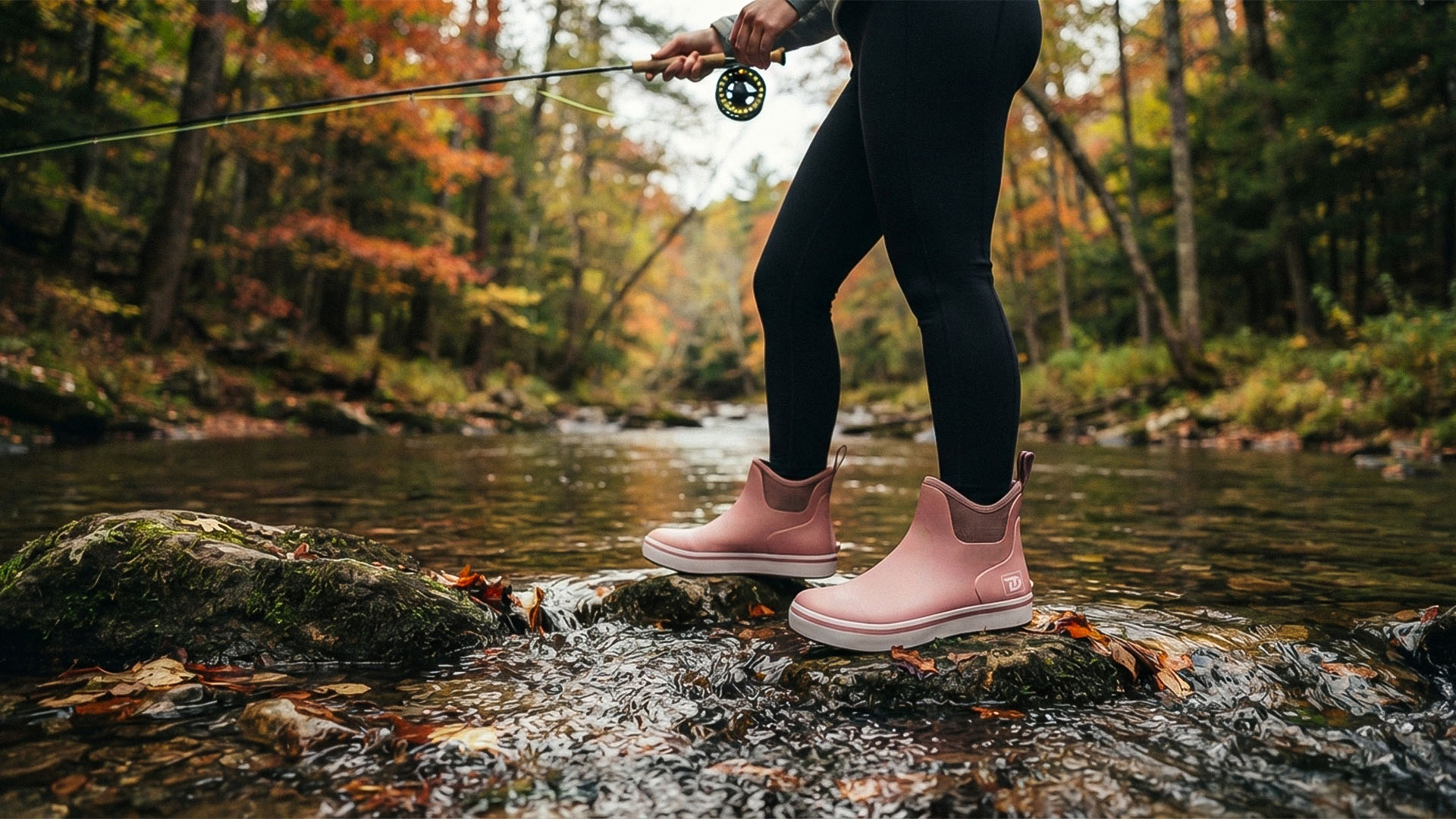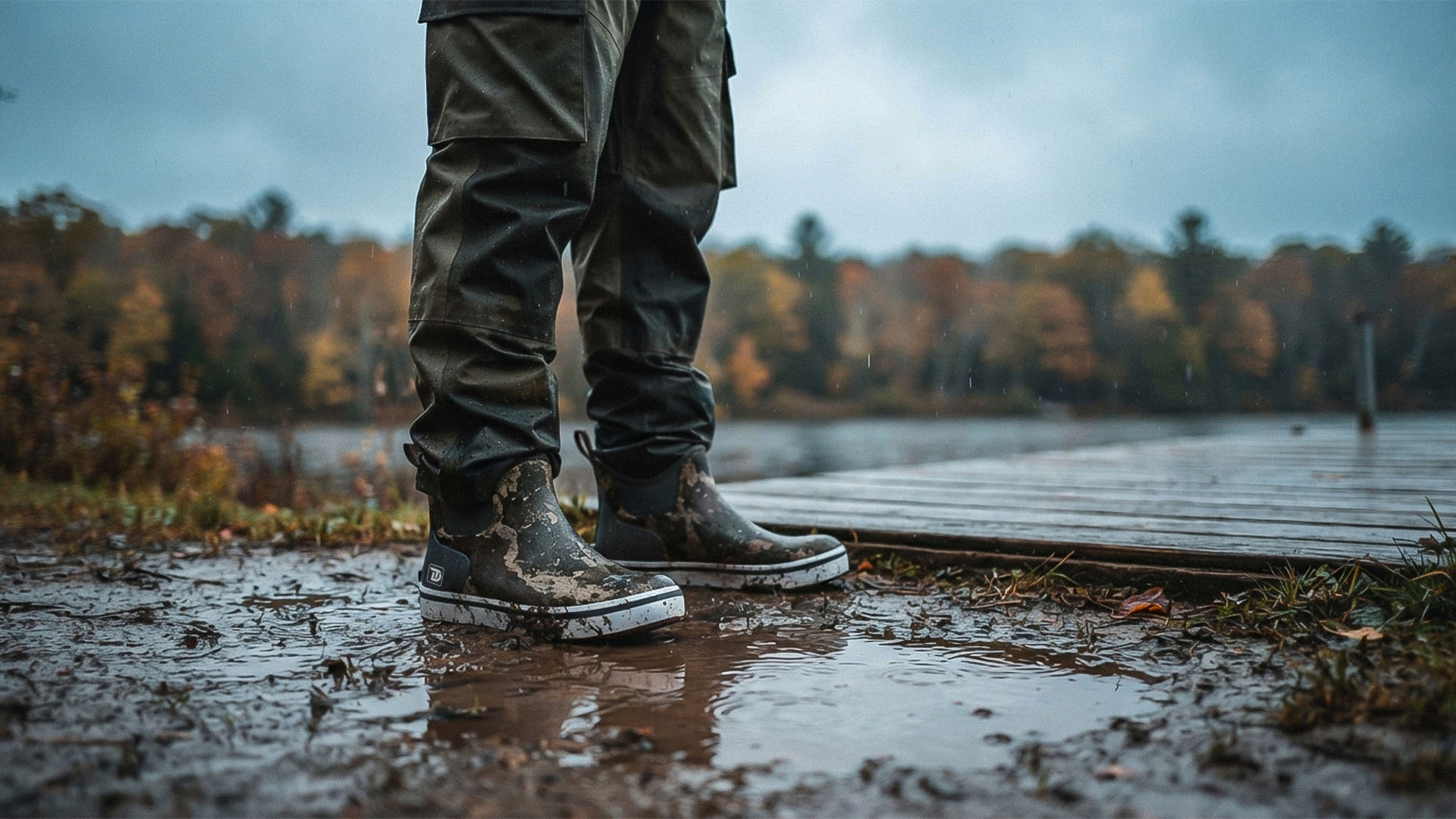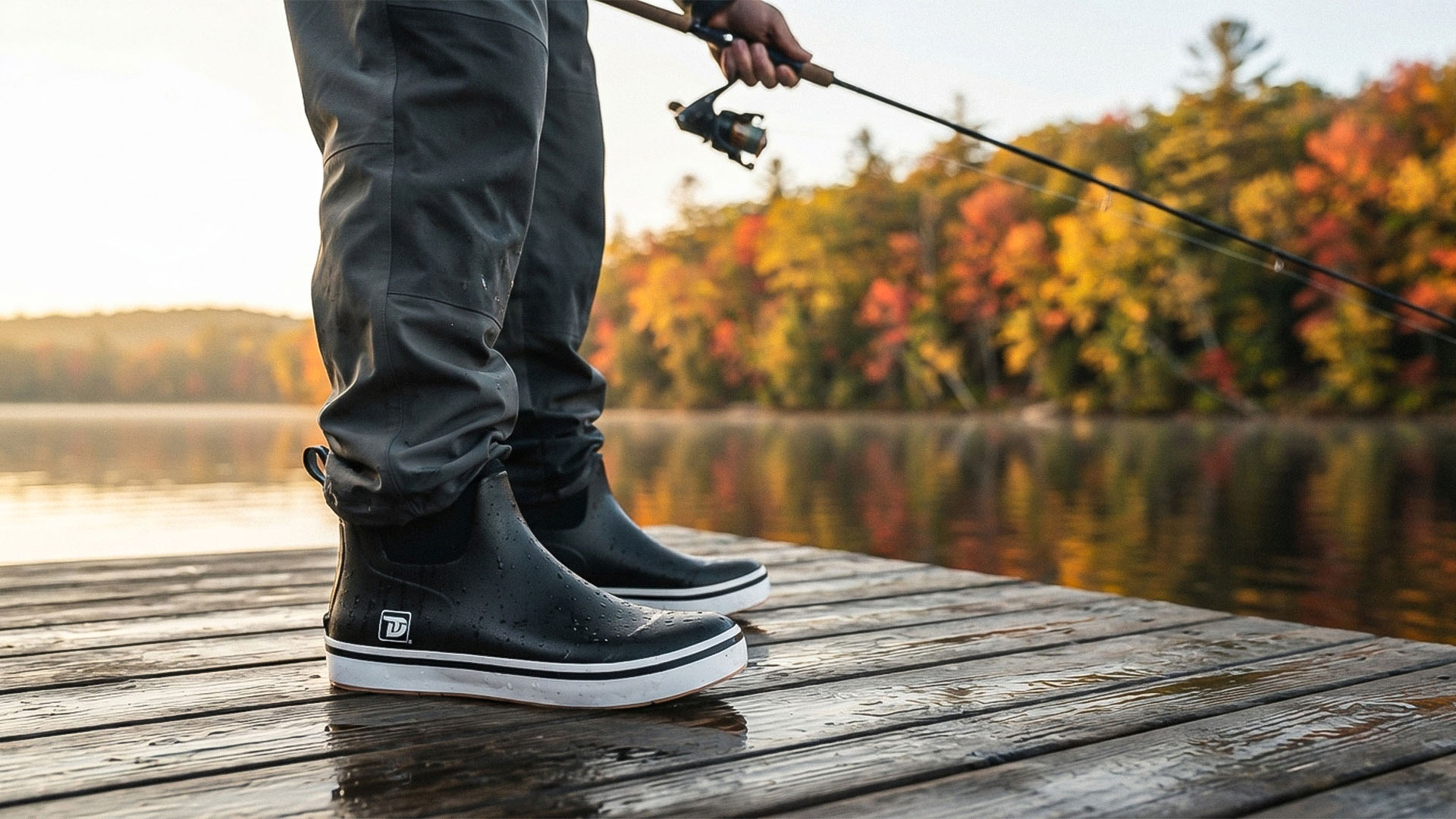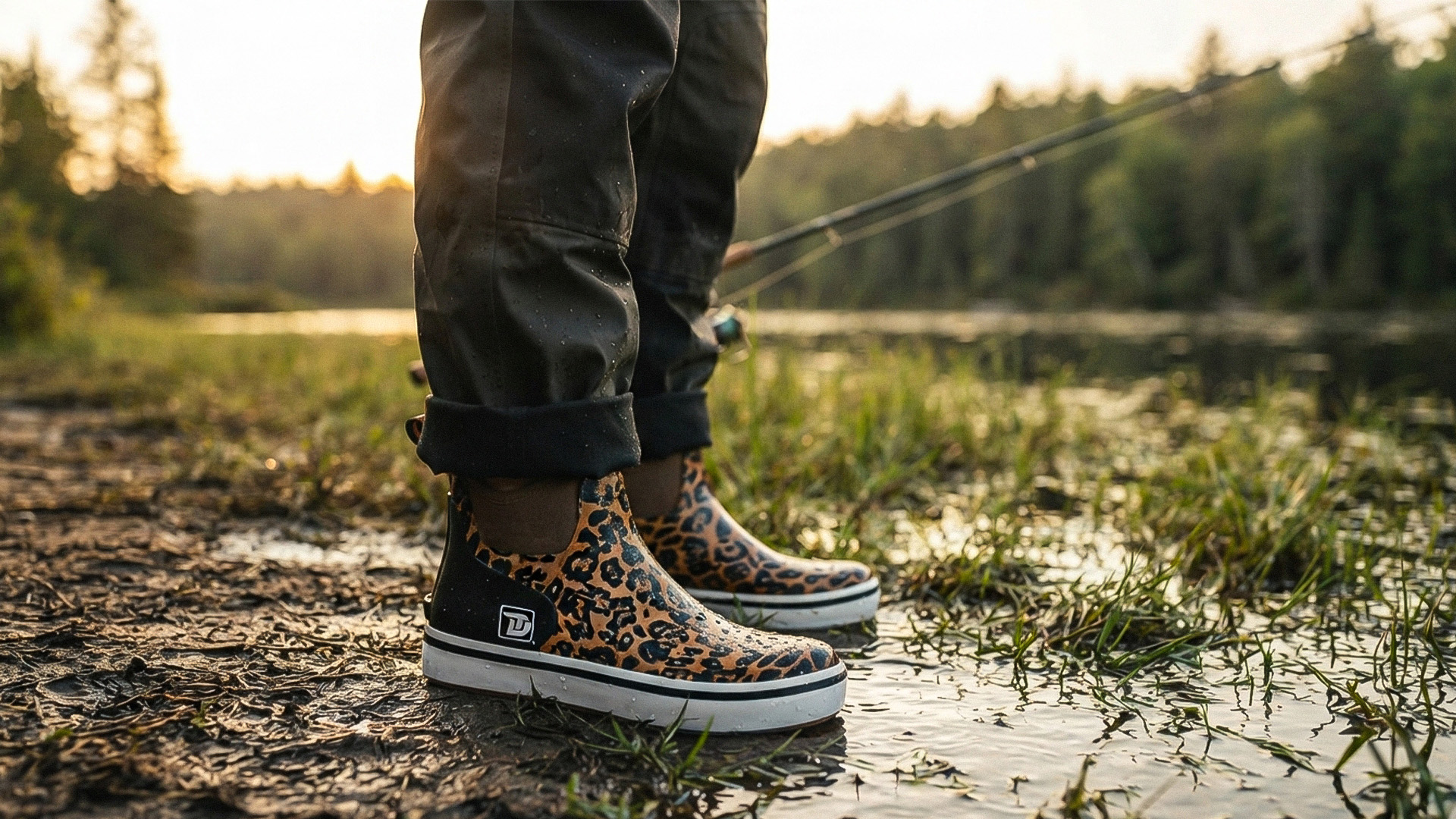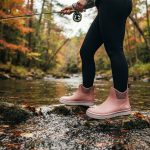
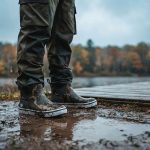
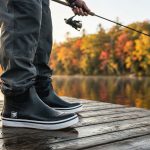
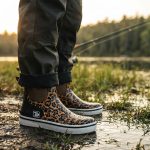
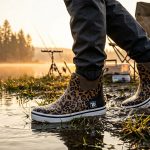
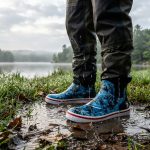
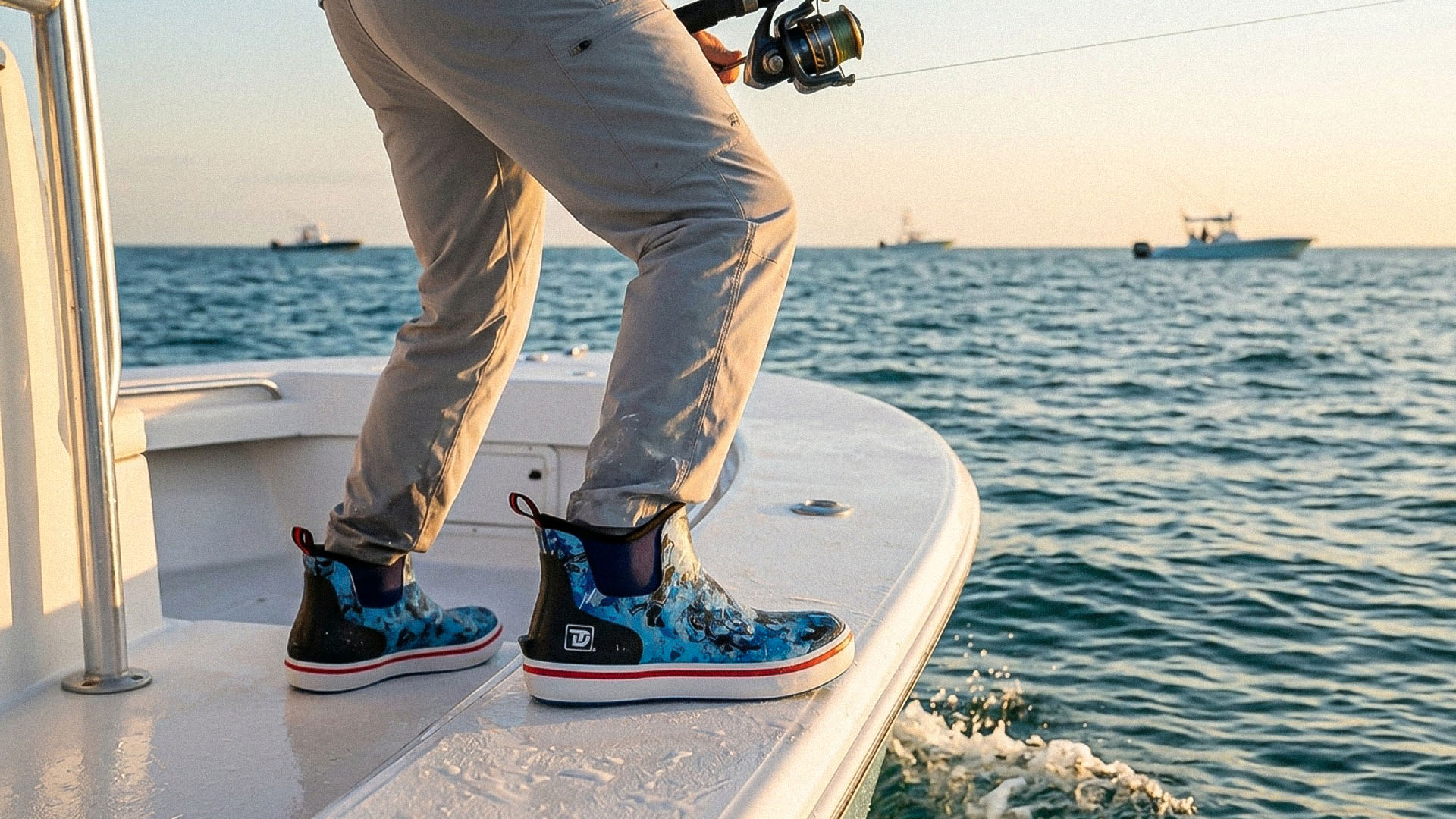
Sheepshead fishing puts anglers in places where footwear matters more than most people expect.
These striped, structure-loving fish are often targeted around:
- Bridge pilings
- Docks
- Seawalls
- Jetties
- Oyster structure
- Artificial reefs
- Rock piles
- Marina pilings
That means anglers spend a lot of time around wet hard surfaces, barnacles, bait water, winter rain, muddy ramps, and boat decks that may stay damp for hours.
Sheepshead fishing is also popular during cooler months in many southern coastal areas.
A Florida winter morning may not be freezing, but wind, spray, cold bait water, and several hours on a boat can make wet shoes surprisingly uncomfortable.
For boat-based anglers, lightweight waterproof deck boots can be one of the most practical footwear choices.
The best deck boots for sheepshead fishing should keep your feet dry, provide stable footing on wet boats and docks, clean up easily after crab and shrimp bait, and remain comfortable during long periods of vertical fishing around structure.
This guide explains what to look for in sheepshead fishing boots, how colder inshore weather affects footwear choice, when deck boots are appropriate around oyster and barnacle-covered structure, and when specialized footwear is a better option.
Why Sheepshead Fishing Creates Unique Footwear Conditions
Sheepshead fishing is usually structure-oriented.
That means the fishing environment may include:
- Wet boat decks
- Concrete bridges
- Marina docks
- Oyster shells
- Barnacles
- Rocks
- Crab bait
- Shrimp
- Saltwater
- Muddy ramps
- Rain
- Fish slime
Unlike open-water trolling, anglers may constantly reposition around pilings or structure.
You may also be handling bait all day.
Fiddler crabs, shrimp, barnacles, and shellfish-based bait can make the work area surprisingly messy.
Footwear needs to handle both moisture and debris.
Why Deck Boots Work Well for Boat-Based Sheepshead Fishing
Deck boots are a good choice for anglers who remain primarily on the boat.
They offer:
- Waterproof protection
- Closed-toe coverage
- Easy-rinse materials
- Wet-deck traction
- Comfortable standing support
- Easy pull-on construction
- Protection from shallow ramp mud
They are particularly useful during cooler months when wet sneakers can become uncomfortable quickly.
Anglers comparing waterproof inshore footwear can evaluate TruDaveGear deck boots alongside other fishing options based on waterproofing, fit, cushioning, outsole design, removable insoles, and seasonal conditions.
Winter Sheepshead Fishing
Sheepshead are commonly targeted during cooler periods in many southeastern fisheries.
That creates conditions such as:
- Cold mornings
- North wind
- Rain
- Damp docks
- Cold saltwater spray
- Wet boat floors
Even in southern climates, your feet may feel cold after several hours if your shoes become wet.
Waterproof deck boots help by keeping external moisture away from your socks.
For many anglers, uninsulated boots paired with appropriate socks provide enough warmth.
Do You Need Insulated Boots for Sheepshead Fishing?
Usually not in most southern inshore fisheries.
Heavy insulation may be unnecessary in places such as:
- Florida
- Coastal Georgia
- Gulf Coast
- Southern Carolinas
Instead, use:
- Uninsulated waterproof boots
- Medium-weight merino socks on cooler mornings
- Lightweight performance socks as temperatures rise
Insulated deck boots may make more sense in genuinely cold northern conditions.
Choose based on temperature, not simply the season.
Cold Wind Changes How Your Feet Feel
A 50°F morning can feel much colder on a moving boat.
Wind and spray increase heat loss.
If your socks become wet, your feet may feel cold for the rest of the trip.
That is why waterproof footwear can be valuable even when the air temperature is not extreme.
Dry feet are easier to keep comfortable than wet feet.
Best Socks for Sheepshead Fishing
Good sock choices include:
- Merino wool
- Synthetic performance fibers
- Merino-synthetic blends
Avoid cotton.
Cotton absorbs sweat and water, then dries slowly.
For cool mornings, medium-weight merino or synthetic socks work well.
For warmer afternoons, lightweight versions may be more comfortable.
Leave Enough Room for Socks
Do not force thick socks into tight deck boots.
This can create:
- Toe pressure
- Reduced circulation
- Instep discomfort
- Numbness
- Cold feet
Your toes should still move naturally.
A slightly roomy toe box is useful for cool-weather fishing, but the heel should remain secure.
Fiddler Crabs and Sheepshead Bait
Fiddler crabs are a classic sheepshead bait in many areas.
Handling them may introduce:
- Mud
- Crab water
- Broken shell
- Bait residue
around the boat.
Deck boots are easy to rinse if bait containers spill.
They are also more practical than fabric sneakers when working around mud and shell debris.
Shrimp as Sheepshead Bait
Live or fresh shrimp may also be used.
Shrimp buckets can spill water around your feet.
Waterproof boots keep this water from soaking into fabric footwear.
After the trip, rinse shrimp residue before it creates odor.
Warm climates can make bait smell develop quickly.
Barnacle and Shell Bait
Some anglers use shellfish or scrape bait from structure depending on local regulations and fishing methods.
These materials may have sharp edges.
Deck boots provide ordinary closed-toe protection but are not puncture-resistant.
Do not rely on recreational deck boots to protect against sharp barnacles or oyster shells.
Handle shell material carefully.
Fishing Bridge Pilings
Bridge pilings are prime sheepshead habitat.
Boat anglers often hold close to structure while fishing vertically.
This may require repeated movement around:
- Console
- Gunwale
- Trolling motor
- Anchor system
- Rod holders
A secure boot helps your foot remain controlled as the boat moves in current.
Oversized boots may allow the foot to rotate during side steps.
Strong Current Around Bridges
Bridge current can create additional boat movement.
Anglers may need to adjust position frequently.
Footwear should provide:
- Stable heel
- Secure midfoot
- Comfortable toe box
- Predictable outsole contact
A very loose pull-on boot may feel unstable during quick repositioning.
Dock Fishing From a Boat
Sheepshead often feed around dock pilings covered with:
- Barnacles
- Oysters
- Marine growth
Boat anglers may make repeated short drops around structure.
The deck may become wet from:
- Bait
- Spray
- Fish handling
- Rain
Waterproof ankle deck boots provide useful protection without excessive bulk.
Fishing From a Dock
Deck boots can also work for anglers fishing directly from docks.
They are useful around:
- Wet wood
- Composite decking
- Concrete
- Rain
- Bait water
However, dock algae can be extremely slippery.
No boot should be treated as completely slip-proof.
Move carefully around wet or green surfaces.
Fishing Around Seawalls
Seawalls may provide good sheepshead habitat.
If fishing from a boat, deck boots work well.
If fishing from land, consider the walking surface.
Some seawall areas involve:
- Rocks
- Uneven concrete
- Sloped surfaces
A deck boot designed for flat marine surfaces may not provide the same support as hiking or work footwear on uneven terrain.
Sheepshead Fishing Around Jetties
Jetties require extra caution.
Wet rocks, barnacles, waves, and uneven surfaces create a completely different environment from a boat deck.
Standard deck boots are generally not ideal for walking on wet rock jetties.
If fishing from a jetty, use footwear designed for:
- Rock traction
- Uneven terrain
- Wet conditions
This guide primarily focuses on boat, dock, and marina sheepshead fishing.
Oyster Reefs and Deck Boots
Sheepshead frequently inhabit oyster-rich areas.
Deck boots are useful inside the boat around these environments.
They should not be treated as oyster-wading footwear.
Oyster shells can:
- Cut
- Puncture
- Damage ordinary rubber
- Create unstable footing
If you plan to walk across oyster reefs or shell-covered bottom, use specialized protective footwear.
Waterproof Does Not Mean Puncture-Resistant
This distinction matters.
A boot may be excellent at keeping water out while offering limited resistance to sharp shells.
Waterproofing protects against:
- Rain
- Spray
- Puddles
- Shallow deck water
Puncture protection requires different materials and construction.
Do not confuse the two.
Vertical Fishing and Long Standing
Sheepshead fishing often involves vertical presentations.
You may stand in the same general area for long periods while:
- Feeling for bites
- Dropping bait
- Adjusting depth
- Rebaiting
- Repositioning around structure
Underfoot comfort matters.
Look for deck boots with:
- Stable heel cushioning
- Supportive footbeds
- Comfortable forefoot
- Secure fit
A flat, thin insole may become tiring after several hours.
Sheepshead Bites Require Concentration
Sheepshead have a reputation for subtle bites.
Anglers often spend long periods focused on rod feel and line movement.
Foot discomfort becomes an unnecessary distraction.
Good footwear should remain comfortable enough that you forget about it.
That makes cushioning and fit just as important as waterproofing.
Trolling Motor Use Around Structure
Many anglers use trolling motors to hold position around:
- Bridges
- Docks
- Reefs
A foot-controlled pedal works best with footwear that is not excessively bulky.
Look for:
- Ankle-height design
- Flexible forefoot
- Secure heel
- Moderate sole thickness
Test the boot with your actual trolling motor before a long trip.
Spot-Lock and Boat Positioning
Modern trolling motors make it easier to remain near structure.
However, anglers may still spend hours standing near the bow.
Stable underfoot support matters.
A removable insole can improve comfort for anglers who need:
- More arch support
- Better heel cushioning
- Different footbed firmness
Removable Insoles
Removable footbeds are valuable for several reasons.
They improve:
- Drying
- Odor control
- Support customization
- Cushion replacement
- Cleaning
After a damp winter trip, remove the insoles as soon as possible.
The boot interior may contain sweat even if external water never entered.
Wet Fiberglass
Many inshore boats use fiberglass decks.
These surfaces can become slippery from:
- Water
- Fish slime
- Bait residue
- Sunscreen
- Soap
A marine-style outsole should provide broad contact and water evacuation.
Keep the outsole clean.
Mud or bait residue can reduce traction.
Aluminum Boats
Small aluminum boats are also used for inshore structure fishing.
Wet aluminum may become slick.
Deck boots can work well when their tread is clean and in good condition.
Avoid bringing ramp mud onto the deck.
Muddy Boat Ramps
Cool-season rain can make launch areas messy.
Deck boots are particularly useful for:
- Mud
- Puddles
- Wet grass
- Trailer work
- Shallow water near the ramp
After launching, rinse or brush the outsole before boarding.
This helps keep both the boat and tread cleaner.
Slippery Ramp Algae
Algae-covered concrete can be extremely slick.
Marine deck boots do not guarantee grip on submerged algae.
Move cautiously.
Avoid rushing during launch and retrieval.
Use handholds where available.
Gravel and Shell at Boat Ramps
Coastal ramps may contain:
- Gravel
- Broken shell
- Sand
These materials can lodge in outsole grooves.
Before stepping onto fiberglass or EVA decking, inspect the tread.
Remove sharp pieces that could scratch or damage the boat surface.
EVA Boat Flooring
EVA foam is becoming common on fishing boats.
It can be comfortable underfoot but may be damaged by sharp debris.
Before boarding:
- Remove gravel
- Check for shell fragments
- Clean mud
- Inspect tread
Your boots should protect your feet without damaging the boat.
Fish Slime
Sheepshead can leave slime around the deck, landing net, and cooler.
This may create slick areas.
Keep fish contained when possible.
Rinse heavy residue after fish handling.
No outsole is completely slip-proof on fish slime.
Sheepshead Spines
Sheepshead have sharp dorsal spines.
Use careful fish-handling techniques.
Do not use your foot to pin or control a fish.
Standard deck boots are not designed as puncture protection against fish spines.
Use appropriate tools and handling methods.
Closed-Toe Footwear Matters
Sheepshead fishing may involve:
- Hooks
- Sinkers
- Jig heads
- Crab shells
- Fish spines
- Pliers
- Knives
Closed-toe deck boots provide more protection than sandals.
But they are still recreational footwear.
Keep sharp tackle off the deck.
Hooks and Small Jigs
Sheepshead anglers may use small but sharp hooks or jigs.
These are easy to drop.
Do not leave them in walking areas.
Use:
- Tackle boxes
- Rig holders
- Hook keepers
Waterproof rubber does not guarantee hook resistance.
Deck Boots vs. Sneakers for Sheepshead Fishing
Deck Boots Are Better For:
- Cold rain
- Wet docks
- Muddy ramps
- Crab bait
- Spray
- Boat washdowns
Sneakers Are Better For:
- Warm dry weather
- Long walking
- Maximum airflow
During winter and early spring boat fishing, deck boots often provide the better balance.
Deck Boots vs. Fishing Shoes
Fishing shoes may provide more airflow and a more athletic fit.
Deck boots provide:
- Better waterproofing
- Easier bait cleanup
- Better mud protection
If the forecast is dry and warm, fishing shoes may be comfortable.
If the day begins cold and wet, deck boots usually make more sense.
Deck Boots vs. Tall Rain Boots
Tall rubber boots provide greater lower-leg coverage but may be:
- Heavier
- Hotter
- Less flexible
For normal boat-based sheepshead fishing, ankle or mid-height deck boots are often easier to wear.
Tall boots may be useful for very wet commercial or shore-based conditions.
Warm Afternoon Conditions
A winter fishing day can start cold and become warm.
This is one reason uninsulated deck boots are useful in southern climates.
You can adjust comfort with socks rather than being stuck with heavy insulation all day.
Florida Sheepshead Fishing
Florida anglers often deal with mild winters but frequent wind and damp conditions.
An uninsulated ankle boot with medium-weight socks usually provides enough protection for many winter trips.
As the day warms, lightweight construction helps reduce overheating.
Georgia and Carolina Sheepshead Fishing
Further north, mornings may be colder.
Anglers may prefer:
- Warmer socks
- Mid-height boots
- More weather protection
Still, insulation should match actual conditions.
Do not assume every winter trip requires heavily insulated footwear.
Gulf Coast Sheepshead Fishing
Gulf Coast anglers may experience rapidly changing winter weather.
A mild day can follow a cold front.
Deck boots provide useful versatility because they handle:
- Rain
- Mud
- Bait water
- Wet boats
without requiring tall heavy rubber construction.
Rain Pants and Deck Boots
Wear rain pants outside the boot opening.
This directs water down the exterior.
If the pant leg is tucked inside, rainwater may run directly into the boot.
Once water enters from above, waterproof boots drain poorly.
Spare Socks
Bring an extra pair in waterproof storage.
They are useful if socks become wet from:
- Rain
- Bait water
- Spray
- Water entering over the collar
Dry socks can completely change the comfort of a cold trip.
Heel Fit
Pull-on boots may allow slight heel movement.
Too much heel lift can cause:
- Blisters
- Sock sliding
- Toe gripping
- Foot fatigue
The boot should feel controlled during walking and side steps.
Toe Room
Your toes need space for:
- Natural movement
- Seasonal socks
- Mild swelling
Do not buy boots that squeeze the front of your foot.
Cold-weather comfort requires circulation.
Wide Feet
Wide-footed anglers should look for:
- Roomy toe box
- Wide forefoot
- Secure heel
- Adequate instep volume
Do not automatically buy a longer size.
Extra length may create heel slip.
High Instep
Pull-on boots may be difficult for high-instep anglers.
Look for:
- Adequate boot volume
- Strong pull tabs
- Removable insoles
- Comfortable entry
Pain or numbness across the top of the foot usually means the fit is wrong.
Cleaning Crab Bait From Deck Boots
After fishing:
- Rinse loose bait residue.
- Use mild soap if necessary.
- Brush the outsole.
- Rinse thoroughly.
- Remove insoles.
- Dry everything separately.
Crab bait can create strong odor if left in warm storage.
Cleaning Shrimp Water
Shrimp water should be rinsed promptly.
Pay attention to:
- Toe
- Sidewalls
- Tread grooves
Fresh water is usually enough for minor spills.
Use mild soap if odor remains.
Cleaning Fish Slime
Rinse fish slime before it dries.
A soft or medium brush can help remove residue.
Do not scrub aggressively enough to damage the boot surface.
Saltwater Care
After every saltwater trip:
- Rinse boots with fresh water
- Clean outsole grooves
- Rinse sidewalls
- Clean collar
- Rinse pull tabs
Frequent rinsing helps prevent salt buildup.
Drying Deck Boots
After fishing:
- Remove the insoles
- Open the boots
- Use gentle airflow
- Dry the footbeds separately
Avoid:
- Clothes dryers
- Heat guns
- Space heaters
- Open flames
High heat may damage waterproof materials, foam, and adhesives.
Odor Prevention
Bait-heavy fishing can create strong odor.
Prevent it by:
- Cleaning bait residue promptly
- Wearing moisture-wicking socks
- Removing insoles
- Drying completely
- Cleaning boot trays
- Avoiding hot sealed storage
Do not leave damp boots inside a vehicle for several days.
Clean Shoes for the Drive Home
Bring clean shoes for the ride home.
Store dirty deck boots in:
- Rubber boot tray
- Plastic tote
- Washable cargo liner
This keeps crab bait, fish slime, saltwater, and mud away from vehicle carpet.
Best Deck Boot Features for Sheepshead Fishing
Look for:
Waterproof Construction
Useful for rain, spray, bait water, and wet docks.
Ankle or Mid-Height Design
Good balance of weather coverage and mobility.
Stable Marine Outsole
Useful on wet fiberglass and aluminum.
Secure Heel
Helps around bridge and dock structure.
Comfortable Cushioning
Important during vertical fishing.
Removable Insoles
Improves drying and support.
Easy-Clean Upper
Useful around crab and shrimp bait.
Seasonal Sock Compatibility
Important for cool mornings.
Lightweight Construction
Better as southern temperatures rise.
Sheepshead Fishing Footwear Checklist
Before fishing:
- Check weather
- Decide whether you will remain on the boat or walk rough structure
- Inspect outsole tread
- Confirm boots are dry
- Choose appropriate socks
- Pack spare socks
- Bring rain gear
- Organize hooks and sinkers
After fishing:
- Rinse saltwater
- Clean crab or shrimp residue
- Remove fish slime
- Brush tread
- Remove insoles
- Dry completely
Common Sheepshead Fishing Footwear Mistakes
Wearing Mesh Sneakers in Cold Rain
They may stay wet for the rest of the trip.
Wearing Cotton Socks
Cotton absorbs water and dries slowly.
Treating Deck Boots as Oyster-Proof
Waterproof does not mean puncture-resistant.
Wearing Deck Boots on Wet Rock Jetties
Specialized rock footwear may be more appropriate.
Buying Boots Too Tight for Winter Socks
Compression may make feet colder.
Leaving Crab Bait on the Boots
Bait residue can create strong odor.
Bringing Ramp Mud Onto the Deck
Mud reduces outsole contact.
Leaving Hooks on the Floor
Deck boots are not hook-proof.
Tucking Rain Pants Into the Boot
Water can run straight inside.
Using Heavy Insulated Boots on Mild Southern Days
Overheating can create sweat and damp feet.
Final Thoughts
Sheepshead fishing combines cool-season weather, wet structure, crab bait, saltwater, slippery docks, fish slime, and long periods of vertical fishing in a way that makes waterproof deck boots extremely useful.
For most boat-based anglers, lightweight uninsulated ankle or mid-height deck boots provide an excellent combination of waterproof protection, mobility, easy cleaning, and cool-weather comfort.
Choose boots with a stable marine outsole, secure heel, supportive cushioning, removable insoles, and enough toe room for the socks you plan to wear.
Use synthetic or merino-blend socks instead of cotton.
Keep rain pants outside the boot openings.
Clean crab and shrimp bait before it dries.
Most importantly, understand the limits of deck boots.
They are excellent for boats, docks, ramps, and relatively flat wet surfaces.
They are not specialized oyster-wading footwear, puncture-resistant shell boots, or ideal shoes for slippery rock jetties.
Use the right footwear for the actual environment.
After fishing, rinse saltwater and bait residue, brush the tread, remove the insoles, and dry everything thoroughly.
The right sheepshead fishing footwear should help you stay comfortable and focused while feeling for one of those subtle bites against bridge pilings or oyster-covered structure—not thinking about wet socks or cold feet.
Frequently Asked Questions
Are deck boots good for sheepshead fishing?
Yes. They are especially useful for boat-based sheepshead fishing around docks, bridges, reefs, and wet winter conditions.
What boots should I wear for Florida sheepshead fishing?
Lightweight uninsulated ankle deck boots paired with moisture-wicking socks are a practical choice for many winter boat trips.
Are deck boots good for fishing around docks?
Yes. They provide waterproof protection and stable footing, though algae-covered docks can still be extremely slippery.
Are deck boots good around oyster reefs?
They are good inside the boat, but standard deck boots are not designed as puncture-resistant footwear for walking over oyster shells.
Can I wear deck boots on jetties?
Standard deck boots are generally not ideal for wet uneven rock jetties. Specialized rock-fishing footwear may be better.
Are deck boots good for bridge fishing?
Yes, especially when fishing from a boat around bridge pilings or from relatively flat wet bridge platforms.
What socks should I wear with sheepshead deck boots?
Wear synthetic, merino wool, or merino-blend moisture-wicking socks. Avoid cotton.
Do I need insulated boots for sheepshead fishing?
Usually not in most southern coastal fisheries. Uninsulated boots with appropriate socks are more versatile.
Are deck boots good for fiddler crab fishing?
Yes. Waterproof boots are easy to clean after crab bait, mud, and bait-water spills.
How do I clean fiddler crab residue from deck boots?
Rinse with fresh water, use mild soap if needed, brush the outsole, rinse thoroughly, remove the insoles, and dry fully.
Can I wear sneakers for sheepshead fishing?
Yes during warm dry weather, but deck boots are usually more practical during cold rain, muddy ramps, bait-heavy fishing, and wet boat conditions.
Are deck boots slip-proof on fish slime?
No. Fish slime, algae, bait residue, and mud can make any surface slippery. Keep both boots and walking areas clean.
Are deck boots puncture-proof against barnacles or oyster shells?
No. Standard recreational deck boots should not be treated as puncture-resistant footwear.
Should rain pants go inside or outside deck boots?
Outside. Allow the pant leg to overlap the boot opening so water runs down the exterior.
Are removable insoles useful for sheepshead fishing?
Yes. They improve drying, odor control, support replacement, and long-day comfort.
How should sheepshead fishing deck boots fit?
They should hold the heel securely while allowing enough toe room for natural movement and cool-weather socks.
What is the biggest footwear mistake in sheepshead fishing?
Using ordinary waterproof deck boots as if they were puncture-resistant oyster or rock-jetties footwear is one of the biggest mistakes.