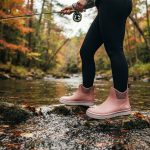
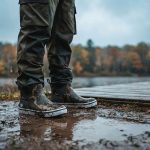
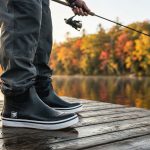
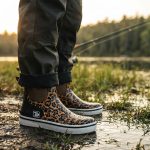
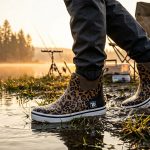
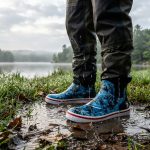
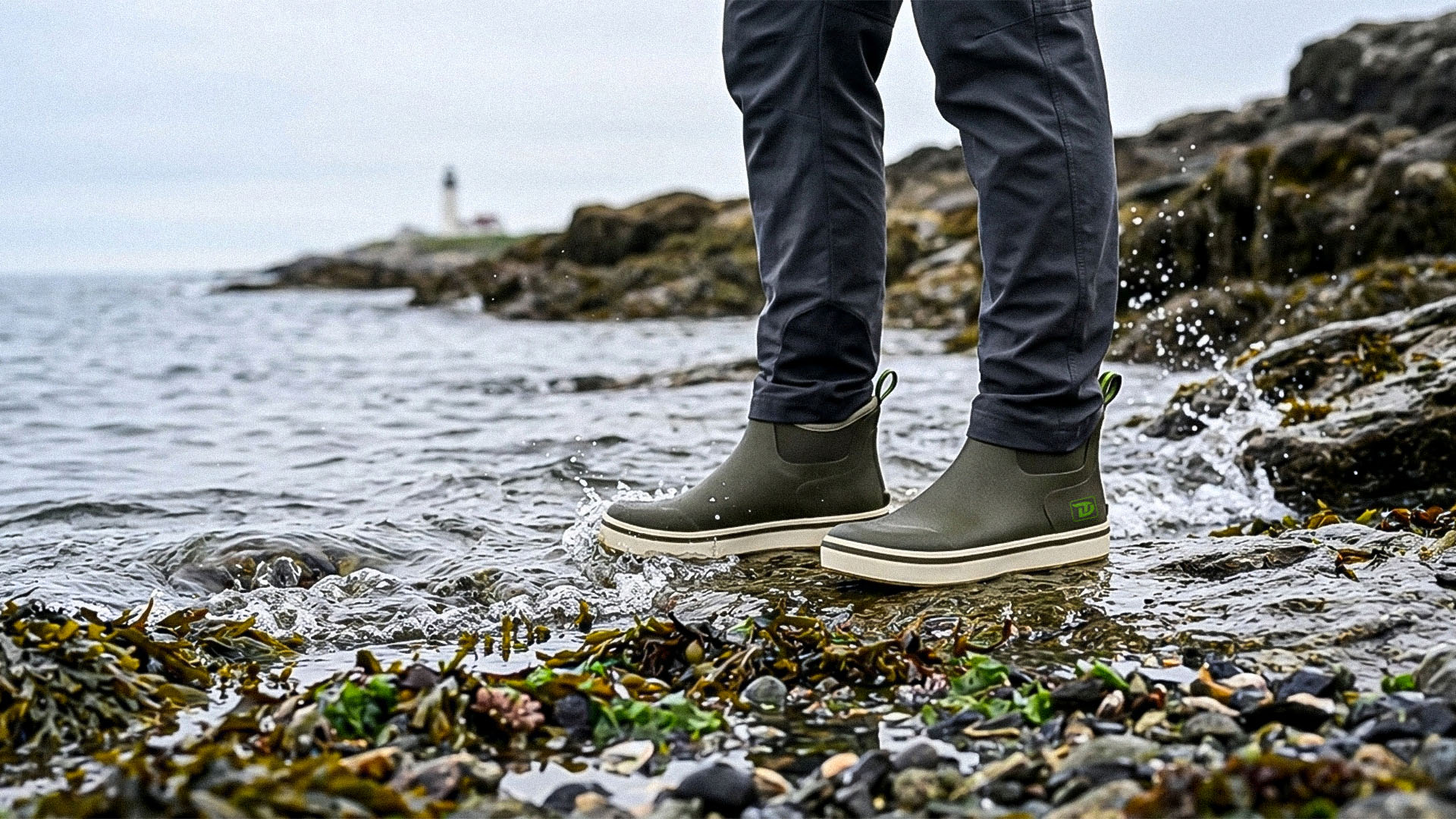
Redfish fishing can take anglers into some of the wettest, muddiest, and most unpredictable inshore environments in the United States.
One day may involve sight fishing across a clean Florida flat.
Another may mean launching a skiff into a muddy Louisiana marsh, fishing oyster-lined ponds, handling live shrimp or mullet, walking wet docks, and washing fish slime and marsh mud off the boat at the end of the day.
That makes footwear more important than many anglers realize.
The best deck boots for redfish fishing should protect your feet from ordinary boat water, remain comfortable in Gulf Coast heat, clean up easily after mud and live bait, and provide stable footing on wet skiffs, center consoles, docks, and boat ramps.
For most boat-based redfish anglers, lightweight uninsulated ankle deck boots are one of the most practical footwear choices.
They offer more water and mud protection than ordinary sneakers without the weight and heat of tall rubber boots.
This guide explains how to choose deck boots for redfish fishing, when they work best, when other footwear is more appropriate, and what features matter for marsh fishing, live bait, oyster areas, shallow skiffs, summer heat, and long inshore days.
Why Redfish Fishing Is Hard on Footwear
Redfish anglers may encounter:
- Saltwater
- Marsh mud
- Oyster shells
- Live bait water
- Shrimp
- Mullet
- Menhaden
- Fish slime
- Rain
- Wet fiberglass
- Aluminum skiffs
- Muddy ramps
- Boat washdowns
- Wet docks
- Grass and marsh debris
The challenge is that many of these conditions happen in warm weather.
That means you need enough waterproof protection without making your feet excessively hot.
A heavy commercial rubber boot may be unnecessary.
A lightweight ankle deck boot often provides a better balance.
Why Deck Boots Work Well for Redfish Fishing
Deck boots fit boat-based redfish fishing particularly well because they combine:
- Waterproof construction
- Closed-toe coverage
- Easy-clean materials
- Wet-deck outsole design
- Secure pull-on fit
- Comfortable standing support
- Protection from shallow ramp mud
They are especially useful on:
- Bay boats
- Flats boats
- Skiffs
- Center consoles
- Jon boats
- Shallow-water aluminum boats
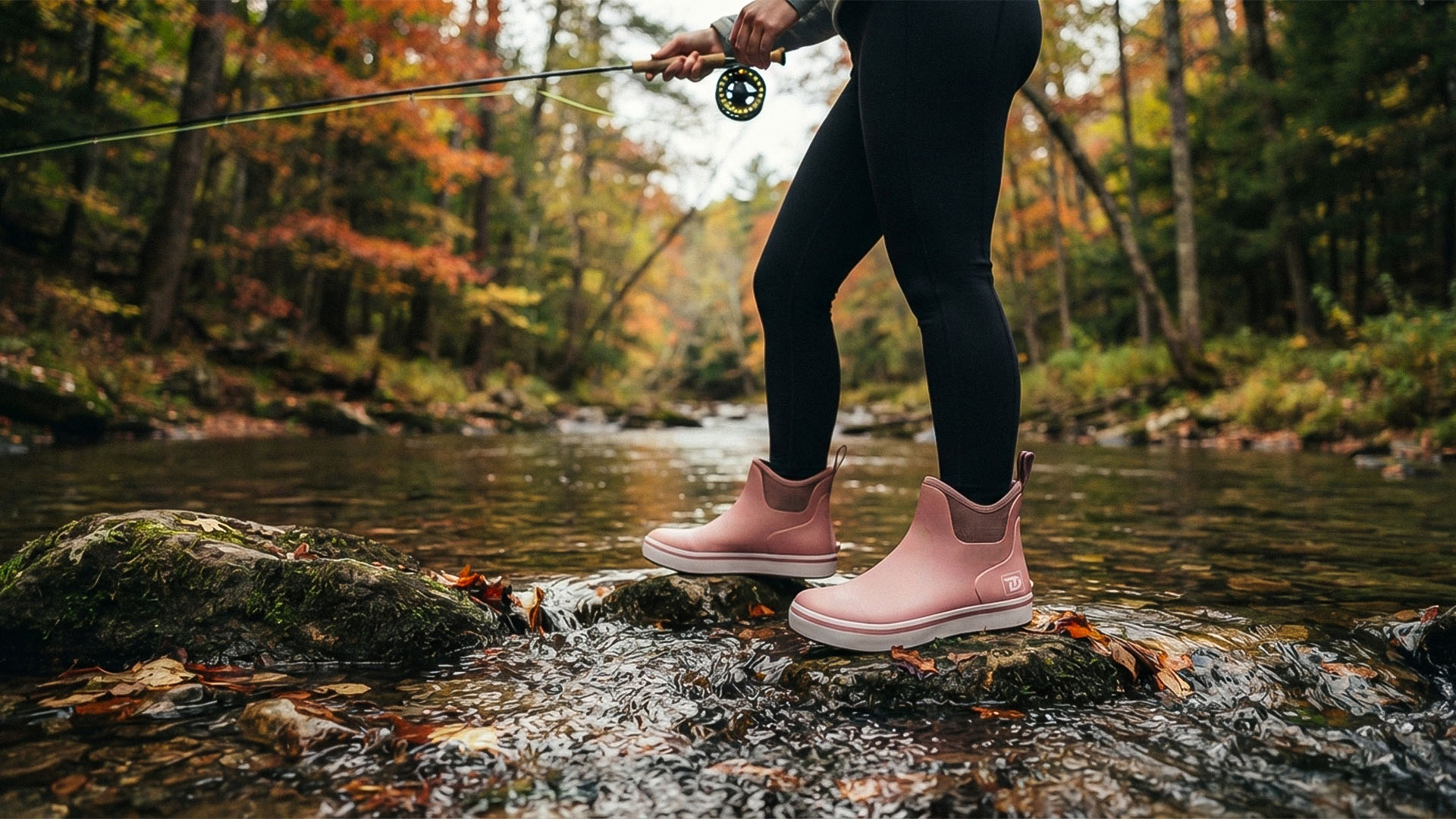
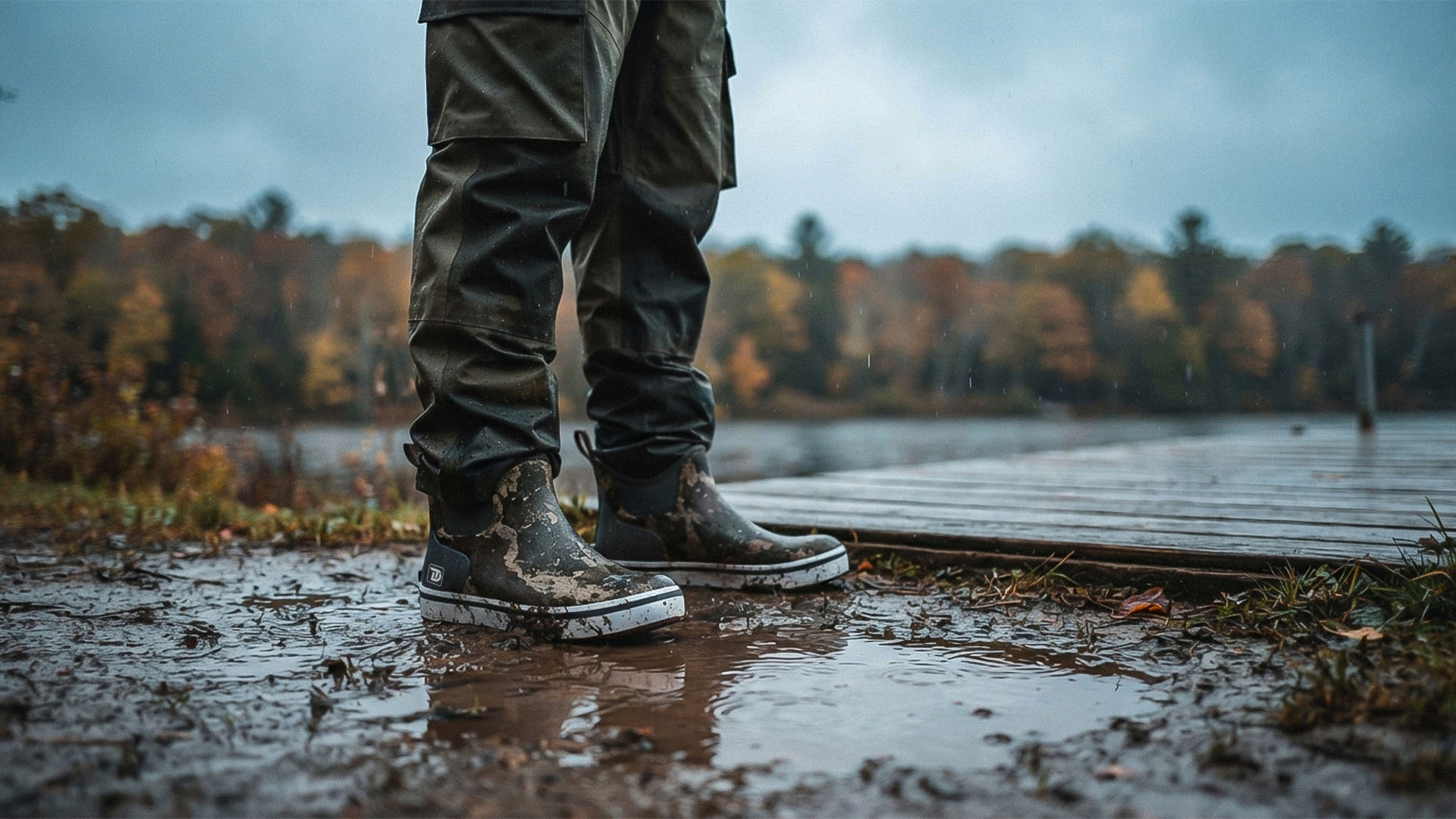
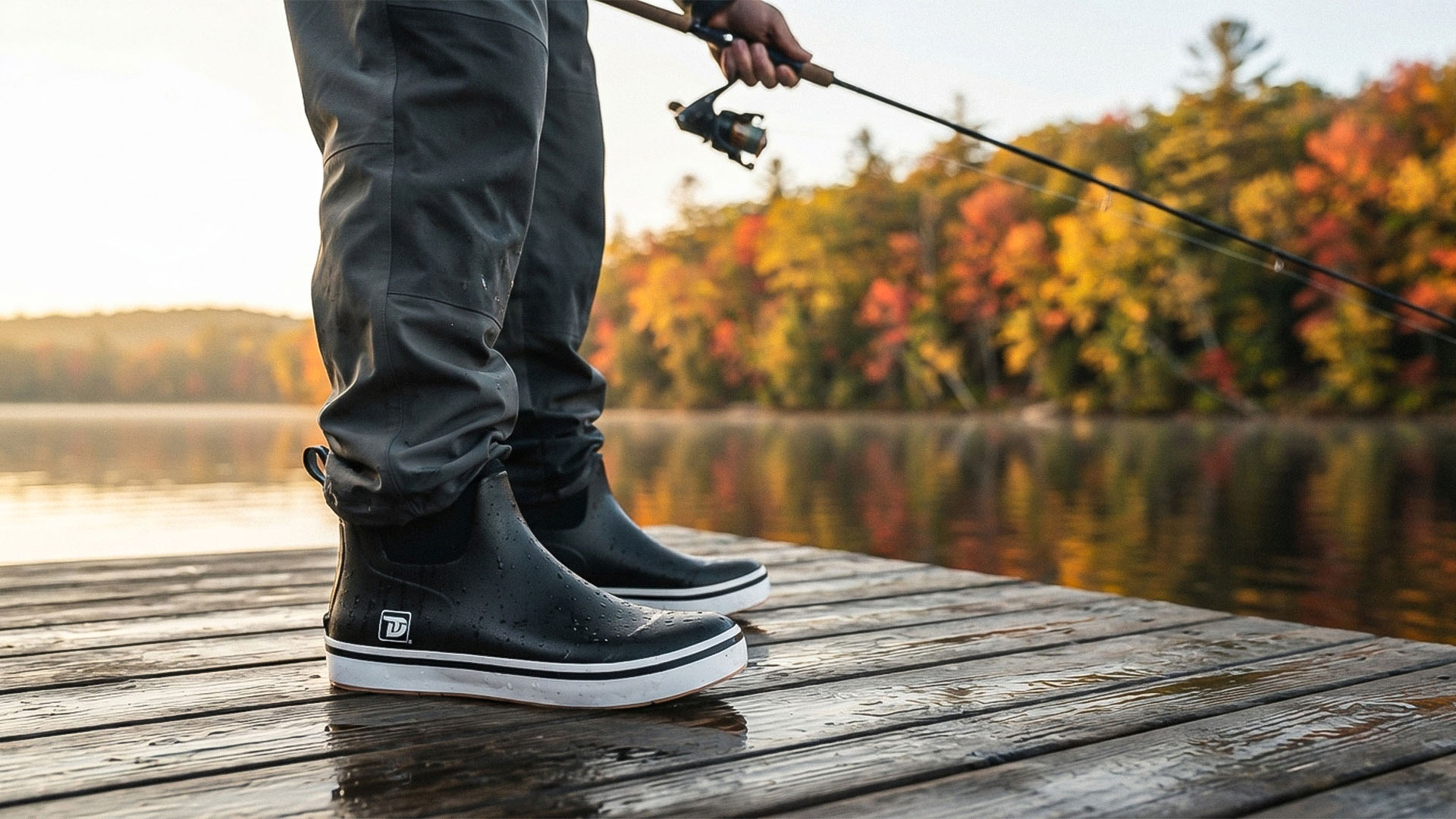
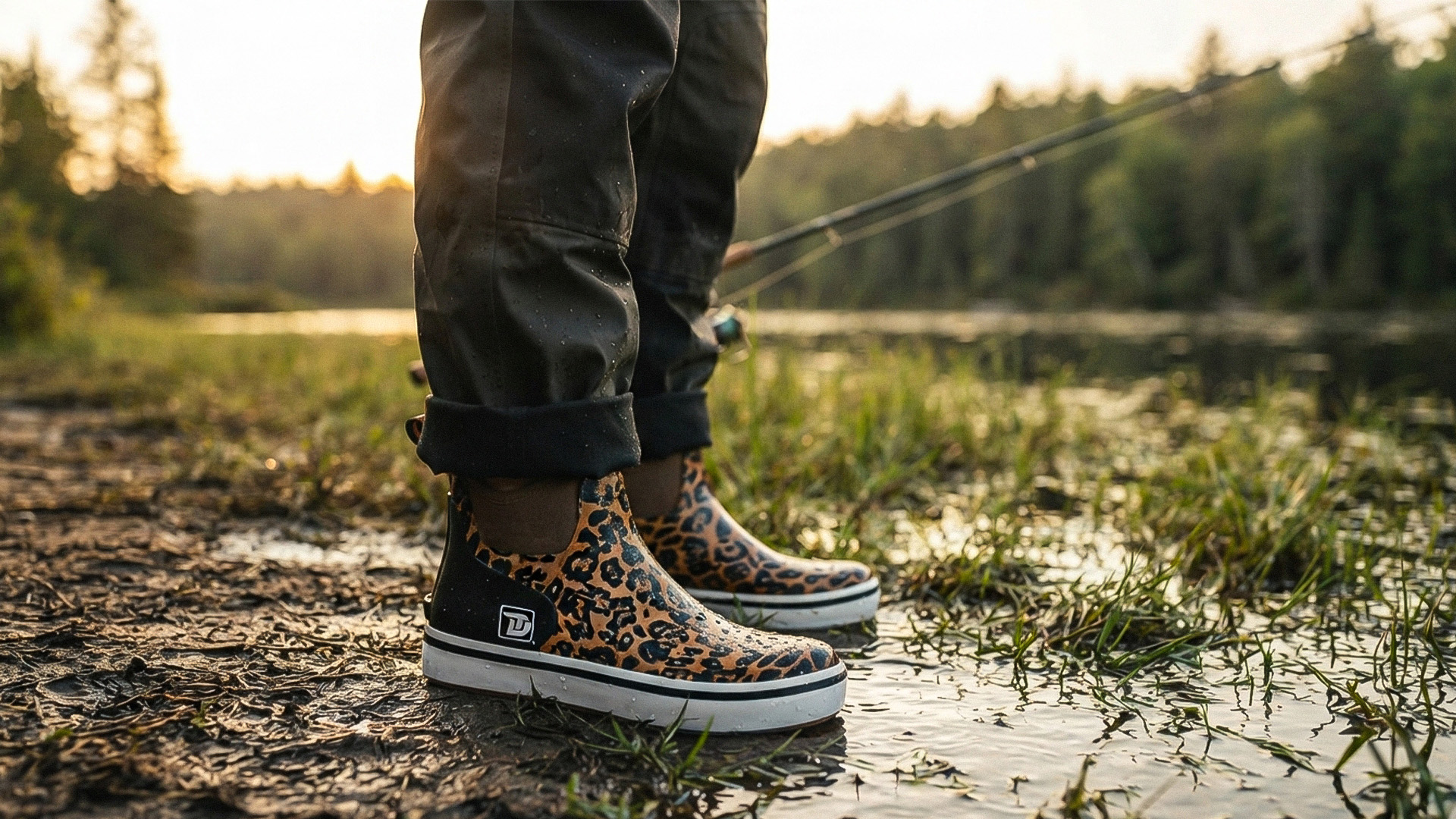
Anglers comparing inshore fishing footwear can evaluate TruDaveGear waterproof deck boots alongside other options based on fit, outsole design, cushioning, removable insoles, boot height, and hot-weather comfort.
Gulf Coast Redfish Fishing
The Gulf Coast is one of the most important redfish regions in the United States.
Anglers may fish areas across:
- Louisiana
- Texas
- Mississippi
- Alabama
- Florida
Conditions can vary, but common footwear problems include:
- Heat
- humidity
- marsh mud
- saltwater
- live bait
- rain
- wet ramps
That usually favors lightweight uninsulated waterproof footwear rather than heavy cold-weather boots.
Louisiana Marsh Redfish
Louisiana marsh fishing creates especially messy conditions.
A typical trip may involve:
- Muddy launch areas
- Shallow ponds
- Grass
- marsh water
- oyster edges
- mud carried onto the boat
- fish slime
Deck boots work well inside the boat and around launch areas.
They are easy to rinse after stepping through shallow mud.
However, standard ankle deck boots are not designed for deep marsh mud or long-distance wading.
If you plan to walk through soft bottom, use footwear appropriate to that environment.
Texas Bay Redfish
Texas redfish anglers may fish:
- Bays
- flats
- marsh drains
- jetties
- oyster reefs
- shorelines
Boat-based anglers benefit from footwear that handles saltwater and mud without becoming too hot.
Uninsulated ankle deck boots can work especially well during cooler mornings, rainy conditions, or live-bait trips.
For extremely hot dry days, breathable fishing shoes may still be more comfortable.
Florida Redfish
Florida redfish fishing often overlaps with snook, trout, and other inshore species.
Common environments include:
- Grass flats
- Mangroves
- oyster bars
- shallow creeks
- docks
Deck boots are useful on the boat because they provide water protection and easy cleanup.
However, beach fishing, deep wading, or shell-heavy walking may require different footwear.
Sight Fishing for Redfish
Sight fishing often involves hours of standing on a casting platform or bow.
You may repeatedly:
- Scan shallow water
- Turn your body
- Cast
- Reposition
- Operate a trolling motor
- Shift weight
Footwear should provide:
- Secure heel fit
- Stable outsole
- Comfortable forefoot
- Moderate cushioning
- Low bulk
A heavy tall boot can feel unnecessary on a shallow-water skiff.
An ankle deck boot usually provides better mobility.
Poling Skiffs
Poling skiffs create a unique footwear environment.
The angler may stand on the bow while the guide poles from the rear platform.
The deck needs to remain:
- Clean
- Quiet
- Organized
- Stable
A low-profile deck boot is useful because it provides closed-toe coverage without excessive bulk.
Check the outsole for mud or gravel before stepping onto the skiff.
Grit can damage or dirty premium deck surfaces.
Quiet Foot Placement
Sight fishing often rewards quiet movement.
Heavy footwear may create more noise when stepping.
Lightweight deck boots can be easier to move in quietly than tall rubber work boots.
However, the way you move matters more than boot type.
Use controlled steps.
Avoid stomping or dragging your feet across the deck.
Casting Platforms
Some redfish boats use elevated casting platforms.
These improve visibility but also require good balance.
Your footwear should feel secure when:
- Stepping up
- Stepping down
- Turning
- Casting
Avoid oversized boots.
A loose boot may allow your foot to rotate inside when stepping down from the platform.
Oyster Bars
Oyster bars are common redfish habitat.
They are also a major footwear hazard.
Oyster shells can be sharp.
Standard recreational deck boots are not designed as puncture-resistant oyster footwear.
Deck boots are excellent for:
- Boats
- docks
- ramps
- wet decks
They should not be treated as protective wading boots for walking across oyster reefs.
If you need to leave the boat and walk through shell-heavy water, use specialized footwear.
Why Oyster Shells Matter
Oyster shells may create:
- Cuts
- punctures
- sharp uneven footing
Even thick rubber may not provide enough protection if the boot is not designed for that purpose.
Do not assume “waterproof” means “puncture-resistant.”
These are different features.
Marsh Mud
Marsh mud can be soft and deep.
Deck boots work well for shallow mud around ramps and shore access.
But ankle boots can become a problem if mud rises above the collar.
Deep mud can:
- Pull at the boot
- Allow water inside
- Trap the foot
- Reduce balance
Use taller or specialized footwear when deep marsh walking is expected.
Muddy Boat Ramps
Boat ramps are one of the best reasons to own deck boots.
Redfish trips often begin before sunrise at ramps that may contain:
- Mud
- algae
- wet grass
- sand
- trailer grime
- puddles
Deck boots allow you to move through shallow mud without soaking ordinary shoes.
After launching, rinse heavy mud from the outsole before stepping onto the boat.
Ramp Algae
Submerged concrete may be covered with algae.
This can be extremely slippery.
No deck boot should be treated as completely slip-proof.
Move slowly and use handholds when available.
Avoid stepping deeper into the water than necessary.
Wet Fiberglass
Many redfish boats use fiberglass decks.
These can become slippery from:
- Water
- fish slime
- bait oil
- sunscreen
- rain
- soap
A marine-style outsole should provide stable contact and channels for water.
But tread only works properly when it is clean.
Mud, oil, and slime can reduce traction dramatically.
Aluminum Skiffs
Aluminum boats are also common in shallow-water fisheries.
Wet aluminum may become slick.
A deck boot with a stable outsole and clean tread works well.
Remove marsh mud before boarding.
Mud on smooth aluminum can make footing less predictable.
EVA Decking
Some modern boats use EVA foam or other soft synthetic decking.
These surfaces may provide:
- Better comfort
- Better grip
- Reduced noise
However, sharp gravel or shell pieces trapped in your boot tread may damage them.
Inspect the outsole before stepping aboard.
Live Shrimp Fishing
Live shrimp are a classic redfish bait.
Shrimp buckets and bait wells can spill water around the boat.
Deck boots help protect against:
- Bait water
- Shrimp residue
- Wet decks
- Cooler drainage
They are also easy to rinse afterward.
Fabric sneakers may absorb the smell of bait water much more easily.
Live Mullet and Menhaden
Other redfish anglers may use:
- Mullet
- Menhaden
- Pinfish
- Other local live bait
Live bait systems create additional moisture.
Bait scales and slime may end up on footwear.
Waterproof molded boots are much easier to maintain than fabric shoes after repeated bait handling.
Cut Bait
Cut bait can create even stronger odor.
Fish oils may spread across:
- Bait boards
- Cooler lids
- Gloves
- Boot outsoles
If oily bait gets into tread grooves, clean it quickly.
Oil can reduce wet-deck traction.
Artificial Lure Fishing
Many redfish anglers prefer artificial lures.
Common options include:
- Soft plastics
- Paddletails
- Topwaters
- Spoons
- Jerkbaits
This style usually involves more active casting.
For lure fishing, choose a lighter boot with good forefoot flexibility.
You may make hundreds of casts in a day.
Heavy footwear increases fatigue.
Topwater Redfish Fishing
Topwater fishing often happens early in the morning.
The boat may still be covered with:
- Dew
- Rain
- Night condensation
Deck boots help keep your feet dry during those first hours.
This is useful even when the afternoon becomes hot.
Trolling Motor Use
Redfish anglers often rely heavily on trolling motors.
A foot-controlled pedal requires footwear with:
- Flexible forefoot
- Low bulk
- Secure heel
- Comfortable ankle movement
A stiff tall boot may feel awkward.
Test your deck boots with the trolling motor before a long trip.
Spot-Lock Fishing
Modern trolling motors allow anglers to hold position around:
- Oyster edges
- points
- channel mouths
- docks
You may stand in one place for long periods.
Stable cushioning helps reduce heel and forefoot fatigue.
A removable supportive insole can improve comfort during long days.
Long Standing on Shallow Flats
Sight fishing often means standing almost continuously.
Good footwear should support:
- Heel
- arch
- forefoot
Avoid extremely thin footbeds if you regularly spend six or eight hours standing.
Moderate cushioning is better for many anglers.
Removable Insoles
Removable insoles are particularly useful in humid Gulf Coast conditions.
They allow you to:
- Dry boots faster
- Reduce odor
- Replace worn cushioning
- Add support
- Clean sweat residue
After every long trip, remove the footbeds.
Even if no outside water entered, sweat may remain underneath.
Heat and Humidity
Gulf Coast humidity can make waterproof footwear feel warmer.
To improve comfort:
- Choose uninsulated boots
- Use lightweight socks
- Wear ankle-height models
- Remove insoles after fishing
- Keep boots out of direct sun
Do not buy tall insulated boots unless you actually need them.
Best Socks for Redfish Fishing
Choose lightweight moisture-wicking socks made from:
- Synthetic fibers
- Lightweight merino wool
- Merino-synthetic blends
Avoid cotton.
Cotton absorbs sweat and water, then dries slowly.
Crew-height socks usually pair well with ankle deck boots because they protect the skin above the collar.
Are Merino Socks Good in Gulf Heat?
Yes, if they are lightweight.
Heavy winter merino socks are not appropriate.
Thin merino blends can help manage:
- Sweat
- odor
- friction
Sock thickness matters more than the material name alone.
Spare Socks
Bring one extra pair in a dry bag.
They are useful if socks become wet from:
- Rain
- Spray
- Bait water
- Water entering the collar
- Sweat
Changing socks during a long summer day can improve comfort dramatically.
Should You Wear Deck Boots Barefoot?
It is possible, but socks are generally more comfortable for long trips.
Barefoot use may increase:
- Sweat
- odor
- blistering
- heel rubbing
A lightweight technical sock creates a washable moisture layer.
Summer Redfish Fishing
Summer conditions often favor:
- Uninsulated deck boots
- Lightweight socks
- Ankle-height construction
For extremely hot, completely dry days, fishing shoes may be more comfortable.
Deck boots are most useful when:
- Rain is expected
- Bait is messy
- Ramps are muddy
- Boat washdowns are common
Fall Redfish Fishing
Fall can be one of the best times to wear deck boots.
Cooler mornings reduce heat concerns.
You still get protection from:
- Spray
- rain
- mud
- bait
Medium-weight socks may be useful as temperatures drop.
Winter Redfish Fishing
In southern regions, winter redfish trips may still be relatively mild.
Uninsulated boots paired with warmer socks may be enough.
In colder conditions, consider more insulation.
Always match footwear to actual temperature rather than season name.
Spring Redfish Fishing
Spring can bring:
- Rain
- Muddy ramps
- cool mornings
- warming afternoons
This is another ideal season for uninsulated ankle deck boots.
They provide weather protection without becoming too hot later.
Rain Pants and Deck Boots
Keep rain pants outside the boot openings.
This allows rainwater to run down the exterior.
If rain pants are tucked inside, water may funnel directly into the boots.
Water entering from above will remain trapped inside waterproof footwear.
Sudden Gulf Coast Storms
Inshore weather can change quickly.
Even during warm weather, heavy rain may soak ordinary shoes within minutes.
Deck boots provide useful protection during sudden storms.
Combine them with a lightweight rain jacket or bib system.
Redfish Slime
Large redfish can leave slime on:
- Net
- Deck
- Boots
- Cooler
Fish slime may reduce traction.
Keep the fish-handling area clean.
Rinse heavy residue when safe.
No boot is completely slip-proof on fish slime.
Large Bull Redfish
Bull reds can be powerful fish.
Boat-side handling may involve:
- Large nets
- Heavy tackle
- Repositioning around the cockpit
Your footwear should remain secure.
A loose boot may feel unstable when stepping around other anglers.
Closed-toe coverage is also preferable around heavy sinkers and tackle.
Heavy Tackle and Sinkers
Bull redfish fishing may use heavier tackle than shallow sight fishing.
Keep weights, hooks, and rigs away from walking areas.
Deck boots provide basic closed-toe protection but are not impact-rated or puncture-proof.
Good tackle organization is the best protection.
Circle Hooks
Many bait anglers use circle hooks.
Even though these hooks are designed for fishing, they can still injure feet.
Keep baited rigs off the floor.
Standard deck boots are not hook-proof.
Use tackle boxes, hook keepers, and rod storage.
Night Redfish Fishing
Redfish may also be targeted after dark around docks, bridges, passes, and channels.
Night fishing increases the importance of:
- Good lighting
- Clean walking areas
- Secure footwear
- Organized tackle
Deck boots provide useful closed-toe coverage but should not be treated as protection from large hooks.
Deck Boots vs. Fishing Shoes for Redfish
Deck Boots Are Better For:
- Rain
- Muddy ramps
- Live bait
- Boat washdowns
- Cooler mornings
- Wet decks
Fishing Shoes Are Better For:
- Extremely hot dry weather
- Wet wading
- Maximum airflow
- Quick drainage
Many redfish anglers benefit from having both.
Deck Boots vs. Sneakers
Sneakers may absorb:
- Saltwater
- Bait water
- Fish slime
- Mud
- Rain
Deck boots are easier to rinse.
That makes them especially useful during messy live-bait or marsh trips.
Deck Boots vs. Tall Rain Boots
Tall rain boots provide more coverage but are usually:
- Hotter
- Heavier
- Less flexible
For most boat-based Gulf Coast redfish fishing, ankle deck boots are more practical.
Deck Boots vs. Wading Boots
Deck boots are intended mainly for:
- Boats
- docks
- ramps
Wading boots are intended for:
- Underwater footing
- Repeated water entry
- Rocks
- shells
- uneven bottom
Do not use ankle deck boots as a replacement for proper wading footwear.
Wading for Redfish
Wading is popular in some redfish fisheries, especially Texas coastal areas.
This requires specialized footwear appropriate for:
- Shell
- Stingrays
- Mud
- Sand
- Water depth
Standard deck boots may not be suitable.
If you plan to wade, choose footwear specifically for local hazards and conditions.
Boat Cleaning After Redfish Trips
Boat cleanup may involve:
- Washdown hose
- Fish slime
- Bait residue
- Mud
- Saltwater
Deck boots work extremely well during cleaning.
You can stay dry while rinsing the cockpit and fish-handling areas.
Cleaning Redfish Slime From Boots
After fishing:
- Rinse the boots with fresh water.
- Remove visible slime.
- Use mild soap if necessary.
- Brush the outsole.
- Rinse thoroughly.
- Remove the insoles.
- Dry separately.
Do not let fish residue remain for several days.
Cleaning Marsh Mud
Mud can harden inside tread grooves.
Use:
- Fresh water
- Boot brush
- Mild soap if necessary
Check for sharp shell pieces before cleaning by hand.
Cleaning Live Bait Residue
Bait water may create strong odor.
Rinse boots promptly.
Pay attention to:
- Outsole
- Toe area
- Sidewalls
If odor remains, use mild soap and dry completely.
Saltwater Care
After every coastal redfish trip:
- Rinse with fresh water
- Clean tread grooves
- Rinse sidewalls
- Clean pull tabs
- Remove salt from the collar
Routine rinsing helps keep salt residue from building up.
Drying in Humid Climates
Humidity may slow drying.
After fishing:
- Remove insoles
- Open boot tops
- Place boots in airflow
- Use a fan if helpful
Do not seal damp footwear in a gear bin.
Avoid High Heat
Avoid:
- Clothes dryers
- Heat guns
- Space heaters
- Open flames
- Very hot vehicle interiors
High heat can damage waterproof materials, foam, adhesives, and boot shape.
Keep Boots Out of the Truck Cab
After fishing, wet boots can make a vehicle smell like:
- Bait
- Marsh mud
- Fish slime
- Saltwater
Use a washable boot tray or plastic tote.
Bring clean shoes for the drive home.
Best Deck Boot Features for Redfish Fishing
Look for:
Lightweight Waterproof Construction
Important for wet inshore conditions without unnecessary heat.
Uninsulated Design
Better for Gulf Coast climates.
Ankle Height
Provides a balance of protection and mobility.
Stable Marine Outsole
Useful on fiberglass and aluminum.
Secure Heel
Important for casting platforms and active fishing.
Comfortable Toe Box
Supports long days of standing.
Flexible Forefoot
Useful for trolling motor operation.
Removable Insoles
Improves drying and support.
Easy-Clean Materials
Important around mud and live bait.
Redfish Fishing Footwear Checklist
Before the trip:
- Check weather
- Determine whether you will wade
- Inspect outsole tread
- Confirm boots are dry
- Wear lightweight socks
- Pack spare socks
- Check trolling motor comfort
- Bring rain gear
- Bring clean driving shoes
After fishing:
- Rinse saltwater
- Remove marsh mud
- Clean bait residue
- Remove fish slime
- Brush the outsole
- Remove insoles
- Dry completely
Common Redfish Fishing Footwear Mistakes
Wearing Heavy Insulated Boots in Gulf Coast Heat
They create unnecessary sweat.
Wearing Cotton Socks
Cotton holds moisture.
Using Deck Boots for Oyster-Bed Wading
Standard deck boots are not puncture-resistant.
Buying Boots Too Loose
Loose footwear reduces control on casting platforms.
Ignoring Marsh Mud in the Tread
Mud can reduce traction on the boat.
Leaving Live Bait Residue on Boots
Warm weather can create strong odor quickly.
Tucking Rain Pants Into Boots
Water can run straight inside.
Leaving Circle Hooks on the Deck
Deck boots are not hook-proof.
Walking Gravel Onto EVA Decking
Sharp debris may damage softer deck surfaces.
Leaving Damp Boots in a Hot Vehicle
Odor and heat buildup become much worse.
Final Thoughts
Redfish fishing combines many of the conditions where deck boots make sense: saltwater, marsh mud, live bait, wet skiffs, rain, boat ramps, fish slime, and long hours on your feet.
For most boat-based redfish anglers, lightweight uninsulated ankle deck boots provide one of the best combinations of waterproof protection, mobility, easy cleaning, and Gulf Coast comfort.
Look for a boot with a stable marine outsole, secure heel, flexible forefoot, removable insoles, and enough cushioning for long periods of standing and casting.
Wear lightweight synthetic or merino-blend socks instead of cotton.
Keep rain pants outside the boot openings.
Clean marsh mud from the outsole before stepping onto fiberglass, aluminum, or EVA decking.
Do not treat standard deck boots as oyster-proof or wading footwear.
If your trip involves shell-heavy bottom, deep mud, or significant wading, choose specialized footwear for those conditions.
During extremely hot and dry trips, breathable fishing shoes may still be more comfortable.
But when the ramp is muddy, the bait well is overflowing, a summer storm is building, and fish slime starts reaching the deck, waterproof deck boots quickly prove their value.
After fishing, rinse saltwater, clean mud and bait residue, remove the insoles, and let everything dry completely.
The right redfish footwear should stay out of your mind while you focus on tides, marsh drains, oyster edges, tailing fish, and that unmistakable copper flash in shallow water.
Frequently Asked Questions
Are deck boots good for redfish fishing?
Yes. Deck boots are especially useful for boat-based redfish fishing involving wet decks, marsh mud, live bait, rain, and muddy ramps.
What boots should I wear for Louisiana redfish fishing?
Lightweight uninsulated ankle deck boots are a practical choice for boat-based marsh fishing, while deeper mud or wading may require specialized footwear.
Are deck boots good for Texas redfish fishing?
Yes for boats, docks, and ramps. Dedicated wading footwear is usually more appropriate for shell-heavy Texas bay wading.
Are deck boots good for Florida redfish fishing?
Yes. Lightweight waterproof ankle boots work well for many inshore boat trips.
Are deck boots good around oyster bars?
They are good inside the boat, but standard deck boots are not designed as puncture-resistant oyster wading footwear.
Are deck boots too hot for Gulf Coast fishing?
Heavy insulated boots can be, but lightweight uninsulated ankle deck boots are much more suitable.
What socks should I wear with redfish deck boots?
Wear lightweight synthetic or merino-blend moisture-wicking socks. Avoid cotton.
Are deck boots good for live shrimp fishing?
Yes. Waterproof boots are easy to rinse after shrimp water, bait scales, and livewell spills.
Can I use deck boots on a flats boat?
Yes. Low-profile ankle deck boots work well on many flats boats and skiffs.
Can I use deck boots on a casting platform?
Yes, provided they fit securely and have a stable outsole. Clean mud and gravel from the tread first.
Are deck boots good for muddy boat ramps?
Yes for shallow mud and puddles. Algae-covered submerged concrete can still be extremely slippery.
Can I wear deck boots for redfish wading?
Standard ankle deck boots are generally not ideal for serious wading. Use specialized footwear for shell, mud, and water depth.
Are deck boots hook-proof?
No. Keep circle hooks, jigs, and other tackle off walking areas.
Should rain pants go inside or outside deck boots?
Outside. The pant legs should overlap the boot opening so water runs down the exterior.
How do I clean marsh mud from deck boots?
Rinse with fresh water, use a boot brush to clear tread grooves, inspect for shell fragments, and air dry.
How do I remove live bait smell from deck boots?
Rinse promptly, use mild soap when needed, clean the outsole and sidewalls, remove the insoles, and dry everything fully.
How should redfish fishing deck boots fit?
They should hold the heel securely while allowing enough toe room for comfortable casting, trolling motor use, and long periods of standing.
What is the biggest footwear mistake in redfish fishing?
Using heavy, hot, or absorbent footwear in warm wet conditions—or treating ordinary deck boots as specialized oyster and wading footwear—are among the most common mistakes.