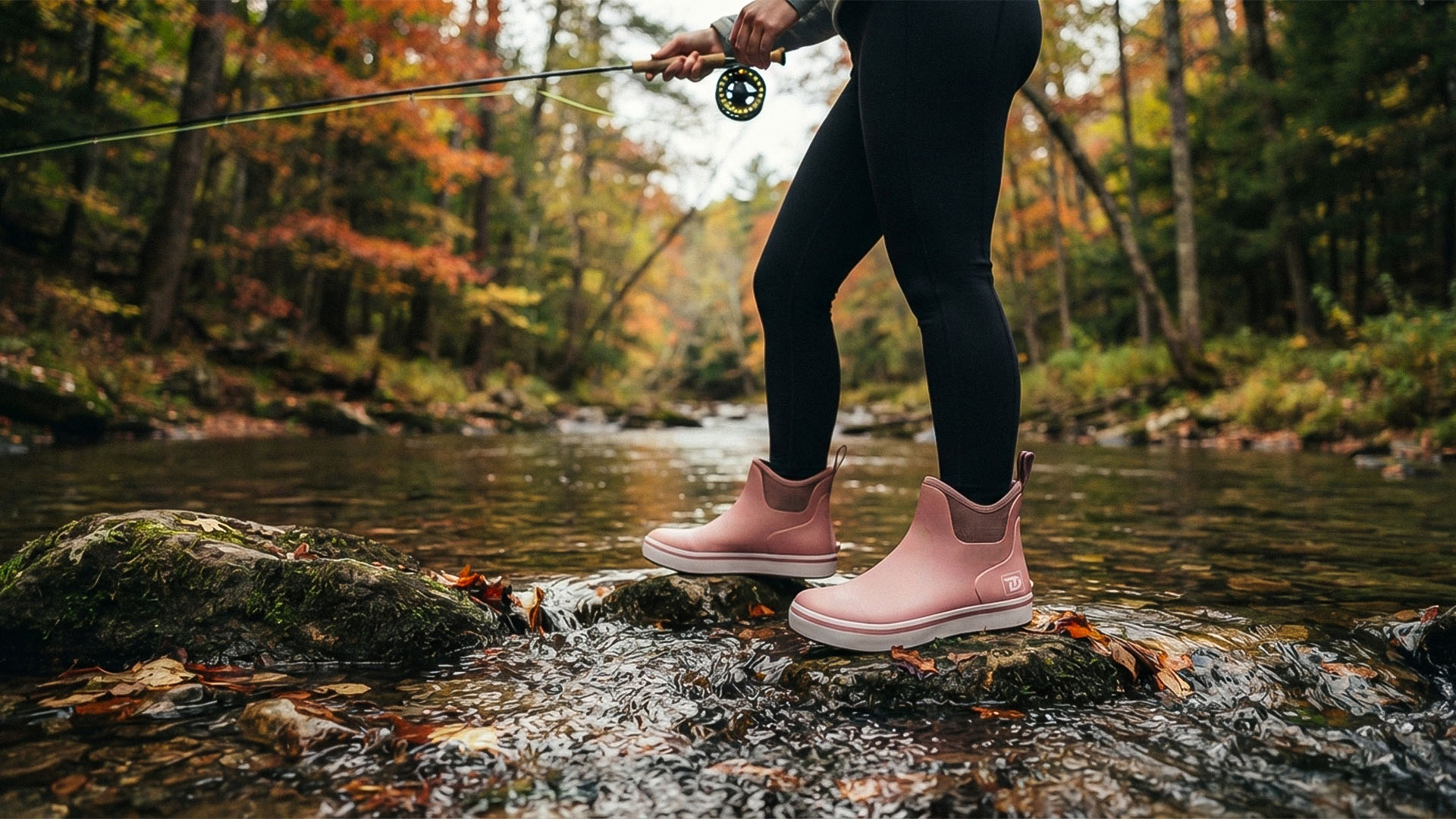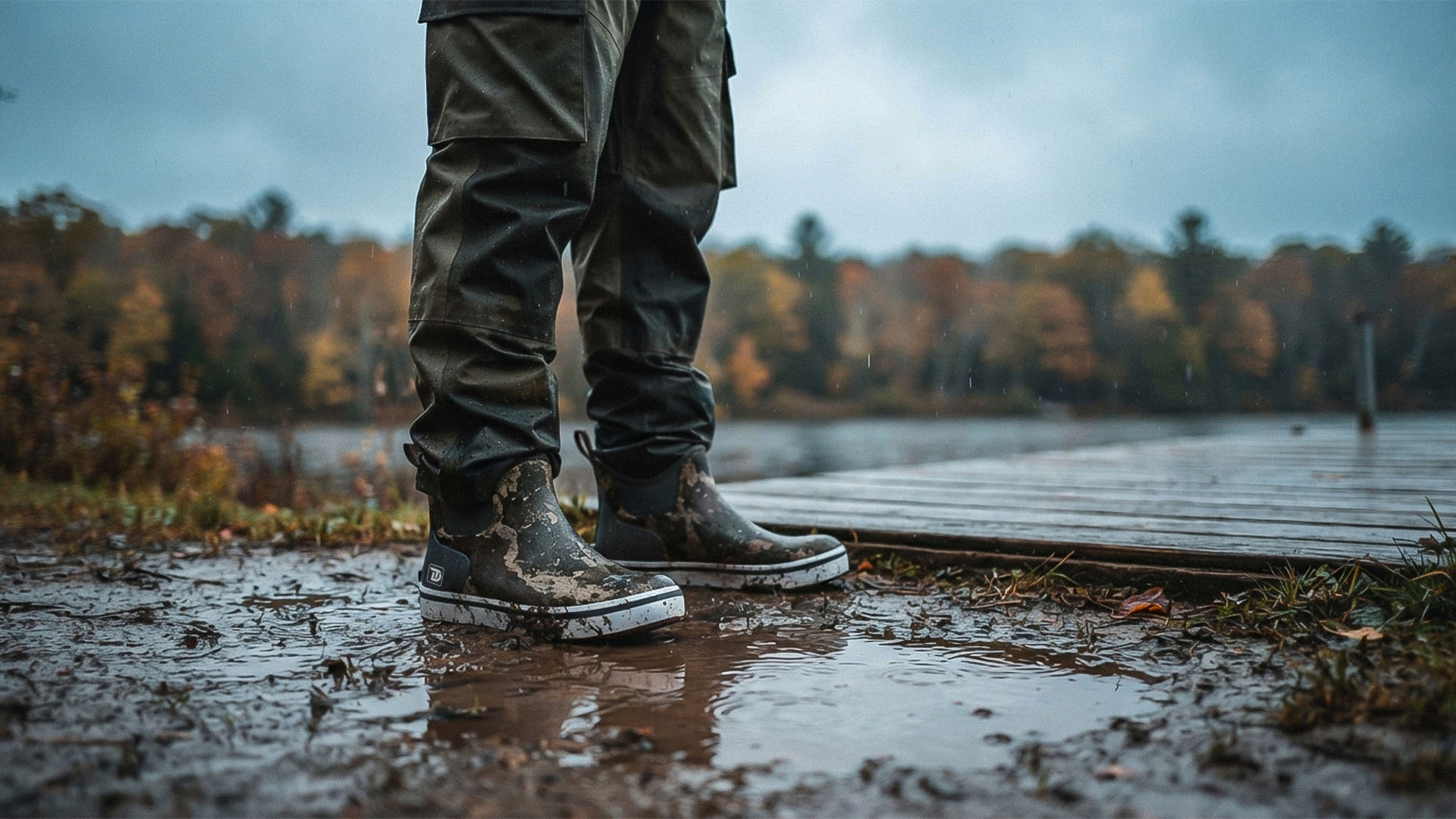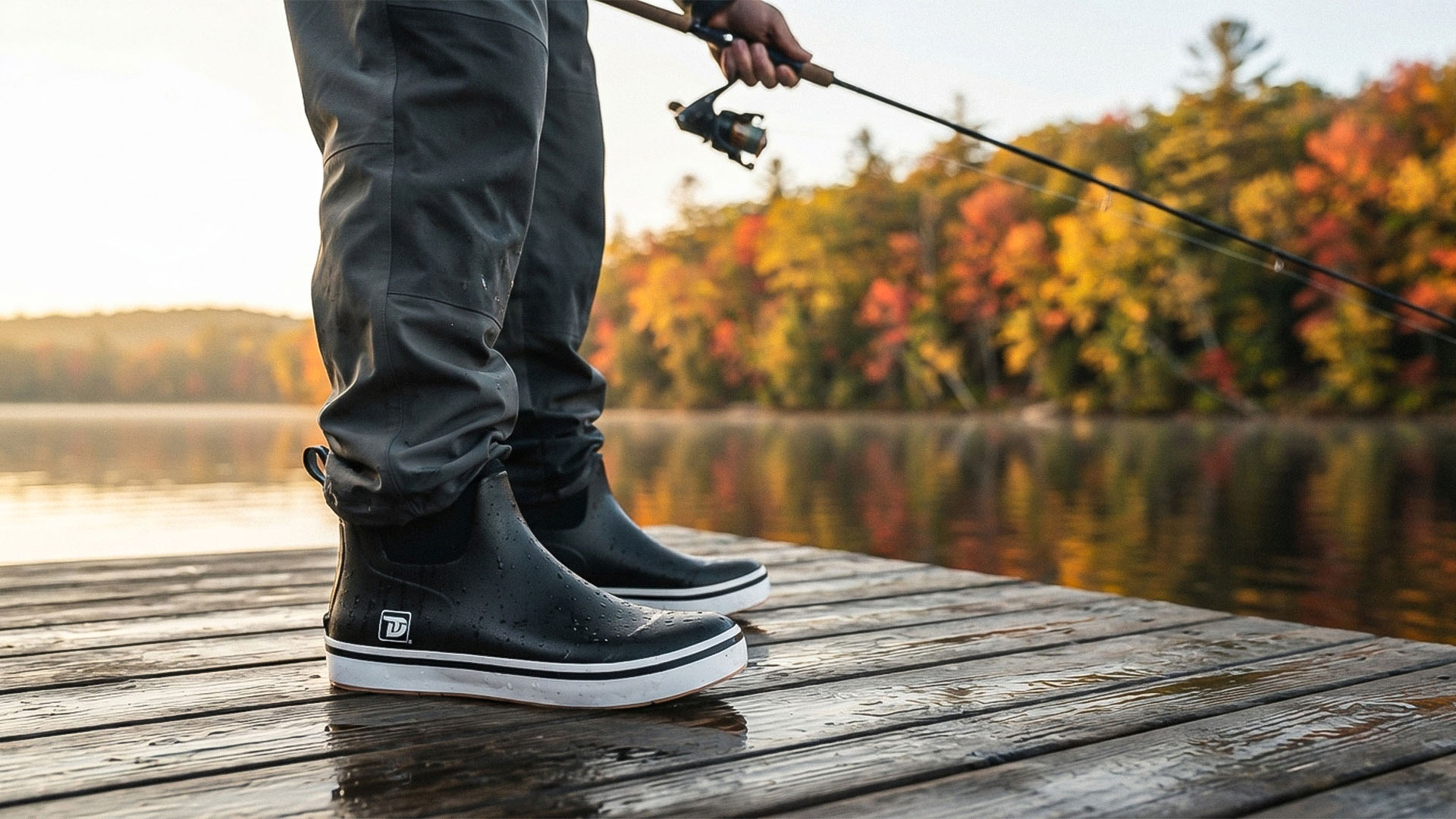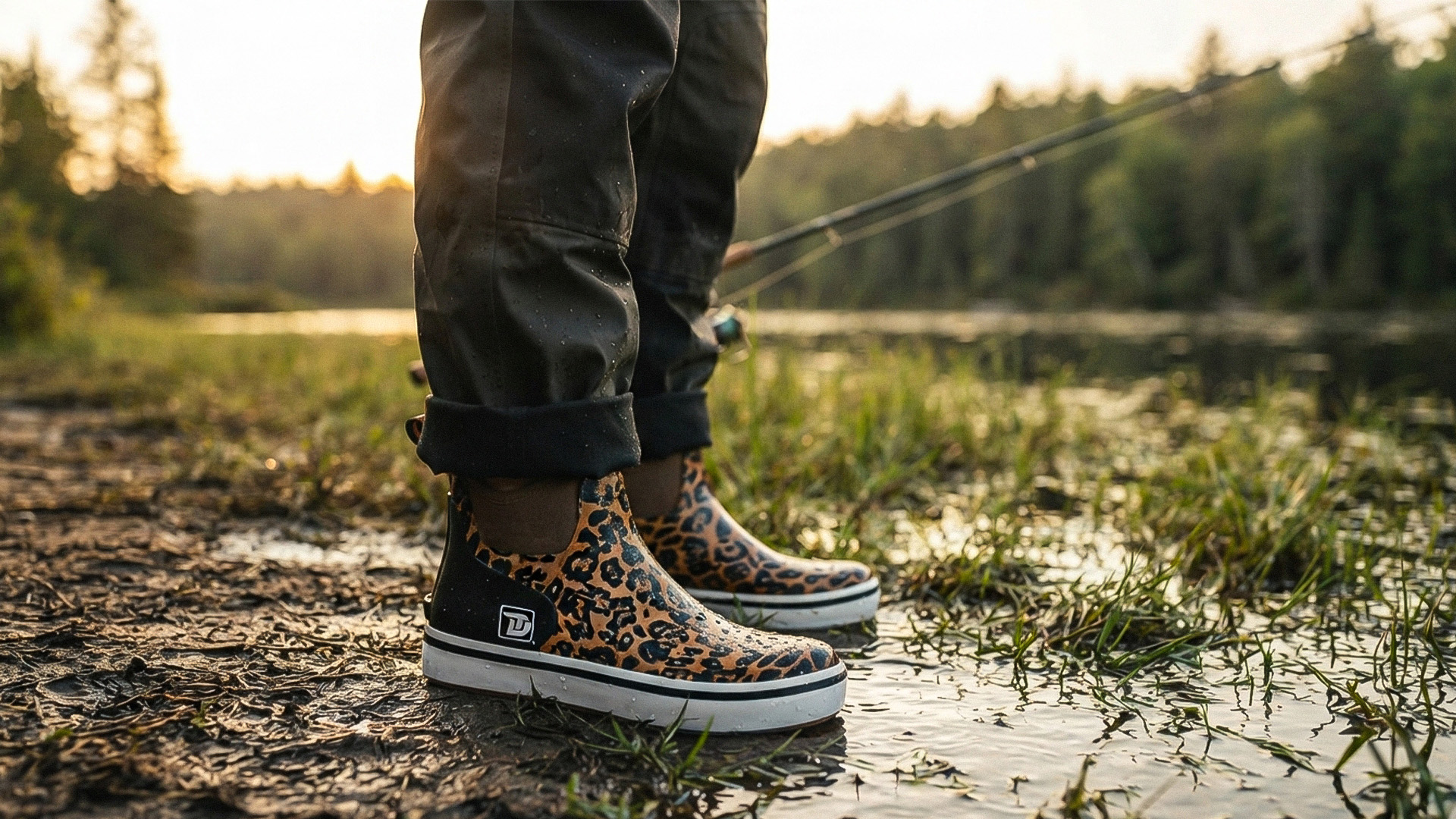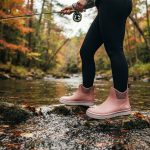
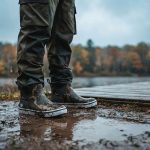
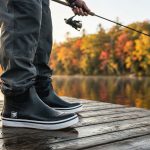
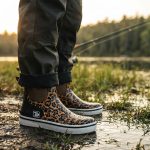
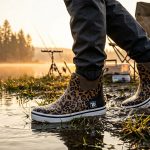
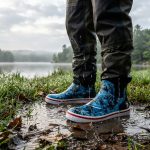
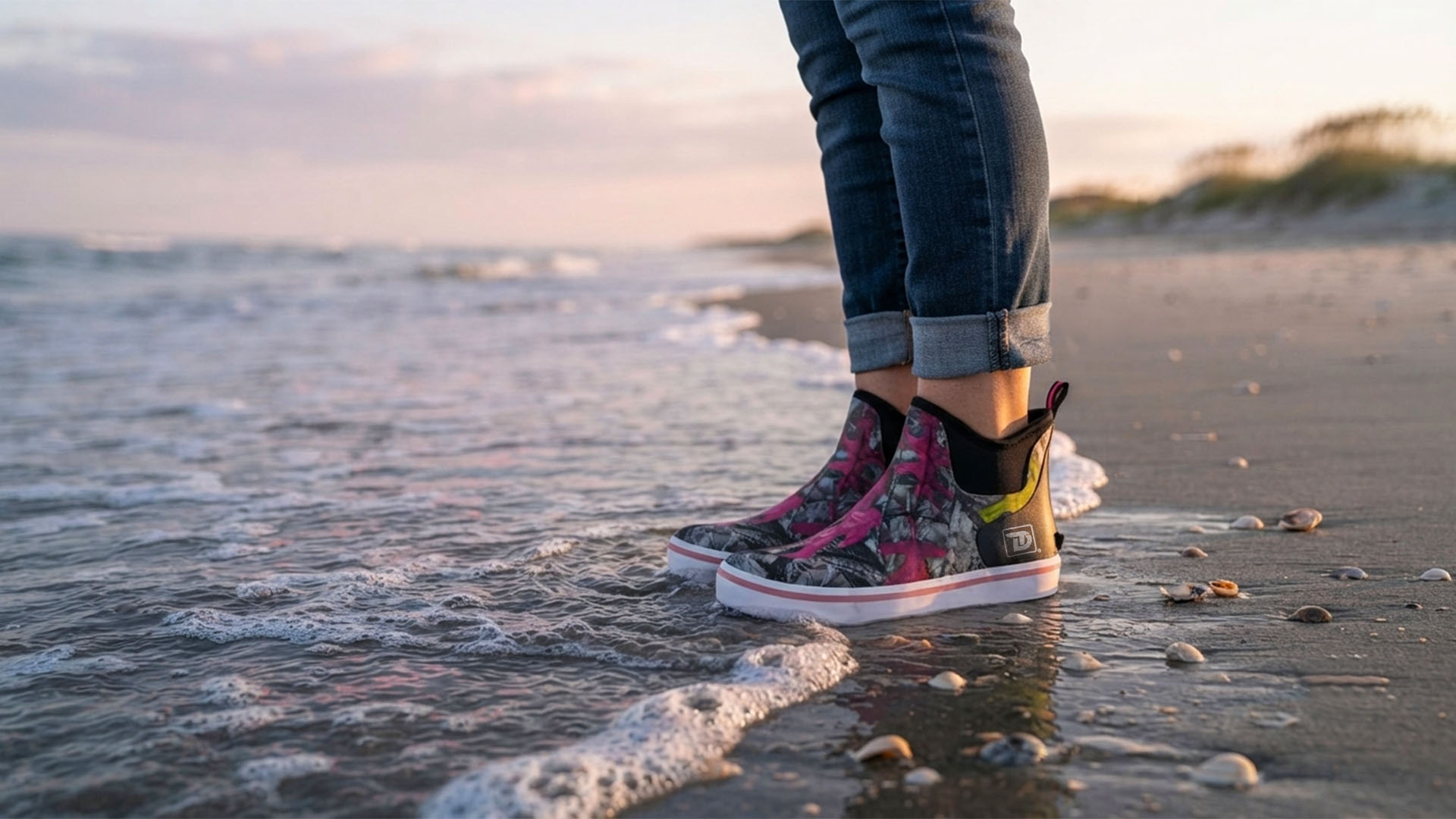
A drift boat may look much drier and cleaner than an offshore fishing boat, but that does not mean ordinary shoes are always the best footwear.
River spray, rain, wet anchor rope, muddy launches, fish slime, cold morning temperatures, and water carried into the boat by anglers can leave the floor damp for most of the day.
Add several hours of standing, casting, rowing, and moving between fishing positions, and footwear becomes an important part of river comfort.
The best deck boots for drift boat fishing should keep your feet dry during ordinary boat use, remain comfortable through long days, provide stable footing on wet hard surfaces, and work without interfering with fly line, rowing equipment, or limited boat space.
For anglers who remain primarily inside the boat, lightweight waterproof ankle deck boots can be an excellent alternative to heavy wading boots.
This guide explains when deck boots make sense for drift boat fishing, how they compare with wading boots and fishing shoes, what to wear in cold weather, and what features matter most for long days on rivers.
Why Drift Boat Fishing Creates Unique Footwear Needs
Drift boat fishing is different from both shore fishing and conventional powerboat fishing.
A typical day may include:
- Early-morning launch
- Muddy or gravel ramps
- Cold river spray
- Wet anchor rope
- Rain
- Fish handling
- Standing while casting
- Long periods of sitting
- Getting in and out of the boat
- Walking around boat ramps
- Moving through shallow shoreline areas
You may spend eight or more hours inside the boat without ever intentionally stepping into deep water.
That makes waterproof ankle footwear a practical option.
What Is a Drift Boat?
A drift boat is a river-oriented boat designed to move efficiently through current.
They are commonly associated with:
- Fly fishing
- Trout fishing
- Steelhead fishing
- Salmon fishing
- River guiding
Many drift boats have open interiors with relatively low sides and flat or textured floors.
Even without ocean spray, water can enter from:
- Wet anglers
- Landing fish
- Rain
- Anchor rope
- Oars
- Shoreline stops
The floor may remain damp throughout the day.
Why Deck Boots Work Well in Drift Boats
Deck boots can be useful because they combine:
- Waterproof construction
- Low-profile design
- Closed-toe coverage
- Easy-clean exterior
- Comfortable standing support
- Quick pull-on convenience
Compared with traditional wading boots, deck boots may be:
- Lighter
- Less bulky
- Easier to clean
- More comfortable inside the boat
- Better for anglers who do not plan to wade
Anglers comparing waterproof fishing footwear can evaluate TruDaveGear deck boots alongside other river-oriented footwear based on fit, outsole design, cushioning, removable insoles, boot height, and expected fishing conditions.
Deck Boots Are Best When You Stay in the Boat
The biggest question is whether you plan to wade.
Deck boots work best when:
- You launch from a dock or shallow ramp
- You remain inside the boat
- Water stays below the boot opening
- Shore stops are relatively dry
- You primarily need rain and splash protection
They are less appropriate when:
- You regularly wade deep water
- You cross river channels on foot
- You fish from submerged rocks
- You need aggressive river-bottom traction
A waterproof ankle boot only keeps water out below the top opening.
If water rises above the collar, it enters the boot and stays there.
Deck Boots vs. Wading Boots
These two types of footwear solve very different problems.
Deck Boots
Designed primarily for:
- Wet boat floors
- Docks
- Rain
- Spray
- Muddy ramps
- Hard surfaces
Advantages:
- Lightweight
- Waterproof
- Easy to rinse
- Comfortable inside boats
- Easy to put on
Wading Boots
Designed primarily for:
- River bottoms
- Rocks
- Current
- Gravel
- Wading
Advantages:
- Better support on uneven terrain
- More aggressive traction
- Better compatibility with waders
- More protection around rocks
If you plan to spend most of the day standing inside a drift boat, deck boots may be more comfortable.
If you plan to spend significant time standing in the river, wading boots are the correct tool.
Deck Boots vs. Fishing Shoes
Fishing shoes are another option.
They may provide:
- Better airflow
- Lower weight
- Quick drying
- More sneaker-like feel
However, they may allow your socks to get wet during:
- Rain
- Boat spray
- Wet launches
- Anchor handling
Deck boots are better when keeping feet dry is the priority.
Fishing shoes are better when airflow and drainage matter more.
Cold Mornings Make Waterproof Boots Valuable
Many river fishing trips begin early.
Even during warmer seasons, a morning launch may be:
- Cold
- Damp
- Foggy
- Windy
River water itself may also be cold.
A small amount of water entering ordinary shoes can make your feet uncomfortable for hours.
Waterproof deck boots help keep cold exterior moisture away from your socks.
This can make early-morning river trips much more comfortable.
Sock Choice Matters in Cold Conditions
For cool weather, choose socks made from:
- Merino wool
- Synthetic performance fibers
- Merino-synthetic blends
Avoid cotton.
Cotton absorbs moisture and dries slowly.
A medium-weight merino sock can work well inside uninsulated deck boots during cool mornings.
For warmer afternoons, avoid overly thick socks that cause sweating.
Insulated vs. Uninsulated Boots for River Fishing
Uninsulated Deck Boots
Best for:
- Spring
- Summer
- Early fall
- Mild winters
- Active anglers
- Multi-season use
Insulated Deck Boots
Better for:
- Winter steelhead trips
- Very cold mornings
- Late-season river fishing
- Long days in low temperatures
For most anglers, uninsulated deck boots provide more versatility.
Warmth can be adjusted with socks.
Built-in insulation cannot be removed when the afternoon becomes warm.
Steelhead Drift Boat Fishing
Steelhead fishing often involves colder conditions.
Trips may include:
- Winter rain
- Cold rivers
- Snow
- Muddy launches
- Long periods of standing
Deck boots can work well for anglers remaining in the boat.
Look for:
- Waterproof construction
- Good sock compatibility
- Stable cushioning
- Enough toe room
- Secure heel fit
If you expect to wade between runs, use appropriate wading footwear instead.
Trout Fishing From a Drift Boat
Trout drift boat fishing often takes place in milder conditions.
You may spend much of the day:
- Casting
- Mending line
- Changing flies
- Standing inside the boat
- Moving between seats
Lightweight deck boots can provide useful water protection without the bulk of wading boots.
They are particularly practical during rainy spring conditions.
Salmon River Fishing
Salmon trips may involve larger fish and wetter working areas.
Landing fish can introduce:
- Water
- Fish slime
- Blood
- Wet nets
onto the boat floor.
Waterproof deck boots are easier to rinse than fabric shoes.
However, anglers who repeatedly step into the river should use proper wading footwear.
Fly Line Management Matters
Fly anglers need to think about more than traction.
Loose fly line may gather around your feet during casting.
Bulky boots with aggressive tread can potentially catch line more easily than smoother low-profile footwear.
Inside a drift boat, look for a boot with:
- Clean outsole design
- Limited unnecessary projections
- Secure fit
- Compact profile
Keep fly line organized regardless of footwear.
A stripping basket, line mat, or clean floor can help.
Do Not Stand on Fly Line
Stepping repeatedly on fly line may:
- Damage coatings
- Trap dirt
- Create tangles
- Reduce line life
Keep excess line away from your boots when possible.
If the floor is muddy or gritty, clean it.
Dirt pressed into fly line by footwear can cause additional wear.
Wet Anchor Rope
Anchor rope is another common source of water.
Every time an anchor is retrieved, wet rope may bring river water into the boat.
This can create damp areas around:
- Stern
- Anchor system
- Rowing station
Deck boots help protect feet from this water.
However, rope should be organized so it does not become a tripping hazard.
Never stand inside loose rope loops.
Muddy River Ramps
Launching a drift boat may involve:
- Mud
- Gravel
- Wet concrete
- Sand
- River sediment
Deck boots are useful because they can be rinsed after stepping through shallow mud.
Before entering the boat, remove heavy mud from the outsole.
Mud packed into tread can reduce traction on hard boat flooring.
It can also grind dirt into fly line.
Gravel Boat Ramps
Gravel may become trapped in outsole grooves.
Before stepping onto a drift boat:
- Check the tread
- Remove larger stones
- Brush away loose gravel
This can help protect:
- Boat floors
- Foam pads
- Fly line
- Other gear
A dedicated boot brush near the vehicle can make this easy.
Wet Wood and Boat Floors
Some drift boats have:
- Painted floors
- Aluminum floors
- Composite interiors
- Rubberized flooring
- Wood components
All can become slippery when wet.
A good deck boot should provide predictable contact on hard wet surfaces.
Look for:
- Flexible rubber
- Broad contact area
- Water channels
- Stable heel platform
No footwear is completely slip-proof.
Keep the boat floor free of mud, slime, and loose tackle.
Fish Slime in a Drift Boat
Trout, salmon, and steelhead may leave water and slime after landing.
Use a landing area that keeps fish and equipment controlled.
When possible:
- Keep fish in the net
- Minimize time on the floor
- Rinse slime after handling
- Avoid leaving fish in walking areas
Deck boots clean easily, but preventing the mess is still better.
Catch-and-Release Considerations
Many drift boat fisheries practice catch and release.
Fish handling should prioritize minimizing stress and protecting the fish.
Keep fish wet whenever possible and follow local best practices.
Your footwear should not come into unnecessary contact with fish.
Deck boots are for protecting your feet—not pinning or controlling fish.
Long Standing Requires Cushioning
Drift boat anglers may stand for hours while casting.
That creates constant load on:
- Heel
- Forefoot
- Arch
- Knees
A good deck boot should offer:
- Stable cushioning
- Supportive footbed
- Secure heel
- Comfortable toe box
Very thin footwear may become uncomfortable during a long river day.
Removable Insoles Are a Strong Advantage
Removable insoles help with:
- Cushioning replacement
- Drying
- Odor control
- Cleaning
- Support customization
River boots may become damp inside from sweat even when no water enters.
Removing the insole after a trip allows the boot to dry faster.
Plantar Fasciitis and Long Drift Boat Days
Anglers with recurring heel discomfort may find long standing especially tiring.
Look for footwear with:
- Stable heel cushioning
- Supportive footbed
- Removable insoles
- Secure fit
Aftermarket insoles may help if they fit correctly.
Avoid overly soft cushioning that collapses under long standing.
Persistent foot pain should be evaluated by a qualified professional.
Wide Feet
Wide-footed anglers should prioritize actual width rather than simply buying a longer size.
Look for:
- Roomy forefoot
- Comfortable toe box
- Secure heel
- Enough instep volume
A boot that is too long may create:
- Heel slip
- Foot rotation
- Increased fatigue
Choose the shape that fits your foot.
High Instep
Pull-on deck boots can feel tight over high insteps.
Signs include:
- Pressure across the top of the foot
- Numbness
- Difficulty pulling the boot on
- Difficulty removing it
Look for:
- More internal volume
- Functional pull tabs
- Removable footbed
- Comfortable opening
Do not expect molded waterproof boots to stretch significantly.
Heel Slip
Some heel movement is normal in pull-on deck boots.
Too much movement can cause:
- Blisters
- Sock sliding
- Foot fatigue
- Reduced stability
Test new boots indoors with:
- Walking
- Side steps
- Squatting
- Stairs
Do not make a full-day float your first test.
Boot Height for Drift Boats
Ankle Deck Boots
Best for:
- Most drift boat fishing
- Mild weather
- Easy movement
- Long standing
- Boat-only use
Mid-Height Boots
Better for:
- More rain
- Colder conditions
- Wetter boat floors
- More launch exposure
Tall Boots
Usually unnecessary inside the boat unless conditions involve heavy water or specialized work.
Lower boots are often more comfortable when spending all day casting.
Summer Drift Boat Fishing
For summer trips, choose:
- Uninsulated boots
- Lightweight socks
- Ankle-height design
- Removable insoles
Waterproof footwear can become warm.
If the weather is extremely hot and the boat stays dry, fishing shoes may be more comfortable.
Rainy River Days
Deck boots are especially useful during rain.
They pair well with:
- Waterproof jacket
- Rain pants
- Fishing bibs
Keep rain-pant legs outside the boot opening.
This allows water to run down the exterior rather than into the boots.
A waterproof boot filled from the top is no longer useful.
Snowy River Trips
Winter river fishing may involve snow and ice around:
- Parking areas
- Ramps
- Docks
- Shoreline paths
Standard deck boots are not automatically winter traction boots.
Wet-deck tread may not perform well on ice.
Use footwear and traction appropriate for icy surfaces and follow local safety guidance.
Drift Boat Guides and Frequent Users
Guides may spend several days each week on the river.
For frequent use, prioritize:
- Durable outsole
- Comfortable footbed
- Removable insoles
- Easy-clean materials
- Secure fit
- Fast drying
Frequent users should inspect tread and cushioning regularly.
A boot that feels fine for occasional fishing may wear quickly under daily guide use.
Deck Boots for Rowers
If you row the drift boat, footwear needs slightly change.
Your feet may brace against:
- Foot bar
- Interior supports
- Floor
Look for:
- Secure heel
- Flexible forefoot
- Comfortable instep
- Manageable bulk
A large or sloppy boot can feel awkward during repeated rowing movements.
Test Rowing Position Before a Trip
If possible, sit in the rowing position while wearing your intended boots.
Check:
- Foot clearance
- Heel position
- Ankle comfort
- Contact with foot braces
A boot that is comfortable while standing may feel different when rowing for hours.
Boat Entry and Exit
Getting into and out of a drift boat can involve awkward surfaces.
Take care around:
- Wet ramps
- Gravel
- Shoreline rocks
- Trailer steps
Deck boots are useful on hard wet surfaces, but they are not hiking or wading footwear.
If access requires climbing across uneven rocky terrain, use footwear suited to that environment.
Deck Boots vs. Hiking Shoes for River Trips
Hiking shoes may be better when the trip includes:
- Long walks
- Steep access
- Rocky banks
- Portages
Deck boots are better when the day is primarily:
- Boat-based
- Wet
- Muddy
- Rainy
Some anglers keep separate walking shoes in the vehicle and change into deck boots at the ramp.
Deck Boots vs. Waders
Waders provide much more water protection.
Choose waders when you expect to:
- Stand in water
- Cross shallow sections
- Launch in deeper water
- Fish from shore after exiting the boat
Deck boots are a simpler choice for anglers staying onboard.
Do not treat short waterproof boots as a replacement for waders.
Clean Shoes for the Drive Home
River trips often leave boots covered with:
- Mud
- Water
- Fish slime
- gravel dust
Bring clean shoes for the drive home.
Keep dirty deck boots in:
- Rubber tray
- Plastic tote
- Cargo liner
This keeps river mud out of the vehicle.
Cleaning Drift Boat Deck Boots
After fishing:
- Rinse mud with fresh water.
- Brush the outsole.
- Remove fish residue.
- Wipe the upper.
- Remove insoles.
- Dry everything separately.
If the trip involved saltwater or brackish water, rinse thoroughly.
For freshwater trips, mud and organic residue are the main cleaning concerns.
Drying Boots Properly
Remove the insoles before drying.
Use:
- Room-temperature airflow
- Ventilated storage
- Compatible low-heat boot dryer if allowed
Avoid:
- Clothes dryers
- Heat guns
- Radiators
- Open flames
High heat can damage waterproof materials, adhesives, foam, and boot shape.
Odor Control
River footwear can still develop odor even without saltwater.
Common causes include:
- Sweat
- Damp insoles
- Mud
- Fish slime
- Wet storage
To control odor:
- Wear moisture-wicking socks
- Remove insoles
- Dry completely
- Clean fish residue
- Avoid sealed wet storage
Do not leave damp boots inside a vehicle for several days.
Best Deck Boot Features for Drift Boat Fishing
Look for:
Waterproof Construction
Useful around wet floors, rain, and launch water.
Lightweight Ankle Height
Keeps the boot compact inside the boat.
Stable Wet-Surface Outsole
Useful on hard river-boat floors.
Secure Heel
Improves standing and rowing comfort.
Comfortable Cushioning
Important during long casting sessions.
Removable Insoles
Improves drying and support customization.
Easy-Clean Exterior
Helpful after mud and fish handling.
Flexible Forefoot
Useful for rowing, standing, and movement.
Good Sock Compatibility
Allows seasonal adjustments.
Drift Boat Footwear Checklist
Before the trip:
- Determine whether you will wade
- Check weather
- Inspect boot tread
- Test fit with fishing socks
- Confirm boots are dry
- Bring spare socks
- Check rain gear
- Bring appropriate wading footwear if needed
After the trip:
- Rinse mud
- Remove gravel
- Clean fish residue
- Brush tread
- Remove insoles
- Dry completely
Common Drift Boat Footwear Mistakes
Wearing Wading Boots All Day When You Never Wade
Heavy footwear may create unnecessary fatigue.
Wearing Deck Boots When Deep Wading Is Planned
Short waterproof boots are not wading boots.
Wearing Cotton Socks
Cotton stays damp and uncomfortable.
Buying Boots Too Loose
Loose footwear reduces stability while casting.
Ignoring Fly Line Around the Feet
Boots can step on or trap loose line.
Bringing Mud Onto the Boat
Mud reduces traction and contaminates gear.
Ignoring Cold Morning Conditions
Wet sneakers can become uncomfortable quickly in cold air.
Wearing Heavy Insulated Boots in Summer
Overheating creates sweat and odor.
Leaving Insoles Inside Damp Boots
Drying takes much longer.
Assuming Deck Boots Work on Ice
Wet-deck traction does not guarantee winter traction.
Final Thoughts
Drift boat fishing creates an ideal middle ground for deck boots.
You may not need heavy wading footwear, but your feet still deal with wet floors, rain, muddy launches, cold morning spray, anchor rope, fish slime, and long hours of standing.
For anglers who remain primarily inside the boat, lightweight waterproof ankle deck boots can provide a comfortable alternative to bulky wading boots.
Choose footwear with a stable wet-surface outsole, secure heel, comfortable toe box, flexible forefoot, removable insoles, and enough cushioning for all-day casting.
Wear synthetic or merino-blend socks instead of cotton.
Choose uninsulated boots for most mild-weather trips and adjust warmth with socks.
If you plan to wade, bring proper wading footwear rather than trying to make ankle deck boots do a job they were not designed for.
Keep mud, loose fly line, anchor rope, and fish slime under control inside the boat.
After the trip, rinse the boots, brush the outsole, remove the insoles, and dry everything completely.
The best drift boat footwear should keep your feet dry and comfortable while staying out of the way of your casting, rowing, and fishing.
When your boots are doing their job, your attention stays where it belongs—on the next seam, the next rise, and the next fish holding downstream.
Frequently Asked Questions
Are deck boots good for drift boat fishing?
Yes. Deck boots are a strong choice for anglers who stay primarily inside the boat and need waterproof protection from wet floors, rain, and muddy launches.
Should I wear deck boots or wading boots in a drift boat?
Wear deck boots if you mostly stay onboard. Choose wading boots if you plan to spend significant time standing or walking in the river.
Are deck boots good for fly fishing from a boat?
Yes. Low-profile waterproof deck boots can work well for boat-based fly fishing when they fit securely and do not interfere with fly line.
Can I wade in ankle deck boots?
Only in very shallow water below the boot opening. For real wading, use appropriate wading footwear.
What socks should I wear with drift boat deck boots?
Synthetic or merino-blend moisture-wicking socks are good choices. Avoid cotton.
Are insulated deck boots good for drift boat fishing?
They can be useful in very cold weather, but uninsulated boots are more versatile for spring, summer, and fall.
Are deck boots good for winter steelhead fishing?
They can work inside the boat, but icy ramps and serious cold may require more specialized footwear and cold-weather gear.
Can I wear sneakers in a drift boat?
Yes in dry weather, but sneakers can become wet from rain, anchor rope, muddy launches, and fish handling.
Are deck boots good for rowing a drift boat?
Yes, provided they have a secure heel, flexible forefoot, and do not interfere with foot braces or the rowing position.
Do deck boots damage fly line?
They can step on or trap fly line like any footwear. Keep line organized and avoid standing on it, especially when mud or gravel is present.
Are deck boots good on aluminum drift boats?
Yes. Marine-style deck boots can work well on wet aluminum when their tread is clean and in good condition.
Are deck boots good on muddy river ramps?
They are useful for shallow mud and wet ramps, but very deep mud may require taller footwear.
Should drift boat boots have removable insoles?
Yes. Removable insoles improve drying, odor control, cushioning replacement, and support customization.
How should drift boat deck boots fit?
They should hold the heel securely, allow natural toe movement, and remain comfortable during standing, casting, rowing, and side steps.
How do I clean deck boots after river fishing?
Rinse mud, brush the outsole, remove fish slime, take out the insoles, and allow the boots and footbeds to dry separately.
Are deck boots good for trout guides?
They can be, especially for guides who spend most of the day inside the boat. Frequent users should prioritize comfort, durability, and replaceable insoles.
What is the biggest mistake when choosing drift boat footwear?
Using heavy wading footwear when you never leave the boat—or using short deck boots when significant river wading is planned—are two of the most common mistakes.