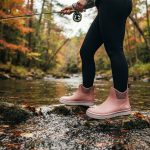
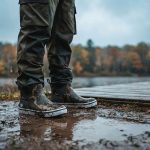
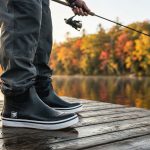
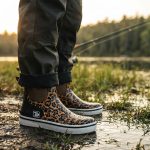
Kayak fishing creates a footwear problem that traditional boat anglers do not always have to think about.
On a center console or bass boat, the goal is often simple: keep your feet dry while standing on a wet deck.
Kayak anglers deal with something different.
You may launch through shallow water, drag a kayak across mud, step onto a wet ramp, sit with your feet inside a damp footwell, operate pedals for hours, and then step back into the water when returning to shore.
That means deck boots can be an excellent choice for some kayak fishing trips—and the wrong choice for others.
The best deck boots for kayak fishing should provide waterproof protection without feeling bulky around pedals or foot braces. They need a secure heel, flexible forefoot, manageable weight, and enough room for the socks you actually wear.
But if your fishing style regularly requires you to step into water deeper than the boot opening, quick-draining shoes or specialized cold-water footwear may be better.
This guide explains when deck boots work for kayak fishing, how to choose the right pair, and what anglers should consider before heading to the launch.
Why Kayak Fishing Footwear Is Different
Kayak anglers move between several environments during one trip.
Your footwear may encounter:
- Muddy shorelines
- Concrete ramps
- Wet docks
- Shallow water
- Sand
- Gravel
- Kayak footwells
- Pedal systems
- Fish slime
- Rain
- Lake water
- Saltwater
- Marsh grass
Unlike larger-boat fishing, getting your feet wet during launching may be difficult to avoid.
The best footwear depends on whether your goal is to keep water out or let water drain quickly.
That distinction is important.
When Deck Boots Make Sense for Kayak Fishing
Deck boots work best when you can launch without stepping into water above the boot opening.
They are especially useful for:
- Dry launches
- Dock launches
- Concrete ramps
- Cool-weather fishing
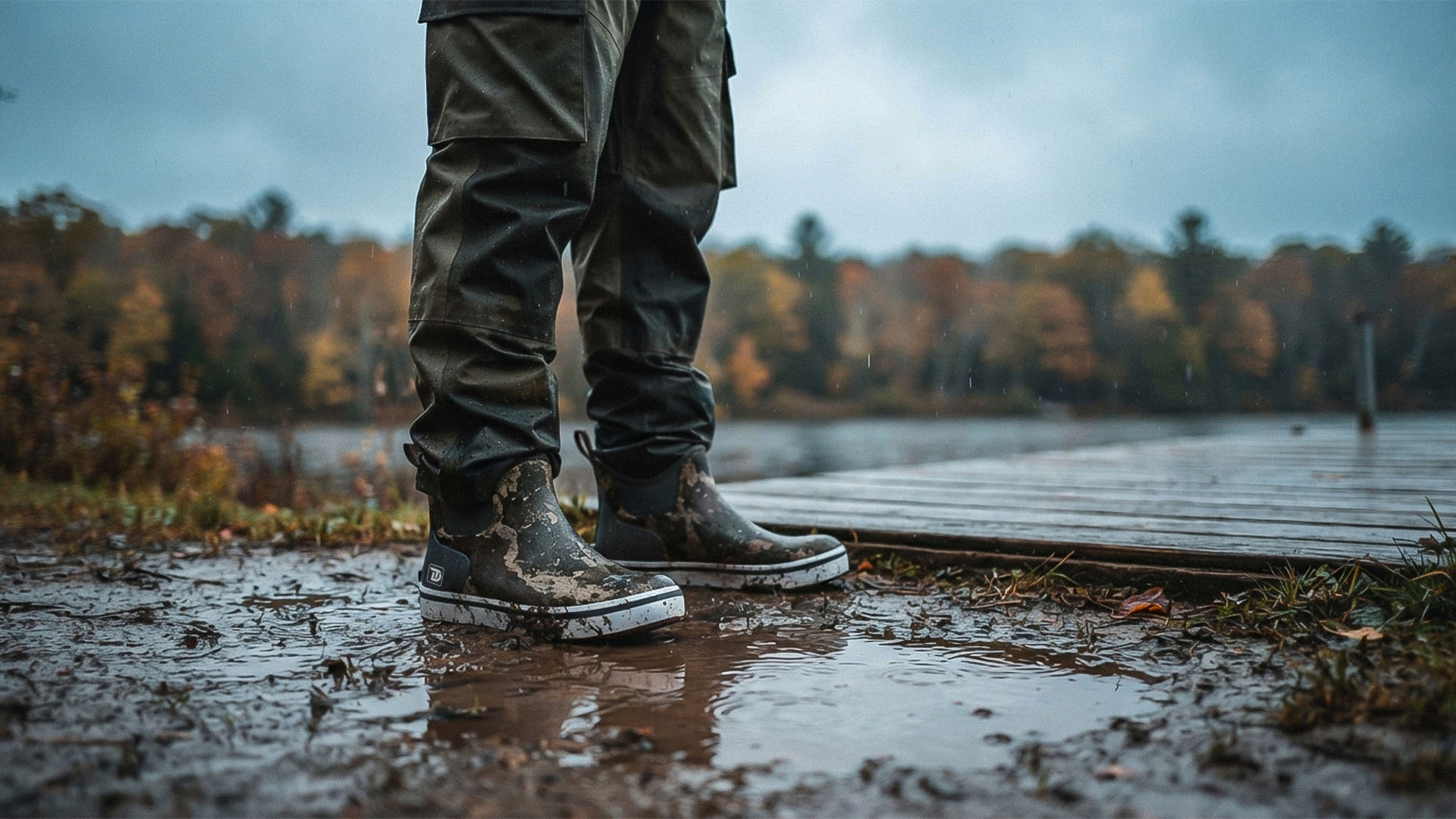
- Muddy shorelines
- Sit-on-top kayaks with relatively dry footwells
- Fishing from stable pedal kayaks
- Rainy conditions
For these situations, waterproof ankle deck boots provide a useful combination of water protection and easy cleanup.
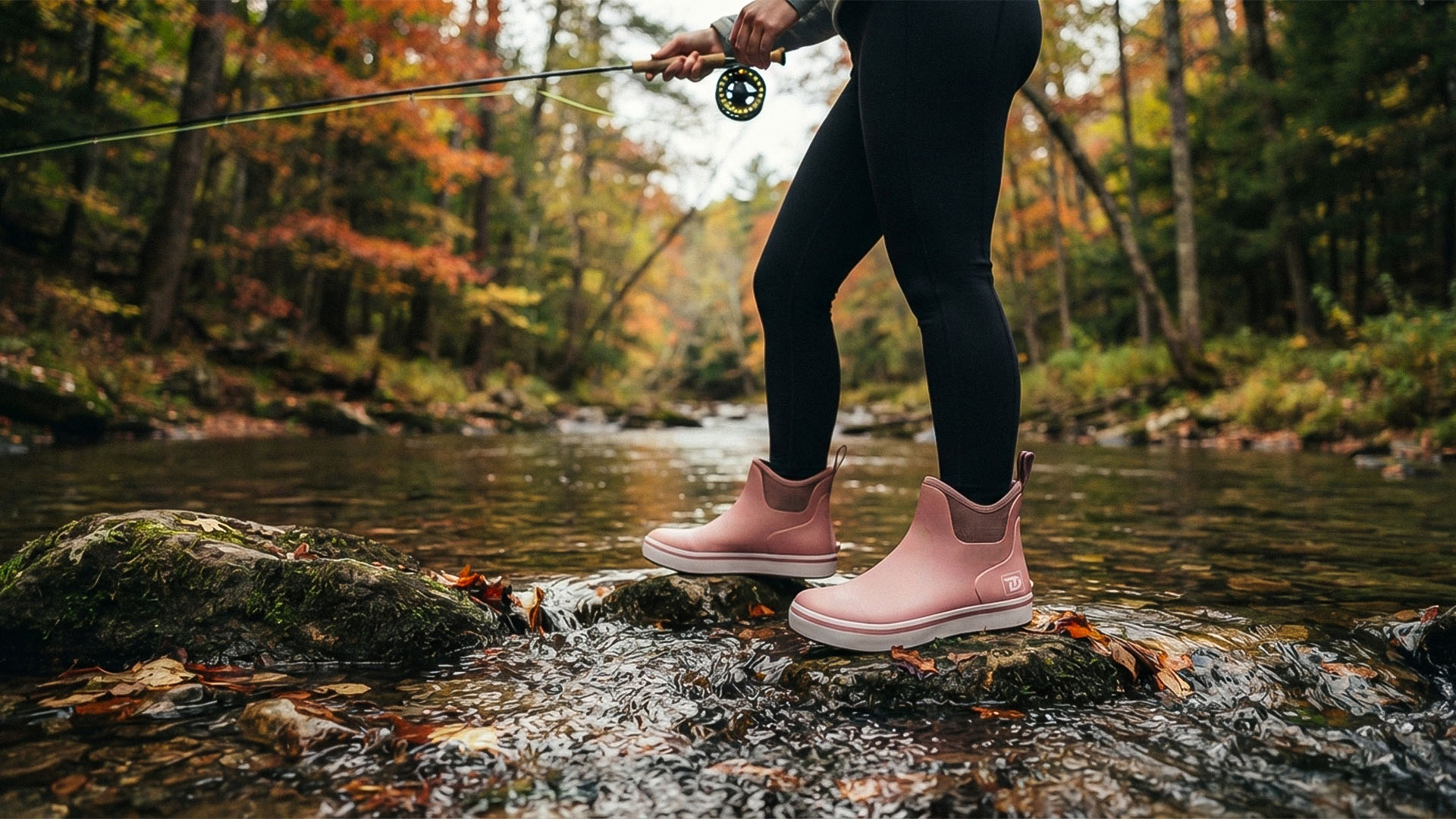
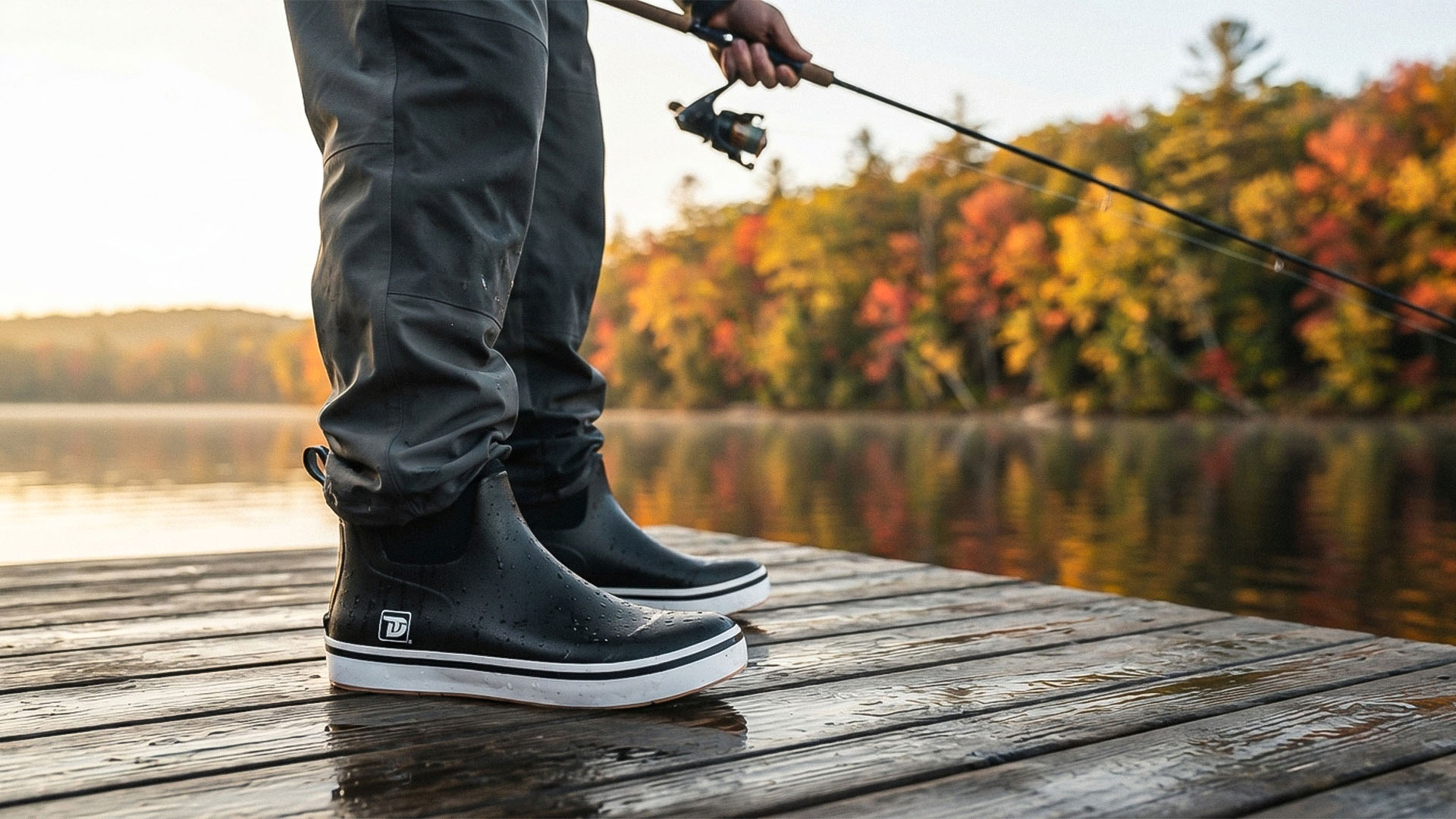
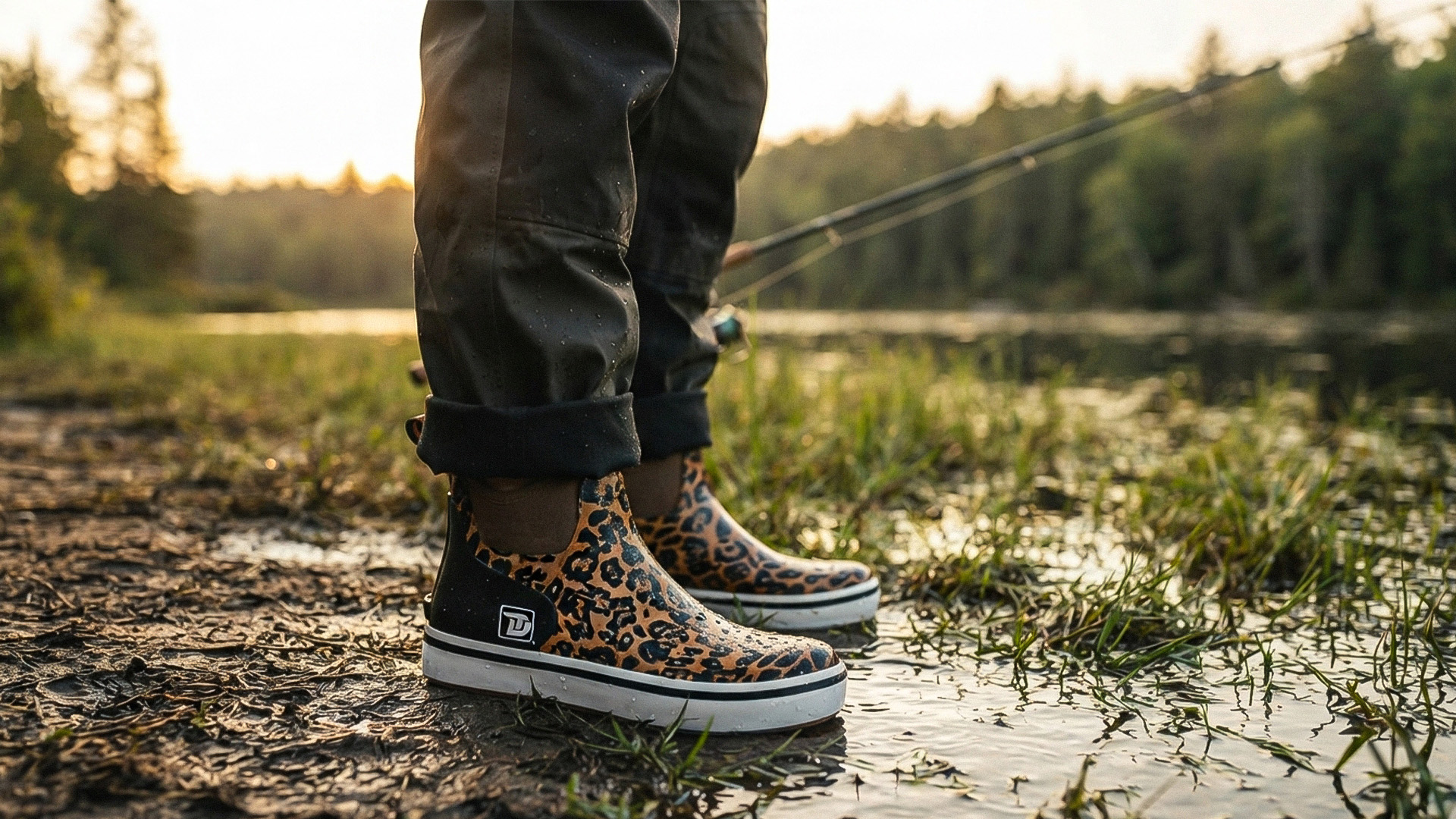
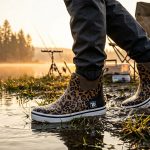
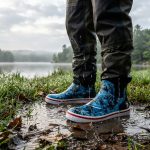
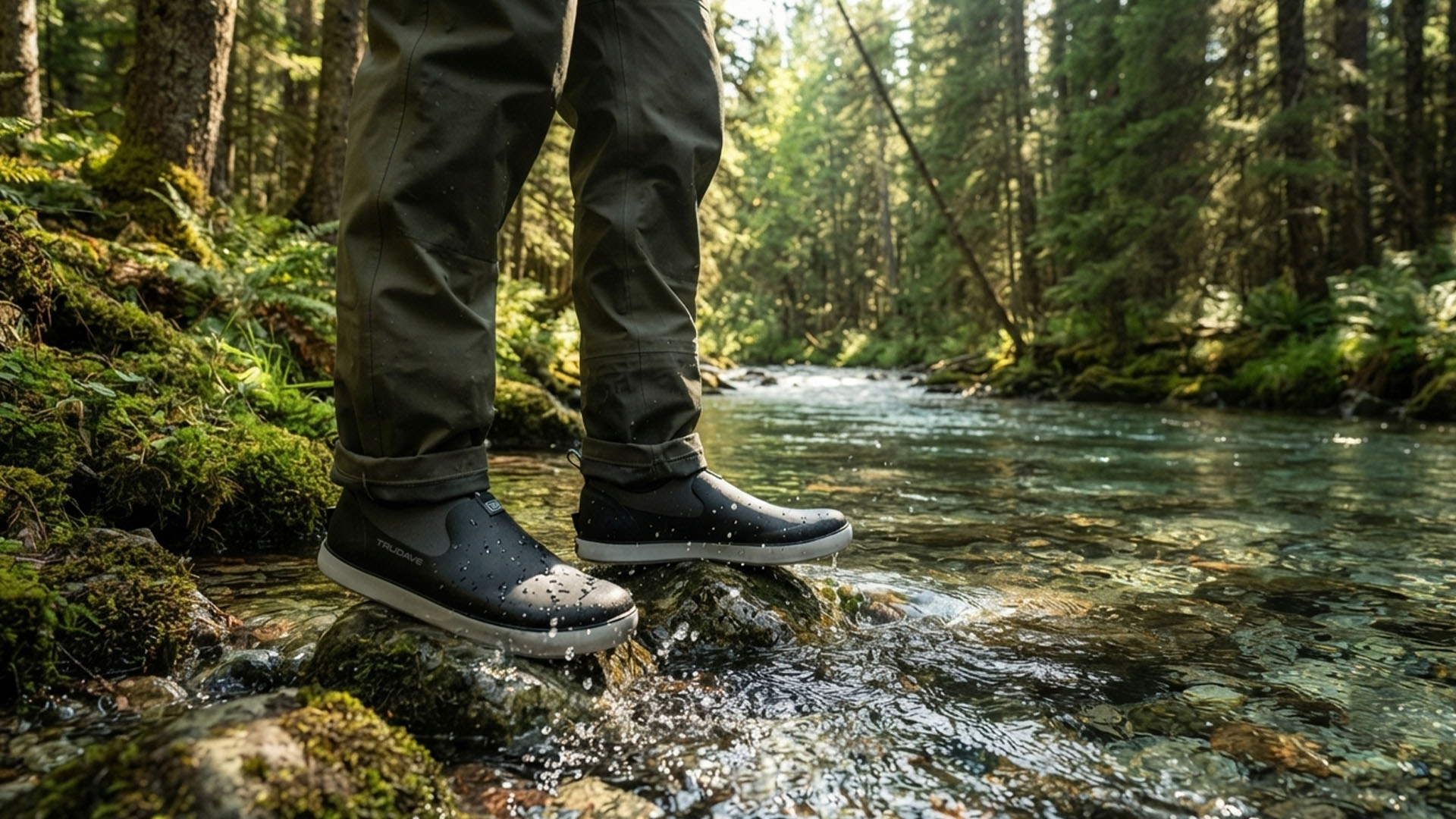
Anglers comparing waterproof fishing footwear can consider TruDaveGear deck boots alongside other kayak-friendly footwear based on flexibility, outsole design, boot height, fit, and expected launch conditions.
When Deck Boots Are Not the Best Choice
Deck boots are less practical when your feet will be repeatedly submerged above the boot opening.
Examples include:
- Deep wet launches
- Wading to launch
- Surf launches
- Repeated kayak entry and exit
- Wet-wading
- Deep marsh access
Once water enters a waterproof boot from the top, it stays inside.
That can make the boot:
- Heavy
- Uncomfortable
- Cold
- Difficult to drain
For these conditions, quick-draining fishing shoes, water shoes, or appropriate cold-water systems may be better.
Waterproof vs. Quick-Drain Footwear
This is the biggest decision for kayak anglers.
Waterproof Deck Boots
Designed to keep outside water away.
Best when:
- Water stays below the boot opening
- Weather is cool
- Mud is common
- Rain is expected
- Feet should remain dry
Quick-Drain Fishing Shoes
Designed to accept water and drain it.
Best when:
- Wet launching is expected
- Water entry is unavoidable
- Weather is hot
- You frequently step out of the kayak
Neither approach is universally better.
Choose based on how you actually launch and fish.
Sit-on-Top Kayaks
Sit-on-top kayaks are extremely popular for fishing.
They often have:
- Open decks
- Scupper holes
- Wet footwells
- Pedal systems
- Adjustable foot braces
Water may regularly enter the cockpit.
Deck boots can still work if the amount of water remains shallow.
Their waterproof exterior helps keep your socks dry from ordinary splash and footwell water.
However, if water repeatedly rises above the collar, quick-draining footwear becomes more practical.
Pedal Kayaks
Pedal kayaks create additional footwear requirements.
Your shoes or boots need to work comfortably with:
- Pedals
- Foot straps
- Pedal cranks
- Rudder controls
- Limited footwell space
Bulky boots can interfere with movement.
For pedal kayaks, look for deck boots with:
- Low-profile design
- Flexible forefoot
- Secure heel
- Manageable weight
- Comfortable ankle height
Before fishing, sit in the kayak on land and test the complete pedal motion.
Make sure the boot does not catch on equipment.
Flexible Forefoot Matters
Pedaling requires repeated foot flex.
A very stiff boot may create:
- Forefoot pressure
- Ankle fatigue
- Reduced pedal comfort
- Awkward movement
Look for controlled flexibility.
The boot should bend naturally near the ball of the foot without feeling unstable.
Too much stiffness may be especially noticeable after several hours of pedaling.
Heel Security
A secure heel matters in a kayak because your feet repeatedly push against pedals or foot braces.
Excessive heel slip may cause:
- Blisters
- Sock movement
- Foot fatigue
- Reduced pedal efficiency
- Collar rubbing
Some heel movement is normal in pull-on deck boots.
Large heel lift is not.
Test the boots with the exact socks you plan to wear.
Muddy Kayak Launches
Kayak launches are often less developed than traditional boat ramps.
You may launch from:
- Mud
- Grass
- Sand
- Gravel
- Clay banks
- Marsh edges
Deck boots are excellent for shallow mud because they are easy to rinse.
They protect everyday shoes from becoming coated with mud before fishing even begins.
However, very deep mud can pull at ankle boots.
If the mud reaches above the boot opening, taller footwear may be better.
Concrete Boat Ramps
Deck boots also work well around wet concrete ramps.
They protect against:
- Shallow puddles
- Mud
- Rain
- Ramp runoff
But algae-covered ramps remain dangerous.
No deck boot should be treated as completely slip-proof on submerged algae.
Move carefully and use stable handholds when available.
Gravel Launches
Gravel creates a different issue.
Small stones may become trapped in outsole grooves.
Before entering the kayak, inspect the soles.
Gravel can:
- Reduce traction
- Scratch kayak surfaces
- Damage softer deck pads
- Make pedals uncomfortable
Brush or rinse the boots when possible.
Cold-Morning Kayak Fishing
Deck boots become especially useful when temperatures drop.
Cold-water kayak fishing may involve:
- Chilly launches
- Cold footwell water
- Wind
- Rain
- Spray
- Long periods of limited movement
Waterproof boots help keep outside water away from socks.
This can significantly improve comfort compared with wet quick-draining shoes in cool conditions.
However, footwear alone is not enough protection for serious cold-water exposure.
Kayak anglers should use a complete cold-water safety system appropriate to conditions.
Cold Water Requires More Than Warm Boots
Cold-water kayaking creates risks that ordinary footwear cannot solve.
Depending on water temperature and conditions, anglers may need:
- Dry suits
- Appropriate thermal layers
- Personal flotation devices
- Proper cold-water training
- Emergency communication
- Safe launch planning
Deck boots should be considered one part of your fishing clothing—not a substitute for cold-water protection.
Summer Kayak Fishing
Hot summer fishing changes the equation.
Waterproof boots may feel warm because airflow is limited.
For hot-weather trips:
- Choose uninsulated boots
- Wear lightweight socks
- Use ankle-height footwear
- Avoid thick insoles
- Bring spare socks
If you expect to wet-launch, quick-draining shoes may be more comfortable than waterproof boots.
Best Socks for Kayak Deck Boots
Choose socks that manage moisture.
Good options include:
- Synthetic performance socks
- Lightweight merino wool
- Merino-synthetic blends
Avoid cotton.
Cotton holds moisture and dries slowly.
For cool-weather kayak fishing, medium-weight merino socks can provide extra warmth if the boot has enough room.
For summer use, choose thinner performance socks.
Do Not Force Thick Socks Into Tight Boots
Cold feet do not always mean you need thicker socks.
If thick socks make the boots too tight, circulation and comfort may decrease.
You should still be able to:
- Move your toes
- Flex your foot
- Pedal comfortably
- Walk normally
A warm sock works best when the boot has enough internal volume.
Ankle Deck Boots vs. Mid-Height Boots
Ankle Deck Boots
Best for:
- Pedal kayaks
- Warm to cool weather
- Dry launches
- Easy movement
- Compact footwells
Mid-Height Boots
Better for:
- More splash
- Rain
- Wetter launches
- Cooler conditions
For most kayak anglers, ankle-height boots provide better pedal compatibility.
Tall Rubber Boots and Kayaks
Tall rubber boots can be awkward in a kayak.
Potential disadvantages include:
- More weight
- Reduced ankle movement
- Pedal interference
- Heat
- Bulk
- Difficulty in confined footwells
They may still make sense around deep mud or very wet launches.
But for actual fishing from the kayak, lower-profile footwear is usually easier.
Deck Boots vs. Neoprene Kayak Boots
Neoprene boots are popular for wet kayak fishing.
Neoprene Footwear
Advantages:
- Works when wet
- Flexible
- Low profile
- Good for repeated water entry
Deck Boots
Advantages:
- Keeps feet dry when water stays below opening
- Easier to rinse
- Better for mud
- Useful around docks and ramps
Neoprene footwear is usually better for intentional wet use.
Deck boots are better when staying dry is realistic.
Deck Boots vs. Water Shoes
Water shoes are designed for wet conditions.
They often provide:
- Quick drainage
- Lightweight feel
- Flexibility
- Better summer comfort
But they provide less protection from:
- Mud
- Cold water
- Rain
- Fish slime
Deck boots are better when the launch is wet but your feet do not need to enter deep water.
Deck Boots vs. Hiking Shoes
Some kayak anglers wear hiking shoes because they provide excellent walking comfort.
They may work well for:
- Long portages
- Rocky shorelines
- Dry launches
But most hiking shoes are less convenient around:
- Mud
- Fish slime
- Wet footwells
- Boat cleaning
Deck boots rinse more easily.
Choose based on how much walking you expect.
Kayak Fishing From Marshes
Marsh fishing can involve:
- Mud
- Grass
- Shallow water
- Oyster shells
- Soft banks
Deck boots are useful on the kayak and around shallow mud.
However, standard deck boots are not designed as puncture-resistant oyster footwear.
If you must walk across shell beds or rough submerged terrain, use footwear designed for those conditions.
Saltwater Kayak Fishing
Saltwater adds maintenance requirements.
After fishing:
- Rinse boots with fresh water
- Clean salt from the outsole
- Remove fish slime
- Remove insoles
- Dry completely
Salt can build up around:
- Pull tabs
- Tread grooves
- Boot collars
- Sidewalls
A quick rinse after each trip makes long-term maintenance easier.
Freshwater Kayak Fishing
Freshwater boots still need cleaning.
They may collect:
- Mud
- Algae
- Grass
- Fish slime
- Lake water
- River sediment
Mud can harden in outsole grooves.
Clean it before the next trip, especially if you frequently fish from smooth kayak decks or stand during casting.
Standing in a Fishing Kayak
Some modern fishing kayaks are stable enough for standing.
If you stand to cast, your footwear becomes more important.
Look for a boot with:
- Stable outsole
- Secure fit
- Comfortable forefoot
- Predictable flex
Avoid loose footwear.
Your foot should control the boot when shifting weight.
Wet Kayak Decks
Kayak decks can become wet from:
- Paddle drip
- Pedal splash
- Fish handling
- Rain
- Waves
- Scupper water
A clean marine-style outsole is helpful.
But remember that kayak deck materials vary.
Some kayaks use:
- Molded plastic
- EVA foam
- Rubberized pads
- Textured surfaces
Check how the outsole feels on your specific kayak before relying on it during standing.
Fish Slime in a Kayak
A fish in the cockpit can make a small space messy quickly.
Slime may end up on:
- Footwell
- Seat area
- Deck pads
- Boots
Because kayak decks are compact, even a small amount of slime can affect your entire working area.
Keep fish contained when possible.
Use:
- Landing net
- Fish bag
- Cooler
- Stringer where appropriate
Rinse or wipe heavy slime before standing.
Hooks and Small Kayak Cockpits
Kayaks have limited space.
That makes loose tackle especially dangerous.
Keep hooks out of walking and footwell areas.
Use:
- Tackle boxes
- Rod holders
- Hook keepers
- Rig storage
Deck boots provide ordinary closed-toe coverage but are not hook-proof.
A large hook can penetrate normal recreational footwear.
Pedals and Loose Line
Fishing line can wrap around:
- Pedal cranks
- Foot braces
- Rudder controls
- Boots
Keep loose line under control.
Do not allow braid or leader material to collect around your feet.
Footwear should never become tangled with pedal equipment.
Removable Insoles
Removable insoles are valuable because kayak boots often become damp inside from sweat.
They allow you to:
- Dry boots faster
- Reduce odor
- Clean the footbed
- Replace cushioning
- Add support
After every long trip, remove the insoles.
Even when the waterproof shell stayed dry, sweat can accumulate underneath.
Long Pedaling Comfort
Pedal kayak anglers may make thousands of pedal movements during a trip.
That means foot comfort matters.
Look for:
- Moderate cushioning
- Flexible forefoot
- Secure heel
- Smooth interior
- No pressure across the instep
A boot designed only for standing may not feel good during constant pedaling.
Test it before fishing.
Wide Feet
Wide-footed kayak anglers should choose boots with:
- Roomy forefoot
- Comfortable toe box
- Secure heel
- Enough instep volume
Do not simply size up dramatically.
Too much extra length can interfere with pedals and reduce foot control.
High Instep
A high instep may create pressure in pull-on boots.
Signs include:
- Numbness
- Top-of-foot pressure
- Difficulty entering the boot
- Difficulty removing it
Choose a model with sufficient internal volume.
A removable insole may also provide more fit flexibility.
Kayak Storage and Deck Boots
Kayaks often have limited gear space.
Deck boots have one advantage:
You can usually wear them from vehicle to launch without carrying separate fishing shoes.
However, if you need specialized wet-launch footwear, bringing a second pair may be worthwhile.
A two-footwear strategy can work well:
- Deck boots for cool dry launches
- Quick-drain footwear for wet summer launches
Clean Shoes for the Drive Home
After kayak fishing, your boots may be covered with:
- Mud
- Salt
- Grass
- Fish slime
Bring lightweight clean shoes for the drive home.
Store dirty boots in:
- Rubber tray
- Plastic tote
- Washable bin
This keeps your vehicle cleaner.
Cleaning Deck Boots After Kayak Fishing
A simple routine:
- Check for hooks or sharp debris.
- Rinse mud and salt with fresh water.
- Brush the outsole.
- Remove fish slime.
- Use mild soap when necessary.
- Remove the insoles.
- Dry boots and footbeds separately.
Avoid high heat.
Use gentle airflow.
Drying After Water Gets Inside
If water enters over the boot collar:
- Remove the boot.
- Drain it.
- Remove the insole.
- Wipe the interior.
- Dry with airflow.
Do not continue wearing a water-filled boot for hours if conditions allow you to change safely.
Water trapped inside can increase friction and discomfort.
Avoid High Heat
Do not dry deck boots with:
- Clothes dryers
- Heat guns
- Radiators
- Open flames
- High-temperature heaters
Heat may damage waterproof materials, adhesives, foam, and boot shape.
Airflow is safer.
Kayak Fishing Footwear Checklist
Before your trip:
- Determine whether the launch is wet or dry
- Check expected water depth
- Test pedal clearance
- Inspect boot tread
- Wear proper socks
- Confirm boots are dry
- Pack spare socks
- Bring cold-water gear when required
After fishing:
- Rinse mud
- Rinse saltwater
- Clean fish slime
- Brush tread
- Remove insoles
- Dry completely
Common Kayak Fishing Footwear Mistakes
Wearing Waterproof Boots for Deep Wet Launches
Once water enters from the top, it stays inside.
Wearing Bulky Boots With Pedals
Large footwear may interfere with pedal movement.
Wearing Cotton Socks
Cotton stays wet and uncomfortable.
Choosing Boots Too Loose
Loose footwear reduces pedal efficiency and standing stability.
Ignoring Mud in the Outsole
Mud can reduce traction on kayak decks.
Wearing Deck Boots Across Sharp Oyster Beds
Standard deck boots are not puncture-resistant wading boots.
Ignoring Cold-Water Risk
Warm boots are not a substitute for proper cold-water protection.
Leaving Hooks in the Footwell
Recreational deck boots are not hook-proof.
Not Testing Pedal Clearance
Fit should be tested in your actual kayak.
Leaving Damp Insoles Inside
This increases odor and slows drying.
Best Deck Boot Features for Kayak Fishing
Look for:
Lightweight Waterproof Construction
Helps around wet launches without unnecessary bulk.
Ankle Height
Works well with most kayak footwells.
Flexible Forefoot
Important for pedal kayaks.
Secure Heel
Improves pedal control and standing stability.
Stable Outsole
Useful on wet molded surfaces and docks.
Removable Insoles
Improves drying and odor control.
Easy-Clean Upper
Useful after mud and fish handling.
Comfortable Toe Box
Helps during long pedaling sessions.
Manageable Width
Prevents interference with kayak hardware.
Final Thoughts
Deck boots can be excellent kayak fishing footwear when the conditions are right.
They work best for dry or shallow launches, cool-weather fishing, muddy banks, wet docks, rain, and kayaks where the footwell remains relatively dry.
For pedal kayak anglers, choose lightweight ankle boots with a flexible forefoot, secure heel, and enough space to move freely around the pedals.
For anglers who regularly wade during launch or step into water above the boot opening, quick-draining fishing shoes or specialized water footwear are usually better.
That is the key distinction:
Deck boots are designed to keep water out.
Water shoes are designed to let water through and drain.
Choose based on your actual fishing routine.
Wear moisture-wicking socks instead of cotton.
Use uninsulated boots for warm weather and appropriate cold-weather systems when temperatures drop.
Do not rely on deck boots as puncture protection around oyster beds, hooks, or sharp submerged debris.
After fishing, rinse mud and saltwater, clean the outsole, remove the insoles, and let everything dry completely.
The right kayak fishing footwear should make launching, pedaling, standing, and landing easier—without taking up more of your attention than the fish you came to catch.
Frequently Asked Questions
Are deck boots good for kayak fishing?
Yes, especially for dry launches, muddy ramps, cool weather, rain, and relatively dry sit-on-top kayaks.
Can I wear deck boots in a pedal kayak?
Yes, but choose lightweight ankle boots with enough forefoot flexibility and test pedal clearance before fishing.
Are deck boots good for wet launching?
Only when water stays below the boot opening. If you regularly step into deeper water, quick-draining footwear may be better.
What shoes are best for kayak fishing?
The best footwear depends on launch style, temperature, water exposure, kayak type, and whether you need waterproofing or drainage.
Are water shoes better than deck boots for kayaking?
Water shoes are better when getting wet is unavoidable. Deck boots are better when keeping your feet dry is realistic.
Are deck boots too bulky for kayaks?
Some are. Look for low-profile ankle models with manageable width and weight.
Can I stand in a kayak while wearing deck boots?
Yes, if your kayak is designed for standing and the boots provide stable grip on that specific deck surface.
What socks should I wear with kayak deck boots?
Wear synthetic or merino-blend moisture-wicking socks. Avoid cotton.
Are deck boots good for cold-weather kayak fishing?
They can help keep feet dry and warm, but proper cold-water protective clothing is still essential.
Can I wear deck boots through deep mud?
They work for shallow mud, but deep mud may pull at ankle boots or rise above the opening.
Can I wear deck boots on oyster beds?
Standard recreational deck boots are not designed as puncture-resistant oyster footwear. Use specialized footwear when shell hazards are significant.
How do I clean kayak fishing deck boots?
Rinse mud and saltwater, brush the outsole, remove fish slime, take out the insoles, and air dry everything.
Why do my kayak deck boots smell?
Sweat, damp insoles, mud, and fish residue can create odor. Clean and dry the boots fully after every trip.
Should kayak fishing boots have removable insoles?
Yes. Removable insoles improve drying, odor control, and comfort adjustment.
Are ankle deck boots better than tall boots for kayak fishing?
Usually yes because they are lighter, less bulky, and easier to use with pedals and confined footwells.
What happens if water gets inside deck boots?
Because waterproof boots do not drain quickly, trapped water can make them heavy and uncomfortable. Remove, drain, and dry them when safe.
What is the biggest mistake when choosing kayak fishing footwear?
Choosing waterproof boots for a fishing style where your feet are repeatedly submerged above the boot opening is one of the most common mistakes.