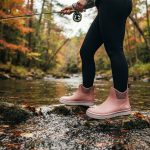
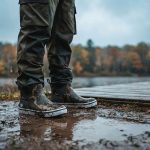
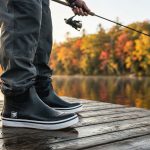
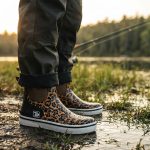

Catfishing from a boat can get messy fast.
A quiet evening on the river may start with a clean deck, dry gear, and a few bait containers. A few hours later, the boat may be covered with river water, mud, bait juice, catfish slime, fish blood, cooler drainage, and wet footprints from repeated trips between the deck and boat ramp.
That is why footwear matters.
The best deck boots for catfishing should keep your feet dry, handle muddy ramps and wet decks, clean up easily after bait and fish slime, and remain comfortable during long periods of standing or sitting.
They should also work well at night.
Many serious catfish anglers fish after sunset, when visibility drops and loose gear, slippery surfaces, anchor rope, bait containers, and fish on the deck become harder to see.
For most boat-based catfishing, lightweight waterproof ankle deck boots are a practical option.
This guide explains what to look for in catfishing footwear, why catfish slime and river mud create unique challenges, how to prepare for night fishing, and when taller boots may be better.
Why Catfishing Is Tough on Footwear
Catfishing often combines several messy conditions:
- River water
- Lake water
- Mud
- Catfish slime
- Cut bait
- Shad
- Skipjack
- Chicken
- Fish blood
- Cooler drainage
- Rain
- Boat washdowns
- Boat-ramp algae
Even freshwater fishing can be just as messy as offshore fishing.
A muddy launch alone may be enough to ruin ordinary sneakers before the boat ever leaves the ramp.
Once bait and catfish start coming aboard, the mess increases.
Why Deck Boots Work Well for Catfishing
Deck boots are useful because they provide:
- Waterproof protection
- Closed-toe coverage
- Easy-clean surfaces
- Wet-deck traction
- Comfortable standing support
- Simple pull-on design
- Protection from mud and bait residue
They are especially practical for anglers fishing from:
- Jon boats
- Pontoon boats
- Aluminum fishing boats
- Center-console freshwater boats
- River boats
- Catfish guide boats
For most recreational use, ankle-height deck boots provide enough coverage without the bulk of tall rubber boots.
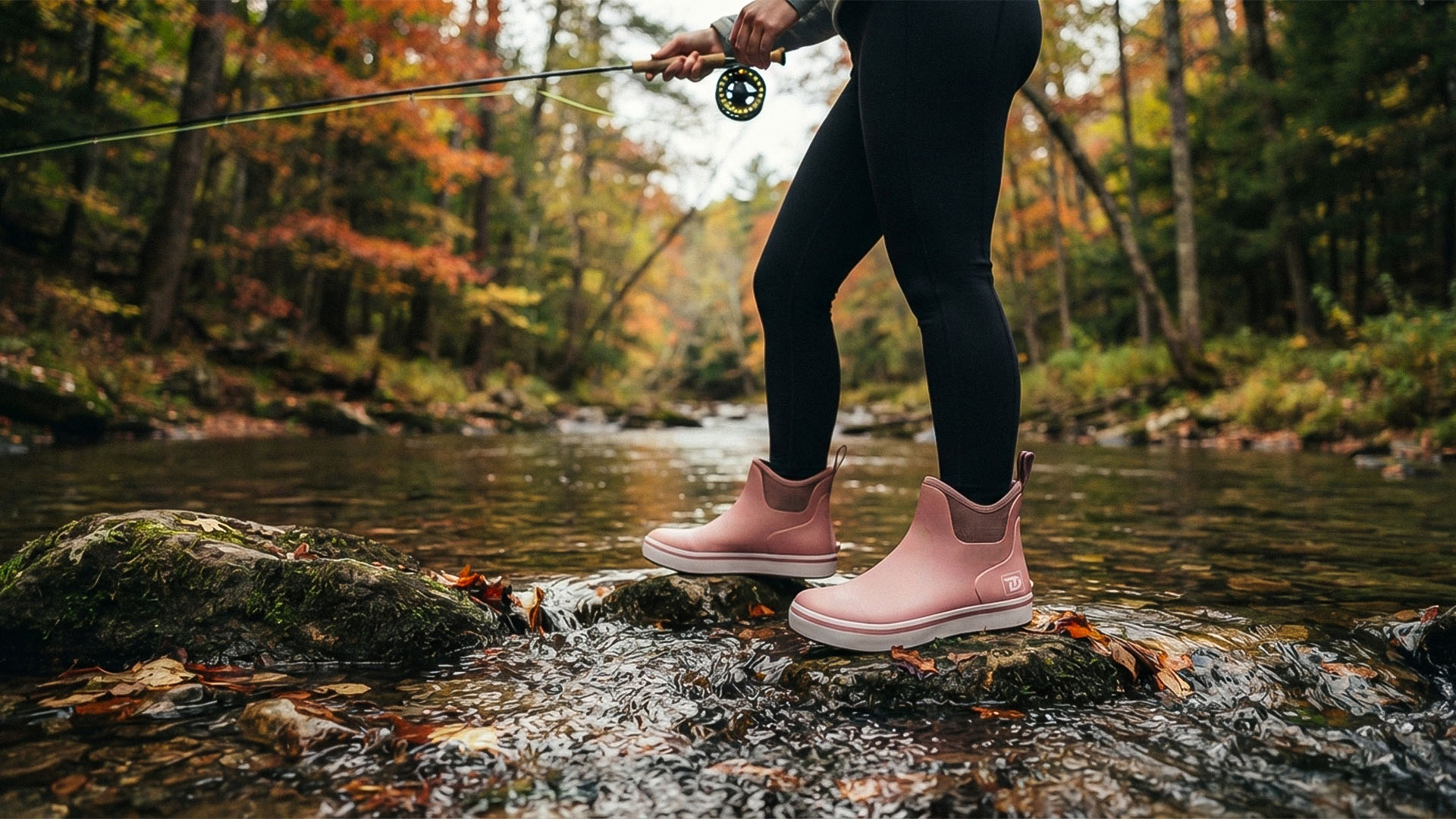
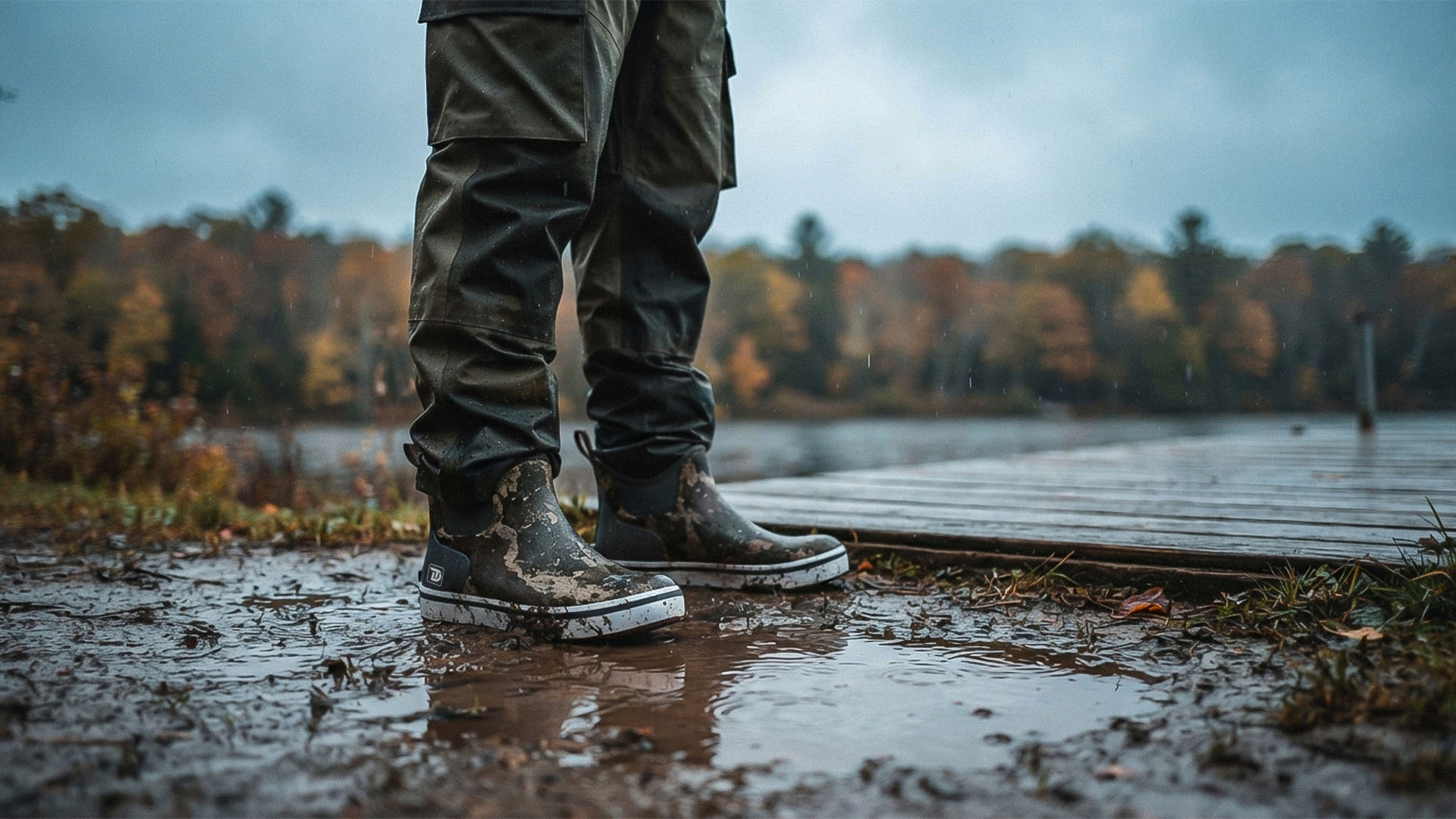
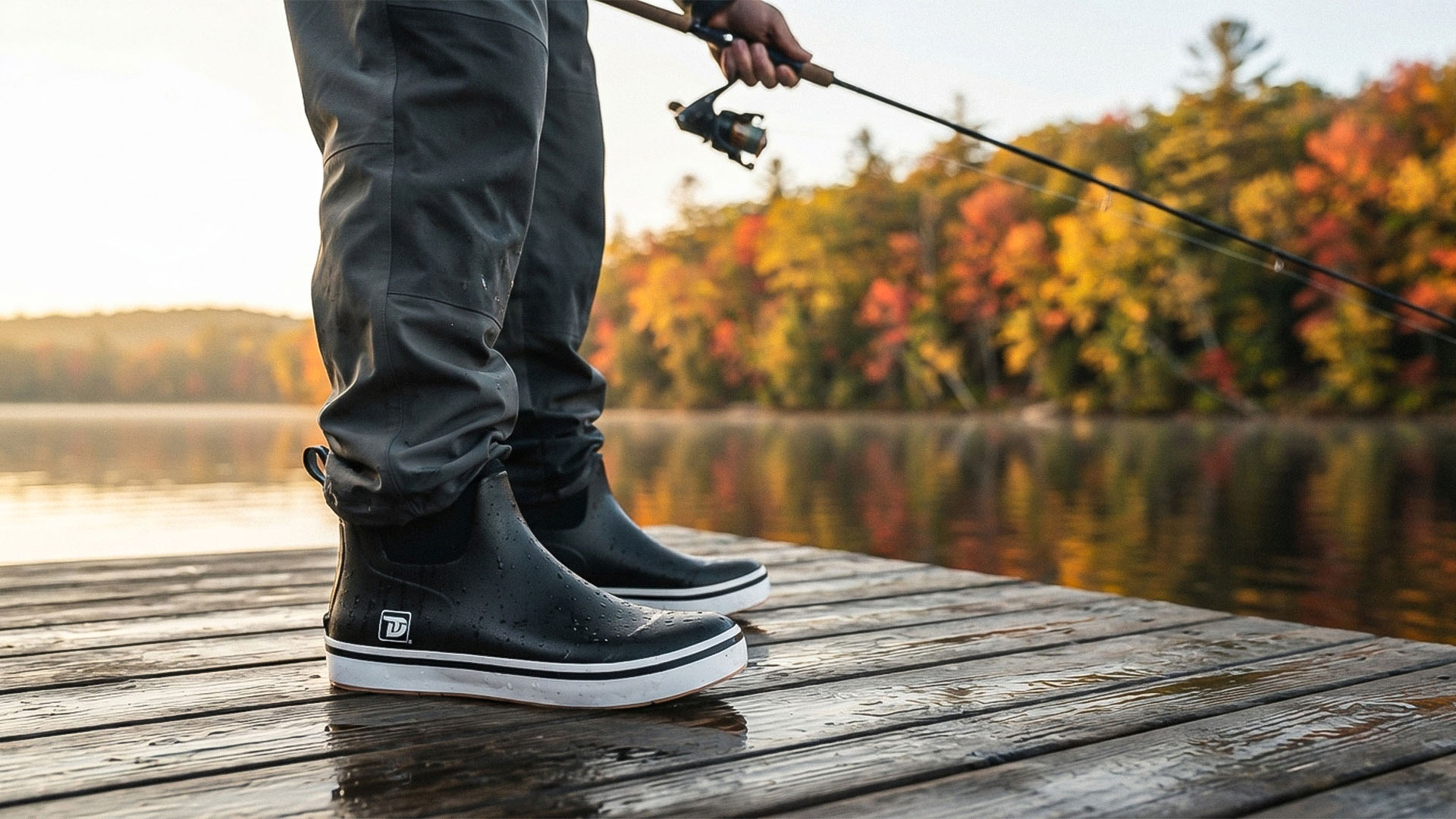
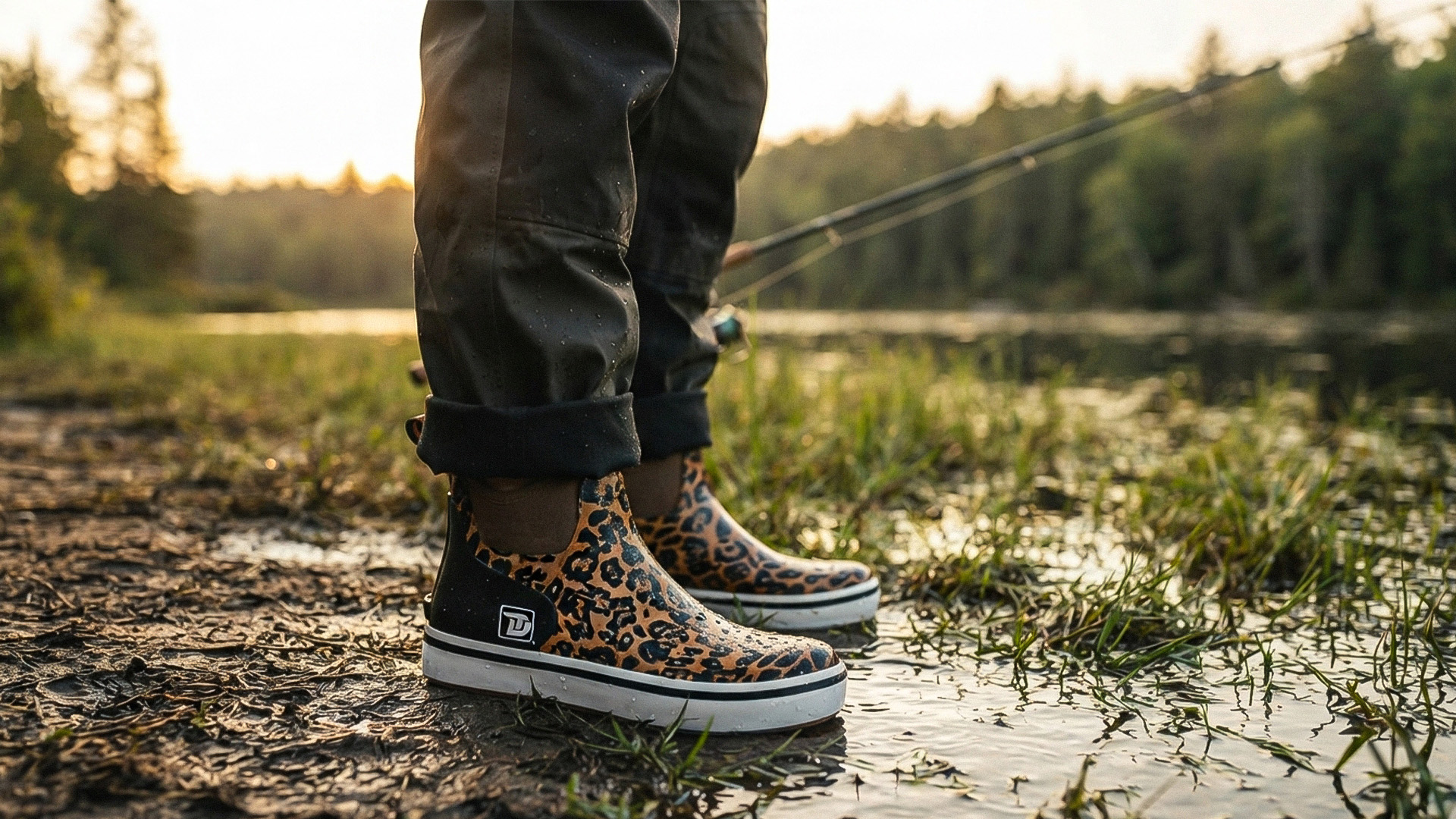
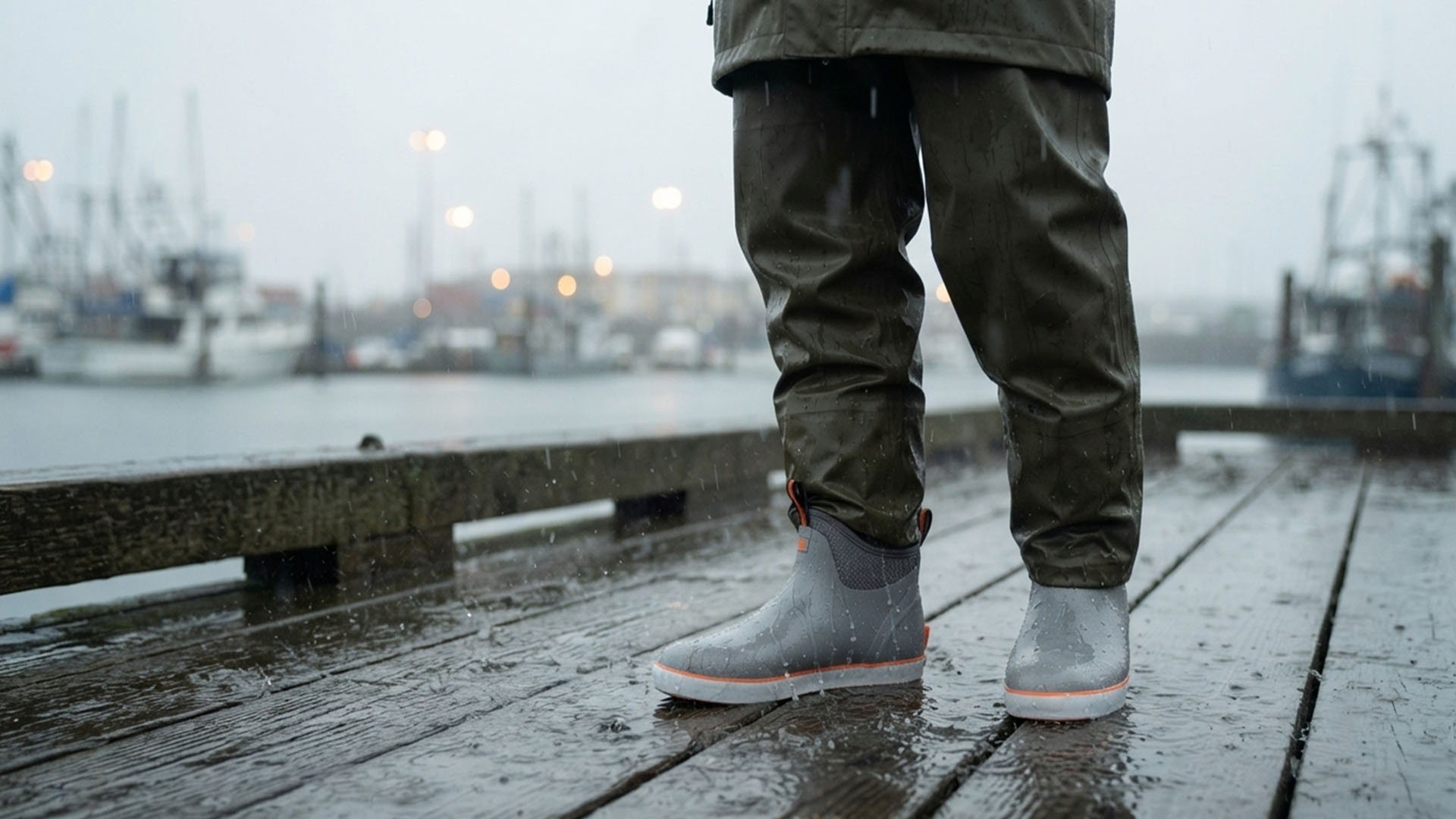
Anglers comparing waterproof fishing footwear can consider TruDaveGear deck boots alongside other options based on fit, outsole design, cushioning, removable insoles, boot height, and expected fishing conditions.
Catfish Slime Is a Serious Mess
Catfish are famous for slime.
A large blue catfish, flathead, or channel cat can leave a surprising amount of residue on:
- Deck
- Cooler
- Fish box
- Gloves
- Landing net
- Boots
Catfish slime can make smooth surfaces slick.
Once mixed with water, it may spread across the deck quickly.
That makes easy-clean footwear especially useful.
Fabric sneakers absorb slime and odor.
Waterproof molded deck boots can usually be rinsed much more easily.
Why Catfish Slime Can Affect Traction
Fish slime can coat both the deck and boot outsole.
This may reduce surface contact.
During active fish handling:
- Keep the landing area organized
- Move fish into a designated container when possible
- Rinse heavy slime after fish handling
- Keep bait away from walking areas
- Check your boot tread
No deck boot is completely slip-proof.
Footwear helps, but keeping the deck clean is just as important.
Blue Catfish Trips
Blue catfish can grow large and powerful.
Fishing for them may involve:
- Heavy rods
- Large circle hooks
- Big sinkers
- Cut bait
- Large landing nets
- Big coolers
Once a large blue cat comes aboard, the working area may become crowded.
Closed-toe deck boots provide better protection than sandals around heavy tackle and fish-handling equipment.
However, standard recreational deck boots are not safety-toe or puncture-resistant footwear.
Keep hooks and sinkers off the deck rather than relying on the boot for protection.
Flathead Catfish Trips
Flathead catfish anglers often fish:
- Rivers
- Reservoirs
- Heavy cover
- Deep holes
- Nighttime structure
Live bait may be used, which creates additional water around bait tanks and buckets.
Deck boots are useful when dealing with:
- Bait tank overflow
- Wet boat floors
- Rain
- muddy ramps
- fish slime
Nighttime conditions make secure footwear especially important.
Channel Catfish Fishing
Channel cats may be caught from smaller boats, lakes, reservoirs, and rivers.
Baits can be especially messy.
Depending on local fishing style, anglers may use:
- Cut bait
- Chicken
- Prepared catfish bait
- Shad
- Skipjack
- Shrimp
- Other scent-heavy bait
Waterproof boots are easier to clean after contact with strong-smelling bait.
That alone can make them worthwhile for frequent catfish anglers.
Night Catfishing Changes Everything
Many catfish anglers prefer fishing after dark.
Night fishing may offer good action, cooler temperatures, and less boat traffic.
It also creates additional hazards.
You may not immediately see:
- Wet areas
- Mud
- Loose hooks
- Anchor rope
- Sinkers
- Fish slime
- Bait spills
- Open storage compartments
- Coolers
Closed-toe footwear and good deck organization become more important after dark.
Use Good Lighting
Footwear cannot compensate for poor visibility.
For night catfishing, use:
- Headlamp
- Deck lights
- Flashlight
- Backup light
- Navigation lighting as required
Keep a light available even if the boat already has permanent deck lighting.
Batteries fail.
Lights get wet.
A backup matters.
Keep Hooks Off the Deck
Catfishing often uses large hooks.
Circle hooks may be attached to:
- Heavy leaders
- sinkers
- rigs
- rod holders
Do not leave baited hooks or rigs loose near your feet.
A standard deck boot is not puncture-proof.
Store hooks in:
- Tackle trays
- rod holders
- rig storage
- dedicated containers
Good organization prevents injuries much better than footwear alone.
Heavy Sinkers Are Another Foot Hazard
Depending on current and depth, catfish anglers may use heavy sinkers.
Dropped weights can land near your feet.
Closed-toe footwear provides more protection than sandals, but it does not make heavy tackle harmless.
Keep sinkers organized when rigging.
Do not leave them rolling around the boat floor.
Muddy Boat Ramps
Boat ramps are one of the biggest reasons deck boots make sense for freshwater anglers.
River and lake ramps may contain:
- Mud
- clay
- algae
- sand
- wet leaves
- gravel
- trailer grime
Ordinary sneakers can become soaked and muddy before the trip begins.
Deck boots protect against shallow mud and puddles while remaining easy to rinse.
Algae-Covered Ramps Require Caution
Submerged concrete ramps can be extremely slippery.
Deck boots may provide useful traction, but marine deck traction is not the same as guaranteed algae traction.
Move carefully.
Use:
- Handrails when available
- Short steps
- Stable entry points
Avoid rushing when launching or retrieving a boat.
A wet algae-covered ramp can be more dangerous than the boat deck itself.
Clean Ramp Mud Before Boarding
Mud packed into the outsole can reduce traction inside the boat.
Before boarding:
- Rinse heavy mud
- Scrape outsole grooves
- Remove gravel
- Check for sticks or debris
A clean outsole gives you better contact with the boat deck.
It also keeps the boat cleaner throughout the trip.
Aluminum Boats and Jon Boats
Many catfish anglers use aluminum boats.
These may have:
- Bare aluminum floors
- Painted decks
- Rubber mats
- Carpet
- Vinyl flooring
Wet aluminum can become slick from:
- Water
- mud
- fish slime
- bait
- rain
Deck boots can work well on hard marine surfaces when their tread is clean.
Avoid bringing ramp mud into the boat whenever possible.
Carpeted Fishing Boats
Some freshwater fishing boats have marine carpet.
Deck boots can still work, but muddy footwear may make carpet difficult to clean.
Before stepping onto carpet:
- Remove heavy mud
- rinse the outsole
- check for hooks
- remove gravel
Deck boots are most useful when the boat has hard, washable surfaces.
Fishing shoes may sometimes be more practical on dry carpeted boats.
Pontoon Catfishing
Pontoon boats are popular for comfortable catfishing.
They often provide:
- Large decks
- Multiple rod holders
- Seating
- Coolers
- Bait storage
Footwear should still be secure.
A big fish, loose bait bucket, rainstorm, or wet landing net can quickly create slippery areas.
Waterproof deck boots are useful on pontoons that regularly get wet or dirty.
Anchor Fishing
Catfish anglers often anchor near:
- River holes
- Current breaks
- ledges
- channel edges
- structure
Anchor rope creates a deck hazard.
Keep anchor rope:
- Coiled
- Secured
- Away from walking areas
- Away from hooks and bait
Never stand inside a rope loop.
Footwear cannot protect you from a tightening line.
Drifting for Catfish
Drifting may involve more frequent movement around the boat.
Anglers may adjust:
- Rods
- bait
- drift socks
- trolling motor
- lines
Boots should provide secure fit without excessive bulk.
Look for:
- Stable heel
- flexible forefoot
- manageable weight
- enough toe room
Loose boots may feel awkward during repeated side steps.
Bait Tanks Create More Water
Live bait systems may overflow or splash.
Deck boots help protect against:
- Tank water
- spilled bait
- wet floors
- cleaning water
Fabric shoes absorb this water quickly.
Waterproof boots are much easier to rinse at the end of the night.
Cut Bait Can Smell Strong
Catfish bait is often oily and strong-smelling.
Common cut bait may include:
- Shad
- Skipjack herring
- Bluegill where legal
- Carp
- Other local baitfish
Bait oil can end up in boot tread.
Clean it promptly.
If allowed to dry, it may create:
- Strong odor
- slick outsole
- sticky residue
Use fresh water and mild soap when necessary.
Prepared Catfish Baits
Some anglers use manufactured or homemade prepared baits.
These may be extremely difficult to remove from fabric shoes.
Waterproof deck boots provide an advantage because the exterior can be rinsed and brushed.
If bait gets on your boots:
- Rinse quickly.
- Use mild soap if needed.
- Brush the outsole.
- Rinse thoroughly.
- Dry completely.
Do not leave bait residue overnight.
Freshwater Does Not Mean Odor-Free
Saltwater is not required for boots to smell.
Freshwater fishing footwear can develop strong odor from:
- Sweat
- catfish slime
- bait
- mud
- algae
- damp insoles
- dirty storage bins
Cleaning and drying habits matter just as much for freshwater boots.
Warm-Weather Catfishing
Summer night catfishing can be hot and humid.
Choose:
- Uninsulated deck boots
- Lightweight socks
- Ankle-height design
- Removable insoles
- Lightweight construction
Avoid heavy insulated boots in hot summer conditions.
They may create excessive sweat and odor.
Cooler Night Conditions
Even summer nights can feel cooler after hours on the water.
Temperature may drop significantly after sunset.
Lightweight merino or synthetic socks can help maintain comfort without excessive heat.
Bring spare socks and an extra clothing layer.
Best Socks for Catfishing Deck Boots
Choose socks made from:
- Synthetic performance fibers
- Lightweight merino wool
- Merino-synthetic blends
Avoid cotton.
Cotton holds sweat and water and dries slowly.
Crew-height socks work well with ankle deck boots because they reduce collar rubbing.
Should You Wear Deck Boots Barefoot?
It is generally better to wear socks.
Barefoot use may increase:
- Sweating
- odor
- blisters
- ankle rubbing
- interior moisture
Performance socks create a washable layer between your foot and the boot.
This is especially useful during humid night fishing.
Bring Spare Socks
A pair of spare socks takes almost no space.
Store them in a dry bag.
They are useful if your feet get wet from:
- Rain
- bait tank water
- river spray
- washdowns
- sweat
- water entering the boot opening
Dry socks can make the rest of a long night much more comfortable.
Boot Height for Catfishing
Ankle Deck Boots
Best for:
- Boat fishing
- Warm weather
- Night fishing
- Shallow ramp mud
- General freshwater use
Mid-Height Boots
Better for:
- Rain
- Wetter boats
- colder weather
- More ramp exposure
Tall Rubber Boots
Better for:
- Deep mud
- shore access
- heavy rain
- standing water
- muddy bank fishing
For most boat-based catfishing, ankle deck boots are enough.
Deck Boots vs. Rain Boots for Catfishing
Rain boots may be better when you spend significant time:
- Walking muddy banks
- launching from primitive ramps
- standing in deep puddles
- fishing from muddy shorelines
Deck boots are usually better for:
- Boats
- docks
- hard wet surfaces
- long standing
- easy movement
Choose based on where you spend most of the trip.
Deck Boots vs. Fishing Shoes
Fishing shoes may be better when:
- The boat stays dry
- Weather is very hot
- Maximum airflow matters
- You walk long distances
Deck boots are better when:
- Mud is common
- Catfish slime is expected
- Bait is messy
- Rain is possible
- Water frequently reaches the floor
For dedicated catfishing boats, deck boots are often more practical.
Deck Boots vs. Sneakers
Sneakers can absorb:
- Mud
- river water
- bait
- fish slime
- rain
Once contaminated, they may be difficult to clean.
Waterproof deck boots are much easier to rinse.
If you regularly use strong-smelling catfish bait, this difference matters.
Why Flip-Flops Are a Poor Choice
Flip-flops provide little protection from:
- Circle hooks
- Heavy sinkers
- Catfish spines
- Anchor equipment
- Coolers
- Wet decks
They also have poor heel security.
For active night catfishing, closed-toe footwear is the better choice.
Catfish Spines
Catfish have sharp spines.
Handle fish carefully.
Do not kick, step on, or pin a catfish with your foot.
Standard deck boots are not designed as puncture protection against fish spines.
Use appropriate fish-handling tools and techniques.
Keep fish under control once aboard.
Landing Large Catfish
Large catfish can move aggressively after being landed.
Keep the working area clear.
Avoid:
- Loose hooks
- tangled leaders
- bait knives
- open coolers
- rope around feet
Use a designated landing area when possible.
Good deck organization reduces the chance of someone stepping backward onto equipment.
Long Standing and Foot Comfort
Catfish anglers may spend hours watching rods.
Even when you are not walking much, your feet remain under load.
Look for deck boots with:
- Stable cushioning
- supportive footbed
- secure heel
- comfortable forefoot
- removable insoles
A basic flat footbed may become uncomfortable during a long night.
Removable Insoles
Removable insoles provide several benefits:
- Faster drying
- Better odor control
- Easier cleaning
- Support replacement
- Comfort adjustment
After humid night fishing, remove the insoles even if the boots did not get visibly wet.
Sweat may remain trapped underneath.
Wide Feet
Wide-footed anglers should look for:
- Roomy toe box
- comfortable forefoot
- secure heel
- enough instep space
Do not simply buy an excessively long boot.
Extra length can create:
- heel slip
- foot rotation
- toe gripping
- instability
Choose a boot shape that actually matches your foot.
High Instep
Pull-on deck boots may feel tight over a high instep.
Signs include:
- Top-of-foot pressure
- numbness
- difficulty putting them on
- difficulty removing them
Look for a higher-volume boot and removable insole.
Do not expect waterproof molded boots to stretch significantly.
Cleaning Catfish Slime From Deck Boots
After the trip:
- Rinse boots with fresh water.
- Remove visible fish slime.
- Use mild soap if necessary.
- Brush the outsole.
- Rinse thoroughly.
- Remove the insoles.
- Dry everything separately.
Do not leave slime on boots overnight.
Warm temperatures can make odor develop quickly.
Cleaning Mud
Mud should be removed before it hardens.
Pay attention to:
- Outsole grooves
- Heel
- Sidewalls
Use a brush rather than digging into the tread with your fingers.
Fishing hooks and sharp debris may be hidden in the mud.
Removing Bait Smell
Strong bait odor may require deeper cleaning.
Clean:
- Toe area
- sidewalls
- tread
- insoles
- boot storage tray
Sometimes the boot itself is clean, but the storage bin still contains old bait residue.
Clean both.
Drying Deck Boots After Night Fishing
It can be tempting to leave everything in the truck until morning.
At minimum:
- Remove boots from the vehicle
- Take out the insoles
- Open the boot tops
- Place them in a ventilated area
Avoid leaving wet boots sealed overnight.
The next morning, rinse and clean them if you were too tired to do it immediately.
Avoid High Heat
Do not dry deck boots using:
- Clothes dryers
- Radiators
- Heat guns
- Space heaters
- Open flames
High heat may damage waterproof materials, foam, adhesives, and boot shape.
Use gentle airflow.
Vehicle Cleanup
Catfish bait smell can stay in a vehicle for a long time.
Use:
- Rubber boot tray
- Plastic tote
- Cargo liner
- Washable bin
Bring clean shoes for the drive home.
Keep dirty boots separate from clothes, food, and personal gear.
Best Deck Boot Features for Catfishing
Look for:
Waterproof Construction
Useful around river water, bait tanks, rain, and mud.
Closed Toe
Provides basic protection around tackle and equipment.
Wet-Deck Outsole
Important on aluminum and hard boat surfaces.
Secure Heel
Helps with movement after dark.
Comfortable Cushioning
Important during long periods of standing.
Removable Insoles
Improves drying and odor control.
Easy-Clean Upper
Useful after catfish slime and bait.
Ankle Height
Works well for most boat-based fishing.
Lightweight Construction
Better for warm night trips.
Catfishing Footwear Checklist
Before the trip:
- Check outsole tread
- Confirm boots are dry
- Inspect for cracks
- Wear moisture-wicking socks
- Pack spare socks
- Bring backup lighting
- Keep rigs organized
- Bring clean shoes for the drive home
After the trip:
- Rinse mud
- clean catfish slime
- remove bait residue
- brush tread
- remove insoles
- air dry
- clean boot storage
Common Catfishing Footwear Mistakes
Wearing Flip-Flops at Night
Poor protection and heel security.
Wearing Sneakers Around Strong Bait
Fabric absorbs water and odor.
Wearing Cotton Socks
Cotton stays damp.
Buying Boots Too Loose
Loose footwear reduces control in the dark.
Ignoring Catfish Slime
Slime can reduce deck traction.
Leaving Hooks on the Floor
Deck boots are not puncture-proof.
Standing in Anchor Rope Loops
Footwear cannot protect against line entanglement.
Leaving Ramp Mud in the Tread
Mud reduces deck contact.
Storing Dirty Boots in the Truck
Bait and fish odor become much worse in heat.
Wearing Worn-Out Boots
Smooth tread can reduce wet-surface performance.
Final Thoughts
Catfishing from a boat creates exactly the kind of conditions where deck boots can be useful.
Freshwater does not mean clean or dry.
Muddy boat ramps, bait tanks, cut shad, skipjack, catfish slime, rain, river spray, cooler drainage, and long night trips can turn ordinary sneakers into wet, smelly gear very quickly.
For most boat-based catfish anglers, lightweight uninsulated ankle deck boots offer a practical balance of waterproof protection, easy cleaning, secure fit, and all-night comfort.
Choose boots with a stable outsole, comfortable toe room, secure heel, removable insoles, and enough cushioning for long periods of standing.
Wear moisture-wicking synthetic or merino-blend socks instead of cotton.
Bring spare socks and clean shoes for the drive home.
At night, keep hooks, sinkers, anchor rope, bait containers, and coolers organized.
No boot can protect you from a cluttered deck or a large circle hook lying point-up on the floor.
After fishing, rinse mud and catfish slime, clean bait residue, brush the outsole, remove the insoles, and dry everything completely.
Good footwear should let you focus on rod tips, current, bait placement, and the next big blue cat or flathead—not whether your shoes will survive the trip.
Frequently Asked Questions
Are deck boots good for catfishing?
Yes. Deck boots are excellent for boat catfishing because they handle mud, fish slime, bait water, rain, and wet decks while remaining easy to clean.
What boots should I wear for boat catfishing?
Waterproof ankle deck boots are a practical option for most boat-based catfishing, especially in warm weather.
Are deck boots good for night catfishing?
Yes. Closed-toe waterproof boots provide better protection and stability than flip-flops or loose sandals after dark.
Can I wear sneakers while catfishing?
You can, but sneakers absorb river water, mud, catfish slime, and bait odor and may remain wet for hours.
Are rain boots better than deck boots for catfishing?
Rain boots are better for deep mud and bank fishing. Deck boots are usually more comfortable for boat-based fishing.
What socks should I wear with catfishing deck boots?
Wear synthetic or merino-blend moisture-wicking crew socks. Avoid cotton.
Are ankle deck boots tall enough for catfishing?
Yes for most boat-based use. Deep mud, bank fishing, or standing water may require taller boots.
Are deck boots puncture-proof against catfish spines?
No. Standard deck boots are not puncture-resistant. Handle catfish carefully and do not use your foot to control them.
Are deck boots safe around circle hooks?
They provide basic coverage but are not hook-proof. Keep hooks and rigs off the deck.
How do I clean catfish slime from deck boots?
Rinse with fresh water, use mild soap if needed, brush the upper and tread, rinse thoroughly, remove the insoles, and dry completely.
How do I remove catfish bait smell from boots?
Clean bait residue quickly, remove and clean the insoles, dry the boots fully, and clean the storage tray or bin.
Are deck boots good on muddy boat ramps?
They are useful for shallow mud and puddles, but algae-covered ramps can still be extremely slippery.
Should I bring spare socks for night catfishing?
Yes. Spare socks help if your feet become wet from rain, sweat, bait tank water, or river spray.
Why are removable insoles useful for catfishing?
They help boots dry faster, reduce odor, and allow cushioning or support replacement.
Can I wear deck boots barefoot while catfishing?
It is possible, but moisture-wicking socks usually provide better comfort, odor control, and blister prevention.
How should catfishing deck boots fit?
They should hold the heel securely, allow comfortable toe movement, and remain stable during side steps and boat movement.
What is the biggest footwear mistake in night catfishing?
Wearing loose, open, absorbent footwear around large hooks, anchor rope, wet decks, and strong-smelling bait is one of the most common mistakes.