

Buying deck boots online can feel difficult.
Unlike sneakers, deck boots do not always fit exactly the same way. Different brands use different shapes, materials, insulation levels, and internal structures. A size that feels perfect in one boot may feel loose or tight in another.
Many anglers make the mistake of choosing deck boots only by their normal shoe size.
That can lead to problems such as:
- Heel slipping
- Toe pressure
- Foot sliding forward
- Blisters
- Cold feet
- Hot spots
- Poor stability on wet decks
- Discomfort during long fishing trips
A good deck boot should feel secure, comfortable, and stable from the first step.
The goal is not simply finding a boot that fits your foot while standing still.
The goal is finding a boot that performs when you are:
- Standing for hours
- Walking on wet decks
- Casting
- Moving around equipment
- Cleaning fish
- Washing the boat
- Wearing fishing socks
- Handling changing weather
This guide explains how deck boots should fit, how to choose the correct size, what mistakes to avoid, and how to get the best comfort from waterproof fishing footwear.
Why Deck Boot Sizing Is Different From Sneakers
Many anglers assume:
“My sneaker size is my boot size.”
Sometimes that works.
Sometimes it does not.
Deck boots are different because they usually have:
- A pull-on design
- Less adjustment than lace-up shoes
- Waterproof materials
- Different toe shapes
- Different insulation levels
- Different sock requirements
- Different heel structures
Sneakers can often be tightened with laces.
Deck boots usually cannot.
That means the boot itself must match your foot shape.
The heel, instep, toe box, and overall volume all matter.
The Three Most Important Areas of Deck Boot Fit
A properly fitting deck boot should balance three areas:
- Heel security
- Midfoot stability
- Toe room
If one area is wrong, comfort suffers.
Heel
The heel should stay controlled.
Too much movement can cause:
- Blisters
- Instability
- Foot fatigue
- Sock movement
Midfoot
The middle of the boot should hold your foot comfortably.
Too loose:
- Your foot slides
- You lose control
Too tight:
- Pressure develops
- Long trips become uncomfortable
Toe Box
Your toes need room.
Your toes should not touch the front when standing or walking.
A cramped toe box creates pressure during long days.
Should Deck Boots Run Big or Small?
There is no universal answer.
Some deck boots feel slightly roomy because they are designed for thicker socks and wet conditions.
Others fit closer because they are designed for better foot control.
Instead of asking:
“Do deck boots run big or small?”
Ask:
“How much space do I need for my actual fishing conditions?”
Consider:
- Summer vs winter use
- Sock thickness
- Foot width
- Foot volume
- Fishing duration
- Whether you add insoles
A boot that fits perfectly with thin summer socks may become too tight with winter socks.
How Much Room Should Be Inside Deck Boots?
A properly fitting deck boot should have enough room for natural movement without allowing your foot to slide.
You should have:
- Space for your toes to move
- Enough room for fishing socks
- Secure heel position
- Comfortable instep pressure
- Stable walking feel
Avoid choosing a larger size just because you want extra room.
Too much extra space can create:
- Heel slip
- Foot movement
- Reduced stability
- Blisters
- Poor control
More space does not always mean more comfort.
Heel Slip: What Is Normal?
Some heel movement is normal in pull-on boots.
The foot naturally moves slightly as the boot flexes.
However, excessive heel movement is a problem.
Signs of too much heel slip:
- Heel lifting every step
- Boot feeling loose
- Toe gripping while walking
- Sliding inside the boot
- Rubbing around the heel
- Blisters after use
A properly fitting deck boot should allow natural movement while keeping your heel controlled.
How to Test Heel Fit
When trying on deck boots:
- Wear your normal fishing socks.
- Stand upright.
- Walk normally.
- Walk upstairs.
- Bend your knees.
- Step sideways.
- Simulate moving around a boat.
Pay attention to:
- Heel movement
- Foot sliding
- Stability
- Pressure points
Do not judge fit only while sitting.
Fishing is an active environment.
Toe Room: How Much Is Enough?
Your toes should not touch the front of the boot.
When standing:
- Toes should move naturally
- Big toe should not press upward
- Front pressure should not exist
- Foot should not slide forward
A little extra toe space is usually better than a cramped fit.
This is especially important because feet can swell slightly during long days.
The Sock Factor
Many deck boot sizing mistakes happen because anglers forget about socks.
The socks you wear change the fit.
Fishing socks are often thicker than everyday socks.
They may include:
- Merino wool
- Synthetic insulation
- Moisture management layers
- Extra cushioning
- Reinforced areas
Always test deck boots with the socks you actually plan to use.
A boot that fits with thin socks may feel tight with fishing socks.
A boot that feels loose with thin socks may become perfect with thicker socks.
Summer vs Winter Sizing
Season affects fit.
Summer Fishing
You may wear:
- Thin moisture-wicking socks
- Lightweight socks
- No insulation
A closer fit may feel better.
Winter Fishing
You may wear:
- Thick wool socks
- Thermal socks
- Layered socks
You may need more internal volume.
Do not buy oversized boots for winter if you rarely wear thick socks.
Choose based on your most common conditions.
Wide Feet and Deck Boots
Many anglers have wide feet but buy based only on length.
This creates problems.
A boot may be long enough but still too narrow.
Signs a deck boot is too narrow:
- Toe pressure
- Little toe discomfort
- Side pressure
- Numbness
- Foot fatigue
- Blisters
For wide feet, look for:
- Roomier toe box
- Flexible upper
- Comfortable instep volume
- Removable insoles
- Reviews mentioning width comfort
Do not solve width problems by buying a much larger size.
A longer boot may create heel slip.
High Instep Considerations
Some anglers have higher-volume feet.
A boot may feel tight across the top even if the length is correct.
Signs include:
- Pressure on top of foot
- Difficulty putting boot on
- Tight feeling with socks
- Reduced comfort after hours
Look for:
- More upper flexibility
- Better internal volume
- Stretch areas
- Roomier construction
Low Volume Feet
Anglers with narrow feet may experience:
- Heel lift
- Foot sliding
- Loose feeling
- Less control
Solutions may include:
- Better sock thickness
- Supportive insoles
- Choosing a closer-fitting model
Avoid simply sizing down.
A shorter boot can create toe pressure.
Should You Size Up for Deck Boots?
Sometimes.
Sizing up may help when:
- You wear thick winter socks
- Your feet are between sizes
- The boot has a narrow shape
- You use additional insoles
- Your feet swell during long trips
But sizing up too much creates problems.
A large boot may:
- Slip at the heel
- Feel unstable
- Create friction
- Reduce control
The correct size should fit your whole foot.
Should You Size Down?
Usually not.
Sizing down can create:
- Toe pressure
- Reduced circulation
- Hot spots
- Discomfort
- Poor sock compatibility
A tight waterproof boot becomes uncomfortable quickly.
Your feet need room during long fishing days.
How Deck Boots Should Feel When New
A new deck boot should feel:
- Secure
- Comfortable
- Stable
- Supportive
It should not require a long painful break-in period.
Avoid boots that:
- Hurt immediately
- Press on toes
- Create heel rubbing
- Feel unstable
- Require extreme stretching
Small adjustments are normal.
Major discomfort usually means the fit is wrong.
Break-In Period
Some deck boots become slightly more comfortable after use.
Materials may soften.
However, waterproof fishing boots should not require painful breaking in.
A good fit should feel acceptable from the beginning.
During the first uses:
- Wear normal fishing socks
- Test short periods
- Check rubbing areas
- Adjust before long trips
Do not discover fit problems offshore.
Insoles and Sizing
Adding aftermarket insoles can change fit.
A thicker insole may:
- Reduce internal volume
- Raise your foot
- Improve support
- Reduce heel space
A thinner insole may:
- Create more room
- Reduce cushioning
If you plan to use custom insoles, test them before deciding on size.
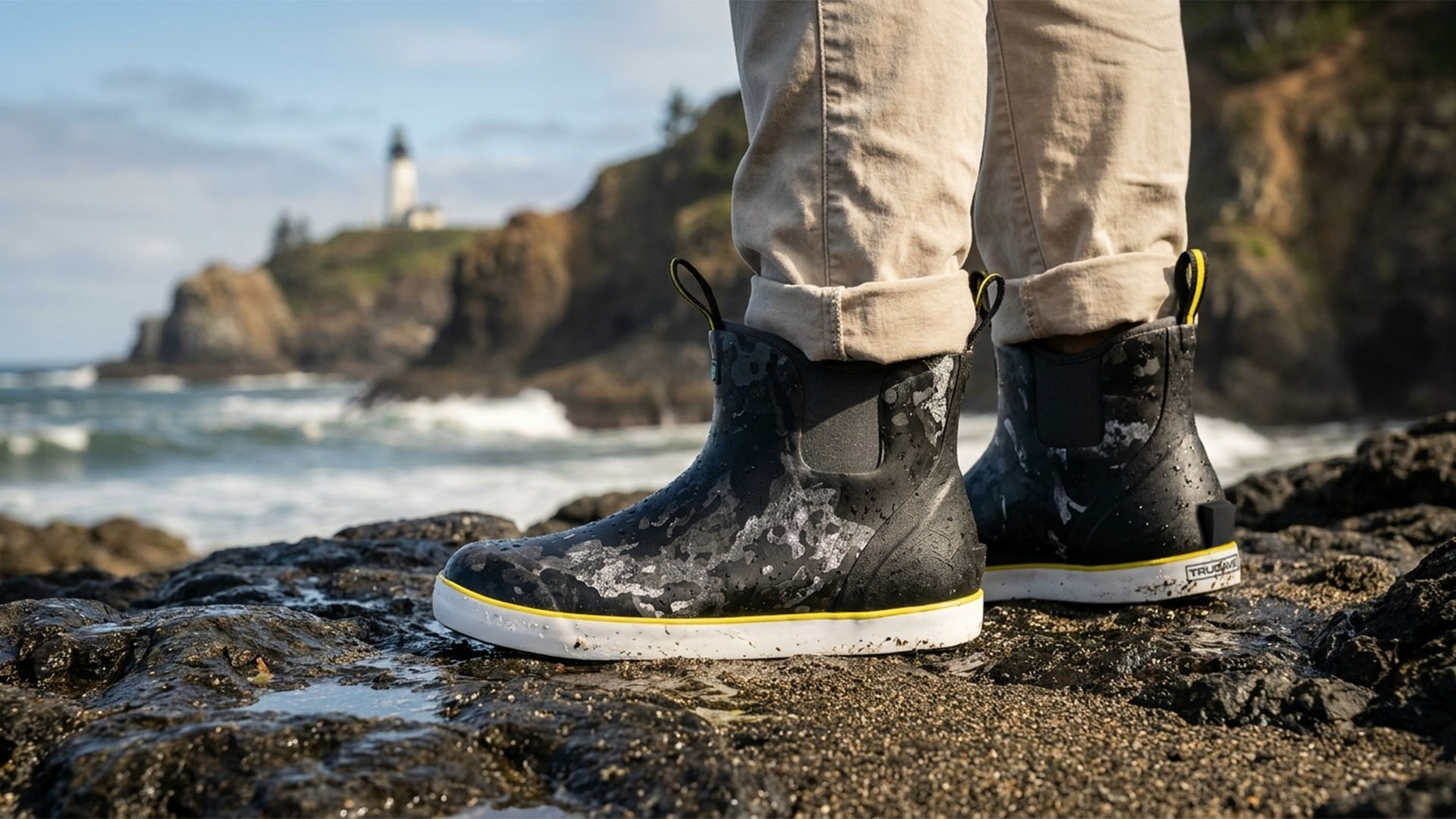
When comparing deck boots, anglers can consider options like TruDaveGear waterproof deck boots while paying attention to removable insoles, foot volume, fit structure, and intended fishing conditions.
How to Try On Deck Boots Correctly
Follow this process:
Step 1: Wear Fishing Socks
Use the socks you normally fish in.
Step 2: Stand Up
Your feet spread slightly under body weight.
Step 3: Check Toe Space
Make sure toes are not touching.
Step 4: Walk
Notice heel movement.
Step 5: Move Sideways
Fishing requires lateral movement.
Step 6: Bend Your Knees
Simulate boat movement.
Step 7: Wear Them Longer
Short try-ons may hide problems.
Common Deck Boot Sizing Mistakes
Buying the Same Size as Sneakers Automatically
Different footwear fits differently.
Choosing Too Large
Extra room can reduce stability.
Ignoring Sock Thickness
Socks change fit.
Testing While Sitting
Standing changes foot shape.
Wearing Thin Socks During Testing
The fit may change later.
Ignoring Width
Length is not the only measurement.
Keeping Uncomfortable Boots
Discomfort usually does not disappear completely.
Buying Before Checking Return Policies
Online sizing requires flexibility.
Online Deck Boot Buying Tips
When buying online:
Check:
- Size chart
- Customer reviews
- Width comments
- Return policy
- Material information
- Boot height
- Insole design
- Intended season
Look for reviews mentioning:
- True to size
- Wide feet
- Thick socks
- Heel movement
- Long fishing days
- Comfort after hours
Repeated comments are more valuable than one opinion.
Deck Boot Fit for Offshore Fishing
Offshore anglers need especially reliable fit.
Long offshore trips involve:
- Constant standing
- Boat movement
- Wet surfaces
- Heavy gear
- Fish handling
- Long hours
A loose boot becomes more noticeable offshore.
Prioritize:
- Heel security
- Cushioning
- Stability
- Waterproof protection
- Comfortable socks
Deck Boot Fit for Inshore Fishing
Inshore anglers may prioritize:
- Lightweight feel
- Easy movement
- Warm-weather comfort
- Quick cleaning
- Flexible fit
A slightly lighter boot may work well.
Deck Boot Fit for Boat Cleaning
Boat cleaning requires:
- Secure movement
- Wet-deck confidence
- Waterproof protection
- Comfortable standing
A loose boot can become annoying during repeated bending and walking.
Choose stability over extra space.
Deck Boot Fit for Cold Weather
Cold-weather fit requires room for:
- Thick socks
- Warm liners
- Reduced foot movement
But do not oversize dramatically.
A loose boot allows more internal movement and can reduce warmth.
How to Know When Your Deck Boots Are Too Big
Signs include:
- Heel lifting
- Foot sliding forward
- Feeling unstable
- Socks moving
- Toes gripping
- Boot making noise while walking
- Difficulty moving sideways
A larger size is not always more comfortable.
How to Know When Your Deck Boots Are Too Small
Signs include:
- Toes touching
- Side pressure
- Top-of-foot pressure
- Numbness
- Foot fatigue
- Tight socks
- Reduced comfort after hours
A fishing boot should never feel like a tight fashion shoe.
Should Deck Boots Feel Tight Around the Ankle?
Not necessarily.
They should feel secure but comfortable.
Too tight:
- Restricts movement
- Creates rubbing
- Makes removal difficult
Too loose:
- Allows water entry
- Reduces control
The collar should support movement without causing pressure.
How Much Heel Movement Is Acceptable?
A small amount is normal.
The important question is:
“Does the movement affect comfort or control?”
If your heel moves enough to create rubbing, instability, or discomfort, the fit is wrong.
Can Better Socks Fix Loose Deck Boots?
Sometimes.
Thicker socks can improve:
- Comfort
- Warmth
- Small amounts of extra space
However, socks cannot fix a boot that is significantly too large.
A poor fit remains a poor fit.
Can Insoles Fix Loose Deck Boots?
A thicker insole may improve fit slightly.
It can:
- Raise the foot
- Reduce internal space
- Improve support
But it cannot fix major sizing problems.
Choose the correct boot size first.
How Often Should You Replace Deck Boots?
Replace when:
- Waterproofing fails
- Tread wears down
- Fit changes
- Cushioning collapses
- Structure breaks
- Comfort disappears
A good fit should remain stable throughout the boot’s useful life.
Final Thoughts
The best deck boot size is not simply your normal shoe size.
It is the size that gives you:
- Secure heel control
- Comfortable toe room
- Proper sock space
- Stable movement
- Long-term comfort
A good deck boot should feel supportive without squeezing your feet.
It should stay controlled while walking on wet decks, moving around the boat, cleaning fish, and handling long fishing days.
When choosing deck boots, consider:
- Your foot shape
- Fishing environment
- Sock thickness
- Weather conditions
- Trip duration
- Boot construction
- Insole options
Do not buy oversized boots thinking more room means more comfort.
Do not buy tight boots hoping they will stretch.
The right fit should feel comfortable from the beginning.
A properly fitted deck boot becomes part of your fishing gear.
You stop thinking about your feet and focus on fishing.
Frequently Asked Questions
Should deck boots fit tight or loose?
Deck boots should fit securely without feeling tight. The heel should stay controlled while the toes have enough room.
Do deck boots run big or small?
It depends on the brand and design. Always consider foot shape, socks, and intended use.
Should I size up for fishing boots?
Only when needed for thicker socks, wider feet, or between-size situations. Avoid excessive extra space.
Should I wear thick socks with deck boots?
Wear the socks you normally fish in when choosing your size.
Why does my heel slip in deck boots?
Heel slip can happen from oversized boots, poor fit, thin socks, or incorrect foot shape matching.
Can heel slip damage my feet?
Excessive heel movement can cause rubbing, blisters, and discomfort.
Should my toes touch the front of deck boots?
No. Your toes should have room to move when standing and walking.
Are deck boots good for wide feet?
Some are. Look for roomy toe boxes and comfortable internal volume.
Can insoles change deck boot sizing?
Yes. Thicker insoles reduce internal space, while thinner ones increase it.
How long does it take to break in deck boots?
A good-fitting pair should feel comfortable quickly. They should not require painful break-in.
Should deck boots feel heavy?
No. Good deck boots balance protection and manageable weight.
Can I wear deck boots without socks?
It is possible, but socks improve comfort, moisture control, and odor prevention.
How do I know if my deck boots are too large?
Heel slipping, foot movement, and unstable walking are common signs.
How do I know if my deck boots are too small?
Toe pressure, numbness, and discomfort after wearing them are common signs.
Are expensive deck boots easier to fit?
Not always, but higher-quality boots often offer better sizing consistency and comfort features.
What is the most important part of deck boot fit?
A secure heel, comfortable toe room, and stable overall foot control are the most important factors.