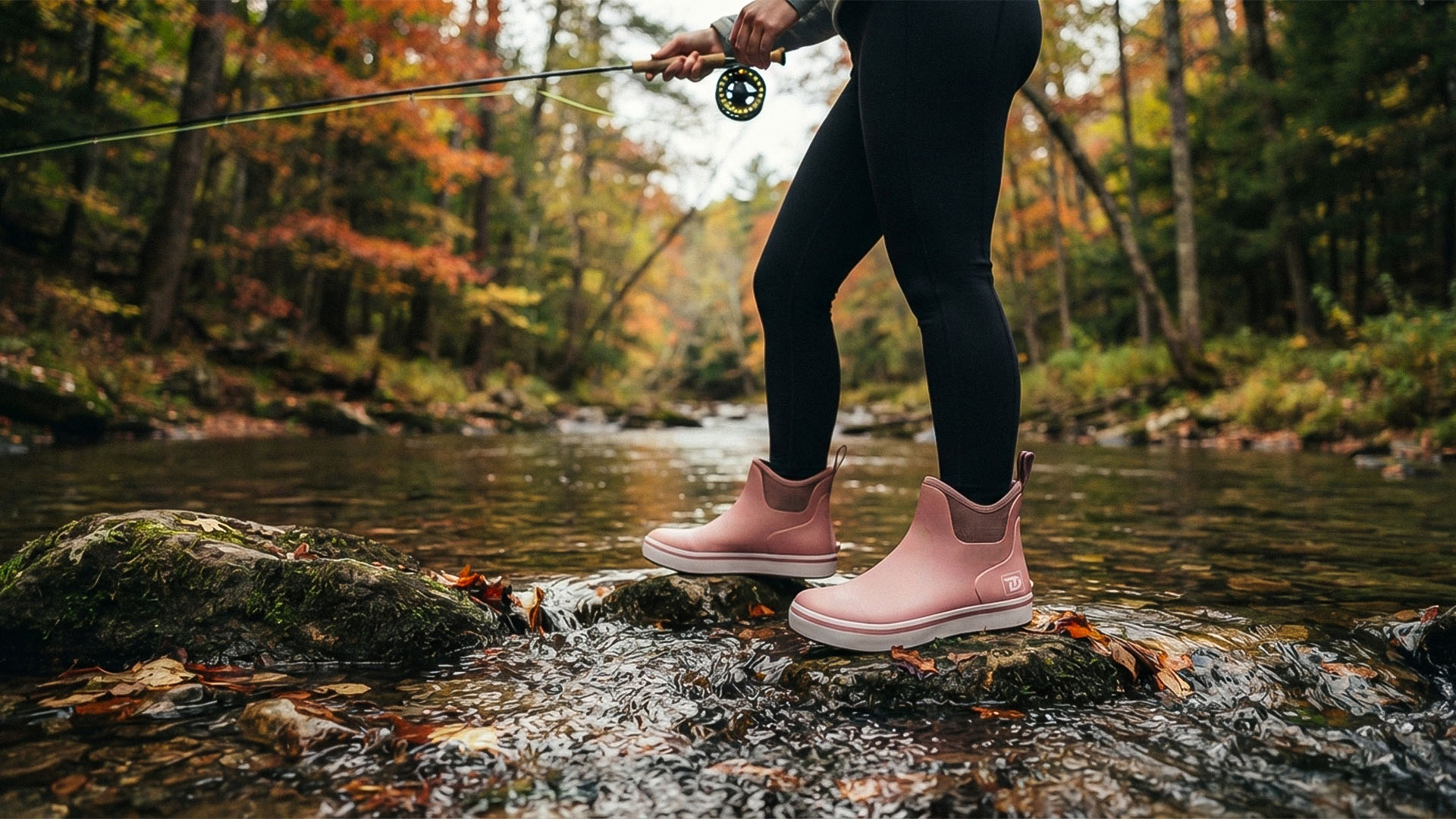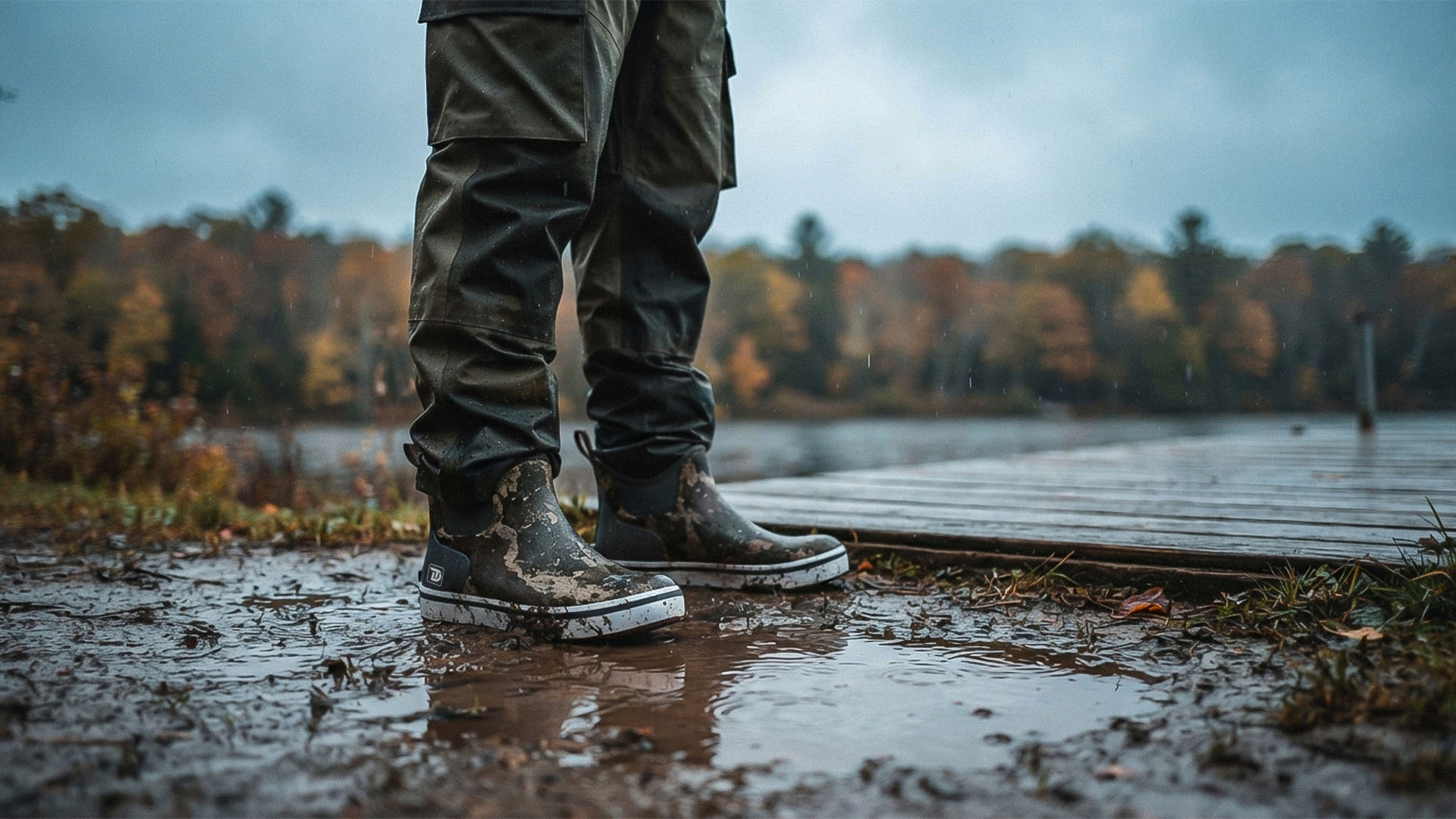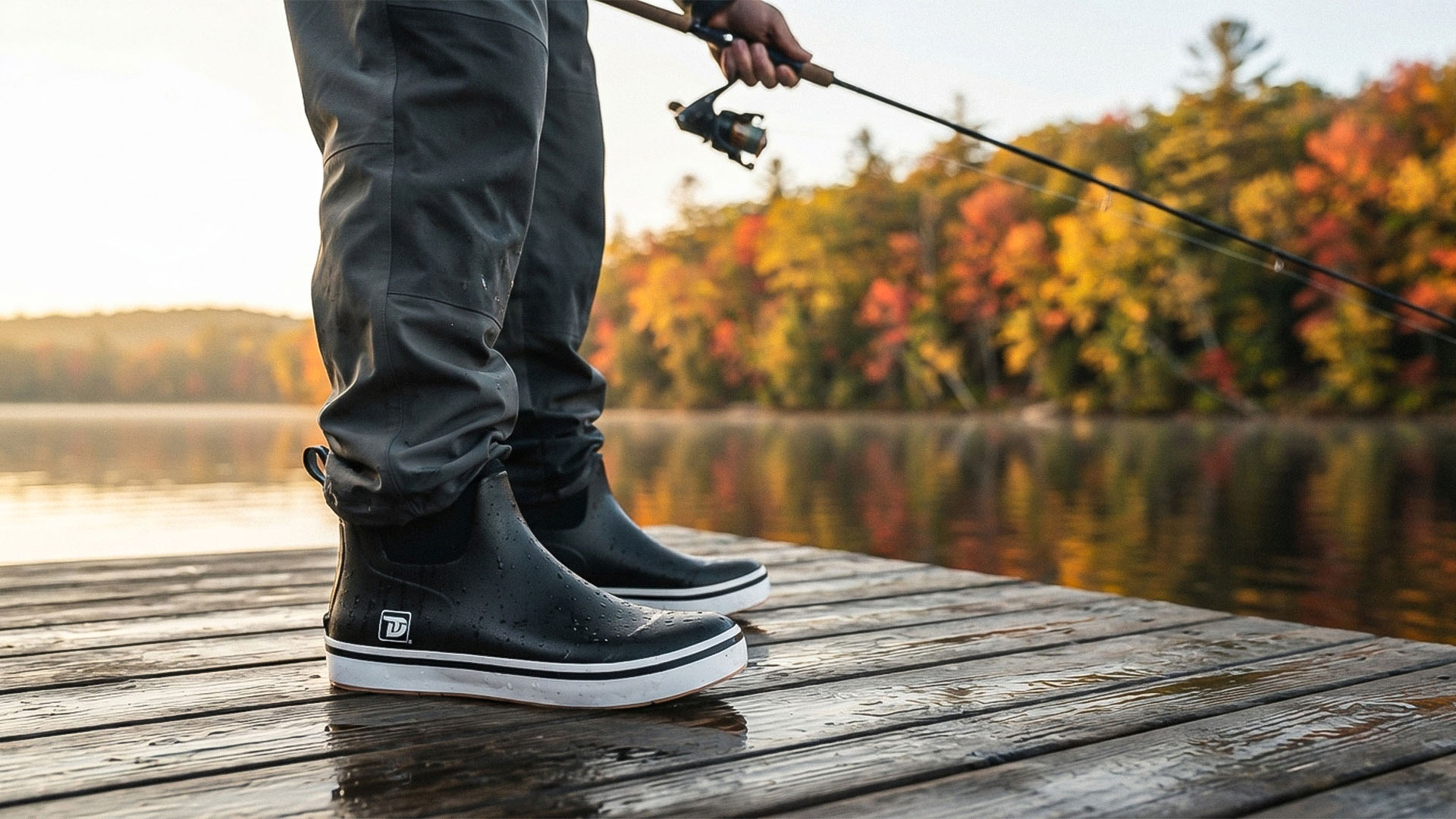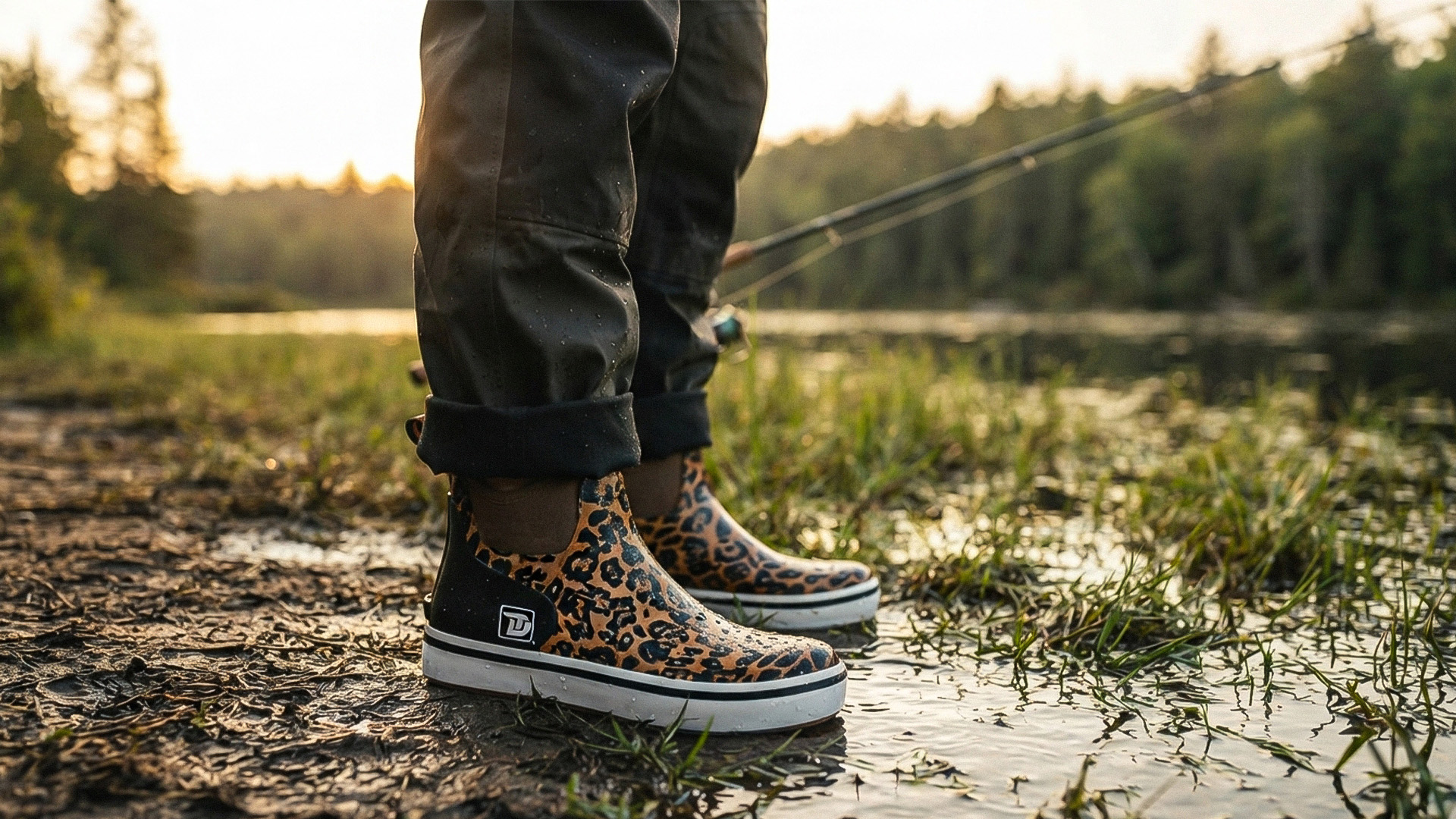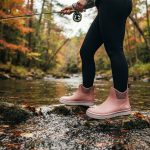
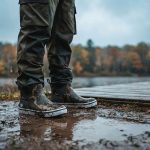
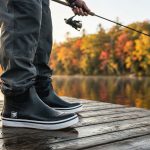
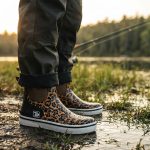
Meta Description: Can you wear deck boots in summer? Learn when waterproof deck boots make sense in hot weather, how to manage sweat, which socks to wear, and when fishing shoes may be better.
Suggested URL Slug: can-you-wear-deck-boots-in-summer
Primary Keyword: can you wear deck boots in summer
Secondary Keywords: summer deck boots, deck boots for hot weather, waterproof fishing boots in summer, sweaty feet in deck boots, uninsulated deck boots, fishing shoes vs deck boots in summer, best socks for deck boots in summer
Search Intent: Informational / Commercial Investigation
Yes, you can wear deck boots in summer.
In many fishing situations, they are still one of the most practical footwear choices, even when the weather is hot.
Summer fishing does not always mean dry decks and breathable shoes. Offshore spray, afternoon storms, bait water, fish slime, boat washdowns, wet marinas, cooler drainage, and rain can all make waterproof footwear useful during warm weather.
However, summer deck boot comfort depends on choosing the right type of boot and wearing the right socks.
Insulated boots can feel too warm. Cotton socks can stay wet and uncomfortable. Oversized boots do not create real ventilation. Wearing deck boots barefoot can increase odor and friction.
The best summer setup is usually an uninsulated waterproof deck boot paired with lightweight moisture-wicking socks.
This guide explains when deck boots make sense in summer, when fishing shoes may be better, how to reduce sweaty feet, what socks to wear, and how to stay comfortable during hot-weather fishing trips.
Why Anglers Wear Deck Boots in Summer
Summer fishing can be wet, messy, and unpredictable.
Deck boots are useful because they protect your feet from:
- Ocean spray
- Rain
- Wet fiberglass
- Fish slime
- Bait water
- Melted ice
- Cooler drainage
- Boat washdowns
- Muddy docks
- Wet marinas
- Cleaning stations
Even on a hot day, a boat deck can become soaked quickly.
If the trip involves offshore fishing, fish cleaning, bait handling, or regular washdowns, deck boots may be more practical than sneakers or sandals.
Are Deck Boots Too Hot for Summer?
Some deck boots are too hot for summer.
This usually happens when the boots are:
- Insulated
- Thick-lined
- Tall
- Heavy
- Paired with cotton socks
- Worn with thick winter socks
- Not dried properly between trips
But not all deck boots are built the same.
Uninsulated ankle deck boots are often comfortable enough for summer fishing, especially when worn with lightweight performance socks.
The goal is to get waterproof protection without unnecessary warmth.
Choose Uninsulated Deck Boots
For summer fishing, uninsulated deck boots are usually the best choice.
They provide waterproof protection while reducing extra heat buildup.
Uninsulated boots are better for:
- Warm-weather charters
- Offshore summer trips
- Boat cleaning
- Dock work
- Rainy summer days
- Hot marinas
- Fish cleaning
- General boating
Insulated deck boots are better saved for cold weather, winter fishing, or freezing conditions.
If you want one pair for most of the year, uninsulated waterproof deck boots are usually more versatile.
Ankle Deck Boots Are Better Than Tall Boots in Summer
Boot height affects heat.
Tall rubber boots trap more warm air around the lower leg.
Ankle-height deck boots usually feel cooler and less restrictive.
They are better for:
- Recreational boat fishing
- Summer charters
- Driving
- Walking docks
- Boat cleaning
- Warm rain
- General wet-deck use
Tall boots are useful when water exposure rises above the ankle, but they are often more boot than needed for ordinary summer fishing.
Choose only as much boot height as your conditions require.
Waterproof Protection Still Matters in Hot Weather
Some anglers assume waterproof footwear is only for winter.
That is not true.
Summer fishing can still involve:
- Afternoon thunderstorms
- Spray during the run offshore
- Wet cockpits
- Fish slime
- Blood
- Bait
- Washdown hoses
- Ice melt
- Boat ramps
- Marina puddles
Wet fabric shoes may stay soggy and smell bad after one trip.
Molded deck boots can usually be rinsed clean more easily.
If your priority is staying clean and dry around fish mess, deck boots still make sense in summer.
Sweat Is Normal in Waterproof Boots
Waterproof boots keep outside water out.
That also means they do not breathe like mesh shoes.
In summer, your feet may sweat inside deck boots because of:
- Heat
- Humidity
- Direct sun
- Long standing
- Waterproof materials
- Limited airflow
- Thick socks
- Insulated linings
- High activity
This does not always mean the boots are leaking.
If both feet are gradually damp, the moisture is often sweat rather than outside water.
Sweat vs. Leaks
A leak is more likely when:
- One boot gets wet
- Water appears suddenly
- Moisture forms in the same location every time
- A crack or puncture is visible
- The insole is wet underneath in one specific spot
- Water enters after stepping into a puddle
Sweat is more likely when:
- Both socks are damp
- Moisture builds slowly
- The day is hot or humid
- The boots feel warm inside
- Dampness is spread across the foot
- No visible damage is present
Dry the boots completely before testing for leaks.
Previous moisture can make diagnosis confusing.
Wear Moisture-Wicking Socks
The right socks make a major difference in summer.
Good summer socks for deck boots should be:
- Lightweight
- Moisture-wicking
- Fast drying
- Smooth underfoot
- Crew height
- Secure around the heel
- Low bulk
- Comfortable above the boot collar
Good materials include:
- Synthetic blends
- Lightweight merino wool
- Merino-synthetic blends
Avoid cotton.
Cotton absorbs sweat, stretches when wet, dries slowly, and increases friction.
Are Merino Socks Too Hot for Summer?
Not necessarily.
Lightweight merino socks can work well in warm weather.
Merino helps with moisture control, odor management, and comfort.
The key is choosing the right weight.
Use lightweight or thin merino-blend socks for summer.
Avoid heavy winter merino socks unless the weather is actually cold.
A thin merino blend may feel more comfortable than a cheap cotton sock that stays wet all day.
Why Cotton Socks Are Bad in Summer Deck Boots
Cotton socks are one of the most common summer footwear mistakes.
Inside deck boots, cotton may:
- Hold sweat
- Stay damp
- Bunch under the foot
- Slide down
- Increase odor
- Cause friction
- Raise blister risk
- Feel heavy after hours of wear
Cotton can feel comfortable when dry, but it performs poorly in wet fishing conditions.
Use synthetic or merino-blend socks instead.
Crew Socks Work Better Than No-Show Socks
Crew socks are usually better with ankle deck boots.
They should extend above the boot collar.
This helps prevent:
- Ankle rubbing
- Collar irritation
- Sock sliding
- Skin contact with the boot opening
- Blisters around the ankle
No-show socks may leave your skin exposed to the collar.
That can become uncomfortable after several hours of walking, sweating, and standing.
Bring Spare Socks
In summer, spare socks are worth packing.
Your socks may become wet from:
- Sweat
- Spray
- Rain
- Water entering the boot opening
- Boat washdowns
- Wet docks
- Cooler drainage
Keep a dry pair in a waterproof bag.
Changing socks halfway through a long trip can make your feet feel much better.
This is especially useful for offshore charters, full-day fishing trips, and hot humid climates.
Do Not Wear Deck Boots Barefoot
Wearing deck boots barefoot may seem cooler, but it usually creates more problems.
Barefoot deck boot use can increase:
- Sweat buildup
- Odor
- Heel rubbing
- Ankle irritation
- Blisters
- Lining discomfort
- Skin softness
- Friction
Socks create a removable moisture-management layer.
They are easier to wash and replace than the boot lining.
Unless the footwear is specifically designed for barefoot use, wear performance socks.
Do Not Size Up for Airflow
Buying a larger boot will not make waterproof footwear breathe like a sandal.
Oversizing usually creates problems such as:
- Heel slip
- Foot rotation
- Sock bunching
- Toe gripping
- Blisters
- Less stability
- Wrong flex point
- Boot slapping
Deck boots should fit securely without squeezing.
For summer comfort, choose uninsulated construction and better socks rather than a sloppy size.
Correct Fit Helps Reduce Heat and Friction
A proper fit improves comfort in hot weather.
Summer deck boots should provide:
- Comfortable toe room
- Secure heel fit
- Limited foot rotation
- No painful instep pressure
- Enough sock room
- Stable side steps
- No excessive heel slip
- No toe compression
Tight boots can trap heat and reduce circulation.
Loose boots can increase friction and fatigue.
The correct fit should feel controlled and comfortable.
Removable Insoles Help in Summer
Removable insoles are useful in hot weather because they allow you to:
- Dry the boots faster
- Remove trapped sweat
- Clean odor-producing material
- Replace worn cushioning
- Adjust support
- Improve moisture management
After a summer fishing trip, remove the insoles and dry them separately.
A damp insole left inside a waterproof boot can create odor quickly.
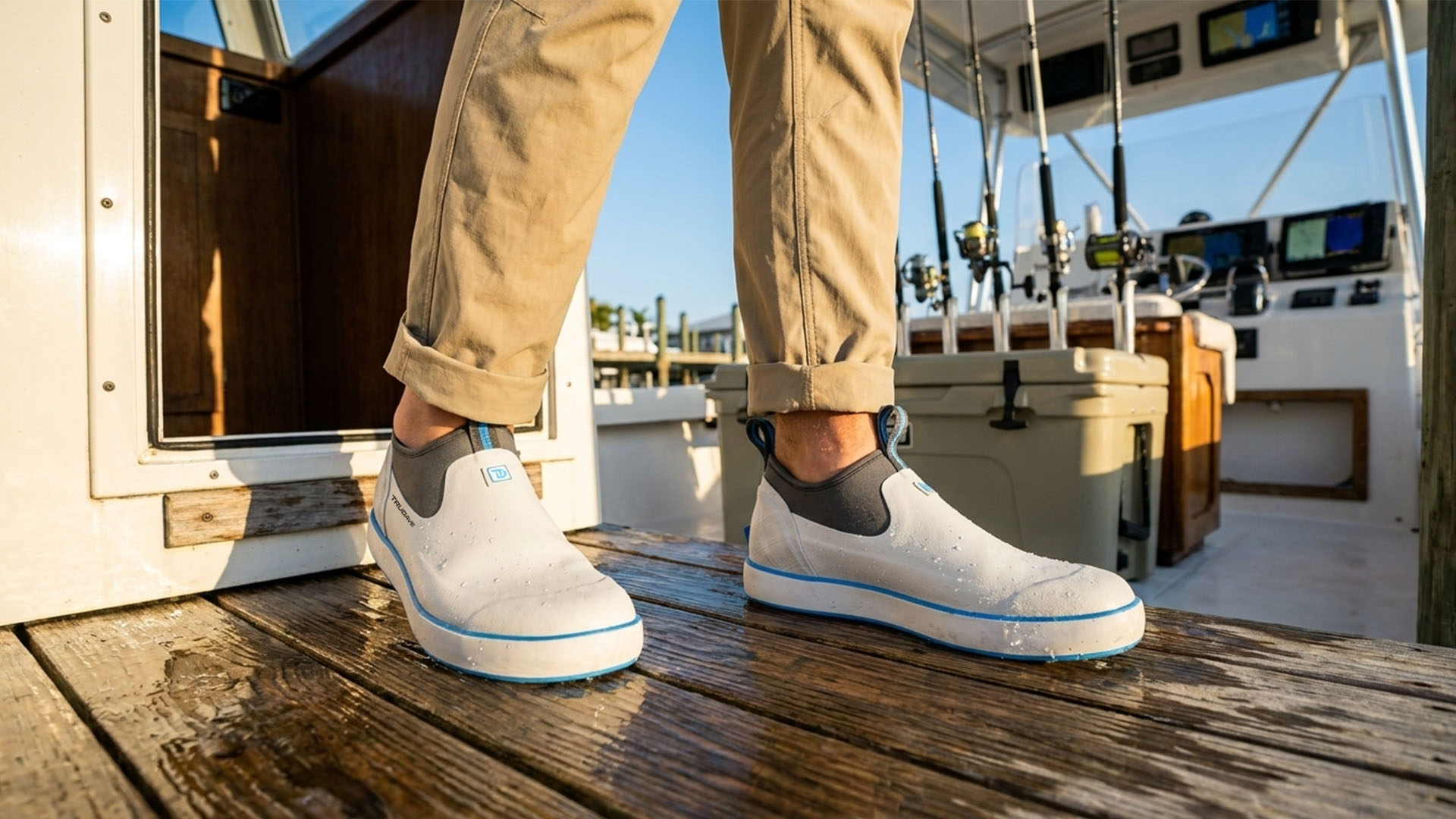
When comparing warm-weather fishing footwear, anglers can evaluate TruDaveGear waterproof deck boots alongside other marine options based on uninsulated construction, removable insoles, outsole design, fit, and summer comfort.
Quick-Drying Insoles
Some insoles dry faster than others.
For summer use, look for footbeds that offer:
- Stable cushioning
- Moisture-friendly top cover
- Good heel support
- Enough arch comfort
- Reasonable thickness
- Easy removal
- Fast drying
Do not choose an extremely thin insole only because it dries quickly.
Standing on a hard boat deck still requires cushioning and support.
Avoid Thick Winter Insoles in Summer
Thermal or heavily cushioned winter insoles may be too warm for summer.
They can also reduce internal space.
Possible problems include:
- Toe pressure
- Instep tightness
- Heat buildup
- More sweating
- Collar rubbing
- Less stability
Use seasonal insoles when appropriate.
A summer insole should balance cushioning, support, and moisture control without adding unnecessary heat.
Deck Boots vs. Fishing Shoes in Summer
This is the main summer footwear decision.
Deck Boots Are Better When You Need:
- Waterproof protection
- Fish slime cleanup
- Rain protection
- Spray protection
- Boat washdown protection
- Easy rinsing
- Cleaner feet
- Wet-deck coverage
Fishing Shoes Are Better When You Need:
- Maximum airflow
- Quick drainage
- Lower weight
- Better breathability
- More walking comfort
- Hot-weather flexibility
- Kayak or beach use
The choice depends on whether your feet need to stay dry or dry quickly.
When Deck Boots Are Better in Summer
Choose deck boots for summer trips that involve:
- Offshore fishing
- Deep sea charters
- Wet center-console boats
- Fish cleaning
- Bait-heavy fishing
- Rainy forecasts
- Boat cleaning
- Marina work
- Wet docks
- Cold morning spray
- Long days around fish boxes
Deck boots are especially practical when the trip is messy.
They help prevent fish slime, bait water, and washdown water from soaking into fabric footwear.
When Fishing Shoes Are Better in Summer
Fishing shoes may be better when:
- The weather is extremely hot
- The boat stays mostly dry
- The trip is short and inshore
- You are kayak fishing
- You walk long distances
- Water entry is unavoidable
- You are wet-wading
- You prefer quick drainage
- Maximum airflow matters more than staying dry
Quick-draining footwear does not keep your feet dry.
It lets water enter and leave more easily.
That can be ideal in some hot-weather fishing environments.
Summer Offshore Fishing
Offshore summer trips often still favor deck boots.
Even when the air is hot, offshore boats may involve:
- Heavy spray
- Wet decks
- Blood
- Bait water
- Fish slime
- Cooler drainage
- Sudden rain
- Deck washdowns
- Long standing
Uninsulated ankle deck boots are usually a strong choice.
Wear lightweight moisture-wicking socks and bring a spare pair.
Summer Inshore Fishing
Inshore summer trips may allow more flexibility.
If the deck is mostly dry, fishing shoes may feel cooler.
Deck boots still make sense when:
- Launch ramps are muddy
- The boat is wet
- Rain is possible
- Fish cleaning is expected
- The deck is rinsed often
- You want easier cleanup
Ask the captain or boat owner what footwear works best for the local conditions.
Summer Fishing Charters
For first-time charter customers, deck boots are often the safer default.
Charter passengers may not know:
- How wet the deck gets
- Where washdowns happen
- Where fish slime collects
- How often bait water spills
- Whether spray is common
- Whether fish are cleaned onboard
Deck boots provide more protection and are easier to clean after the trip.
In very hot inshore conditions, fishing shoes may also work if the captain approves.
Summer Pier Fishing
Pier fishing can involve wet concrete, fish slime, rain, cleaning stations, and long standing.
Deck boots can work well when:
- The pier is wet
- Rain is expected
- Fish are cleaned nearby
- You handle bait often
- You want waterproof protection
However, concrete can wear marine outsoles faster than fiberglass decks.
If the pier is dry and hot, supportive fishing shoes may feel cooler.
Summer Boat Cleaning
Deck boots are excellent for summer boat cleaning.
They protect your feet from:
- Hose water
- Soap
- Fish slime
- Mud
- Wet fiberglass
- Cooler drainage
- Cleaning residue
Uninsulated deck boots are best for this job.
They provide waterproof protection without the extra heat of insulated boots.
Be careful with soap.
No boot is completely slip-proof on soapy surfaces.
Summer Dock Work
Dock work can include wet boards, algae, fuel residue, rope handling, fish boxes, and constant movement.
Deck boots are useful when the work is wet and messy.
For hot summer dock work, choose:
- Uninsulated boots
- Lightweight socks
- Removable insoles
- Stable outsole
- Manageable weight
- Easy-clean materials
If the job involves long walking in dry heat, fishing shoes may be more comfortable.
How to Keep Feet Cooler in Deck Boots
To improve summer comfort:
- Choose uninsulated boots
- Use lightweight socks
- Avoid cotton
- Bring spare socks
- Remove boots during safe breaks
- Dry boots between trips
- Remove insoles after use
- Avoid leaving boots in direct sun
- Wear breathable clothing
- Choose ankle height when possible
You may not eliminate sweat completely, but you can reduce discomfort.
Take Safe Breaks
When the boat is stable and conditions allow, briefly removing boots can help your feet cool down.
Only do this when:
- The deck is safe
- Hooks are controlled
- The captain permits it
- You are away from active fishing gear
- There is no immediate need to move
- You can put boots back on quickly
Do not walk around an active fishing deck barefoot.
Hooks, fish spines, knives, and hot surfaces can cause injury.
Avoid Leaving Boots in the Sun
Deck boots can heat up quickly when left in direct summer sun.
Before wearing them, store boots:
- In shade
- In a ventilated area
- Away from hot metal surfaces
- Away from vehicle dashboards
- Away from closed trunks when possible
Do not leave waterproof boots inside a hot car for long periods.
Heat can affect materials, adhesives, shape, and odor.
Dry Boots Fully Between Trips
Summer heat and sweat can create strong odor if boots stay damp.
After every trip:
- Rinse saltwater and fish residue.
- Remove the insoles.
- Wipe the interior if damp.
- Dry boots with airflow.
- Dry insoles separately.
- Store only when fully dry.
Do not seal damp deck boots in a gear bag.
Airflow is one of the best odor-control tools.
Clean Fish Slime Quickly
Fish slime and bait residue can make boots smell worse in summer heat.
After fishing, clean:
- Upper
- Sidewalls
- Collar
- Pull tabs
- Outsole grooves
- Insole area
Use fresh water and mild soap when needed.
Brush the outsole to remove scales, mud, bait, and debris.
Dry thoroughly.
Odor Control in Summer
Deck boot odor usually comes from moisture and organic residue.
To reduce odor:
- Wear clean socks
- Avoid barefoot use
- Remove insoles
- Dry boots fully
- Rinse fish slime
- Do not store boots wet
- Rotate footwear when possible
- Use boot-safe cleaning products
- Keep boots away from hot sealed spaces
Fragrance sprays may mask odor temporarily, but they do not remove the cause.
Clean and dry the boots instead.
Rotate Footwear During Summer
Frequent anglers may benefit from two footwear options.
A summer rotation might include:
- Uninsulated deck boots for wet, messy trips
- Fishing shoes for hot, dry trips
This lets each pair dry fully between uses.
It also gives you a better match for changing conditions.
Guides, charter crews, and boat owners often benefit from rotating footwear.
Clean Shoes for the Drive Home
After a hot summer fishing trip, your deck boots may be wet, salty, and covered with fish residue.
Bring clean shoes for the drive home.
This helps:
- Keep vehicle pedals cleaner
- Reduce fish odor in the car
- Let your feet cool down
- Keep wet boots in a tray or bin
- Improve comfort after long standing
Place dirty boots in a washable cargo tray or plastic bin.
Do not seal them in a plastic bag for long storage.
Are Black Deck Boots Hotter in Summer?
Dark footwear may absorb more heat in direct sun than lighter footwear.
However, comfort depends on more than color.
Important factors include:
- Insulation
- Boot height
- Sock material
- Fit
- Air temperature
- Sun exposure
- Standing time
- Insole material
- Whether the boots are stored in shade
If heat is a concern, focus first on uninsulated construction, lightweight socks, and keeping boots out of direct sun before use.
Can Deck Boots Cause Blisters in Summer?
Any footwear can cause blisters when moisture and friction combine.
Summer deck boot blisters may come from:
- Wet socks
- Cotton socks
- Heel slip
- Oversized boots
- Tight toe box
- No-show socks
- Barefoot wear
- Ankle collar rubbing
- Long standing
- New untested boots
Prevent blisters by choosing correct size, wearing crew-height moisture-wicking socks, and testing boots before long trips.
Bring blister tape for known hot spots.
Can Deck Boots Make Feet Smell?
Deck boots can smell if moisture and bacteria remain trapped inside.
Odor is more likely when:
- Boots are worn barefoot
- Socks are cotton
- Insoles stay damp
- Fish slime is not cleaned
- Boots are stored wet
- Boots sit in a hot car
- The same pair is worn every day without drying
The solution is simple but consistent:
Clean, remove insoles, dry completely, and wear clean performance socks.
Can You Wear Deck Boots With Shorts?
Yes.
Deck boots with shorts are common on fishing boats in summer.
For comfort, wear crew socks that extend above the boot collar.
This helps prevent ankle rubbing.
Deck boots with shorts are practical for:
- Offshore charters
- Boat cleaning
- Fish cleaning
- Rainy summer trips
- Wet marinas
- Dock work
If the sun is intense, consider lightweight fishing pants for better leg protection.
Can You Wear Deck Boots Without Socks?
It is not recommended for long fishing trips.
Without socks, sweat and friction go directly into the boot lining.
This can increase:
- Odor
- Blisters
- Skin irritation
- Heel rubbing
- Damp interior
- Cleaning difficulty
Socks are easier to wash than boot linings.
Wear lightweight crew socks instead.
Can You Wear Deck Boots for Kayak Fishing in Summer?
Sometimes, but they are not always ideal.
Deck boots may feel bulky in a kayak footwell.
They may also be less appropriate if water entry is likely.
Kayak fishing often favors:
- Quick-draining shoes
- Water shoes
- Low-profile fishing shoes
- Footwear compatible with pedals
- Warm-weather wet footwear systems
Deck boots may work for dry launches or sit-on-top situations where water exposure is limited.
For repeated water entry, quick-draining footwear is often better.
Can You Wear Deck Boots for Beach Fishing in Summer?
Deck boots can work for some beach fishing, especially around wet sand, rain, or fish cleaning.
However, they may not be ideal for long walks in soft sand.
Sand can enter the boot opening and cause friction.
For surf fishing, you may need different footwear depending on:
- Water depth
- Sand temperature
- Walking distance
- Wave exposure
- Terrain
- Whether waders are needed
Deck boots are best for boats, docks, marinas, and wet hard surfaces.
Can You Wear Deck Boots for Yard Work in Summer?
Yes, uninsulated deck boots can be useful for wet summer yard work.
They work well around:
- Mud
- Rain
- Garden hoses
- Wet grass
- Pressure washing
- Outdoor cleaning
- Light farm chores
However, deck boots are not a replacement for safety work boots when toe protection, puncture resistance, or workplace certification is required.
Choose footwear based on the actual risk.
Summer Deck Boot Fit Checklist
A summer deck boot should have:
- Uninsulated construction
- Comfortable toe room
- Secure heel fit
- Lightweight feel
- Stable outsole
- Removable insole
- Enough sock space
- No painful instep pressure
- No excessive heel slip
- Easy-clean upper
- Crew-sock compatibility
The boot should feel secure, not tight.
It should protect against water without trapping unnecessary heat.
Summer Deck Boot Buying Checklist
Before buying:
- Choose uninsulated construction
- Check boot height
- Review outsole design
- Check removable insole details
- Read fit reviews
- Consider sock thickness
- Avoid insulated winter models
- Review return policy
- Think about fishing style
After delivery:
- Test with summer socks
- Stand for 20 minutes
- Walk and turn
- Side-step
- Squat
- Use stairs
- Check heel movement
- Check ankle rubbing
- Check heat buildup
- Exchange if painful or unstable
Do not make a full-day summer charter the first real test of new boots.
Common Summer Deck Boot Mistakes
Wearing Insulated Boots
They often trap too much heat.
Wearing Cotton Socks
Cotton stays wet and increases friction.
Going Barefoot
This increases odor and rubbing.
Sizing Up for Airflow
Oversizing causes instability.
Forgetting Spare Socks
Wet socks make feet uncomfortable.
Leaving Boots in the Sun
Hot boots feel worse and may age faster.
Not Removing Insoles
Damp insoles create odor.
Wearing No-Show Socks
The collar may rub the ankle.
Using Thick Winter Insoles
They increase heat and reduce space.
Assuming Fishing Shoes Are Always Better
Fishing shoes are cooler, but deck boots are more protective in wet, messy conditions.
Final Thoughts
You can wear deck boots in summer, and in many fishing situations, they are still the most practical choice.
The key is choosing the right type.
For hot-weather fishing, uninsulated ankle deck boots usually work best.
They provide waterproof protection against spray, rain, fish slime, bait water, cooler drainage, and boat washdowns without the extra warmth of insulated winter boots.
Wear lightweight moisture-wicking socks.
Avoid cotton.
Do not wear deck boots barefoot for long fishing trips.
Do not size up only for airflow.
A waterproof boot will not breathe like a mesh shoe just because it is larger.
Instead, choose correct fit, lightweight socks, removable insoles, and good drying habits.
Bring spare socks on long trips.
Remove insoles after fishing and dry the boots completely.
Keep boots out of direct sun and away from hot vehicles whenever possible.
Choose fishing shoes instead of deck boots when the weather is extremely hot, the deck stays mostly dry, maximum airflow matters, or water entry is unavoidable.
Choose deck boots when the trip involves wet decks, fish slime, rain, spray, bait water, boat cleaning, or offshore fishing.
Summer fishing footwear is not about choosing the coolest option in the parking lot.
It is about choosing the footwear that keeps your feet protected, stable, clean, and comfortable for the conditions you will actually face on the water.
Frequently Asked Questions
Can you wear deck boots in summer?
Yes. Uninsulated ankle deck boots can work well in summer, especially for wet decks, offshore fishing, rain, fish slime, and boat washdowns.
Are deck boots too hot for summer?
Insulated or tall deck boots may be too hot. Uninsulated ankle deck boots with lightweight moisture-wicking socks are usually more comfortable.
What socks should I wear with deck boots in summer?
Wear lightweight synthetic, merino, or merino-blend moisture-wicking crew socks. Avoid cotton socks.
Can I wear deck boots without socks?
It is not recommended for long fishing trips. Socks reduce friction, manage sweat, and help control odor.
Are fishing shoes better than deck boots in summer?
Fishing shoes are better for maximum airflow and quick drainage. Deck boots are better for waterproof protection, fish slime, rain, spray, and washdowns.
Should summer deck boots be insulated?
Usually no. Insulated boots are generally better for cold weather and may be too warm in summer.
Why do my feet sweat in deck boots?
Waterproof materials limit airflow, so heat and moisture from your feet remain inside the boot.
Does sweat mean my deck boots are leaking?
Not always. Gradual dampness in both boots usually suggests sweat, while sudden wetness in one specific area may suggest a leak.
Should I size up in summer deck boots?
Not just for airflow. Oversized boots can cause heel slip, foot rotation, blisters, and poor stability.
Are deck boots good for summer offshore fishing?
Yes. Offshore fishing often involves spray, rain, wet decks, fish slime, bait water, and washdowns even in warm weather.
Are deck boots good for summer fishing charters?
Yes, especially for offshore or wet-deck charters. For hot, calm inshore trips, fishing shoes may also work.
Can I wear deck boots with shorts?
Yes. Deck boots with shorts are common in summer. Wear crew socks to prevent collar rubbing.
How do I stop deck boots from smelling in summer?
Wear clean moisture-wicking socks, rinse fish residue, remove insoles, dry boots fully, and avoid storing them wet.
Should I bring spare socks when wearing deck boots?
Yes. Spare socks help if your feet get wet from sweat, rain, spray, or water entering through the boot opening.
How do I dry deck boots after summer fishing?
Remove the insoles, wipe moisture, and dry the boots with gentle airflow. Avoid high heat and closed hot vehicles.
When should I choose fishing shoes instead of deck boots?
Choose fishing shoes for extremely hot, dry, inshore, kayak, beach, or quick-draining situations where waterproof protection is less important.