Meta Description: Learn what to wear surf fishing in warm, cold, rainy, and windy conditions, including boots, waders, socks, rain gear, sun protection, and clothing for wet sand.
Suggested URL Slug: what-to-wear-surf-fishing
Primary Keyword: what to wear surf fishing
Secondary Keywords: surf fishing clothing, best boots for surf fishing, surf fishing waders, beach fishing footwear, cold weather surf fishing gear, what shoes to wear surf fishing
Search Intent: Informational / Commercial Investigation
Surf fishing exposes anglers to a combination of conditions that few other fishing environments create.
You may spend hours standing in wind, walking through soft sand, dealing with breaking waves, carrying gear across a wide beach, and moving between dry dunes and wet shoreline areas.
The weather may also feel very different at the water than it did in the parking lot.
A mild day can become cold once strong coastal wind and ocean spray are added. Warm sand may turn into chilly water around your ankles. Clothing that works during the walk to the beach may feel heavy and uncomfortable after several hours of casting.
The best surf fishing outfit depends on water temperature, air temperature, wind, wave conditions, walking distance, and whether you plan to remain on dry sand or enter the water.
This guide explains what to wear surf fishing in warm, cool, rainy, and cold conditions, including how to choose boots, waders, socks, outerwear, and sun protection.
Start With the Water Temperature
When dressing for surf fishing, many anglers focus only on the air temperature.
That can be a mistake.
Water temperature matters because surf fishermen may stand in wash, step into deeper water, or become unexpectedly soaked by a wave.
Cold water can make ordinary footwear and clothing uncomfortable quickly.
Before choosing your outfit, consider:
- Air temperature
- Water temperature
- Wind speed
- Wave height
- Rain
- Tide
- Time of day
- Walking distance
- How deep you plan to wade
Warm air does not always mean warm water.
A sunny spring day may still involve cold coastal water.
Common Surf Fishing Conditions
Surf anglers often deal with:
- Strong wind
- Breaking waves
- Wet sand
- Saltwater spray
- Cold water
- Bright sun
- Blowing sand
- Long walks
- Sudden rain
- Changing tides
- Uneven beach slopes
- Slippery rocks or jetties
Clothing should protect you without making movement difficult.
The right system should also dry quickly and remain comfortable after repeated exposure to saltwater.
Best Footwear for Surf Fishing
Common surf fishing footwear includes:
- Barefoot or sandals in limited warm conditions
- Quick-draining fishing shoes
- Neoprene surf boots
- Waterproof ankle boots
- Tall rubber boots
- Wading boots
- Hip waders
- Chest waders
The best option depends on how wet you expect to become.
Quick-Draining Fishing Shoes
Quick-draining shoes work well during warm-weather surf fishing when wet feet are expected.
They are useful for:
- Summer beach fishing
- Shallow water
- Warm coastal climates
- Short fishing sessions
- Walking through wet sand
Good draining shoes should provide:
- Secure fit
- Toe protection
- Fast drainage
- Quick-drying materials
- Traction on wet sand
- Enough support for walking
Avoid loose slip-on water shoes.
Waves and soft sand can pull them from your feet.
Neoprene Surf Boots
Neoprene boots or booties are popular with anglers who want more warmth and protection than ordinary water shoes provide.
They can help with:
- Cool water
- Wet sand
- Shell fragments
- Small rocks
- Repeated wave exposure
- Cold early mornings
Neoprene does not usually keep your feet completely dry.
Instead, it traps a thin layer of water that warms against the body.
Fit should be close and secure.
Loose neoprene can allow sand to enter and create friction.
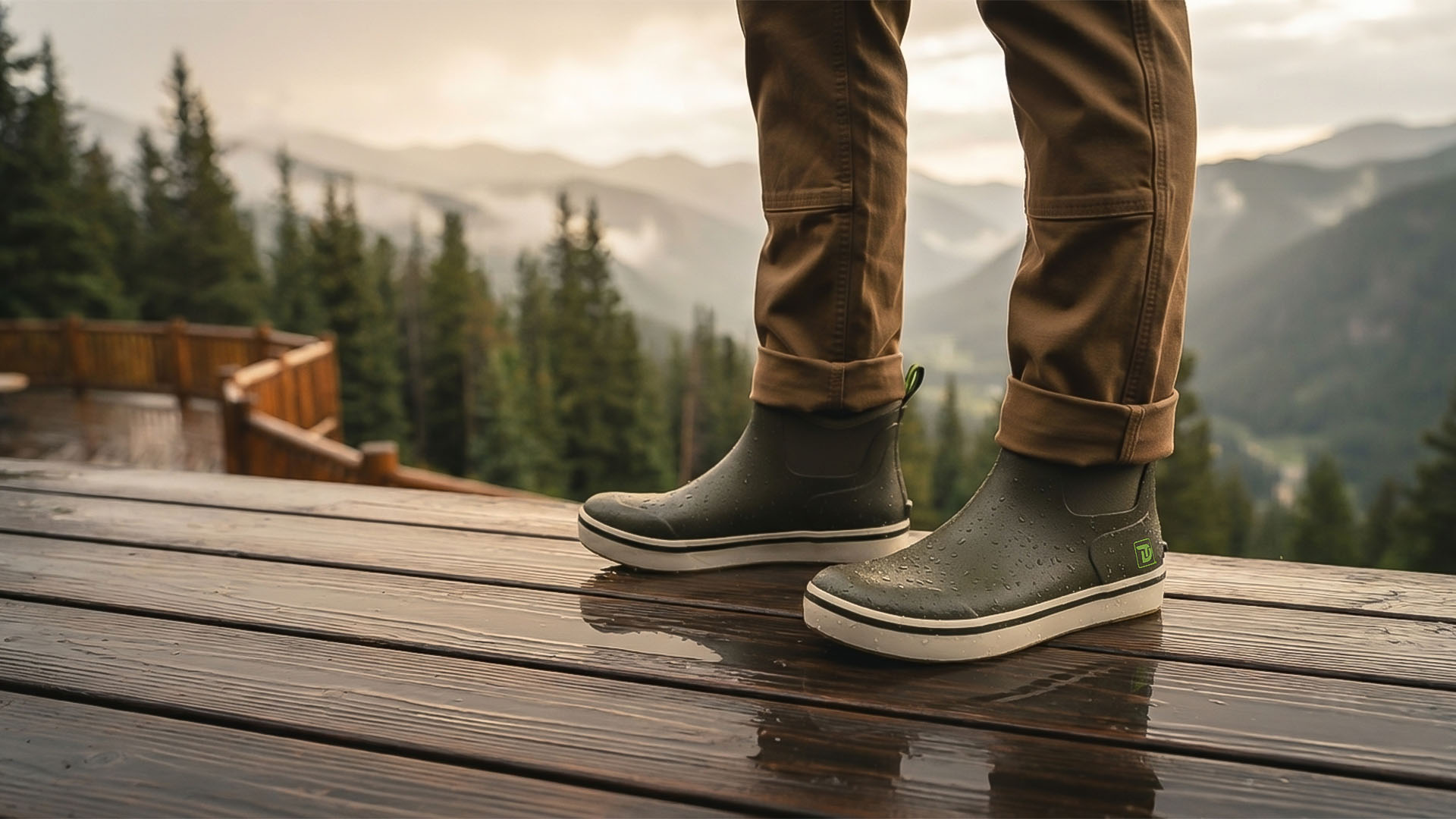
Waterproof Ankle Boots
Waterproof ankle boots can work for surf fishing when you plan to stay mostly above the active wash zone.
They are useful for:
- Walking on damp sand
- Light rain
- Beach access
- Fishing from firm sand
- Carrying gear near the shoreline
- Cool mornings
They are less suitable when waves regularly reach above the boot opening.
Once saltwater enters, waterproof construction can trap it inside.
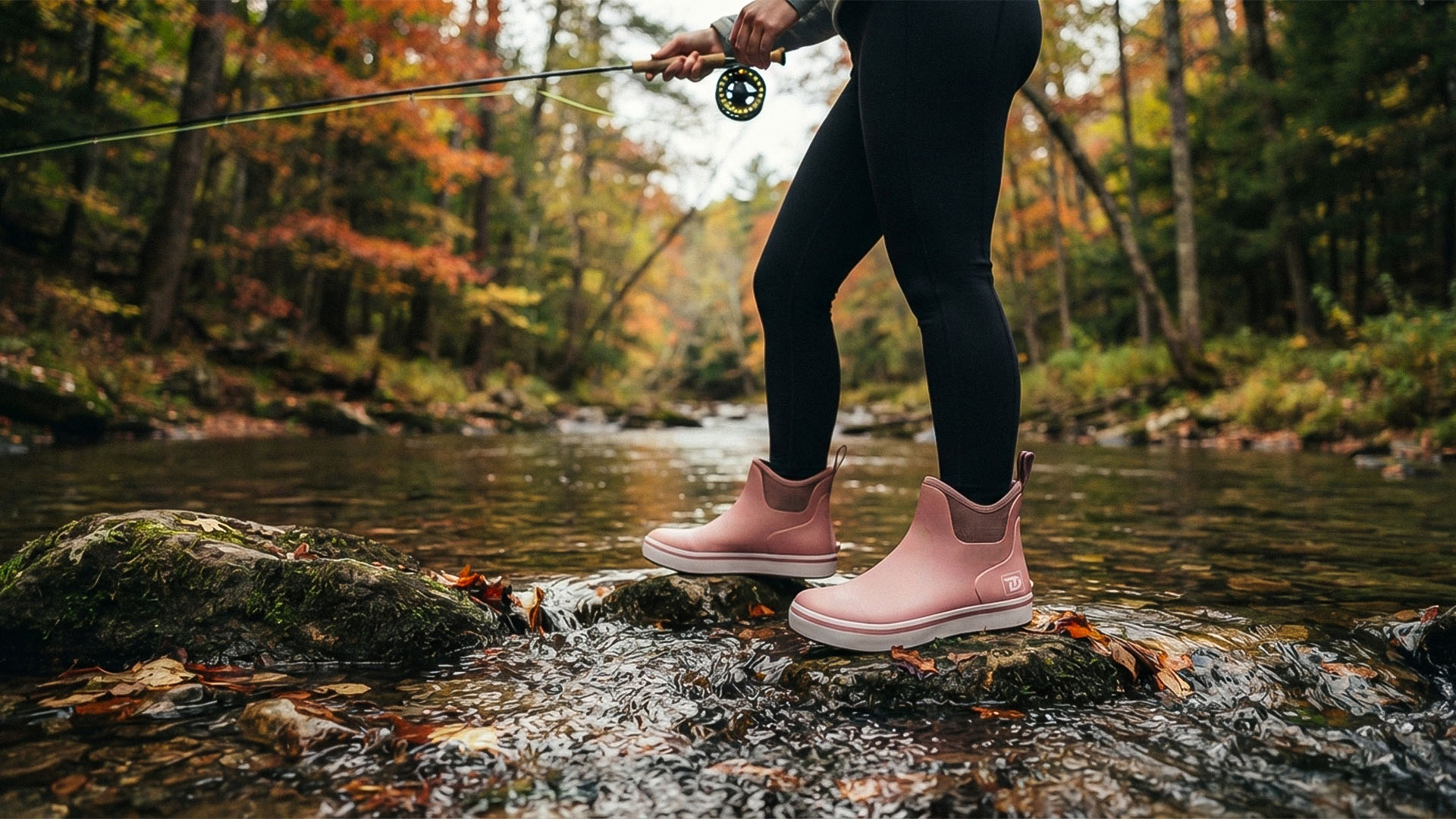
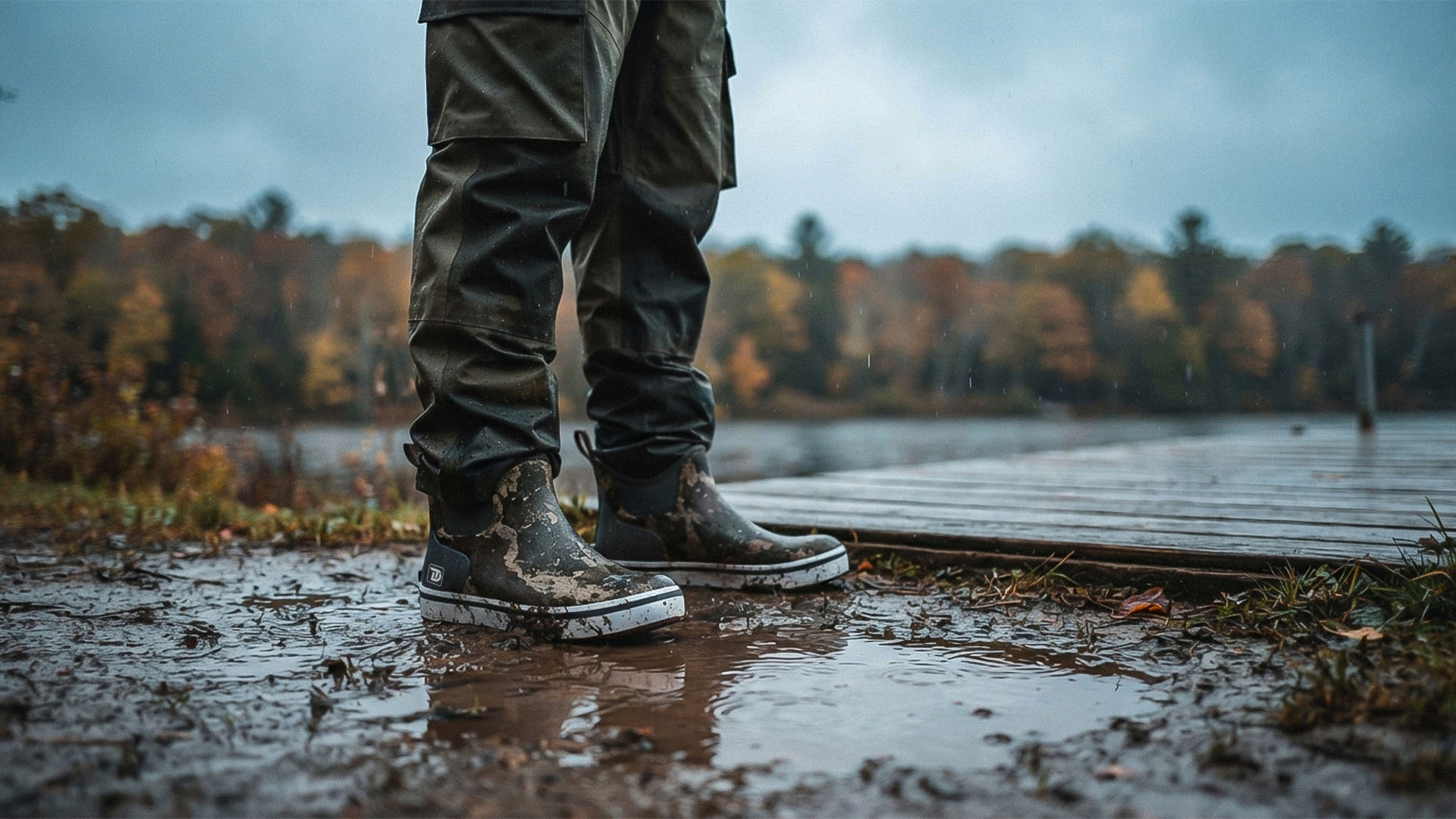
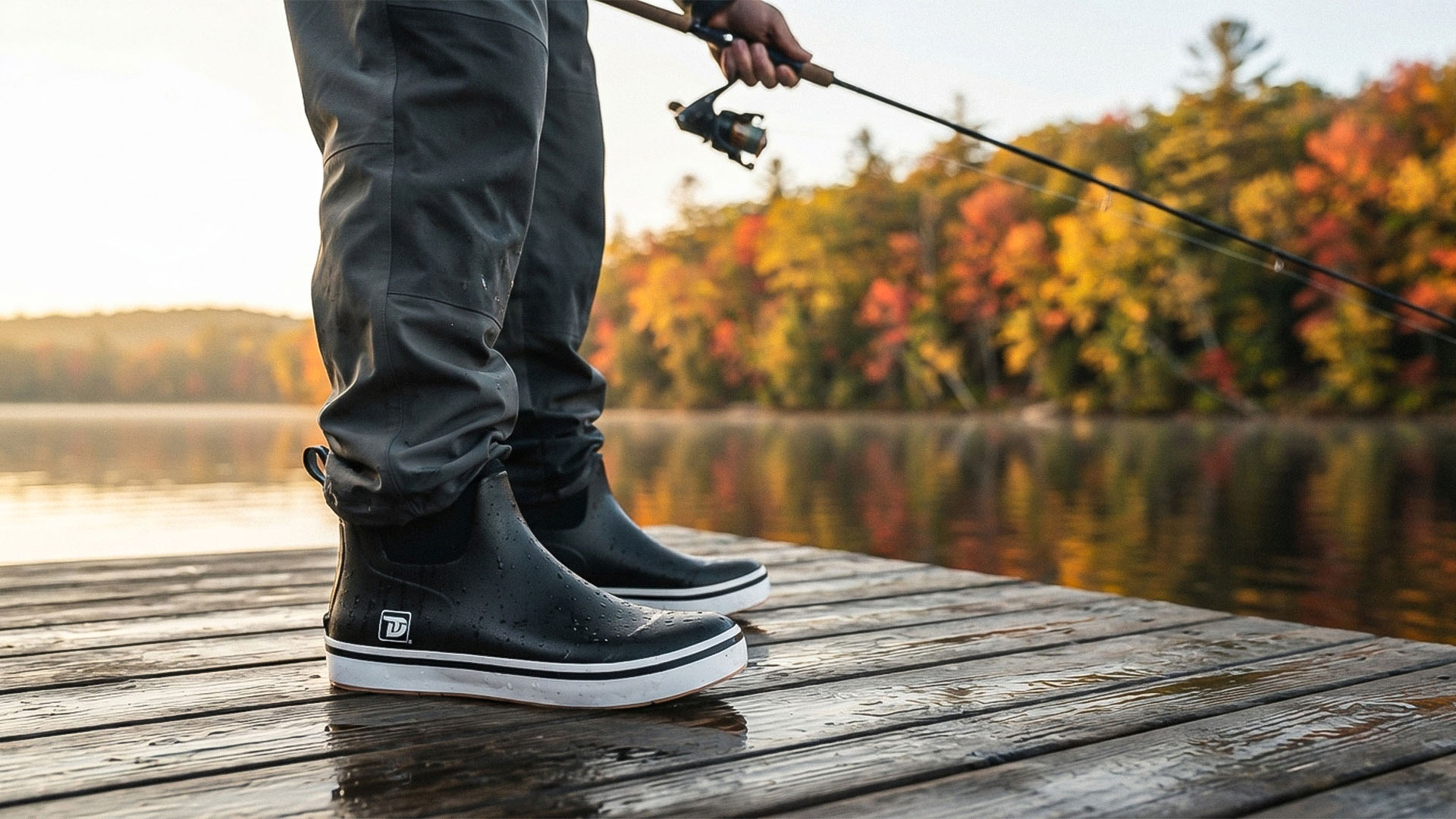
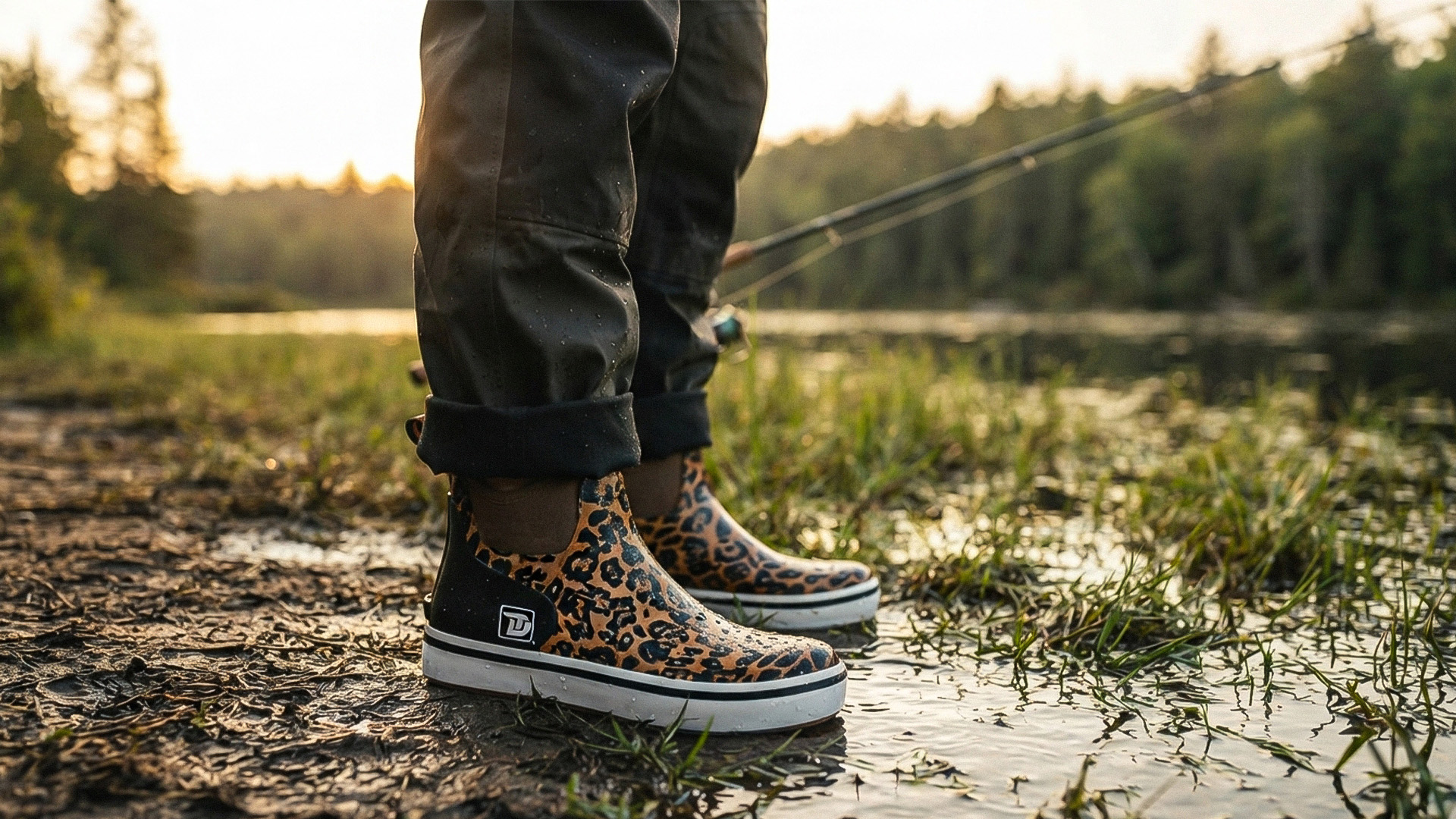
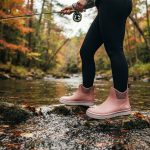
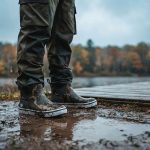
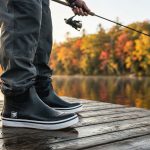
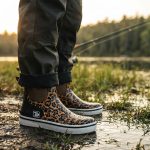
Anglers who also fish from boats, piers, and wet docks can compare [TruDaveGear waterproof deck boots] with other low-profile waterproof footwear for dry-sand and light-spray conditions.
For active surf wading, taller boots or waders are usually more appropriate.
Tall Rubber Boots
Tall rubber boots provide more protection than ankle boots.
They work well for:
- Shallow wash
- Cold wet sand
- Heavy rain
- Beach launching
- Carrying equipment near the water
- Short periods in shallow surf
However, they can become heavy and fill with water if a wave rises above the opening.
Tall rubber boots may also feel loose during long walks across soft sand.
Use them when water remains below the top.
Wading Boots
Wading boots provide support, drainage, and traction for anglers who spend significant time in the water.
They are commonly worn with stockingfoot waders.
Wading boots may be useful around:
- Rocky beaches
- Jetties
- Cold surf
- Uneven bottoms
- Long wading sessions
Choose an outsole appropriate for the local surface.
Beach sand, rocks, algae, and jetty structure require different traction.
Check local rules regarding sole materials.
Hip Waders
Hip waders provide protection above the knee without covering the torso.
They can be useful for:
- Shallow surf
- Calm beach conditions
- Warm to cool weather
- Short periods in the wash
They are lighter than chest waders but offer less protection if water rises unexpectedly.
Wave conditions can change quickly.
Do not rely on hip waders when the surf regularly reaches above their safe height.
Chest Waders
Chest waders provide the greatest lower-body water protection.
They are commonly used for:
- Cold-water surf fishing
- Winter fishing
- Repeated wading
- Rough weather
- Extended shoreline sessions
Chest waders can be breathable or neoprene.
Breathable Waders
Better for:
- Mild and cool weather
- Long walking
- Layering
- Active fishing
- Reduced heat buildup
Neoprene Waders
Better for:
- Cold water
- Low activity
- Winter fishing
- Strong insulation needs
Chest waders require careful fit and safe use.
They should not encourage anglers to wade deeper than conditions allow.
Surf Fishing Footwear Comparison
| Footwear Type | Best For | Main Advantage | Main Limitation |
|---|---|---|---|
| Draining Shoes | Warm summer surf | Lightweight and quick drying | Feet remain wet |
| Neoprene Boots | Cool shallow water | Warmth and flexibility | Sand can enter |
| Ankle Waterproof Boots | Dry sand and light spray | Easy and comfortable | Limited wave protection |
| Tall Rubber Boots | Shallow wash | Greater water coverage | Can fill with water |
| Wading Boots | Rocky or uneven surf | Support and traction | Require compatible system |
| Hip Waders | Shallow wading | Lighter than chest waders | Limited height |
| Chest Waders | Cold and deeper surf | Maximum protection | Hotter and bulkier |
What to Wear Surf Fishing in Summer
Summer surf fishing often involves heat, strong sunlight, humidity, and warm water.
A practical summer outfit includes:
- Lightweight long-sleeve sun shirt
- Quick-drying shorts or pants
- Draining fishing shoes or neoprene booties
- Lightweight socks when appropriate
- Wide-brim hat
- Polarized sunglasses
- Neck gaiter
- Sunscreen
- Lightweight rain shell
Long sleeves can be more comfortable than a cotton T-shirt because they reduce direct sun exposure.
Choose breathable materials.
Avoid heavy cotton clothing that stays wet.
Should You Wear Shorts Surf Fishing?
Shorts work well when:
- Water is warm
- The beach is clean
- Insects are limited
- You are comfortable with sun exposure
- The walk is short
- You expect to get wet
Lightweight pants are better when:
- Sun exposure is intense
- Wind is strong
- Insects are present
- Sand is blowing
- Temperatures are cool
- The beach contains sharp vegetation or debris
Quick-drying pants provide more versatile protection.
What to Wear Surf Fishing in Spring
Spring beaches can be windy and the water may remain cold.
Wear:
- Moisture-wicking base layer
- Lightweight fleece
- Windproof or waterproof shell
- Quick-drying fishing pants
- Waterproof boots or waders
- Merino or synthetic socks
- Hat
- Gloves when needed
Dress for water temperature as well as air temperature.
A warm afternoon can still involve cold surf and strong wind.
What to Wear Surf Fishing in Fall
Fall surf fishing may bring excellent conditions, but temperatures can change quickly.
A useful outfit includes:
- Long-sleeve base layer
- Lightweight fleece
- Waterproof shell
- Durable fishing pants
- Waterproof boots or breathable waders
- Medium-weight socks
- Hat
- Light gloves
- Neck gaiter
Sunset temperatures may drop quickly.
Pack an additional layer in a dry bag.
What to Wear Surf Fishing in Winter
Winter surf fishing requires a complete cold-weather system.
Wear:
- Thermal base layers
- Fleece or synthetic insulation
- Waterproof and windproof shell
- Insulated fishing pants
- Chest waders
- Warm socks
- Insulated boots or wading boots
- Warm hat
- Waterproof gloves
- Neck gaiter
- Spare dry clothing
Avoid excessive layering inside boots.
If socks make footwear tight, circulation may decrease and feet may become colder.
Cold-weather surf fishing should be conservative.
Waves, wet clothing, and low temperatures increase risk.
Wind Protection Is Essential
Coastal wind affects comfort more than many anglers expect.
Even moderate temperatures can feel cold when wind remains constant.
Use:
- Windproof outer shell
- Adjustable hood
- Secure cuffs
- Neck gaiter
- Wind-resistant pants
- Close-fitting hat
Avoid loose clothing that flaps constantly.
Loose fabric can become distracting and may catch on hooks or equipment.
What Jacket Is Best for Surf Fishing?
A good surf fishing jacket should protect against wind, spray, and rain.
Look for:
- Waterproof or highly water-resistant construction
- Wind protection
- Adjustable hood
- High collar
- Secure cuffs
- Enough room for layers
- Easy casting movement
- Corrosion-resistant hardware where possible
The jacket should overlap the top of your pants or waders.
Water should move down the outside rather than entering through gaps.
Waterproof Bibs for Surf Fishing
Waterproof bib pants are useful when fishing from dry sand or shallow wash without full waders.
They provide more coverage than ordinary rain pants.
Bibs help protect against:
- Wind
- Rain
- Spray
- Wet sand
- Fish slime
- Bait
They are useful for anglers who remain mostly on the beach.
For repeated wading, chest waders usually provide better protection.
How Should Waders Fit?
Waders should allow bending, walking, casting, and climbing without excessive loose material.
They should provide enough room for layers but not fit like oversized bags.
Check:
- Torso length
- Inseam
- Bootie size
- Shoulder strap adjustment
- Knee movement
- Crotch fit
- Sock thickness
Excess material can create folds and wear points.
Waders that are too tight may restrict movement and place stress on seams.
Should You Wear a Belt With Waders?
A properly fitted wading belt is commonly recommended with chest waders.
It helps reduce the amount of water that can move into the lower section if the angler falls.
Use the belt according to the wader manufacturer’s instructions.
A belt does not make deep or rough wading safe.
Always evaluate waves, current, tide, and footing.
Wading Depth and Wave Safety
Surf anglers should avoid wading deeper simply because they are wearing taller waders.
Breaking waves create force even in relatively shallow water.
Do not wade when:
- Waves are knocking you off balance
- The bottom drops unexpectedly
- Rip currents are present
- The tide is rising quickly
- Visibility is poor
- You are fishing alone in hazardous conditions
- Water temperature creates serious risk
- Local authorities issue warnings
A productive fishing spot is not worth unsafe exposure.
What Socks to Wear Surf Fishing
Sock choice depends on footwear and temperature.
Warm Weather
Use lightweight synthetic socks or specialized wet-wading socks.
Cool Weather
Use medium-weight synthetic or merino wool socks.
Cold Weather
Use thicker merino socks with enough footwear space.
With Neoprene Booties
Use thin synthetic liners when needed to reduce friction.
Avoid cotton.
Cotton absorbs water and dries slowly.
How to Prevent Sand From Entering Footwear
Sand causes friction and blisters.
To reduce sand entry:
- Use gravel guards
- Choose close-fitting neoprene boots
- Wear pants over boot openings
- Use gaiters
- Avoid loose low-cut shoes
- Stop and empty footwear early
- Rinse before sand dries inside
Fine sand can become trapped under insoles and around toes.
Even a small amount can become painful during long walks.
Gravel Guards for Surf Fishing
Gravel guards help block sand, shells, and small stones.
They are useful with:
- Wading boots
- Neoprene socks
- Wet-wading systems
- Stockingfoot waders
Built-in gravel guards are common on many waders.
Make sure they sit securely over the boot.
Loose guards may shift during wave action.
Sun Protection on the Beach
Open beaches provide little shade.
Water and sand reflect sunlight.
Bring:
- Broad-spectrum sunscreen
- Long-sleeve sun shirt
- Hat
- Polarized sunglasses
- Neck gaiter
- Lip protection
- Lightweight gloves when desired
Apply sunscreen before reaching the beach.
Wind may prevent you from noticing how much sun exposure you are receiving.
Best Hat for Surf Fishing
Choose a hat that remains secure in strong wind.
Good options include:
- Fitted fishing cap
- Wide-brim hat with chin strap
- Performance sun hat
- Waterproof shell hat
- Knit cap in cold weather
Avoid loose hats.
Use a retainer strap when necessary.
Polarized Sunglasses for Surf Fishing
Polarized sunglasses reduce glare and help anglers see:
- Sandbars
- Troughs
- Bait
- Weed lines
- Changes in water color
- Surface activity
- Submerged hazards
They also protect against blowing sand, hooks, and sunlight.
Use a secure strap.
Gloves for Surf Fishing
Gloves can provide protection from:
- Cold
- Wind
- Fish spines
- Rough line
- Bait
- Sun
- Wet equipment
Choose gloves that allow knot tying and reel operation.
Cold-weather anglers may need multiple pairs because gloves become wet.
Keep a dry backup inside waterproof storage.
What Pants to Wear on the Beach
Good surf fishing pants should be:
- Quick-drying
- Wind-resistant
- Flexible
- Lightweight
- Easy to clean
- Comfortable during walking
Options include:
- Technical fishing pants
- Lightweight hiking pants
- Soft-shell pants
- Waterproof bibs
- Wader layers
Avoid jeans.
Wet denim becomes heavy, cold, and slow to dry.
Layers Under Waders
The clothing worn under waders should match the temperature.
Mild Weather
Wear lightweight moisture-wicking pants or base layers.
Cool Weather
Add fleece pants or medium insulation.
Cold Weather
Use thermal base layers and synthetic insulation designed to fit without restricting movement.
Avoid cotton.
Moisture trapped under waders can reduce comfort.
How to Dress for Rainy Surf Fishing
A rainy surf outfit may include:
- Waterproof jacket
- Waterproof bibs or chest waders
- Moisture-wicking base layers
- Waterproof footwear
- Synthetic or merino socks
- Hat under the hood
- Spare dry clothing
Rain can combine with ocean spray and wind.
A simple water-resistant jacket may not provide enough protection during long exposure.
How to Dress for Night Surf Fishing
Night surf fishing often becomes cooler and windier.
Wear:
- Reflective or visible outer layer
- Warm base layer
- Windproof shell
- Long pants
- Secure footwear
- Headlamp
- Backup flashlight
- Warm hat
- Gloves
- Spare batteries
Keep track of tides and exit routes.
A beach that was easy to access during daylight may feel very different after dark.
Reflective Clothing and Visibility
Surf anglers sometimes fish near vehicles, piers, jetties, or other anglers.
Reflective details can improve visibility.
Consider:
- Reflective strips
- Bright outer layer
- Headlamp
- Marker light on gear
- Reflective tackle bag
Avoid shining bright lights directly at other anglers or into the water unnecessarily.
What to Wear on a Sandy Beach
For long walks across soft sand, choose lightweight footwear with a secure fit.
Heavy boots can increase fatigue.
Suitable options include:
- Draining shoes
- Neoprene boots
- Lightweight wading boots
- Low-profile waterproof footwear for dry conditions
Sand will enter many footwear systems eventually.
Choose something easy to empty and rinse.
What to Wear on a Rocky Beach
Rocky beaches require more structure.
Use:
- Wading boots
- Waterproof hiking boots
- Supportive surf boots
- Toe protection
- Secure lacing
Avoid loose ankle boots on unstable rocks.
No outsole is completely safe on algae-covered stone.
Move slowly and test each step.
What to Wear on a Jetty
Jetties are more hazardous than ordinary sandy beaches.
Wear footwear with:
- Strong traction
- Secure fit
- Toe protection
- Stable midsoles
- Good lateral support
Deck boots may work on clean, flat jetty surfaces but are often less suitable for uneven rocks.
Purpose-built rock or wading footwear is usually safer.
Do not jump between wet rocks.
Use extreme caution around waves.
What to Wear for Long Beach Walks
Surf anglers may walk significant distances while carrying rods, bait, and tackle.
Wear footwear that provides:
- Secure heel fit
- Cushioned insole
- Correct width
- Stable outsole
- Low enough weight
- Protection from sand
Use a backpack or shoulder bag to keep hands free.
Avoid carrying unnecessary gear.
Carry Spare Dry Clothing
Keep spare items in a dry bag.
At minimum, bring:
- Socks
- Shirt
- Lightweight pants
- Towel
- Warm layer
Cold-weather anglers should bring a more complete backup set.
A single unexpected wave can soak clothing.
Use a Dry Bag
A dry bag protects:
- Phone
- Keys
- Wallet
- Spare clothes
- Medication
- Camera
- Batteries
- Food
- Fishing license
Sand and saltwater damage electronics quickly.
Do not place the dry bag where waves can reach it.
Saltwater Clothing Care
Saltwater should be removed after every trip.
After fishing:
- Rinse boots and waders with fresh water.
- Remove sand.
- Clean fish residue.
- Rinse zippers and hardware.
- Dry equipment fully.
- Store away from direct sun.
- Inspect seams and soles.
- Follow manufacturer instructions.
Salt and sand can damage materials over time.
How to Clean Surf Fishing Boots
Rinse footwear with fresh water.
Clean:
- Tread grooves
- Zippers
- Pull tabs
- Seams
- Insoles
- Boot openings
Remove insoles and dry them separately.
Avoid direct high heat.
Do not store damp boots inside sealed containers.
How to Dry Waders
After rinsing:
- Hang waders according to manufacturer guidance
- Allow the exterior to dry
- Turn them carefully when interior drying is needed
- Avoid sharp hangers
- Keep away from heaters
- Store without tight folds
- Inspect for leaks
Never place wet waders into long-term storage.
Common Surf Fishing Clothing Mistakes
Dressing Only for Air Temperature
Water and wind may be much colder.
Wearing Cotton
Cotton stays wet and loses comfort.
Using Ankle Boots in Active Surf
Waves can fill them quickly.
Wearing Loose Water Shoes
They may come off in sand or waves.
Forgetting Wind Protection
Wind can create more discomfort than rain.
Wading Too Deep
Boot or wader height does not make rough water safe.
Ignoring Sand Inside Footwear
Sand creates blisters quickly.
Wearing Heavy Jeans
Wet denim becomes cold and difficult to move in.
Forgetting Spare Clothes
Unexpected waves happen.
Failing to Rinse Saltwater Away
Salt damages footwear and clothing over time.
Surf Fishing Clothing Checklist
Warm Weather
- Long-sleeve sun shirt
- Quick-drying shorts or pants
- Draining shoes or neoprene boots
- Lightweight socks
- Hat
- Sunglasses
- Sunscreen
- Neck gaiter
Cool Weather
- Moisture-wicking base layer
- Lightweight fleece
- Windproof shell
- Fishing pants
- Waterproof boots or breathable waders
- Merino socks
- Hat
- Light gloves
Cold Weather
- Thermal base layers
- Insulating mid layers
- Waterproof shell
- Chest waders
- Warm socks
- Wading boots
- Warm hat
- Gloves
- Neck gaiter
- Dry backup clothing
Rainy Conditions
- Waterproof jacket
- Bibs or waders
- Water-ready footwear
- Moisture-wicking socks
- Dry bag
- Spare shirt and socks
Night Fishing
- Reflective outerwear
- Headlamp
- Backup flashlight
- Warm layer
- Windproof shell
- Secure footwear
- Spare batteries
Final Thoughts
The best surf fishing outfit depends on water temperature, wind, waves, season, and how deeply you plan to enter the water.
Use quick-draining shoes or neoprene boots for warm summer surf.
Use waterproof boots when staying mostly on dry or damp sand.
Use tall boots for shallow wash.
Use breathable or neoprene chest waders for cold water and repeated wading.
Wear quick-drying layers.
Block the wind.
Protect yourself from the sun.
Use footwear that fits securely in soft sand.
Carry spare dry clothing.
Rinse saltwater from everything after the trip.
Most importantly, do not allow waders or waterproof footwear to create false confidence.
Waves, currents, tides, cold water, and unstable footing remain serious hazards.
Dress for the beach, the water, and the conditions—not just the temperature shown on your phone.
Frequently Asked Questions
What should I wear surf fishing?
Wear quick-drying layers, secure water-ready footwear, sun protection, and a windproof or waterproof outer layer. Use waders when cold water or repeated wading requires more coverage.
What shoes are best for surf fishing?
Quick-draining shoes work in warm conditions, neoprene boots provide more warmth, and wading boots are better for rocky or cold surf. Waterproof ankle boots are best only when staying mostly above the wash zone.
Do I need waders for surf fishing?
Waders are useful in cold water, winter conditions, and repeated wading. They may be unnecessary for warm-weather fishing from dry sand.
Are deck boots good for surf fishing?
Deck boots can work on dry sand, damp beaches, and around light spray. They are not ideal when waves regularly rise above the ankle opening.
Are rubber boots good for surf fishing?
Tall rubber boots work in shallow wash and wet sand, but they can fill with water if waves rise above the top.
What socks should I wear surf fishing?
Use synthetic or merino wool socks in waterproof footwear. Use neoprene or specialized wet-wading socks when your feet will remain wet. Avoid cotton.
Can I wear shorts surf fishing?
Yes, in warm weather and warm water. Lightweight pants provide more protection from sun, wind, insects, and blowing sand.
What should I wear surf fishing in cold weather?
Wear thermal base layers, insulating mid layers, a waterproof shell, chest waders, warm socks, wading boots, a warm hat, gloves, and a neck gaiter.
How do I keep sand out of surf fishing shoes?
Use gravel guards, close-fitting neoprene boots, pants over boot openings, and secure footwear. Remove sand quickly before it causes friction.
Should I wear a belt with chest waders?
A properly fitted wading belt is commonly recommended. Follow the manufacturer’s instructions and never treat the belt as protection against unsafe waves or deep water.
How do I clean surf fishing boots?
Rinse them with fresh water, remove sand and salt, clean the tread, remove the insoles, and dry everything completely away from direct high heat.