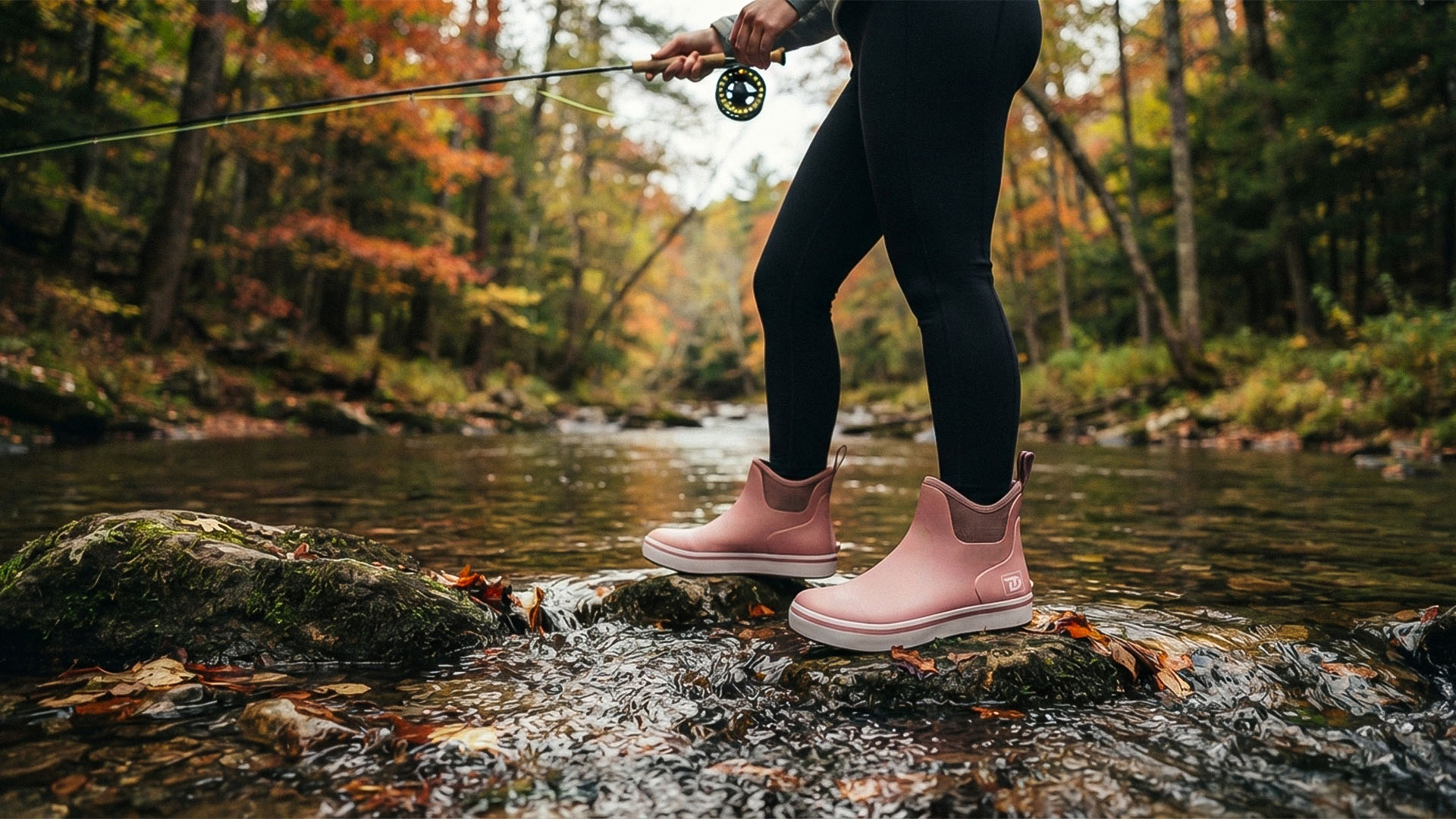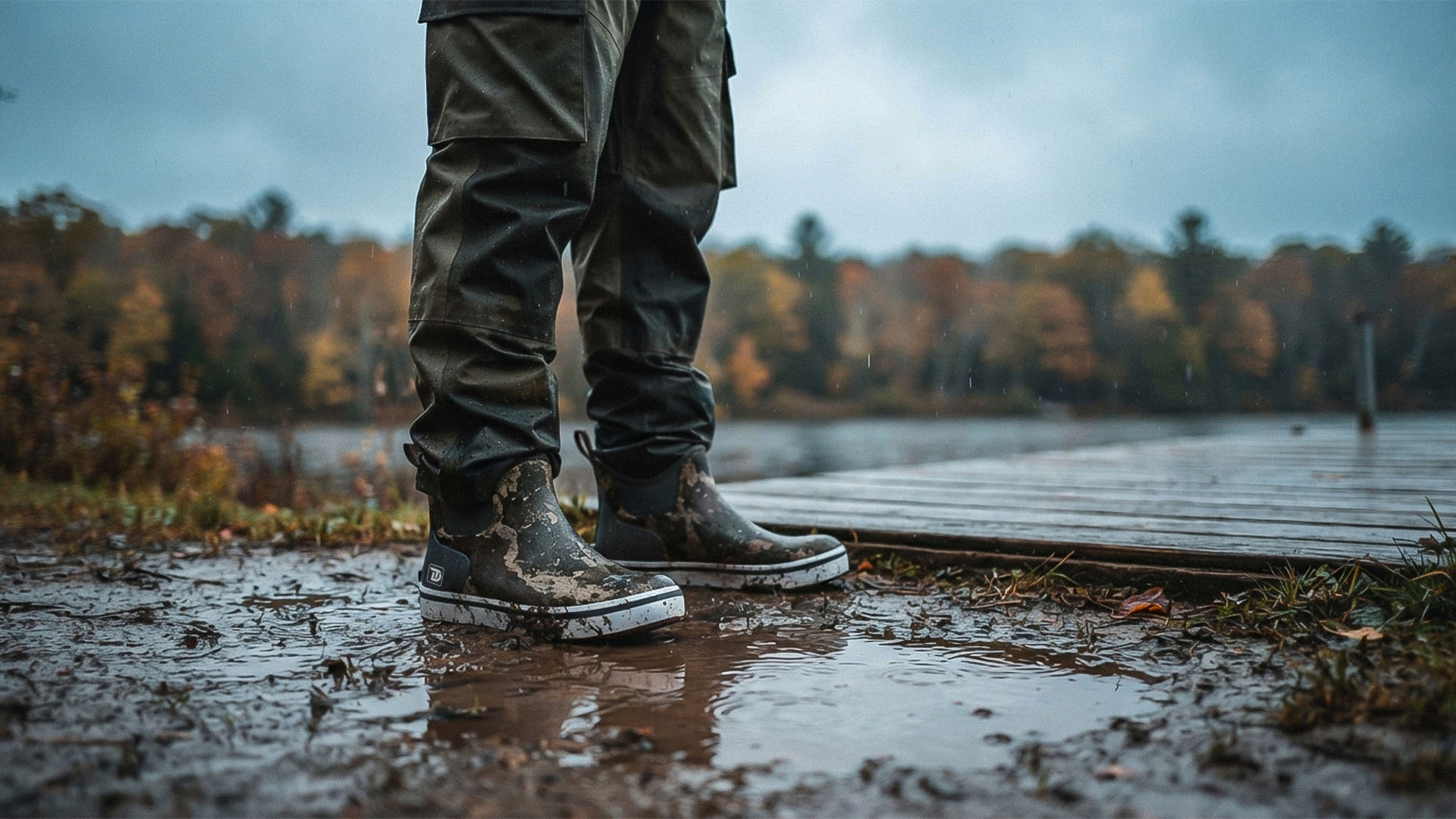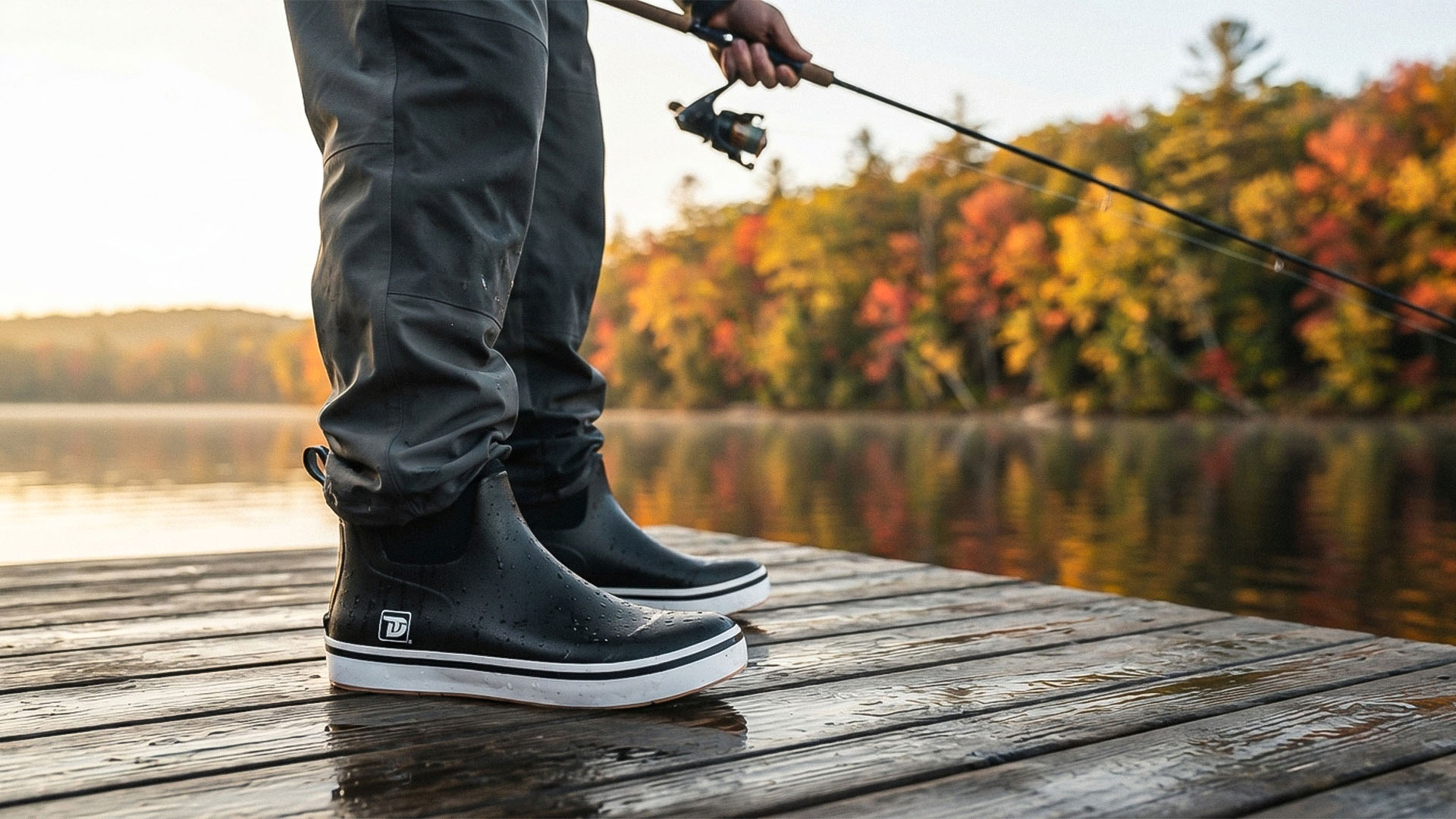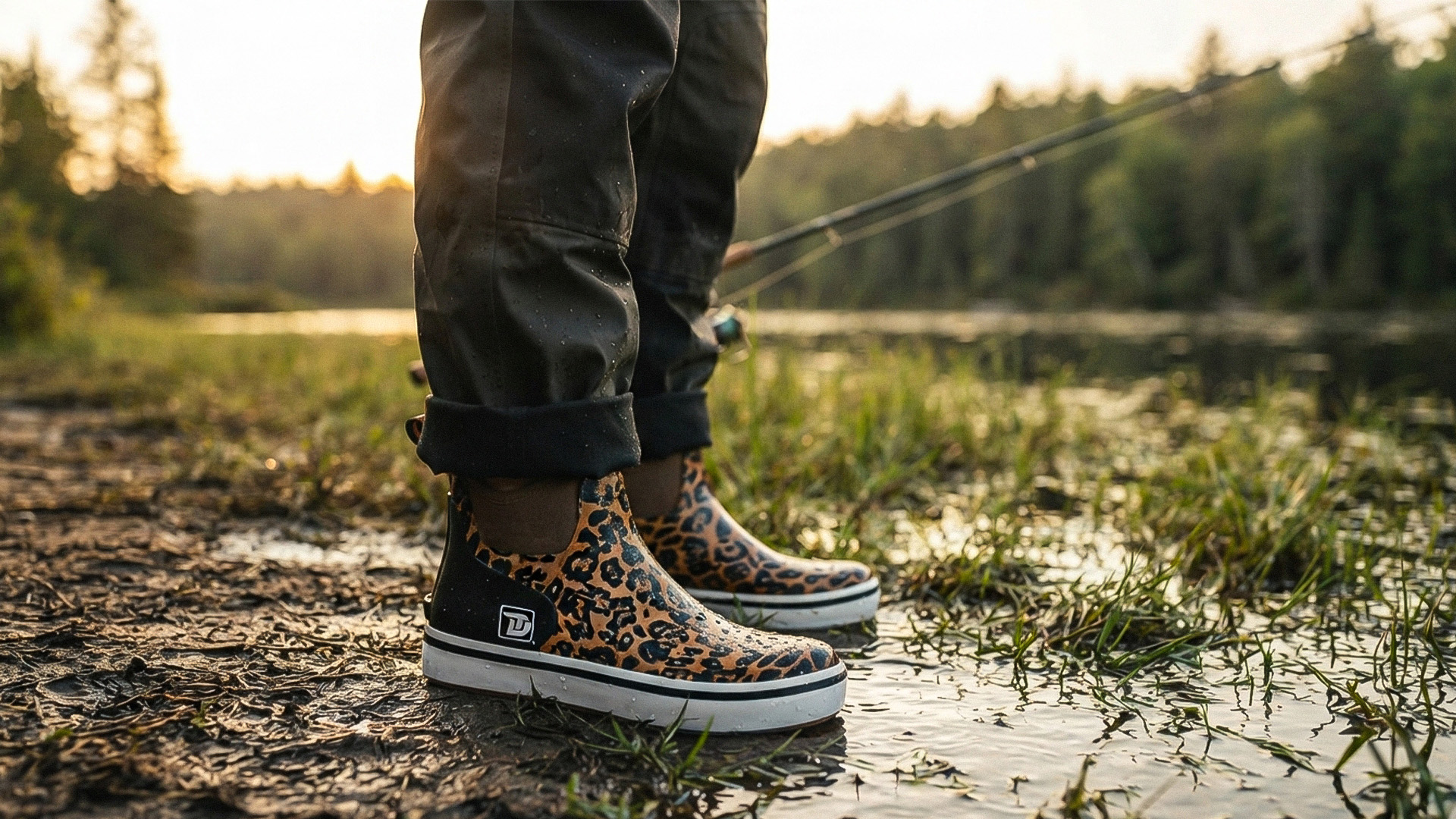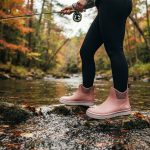
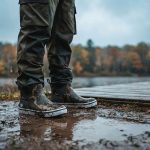
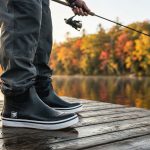
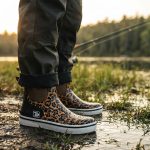
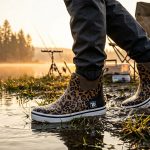
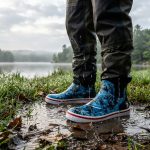
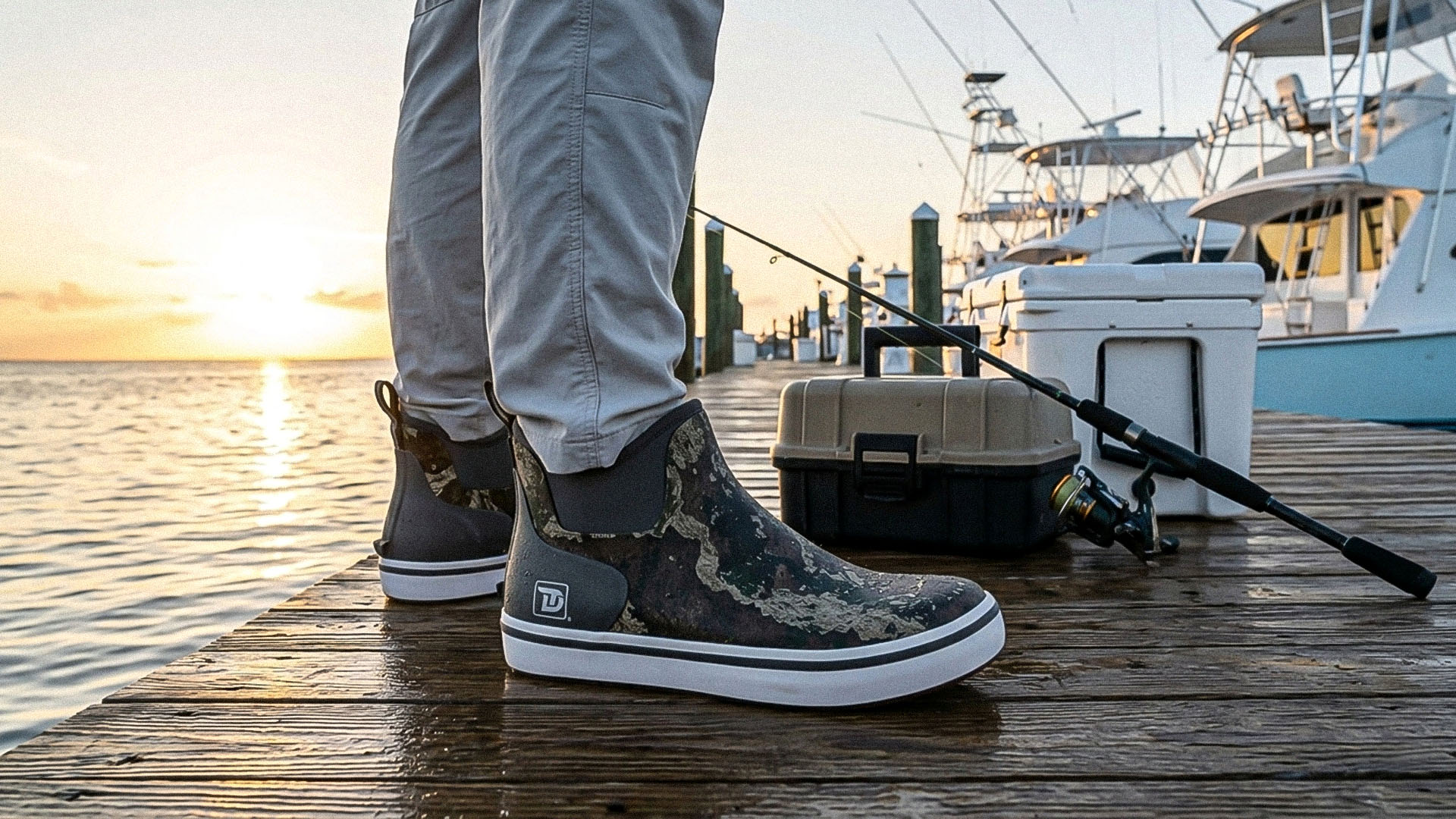
Walleye fishing has a way of making anglers appreciate good footwear.
Some of the best walleye trips happen when conditions are far from comfortable.
You may launch before sunrise in cold spring air, troll for hours through wind and spray, fish through steady rain, move around a wet aluminum boat, handle livewell water, and finish the day at a muddy ramp with temperatures dropping again.
That is exactly where waterproof deck boots make sense.
The best deck boots for walleye fishing should keep your feet dry without feeling heavy, provide enough cushioning for long periods of standing, work comfortably around trolling equipment, and remain easy to clean after mud, fish slime, and lake water.
For many anglers, lightweight or moderately warm ankle-height deck boots provide the best balance between protection and mobility.
This guide explains what to look for in walleye fishing footwear, when insulated boots make sense, why trolling changes your comfort needs, and how to choose boots for Great Lakes fishing, inland lakes, rivers, rain, spring cold fronts, and fall conditions.
Why Walleye Fishing Is Tough on Footwear
Walleye anglers often fish during weather that other anglers avoid.
Common conditions include:
- Cold spring mornings
- Fall wind
- Light rain
- Heavy rain
- Lake spray
- Wet aluminum decks
- Livewell overflow
- Muddy ramps
- Cooler drainage
- Fish slime
- Long trolling sessions
- Early and late season fishing
Walleye fishing is also often less physically active than bass fishing.
You may spend long periods:
- Sitting
- Standing
- Watching planer boards
- Monitoring electronics
- Adjusting trolling lines
- Waiting for a bite
When your body is not moving much, your feet can feel cold faster.
That makes waterproofing, sock choice, cushioning, and fit especially important.
Why Deck Boots Work Well for Walleye Fishing
Deck boots provide several useful advantages:
- Waterproof protection
- Easy pull-on design
- Closed-toe coverage
- Easy-clean exterior
- Comfortable standing support
- Protection from wet boat floors
- Better weather protection than mesh sneakers
They are especially useful during spring and fall.
Anglers comparing waterproof freshwater footwear can evaluate TruDaveGear deck boots alongside other fishing boots based on waterproofing, insulation, outsole design, fit, removable insoles, and seasonal use.
The ideal walleye boot should protect against weather without becoming unnecessarily bulky.
Early Spring Walleye Fishing
Spring is one of the most important seasons for walleye anglers.
It can also be one of the coldest.
You may deal with:
- Cold water
- Frosty mornings
- Rain
- Snow flurries
- Wind
- Wet ramps
- Cold aluminum boat floors
A waterproof boot becomes much more valuable when air and water temperatures are low.
Wet sneakers can make an otherwise productive fishing day miserable.
Deck boots help isolate your feet from outside moisture while giving you room to adjust warmth with socks.
Cold Aluminum Floors
Many walleye boats use aluminum construction.
Aluminum transfers temperature quickly.
On cold mornings, the floor may feel noticeably colder than the air.
A boot with:
- Stable cushioning
- Sufficient outsole thickness
- Supportive insole
helps create separation between your foot and the cold deck.
Thin shoes may feel colder because less material separates your foot from the aluminum.
Great Lakes Walleye Fishing
Great Lakes walleye fishing can expose anglers to more wind and spray than smaller inland waters.
Common conditions include:
- Longer runs
- Bigger waves
- Heavy spray
- Rapid weather changes
- Cold mornings
- Wet cockpits
Deck boots are particularly useful because they protect against repeated spray without absorbing water.
For Great Lakes use, prioritize:
- Waterproof construction
- Secure fit
- Stable outsole
- Enough room for seasonal socks
- Easy-clean materials
- Good all-day cushioning
A full day on Lake Erie or another large body of water requires footwear that remains comfortable for hours.
Lake Erie Walleye Trips
Lake Erie is well known for walleye fishing and can involve:
- Trolling
- Drifting
- Jigging
- Large open-water runs
Footwear should match the weather rather than the calendar.
A sunny spring day may still feel cold offshore.
Wind, spray, and cold water can make conditions feel much cooler than at the marina.
Bring footwear that protects against water even when the forecast does not show heavy rain.
Trolling Changes Footwear Needs
Trolling for walleye often means less walking and more stationary standing.
You may spend hours:
- Watching rod tips
- Monitoring planer boards
- Adjusting speed
- Checking electronics
- Clearing lines
- Resetting baits
Standing still can make your feet colder.
It can also increase heel and arch fatigue.
Look for deck boots with:
- Stable heel cushioning
- Supportive footbeds
- Enough toe room
- Secure heel fit
Comfort becomes more important during long, slow fishing periods.
Planer Board Fishing
Planer board setups can create busy moments.
When a board goes back or a fish strikes, anglers may need to:
- Grab the correct rod
- Move around other anglers
- Clear lines
- Adjust boards
- Net fish
Your footwear should allow controlled movement when the bite happens.
A boot that is too loose can cause:
- Heel slip
- Toe gripping
- Foot rotation
- Reduced stability
The right boot should remain comfortable while standing but secure when movement suddenly increases.
Jigging for Walleye
Jigging may require more active foot movement than trolling.
You may stand while:
- Vertically jigging
- Casting
- Working current
- Controlling the boat
Look for footwear with:
- Flexible forefoot
- Stable heel
- Secure midfoot
- Lightweight construction
Extremely heavy boots may feel unnecessary for active jigging.
Rainy Walleye Fishing
Walleye anglers often continue fishing through rain.
That is where deck boots become especially valuable.
Mesh shoes may be comfortable when dry but can become soaked quickly.
Waterproof deck boots protect your socks from:
- Rain
- Wet boat carpet
- Deck water
- Lake spray
- Livewell overflow
Pair them with rain pants worn over the boot openings.
Do not tuck waterproof pants inside the boots.
Why Rain Pants Should Stay Outside the Boots
If rain pants are tucked inside waterproof boots, water can run down the pant leg directly into the boot opening.
Once water gets inside, waterproof construction works against you because it also prevents fast drainage.
The proper setup is:
- Socks inside boots
- Boots under rain pants
- Rain pants overlapping the boot collar
This keeps runoff on the outside.
Livewell Water
Walleye anglers may keep fish in a livewell when regulations allow.
Water can spill from:
- Filling
- Checking fish
- Boat movement
- Draining
Even small amounts of livewell water can soak ordinary shoes.
Deck boots handle this type of exposure easily.
They also rinse clean if fish slime reaches the footwear.
Wet Boat Carpet
Some walleye boats use marine carpet.
After rain or heavy spray, the carpet may stay wet for hours.
Waterproof boots keep moisture from soaking through to your socks.
However, remove:
- Mud
- Gravel
- Sand
from the outsole before boarding.
Dirty tread can damage or stain carpet and track grit through the boat.
Vinyl and Synthetic Flooring
Many modern fishing boats use vinyl or synthetic flooring because it is easier to clean.
These surfaces can still become slick when wet.
A good fishing boot should have:
- Stable outsole contact
- Flexible rubber
- Clean tread
- Predictable heel support
Avoid walking around with mud packed into the outsole.
Clean boots perform better.
Muddy Ramps
Spring walleye trips often start at muddy or wet ramps.
Deck boots help protect against:
- Shallow mud
- Rainwater
- Puddles
- Wet grass
- Dock water
This makes them useful before the boat even leaves shore.
However, algae-covered submerged concrete remains dangerous.
No deck boot provides guaranteed traction on algae.
Move carefully.
Trolling Motor Use
Some walleye fishing techniques rely heavily on trolling motors.
Foot-operated systems may require:
- Forefoot flexibility
- Ankle mobility
- Secure heel
- Low bulk
A very stiff or tall boot may feel awkward on a pedal.
If you use a foot-controlled trolling motor regularly, test the footwear before the trip.
The boot should not interfere with normal pedal movement.
Boat Pedals and Controls
Some boats may also have:
- Kicker motor controls
- Foot switches
- trim controls
- bow-mounted electronics
Bulky footwear can make precise operation harder.
For active boat control, ankle-height boots are usually more practical than tall rubber boots.
Walleye Fishing at Night
Some walleye anglers fish after sunset, especially near shallow structure.
Nighttime adds:
- Reduced visibility
- Cooler temperatures
- Dew
- More difficulty spotting wet surfaces
Closed-toe waterproof footwear is useful.
Keep the deck organized and use good lighting.
Do not leave hooks, lures, or landing gear loose around your feet.
Walleye Lures and Hooks
Walleye fishing may involve:
- Crankbaits
- Jig heads
- Treble hooks
- Harnesses
- Bottom bouncers
Treble hooks are especially important to keep off the floor.
Deck boots provide ordinary closed-toe coverage but are not hook-proof.
Store lures in tackle boxes or hook holders.
Do not depend on footwear to prevent puncture injuries.
Bottom Bouncers and Sinkers
Trolling systems may use:
- Bottom bouncers
- Sinkers
- Snap weights
These should also stay organized.
Heavy weights rolling around the floor can:
- Damage equipment
- Become trip hazards
- Land on feet
Closed-toe boots offer more protection than sandals, but tackle organization is the real solution.
Cold Weather: Insulated vs. Uninsulated Boots
Insulated Deck Boots
Good for:
- Very cold spring trips
- Late fall fishing
- Winter river fishing
- Anglers who get cold easily
- Long periods of low activity
Uninsulated Deck Boots
Good for:
- Most spring conditions
- Summer rain
- Early fall
- Multi-season use
- Active jigging
For many walleye anglers, uninsulated boots plus proper socks provide the best versatility.
Insulation can become too warm once temperatures rise.
Best Socks for Walleye Fishing
Choose socks based on temperature.
Cool Weather
Use:
- Merino wool
- Merino-synthetic blends
- Medium-weight synthetic socks
Mild Weather
Use:
- Lightweight synthetic socks
- Thin merino blends
Avoid cotton.
Cotton holds moisture, stretches when wet, and dries slowly.
Cold wet cotton socks are one of the fastest ways to make a spring fishing trip uncomfortable.
Do Not Wear Socks That Make Boots Too Tight
Thick socks help only when there is enough room.
If thick socks compress your toes, the boots may become:
- Uncomfortable
- Cold
- Difficult to wear
- Hard to remove
You should still be able to move your toes naturally.
Warmth depends partly on circulation.
Spare Socks Are Worth Carrying
Store a spare pair in a waterproof bag.
They are useful after:
- Heavy rain
- Water entering over the collar
- Spray
- Sweat buildup
A dry pair weighs almost nothing and can make the second half of the trip much better.
Summer Walleye Fishing
Summer conditions may be very different.
On hot days, deck boots can feel warm.
Choose:
- Uninsulated boots
- Lightweight socks
- Ankle-height design
- Removable insoles
For hot, completely dry days, fishing shoes or sneakers may be more comfortable.
Some anglers keep both footwear options in the vehicle and choose based on weather.
Warm Weather vs. Waterproof Protection
The choice is simple:
If your biggest problem is heat, choose more breathable footwear.
If your biggest problem is water, choose waterproof footwear.
Summer thunderstorms, heavy spray, or boat washdowns may still make deck boots worthwhile.
Fall Walleye Fishing
Fall is one of the best seasons for deck boots.
Conditions may include:
- Cool mornings
- Wind
- Rain
- Cold water
- Wet ramps
Uninsulated deck boots with medium-weight socks are often enough.
For late fall, insulated footwear may become more useful.
River Walleye Fishing
River anglers may deal with:
- Mud
- Current
- wet ramps
- anchor ropes
- cooler water
Deck boots work well inside the boat.
However, if significant shoreline walking or wading is involved, other footwear may be better.
Marine deck boots are designed primarily for hard wet surfaces, not deep mud or rocky river bottoms.
Shore Fishing vs. Boat Fishing
Deck boots are best for boat-based walleye fishing.
For shore anglers, footwear needs may include:
- Hiking support
- mud traction
- wading ability
- rock protection
If you spend most of the day walking rocky shorelines, hiking or wading footwear may be more appropriate.
Deck Boots vs. Sneakers
Deck Boots Are Better For:
- Rain
- cold mornings
- spray
- livewell water
- wet carpet
- muddy ramps
Sneakers Are Better For:
- Hot dry days
- long walking
- maximum airflow
The right choice depends on conditions.
Deck Boots vs. Rain Boots
Tall rain boots offer more water coverage.
But for boat fishing they may be:
- Heavier
- warmer
- less flexible
- less comfortable around pedals
Ankle deck boots are often the better choice for recreational walleye boats.
Tall boots are useful when deeper mud or heavy washdowns are common.
Deck Boots vs. Hiking Boots
Waterproof hiking boots may offer better ankle support and walking comfort.
But they may also:
- Hold mud
- dry slowly
- be harder to clean
- absorb fish odor
Deck boots are better for wet boat environments.
Hiking boots are better when the trip includes significant walking.
Heel Fit
Your heel should stay reasonably controlled.
Excessive heel slip can cause:
- Blisters
- sock movement
- toe gripping
- foot fatigue
Some heel movement is normal in pull-on boots.
The important question is whether the boot feels stable during:
- Walking
- Side steps
- Boat movement
Toe Room
Long days and thicker socks require enough toe space.
Your toes should:
- Move naturally
- Not touch the front
- Not feel compressed sideways
Do not size down just to eliminate heel movement.
A good boot balances heel security with toe room.
Wide Feet
Wide-footed anglers should look for:
- Roomy forefoot
- secure heel
- adequate instep volume
- wide toe box
Do not solve width problems by buying an excessively long size.
A boot that is too long can become unstable.
High Instep
Pull-on boots can feel tight across a high instep.
Signs include:
- Pressure on top of the foot
- Numbness
- Difficult entry
- Difficult removal
Look for:
- Higher internal volume
- Removable insoles
- Good pull tabs
The boot should feel comfortable without requiring painful break-in.
Removable Insoles
Removable footbeds are particularly useful for walleye anglers.
They help with:
- Drying
- Odor control
- Cushioning replacement
- Arch support
- Seasonal insole changes
After a wet or sweaty trip, remove the insoles.
Let the boot interior and footbeds dry separately.
Long Standing Comfort
Trolling can involve hours of standing with relatively little walking.
Look for:
- Stable heel cushion
- Comfortable forefoot
- Moderate arch support
- Balanced cushioning
Too much softness may feel unstable.
Too little cushioning may feel harsh.
For long trolling days, support and stability matter more than a soft first impression.
Plantar Fasciitis and Walleye Fishing
Anglers with recurring heel pain may notice symptoms during long trolling sessions.
Helpful footwear features may include:
- Removable insoles
- supportive arch
- stable heel cushioning
- secure fit
A properly fitted aftermarket insole may improve comfort.
Persistent pain should be evaluated by a qualified medical professional.
Cleaning Walleye Slime From Boots
After fishing:
- Rinse with fresh water.
- Remove visible slime.
- Use mild soap if needed.
- Brush the outsole.
- Rinse completely.
- Remove the insoles.
- Air dry.
Walleye may not create the same mess as large offshore species, but fish residue can still smell if left on footwear.
Cleaning Ramp Mud
Mud can harden inside tread grooves.
Use:
- Fresh water
- Boot brush
- Mild soap when needed
Check for:
- Gravel
- hooks
- sharp debris
before cleaning the outsole by hand.
Freshwater Boot Care Still Matters
Freshwater does not mean maintenance-free.
Boots can still develop odor from:
- Sweat
- fish slime
- mud
- algae
- damp insoles
Clean and dry them after every wet trip.
Drying Deck Boots
After fishing:
- Remove insoles
- Drain water
- Open the boot tops
- Dry with airflow
- Dry the insoles separately
Avoid:
- Clothes dryers
- Heat guns
- Radiators
- High heat
Heat can damage waterproof materials, foam, adhesives, and boot shape.
Do Not Leave Wet Boots in the Boat
Boat storage compartments may stay damp.
Leaving wet boots inside may cause:
- Odor
- mildew
- slow drying
- damp gear
Take them home and dry them properly.
Clean Driving Shoes
Bring clean shoes for the drive home.
This is especially helpful after:
- Muddy ramps
- Rain
- Fish handling
Store dirty deck boots in:
- Rubber tray
- Plastic bin
- Cargo liner
Your vehicle will stay much cleaner.
Best Deck Boot Features for Walleye Fishing
Look for:
Waterproof Upper
Protects against rain, spray, and livewell water.
Ankle Height
Good balance of protection and mobility.
Stable Outsole
Important on wet hard surfaces.
Comfortable Cushioning
Helps during long trolling sessions.
Secure Heel
Reduces foot movement.
Removable Insoles
Improves drying and support.
Seasonal Sock Compatibility
Important for spring and fall.
Lightweight Construction
Reduces fatigue.
Easy-Clean Exterior
Useful after mud and fish handling.
Walleye Fishing Footwear Checklist
Before fishing:
- Check weather
- Inspect outsole
- Confirm boots are dry
- Select correct socks
- Pack spare socks
- Check rain gear
- Test trolling motor comfort
- Bring clean driving shoes
After fishing:
- Rinse mud
- Clean fish slime
- Brush tread
- Remove insoles
- Dry completely
- Clean boot tray
Common Walleye Footwear Mistakes
Wearing Mesh Sneakers in Cold Rain
Wet feet can stay uncomfortable for hours.
Wearing Cotton Socks
Cotton holds moisture and dries slowly.
Buying Boots Too Tight for Winter Socks
Compression can make feet colder.
Wearing Heavy Insulated Boots on Mild Days
Sweat may become a bigger problem than cold.
Ignoring Trolling Motor Comfort
Bulky boots can interfere with foot controls.
Leaving Ramp Mud in Tread
Mud reduces deck contact.
Tucking Rain Pants Into Boots
Water may run inside.
Leaving Wet Boots in Boat Storage
Limited airflow causes odor.
Wearing Worn-Out Tread
Traction can decline over time.
Not Bringing Spare Socks
A small backup item can save a long trip.
Final Thoughts
Walleye fishing is one of the best examples of why anglers need footwear that matches conditions rather than simply choosing the most breathable shoes available.
Cold spring mornings, Great Lakes spray, rain, livewell water, muddy ramps, wet aluminum floors, and long trolling sessions can make waterproof deck boots extremely useful.
For most walleye anglers, lightweight uninsulated ankle deck boots provide a strong balance of waterproof protection, comfort, mobility, and seasonal versatility.
Use insulated boots when temperatures are genuinely cold.
Use moisture-wicking merino or synthetic socks instead of cotton.
Make sure your toes have enough room and your heel stays controlled.
Choose cushioning that remains comfortable during long periods of standing.
If you use a foot-controlled trolling motor, make sure your boots are flexible and low-profile enough for normal operation.
During hot, dry summer weather, breathable fishing shoes may be better.
During cold, wet spring or fall trips, deck boots often win.
After fishing, rinse mud and fish residue, brush the outsole, remove the insoles, and dry everything completely.
The right footwear should help you stay comfortable through the slow hours between bites so that when a planer board drops back or a rod loads up, your attention is on the fish—not your wet or cold feet.
Frequently Asked Questions
Are deck boots good for walleye fishing?
Yes. They are especially useful during cold, rainy, windy, or wet boat conditions.
What boots should I wear for Lake Erie walleye fishing?
Waterproof ankle deck boots with good cushioning, secure fit, and appropriate socks are a practical choice for many Great Lakes trips.
Do I need insulated boots for walleye fishing?
Not always. Insulated boots are useful in very cold conditions, while uninsulated boots are more versatile for spring, summer, and fall.
What socks should I wear with walleye deck boots?
Wear merino, synthetic, or merino-blend moisture-wicking socks. Avoid cotton.
Are deck boots good for trolling?
Yes. Choose boots with stable cushioning and enough comfort for long periods of standing.
Can I use deck boots with a trolling motor?
Yes, but choose ankle-height boots with adequate forefoot flexibility and test them with your pedal system.
Are deck boots good on aluminum fishing boats?
Yes. They work well on many wet aluminum surfaces when their tread is clean and in good condition.
Can I wear sneakers for walleye fishing?
Yes in warm, dry conditions. In cold rain or heavy spray, waterproof deck boots are usually more practical.
Are deck boots good on wet boat carpet?
Yes. Waterproof boots can help keep socks dry when boat carpet is wet.
Should rain pants go inside or outside deck boots?
Outside. Rain pants should overlap the boot opening so water runs down the exterior.
Are deck boots good for muddy ramps?
They work well for shallow mud and puddles, but algae-covered concrete can still be very slippery.
Should I bring spare socks on a walleye trip?
Yes, especially for long Great Lakes, spring, or fall trips.
Why are my feet cold even in waterproof boots?
Possible causes include tight fit, damp socks, insufficient insulation, cold deck surfaces, or long periods of standing still.
Why are removable insoles useful for walleye fishing?
They improve drying, odor control, cushioning replacement, and arch-support customization.
Are ankle deck boots tall enough for walleye fishing?
For most recreational boat fishing, yes. Very wet or specialized conditions may require taller boots.
How do I clean deck boots after freshwater fishing?
Rinse mud and fish slime, brush the outsole, remove the insoles, and air dry everything completely.
What is the biggest footwear mistake in walleye fishing?
Wearing breathable but absorbent shoes in cold, wet conditions—or over-insulated heavy boots during mild weather—are two of the most common mistakes.