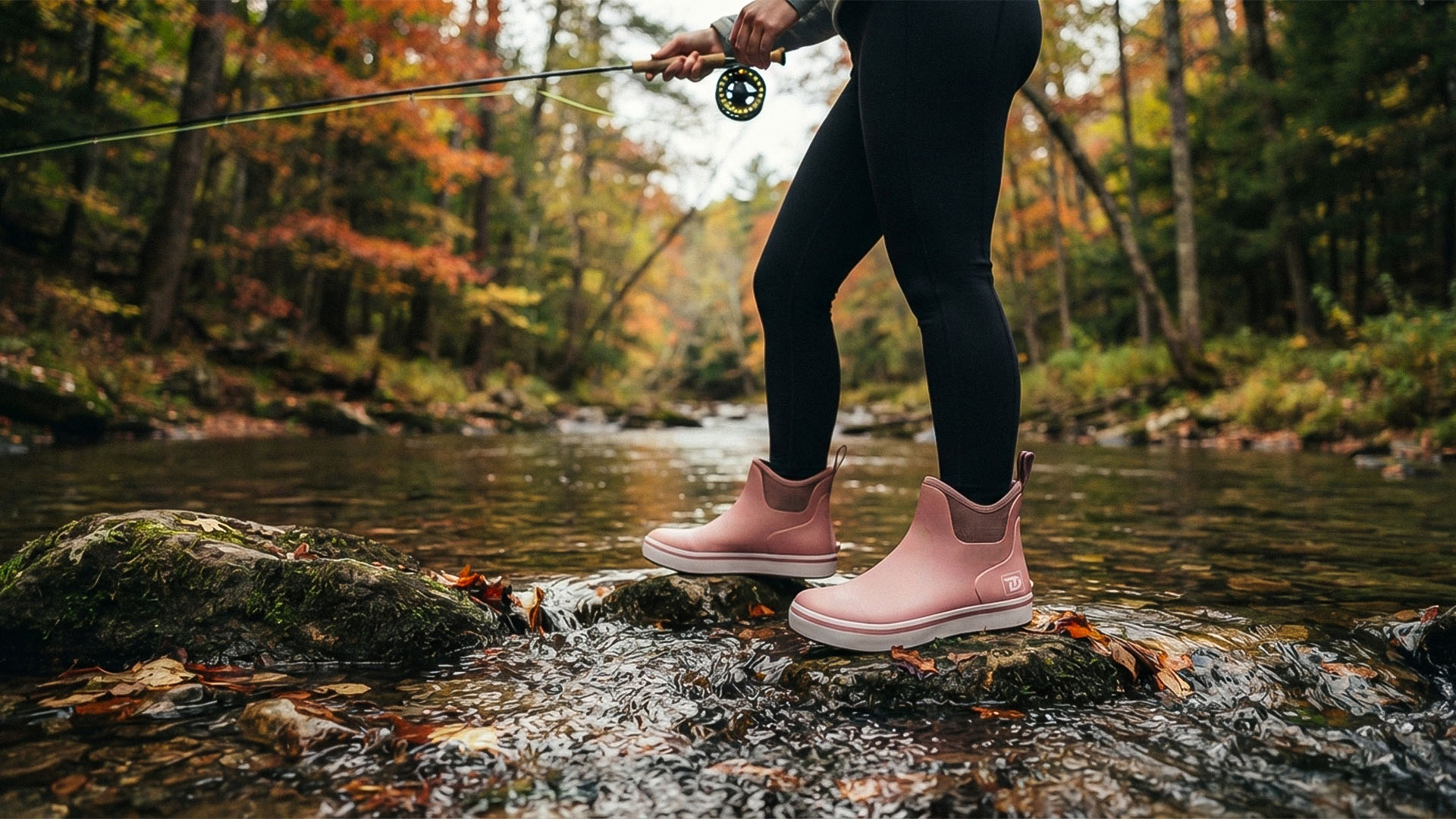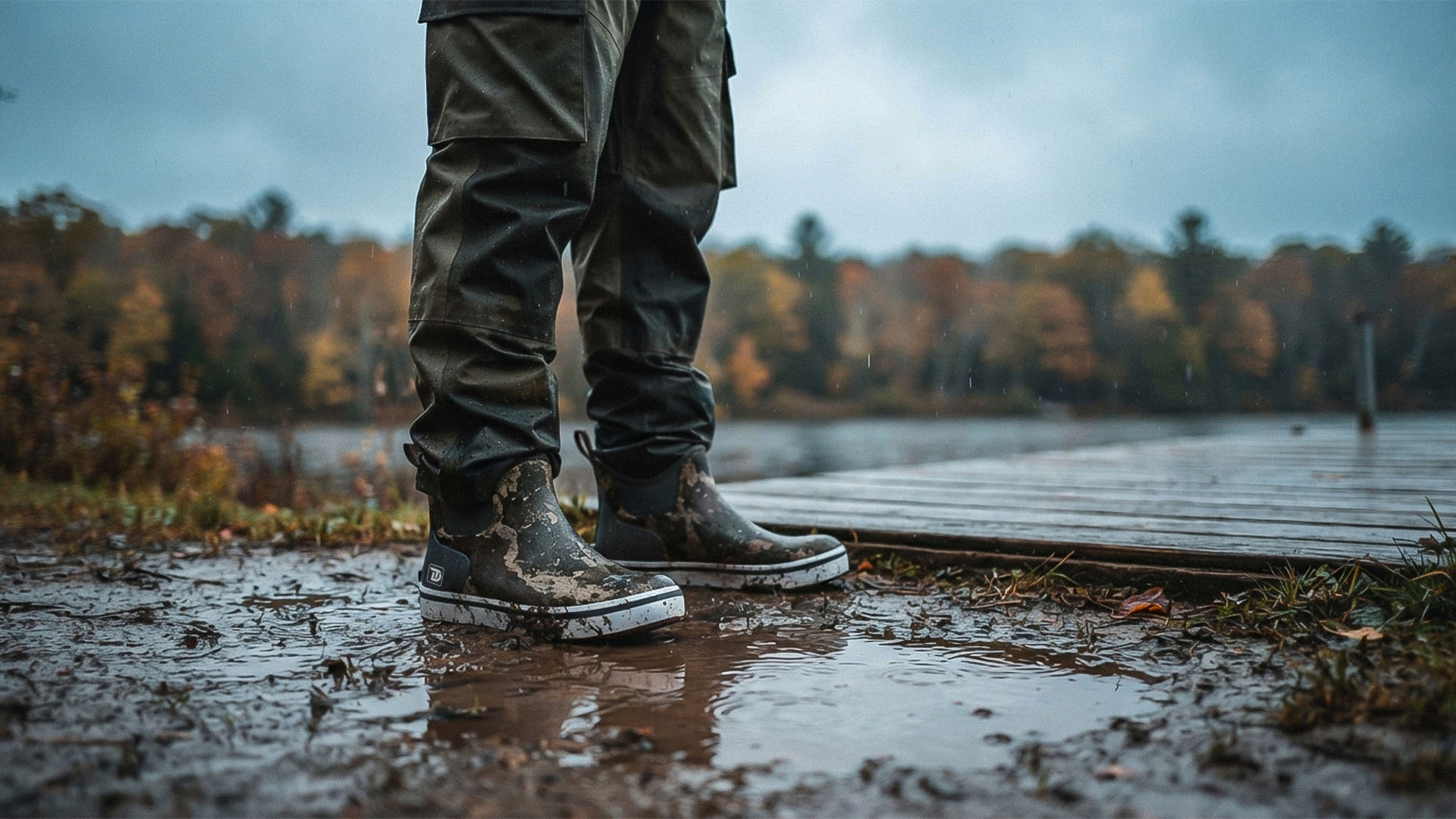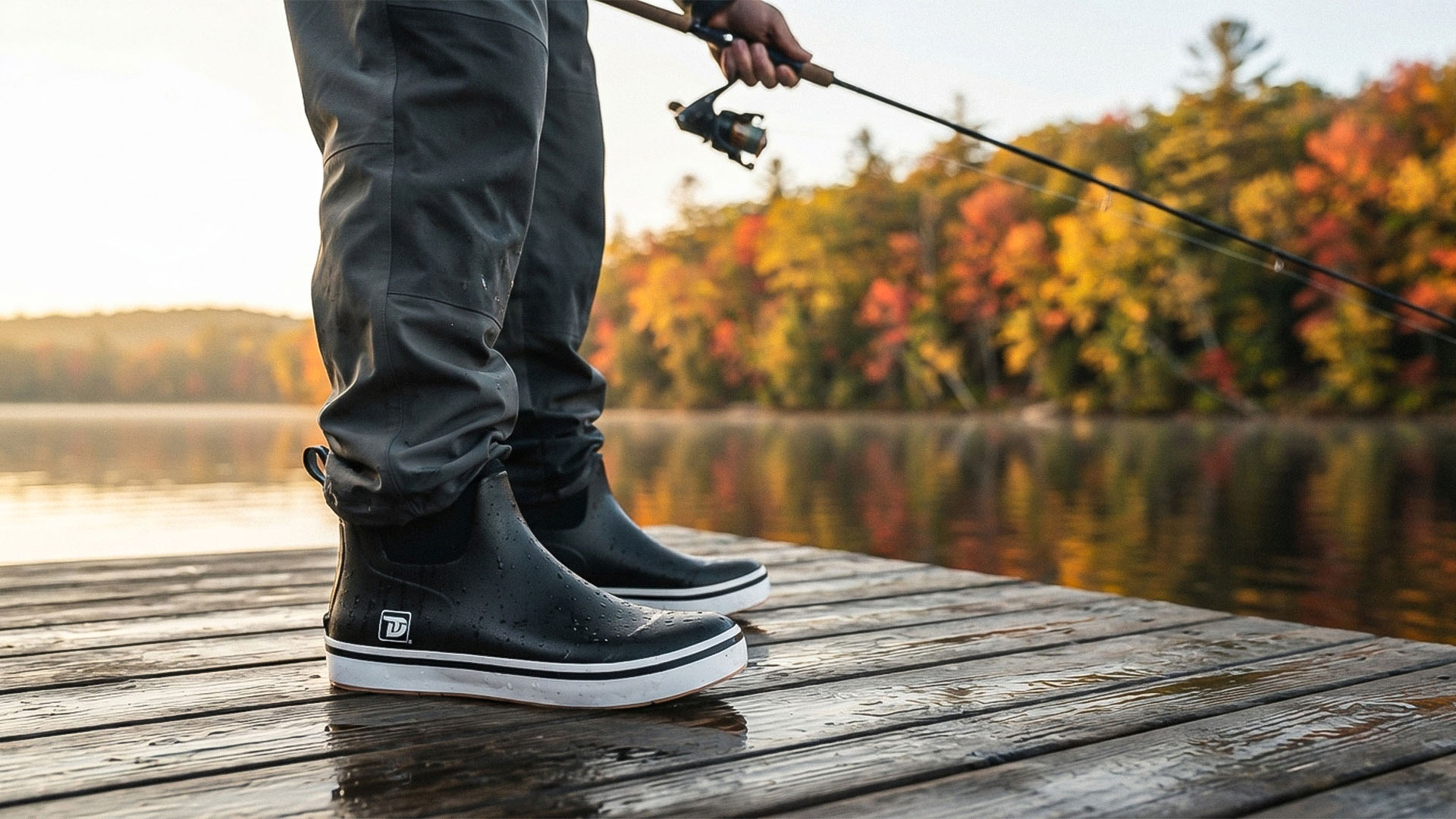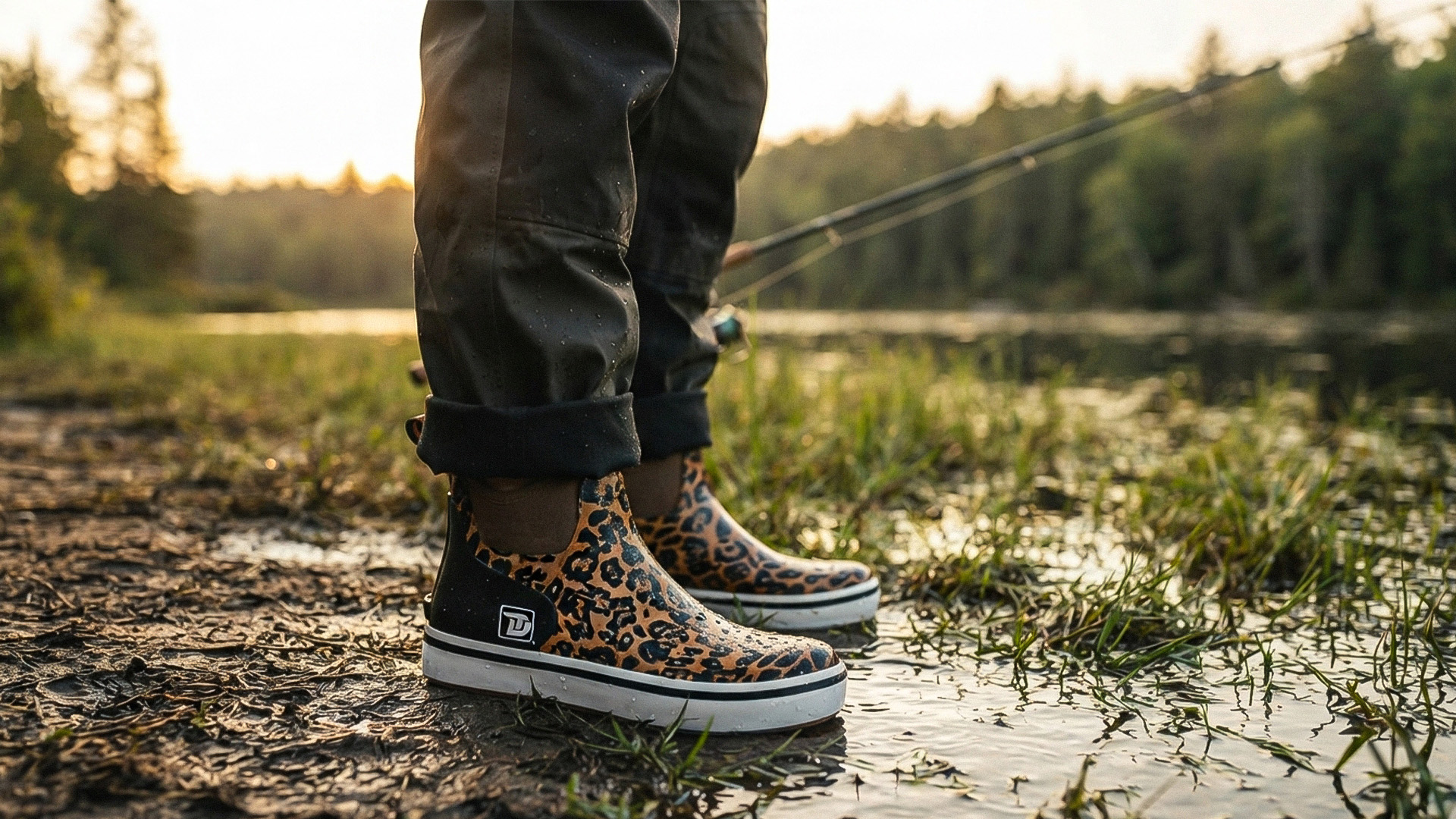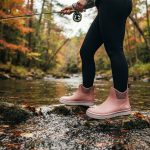
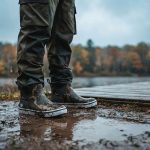
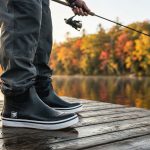
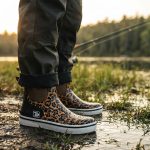
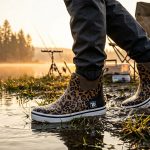
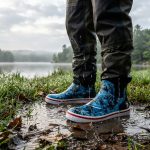
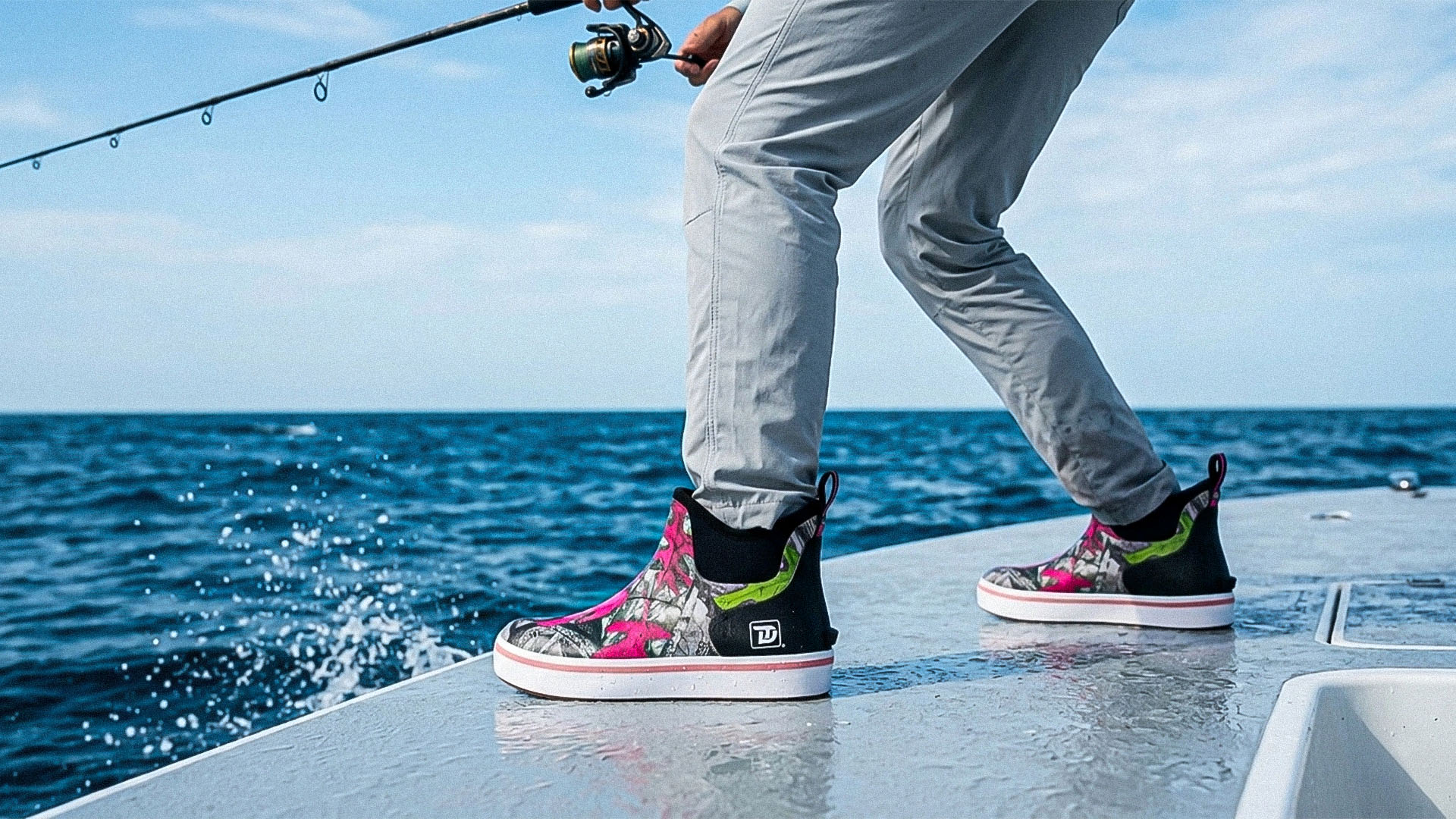
Crappie fishing is often associated with calm lakes, quiet coves, brush piles, docks, and springtime fishing.
But anyone who spends enough time chasing crappie knows that the conditions are not always clean or comfortable.
Some of the best crappie fishing happens during early spring, when mornings are cold, ramps are muddy, docks are wet, rain can arrive without warning, and boat floors may stay damp throughout the day.
You may also spend hours standing while spider rigging, jigging timber, shooting docks, or moving between fishing spots.
That makes footwear more important than many anglers realize.
The best deck boots for crappie fishing should keep your feet dry during wet spring conditions, remain comfortable while standing for long periods, clean up easily after mud and fish slime, and feel light enough for a full day on a freshwater boat.
For many anglers, lightweight uninsulated ankle deck boots provide an excellent balance between waterproof protection and all-day comfort.
This guide explains when deck boots make sense for crappie fishing, how they compare with sneakers and rain boots, what to wear during cold spring mornings, and what features matter most for boat, dock, and tournament anglers.
Why Crappie Fishing Can Be Hard on Footwear
Crappie fishing may not create the same mess as offshore tuna fishing, but the environment still exposes footwear to:
- Rain
- Morning dew
- Muddy boat ramps
- Wet docks
- Lake water
- Fish slime
- Minnow buckets
- Livewell water
- Cooler drainage
- Boat cleaning water
- Wet carpet
- Spring cold fronts
One of the biggest problems is that crappie anglers often fish during transitional weather.
A March morning may begin cold and wet, warm up by afternoon, and then turn windy or rainy again.
That means footwear needs to handle changing conditions without becoming too heavy or hot.
Why Deck Boots Work Well for Crappie Fishing
Deck boots are useful when your biggest problem is moisture.
They offer:
- Waterproof construction
- Closed-toe coverage
- Easy-rinse surfaces
- Protection from muddy ramps
- Better weather protection than mesh shoes
- Comfortable standing when properly cushioned
- Fast pull-on convenience
For anglers who regularly launch before sunrise or fish through spring rain, deck boots can be much more practical than ordinary sneakers.
Anglers comparing waterproof freshwater footwear can evaluate TruDaveGear deck boots alongside other options based on cushioning, outsole design, removable insoles, fit, weight, and seasonal fishing conditions.
Spring Crappie Fishing
Spring is one of the most popular times to target crappie.
It is also when waterproof footwear becomes especially useful.
Conditions may include:
- Cold mornings
- Wet ramps
- Rain
- Mud
- Heavy dew
- Cold lake water
- Wind
Even if the afternoon becomes pleasant, your feet may already be wet if you launched wearing mesh shoes.
Deck boots help prevent early-morning moisture from becoming an all-day problem.
Pre-Spawn Crappie Fishing
During the pre-spawn period, anglers may fish:
- Creek channels
- Brush piles
- Timber
- Drop-offs
- Staging areas
You may spend long periods standing while watching electronics and working jigs vertically.
This makes underfoot comfort important.
Look for boots with:
- Stable heel cushioning
- Supportive footbeds
- Secure heel fit
- Enough toe room
The boot should remain comfortable during repeated hours of standing.
Spawn-Season Crappie Fishing
During the spawn, crappie may move shallower.
Anglers may target:
- Banks
- Brush
- Shallow wood
- Docks
- Vegetation
This often means more casting and more movement around the boat.
A lighter boot becomes valuable.
Choose footwear that allows:
- Side steps
- Squatting
- Reaching
- Casting
- Trolling motor operation
Heavy rubber boots may feel unnecessary during active shallow-water fishing.
Cold Spring Mornings
A spring forecast showing 60°F in the afternoon can still begin with a very chilly sunrise.
Your feet may feel cold from:
- Low air temperature
- Cold boat floor
- Wind
- Rain
- Limited movement
Uninsulated waterproof boots paired with medium-weight merino socks can work well for many spring conditions.
This gives you flexibility.
If the day warms up, the boot does not become as hot as a heavily insulated winter model.
Heavy Dew at the Ramp
Crappie anglers often launch before sunrise.
Even without rain, morning dew can soak:
- Grass
- Docks
- boat covers
- carpeting
- parking areas
Mesh shoes can absorb this moisture before the boat leaves the launch.
Waterproof deck boots prevent this small amount of water from ruining the comfort of the entire trip.
Muddy Boat Ramps
Spring rain often creates muddy launch areas.
Deck boots are especially useful around:
- Soft mud
- Wet clay
- Shallow puddles
- Trailer areas
- Wet grass
They are easy to rinse afterward.
However, before stepping onto the boat, remove heavy mud from the outsole.
Mud packed into tread can reduce traction and dirty the boat.
Algae-Covered Ramps
Submerged boat ramps can be covered with algae.
These surfaces may be extremely slippery.
Deck boots can help, but they should never be treated as completely slip-proof.
When launching:
- Move slowly
- Use short steps
- Keep your center of gravity controlled
- Use handholds when available
- Avoid stepping farther into the water than necessary
Ramp safety depends on surface conditions as much as footwear.
Fishing From Aluminum Boats
Many crappie anglers fish from:
- Aluminum fishing boats
- Jon boats
- Multi-species boats
These boats may have wet surfaces from:
- Rain
- Minnow water
- Fish slime
- Livewell overflow
- Mud
A deck boot with stable wet-surface contact works well.
Keep the outsole clean so ramp debris does not reduce traction.
Carpeted Crappie Boats
Some fishing boats use marine carpet.
Wet carpet can remain damp all day after:
- Rain
- Heavy dew
- Fish handling
- Livewell overflow
Waterproof boots help keep moisture away from your socks.
But muddy boots can make carpet difficult to clean.
Before boarding:
- Rinse mud
- Remove gravel
- Check tread grooves
This protects both your boat and your footwear performance.
Vinyl and Synthetic Boat Flooring
Vinyl floors are easier to clean but can become slippery when wet.
Deck boots may be particularly useful here.
Look for an outsole that provides:
- Broad contact area
- Flexible rubber
- Water channels
- Stable heel support
Avoid worn tread.
A smooth, old outsole may feel less reliable than it did when new.
Spider Rigging for Crappie
Spider rigging can mean hours of slow movement and careful monitoring.
Anglers may sit or stand while watching several rods.
Footwear needs become more about comfort than athletic movement.
Look for:
- Heel cushioning
- Moderate arch support
- Comfortable toe box
- Secure fit
- Removable insoles
A cheap, flat footbed may become tiring after several hours.
Long-Lining for Crappie
Long-line trolling may require repeated movement between rods.
When a fish hits, anglers may need to:
- Grab the correct rod
- Avoid other lines
- Move around seats
- Net fish
- Reset the spread
Footwear should stay attached to your feet and not feel sloppy.
A secure heel becomes especially important when moving quickly around a crowded boat.
Dock Shooting
Shooting docks is a more active style of crappie fishing.
You may spend hours:
- Standing
- Casting
- Repositioning
- Working the trolling motor
For this technique, lightweight boots are preferable.
Look for:
- Flexible forefoot
- Secure heel
- Moderate cushioning
- Low bulk
Heavy tall boots may feel restrictive.
Vertical Jigging
Vertical jigging can involve long periods standing almost motionless.
Your feet may feel fatigue before your legs do.
Stable cushioning helps.
You do not necessarily need a very soft footbed.
A moderately firm supportive platform may remain more comfortable over time than foam that collapses quickly.
Minnow Fishing Creates Extra Water
Live minnows are common in crappie fishing.
Minnow buckets and bait tanks can create water around the boat.
Water may spill when:
- Refilling buckets
- Catching minnows
- Moving bait containers
- Boat wakes rock the container
- Cleaning up at the end of the day
Waterproof boots handle this easily.
Fabric shoes may soak up the water and stay wet.
Livewell Water
Crappie anglers who keep legal fish may use a livewell or cooler.
Water can spill during:
- Filling
- Draining
- Fish handling
- Boat movement
Deck boots protect against ordinary livewell overflow and are easy to rinse after fish contact.
Fish Slime
Crappie are not especially messy compared with larger fish, but slime can still reach:
- Boat floor
- Landing net
- Cooler
- Boots
Try to keep fish off walking areas.
If slime reaches the boots, rinse it after the trip.
Organic residue can create odor if left for several days.
Crappie Fishing From Docks
Deck boots are also useful for dock anglers.
Fishing docks may have:
- Wet wood
- Composite boards
- Concrete
- Fish-cleaning areas
- Rainwater
- Algae
Waterproof boots help during rainy or cold weather.
However, some dock surfaces can remain slippery even with good footwear.
Move carefully around algae and wet wood.
Crappie Fishing From Marinas
Marinas may provide access to productive dock fishing.
Footwear may encounter:
- Wet boards
- Fuel residue
- Fish slime
- rain
- concrete
Deck boots are convenient because they can transition from parking lot to dock without needing a footwear change.
Keep the outsole free of mud and oil.
Crappie Fishing From Banks
Deck boots can work for some bank fishing situations.
They are useful around:
- Wet grass
- shallow mud
- puddles
- rainy shorelines
However, they are less ideal for:
- Long hiking
- steep banks
- rocky terrain
- deep mud
If you walk significant distances to reach fishing spots, hiking or trail footwear may be better.
Deck Boots vs. Sneakers for Crappie Fishing
Deck Boots Are Better For:
- Rain
- Cold mornings
- Muddy ramps
- Wet docks
- Minnow water
- Wet carpet
Sneakers Are Better For:
- Hot dry weather
- Long walking
- Maximum airflow
- Athletic movement
Many crappie anglers can benefit from owning both.
Choose based on the weather and fishing environment.
Deck Boots vs. Fishing Shoes
Fishing shoes usually offer more ventilation.
They can be better during:
- Hot summer days
- Dry boat trips
- Long walks
Deck boots are better when:
- Staying dry is important
- Rain is expected
- Mud is common
- Live bait water spills regularly
The choice depends on whether the day is primarily hot and dry or cool and wet.
Deck Boots vs. Tall Rain Boots
Tall rain boots provide more lower-leg protection.
They are useful for:
- Deep mud
- heavy rain
- shore access
- flooded launch areas
For boat-based crappie fishing, they may be heavier and warmer than necessary.
Ankle deck boots are usually more comfortable for moving around a fishing boat.
Crappie Tournament Fishing
Tournament anglers need footwear they can forget about.
A footwear problem becomes a distraction when trying to stay focused on:
- Electronics
- fish location
- timing
- boat positioning
- weight
Tournament boots should be tested during practice.
Do not wear a brand-new pair for the first time on competition morning.
Tournament Mornings and Weather
Crappie tournaments may start very early.
Conditions can include:
- Cold rain
- Heavy dew
- Fog
- Muddy launch areas
Waterproof deck boots are especially valuable in these conditions.
Starting the day with dry feet is much better than trying to dry wet sneakers during competition.
Best Socks for Crappie Fishing
Use moisture-wicking socks.
Good materials include:
- Merino wool
- Synthetic performance fibers
- Merino-synthetic blends
Avoid cotton.
Cotton holds moisture and dries slowly.
Choose sock thickness based on weather.
Lightweight Socks for Summer
During warm conditions, use:
- Lightweight synthetic socks
- Thin merino blends
Heavy socks increase heat inside waterproof boots.
Medium-Weight Socks for Spring
Cool spring mornings may call for slightly warmer socks.
Medium merino or synthetic socks provide insulation without excessive bulk.
Make sure the boot still has enough room.
Your toes should not feel compressed.
Why Tight Boots Can Feel Colder
A common mistake is adding thick socks to boots that are already snug.
This may reduce circulation and compress insulating fibers.
Signs the combination is too tight include:
- Numb toes
- Instep pressure
- Cold feet
- Difficulty removing boots
Choose enough internal volume for the sock system you actually use.
Bring Spare Socks
Keep one pair in a waterproof bag.
They can help if socks become wet from:
- Rain
- bait water
- livewell water
- sweat
- water entering over the boot collar
Dry socks can completely change the second half of a long fishing day.
Rain Pants and Deck Boots
Keep rain pants outside the boot opening.
This lets water run down the exterior.
If rain pants are tucked inside, water may funnel into the boot.
Waterproof boots keep water out from below.
They cannot stop water poured through the top.
Boot Height
Ankle Deck Boots
Best for:
- Boat fishing
- Docks
- Mild rain
- Spring and fall fishing
- Easy movement
Mid-Height Boots
Better for:
- More rain
- wetter boats
- colder conditions
Tall Boots
Better for:
- Deep mud
- shore access
- heavy standing water
For most crappie boat fishing, ankle height is enough.
Uninsulated vs. Insulated Deck Boots
Uninsulated Boots
Better for:
- Most spring fishing
- Summer rain
- Fall
- Multi-season use
Insulated Boots
Better for:
- Winter fishing
- Very cold spring mornings
- Northern climates
- Low-activity fishing
For most anglers, uninsulated boots are more versatile.
You can add warmer socks when needed.
Summer Crappie Fishing
During hot summer weather, waterproof boots can feel warm.
If conditions are dry, breathable fishing shoes may be better.
Use deck boots when:
- Rain is expected
- Boat floors stay wet
- Muddy ramps are common
- Nighttime dew is heavy
Choose uninsulated construction.
Fall Crappie Fishing
Fall is an excellent season for deck boots.
Cooler mornings, rain, and changing weather make waterproof footwear useful.
Medium-weight socks can add warmth without requiring insulated boots.
Winter Crappie Fishing
In regions where anglers fish open water during winter, insulated footwear may become more important.
Consider:
- Warmer footbeds
- Merino socks
- Insulated deck boots
- More lower-leg coverage
Do not use ordinary wet-deck boots as ice footwear unless they are specifically designed for icy surfaces.
Heel Fit
Your heel should remain controlled.
Excessive movement can create:
- Blisters
- Sock slipping
- Foot fatigue
- Reduced stability
Some heel lift is normal in pull-on boots.
The fit is wrong when the movement becomes uncomfortable or distracting.
Toe Room
Crappie anglers may remain in their boots for an entire day.
Allow enough room for:
- Natural toe movement
- Sock thickness
- Mild foot swelling
Do not choose tight footwear because it feels more “secure.”
Security should come from heel and midfoot fit, not toe compression.
Wide Feet
Look for boots with:
- Roomy forefoot
- Wide toe box
- Secure heel
- Comfortable instep
Do not simply buy a much longer size.
Extra length may increase heel slip.
High Instep
High-instep anglers should look for:
- Enough internal volume
- Strong pull tabs
- Removable insoles
- Comfortable boot opening
A waterproof pull-on boot should not create numbness or painful top-of-foot pressure.
Removable Insoles
This feature is highly useful for crappie anglers.
Removable footbeds help with:
- Drying
- Odor control
- Cushion replacement
- Arch support
- Cleaning
After a rainy or humid trip, remove the insoles and let them dry separately.
Standing Comfort
Whether spider rigging or jigging brush piles, crappie anglers may spend long periods standing.
Look for:
- Stable heel cushioning
- Moderate arch support
- comfortable forefoot
- secure fit
A good boot should still feel comfortable after several hours.
Trolling Motor Compatibility
If you use a foot-controlled trolling motor, avoid overly bulky footwear.
Look for:
- Ankle-height profile
- Flexible forefoot
- Secure heel
- Moderate outsole thickness
Test the boots with your pedal system before a long fishing day.
Cleaning Crappie Deck Boots
After fishing:
- Rinse mud and debris.
- Brush the outsole.
- Remove fish slime.
- Wipe the upper.
- Remove the insoles.
- Dry boots and footbeds separately.
Most freshwater cleaning does not need to be complicated.
Consistency matters more than aggressive cleaning.
Cleaning Minnow Water and Bait Residue
If bait water spills on the boots:
- Rinse with fresh water
- Use mild soap if odor develops
- Clean tread grooves
- Dry completely
Do not leave damp bait residue in a hot vehicle.
Cleaning Boat-Ramp Mud
Use a brush and hose.
Pay attention to:
- Tread grooves
- Heel
- Sidewalls
Check for:
- Gravel
- Hooks
- Sharp debris
before cleaning the tread with your fingers.
Drying Boots
After fishing:
- Remove insoles
- Open the boot tops
- Use airflow
- Dry in a ventilated location
Avoid:
- Clothes dryers
- Heat guns
- Space heaters
- Open flames
- High direct heat
High heat can damage materials and adhesives.
Odor Control
Freshwater boots can still develop odor.
Common causes include:
- Sweat
- Damp insoles
- Fish slime
- Minnow water
- Wet storage
To prevent smell:
- Wear clean socks
- remove insoles
- dry boots fully
- clean bait residue
- keep boots out of sealed compartments
Do Not Leave Wet Boots in Boat Storage
Boat compartments often have poor airflow.
Leaving boots inside can cause:
- Odor
- Mildew
- Dampness
Take them out after fishing.
Dry them in a ventilated area.
Clean Shoes for the Drive Home
After a wet spring fishing day, deck boots may be muddy and damp.
Bring clean shoes for the drive home.
Store dirty boots in:
- Rubber tray
- Plastic tote
- Cargo liner
This keeps mud and fish residue out of your vehicle.
Best Deck Boot Features for Crappie Fishing
Look for:
Waterproof Upper
Useful for rain, ramps, wet docks, and bait water.
Lightweight Construction
Better for active freshwater fishing.
Ankle Height
Provides enough protection without excess bulk.
Stable Outsole
Useful on wet boat floors and docks.
Comfortable Cushioning
Important during spider rigging and long standing.
Secure Heel
Helps during boat movement.
Flexible Forefoot
Useful for trolling motor operation and casting.
Removable Insoles
Improves drying and support.
Easy-Clean Exterior
Useful after mud and fish handling.
Crappie Fishing Footwear Checklist
Before the trip:
- Check the forecast
- Inspect outsole tread
- Make sure boots are dry
- Wear appropriate socks
- Pack spare socks
- Test trolling motor comfort
- Bring rain gear
- Bring clean driving shoes
After fishing:
- Rinse mud
- Clean bait water
- Remove fish slime
- Brush tread
- Remove insoles
- Dry completely
Common Crappie Fishing Footwear Mistakes
Wearing Mesh Shoes During Cold Spring Rain
They may stay wet all day.
Wearing Cotton Socks
Cotton absorbs moisture and dries slowly.
Wearing Tall Heavy Boots for Active Fishing
Excess weight can increase fatigue.
Ignoring Mud Before Boarding
Mud can reduce traction and dirty carpet.
Buying Boots Too Tight for Spring Socks
This may reduce comfort and warmth.
Buying Boots Too Loose
Excessive heel movement causes rubbing.
Not Testing Trolling Motor Pedal Comfort
Bulky boots may interfere with control.
Leaving Minnow Water on Boots
Bait water may create odor.
Storing Damp Boots in a Boat Compartment
Limited airflow increases smell.
Wearing New Boots for the First Time in a Tournament
Fit should be tested beforehand.
Final Thoughts
Crappie fishing is exactly the kind of freshwater activity where deck boots can be extremely useful during the right seasons.
Cold spring mornings, wet docks, muddy ramps, rain, minnow buckets, livewell water, and damp boat floors can make ordinary sneakers uncomfortable long before the fishing day is over.
For most boat-based crappie anglers, lightweight uninsulated ankle deck boots offer the best balance of waterproof protection, mobility, easy cleaning, and all-day comfort.
Look for footwear with a stable outsole, secure heel, flexible forefoot, removable insoles, comfortable cushioning, and enough toe room for your fishing socks.
Wear moisture-wicking synthetic or merino-blend socks instead of cotton.
Keep rain pants outside the boot openings.
Clean ramp mud before stepping onto boat carpet or synthetic flooring.
During hot, dry summer conditions, breathable fishing shoes may be the better option.
But when spring weather turns wet and cold, waterproof deck boots become one of the easiest ways to keep your feet comfortable.
After fishing, rinse mud and bait residue, brush the tread, remove the insoles, and let everything dry completely.
The right footwear should disappear into the background while you focus on brush piles, docks, electronics, and the next crappie coming over the side.
Frequently Asked Questions
Are deck boots good for crappie fishing?
Yes. Deck boots are especially useful during rainy, muddy, cold, or wet spring fishing conditions.
What boots should I wear for spring crappie fishing?
Lightweight waterproof ankle deck boots with moisture-wicking socks are a practical choice for many spring trips.
Are deck boots good for spider rigging?
Yes. Choose boots with stable cushioning and enough support for long periods of standing.
Can I use deck boots with a trolling motor?
Yes. Look for ankle-height boots with a flexible forefoot and test them with your pedal system.
Are deck boots good on crappie boat carpet?
Yes. They keep socks dry when carpet is wet, but clean mud and gravel from the outsole before boarding.
Can I wear sneakers for crappie fishing?
Yes in warm, dry weather. Waterproof deck boots are usually better during rain, cold mornings, and muddy conditions.
Are deck boots good for dock fishing?
Yes. They work well on wet docks and rainy days, but algae-covered surfaces can still be slippery.
Should crappie fishing boots be insulated?
Usually not for most spring and fall conditions. Uninsulated boots with appropriate socks are more versatile.
What socks should I wear with crappie deck boots?
Wear synthetic or merino-blend moisture-wicking socks. Avoid cotton.
Are ankle deck boots tall enough for crappie fishing?
For most boat and dock fishing, yes. Deep mud or standing water may require taller boots.
Are deck boots good for muddy boat ramps?
Yes for shallow mud and puddles, but submerged algae can remain extremely slippery.
How do I clean minnow water from deck boots?
Rinse with fresh water, use mild soap if odor develops, remove the insoles, and dry everything completely.
Should I bring spare socks on a crappie trip?
Yes, especially during cold spring or rainy fishing.
Are removable insoles useful for crappie fishing?
Yes. They improve drying, odor control, support, and long-term comfort.
How should crappie fishing deck boots fit?
They should hold the heel securely while giving the toes enough space for natural movement and fishing socks.
Are deck boots too hot for summer crappie fishing?
They can be. Uninsulated ankle boots are better in warm weather, while breathable fishing shoes may be preferable on hot dry days.
What is the biggest footwear mistake in spring crappie fishing?
Wearing absorbent shoes and cotton socks in cold, wet conditions is one of the most common mistakes.