Meta Description: Learn what to wear kayak fishing at night, including footwear, layering, rain gear, personal flotation devices, visibility equipment, and cold-water protection.
Suggested URL Slug: what-to-wear-kayak-fishing-at-night
Primary Keyword: what to wear kayak fishing at night
Secondary Keywords: night kayak fishing gear, kayak fishing clothing, shoes for kayak fishing, cold water kayak fishing clothes, kayak fishing safety gear, night fishing visibility equipment
Search Intent: Informational / Commercial Investigation
Kayak fishing at night can provide quiet water, less boat traffic, cooler temperatures, and access to fish that move closer to shore after sunset.
It also creates challenges that daytime anglers do not face.
Shorelines become difficult to identify. Fishing line, hooks, paddle leashes, and deck equipment are harder to see. Temperatures may fall quickly, and clothing that felt comfortable at launch can become cold once wind and water exposure increase.
Footwear, lighting, and personal flotation equipment also become more important.
A bulky boot may interfere with pedals or foot braces. Loose sandals may come off during a wet launch. Heavy cotton clothing can become dangerous if it absorbs water, while dark outerwear may make the kayak difficult for boaters to notice.
The best night kayak fishing clothing system should help you remain visible, manage moisture, move freely, and prepare for the possibility of getting wet.
This guide explains what to wear kayak fishing at night in warm, cool, rainy, and cold conditions, including footwear, layers, visibility gear, and safety equipment.
Night Kayak Fishing Requires a Complete Clothing System
Kayak fishing clothing should not be chosen one item at a time.
Your shirt, pants, footwear, rain gear, flotation device, and lighting need to work together.
A practical clothing system should account for:
- Air temperature
- Water temperature
- Wind
- Rain
- Launch conditions
- Kayak design
- Pedal or paddle operation
- Distance from shore
- Trip duration
- Boat traffic
- Emergency exposure
The outfit should remain comfortable while seated but still allow you to stand, paddle, launch, land, and exit the kayak when necessary.
Dress for the Water Temperature
One of the most important kayak fishing principles is to consider water temperature, not only air temperature.
A warm evening can create a false sense of security.
The air may feel comfortable while the water remains cold enough to create serious problems after an unexpected fall.
Your clothing should reflect the consequences of immersion.
When the water is warm, lightweight quick-drying clothing may be appropriate.
When the water is cold, use clothing designed for cold-water exposure, such as a properly selected wetsuit, drysuit, or other specialized system.
Do not assume a rain jacket and waterproof boots provide enough protection for cold-water immersion.
Always Wear a Properly Fitted Personal Flotation Device
A personal flotation device should be part of the outfit, not an accessory stored behind the seat.
Choose a model designed for paddling or kayak fishing.
It should allow:
- Full arm movement
- Comfortable seated posture
- Easy casting
- Access to pockets
- Unrestricted paddling
- Compatibility with the kayak seat
The flotation device should fit securely without riding upward.
Adjust all straps before launching.
Nighttime, cold water, wind, current, and low visibility increase the importance of wearing flotation continuously.
Follow all local laws and equipment requirements.
Choose Clothing That Works Under a PFD
Bulky jackets and loose hoodies can interfere with flotation-device fit.
Wear streamlined layers that sit comfortably beneath the PFD.
Good options include:
- Moisture-wicking base shirts
- Lightweight fleece
- Thin synthetic insulation
- Low-profile rain shells
- Kayak-specific paddling jackets
Avoid large front pockets, thick drawstrings, and loose fabric around the chest and shoulders.
The PFD should remain properly positioned after every layer is added.
Base Layer: Manage Moisture
The base layer should help move sweat away from the skin.
Kayak fishing involves periods of active paddling followed by long periods of sitting still.
A poor base layer may become damp during the paddle and cold once activity decreases.
Choose:
- Synthetic performance fabric
- Lightweight merino wool
- Quick-drying paddling shirt
- Thermal synthetic material in cool weather
Avoid cotton.
Cotton absorbs sweat and water, dries slowly, and becomes heavy when wet.
Mid Layer: Add Controlled Warmth
The mid layer provides insulation.
Useful options include:
- Lightweight fleece
- Thin synthetic jacket
- Performance hoodie
- Insulated vest
- Thermal paddling top
Choose a layer that does not restrict shoulder movement.
It should also fit underneath your PFD and outer shell without creating excessive bulk.
Synthetic insulation is generally more practical than down in environments where water exposure is likely.
Outer Layer: Block Wind and Spray
Wind can make a night kayak trip feel colder than expected.
Even without rain, paddle drips and small waves may gradually wet clothing.
A practical outer layer should provide:
- Wind protection
- Water resistance or waterproofing
- Adjustable cuffs
- Secure closures
- Comfortable seated fit
- Easy arm movement
- Minimal loose cords
A paddling jacket or low-profile waterproof shell often works better than a bulky raincoat.
The lower section should overlap your pants or bibs while seated.
What Shirt Should You Wear?
A long-sleeve moisture-wicking shirt is the most versatile option.
It provides:
- Light warmth
- Insect protection
- Sun protection before sunset
- Fast drying
- Reduced skin exposure
- Comfort under a PFD
In warm weather, choose a lightweight fishing shirt.
In cool conditions, use a thermal synthetic or merino base layer.
Avoid loose sleeves that may catch on hooks, reels, or paddle hardware.
What Pants Should You Wear?
Kayak fishing pants should remain comfortable while seated for several hours.
Good options include:
- Quick-drying fishing pants
- Lightweight paddling pants
- Synthetic hiking pants
- Waterproof overpants
- Paddling bibs
- Drysuit-compatible base layers
Avoid heavy jeans.
Wet denim becomes heavy, cold, and restrictive.
Make sure the waistband does not create pressure beneath the PFD or kayak seat.
Should You Wear Shorts?
Shorts can work during warm summer nights when the water is also warm.
However, they provide less protection from:
- Mosquitoes
- Sun before sunset
- Fish spines
- Hooks
- Cold wind
- Splash
- Seat friction
- Vegetation at launch sites
Lightweight quick-drying pants are usually more versatile.
They provide coverage without adding much heat.
Best Footwear for Night Kayak Fishing
Kayak footwear should be compact, secure, water-ready, and compatible with the cockpit or pedal system.
Common options include:
- Quick-draining water shoes
- Neoprene kayak boots
- Low-profile fishing shoes
- Waterproof ankle deck boots
- Lightweight paddling boots
The correct option depends on temperature, launch conditions, and kayak design.
Quick-Draining Water Shoes
Quick-draining shoes are one of the best warm-weather options.
They allow water to enter and escape rather than trapping it.
Choose models with:
- Secure heel fit
- Closed toes
- Fast drainage
- Flexible soles
- Enough protection for launches
- Low overall volume
They work well for:
- Warm lakes
- Summer inshore fishing
- Wet launches
- Sit-on-top kayaks
- Shallow shoreline access
Avoid loose slip-on water shoes.
Mud and current can pull them off.
Neoprene Kayak Boots
Neoprene boots provide warmth and flexibility.
They are useful during:
- Cool weather
- Cold launches
- Repeated water exposure
- Sit-on-top kayak fishing
- Wet beach access
Neoprene does not necessarily keep the foot completely dry.
It helps retain warmth when wet.
Choose a secure fit that does not allow sand or gravel to collect inside.
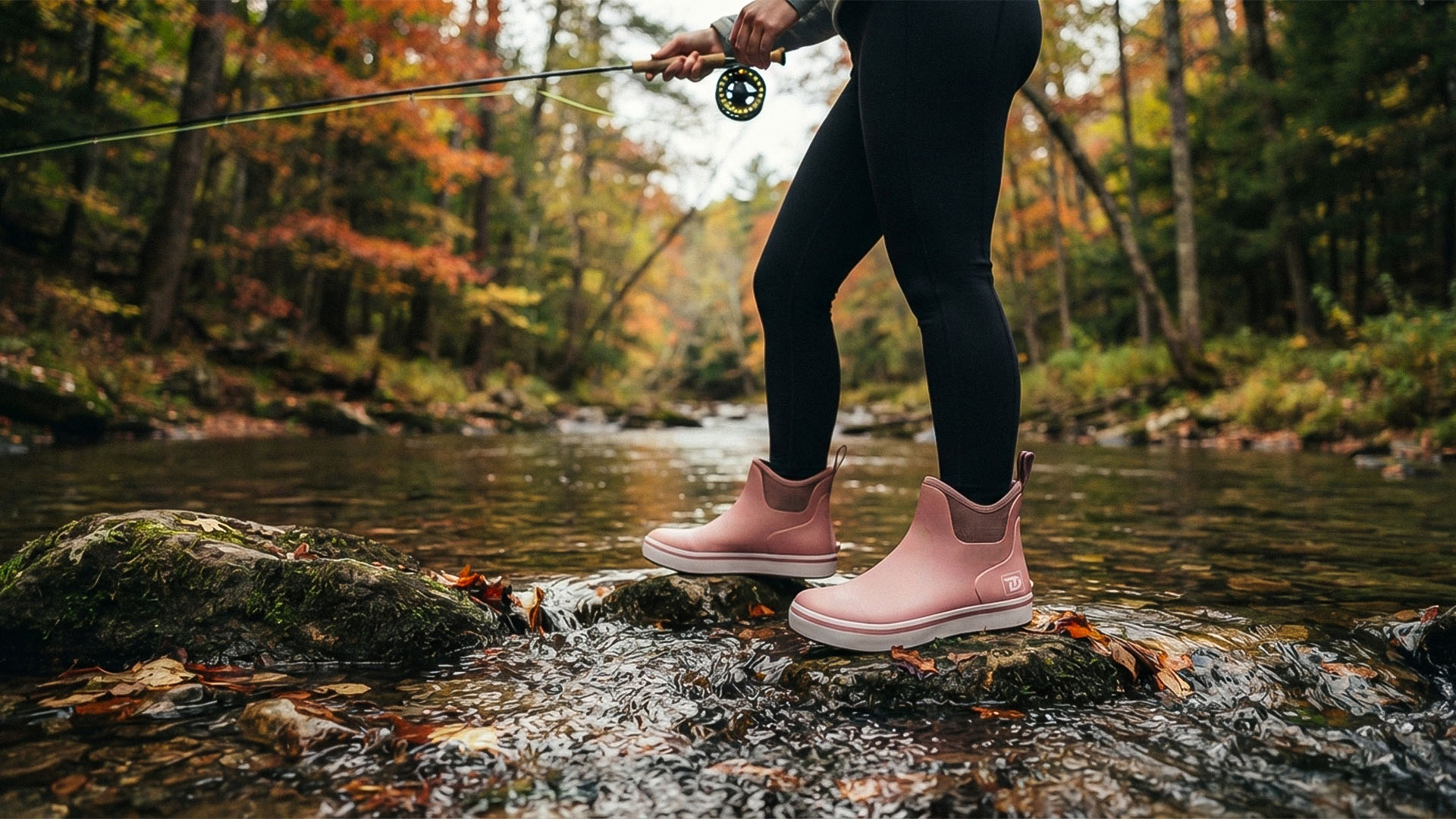
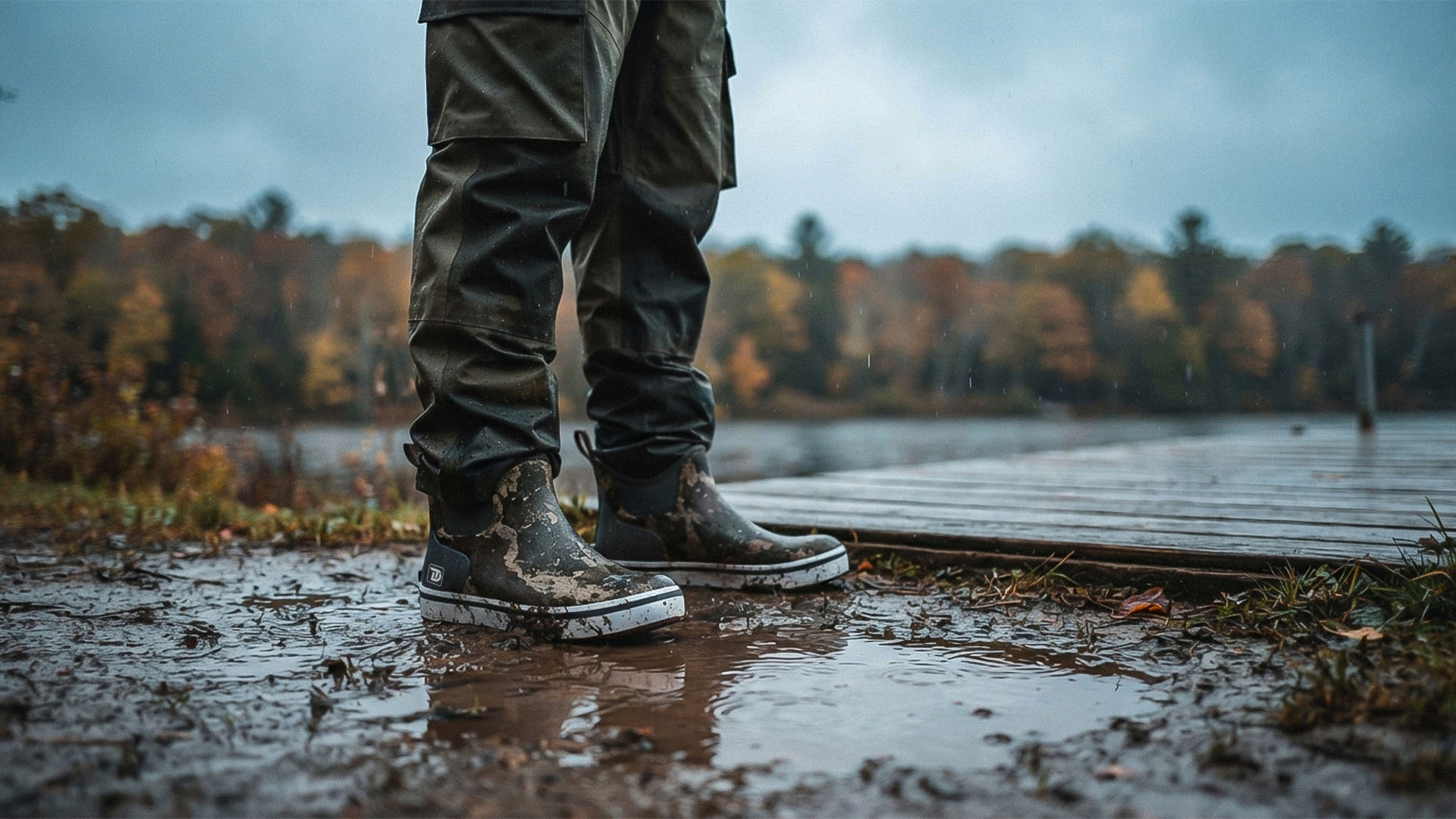
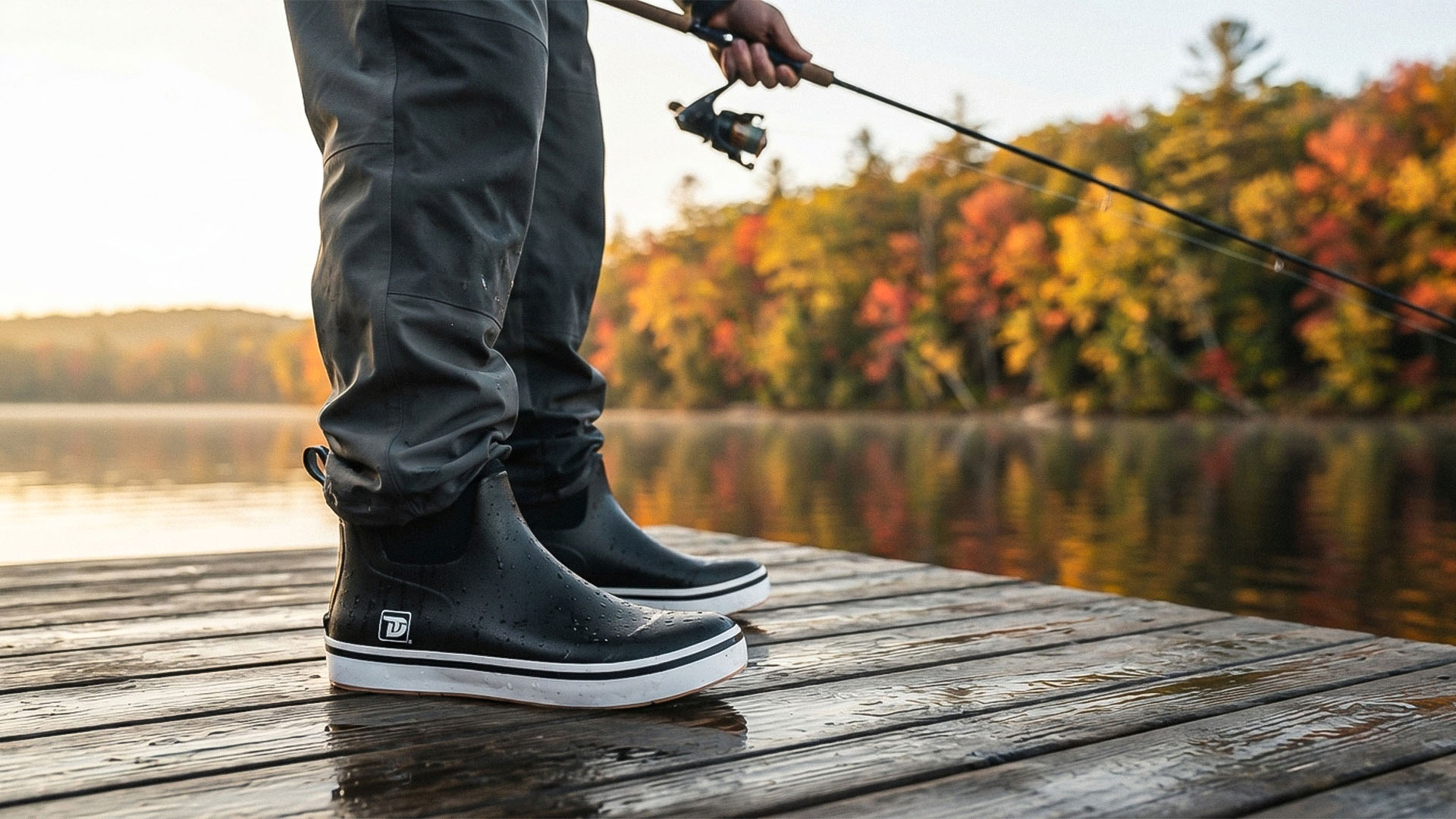
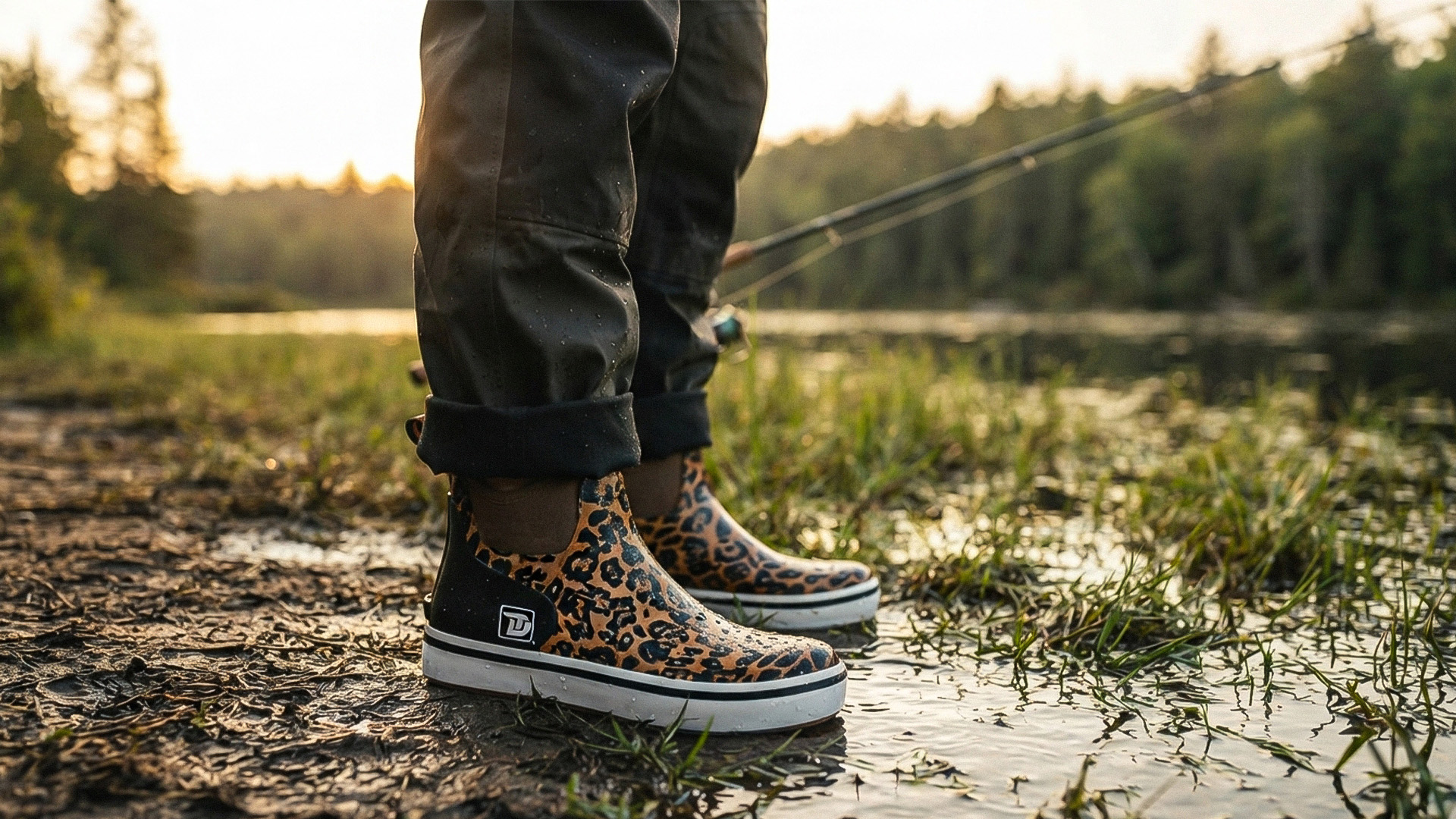
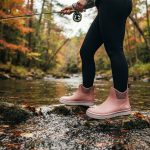
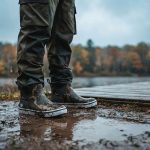
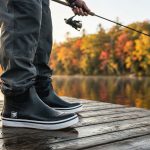
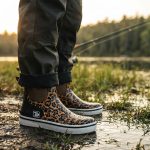
Waterproof Ankle Deck Boots
Low-profile deck boots can work in certain kayak setups, especially when anglers want protection from wet ramps, shallow puddles, rain, and spray.
They are most suitable when:
- The kayak has an open deck
- Foot space is generous
- Pedal clearance is adequate
- Water temperatures are mild
- The launch does not require deep wading
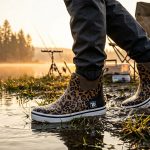
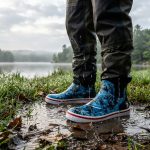
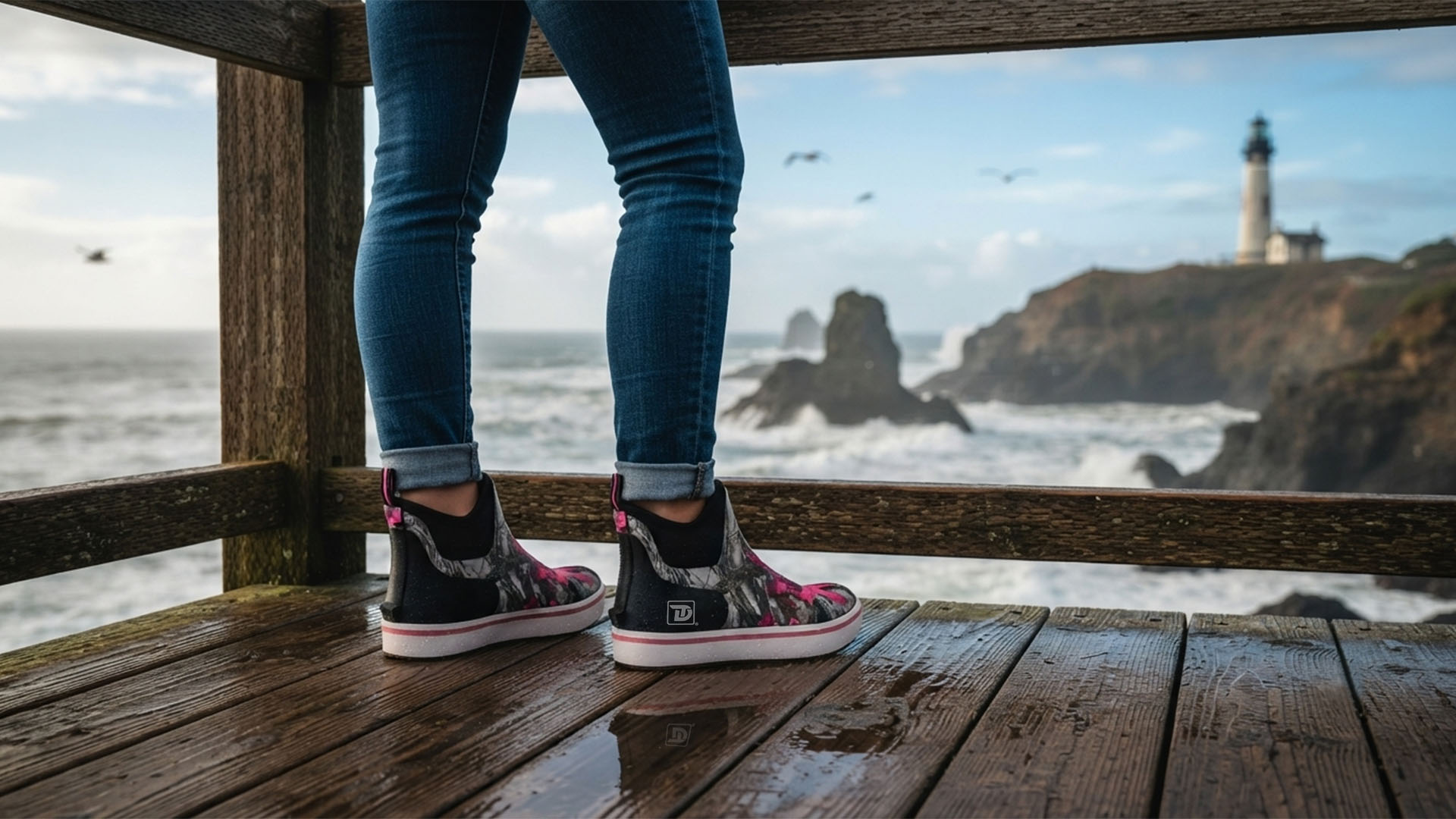
Anglers comparing waterproof footwear for wet launches and boat use can review [TruDaveGear waterproof deck boots] alongside other fishing-specific options.
Before using any deck boot in a kayak, test whether the sole, opening, and overall volume interfere with pedals, foot braces, or emergency exit.
When Deck Boots Are Not the Best Choice
Deck boots may be unsuitable when:
- The cockpit is narrow
- Pedals require close ankle movement
- Deep wading is required
- Water regularly enters above the opening
- Cold-water immersion protection is necessary
- The boots are difficult to remove
- The outsole catches on kayak hardware
A waterproof boot filled with water becomes heavy.
Do not use bulky footwear that may interfere with exiting the kayak.
Tall Rubber Boots in a Kayak
Tall rubber boots are generally less suitable for kayak fishing.
They can be:
- Bulky
- Heavy
- Restrictive
- Difficult to remove
- Incompatible with pedals
- Capable of holding large amounts of water
They may work in specific large open kayaks or during shoreline work, but they are usually not the best option for active paddling.
Use low-profile footwear unless conditions clearly require more coverage.
Footwear and Kayak Reentry
Consider what happens if you fall into the water and need to reenter the kayak.
Footwear should not:
- Fill with excessive water
- Catch on the seat
- Interfere with kicking
- Restrict ankle movement
- Prevent climbing onto the deck
- Become difficult to remove
Practice reentry in safe, controlled conditions while wearing the same clothing and footwear intended for fishing.
Do not assume the setup will work without testing.
What Socks Should You Wear?
Sock choice depends on whether the footwear is designed to remain dry or wet.
Inside Waterproof Footwear
Wear lightweight synthetic or merino wool socks.
Inside Neoprene Boots
Use thin synthetic liners or socks recommended for the boot.
In Warm Draining Shoes
Use lightweight synthetic socks or go without socks when the footwear is designed for direct skin contact.
In Cold Conditions
Use appropriate thermal or neoprene systems without making the footwear excessively tight.
Avoid cotton socks.
They remain wet and increase friction.
Carry Spare Socks
Keep at least one dry pair inside a waterproof bag.
Your feet may become wet during:
- Launching
- Landing
- Rain
- Paddle drips
- Waves
- Accidental stepping
- Kayak reentry
Dry socks are especially useful for the return drive or after leaving the water.
Cold-Water Clothing
Cold-water kayak fishing requires specialized planning.
Depending on conditions, appropriate clothing may include:
- Drysuit
- Wetsuit
- Thermal base layers
- Paddling jacket
- Insulating layers
- Neoprene boots
- Cold-weather gloves
- Warm hat
- Hood
A drysuit keeps outside water away from internal layers when properly used, while a wetsuit provides insulation by trapping water close to the body.
The correct system depends on water temperature, trip type, distance from shore, and local safety guidance.
Ordinary rain gear is not a replacement for immersion protection.
Warm-Weather Night Kayak Outfit
A practical warm-weather setup includes:
- Lightweight long-sleeve fishing shirt
- Quick-drying pants or shorts
- Personal flotation device
- Secure draining shoes
- Lightweight socks
- Hat
- Insect protection
- Compact rain shell
- Headlamp
- Visibility lighting
Bring a light wind layer even on warm nights.
Temperatures may fall after midnight.
Cool-Weather Night Kayak Outfit
For cool conditions, wear:
- Moisture-wicking base layer
- Lightweight fleece
- Windproof paddling shell
- Quick-drying pants
- Neoprene or low-profile waterproof footwear
- Merino or synthetic socks
- Warm hat
- Light gloves
- PFD
Make sure all layers remain comfortable while seated.
Cold-Weather Night Kayak Outfit
For cold conditions, consider:
- Appropriate drysuit or wetsuit system
- Thermal base layers
- Synthetic insulation
- Cold-water paddling footwear
- Warm socks
- Insulated gloves
- Warm hat or hood
- PFD
- Complete dry clothing backup
Avoid cotton and oversized layers.
Cold-water kayak trips should remain conservative and close to safe access points.
Rainy Night Kayak Outfit
For rain, use:
- Waterproof paddling jacket
- Waterproof pants or bibs
- Moisture-wicking base layer
- Secure water-ready footwear
- Synthetic or merino socks
- Brimmed cap beneath the hood
- PFD worn over compatible layers
Rain gear should not collect water around the waist or interfere with the seat.
Test the setup before fishing.
Visibility Is Part of What You Wear
Night fishing clothing should help other boaters identify you.
Dark clothing, dark kayaks, and unlit equipment are difficult to see.
Use a combination of:
- Reflective clothing details
- Reflective PFD panels
- Bright hat
- Reflective tape
- Approved navigation lights
- Clip-on safety light
- Kayak flag where appropriate
Do not rely only on a headlamp.
A headlamp points where you look and may not remain visible from every direction.
Use Legally Required Kayak Lighting
Lighting requirements vary by location and waterway.
Your kayak may need specific navigation or visibility lights after dark.
Check current local boating regulations before launching.
Use equipment designed for marine environments.
Lights should be:
- Water resistant
- Securely mounted
- Visible from required directions
- Charged or equipped with fresh batteries
- Positioned where fishing gear will not block them
Carry backup lighting.
Headlamp Selection
A headlamp keeps both hands free.
Choose one with:
- Adjustable brightness
- Red-light mode
- Water resistance
- Comfortable strap
- Lockout function
- Long battery life
- Simple controls
The headlamp should fit comfortably with your hat, hood, and PFD.
Use Red Light for Routine Tasks
Red light is useful for:
- Organizing tackle
- Checking knots
- Moving around the kayak
- Preserving night vision
- Reducing glare
White light is better for:
- Identifying hazards
- Removing hooks
- First aid
- Navigation checks
- Detailed repairs
Use the lowest effective brightness.
Carry Multiple Backup Lights
Night kayak anglers should carry more than one light source.
Bring:
- Primary headlamp
- Backup headlamp or flashlight
- Spare batteries
- Backup kayak light
- Waterproof phone light
- Emergency signaling light
Store backups in separate waterproof locations.
One lost bag should not remove every light source.
Reflective Tape on Clothing and Equipment
Reflective tape can improve visibility on:
- Paddle blades
- PFD
- Dry bags
- Crates
- Rod holders
- Footwear
- Kayak sides
Place it where it can be seen from multiple angles.
Do not cover required labels, vents, or moving parts.
Wear Eye Protection
Clear or lightly tinted protective glasses are useful after sunset.
They protect against:
- Hooks
- Flying lures
- Insects
- Branches
- Wind
- Spray
Polarized sunglasses should be replaced with clear lenses once darkness makes tinted glasses impractical.
Keep eyewear secured with a retainer strap.
Insect Protection
Nighttime water environments often attract mosquitoes and other insects.
Wear:
- Long sleeves
- Lightweight pants
- Socks
- Neck gaiter
- Hat
- Appropriate insect repellent
Avoid applying oily repellent directly to paddle grips, electronics, fishing line, or plastic equipment.
Follow the product instructions.
Gloves for Night Kayak Fishing
Gloves may provide:
- Warmth
- Sun protection before sunset
- Paddle grip
- Fish handling protection
- Reduced friction
- Hook protection
Choose gloves that still allow you to operate:
- Reels
- Knots
- Clips
- Electronics
- Paddle
- Pliers
Keep a dry backup pair in cool weather.
Hat and Head Protection
A lightweight cap works well in warm weather.
A knit hat or thermal cap provides warmth in cool conditions.
The hat should fit securely beneath the headlamp.
Avoid loose brims that block vision or interfere with the light beam.
In rain, a brimmed cap beneath the hood can help keep water away from the eyes.
Neck Gaiter
A neck gaiter provides protection from:
- Wind
- Mosquitoes
- Cool air
- Spray
- Sun before sunset
Choose quick-drying fabric.
In colder weather, use a thermal gaiter that does not interfere with PFD fit.
Organize Clothing to Avoid Snags
Loose clothing and cords can catch on:
- Hooks
- Paddle leashes
- Rod holders
- Pedal systems
- Crates
- Seat hardware
Secure drawcords.
Close pockets.
Tuck away straps.
Keep outer layers streamlined.
Avoid dangling accessories around the chest and waist.
Keep a Knife Accessible
Kayak anglers often carry line, leashes, anchors, and cords.
A cutting tool may be useful during an entanglement emergency.
Keep an appropriate knife or line cutter accessible on the PFD according to safe paddling practices.
It should remain secured and should not create an additional snagging hazard.
Use a Paddle Leash Carefully
A paddle leash helps prevent paddle loss, but every cord adds entanglement risk.
Arrange leashes so they do not cross the legs or feet.
Keep clothing and footwear clear of loose loops.
Practice emergency movement with the complete setup.
Dress for Launching and Landing
Launch areas may be:
- Muddy
- Rocky
- Sandy
- Covered in algae
- Steep
- Dark
- Exposed to waves
Footwear should provide enough protection for the launch, not only for sitting in the kayak.
Use extra lighting while entering and exiting.
Do not step into water without evaluating depth and footing.
Avoid Bulky Clothing Around the Seat
Bulky jackets and thick pants may change your sitting position.
They can create:
- Lower-back pressure
- Restricted hip movement
- Difficulty reaching pedals
- PFD misalignment
- Reduced reentry ability
Test the full outfit while seated in the kayak before the trip.
Adjust the seat and foot braces as necessary.
Keep Rain Gear From Pooling Water
Some loose rain pants and jackets collect water while seated.
Choose paddling-oriented clothing or adjust cuffs and openings so water drains away.
Do not allow water to accumulate around the lap, waist, or seat.
Repeated pooling can create discomfort and interfere with movement.
Pack a Complete Dry Clothing Set
Keep dry clothing inside a reliable dry bag.
Pack:
- Shirt
- Pants
- Socks
- Underwear
- Warm layer
- Towel
- Hat
Cold-weather trips may require a complete emergency clothing system.
Secure the dry bag to the kayak without blocking access.
Use Multiple Dry Bags
Divide critical equipment between separate bags.
For example:
Bag One
- Dry clothing
- Towel
- Emergency blanket
Bag Two
- Phone
- Keys
- Wallet
- Medication
Bag Three
- Backup lights
- Batteries
- Fire-starting or emergency equipment where appropriate
Redundancy helps when one bag leaks or becomes lost.
Check the Weather Before Launching
Review:
- Hourly air temperature
- Water temperature
- Wind speed
- Wind direction
- Rain
- Thunderstorm risk
- Fog
- Current
- Tide
- Moonlight
- Visibility
Night weather can change without being obvious from the water.
Do not launch when conditions exceed your experience, equipment, or kayak capability.
Avoid Night Kayak Fishing Alone When Possible
Fishing with another experienced paddler can improve visibility, communication, and emergency response.
Maintain reasonable distance without crowding each other.
Agree on:
- Route
- Return time
- Communication method
- Light signals
- Emergency procedures
- Launch and landing plan
Tell someone on shore where you are going.
File a Float Plan
A basic float plan should include:
- Launch location
- Fishing area
- Expected return time
- Kayak description
- Vehicle information
- Names of paddlers
- Emergency contact details
Tell the shore contact what to do if you do not return or communicate as expected.
Carry Communication Equipment
A phone may not have service everywhere.
Depending on the waterway and distance from shore, appropriate communication equipment may include:
- Waterproof phone
- Marine radio
- Whistle
- Emergency signaling device
- Personal locator equipment
Keep essential communication tools attached to the PFD or body, not only stored in the kayak.
Keep a Whistle on the PFD
A whistle provides a simple sound signal.
It should remain accessible without opening a bag.
Use a marine-safe design and check that it works when wet.
Clothing for Foggy Conditions
Fog reduces visibility and makes orientation difficult.
Wear reflective outer layers and ensure all required lights are working.
Avoid dark, unmarked clothing.
Fog may make even short distances from shore difficult to judge.
If visibility becomes unsafe, move to a protected area or return to the launch according to the safest available plan.
Clothing for Windy Conditions
Wind increases heat loss and may create spray.
Wear:
- Windproof shell
- Secure cuffs
- Close-fitting hood
- Warm base layer
- Water-ready footwear
- Gloves with reliable paddle grip
Avoid loose ponchos.
They can catch wind and interfere with paddling.
What Not to Wear Night Kayak Fishing
Avoid:
Cotton Hoodies and Jeans
They become heavy and cold when wet.
Flip-Flops
They provide limited protection and may come off during launching.
Tall Heavy Rubber Boots
They may restrict movement and fill with water.
Loose Ponchos
They catch wind and interfere with paddling.
Dark Clothing Without Reflective Features
It reduces visibility.
Loose Scarves and Cords
They increase snagging risk.
Unfamiliar New Footwear
Test all gear before a night trip.
Bulky Jackets Under a PFD
They may affect flotation-device fit.
Common Night Kayak Clothing Mistakes
Dressing Only for Air Temperature
Water temperature may present the greater risk.
Storing the PFD Instead of Wearing It
Flotation equipment must be accessible immediately.
Relying on One Light
Carry multiple backups.
Wearing Footwear That Interferes With Pedals
Test the setup before launch.
Using Waterproof Boots in Deep Water
Water may enter and become trapped.
Skipping Reflective Gear
Other boaters need to see you.
Forgetting Dry Clothes
A complete dry set may be essential after immersion.
Wearing Loose Clothing
Loose fabric catches on kayak equipment.
Failing to Test Reentry
Practice in controlled conditions with the real outfit.
Night Kayak Fishing Clothing Checklist
Warm Weather
- Lightweight long-sleeve shirt
- Quick-drying pants or shorts
- PFD
- Draining water shoes
- Lightweight socks
- Hat
- Insect protection
- Rain shell
Cool Weather
- Moisture-wicking base layer
- Lightweight fleece
- Windproof paddling jacket
- Quick-drying pants
- Neoprene or low-profile waterproof footwear
- Merino socks
- Warm hat
- Gloves
- PFD
Cold Water
- Appropriate drysuit or wetsuit
- Thermal layers
- Paddling footwear
- Warm socks
- Insulated gloves
- Thermal hat or hood
- PFD
- Complete dry clothing backup
Visibility
- Required kayak lights
- Headlamp
- Backup flashlight
- Reflective PFD
- Reflective tape
- Clip-on safety light
- Spare batteries
Safety and Storage
- Dry clothing
- Waterproof phone
- Whistle
- Communication equipment
- First-aid kit
- Float plan
- Accessible line cutter
- Emergency signaling equipment
Final Thoughts
Night kayak fishing requires more than wearing dark fishing clothes and carrying a headlamp.
Your clothing should help you manage water temperature, wind, rain, spray, insects, and the possibility of immersion.
Wear a properly fitted personal flotation device at all times.
Choose quick-drying base layers.
Use lightweight insulation and a low-profile windproof shell.
Select footwear that fits inside the kayak, works with the pedal or foot-brace system, and does not interfere with emergency reentry.
Quick-draining shoes are practical in warm water.
Neoprene boots provide more warmth.
Low-profile deck boots may work for wet launches and open kayaks when conditions are mild, but they should not create bulk or trap excessive water.
Use legally required navigation lights.
Add reflective details.
Carry a headlamp and multiple backups.
Pack a complete change of dry clothing.
Dress for the water, not just the night air.
The best kayak fishing outfit is one that remains comfortable while fishing and still works when the trip does not go exactly as planned.
Frequently Asked Questions
What should I wear kayak fishing at night?
Wear quick-drying base layers, weather-appropriate insulation, a windproof or waterproof shell, secure low-profile footwear, reflective details, and a properly fitted personal flotation device.
What shoes are best for night kayak fishing?
Quick-draining water shoes work well in warm conditions, while neoprene boots provide more warmth. Low-profile waterproof deck boots may work in open kayaks when they do not interfere with pedals or reentry.
Are deck boots good for kayak fishing?
They can be useful for wet launches, rain, and open sit-on-top kayaks. They may be unsuitable in narrow cockpits, deep water, cold immersion conditions, or pedal systems with limited clearance.
Should I wear a life jacket while kayak fishing at night?
Yes. Wear a properly fitted paddling or fishing personal flotation device continuously and follow all local boating regulations.
What should I wear for cold-water kayak fishing?
Use an appropriate drysuit or wetsuit system, thermal layers, cold-water footwear, warm gloves, head protection, and a PFD. Ordinary rain gear is not a replacement for immersion protection.
Can I wear sneakers kayak fishing?
Quick-drying athletic or fishing shoes may work in warm conditions. Ordinary absorbent sneakers can become heavy, remain wet, and dry slowly.
Should I wear shorts while night kayak fishing?
Shorts may work in warm air and warm water. Quick-drying pants provide better protection from insects, spray, hooks, seat friction, and falling temperatures.
What lights do I need for night kayak fishing?
Lighting requirements vary by location. Use all legally required navigation or visibility lights, plus a headlamp, backup flashlight, spare batteries, and reflective equipment.
Why should I avoid cotton in a kayak?
Cotton absorbs water, dries slowly, becomes heavy, and provides less comfort when wet. Synthetic and merino wool layers are more practical.
What should I keep in a dry bag?
Keep a complete clothing change, socks, towel, phone, keys, medication, backup lights, batteries, and emergency equipment in waterproof storage.
How do I make myself visible while kayak fishing at night?
Use required kayak lights, reflective clothing, reflective PFD panels, reflective tape, a bright flag where appropriate, and backup safety lights.
Should I practice kayak reentry while wearing fishing clothes?
Yes. Practice in safe, controlled conditions while wearing the same PFD, footwear, and clothing system you plan to use. This helps identify equipment that restricts movement or catches on the kayak.