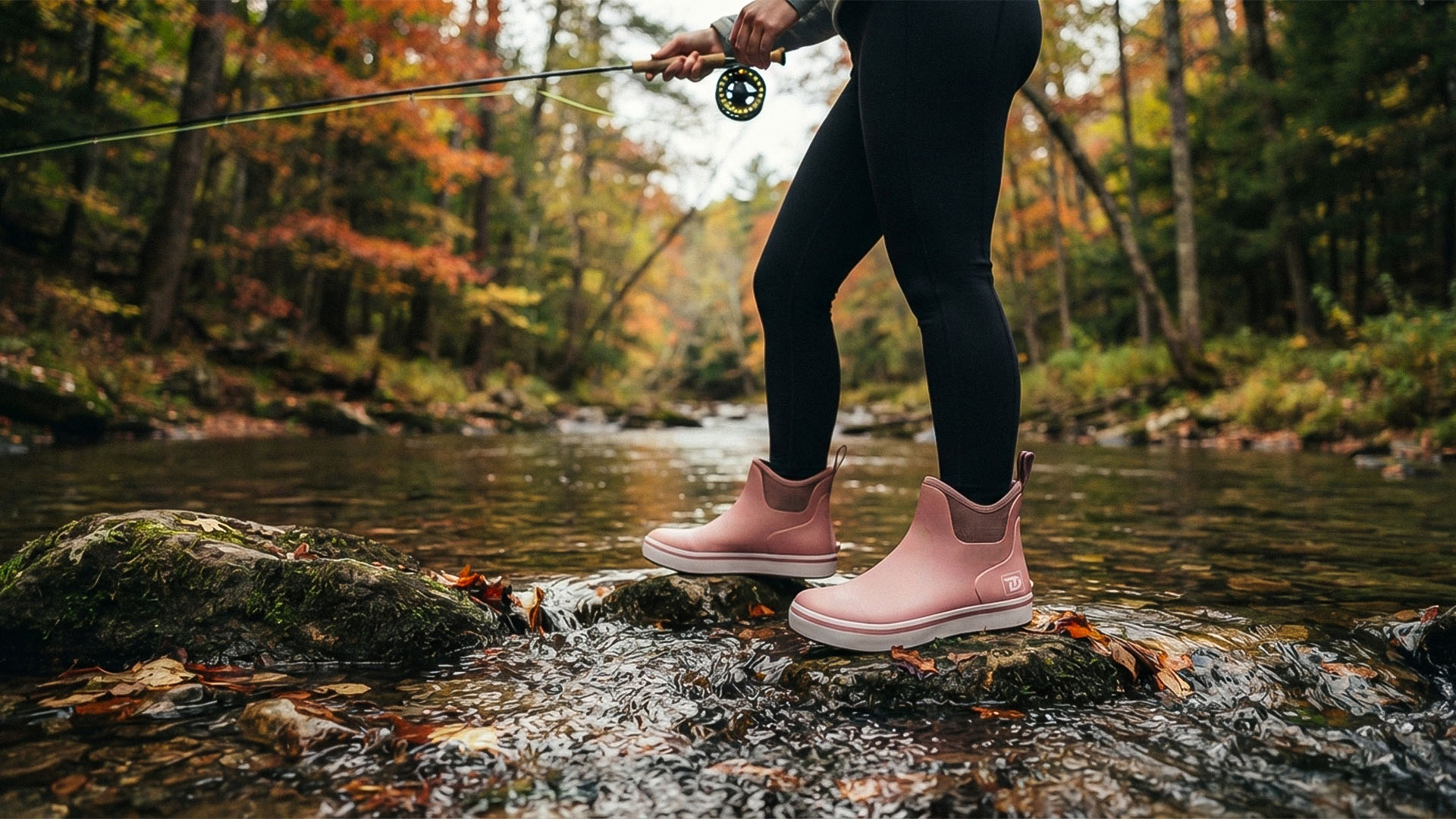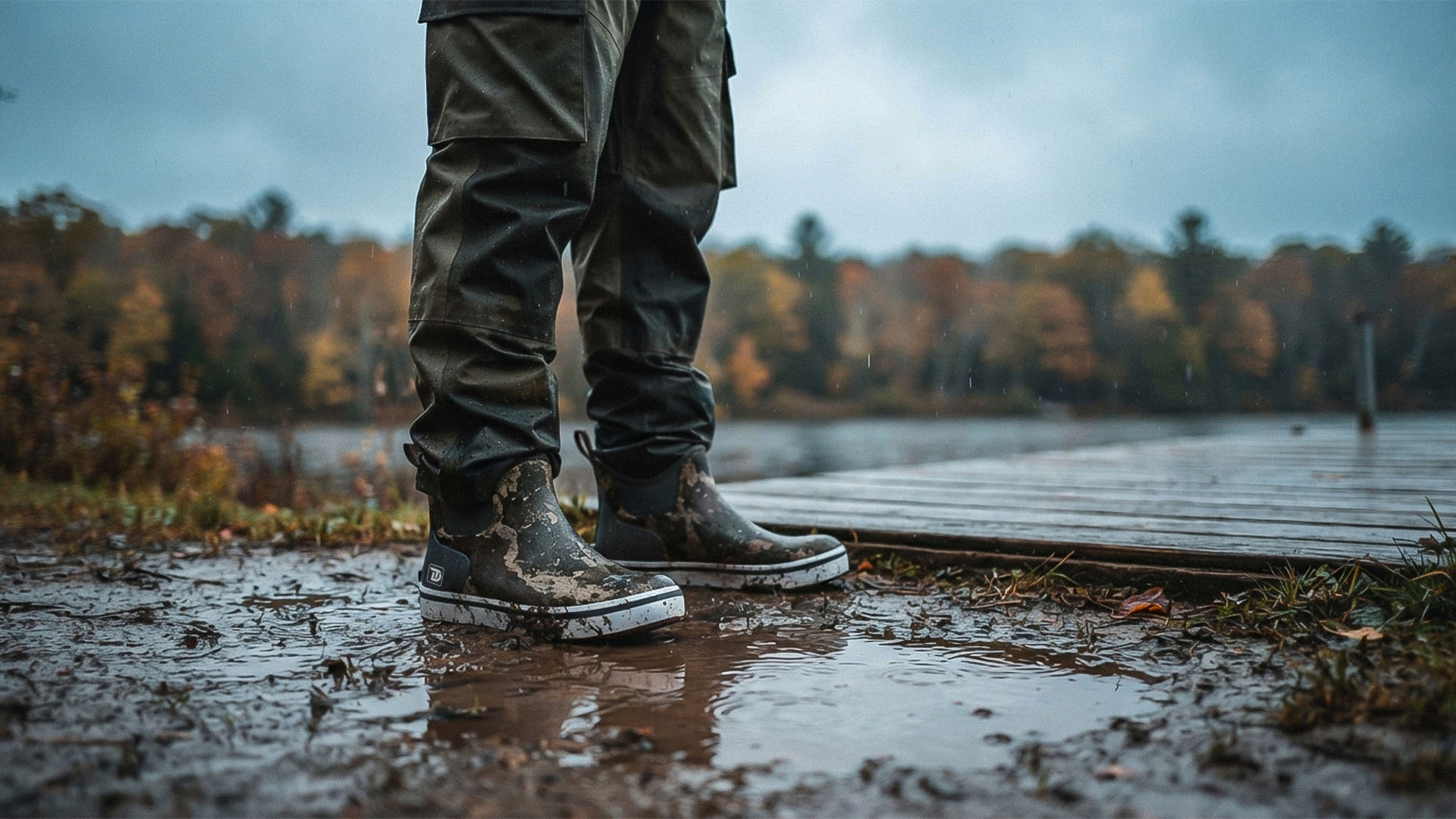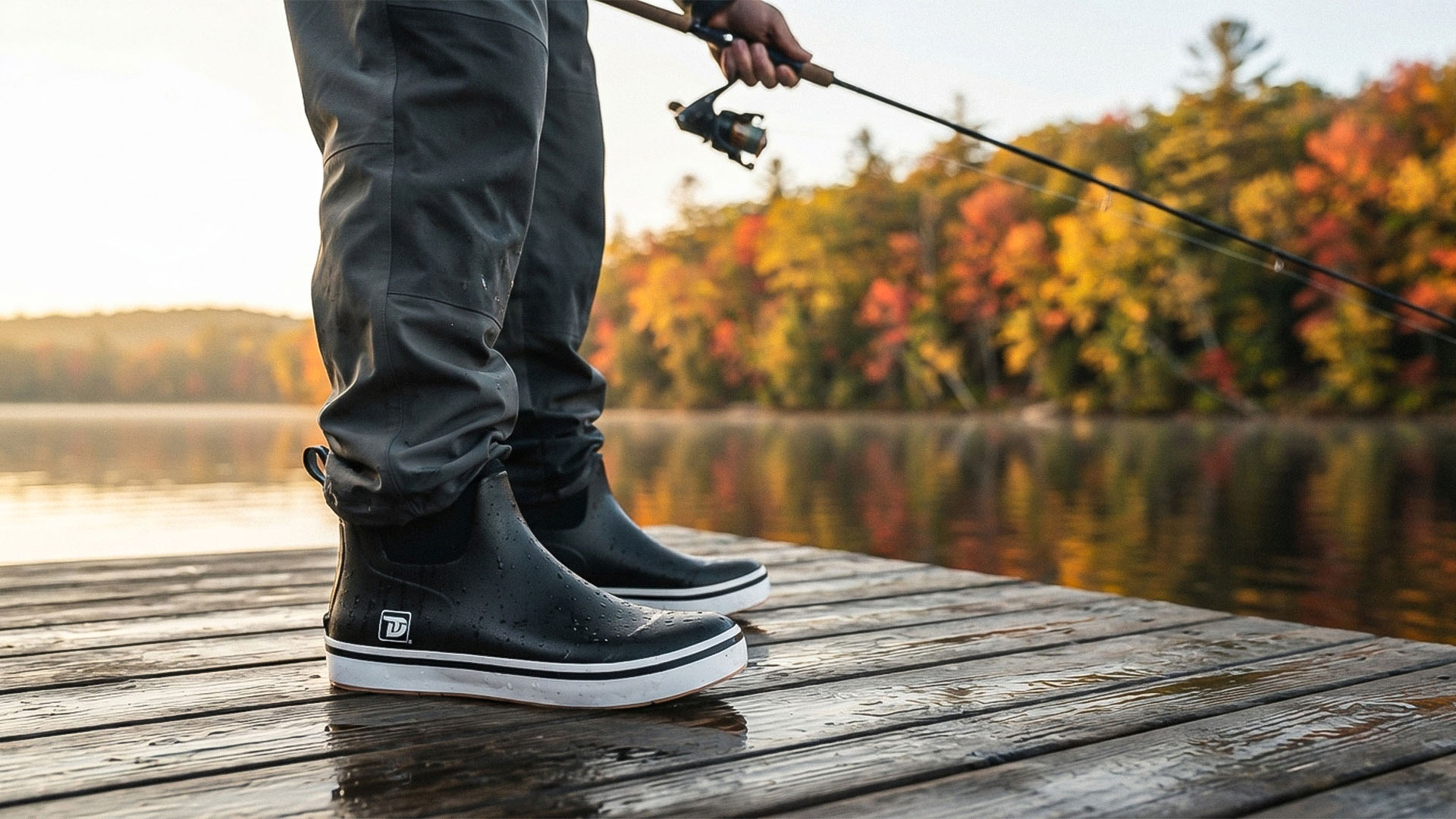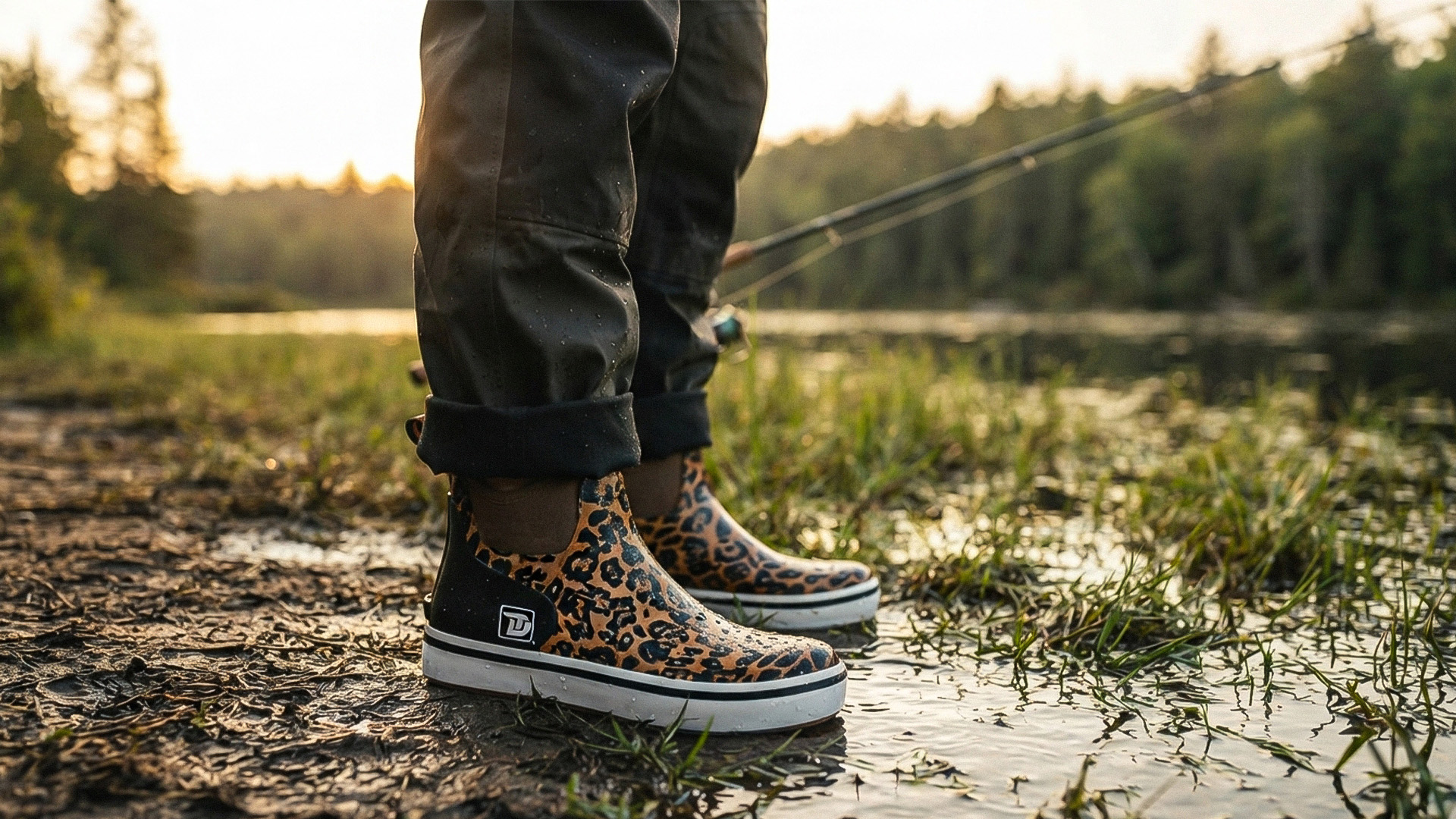

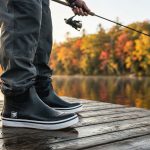
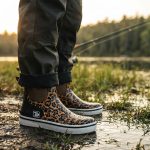
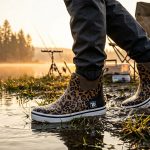
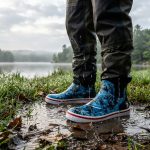
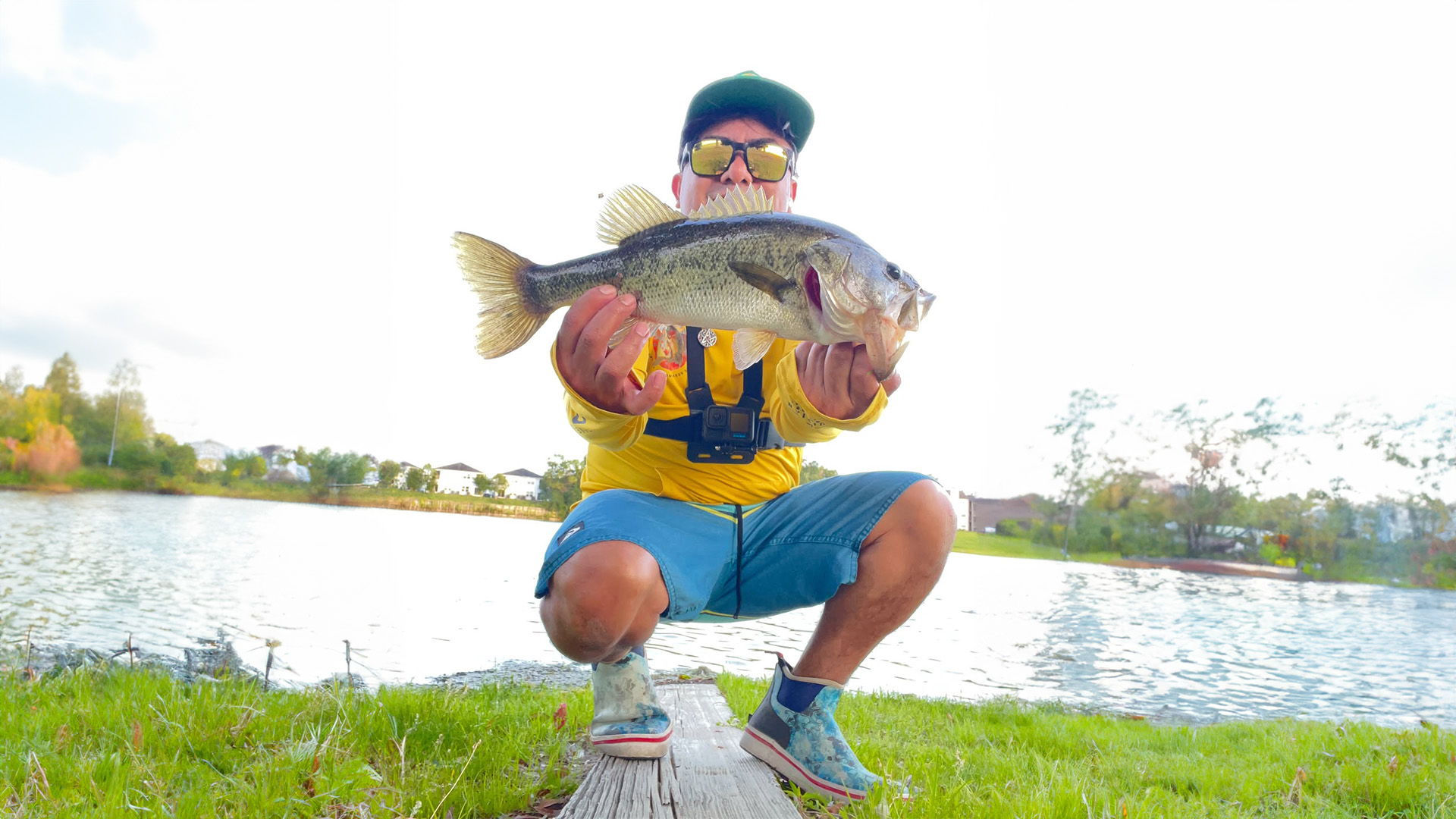
Let’s be honest. For years, there was one name that dominated the conversation around deck boots: XTRATUF. If you spent any time on a boat, you probably owned a pair—or at least knew someone who did. They were the boots worn by the guys on Deadliest Catch, the ones who stood on slippery decks in the Bering Sea for days on end. They were the gold standard.
But here‘s the thing about gold standards: they can tarnish.
Over the past few years, a growing chorus of anglers has started asking a difficult question: Are XTRATUFs still worth the premium price? The answer, for many, is increasingly “no.”
This isn’t about bashing a legacy brand. It‘s about recognizing that the deck boot market has changed. Newer brands have entered the space, offering comparable—and in some cases superior—performance at a fraction of the cost. One such brand is Trudave Gear.
If you’re tired of paying $150+ for boots that crack within a season, it‘s time to look at what’s actually changed in the world of deck boots—and why Trudave might be the smartest buy in 2026.
⚠️ Disclosure: This article is based on product specifications, independent gear reviews, and verified customer feedback. All factual claims are sourced from official product pages, customer reviews, and industry publications. Our goal is to provide honest, practical information for anglers—not to sell you anything.
The Cracks Are Showing: What’s Happening to the “Gold Standard”
Let‘s start with the uncomfortable truth. A significant number of recent XTRATUF customers have reported serious durability issues—problems that would have been unthinkable a decade ago.
Reviews across multiple platforms paint a consistent picture:
- Cracking at stress points. Multiple users report that boots develop cracks at the toe bend within months of purchase. One reviewer noted that after just six months, “cracks started to show” and the boots “completely fallen apart w cracks at the flex points”.
- Peeling and glue failure. “Durability is a major concern, with issues including peeling rubber strips, cracking at stress points, and overall short lifespan”. Some users report glue failure around the toe and overall poor workmanship.
- Sole separation. One customer who wore their boots “maybe a dozen times” reported that “the soles are separating. The boots are no longer waterproof. For this price I expected more”.
- Quality decline. Perhaps most tellingly, reviewers note that “quality [is] significantly lower compared to previous models, with strong disappointment expressed by multiple users”.
- Poor customer service. When customers try to address these issues, they often hit a wall. “Poor response and customer service from the company, with complaints of ignored communications”.
One review summary puts it bluntly: “If you’re looking for a durable, high-performance boot for intensive use, you might want to explore alternative options”.
This isn‘t to say XTRATUFs are bad boots. They still offer excellent grip—the Chevron outsole remains one of the most effective traction patterns on wet decks. But when you’re paying $100–$180 for a pair of boots, “excellent grip” isn‘t enough. You’re also paying for durability. And that‘s where the value proposition has broken down.
The Trudave Alternative: What Happens When You Engineer for Value
While legacy brands have been coasting on reputation, Trudave Gear has been building deck boots from a different starting point: the mechanics of a sneaker.
The Comfort Revolution. Most rubber boots are uncomfortable because they’re made from rigid materials and shaped like wide tubes. Trudave solved this with three engineering choices.
First, Active Flex Rubber — a formulated rubber compound that is naturally flexible. It moves with your ankle, not against it, so you can crouch, kneel, and walk briskly without the boot digging into your shin.
Second, the “Lock-In” Heel — they tightened the tolerance around the ankle and heel cup, eliminating the “heel slip” that causes blisters and makes boots feel heavier than they actually are.
Third, dual-density insoles that provide actual arch support and shock absorption—not just a flat piece of rubber.
The result? “I forgot I was wearing them.” That’s the compliment Trudave hears from customers constantly.
The Traction Technology. The WaveLock Series uses Trudave‘s exclusive WaveLock Traction Outsole with micro-channel siping that disperses water instantly, keeping your footing solid even on wet fiberglass or metal surfaces. The DeckFlow Series features non-slip rubber outsoles designed for superior traction on slick boat decks, docks, and marinas.
Both are non-marking—they won’t scuff your boat‘s gel coat.
The Waterproofing. Both series are 100% waterproof, made from premium natural rubber with sealed construction. Not water-resistant. Not water-repellent. Waterproof.
The Price Gap. This is where the math gets interesting. XTRATUF deck boots typically run $100–$180. Trudave’s WaveLock and DeckFlow series run $50–$90. That’s roughly half the price for comparable—and in some cases superior—features.
WaveLock vs. DeckFlow: Which One Fits Your Water?
Trudave offers two distinct deck boot series, each optimized for different fishing styles and conditions.
The WaveLock Series is for the angler who fishes when the water is cold and the air is colder. The thermal insulation traps your body heat when you‘re sitting still—perfect for early spring stripers, late-fall trophy hunts, or any trip where you’re spending more time anchored than moving.
The DeckFlow Series is for the angler who moves. Kayak fishermen, bank anglers, tournament fishermen running the deck all day. The breathable mesh lining pulls sweat away from your skin, preventing the “swamp foot” that plagues fully sealed rubber boots.
The year-round hack: If you fish in both cold and warm weather, buy both. Together, they cost less than a single pair of premium boots—and you get the right boot for every condition, not a compromise.
What Real Anglers Are Saying
Trudave holds a 3.8 to 4.1 rating across verified review platforms. Here‘s what actual owners emphasize:
Dry feet (the consistent win):
“The boots have made our jobs and lives sooo much better and easier. And best of all, our feet stay DRY!!! It has been about two months now and these boots are still going strong and keeping our feet protected. Would recommend these boots 100%.”
Build quality and comfort:
“Bought some boots from Trudave, These boots are well made and comfortable. The size is slightly larger, but with socks they fit well and comfortably. A size smaller would be too tight.”
“The shoes are very well made. They do a good job of keeping my socks dry. The tabs help a lot to get them on.”
Pressure washing professional validation:
“They‘ve got good colors especially if you’re in The Pressure Washing Industry and the boots are comfortable.”
Common patterns from verified feedback:
- Sizing runs slightly large. Most owners recommend wearing medium-to-heavy socks for optimal fit. The sizing chart works when followed.
- Dry feet is the consistent win. Across hundreds of reviews, the one feature everyone agrees on is that Trudave boots keep feet dry.
- Order directly from Trudave rather than third-party retailers for best accuracy.
- Customer service is variable. Some owners report quick responses; others note delays. Ordering the correct size initially is strongly recommended.
The Bottom Line
Here‘s the honest truth about deck boots in 2026.
You can spend $100–$180 on a pair of boots with a logo that’s been around for decades. You‘ll get a good boot. It will grip the deck. It will keep your feet dry. It will work.
But “it will work” isn’t the same as “it will last.” And based on the growing chorus of customer feedback, the durability of legacy deck boots has become a legitimate concern.
Or you can spend $50–$90 on a pair of Trudave boots that do the same things—with better comfort engineering, the same waterproofing, and comparable slip resistance—and use the money you save to buy fuel for more trips, new lures, or a better fish finder.
Independent gear guides for 2026 have taken note. “Some newer brands have started matching or exceeding Xtratuf‘s features at competitive prices, so while Xtratufs remain reliable, they might not be the only good option anymore”.
The WaveLock keeps you warm and planted when you’re sitting still in cold weather. The DeckFlow keeps you comfortable and secure when you‘re moving on the deck in warm weather. Both keep you upright—and that’s the only thing that really matters.
| Decision Factor | WaveLock | DeckFlow |
|---|---|---|
| Cold-weather fishing (20°F–50°F) | ⭐⭐⭐⭐⭐ Best in class | ⭐⭐⭐ Requires wool socks |
| Warm-weather fishing (50°F–80°F+) | ⭐⭐ Too hot | ⭐⭐⭐⭐⭐ Best in class |
| Slip resistance | ⭐⭐⭐⭐⭐ Micro-channel siping | ⭐⭐⭐⭐ Non-marking siped outsole |
| Waterproofing | ⭐⭐⭐⭐⭐ | ⭐⭐⭐⭐⭐ |
| Comfort engineering | ⭐⭐⭐⭐⭐ | ⭐⭐⭐⭐⭐ |
| Value for money | ⭐⭐⭐⭐⭐ | ⭐⭐⭐⭐⭐ |
The fish don’t care what logo is on your boots. The deck doesn‘t check the brand tag. It only cares if you’re still upright—dry, comfortable, and focused—when the bite finally turns on.
Trudave keeps you there. Without emptying your wallet.
Now go catch something. Your boots will handle the rest.