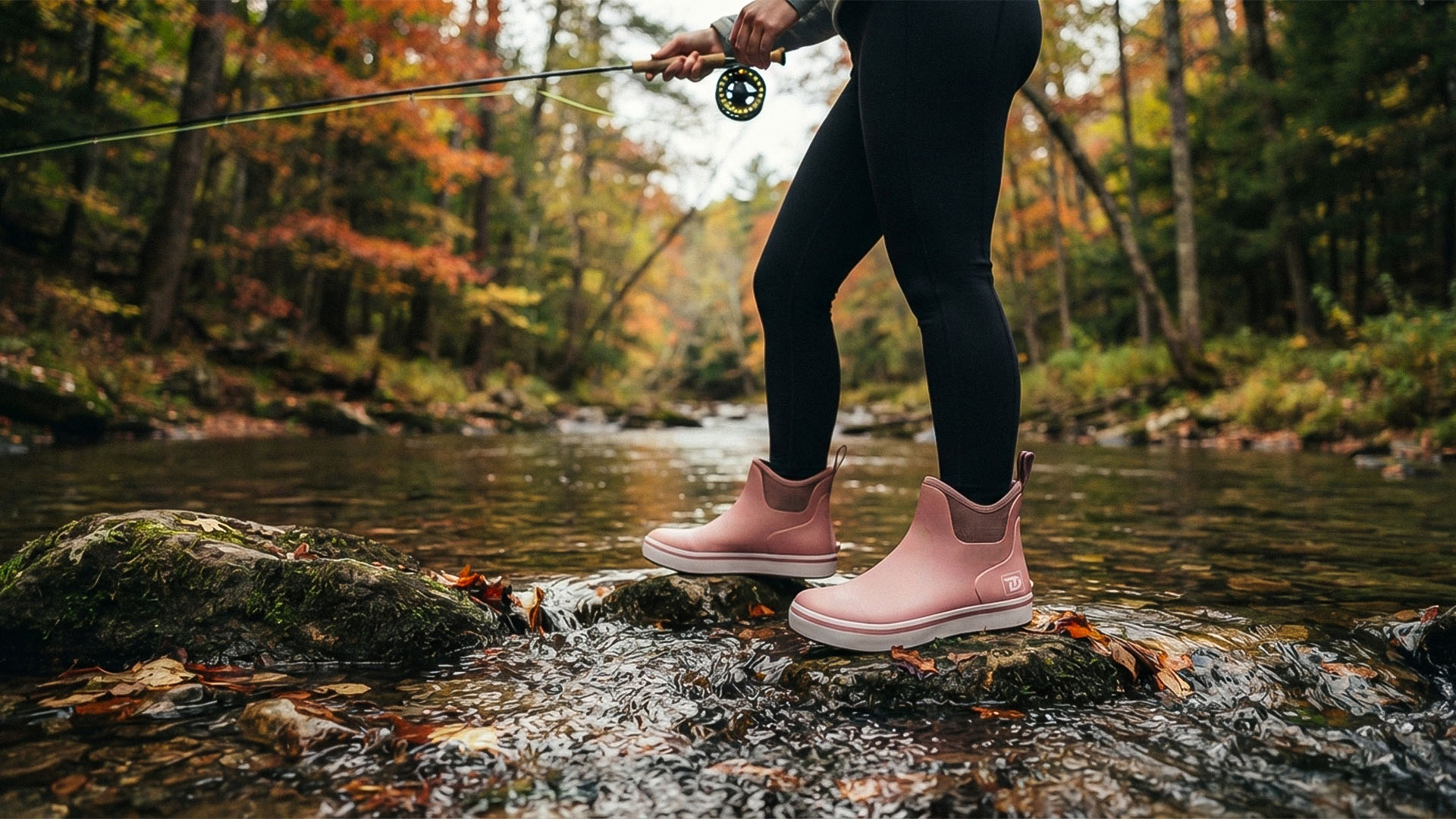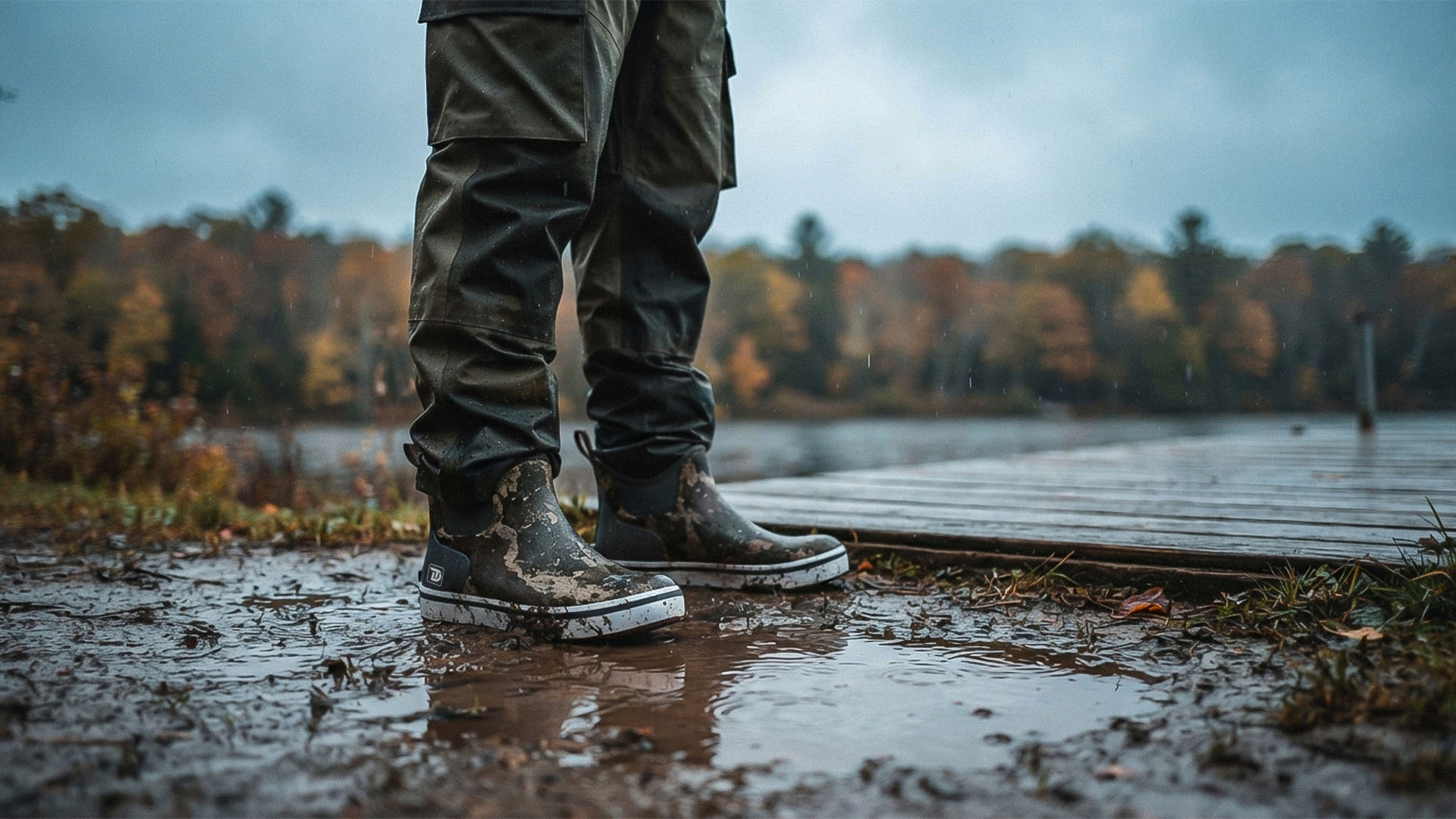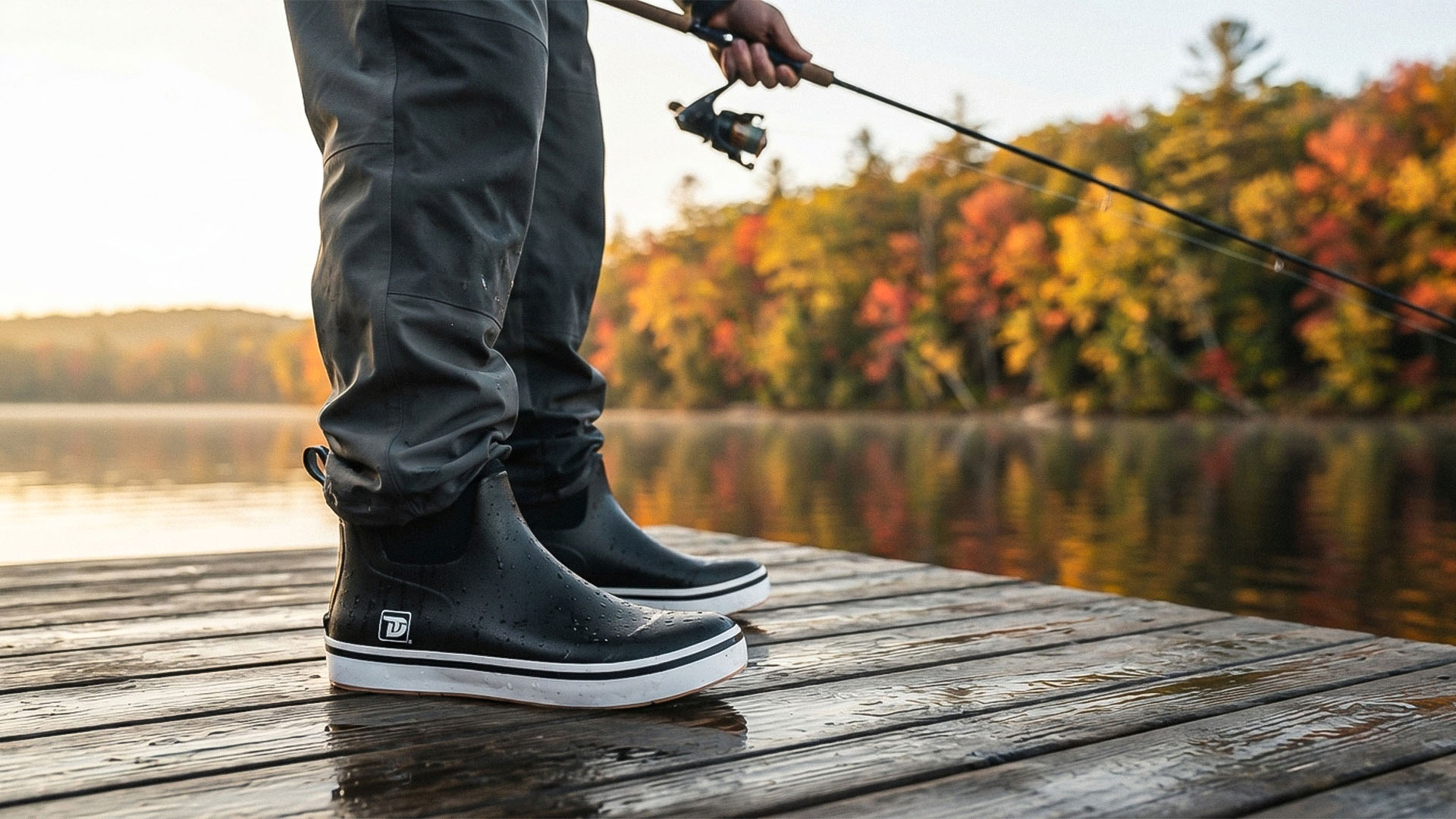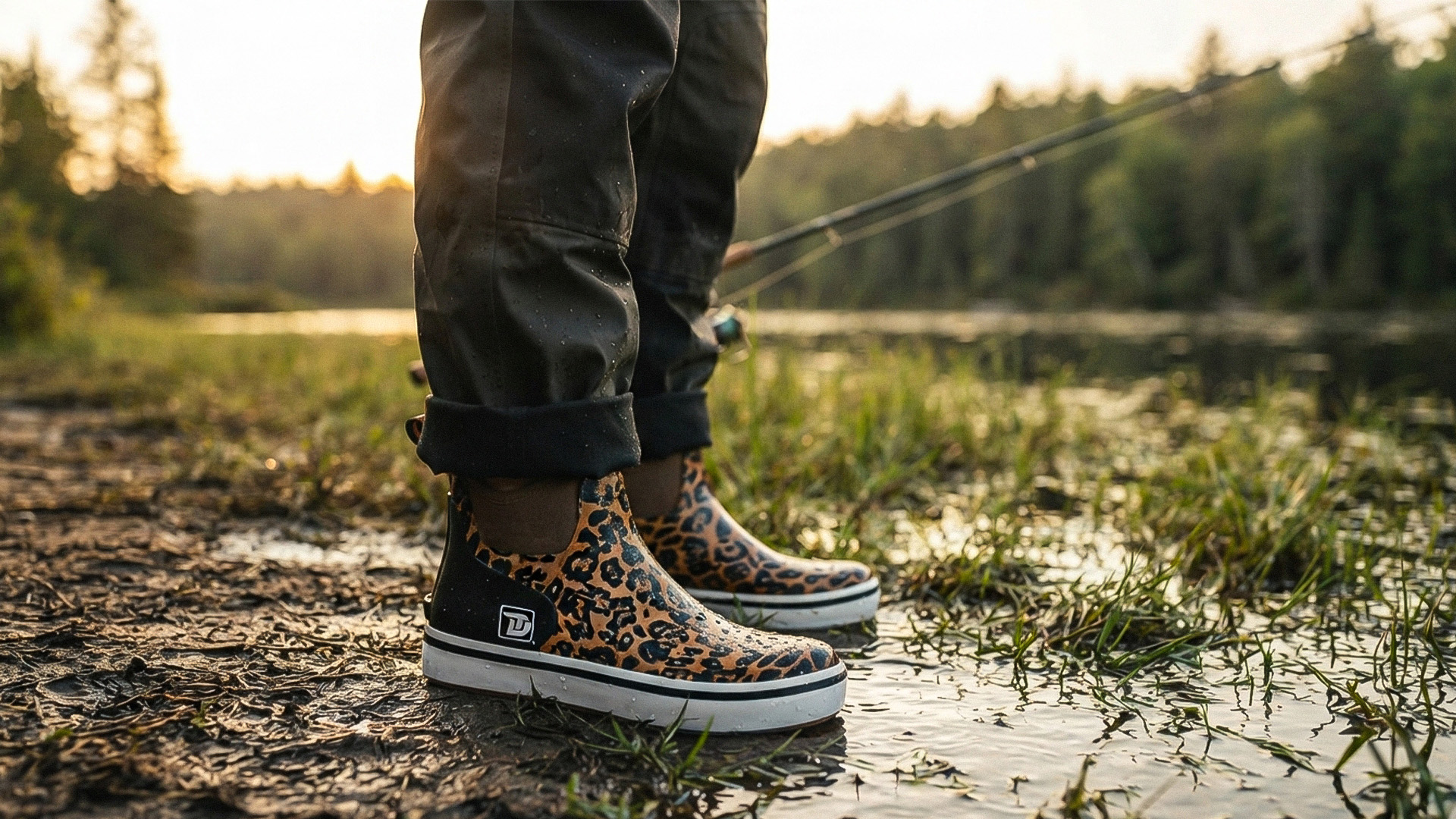
Let me ask you something.
When was the last time you kicked off your deck boots at the end of a fishing day and felt genuine relief—not because you’d caught a limit, but because you could finally feel your feet again?
If you’re like most anglers, the answer is “every trip.” We’ve been conditioned to believe that rubber boots are supposed to be uncomfortable. That heavy, stiff sensation of walking with two plastic buckets strapped to your feet. The “clomp, clomp, clomp” sound that announces your arrival from fifty yards away. The relief when you finally peel them off at the dock.
But here’s a question worth asking: what if that was a lie?
What if the industry had just been making boots poorly for so long that we accepted it as normal? What if deck boots could feel like sneakers—flexible, supportive, and comfortable enough that you forgot you were wearing them?
That’s exactly what Trudave Gear set out to prove. And after spending months in their DeckFlow and WaveLock series, I can tell you: the comfort revolution is real.
The Three Ways Cheap Boots Fail (And Why We Accepted It)
Let’s start with the obvious: most rubber boots are miserable to wear for more than an hour. For a long time, I thought that was just how it had to be.
The industry sold us a story: comfort was a trade-off for waterproofing. If you wanted to keep water out, you had to accept stiff materials, poor fit, and zero support. The “break-in” period was a badge of honor. The blisters were a rite of passage.
But here’s the truth: cheap boots fail in three distinct ways, and none of them are necessary.
The Material Problem (Too Stiff). Cheap rain boots are often made of rigid PVC plastic, not high-grade rubber. They don’t flex with your foot—they fight against it. Every step requires extra energy just to bend the boot, leading to shin splints and fatigue long before the day is done.
The Fit Problem (The “Bucket” Effect). To fit everyone, cheap boots are shaped like wide tubes. Your heel lifts up and slips down with every step. That friction causes blisters and makes the boot feel heavier than it actually is—because you’re dragging dead weight with every stride.
The Footbed Problem (Zero Support). Look inside a standard deck boot. It’s usually just a flat piece of rubber. No arch support. No shock absorption. It’s like standing on concrete barefoot.
The result? You don’t just get uncomfortable feet. You get distracted feet. And on a boat, distraction is dangerous.
Building Boots Like Sneakers
When Trudave set out to design their deck boots, they didn’t start with a mold for a boot—they started with the mechanics of a sneaker. That single decision changed everything.
Active Flex Rubber. The first problem was material stiffness. Trudave uses a formulated rubber compound that is naturally flexible. It moves with your ankle, not against it. You can crouch, kneel, and walk briskly without the boot digging into your shin. This is the kind of flexibility that makes you forget you’re wearing rubber boots at all.
The “Lock-In” Heel. The second problem was fit. By tightening the tolerance around the ankle and heel cup, Trudave eliminated the “heel slip” that causes blisters and makes boots feel heavier than they actually are. A boot feels lighter when it fits properly. When your heel is locked in, the boot feels like an extension of your leg rather than a dead weight dragging behind you.
Shock Absorption. The third problem was the footbed. You aren’t just standing still—you’re jumping off boat decks, walking on hard docks, and navigating wet fiberglass. Trudave integrated a dual-density insole that provides actual arch support and impact absorption. Your knees and lower back will notice the difference by hour eight.
The Enemy Isn’t Cold—It’s Moisture
Here’s something most boot guides don’t tell you: in rubber boots, the number one cause of cold feet isn’t usually the outside air. It’s sweat.
If your feet sweat in a sealed rubber boot and that moisture can’t escape, it cools down rapidly as soon as you stop moving. This creates a “refrigerator effect” inside your boot. Your feet get cold—even when the air temperature is mild—because your own sweat has turned against you.
That’s why choosing the right deck boot isn’t just about insulation thickness. It’s about managing moisture balance based on your activity level.
Trudave built two distinct series to handle this balance: WaveLock for the angler who spends more time standing than moving, and DeckFlow for the angler who generates their own heat through movement.
WaveLock vs. DeckFlow: Which One Fits Your Style?
This is the most common question anglers ask, and the answer is simpler than you think—it comes down to your activity level and the conditions you fish most.
| Feature | WaveLock Series | DeckFlow Series |
|---|---|---|
| Primary Use | Cold mornings, early season, stationary fishing | Warm weather, active movement, year-round versatility |
| Lining | Soft thermal insulation + fleece interior | X-Dry moisture-wicking breathable mesh |
| Ideal Temperature | 20°F to 50°F | 45°F to 80°F+ (works colder with wool socks) |
| Outsole | WaveLock micro-channel siping, non-slip grip | Non-marking siped outsole |
| Key Feature | Stretchy side panels, reinforced heel armor, easy-off heel tab | Lightweight low-cut design, transitions from dock to daily wear |
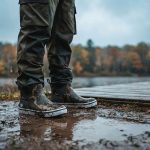
The WaveLock Series: The “Static” Specialist. The WaveLock is built for anglers who fish when the water is cold and the air is colder. Early spring stripers. Late-fall trophy hunts. Steelhead trips when you’re scraping frost off the windshield. The thermal insulation traps your body heat when you’re sitting still. The micro-channel siping keeps you planted on wet decks. The non-slip rubber outsole provides excellent traction on slick decks, docks, and other wet surfaces.
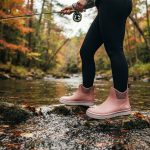
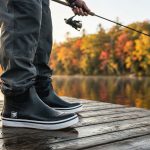
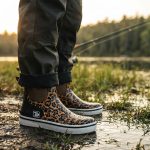
The DeckFlow Series: The “Active” Specialist. The DeckFlow is built for anglers who move. Kayak fishermen, bank anglers, tournament fishermen running the deck all day. The breathable mesh lining pulls sweat away from your skin, preventing the “swamp foot” that plagues fully sealed rubber boots. The non-marking siped outsole channels water away and grips securely on wet wood and fiberglass decks.
The year-round hack: If you fish in both cold and warm weather, buy both. Together, they often cost less than a single pair of premium deck boots—and you get the right boot for every condition, not a compromise.
The Science of Staying Upright
Comfort matters, but let’s not forget why you’re wearing deck boots in the first place: to stay upright on a wet, slippery surface.
Trudave’s outsole technology is engineered for one thing: keeping you on your feet when the deck is slick. The WaveLock Series uses micro-channel siping—those tiny razor-thin cuts in the sole that act like miniature squeegees. When you step down on a wet surface, the sipes open up and channel water away from the contact patch. Your rubber meets the deck directly—not a thin layer of water.
The DeckFlow Series uses a non-marking siped outsole engineered for marine and dockside conditions. It won’t scuff your boat’s gel coat—a small detail that matters to anyone who cares about their boat’s finish.
Both series are built from premium natural rubber with sealed construction—100% waterproof, not water-resistant. No DWR coating to wear off. No membrane to clog. Just rubber doing what rubber has always done.
What Real Anglers Are Saying
Trudave holds a 4.1 out of 5 rating on Trustpilot based on verified purchaser reviews. Here’s what real owners emphasize about comfort and durability:
Dry feet (the consistent win):
“We purchased waterproof boots back in May for working on our little farm as we were constantly dealing with wet, muddy and otherwise soiled shoes while tending our livestock. The boots have made our jobs and lives sooo much better and easier. And best of all, our feet stay DRY!!! It has been about two months now and these boots are still going strong and keeping our feet protected. Would recommend these boots 100%.”
Build quality and comfort:
“Bought some boots from Trudave, These boots are well made and comfortable. The size is slightly larger, but with socks they fit well and comfortably. A size smaller would be too tight.”
The comfort verdict: The true test of a boot isn’t the first five minutes—it’s the twelfth hour. And this is where the comfort engineering proves itself. As Trudave puts it, “We hear it from customers constantly: ‘I forgot I was wearing them.’ That is the highest compliment we can get. Gear shouldn’t be a burden. It should work so well that it disappears”.
Beyond the Boot: What You’re Really Buying
Here’s what I’ve learned after testing Trudave deck boots through long days on the water.
For decades, we were told that rubber boots are just uncomfortable. That the “break-in” period was normal. That if you wanted waterproofing, you had to accept stiff materials, poor fit, and zero support.
That was a lie. It was the story the industry told you to justify cheap materials and bad design.
Trudave built their deck boots from a different starting point: the mechanics of a sneaker. Active Flex rubber moves with your ankle. The Lock-In Heel eliminates heel slip and blisters. The dual-density insole provides actual arch support and shock absorption.
The result is a boot that doesn’t just keep water out—it disappears on your feet. And when you’re facing a twelve-hour day on the water, that’s not a luxury. That’s a foundation.
How to Care for Your Deck Boots
Proper care dramatically extends the lifespan of any boot. Here’s the simple routine that works for both the WaveLock and DeckFlow:
Rinse after every use. Especially after saltwater exposure. A quick fresh-water rinse removes salt crystals, fish residue, and mud that can degrade rubber over time.
Air dry naturally—never use heat. Never put rubber boots on a radiator, in a dryer, or in direct sunlight. Heat cracks rubber and ruins the waterproof seal.
Use mild soap only. For heavy dirt, use mild dish soap and a soft brush. Avoid degreasers, bleach, or harsh chemicals—these strip essential oils from the rubber and cause premature cracking.
Store upright in a cool, dry place away from direct sunlight. Don’t fold or crease the boots, which creates weak points in the rubber.
Check your tread periodically. When the lugs wear down and the sole feels hard like plastic instead of grippy rubber, it’s time for new boots.
Frequently Asked Questions
Q: Which Trudave deck boot should I choose if I fish year-round in a temperate climate?
A: The DeckFlow Series is the more versatile choice. It works across a wider temperature range with the right socks. Add wool socks for colder trips, and you’re covered for spring, summer, and fall.
Q: Do Trudave deck boots run true to size?
A: Verified users report that the sizing chart is accurate when followed. Many users note that boots run slightly large, so wearing medium-to-heavy socks provides optimal fit.
Q: Are Trudave deck boots comfortable for long days on the water?
A: Yes. Both series feature cushioned insoles and breathable linings offering all-day comfort for anglers who spend hours on the boat.
Q: How do I clean Trudave deck boots?
A: For both series, rinse with clean water after use, gently wipe dirt with mild soap, and air dry naturally. Avoid direct sunlight or heat to preserve the rubber flexibility and waterproof durability.
Q: Is Trudave Gear a legitimate brand?
A: Yes. Trudave Gear is an established outdoor footwear brand focused on fishing, hunting, farm work, and outdoor activities. They hold a 4.1/5 rating on Trustpilot based on verified purchaser reviews.
The Bottom Line
Here’s the honest truth about deck boots in 2026.
You can spend $100–$180 on a pair of boots with a logo that’s been around for decades. You’ll get a good boot. It will keep your feet dry. It will work.
Or you can spend $50–$90 on a pair of Trudave boots that do the same things—with better comfort engineering, the same waterproofing, and comparable slip resistance—and use the money you save for more important things. Like fuel for more trips. Like new lures. Like a better fish finder.
The WaveLock keeps you warm and planted when you’re sitting still in cold weather. The DeckFlow keeps you comfortable and secure when you’re moving on the deck in warm weather. Both keep you upright—and that’s the only thing that really matters.
| Decision Factor | WaveLock | DeckFlow |
|---|---|---|
| Cold-weather fishing (20°F–50°F) | ⭐⭐⭐⭐⭐ Best in class | ⭐⭐⭐ Requires wool socks |
| Warm-weather fishing (50°F–80°F+) | ⭐⭐ Too hot | ⭐⭐⭐⭐⭐ Best in class |
| Slip resistance | ⭐⭐⭐⭐⭐ Micro-channel siping | ⭐⭐⭐⭐ Non-marking siped outsole |
| Waterproofing | ⭐⭐⭐⭐⭐ | ⭐⭐⭐⭐⭐ |
| Comfort engineering | ⭐⭐⭐⭐⭐ | ⭐⭐⭐⭐⭐ |
| Value for money | ⭐⭐⭐⭐⭐ | ⭐⭐⭐⭐⭐ |
The fish don’t care what logo is on your boots. The deck doesn’t check the brand tag. It only cares if you’re still upright—dry, comfortable, and focused—when the bite finally turns on.
Trudave keeps you there. And you won’t even remember you’re wearing them.
Now go catch something. Your boots will handle the rest.