Article Content:
Congratulations. You finally did it. After years of dreaming, saving, and watching boat tour videos on YouTube, you’ve signed the papers. The trailer is hitched. The cooler is loaded. The fish finder is still in the box, waiting to be installed.
You‘ve thought about everything. PFDs for the kids. A fire extinguisher for the inspection. Flares, a horn, and a throwable cushion. You’ve got the checklist from the Coast Guard printed out and tucked into the glove box.
But here‘s a question that probably hasn’t crossed your mind: What‘s on your feet?
If the answer is old sneakers, boat shoes with worn-out tread, or the same flip-flops you wore to the grocery store, you’ve got a blind spot in your safety plan.
This guide isn‘t about fishing. It’s not about gear setups or trolling speeds. It‘s about the single most overlooked piece of safety equipment on any boat: deck boots that actually grip. And it’s written specifically for people who are new to boat ownership — people who haven‘t yet learned, the hard way, that a wet deck doesn’t care about your brand loyalty.
⚠️ Disclosure: This article is based on publicly available product information, independent gear reviews, and verified customer feedback from multiple platforms. Our goal is to provide honest, practical information for new boat owners — not to sell you anything.
The Two Biggest Mistakes New Boat Owners Make
Let me tell you about two guys I know. They bought boats the same week. They both had the same enthusiasm, the same dreams of family fishing trips and sunset cruises.
Guy #1 spent all his money on the boat. He bought the biggest motor, the fanciest electronics, and the nicest trailer. When it came to footwear, he figured his old sneakers would be fine. They‘d gotten him through plenty of rainy days on land. How different could a boat deck be?
Guy #2 spent a little less on the boat. He bought a good hull and a reliable motor, but he left room in his budget for the things that actually mattered — including a pair of deck boots designed for wet fiberglass.
You can guess what happened. Guy #1‘s first season ended early. Not because the boat broke down, but because his wife slipped on a wet deck while trying to help with the anchor. Nothing broken, thank God, but the trust was. Every trip after that, she was nervous. Every step was tentative. The joy was gone.
Guy #2? He‘s still out there every weekend. His family feels secure. They move around the boat like they own it — because he invested in the foundation before the frills.
Here‘s the mistake that kills more boating seasons than any mechanical failure: thinking of deck boots as an accessory instead of safety equipment.
The second mistake is almost as common: buying the wrong deck boots.
Not all waterproof boots are created equal. A “waterproof” hiking boot uses a membrane that can clog with salt and fish slime, losing breathability within months. A fashion rain boot has a smooth sole that turns into an ice skate on wet fiberglass. A cheap rubber boot might keep water out, but it has no arch support, no shock absorption, and no puncture protection — and it will crack at the toe flex point before the season is over.
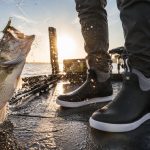
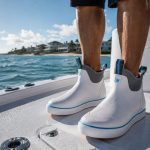
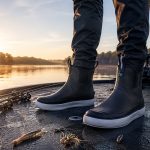
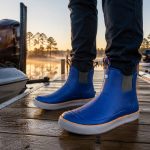
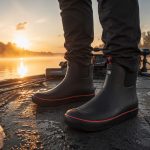
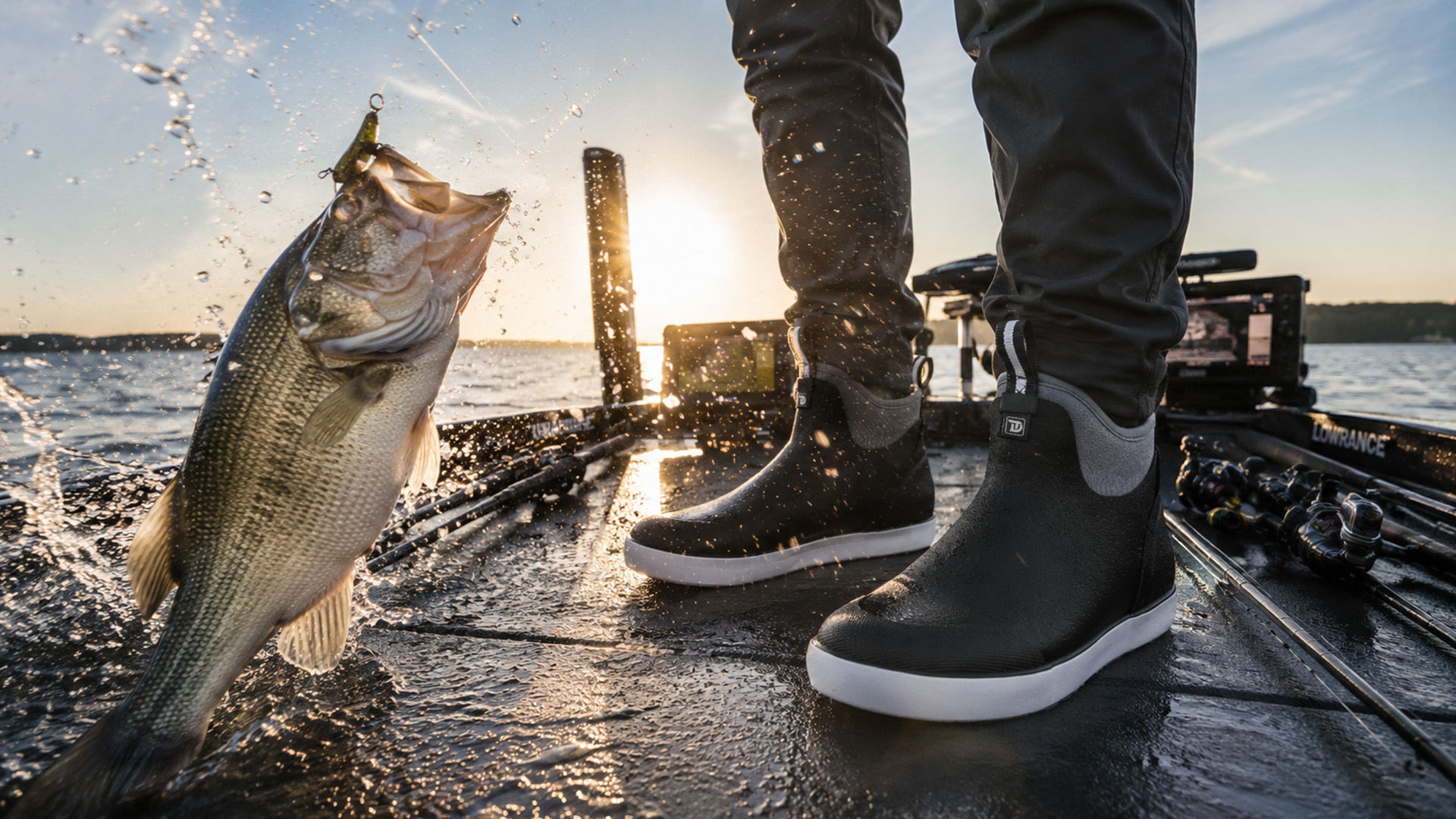
The deck boots you need combine specific features: 100% waterproof rubber construction, siped or micro-channel outsoles for wet-deck traction, cushioned insoles for all-day comfort, and a fit that doesn‘t slip or pinch.
Trudave Gear builds both of their deck boot series—WaveLock and DeckFlow—around exactly these priorities. And they sell direct, which keeps prices in the $50–$90 range instead of the $100–$180 range of legacy brands.
The “Albatross” of Cheap Sneakers and the Cost of “Just This Once”
Let‘s talk about the sneakers you’re probably wearing right now.
You‘ve worn them for years. They’re broken in. They feel like slippers. And on land, they‘re fine.
But a boat deck isn’t land. It‘s wet fiberglass coated in a film of fish slime, sunscreen, salt spray, and whatever else washed out of the cooler. The coefficient of friction on that surface is a fraction of what it is on dry pavement. Standard sneaker soles—designed for sidewalks, not decks—have no active water management. The rubber doesn’t channel water away. The tread pattern is too shallow to grip.
When you step on a wet deck in sneakers, you’re not walking. You‘re hydroplaning. And one micro-slip at the wrong moment can send you overboard, into the gunwale, or onto the deck hard enough to break something.
Commercial fishing operations have studied this problem extensively. One study found that slip-resistant footwear significantly reduced injuries, with odds ratios of 4.9 and 13.0 for different risk factors. Injuries from falling accounted for 40% of all lower extremity injuries among fishermen. Think about that. Nearly half of all injuries to the foundation of your body—the part that keeps you standing and moving—come from falls. Falls that proper footwear could have prevented.
The maritime industry knows this. That‘s why safety guides for fishing vessels explicitly recommend slip-resistant shoes and boots as essential personal protective equipment. They know that a slippery deck isn‘t just inconvenient. It’s the primary reason people get hurt.
The same principles apply to recreational boaters. The deck doesn‘t know the difference between a commercial fisherman and a dad taking his kids out for the day. Wet fiberglass is wet fiberglass. Fish slime is fish slime. And gravity doesn’t take weekends off.
The Three Pillars of Deck Boot Safety: A New Owner‘s Guide
If you‘re buying your first pair of deck boots, ignore the marketing hype and focus on three things.
First: 100% Waterproof Construction (No Exceptions).
Here‘s the dirty secret of the footwear industry: “water‑resistant” does not mean “waterproof.” Water‑resistant boots might handle a light drizzle, but the moment you step into wet grass, a puddle, or a deck splashed by a washdown hose, water finds a way in. The DWR (Durable Water Repellent) coating wears off with abrasion. The membrane clogs with salt and dirt. Cheap seams leak.
What you need is 100% waterproof construction using materials that are waterproof by their very composition: premium natural rubber with sealed seams. No coating to wear off. No membrane to clog. No hidden leak points.
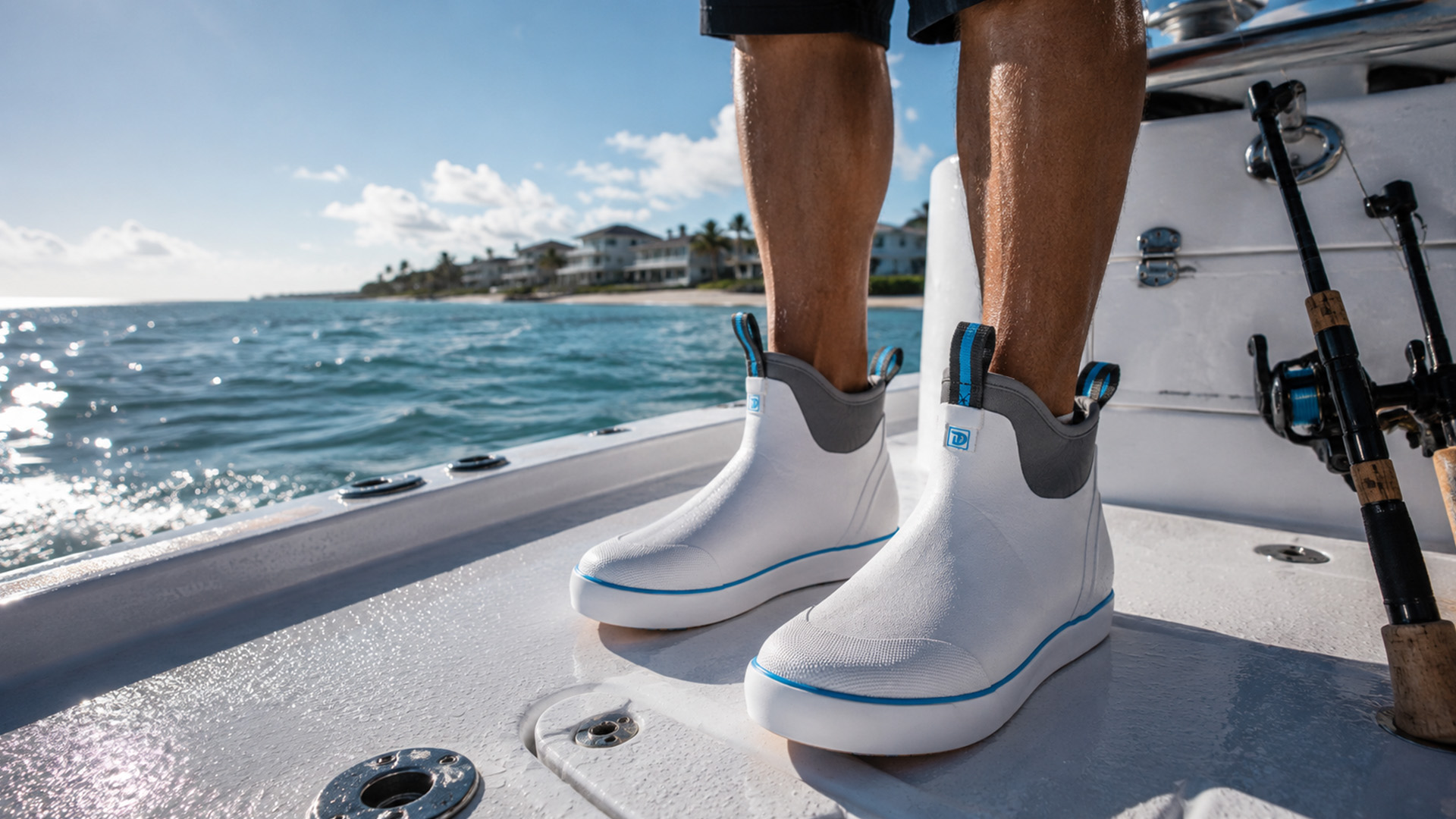
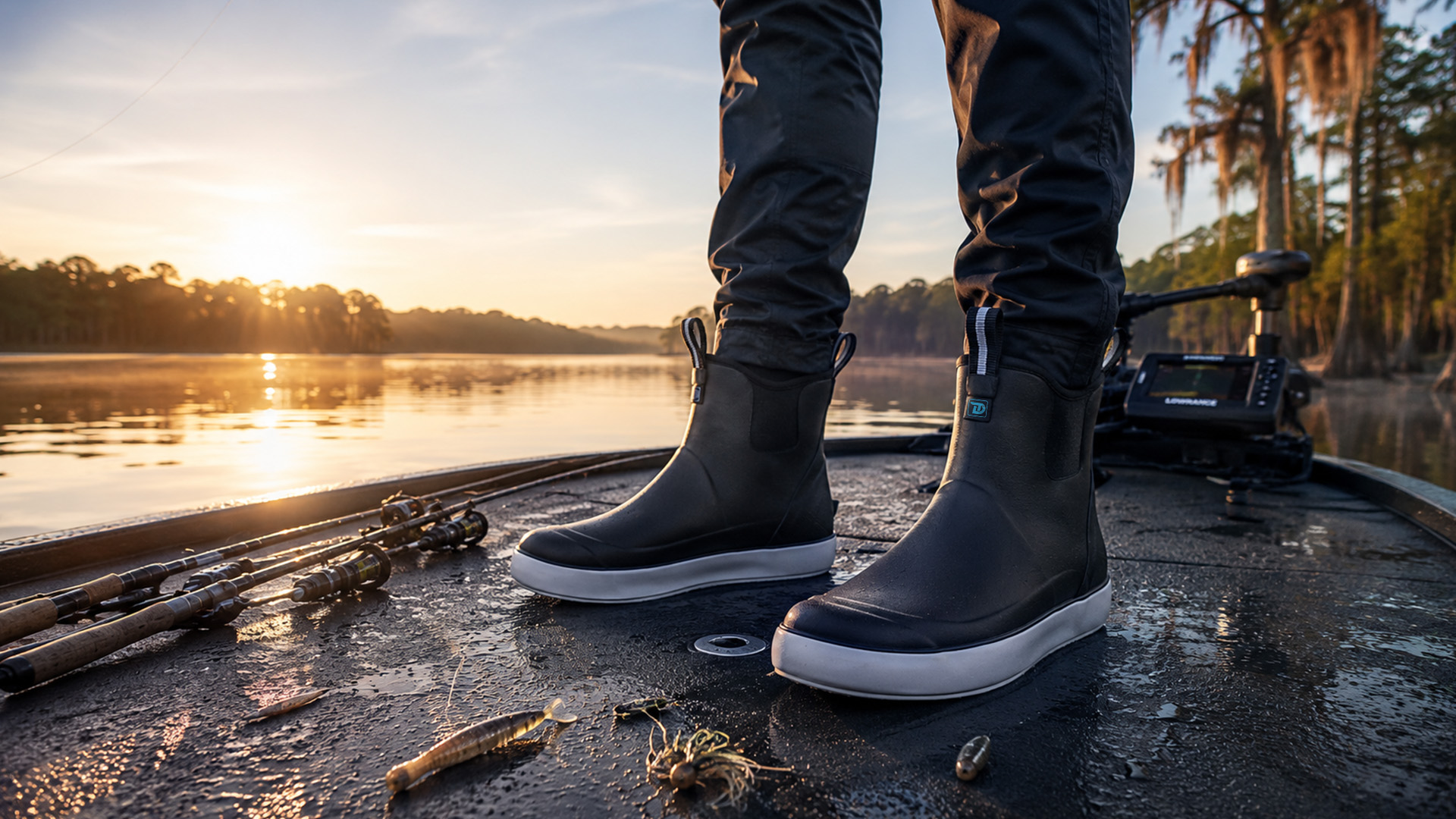
Trudave‘s WaveLock Series deck boots are “fully waterproof, made from premium natural rubber with sealed construction to keep your feet dry while fishing, boating, or working in wet conditions.” Their DeckFlow Series uses the same sealed rubber construction, delivering “fully waterproof, made from premium natural rubber that keeps your feet dry on wet decks, docks, or rainy outdoor conditions.”
Second: Real Slip Resistance for Wet Fiberglass.
Not all non-slip outsoles are the same. A sole that grips a wet sidewalk will slide on a wet fiberglass deck. Fiberglass is smooth. It has no texture for standard tread to bite into. What you need is active water management.
The WaveLock Series uses Trudave‘s exclusive WaveLock Traction Outsole with “micro‑channel siping that disperses water instantly, keeping your footing solid even on wet fiberglass or metal surfaces.” Those thousands of tiny cuts in the sole act like miniature squeegees, channeling water away from the contact patch and letting the rubber grip the deck directly.
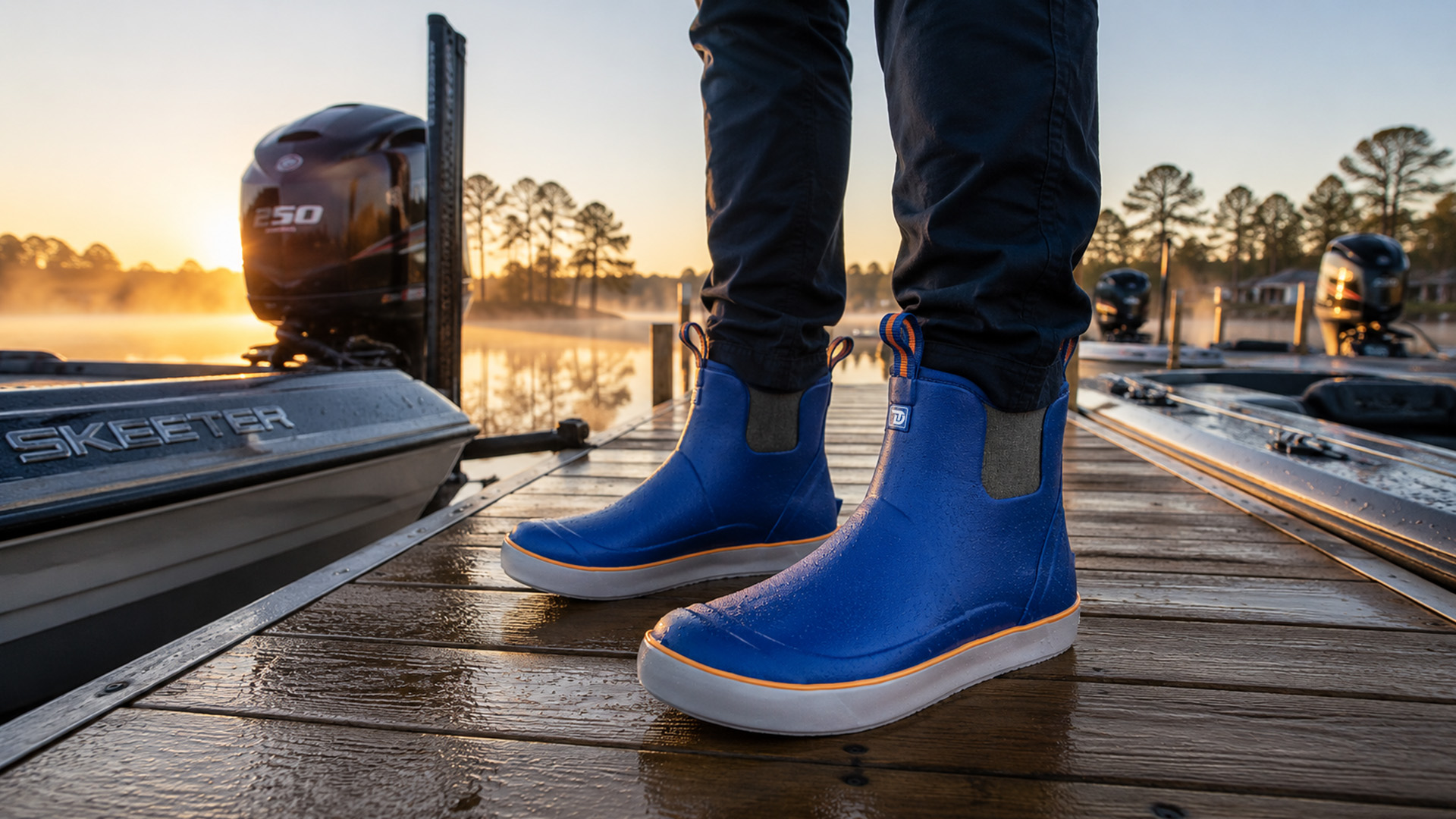
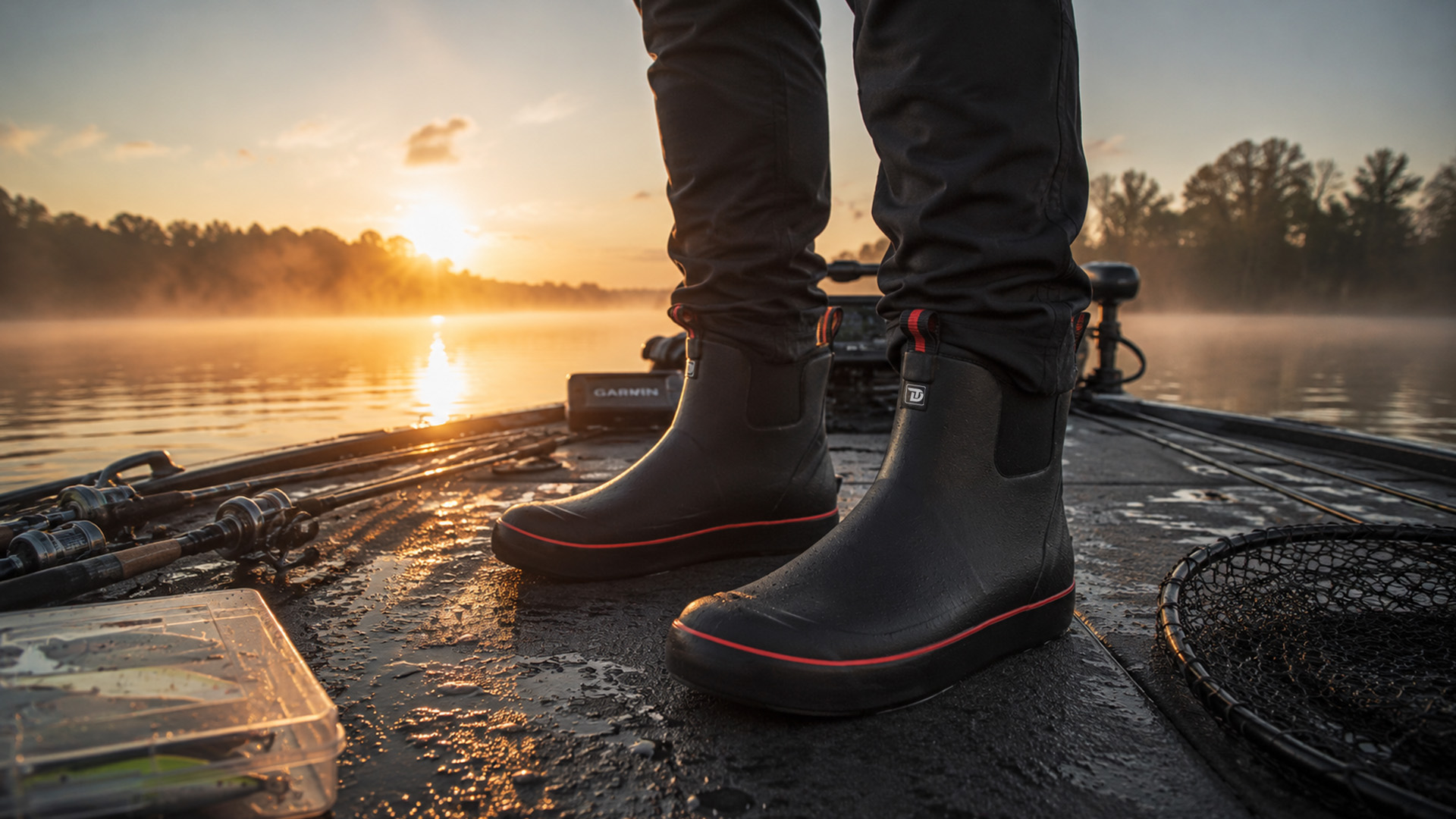
The DeckFlow Series features “non‑slip rubber outsoles designed for superior traction on slick boat decks, docks, and marinas. Perfect for fishing, sailing, or any wet environment.”
Both are non‑marking outsoles. You won‘t scuff up your new boat’s gel coat.
Third: Comfort That Prevents Fatigue (Because Fatigue Causes Accidents).
Here‘s something that safety manuals don‘t tell you: fatigue is a safety hazard. When your feet hurt, your focus drifts. When your focus drifts, you make mistakes. And on a boat, mistakes can be catastrophic.
Cheap deck boots have flat footbeds. No arch support. No shock absorption. After four hours on the water, your knees ache, your lower back hurts, and you‘re thinking about your discomfort instead of your family.
When Trudave designed their deck boots, they didn’t start with a mold for a boot — they started with the mechanics of a sneaker. The WaveLock and DeckFlow series feature cushioned EVA insoles, flexible construction, and shock-absorbing midsoles that provide lasting comfort for all-day wear.
The Comfort Revolution: Why “Boots Are Supposed to Be Uncomfortable” Is a Lie
For decades, we‘ve been told that boots are supposed to be stiff, heavy, and uncomfortable. That you need to “break them in” over weeks of suffering. That the “clomp, clomp, clomp” sound is just part of wearing boots.
That’s all nonsense. It‘s a story the industry told you to justify cheap materials and bad design.
When Trudave designed their deck boots, they started with a different question: what if deck boots felt like sneakers?
The result is a boot that moves with your ankle instead of fighting against it. The flexible rubber compound allows you to crouch, kneel, and walk briskly without the boot digging into your shin. The lock‑in heel fit eliminates the “heel slip” that causes blisters and makes boots feel heavier than they actually are. The dual-density insole provides actual arch support and impact absorption — not a flat piece of rubber.
The true test of a boot isn‘t the first five minutes. It‘s the twelfth hour. Across verified customer reviews, the consistent praise is that Trudave boots are comfortable enough that you forget you‘re wearing them. That’s not a luxury. That‘s a safety feature.
The Two Boots: WaveLock vs. DeckFlow
Trudave offers two deck boot series, each optimized for different conditions and angler styles. Choosing between them is simple.
| Feature | WaveLock Series (Insulated) | DeckFlow Series (Breathable) |
|---|---|---|
| Primary Use | Cold mornings, early season, stationary fishing | Warm weather, active movement, year-round versatility |
| Lining | Soft thermal insulation + fleece interior | X-Dry moisture-wicking breathable mesh |
| Ideal Temperature | 20°F to 50°F | 45°F to 80°F+ (works in cold with wool socks) |
| Outsole | WaveLock micro-channel siping, non-slip grip | Non-marking siped outsole |
| Key Feature | Stretchy side panels for quick slip-on; reinforced heel armor | Lightweight low-cut design; transitions from dock to daily wear |
The WaveLock Series is built for cold-weather fishing—early spring stripers, late-fall trophy hunts, steelhead trips when you‘re scraping frost off the windshield. The thermal insulation traps your body heat when you‘re sitting still. If you spend more hours anchored than running, this is your boot.
The DeckFlow Series is built for warm-weather fishing—summer bass tournaments, kayak fishing, active days when you‘re moving constantly. The breathable mesh lining pulls sweat away from your skin, preventing the “swamp foot” that plagues fully sealed rubber boots. This is the boot for anglers who generate their own heat through movement.
The year-round hack: If you want one boot to cover 90% of your trips, buy the DeckFlow and invest in a few pairs of good wool socks. The breathable boot handles spring through fall comfortably. The socks provide the warmth for the 20% of days when it‘s actually cold. If you fish in real winter conditions, buy both. Together, they cost less than one pair of premium boots.
What Other Owners Say: The Trustpilot File
Let‘s stop talking about what brands claim and look at what verified customers report. Trudave holds a 3.7/5 rating across verified review platforms. Here‘s what real owners emphasize:
“We purchased waterproof boots back in May for working on our little farm as we were constantly dealing with wet, muddy and otherwise soiled shoes while tending our livestock. The boots have made our jobs and lives sooo much better and easier. And best of all, our feet stay DRY!!! It has been about two months now and these boots are still going strong and keeping our feet protected. Would recommend these boots 100%.” — Verified Trustpilot Reviewer
“Bought some boots from Trudave, These boots are well made and comfortable. The size is slightly larger, but with socks they fit well and comfortably. A size smaller would be too tight.” — Verified Trustpilot Reviewer
“Great shoe. Just what I was looking for. The heels rub. That would be my only comment.” — Verified Trustpilot Reviewer
“My order shipped super fast. I sized up because I want to be able to wear thick handmade socks in the fall and winter. They fit beautifully. These are sturdy workhorses.” — Verified Trustpilot Reviewer
“Sizing Chart was correct. Medium fit me perfect and I am 5‘10“, 185 lbs with a standard build.” — Verified Trustpilot Reviewer
Key patterns from verified feedback:
- Sizing runs slightly large. Most owners report best results ordering their normal size and wearing medium-to-heavy socks. The chart works when followed.
- Dry feet is the consistent win. Across hundreds of reviews, the one feature everyone agrees on is that Trudave boots keep feet dry.
- Heels can rub with thin socks — easily addressed by wearing appropriate sock thickness.
- Order directly from Trudave rather than third-party retailers. Multiple users reported receiving wrong sizes from Amazon but correct sizes directly from Trudave.
- Customer service is variable. Some owners report quick responses; others note delays. Get your size right the first time.
Important note: Trudave‘s standard deck boots feature a steel shank for underfoot puncture protection — they are not certified steel toe for workplace impact safety. If your job requires ASTM-certified steel toe protection, verify specific certifications before purchase. For recreational boating, the steel shank provides excellent protection against deck hazards.
Beyond Deck Boots: The Growing Trudave Lineup
Trudave isn‘t just a deck boot company. They build the same philosophy into their entire lineup — hunting boots, rain boots, farm boots, and garden boots. Each series is built around 100% waterproof construction, steel shank protection where needed, and direct-to-customer pricing.
If you‘re a new boat owner who also hunts, works outdoors, or just needs a pair of reliable rain boots for the yard, Trudave has options. The same features that make their deck boots work — sealed seams, non-slip outsoles, cushioned insoles — carry across their entire product line.
Care and Maintenance: Make Your Boots Last
You can buy the best boot in the world, but poor care will destroy it faster than any manufacturing defect. Here‘s the simple routine that works:
Rinse after every use. Especially after saltwater exposure. A fresh-water rinse removes salt crystals, fish residue, and mud that can degrade rubber over time.
Air dry naturally — never use heat. Never put rubber boots on a radiator, in a dryer, or in direct sunlight. Heat cracks rubber and ruins the waterproof seal. Air dry in a shaded area.
Use mild soap only. For heavy dirt, use mild dish soap and a soft brush. Avoid degreasers, bleach, or harsh chemicals — these strip essential oils from the rubber and cause premature cracking.
Store upright in a cool, dry place. Don‘t fold or crease the boots, which creates weak points.
Check your tread periodically. When the lugs wear down and the sole feels hard like plastic instead of grippy rubber, it’s time for new boots. Don‘t wait until you’re slipping on a wet deck to realize your boots are done.
The official WaveLock product page specifies: “Rinse the boots with clean water after use, wipe off dirt with mild soap, and let them air dry naturally. Avoid sunlight or heat to preserve waterproof seal and rubber durability.”
The Bottom Line: Welcome to Boat Ownership
Here‘s the honest truth about boat ownership that nobody tells you before you buy.
The gear that gets the most attention — the motor, the electronics, the flashy accessories — isn‘t the gear that keeps your family safe.
The PFDs do that. The fire extinguisher does that. The first-aid kit does that. And the boots on your feet do that.
A proper pair of deck boots costs less than a decent rod and reel. Less than a tank of gas for a weekend trip. Less than dinner out with the family. And they could be the difference between a great day on the water and a trip to the ER.
Trudave built their deck boots for people who actually use them — 100% waterproof rubber, micro-channel siping for wet-deck traction, cushioned insoles for all-day comfort, and direct-to-consumer pricing that cuts out retail markup. Independent gear reviewers have stood in creeks for twenty minutes with bone-dry results. Verified owners have put them through farm chores, pressure washing, and daily use. The consistent verdict is dry feet, good comfort, and surprising durability.
The WaveLock keeps you warm when you‘re sitting still in March, waiting for the stripers to run. The DeckFlow keeps you comfortable when you’re moving on the deck in July. Both keep you upright when the deck is wet — and that‘s the only thing that really matters.
| Decision Factor | Verdict |
|---|---|
| Waterproofing | ⭐⭐⭐⭐⭐ — 100% sealed rubber construction, no coatings to fail |
| Slip resistance | ⭐⭐⭐⭐⭐ — Micro-channel siping and non-slip outsoles |
| Comfort engineering | ⭐⭐⭐⭐⭐ — Active Flex rubber, lock-in heel, dual-density insole |
| Value for money | ⭐⭐⭐⭐⭐ — 90% of premium performance at roughly 50% of the cost |
| Cold-weather warmth | ⭐⭐⭐⭐⭐ — WaveLock insulation works when you‘re stationary |
| Warm-weather breathability | ⭐⭐⭐⭐⭐ — DeckFlow lining prevents “swamp foot” |
| Durability | ⭐⭐⭐⭐ — Verified users report months of reliable use |
| Sizing accuracy | ⭐⭐⭐⭐ — Slightly large; predictable if you follow the chart |
| Customer service | ⭐⭐⭐ — Variable; order directly and get size right the first time |
Welcome to boat ownership. You‘ve invested in the boat, the motor, and the safety gear. Don’t overlook the foundation. Your feet are the only thing between you and a wet deck.
And the only thing between your family and an accident.
Now go make some memories. Your boots will handle the rest.