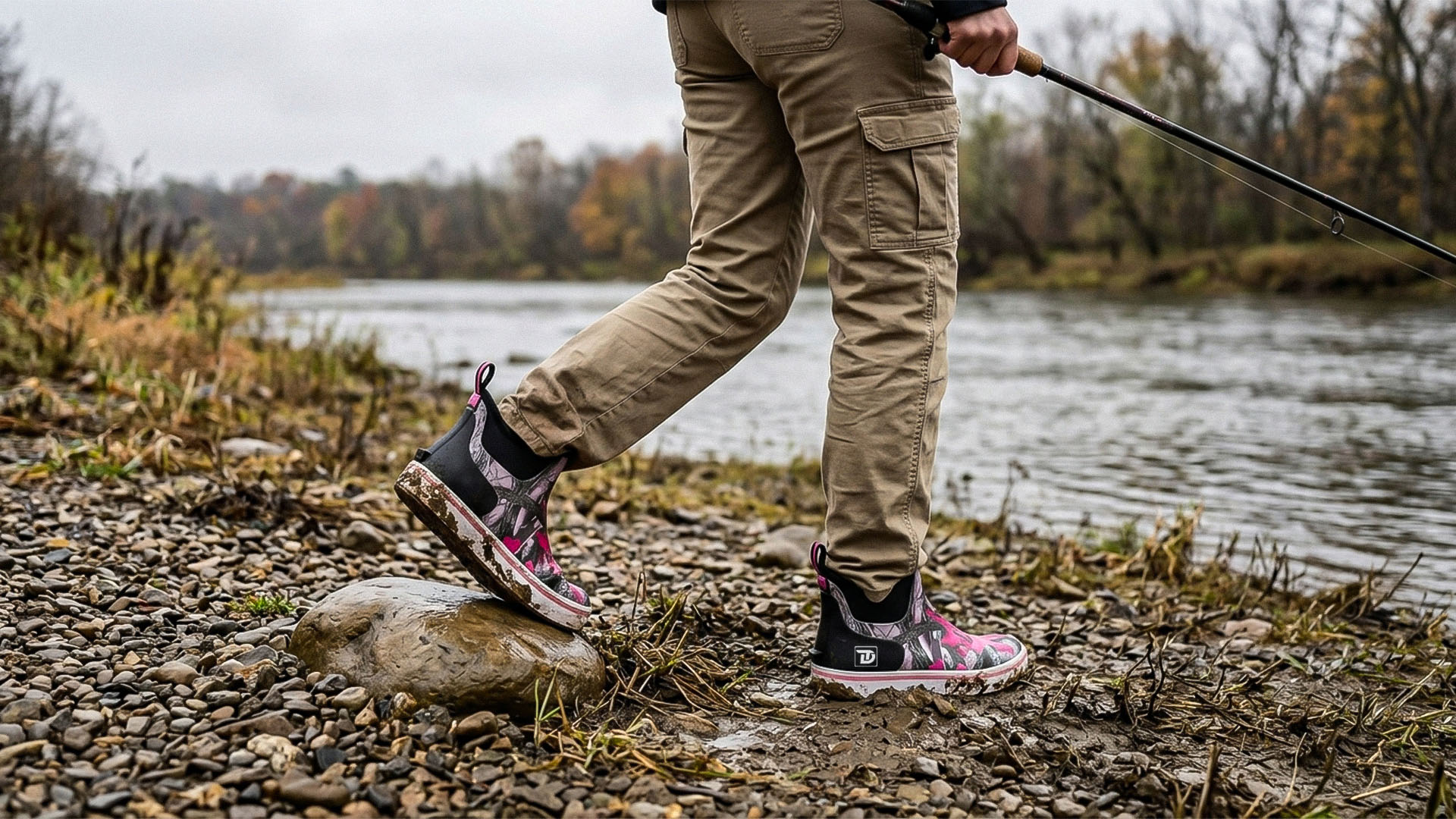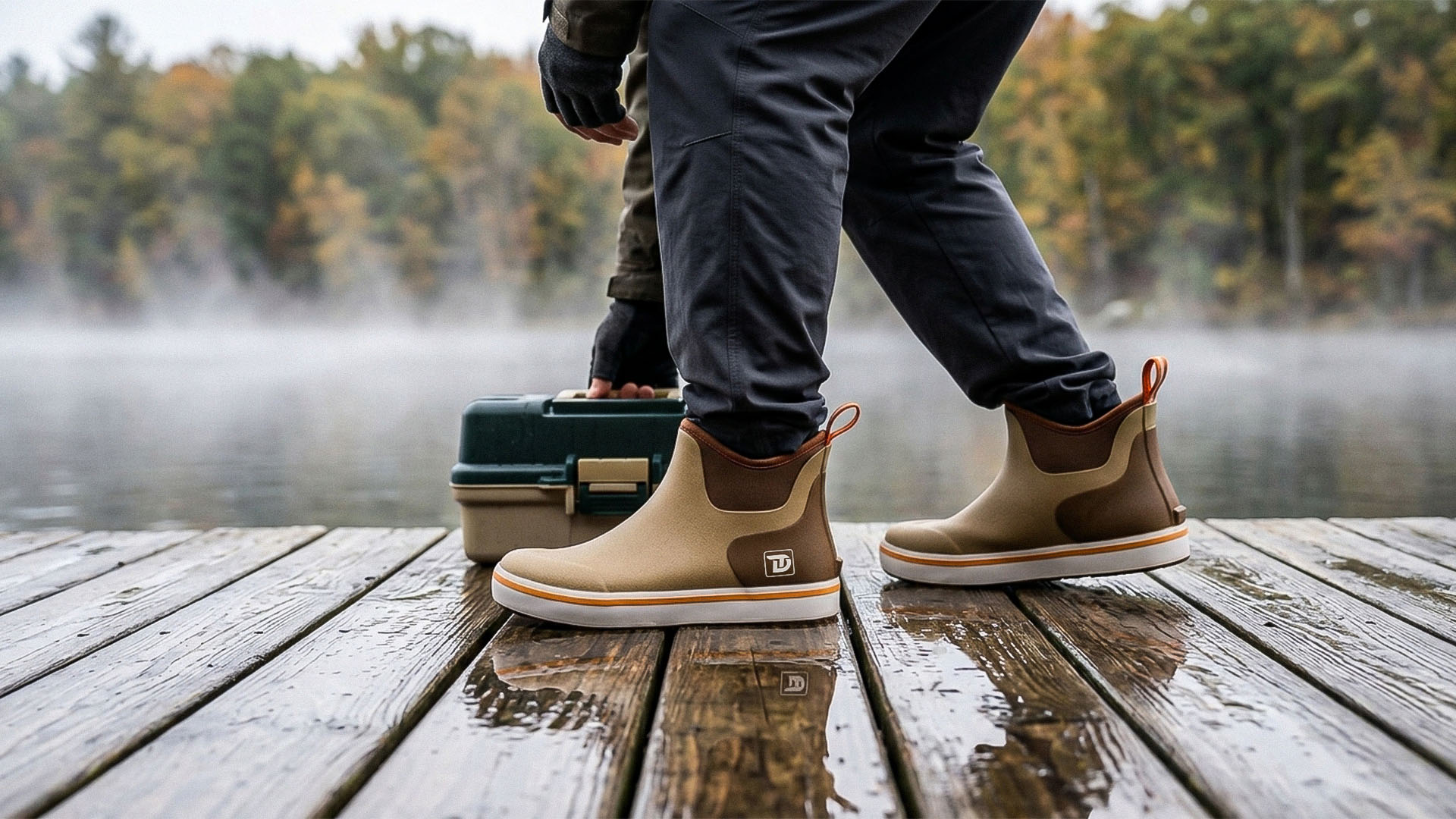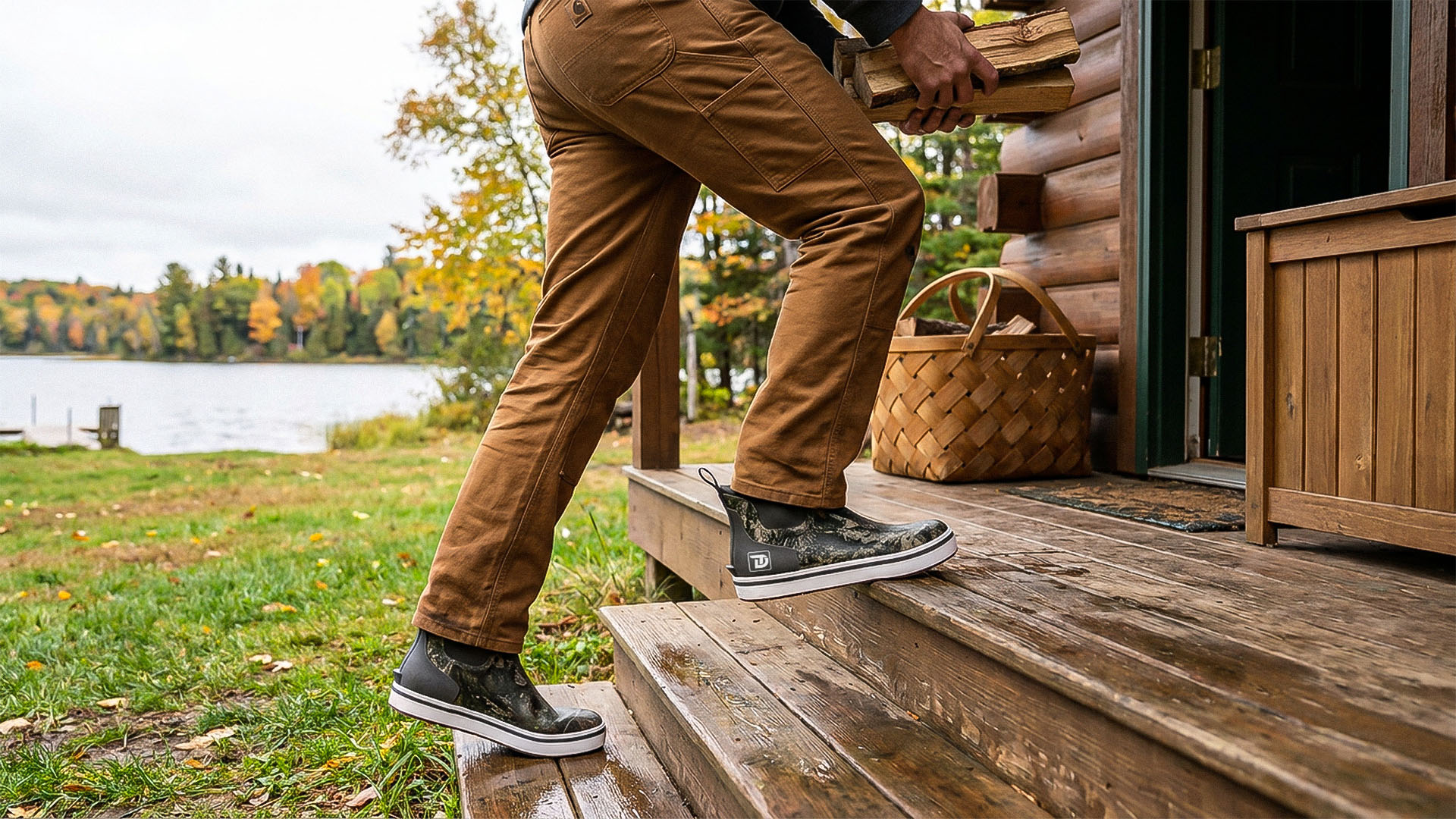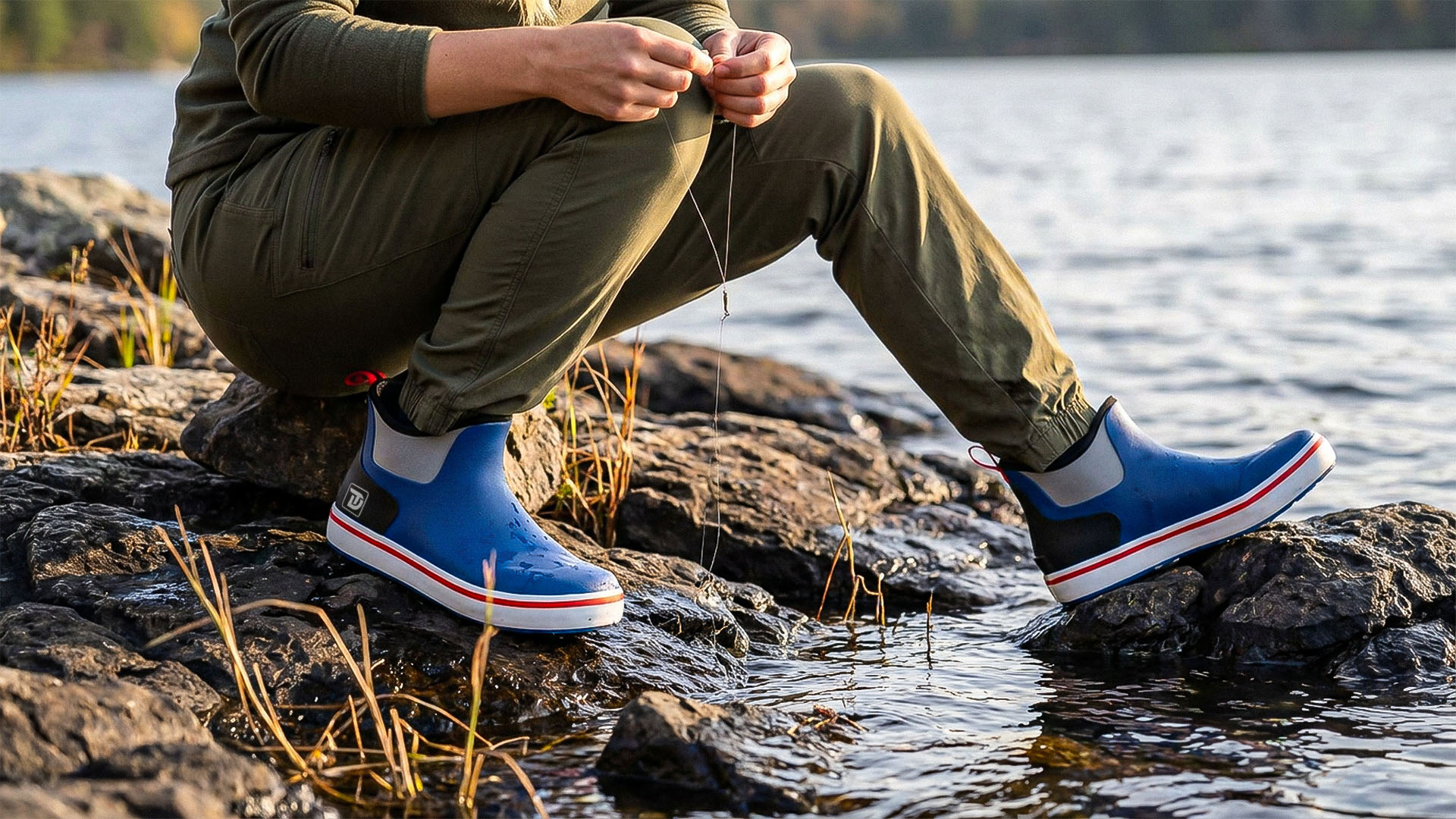
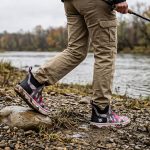
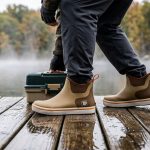
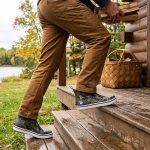
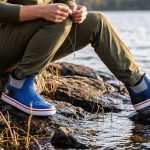
Dungeness crab fishing combines heavy crab pots, wet rope, fish bait, cold seawater, rain, slippery docks, muddy boat ramps, and some of the messiest working conditions found in recreational West Coast fishing.
For many anglers, crabbing begins before the boat ever leaves the marina.
A typical trip may involve:
- Carrying crab pots
- Loading bait
- Handling wet rope
- Walking across damp docks
- Launching from slippery ramps
- Setting gear
- Pulling pots
- Sorting crabs
- Washing the deck afterward
Water may constantly move across the working area.
Your footwear can be exposed to:
- Saltwater
- Rain
- Crab bait
- Fish oil
- Mud
- Sand
- Crab residue
- Deck washdown water
- Cold spray
The best deck boots for Dungeness crab fishing should keep your feet dry, provide stable traction on wet marine surfaces, remain secure while handling heavy gear, and clean easily after exposure to bait, crab residue, mud, and saltwater.
For most recreational boat-based crabbers, waterproof ankle or mid-height deck boots provide an excellent balance of protection, mobility, and all-day comfort.
This guide explains what to look for in Dungeness crabbing footwear and how crab pots, ropes, bait, rain, docks, boat ramps, and West Coast weather should influence your choice.
Why Dungeness Crabbing Is Hard on Footwear
Crabbing creates a much wetter working environment than many types of rod-and-reel fishing.
A crabber may repeatedly handle:
- Wet rope
- Soaked pots
- Bait containers
- Crabs
- Washdown hoses
Each retrieved pot can bring additional seawater onto the deck.
By the end of the trip, footwear may be surrounded by water almost continuously.
This makes waterproof construction especially valuable.
Why Deck Boots Work Well for Dungeness Crab Fishing
Deck boots provide several practical advantages:
- Waterproof construction
- Closed-toe coverage
- Easy-clean materials
- Marine-oriented traction
- Quick pull-on design
- Comfortable support for long working days
They are particularly useful on:
- Aluminum boats
- Center consoles
- Small commercial-style crab boats
- Recreational fishing vessels
- Marina docks
- Boat ramps
Anglers comparing waterproof marine footwear can evaluate TruDaveGear deck boots alongside other options based on fit, outsole design, boot height, cushioning, removable insoles, and expected weather.
Washington Dungeness Crab Fishing
Washington provides extensive recreational crabbing opportunities.
Anglers may encounter conditions involving:
- Cool marine air
- Rain
- Wet docks
- Cold spray
- Muddy launches
Waterproof deck boots are particularly useful in these environments.
Puget Sound Crabbing
Puget Sound crabbing often involves relatively protected water, but the boat deck can still become extremely wet.
Each crab pot retrieval may bring aboard:
- Seawater
- Kelp
- Mud
- Bait residue
A waterproof mid-height boot can provide additional coverage during repeated pot pulls.
San Juan Islands Crabbing
Island crabbing may involve:
- Cool mornings
- Longer boat runs
- Spray
- Wet docks
- Repeated pot hauling
Comfort becomes increasingly important during longer trips.
Oregon Dungeness Crabbing
Oregon crabbers may work around:
- Bays
- Estuaries
- Coastal harbors
- Nearshore waters
Weather can include:
- Rain
- Wind
- Cold spray
- Muddy ramps
Waterproof footwear is highly practical.
Oregon Bay Crabbing
Bay crabbing may involve frequent interaction with docks, ramps, and muddy coastal environments.
Deck boots work well because they can transition between:
- Boat
- Dock
- Ramp
without absorbing water.
California Dungeness Crab Fishing
California recreational crabbers may target Dungeness crab in suitable coastal waters and seasons.
Conditions can involve:
- Cold Pacific water
- Fog
- Coastal wind
- Wet decks
- Bait residue
Waterproof footwear provides useful protection.
Northern California Crabbing
Northern California conditions may feel particularly cool on the water.
Medium-weight moisture-wicking socks paired with waterproof boots can improve comfort significantly.
San Francisco Bay Area Crabbing
Boat-based crabbing around the broader Bay Area may involve:
- Damp mornings
- Fog
- Wind
- Boat wake
- Wet docks
A secure deck boot helps from marina setup through cleanup.
Crab Pot Fishing
Crab pots are one of the defining pieces of Dungeness crabbing equipment.
They may be:
- Heavy
- Wet
- Awkward
- Covered with marine debris
Footwear should help the crabber maintain a stable stance while handling them.
Pulling Crab Pots
Manual pot retrieval can require repetitive:
- Pulling
- Bracing
- Stepping backward
- Coiling rope
A stable outsole and secure heel become especially important.
Stable Footing While Pulling
When hauling a pot, your body may lean backward against the load.
Footwear should provide a predictable base.
Look for:
- Stable heel geometry
- Secure fit
- Moderate cushioning
- Wet-deck outsole design
Secure Heel Fit
Too much heel movement may cause:
- Blisters
- Toe gripping
- Sock movement
- Reduced balance
The boot should move with your foot during repetitive pulling.
Flexible Forefoot
A flexible forefoot helps while:
- Bracing
- Squatting
- Coiling rope
- Moving around the cockpit
- Sorting crabs
Very stiff footwear may increase fatigue.
Toe Room
Long crabbing sessions can cause mild foot swelling.
Leave enough room for:
- Natural toe movement
- Weather-appropriate socks
- Extended standing
Avoid overly tight boots.
Crab Pot Weight
Crab pots can be heavy even before they are loaded with catch or marine debris.
A falling pot can cause significant injury.
Standard recreational deck boots are not impact-rated safety footwear.
Do Not Rely on Deck Boots Against Falling Crab Pots
Closed-toe coverage provides basic separation from minor contact.
It does not provide safety-toe protection.
Keep feet clear whenever pots are being:
- Lifted
- Moved
- Stacked
- Lowered
Store Crab Pots Securely
Unsecured pots may shift when the boat moves.
Keep them positioned where they cannot slide into:
- Feet
- Walking areas
- Other equipment
Crab Rings
Some recreational crabbers use rings or similar equipment.
These may be lighter than full pots but still involve:
- Rope
- Bait
- Wet metal
- Repeated hauling
Waterproof deck boots remain useful.
Crab Trap Rope
Rope is one of the biggest hazards during crabbing.
Wet rope may accumulate rapidly on deck during pot retrieval.
Never Stand Inside Rope Coils
A rope loop around your foot or ankle can create a serious entanglement hazard.
Footwear cannot protect against this.
Keep rope:
- Coiled intentionally
- Away from feet
- Away from propellers
- Clear of walking areas
Wet Rope on the Deck
Wet rope may also create a trip hazard.
Keep the working area organized during retrieval.
Rope and Boot Tread
Some aggressive tread designs may catch loose rope more easily than low-profile deck-focused tread.
For boat crabbing, prioritize a stable outsole without unnecessarily deep off-road lugs.
Electric Pot Pullers
Some crabbers use powered pot pullers.
These reduce manual effort but introduce additional moving equipment.
Keep:
- Clothing
- Gloves
- Rope
- Feet
clear of moving components.
Deck Boots Are Not Machinery Protection
Waterproof fishing boots do not protect against entanglement with powered equipment.
Follow manufacturer instructions for pot pullers and hauling systems.
Crab Bait
Dungeness crab bait may include different legal bait options depending on local rules and preferences.
Bait can create an extremely messy working area.
It may introduce:
- Fish oil
- Blood
- Scales
- Organic residue
- Strong odor
to the boat.
Fish Bait and Deck Traction
Oily bait is one of the biggest traction problems during crabbing.
Fish oil can coat:
- Aluminum
- Fiberglass
- Painted decks
- EVA flooring
- Boot tread
Even high-quality deck boots may become slippery when covered with oil.
Cleaning Bait Oil From Deck Boots
If oily bait residue reaches the outsole:
- Rinse with fresh water.
- Apply mild soap.
- Brush tread grooves.
- Rinse thoroughly.
- Air dry.
Bait Containers
Store bait inside secure containers.
Leaking bait buckets can spread:
- Water
- Oil
- Blood
- Odor
throughout the cockpit.
Bait Preparation
Keep cutting and bait preparation concentrated in one area.
This makes cleanup easier and reduces contamination around walking surfaces.
Bait Knives
Sharp knives should remain:
- Sheathed
- Secured
- Away from foot traffic
Standard deck boots are not cut-resistant safety footwear.
Wet Aluminum Boats
Aluminum boats are common in many West Coast recreational fisheries.
Wet aluminum can become slippery when contaminated with:
- Fish oil
- Mud
- Kelp
- Crab residue
Keep boot tread clean.
Fiberglass Boats
Fiberglass can also become slick from:
- Bait oil
- Saltwater
- Crab residue
- Soap
- Rain
Look for a marine-focused outsole that maintains broad contact with the deck.
Painted Decks
Painted working surfaces may become slippery once wet.
Routine cleaning matters more than relying solely on tread depth.
EVA Decking
Modern fishing boats may use EVA foam.
Before boarding, remove:
- Gravel
- Shell
- Sand
from outsole grooves.
This helps prevent damage to softer flooring.
Crab Residue
Crab handling can leave:
- Water
- Shell fragments
- Organic residue
- Mud
on the deck.
Waterproof footwear makes cleanup easier.
Crab Shell
Crab shell can be sharp.
Standard recreational deck boots should not automatically be considered puncture-resistant.
Avoid deliberately stepping on shell fragments.
Cleaning Crab Shell From Tread
Inspect outsole grooves after the trip.
Remove debris carefully using:
- Fresh water
- A stiff brush
Avoid pulling sharp shell fragments out with bare fingers.
Sorting Dungeness Crab
Depending on local regulations, crabbers may need to sort catch by:
- Species
- Sex
- Size
This often happens on a wet working deck.
Stable footing helps during repeated squatting and handling.
Measuring Crab
Measuring legal catch may require anglers to remain focused on the crab.
Keeping the deck organized reduces distractions.
Crab Claws
Dungeness crabs have strong claws.
Keep hands and feet away from uncontrolled crabs.
Standard deck boots are not designed as crab-claw protection.
Do Not Use Your Foot to Restrain Crabs
Use appropriate handling techniques.
Deck boots are not:
- Bite-proof
- Crush-proof
- Puncture-resistant animal-handling gear
Crab Storage
Retained crabs may be placed in:
- Coolers
- Bins
- Live storage systems
These areas may remain wet throughout the trip.
Waterproof footwear works especially well around them.
Cooler Drainage
Coolers may release:
- Meltwater
- Seawater
- Crab residue
onto the deck.
Fabric shoes may absorb this quickly.
Ice and Cold Water
Cold meltwater around your feet can become uncomfortable fast.
Keeping socks dry significantly improves comfort.
Boat Washdowns
Crabbing often ends with a substantial cleanup.
Crews may rinse:
- Fish oil
- Crab residue
- Mud
- Kelp
- Blood
- Bait fragments
from the boat.
Deck boots are ideal because they can simply be washed at the same time.
Cold Water and Spray
Pacific crabbing water can remain cold even when air temperatures are comfortable.
Spray may repeatedly hit:
- Lower legs
- Feet
- Deck
Waterproof footwear keeps this external water away from your socks.
Rainy Crabbing Conditions
Rain may continue for much of a trip in Washington or Oregon.
Waterproof deck boots become especially useful during extended exposure.
Rain Pants and Deck Boots
Keep rain-pant cuffs outside the boot opening.
This allows water to run down the exterior.
Tucking pants inside can funnel rainwater directly into the boot.
Best Socks for Dungeness Crabbing
Choose moisture-wicking socks made from:
- Synthetic performance fibers
- Merino wool
- Merino-synthetic blends
Avoid cotton.
Cotton absorbs moisture and dries slowly.
Lightweight Socks
Lightweight socks work well during warmer California conditions.
Medium-Weight Socks
Medium-weight socks are useful for:
- Washington
- Oregon
- Northern California
- Cool mornings
Heavier Socks
Colder conditions may justify heavier socks.
Make sure the boot does not become too tight.
Restricted circulation can make feet feel colder.
Spare Socks
Bring a dry backup pair in waterproof storage.
This is especially useful if water enters over the boot opening.
Ankle vs. Mid-Height Deck Boots for Crabbing
Ankle Deck Boots
Best for:
- Warmer weather
- Smaller boats
- Moderate spray
- Maximum mobility
Mid-Height Deck Boots
Better for:
- Heavy pot pulling
- Frequent deck water
- Rain
- Cold spray
- Washdowns
Tall Boots for Crabbing
Taller rubber boots may provide more coverage during extremely wet conditions.
However, they also add:
- Weight
- Bulk
- Heat
For many recreational crabbers, mid-height deck boots provide a practical middle ground.
Long Periods of Standing
A crabbing trip may involve hours of:
- Running between pots
- Waiting
- Pulling
- Sorting
- Resetting gear
Hard decks can become tiring.
Look for boots with:
- Stable cushioning
- Moderate arch support
- Comfortable forefoot
- Removable insoles
Stable Cushioning
Very soft foam may feel unstable during heavy pot handling.
Moderate cushioning often provides a better balance between comfort and support.
Rough Water
Crabbing may take place in:
- Bays
- Sounds
- Nearshore ocean water
Conditions may involve:
- Swell
- Boat wake
- Wind chop
- Spray
A secure-fitting boot helps during repeated balance corrections.
Moving Between Pots
Boats may travel repeatedly between strings of crab gear.
Footwear should remain comfortable during both:
- Boat runs
- Active pot retrieval
Marina Docks
Crabbing often begins on wet docks.
Conditions may include:
- Rain
- Dew
- Fish residue
- Boat wash water
Deck boots provide useful traction and waterproofing.
Slippery Dock Surfaces
Wooden or composite docks can become slippery from:
- Rain
- Algae
- Marine growth
No ordinary recreational boot guarantees traction on algae-covered surfaces.
Move carefully and use railings where available.
Boat Ramp Conditions
Private crabbers may launch from wet ramps.
Footwear may encounter:
- Mud
- Sand
- Gravel
- Saltwater
- Algae
Waterproof boots are highly practical.
Ramp Algae
Submerged ramps can be extremely slippery.
Do not assume a deck outsole will grip algae-covered concrete reliably.
Use careful steps and handholds.
Mud in the Outsole
Mud can fill tread grooves and reduce traction once you step onto a hard boat deck.
Rinse heavy mud before boarding.
Beach Launches
Some coastal boat access may involve sand.
Sand can enter low ankle boots.
Choose boot height based on launch conditions.
Pier Crabbing
Crabbing may also occur from:
- Piers
- Docks
- Jetties
Deck boots can be useful in wet pier environments.
Pier Deck Boots
Waterproof boots work especially well when anglers are dealing with:
- Rain
- Crab bait
- Wet rope
- Bait buckets
Jetty Crabbing
Technical jetties create a different footwear environment.
Wet rocks may involve:
- Algae
- Uneven surfaces
- Wave splash
Standard deck boots are primarily designed for boats and relatively flat marine surfaces.
Deck Boots vs. Jetty Footwear
Deck Boots Are Better For:
- Boats
- Docks
- Flat piers
- Wet ramps
- Bait handling
Terrain-Specific Footwear Is Better For:
- Uneven jetties
- Wet rocks
- Steep coastal access
- Algae-covered stone
Kayak Crabbing
Kayak crabbing introduces different footwear considerations.
Regular water entry and possible re-entry mean traditional deck boots may not always be appropriate.
Kayak-specific footwear may be better when:
- Swimming is possible
- Feet are regularly immersed
- Beach launching is required
Non-Marking Soles
Some private boats may prefer non-marking footwear.
Non-marking construction and wet traction are separate features.
Choose based on both deck requirements and actual surface conditions.
Removable Insoles
Removable insoles are particularly useful after wet crabbing trips.
They improve:
- Drying
- Odor control
- Cushion replacement
- Cleaning
- Support adjustment
Remove them after each trip.
Sweat Inside Waterproof Boots
Even in cool weather, feet can sweat inside waterproof footwear.
Take the insoles out and let everything dry fully.
Wide Feet
Wide-foot crabbers should prioritize:
- Adequate forefoot width
- Roomy toe box
- Secure heel
- Comfortable instep
Do not simply buy excessive length.
High Instep
Pull-on boots may feel tight over a high instep.
Look for:
- Adequate boot volume
- Strong pull tabs
- Comfortable opening
- Removable insoles
Persistent pressure or numbness suggests poor fit.
Deck Boots vs. Work Boots for Crabbing
Deck Boots Are Better For:
- Waterproof comfort
- Wet boat decks
- Light weight
- Easy cleaning
- Recreational crabbing
Work Boots May Be Better For:
- Heavy commercial equipment
- Situations requiring certified toe protection
- Industrial working environments
If safety-toe protection is required, use properly rated footwear rather than ordinary recreational deck boots.
Deck Boots vs. Sneakers
Sneakers may absorb:
- Bait water
- Rain
- Saltwater
- Crab residue
- Washdown water
Once soaked, they may remain cold and uncomfortable.
Deck boots are much easier to rinse.
Deck Boots vs. Flip-Flops
Flip-flops are poorly suited to crabbing around:
- Heavy pots
- Rope
- Sharp shell
- Wet decks
- Bait knives
Closed-toe footwear is far more practical.
Deck Boots vs. Tall Rubber Boots
Tall rubber boots provide additional water coverage.
However, they may be:
- Heavier
- Bulkier
- Less flexible
Choose based on how wet your specific boat becomes.
Cleaning Deck Boots After Crabbing
After each trip:
- Rinse with fresh water.
- Remove bait residue.
- Brush crab debris from tread.
- Apply mild soap to oily areas.
- Rinse thoroughly.
- Remove insoles.
- Dry completely.
Cleaning Crab Bait Smell
Organic bait residue should be removed quickly.
Use:
- Fresh water
- Mild soap
- A brush
Avoid storing dirty boots inside a sealed vehicle or container.
Cleaning Fish Oil
Pay particular attention to outsole grooves.
Residual fish oil can significantly reduce traction during the next trip.
Cleaning Crab Residue
Remove shell, mud, and organic debris before they dry.
Use a brush rather than bare fingers around sharp shell.
Cleaning Kelp
Kelp may become trapped around tread grooves.
Remove it before storage.
Saltwater Care
After every crabbing trip:
- Rinse the upper
- Clean outsole grooves
- Rinse pull tabs
- Clean the collar
- Remove organic material
Freshwater rinsing helps reduce salt buildup.
Drying Deck Boots
Use gentle airflow.
Remove the insoles and dry them separately.
Avoid:
- Clothes dryers
- Heat guns
- Open flames
- Extreme heaters
High temperatures may damage waterproof materials, cushioning foam, or adhesives.
Odor Prevention
Crabbing boots may develop strong odor from:
- Fish bait
- Crab residue
- Sweat
- Mud
- Damp storage
Prevent odor by:
- Cleaning promptly
- Removing insoles
- Drying completely
- Storing boots with ventilation
Clean Shoes for the Drive Home
Bring separate dry footwear.
Store dirty crabbing boots inside:
- Rubber boot tray
- Plastic tote
- Washable cargo bin
This helps keep bait oil, crab residue, mud, and seawater away from your vehicle.
Best Deck Boot Features for Dungeness Crab Fishing
Look for:
Waterproof Construction
Essential around pot water, rain, bait, and washdowns.
Stable Marine Outsole
Important on wet aluminum, fiberglass, and docks.
Secure Heel
Useful while pulling pots and moving around the boat.
Flexible Forefoot
Helps during squatting, rope handling, and crab sorting.
Comfortable Cushioning
Important during long crabbing trips.
Ankle or Mid-Height Coverage
Choose based on expected spray and deck water.
Removable Insoles
Improves drying and support.
Easy-Clean Exterior
Particularly useful around bait oil, crab residue, mud, and seawater.
Dungeness Crabbing Footwear Checklist
Before leaving:
- Check weather and marine conditions
- Inspect outsole tread
- Confirm boots are dry
- Choose moisture-wicking socks
- Pack spare socks
- Secure crab pots
- Inspect rope
- Prepare bait containers
- Store knives safely
- Keep deck walking areas clear
- Check pot-puller equipment
- Check local crabbing regulations
During crabbing:
- Keep rope away from feet
- Keep pots secured
- Clean bait spills
- Remove shell fragments
- Keep walking areas clear
After crabbing:
- Rinse saltwater
- Clean bait oil
- Remove crab residue
- Remove shell and kelp
- Rinse mud
- Brush tread
- Remove insoles
- Dry completely
Common Dungeness Crabbing Footwear Mistakes
Wearing Absorbent Sneakers
Pot water, rain, and bait residue may soak them quickly.
Wearing Flip-Flops
Open footwear provides poor protection around pots, rope, shell, and knives.
Wearing Cotton Socks
Cotton retains moisture and can become cold when damp.
Buying Boots Too Loose
Loose footwear reduces stability while pulling heavy gear.
Assuming Deck Boots Protect Against Falling Pots
Standard deck boots are not impact-rated safety footwear.
Standing Inside Rope Coils
Footwear cannot protect against rope entanglement.
Ignoring Fish Oil
Bait oil can dramatically reduce traction.
Stepping on Crab Shell
Standard waterproof boots are not necessarily puncture-resistant.
Allowing Mud to Fill the Tread
Mud-packed grooves may reduce grip on hard boat surfaces.
Leaving Dirty Boots Sealed After the Trip
Bait and crab residue can create strong odor quickly.
Final Thoughts
Dungeness crab fishing combines crab pots, wet rope, fish bait, rain, cold spray, muddy ramps, slippery docks, shell fragments, and repeated boat washdowns.
That makes footwear far more important than many first-time crabbers expect.
For most recreational boat-based crabbing, waterproof ankle or mid-height deck boots provide an excellent combination of dry-foot protection, stable movement, easy cleaning, and all-day comfort.
Choose boots with a stable marine outsole, secure heel, flexible forefoot, removable insoles, and enough cushioning for repeated pot pulling and long periods on hard boat decks.
Wear synthetic or merino-blend moisture-wicking socks rather than cotton.
Adjust sock weight for California, Oregon, Washington, Puget Sound, and seasonal conditions.
Keep crab pots, rope, bait containers, knives, and hauling equipment organized away from primary walking areas.
Pay particular attention to bait oil, crab residue, mud, and rope because these can create major deck hazards regardless of footwear quality.
Standard recreational deck boots are not safety-toe footwear, cut-resistant, puncture-resistant, machinery protection, or protection against rope entanglement.
If your crabbing setup involves industrial equipment or a workplace requiring protective footwear, use properly rated safety boots instead.
But for recreational boat crabbing, when rain is falling, pot rope is soaked, bait water is covering the deck, and another heavy Dungeness crab pot is coming over the rail, waterproof deck boots become one of the most practical pieces of equipment onboard.
After the trip, rinse saltwater, fish oil, crab residue, mud, kelp, and shell from your boots, brush the tread thoroughly, remove the insoles, and allow everything to dry completely.
The right crabbing footwear should stay out of your mind while you focus on pot location, soak time, rope management, crab size, safe handling, and finding out what is waiting inside the next pot.
Frequently Asked Questions
Are deck boots good for Dungeness crab fishing?
Yes. Waterproof deck boots are particularly useful for recreational boat crabbing involving wet rope, crab pots, bait, rain, and washdown water.
What boots should I wear for Washington crabbing?
Waterproof ankle or mid-height deck boots paired with moisture-wicking socks are a practical choice for most recreational boat trips.
Are deck boots good for Puget Sound crabbing?
Yes. They work especially well around wet boats, pot water, cool conditions, and repeated gear retrieval.
Are deck boots good for Oregon crabbing?
Yes. Waterproof boots are useful around rainy conditions, bay boats, muddy ramps, bait, and wet docks.
Are deck boots good for California Dungeness crabbing?
Yes. Lightweight waterproof boots work well around cool coastal water, fog, bait, and wet boat decks.
Are mid-height boots better for crabbing?
They can be. Mid-height boots provide additional coverage when repeated pot pulls send water across the deck.
Are deck boots good for pulling crab pots?
Yes. Look for secure heel fit, stable cushioning, and a marine-focused outsole.
Can deck boots protect against falling crab pots?
No. Standard recreational deck boots are not impact-rated or safety-toe footwear.
Can deck boots protect against crab shell?
Do not assume so. Waterproof construction does not automatically provide puncture resistance.
Can deck boots protect against crab claws?
Standard deck boots are not specialized crab-handling protection. Keep feet away from uncontrolled crabs.
Are deck boots good around crab pot rope?
They are suitable for wet decks, but footwear cannot prevent rope entanglement. Never stand inside rope coils.
Can fish bait make deck boots slippery?
Yes. Fish oil can significantly reduce outsole traction, so clean bait residue promptly.
What socks should I wear while Dungeness crabbing?
Synthetic or merino-blend moisture-wicking socks work well. Adjust thickness according to temperature.
Are insulated boots necessary for crabbing?
Not always. Uninsulated waterproof deck boots combined with appropriate socks provide flexibility across many West Coast conditions.
Are ankle boots tall enough for crabbing?
They may be on smaller, relatively dry boats. Mid-height boots provide more coverage when the working deck is frequently flooded by pot water.
Are deck boots good for pier crabbing?
Yes. They work well around rain, bait, wet rope, and damp pier surfaces.
Are deck boots good for jetty crabbing?
Standard deck boots are mainly designed for boats and relatively flat marine surfaces. Technical wet jetties generally require terrain-specific footwear.
Are deck boots good for kayak crabbing?
They may work in limited situations, but kayak-specific footwear is usually preferable when swimming, re-entry, or regular water immersion is expected.
Should rain pants go inside or outside deck boots?
Outside. Let the pant leg overlap the boot opening so rainwater runs down the exterior.
How do I remove crab bait smell from deck boots?
Rinse immediately with fresh water, use mild soap, brush tread grooves, remove the insoles, and allow the boots to dry completely.
How should Dungeness crabbing deck boots fit?
They should hold the heel securely while providing enough toe room for long periods of standing, pot pulling, rope handling, and weather-appropriate socks.
What is the biggest footwear mistake in Dungeness crabbing?
Wearing loose, open, or absorbent footwear around heavy pots, wet rope, bait oil, crab shell, muddy ramps, and slippery decks—or assuming ordinary deck boots provide safety-toe or entanglement protection—is one of the most common mistakes.