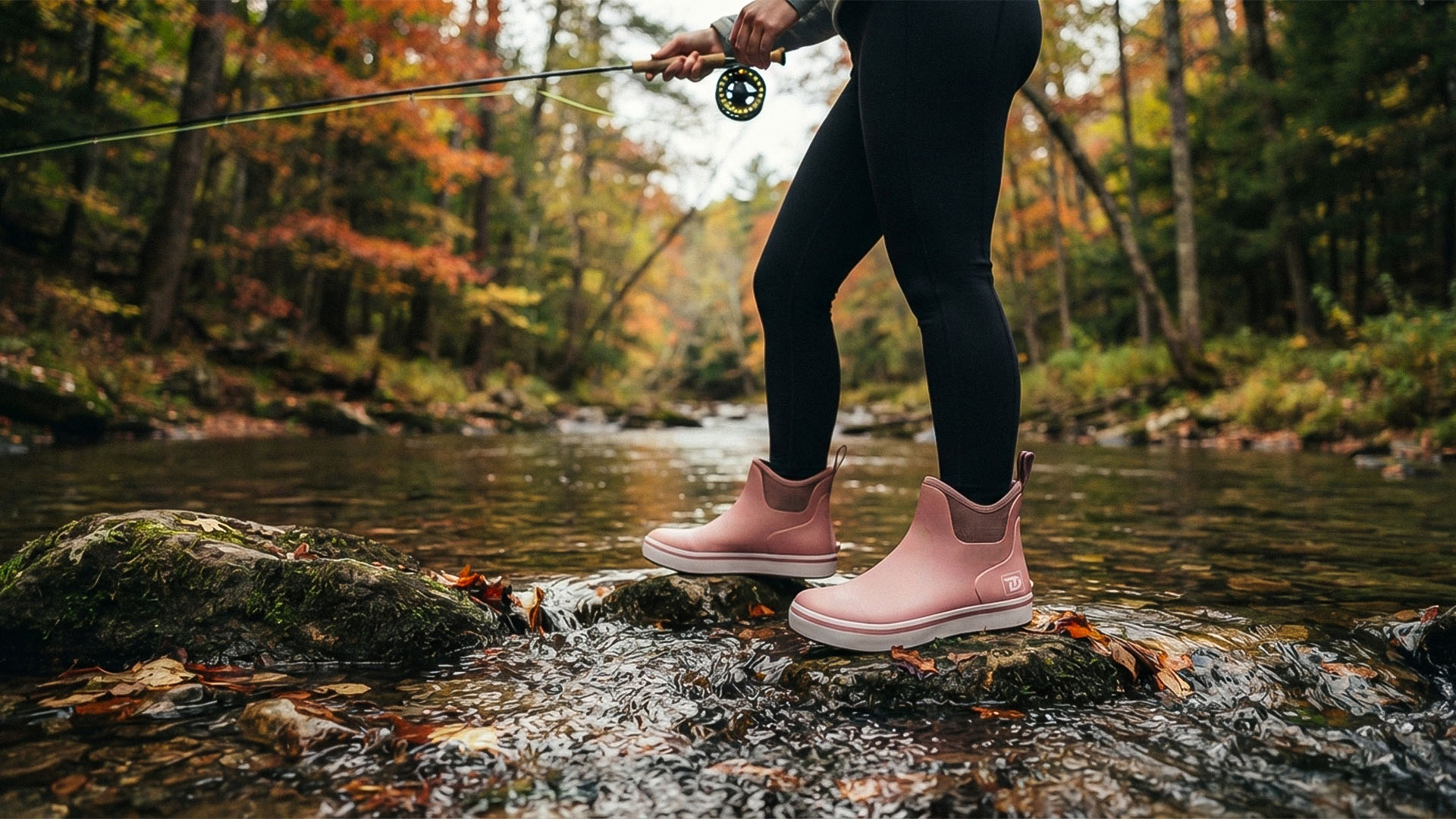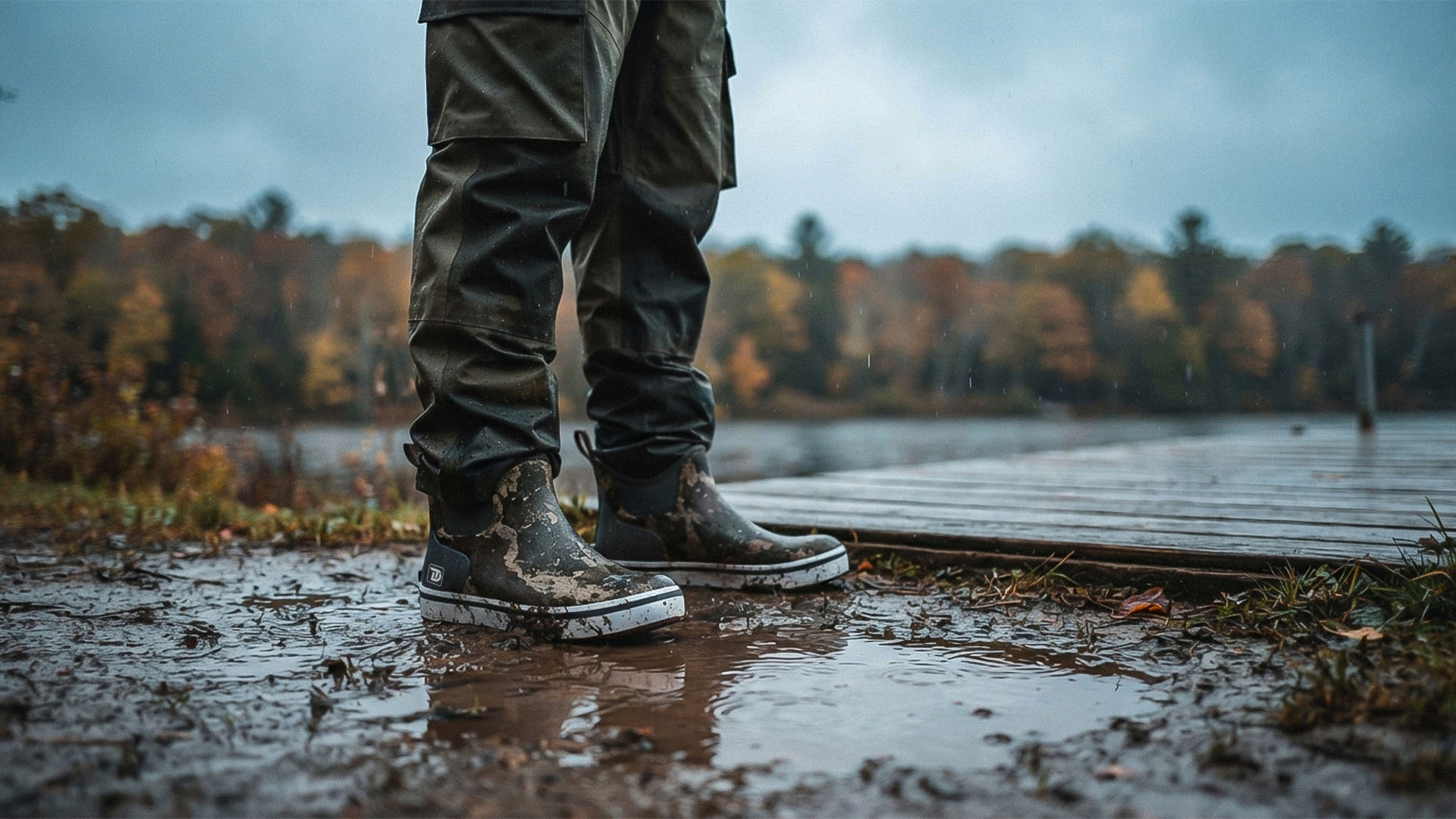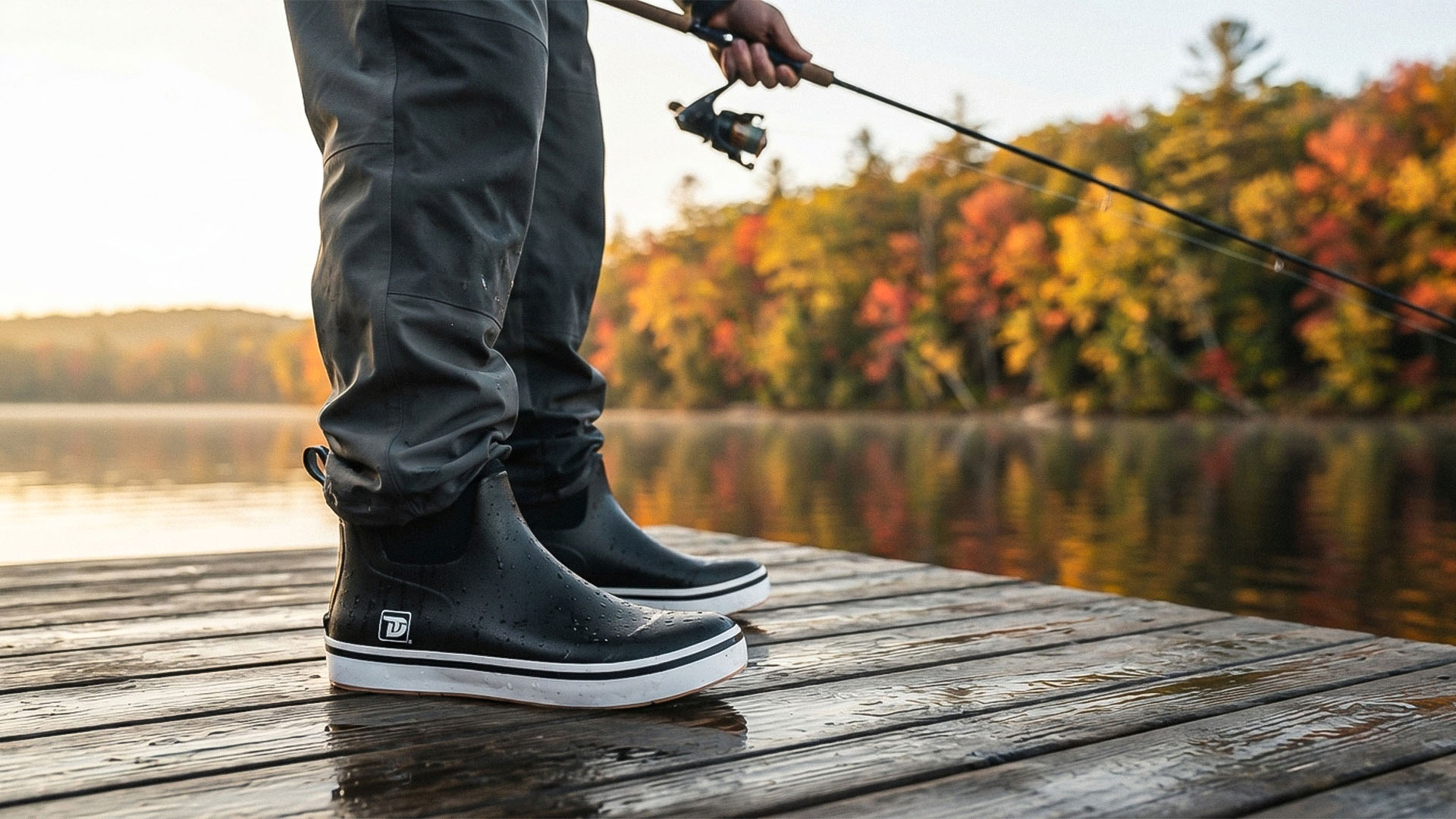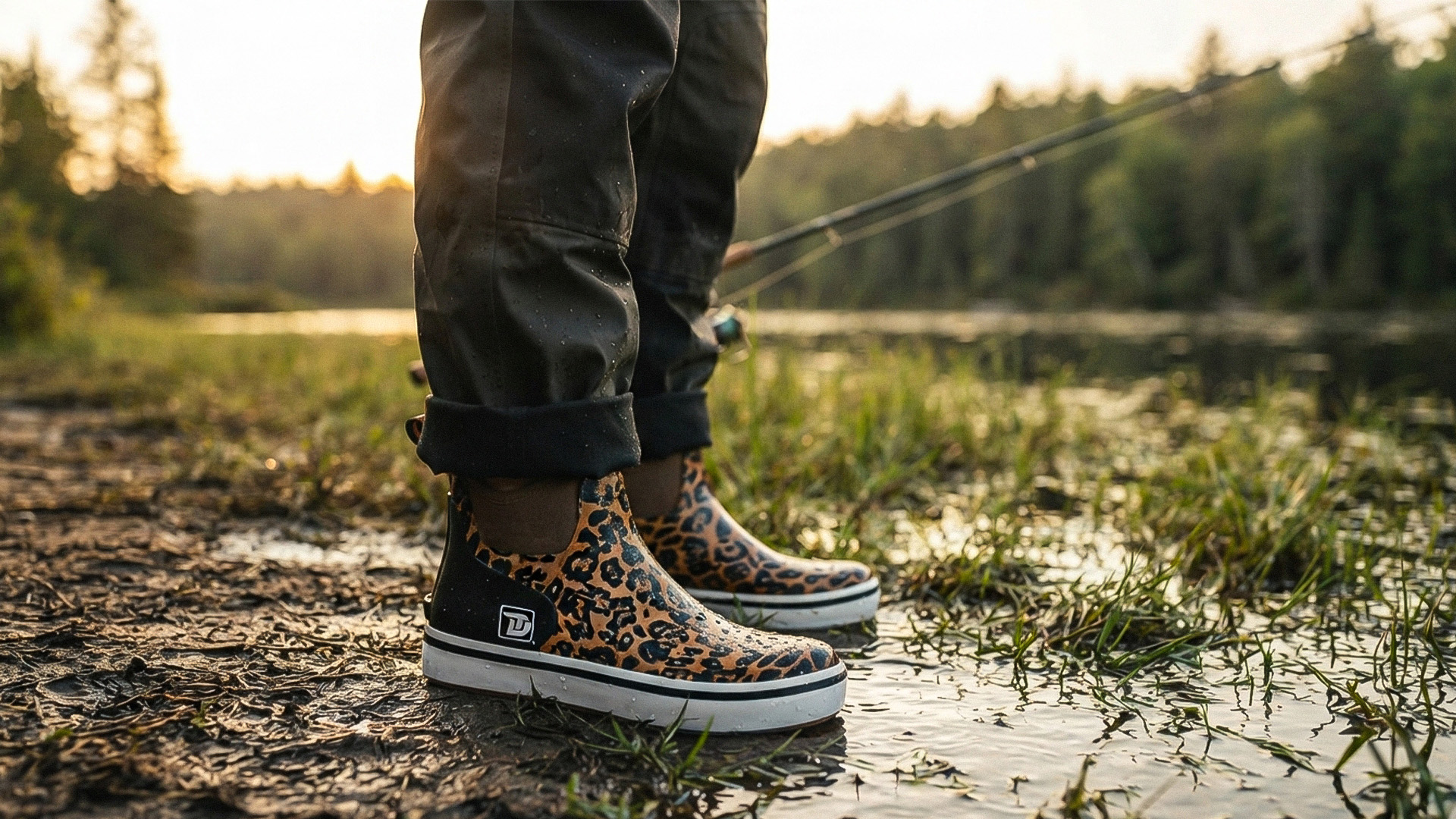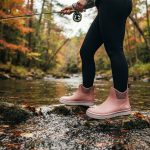
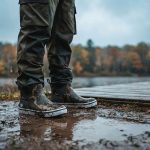
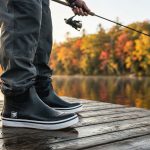
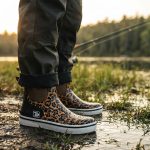
Yellowtail snapper fishing is one of the classic reef-fishing experiences in South Florida and the Florida Keys.
These colorful, fast-moving snapper are commonly targeted around:
- Coral reefs
- Patch reefs
- Wrecks
- Hard bottom
- Offshore structure
- Reef edges
The fishing often combines chumming, light tackle, natural bait, warm weather, and long periods of standing near the stern while watching the chum line.
That creates a boat environment where footwear can become surprisingly important.
A typical yellowtail snapper trip may involve:
- Saltwater spray
- Chum
- Bait water
- Fish scales
- Fish slime
- Wet fiberglass
- Rain
- Cooler drainage
- Repeated deck washdowns
The best deck boots for yellowtail snapper fishing should keep your feet dry, provide secure footing on wet marine surfaces, stay comfortable during long reef sessions, and rinse clean after exposure to chum, bait, saltwater, and fish residue.
For most recreational Florida Keys anglers, lightweight uninsulated ankle deck boots offer an excellent combination of waterproof protection, mobility, and warm-weather comfort.
This guide explains what to look for in yellowtail snapper fishing footwear, why chumming changes the deck environment, how Florida heat affects boot choice, and when another type of fishing footwear may be more appropriate.
Why Yellowtail Snapper Fishing Is Hard on Footwear
Yellowtail snapper fishing may not involve extremely heavy tackle, but it can create one of the messier reef-fishing environments.
Your footwear may encounter:
- Chum water
- Fish oil
- Bait residue
- Saltwater spray
- Fish slime
- Rain
- Wet decks
- Cooler drainage
- Boat washdowns
The combination of bait oil and wet fiberglass is especially important.
A boot needs to stay clean if it is going to provide reliable deck contact.
Why Deck Boots Work Well for Yellowtail Snapper Fishing
Deck boots provide several advantages:
- Waterproof construction
- Closed-toe coverage
- Easy-clean exterior
- Marine-focused outsole
- Comfortable standing support
- Quick pull-on convenience
They work especially well on:
- Center consoles
- Reef-fishing boats
- Charter vessels
- Party boats
- Private offshore boats
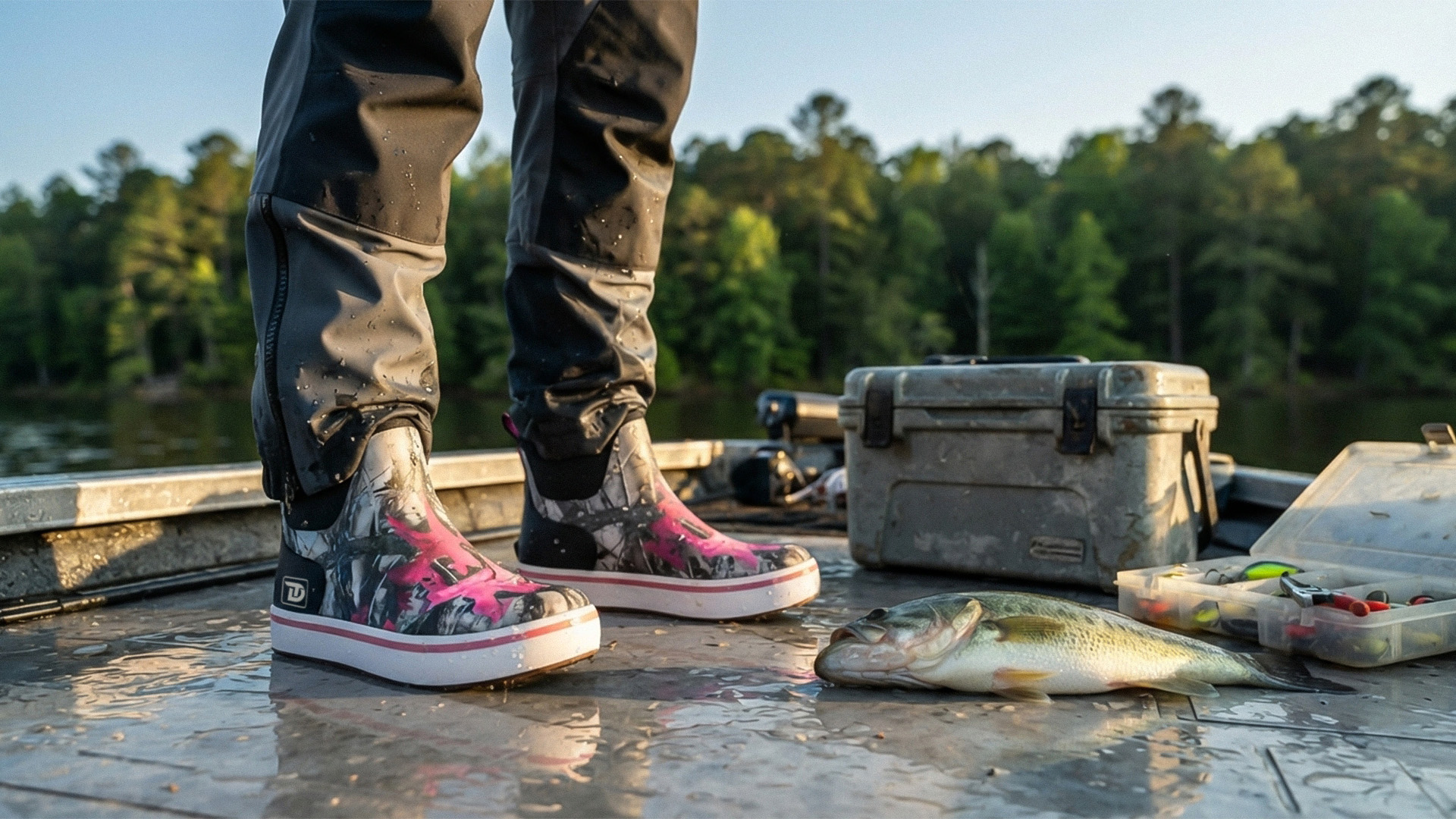
Anglers comparing waterproof fishing footwear can evaluate TruDaveGear deck boots alongside other options based on fit, outsole design, cushioning, removable insoles, weight, and warm-weather comfort.
Florida Keys Yellowtail Snapper Fishing
The Florida Keys are one of the best-known yellowtail snapper destinations.
Anglers may fish from areas around:
- Key Largo
- Islamorada
- Marathon
- Big Pine Key
- Key West
Conditions are often warm and humid.
That means footwear should generally be:
- Lightweight
- Uninsulated
- Low profile
- Easy to clean
Heavy cold-weather rubber boots are usually unnecessary.
Key West Yellowtail Snapper Fishing
Key West anglers often target yellowtail snapper around nearby reef systems.
A typical trip may involve:
- Chumming
- Light leaders
- Natural bait
- Long periods at anchor
- Warm weather
- Wet cockpits
Ankle-height deck boots work well because they provide water protection without excessive bulk.
Reef Fishing for Yellowtail Snapper
Yellowtail snapper often hold around reef structure.
Anglers may anchor or position the boat so the chum line carries bait toward the fish.
This can mean spending several hours in one general area.
Comfortable footwear becomes important.
Long Periods Standing at the Stern
Many anglers spend much of the trip:
- Watching the chum line
- Free-lining bait
- Adjusting leader
- Recasting
- Fighting fish
Standing on hard fiberglass for hours can create foot fatigue.
Look for boots with:
- Stable heel cushioning
- Comfortable forefoot
- Moderate arch support
- Removable insoles
Chumming Creates a Different Deck Environment
Chumming is a major part of many yellowtail snapper trips.
Chum can introduce:
- Fish oil
- Water
- Small bait particles
- Strong odor
to the stern area.
This makes easy-clean footwear especially useful.
Chum Oil and Traction
Fish oil is one of the biggest traction problems on a fishing boat.
If chum residue reaches the deck or boot outsole, it may create a slick film.
Clean it promptly.
A good marine outsole cannot perform properly when heavily coated with oil.
How to Clean Chum From Deck Boots
If chum reaches your boots:
- Rinse with fresh water.
- Apply mild soap to oily areas.
- Brush tread grooves.
- Rinse thoroughly.
- Remove insoles.
- Dry completely.
Prompt cleaning also helps control odor.
Natural Bait Fishing
Yellowtail snapper anglers may use various natural bait presentations.
Bait handling can create:
- Fish scales
- Slime
- Water
- Oil
around the bait station.
Waterproof deck boots are far easier to maintain than absorbent fabric shoes.
Ballyhoo and Small Baitfish
Depending on fishing style, anglers may use small pieces of baitfish.
This can introduce fish oil and scales to the deck.
Keep bait concentrated around a designated station.
Avoid allowing loose bait pieces into primary walking areas.
Shrimp and Other Baits
Some anglers may use shrimp or other legal baits depending on location and conditions.
Bait water can quickly soak mesh sneakers.
Waterproof boots prevent repeated small spills from reaching your socks.
Fish Scales in the Tread
Scales may become trapped in outsole grooves.
Rinse tread during or after fishing.
A clean tread provides more predictable contact with the deck.
Light Tackle Fishing
Yellowtail snapper fishing often uses relatively light tackle.
That means the angler may make frequent small movements while:
- Free-lining bait
- Adjusting drag
- Recasting
- Following fish around the stern
Footwear should remain light and flexible.
Flexible Forefoot
Look for enough forefoot flexibility to support:
- Casting
- Side stepping
- Squatting
- Moving around coolers and rod holders
Very stiff work-style boots may feel unnecessary for this kind of fishing.
Secure Heel Fit
Even lightweight fishing benefits from a secure heel.
Too much heel movement can cause:
- Blisters
- Sock sliding
- Toe gripping
- Foot fatigue
A good pull-on boot should remain reasonably controlled during walking and turning.
Toe Room
Long fishing days can cause mild foot swelling.
Your toes should have enough space for:
- Natural movement
- Performance socks
- Extended standing
Avoid buying a boot that squeezes the forefoot.
Fighting Yellowtail Snapper
Yellowtail snapper can be quick and surprisingly strong on light tackle.
Anglers may need to reposition around:
- Stern corners
- Rod holders
- Engines
- Other fishermen
Stable footwear makes these small movements easier.
Wet Fiberglass
Fiberglass is common on Florida reef-fishing boats.
It can become slick from:
- Saltwater
- Chum oil
- Fish slime
- Sunscreen
- Soap
- Rain
Look for a marine outsole with:
- Broad contact area
- Flexible rubber
- Drainage channels
- Stable heel platform
No footwear is completely slip-proof.
Sunscreen and Florida Boats
Strong Florida sun means sunscreen is essential.
However, spilled sunscreen can create a slick film on the deck.
Clean spills promptly.
Traction depends on both footwear and surface condition.
Fish Slime
Yellowtail snapper may leave slime on:
- Deck
- Cooler
- Net
- Boots
Slime in outsole tread can reduce traction.
Rinse heavy residue when practical.
Snapper Teeth
Yellowtail snapper have teeth and should be handled carefully.
Do not use your boot to control a landed fish.
Deck boots are not bite-resistant equipment.
Sharp Hooks
Yellowtail snapper rigs may use small but sharp hooks.
Standard deck boots are not hook-proof.
Keep hooks in:
- Rig trays
- Bait stations
- Tackle boxes
- Hook holders
Small hooks can still penetrate ordinary recreational footwear.
Sinkers and Weights
Depending on technique, anglers may use small weights or sinkers.
Keep tackle off the deck whenever possible.
Closed-toe footwear provides basic coverage but should not replace good organization.
Charter Yellowtail Snapper Fishing
Florida Keys charters frequently target reef species.
Before your trip, ask:
- Are deck boots recommended?
- Are non-marking soles required?
- Will chumming be used?
- How wet does the cockpit usually get?
Follow the captain’s footwear instructions.
Party Boat Reef Fishing
Larger reef-fishing boats may have many anglers fishing together.
The deck can become wet from:
- Bait
- Fish
- Chum
- Washdowns
- Spray
Closed-toe waterproof footwear is particularly practical in these conditions.
Boat Washdowns
Chum-heavy trips may require repeated rinsing.
Deck boots are ideal because they can be rinsed along with the working area.
Fabric sneakers may stay wet for hours.
Cooler Drainage
Bait coolers and fish boxes can create additional deck water.
Waterproof footwear prevents cooler drainage from soaking your socks.
Warm Florida Weather
Yellowtail snapper fishing often takes place in hot conditions.
Choose:
- Lightweight construction
- Uninsulated boots
- Ankle height
- Moisture-wicking socks
Avoid heavy insulated footwear.
Are Deck Boots Too Hot for Yellowtail Snapper Fishing?
They can be if they are tall or heavily insulated.
Lightweight ankle deck boots are much better suited to tropical and subtropical weather.
On extremely hot and completely dry days, breathable fishing shoes may still be more comfortable.
Best Socks for Yellowtail Snapper Fishing
Use lightweight moisture-wicking socks made from:
- Synthetic performance fibers
- Lightweight merino
- Merino-synthetic blends
Avoid cotton.
Cotton absorbs sweat and dries slowly.
Crew Socks
Crew-height socks pair well with ankle deck boots.
They reduce:
- Collar rubbing
- Heel friction
- Skin irritation
Should You Wear Deck Boots Barefoot?
Some anglers do.
For long fishing days, socks are generally more comfortable.
Barefoot use may increase:
- Sweat
- Odor
- Friction
- Blister risk
Spare Socks
Bring a dry backup pair.
They are useful after:
- Rain
- Spray
- Water entering over the boot opening
- Heavy sweating
Store them in waterproof packaging.
Rain in the Florida Keys
Tropical and subtropical weather can change quickly.
A short storm may turn a dry cockpit into a wet one.
Waterproof boots become especially useful during these conditions.
Rain Pants and Deck Boots
Keep rain pants outside the boot opening.
This lets water run down the exterior.
Tucking rain pants inside can funnel water directly into the boots.
Center Console Reef Fishing
Center consoles are common throughout the Florida Keys.
They provide mobility but expose anglers to more spray.
Low-profile ankle deck boots work especially well on open boats.
Non-Marking Soles
Some boats require non-marking footwear.
Check product specifications before boarding.
Non-marking and wet-deck traction are separate characteristics.
EVA Decking
Many modern reef boats use EVA foam.
Before boarding, remove:
- Sand
- Gravel
- Shell fragments
from outsole grooves.
Sharp debris can damage softer deck materials.
Marina Docks
Yellowtail snapper trips often start early.
Docks may be wet from:
- Dew
- Rain
- Boat washdowns
- Tide spray
Waterproof boots keep your socks dry before departure.
Boat Ramp Conditions
Private-boat anglers may encounter:
- Wet concrete
- Sand
- Gravel
- Mud
- Algae
Deck boots are useful around launch areas.
Clean the outsole before boarding.
Ramp Algae
Submerged algae can make ramps extremely slippery.
No recreational deck boot guarantees traction on algae.
Move carefully and use handholds when available.
Removable Insoles
Removable footbeds improve:
- Drying
- Odor control
- Cushion replacement
- Support
- Cleaning
Remove them after each fishing trip.
Even if outside water stays out, sweat can accumulate underneath.
Wide Feet
Wide-foot anglers should look for:
- Proper forefoot width
- Roomy toe box
- Secure heel
- Adequate instep volume
Avoid simply buying an excessively long boot.
High Instep
Pull-on boots may feel tight across a high instep.
Look for:
- Enough internal volume
- Comfortable opening
- Strong pull tabs
- Removable insoles
Pressure or numbness suggests poor fit.
Deck Boots vs. Fishing Shoes
Deck Boots Are Better For:
- Chumming
- Bait-heavy fishing
- Wet decks
- Rain
- Washdowns
- Cooler drainage
Fishing Shoes Are Better For:
- Extremely hot dry days
- Maximum airflow
- Quick drainage
Both can be useful depending on the trip.
Deck Boots vs. Sneakers
Sneakers may absorb:
- Chum water
- Bait oil
- Saltwater
- Rain
- Washdown water
Once wet, they may remain uncomfortable for hours.
Deck boots are much easier to rinse.
Deck Boots vs. Flip-Flops
Flip-flops provide limited protection around:
- Hooks
- Fish
- Wet decks
- Boat hardware
They also provide poor heel security.
Closed-toe footwear is generally more practical on working reef boats.
Deck Boots vs. Tall Rubber Boots
Tall rubber boots provide more water coverage but add:
- Heat
- Weight
- Bulk
For most recreational Florida Keys reef fishing, ankle deck boots provide enough protection.
Cleaning Yellowtail Snapper Slime
After fishing:
- Rinse with fresh water.
- Remove visible fish residue.
- Use mild soap if necessary.
- Brush the outsole.
- Rinse thoroughly.
- Remove insoles.
- Dry completely.
Cleaning Chum Oil
Chum oil may require extra attention.
Use mild soap and thoroughly brush the tread grooves.
Residual oil can reduce traction on your next fishing trip.
Cleaning Bait Scales
Rinse scales before they dry onto the footwear.
Pay attention to tread grooves and seams around the outsole.
Saltwater Care
After every reef-fishing trip:
- Rinse the upper
- Clean outsole grooves
- Rinse pull tabs
- Clean the collar
- Remove bait residue
Regular freshwater rinsing helps reduce salt buildup.
Drying in Florida Humidity
Humidity can slow drying.
After fishing:
- Remove insoles
- Open boot tops
- Use airflow
- Use a fan if necessary
Avoid leaving damp boots sealed inside a boat compartment.
Avoid High Heat
Do not use:
- Clothes dryers
- Heat guns
- Open flames
- Extreme heaters
High temperatures may damage waterproof materials, foam, or adhesives.
Odor Prevention
Yellowtail snapper fishing boots may develop odor from:
- Chum
- Baitfish
- Fish slime
- Sweat
- Damp storage
Prevent odor by:
- Cleaning promptly
- Removing insoles
- Drying completely
- Avoiding sealed wet storage
Clean Shoes for the Drive Home
Bring separate driving shoes.
Store fishing boots in:
- Rubber boot tray
- Plastic tote
- Washable cargo bin
This keeps chum, fish residue, and saltwater away from the vehicle interior.
Best Deck Boot Features for Yellowtail Snapper Fishing
Look for:
Lightweight Waterproof Construction
Ideal for warm wet reef-fishing conditions.
Uninsulated Design
Better for Florida Keys temperatures.
Ankle Height
Provides protection without unnecessary heat.
Stable Marine Outsole
Useful on wet fiberglass.
Secure Heel
Improves movement around the stern.
Flexible Forefoot
Supports light-tackle casting and repositioning.
Comfortable Cushioning
Important during long periods standing in the chum line.
Removable Insoles
Improves drying and support.
Easy-Clean Exterior
Particularly important around chum and bait oil.
Yellowtail Snapper Fishing Footwear Checklist
Before fishing:
- Check weather
- Inspect tread
- Confirm boots are dry
- Wear moisture-wicking socks
- Pack spare socks
- Organize hooks
- Prepare bait and chum stations
- Bring rain gear
- Check charter footwear rules
After fishing:
- Rinse saltwater
- Remove chum residue
- Clean bait oil
- Remove fish slime
- Brush tread
- Remove insoles
- Dry completely
Common Yellowtail Snapper Fishing Footwear Mistakes
Wearing Flip-Flops Around Hooks and Wet Decks
Open footwear provides limited protection and heel stability.
Wearing Heavy Insulated Boots in Florida Heat
They create unnecessary sweat and fatigue.
Wearing Cotton Socks
Cotton absorbs moisture and dries slowly.
Buying Boots Too Loose
Loose footwear reduces control during quick movement.
Ignoring Chum Oil on the Outsole
Fish oil may dramatically reduce traction.
Leaving Hooks Around the Stern
Standard deck boots are not hook-proof.
Leaving Fish Slime on Fiberglass
No outsole works well on heavily contaminated surfaces.
Tucking Rain Pants Inside Boots
Water may flow directly into the boot opening.
Leaving Chum-Contaminated Boots in a Hot Vehicle
Odor can become extremely strong.
Wearing Gravel-Covered Boots on EVA Flooring
Debris may damage softer deck surfaces.
Final Thoughts
Yellowtail snapper fishing combines warm Florida weather, reef structure, light tackle, chumming, baitfish, wet fiberglass, fish slime, and long periods of standing.
For most boat-based anglers, lightweight uninsulated ankle deck boots provide an excellent balance of waterproof protection, secure movement, easy cleaning, and all-day comfort.
Choose boots with a stable marine outsole, secure heel, flexible forefoot, removable insoles, and enough cushioning for hours spent working a chum line.
Wear lightweight synthetic or merino-blend moisture-wicking socks rather than cotton.
Keep hooks, bait containers, chum buckets, fish boxes, and fishing gear organized away from primary walking areas.
Pay particular attention to chum and bait oil.
Even excellent deck boots can lose traction if oily residue coats the outsole or deck.
Standard recreational deck boots are not hook-proof, impact-rated, or designed for technical underwater reef walking.
During extremely hot and completely dry fishing conditions, breathable fishing shoes may still be more comfortable.
But when the chum bag is working, bait water is spilling, fish slime reaches the deck, and the washdown hose comes out, waterproof deck boots become one of the most practical pieces of footwear on the boat.
After fishing, rinse saltwater, chum, bait oil, scales, and fish slime, brush the tread carefully, remove the insoles, and allow everything to dry completely.
The right yellowtail snapper fishing footwear should stay out of your mind while you focus on current, chum flow, leader size, bait presentation, and that sudden flash of yellow racing away from the reef.
Frequently Asked Questions
Are deck boots good for yellowtail snapper fishing?
Yes. They are especially useful for boat-based yellowtail snapper fishing involving chumming, bait, wet decks, spray, and washdowns.
What boots should I wear for Florida Keys yellowtail snapper fishing?
Lightweight uninsulated ankle deck boots are a practical choice for most recreational reef trips.
Are deck boots good for Key West reef fishing?
Yes. Waterproof deck boots work well around bait, chum, wet fiberglass, and fish-handling areas.
Are deck boots good for chumming?
Yes. Easy-clean waterproof footwear is especially useful around chum water and fish oil.
What socks should I wear with yellowtail snapper deck boots?
Wear lightweight synthetic or merino-blend moisture-wicking socks. Avoid cotton.
Are deck boots too hot for Florida Keys fishing?
Heavy insulated boots can be, but lightweight uninsulated ankle models are much better suited to the climate.
Are deck boots good for charter reef fishing?
Yes. Always check the captain’s requirements regarding non-marking footwear or other boat-specific rules.
Can deck boots protect against fishing hooks?
They provide basic closed-toe coverage but are not hook-proof.
Are ankle deck boots tall enough for yellowtail snapper fishing?
For most recreational center consoles and reef boats, yes.
Can chum oil make deck boots slippery?
Yes. Fish oil can reduce traction significantly, so clean the outsole and deck promptly.
Are deck boots good for offshore yellowtail snapper fishing?
Yes. They provide useful waterproof protection during offshore reef trips involving spray, bait, and wet decks.
Should rain pants go inside or outside deck boots?
Outside. Let the pant leg overlap the boot opening so water runs down the exterior.
How do I remove chum smell from deck boots?
Rinse promptly with fresh water, use mild soap on oily areas, brush the tread, remove the insoles, and dry everything completely.
How do I clean yellowtail snapper slime from deck boots?
Rinse with fresh water, brush affected areas if necessary, clean tread grooves, remove the insoles, and air dry fully.
How should yellowtail snapper fishing deck boots fit?
They should hold the heel securely while providing enough toe room for long periods of standing and light-tackle movement.
What is the biggest footwear mistake in yellowtail snapper fishing?
Ignoring chum and bait oil buildup on the outsole—or wearing loose, open, absorbent, or heavily insulated footwear on wet Florida reef boats—is one of the most common mistakes.