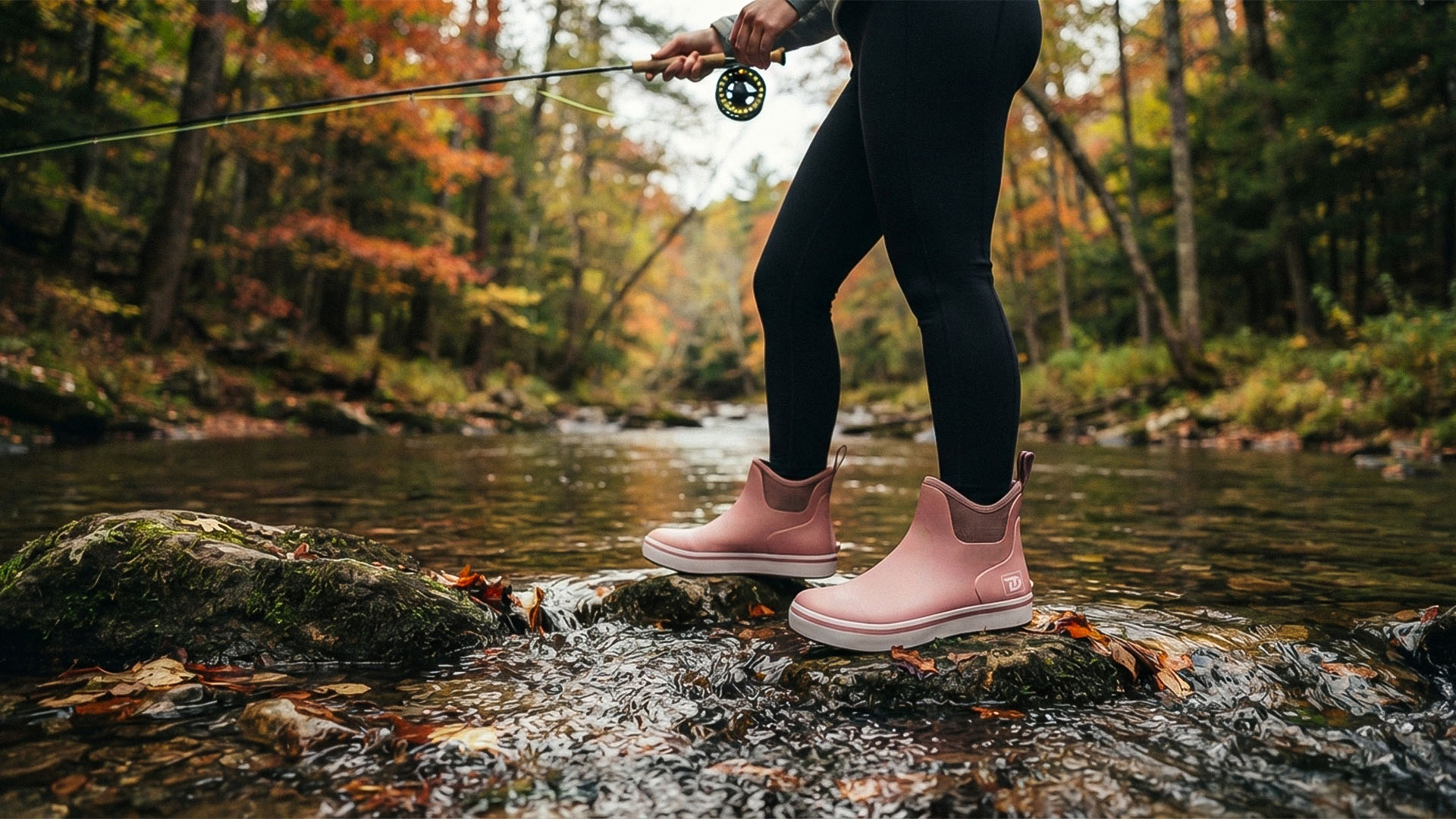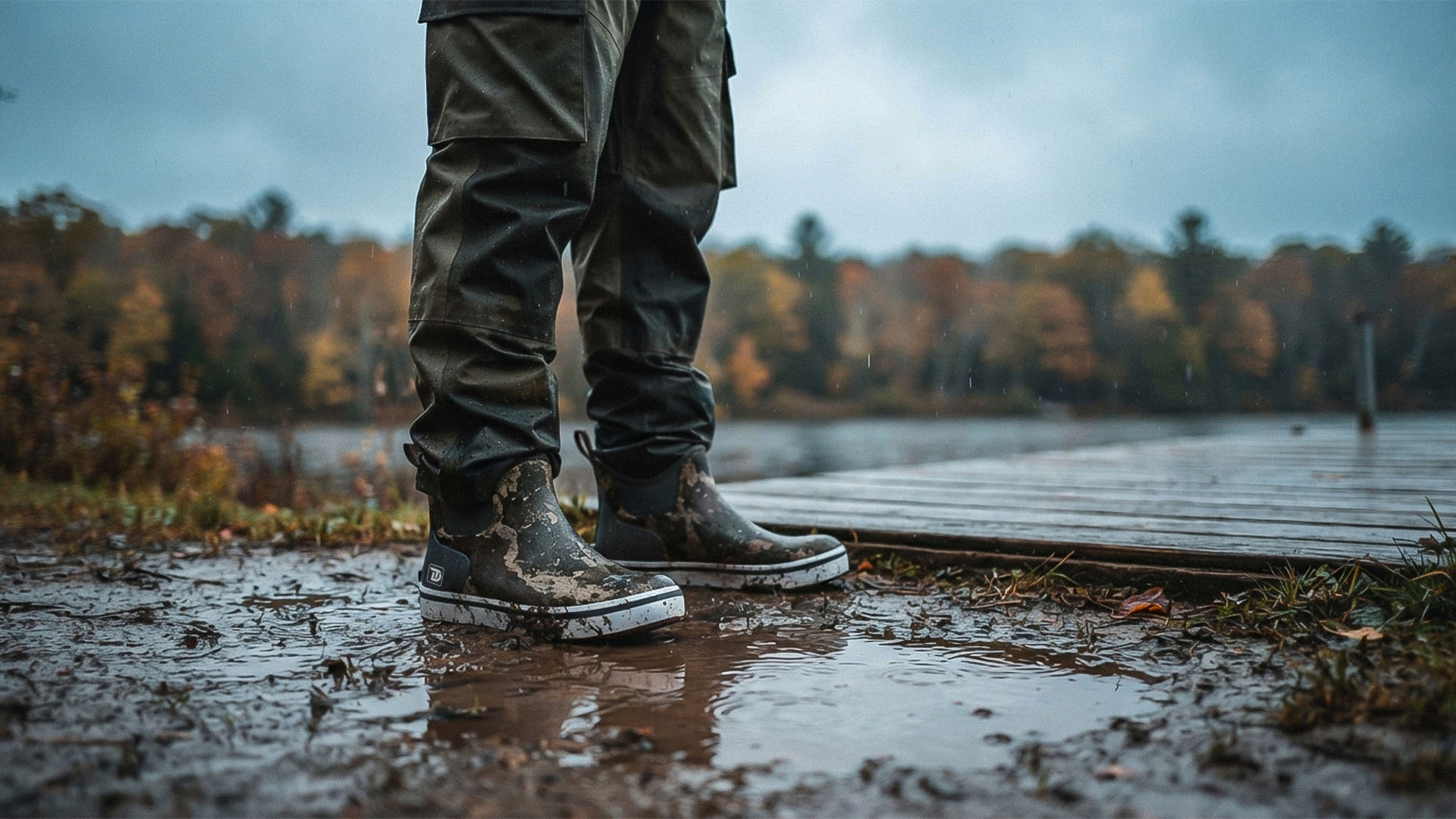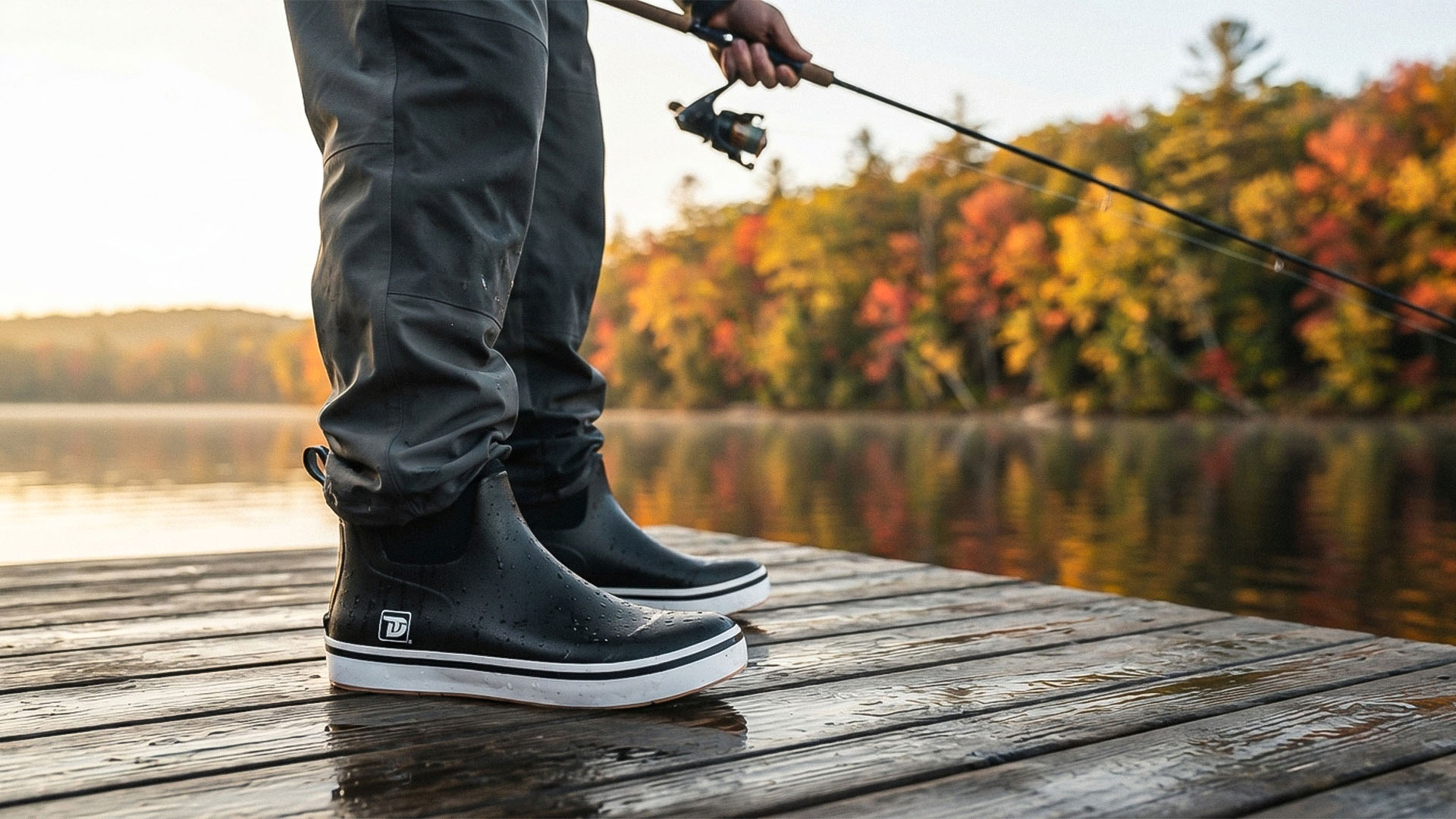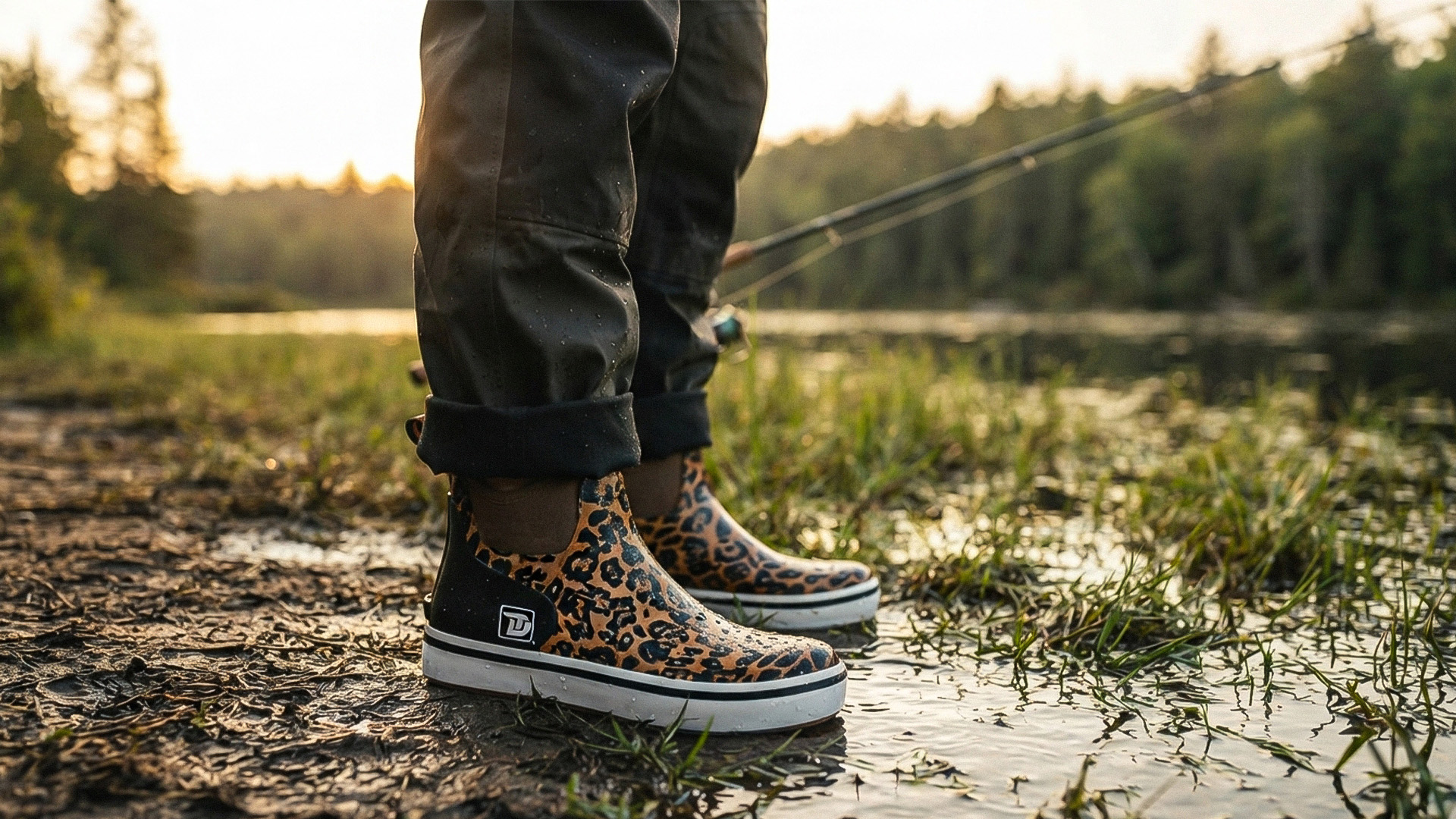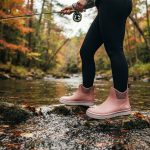
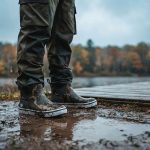
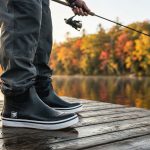
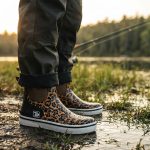
Black drum fishing puts anglers in some of the messiest inshore fishing environments.
These powerful fish are commonly targeted around:
- Bays
- Bridges
- Jetties
- Channels
- Oyster areas
- Piers
- Coastal passes
- Marsh edges
- Docks
Depending on location and season, anglers may encounter black drum ranging from smaller fish around shallow structure to extremely large adults capable of putting serious pressure on tackle.
A typical trip may involve:
- Crab bait
- Shrimp
- Cut bait
- Muddy boat ramps
- Saltwater spray
- Wet fiberglass
- Fish slime
- Rain
- Livewell water
- Long periods of standing
That combination makes footwear an important part of the setup.
The best deck boots for black drum fishing should keep your feet dry, stay comfortable during long bait-fishing sessions, provide stable footing on wet decks, and clean easily after exposure to crab residue, shrimp water, mud, fish slime, and saltwater.
For most boat-based anglers, lightweight uninsulated ankle deck boots provide an excellent combination of waterproof protection, mobility, and warm-weather comfort.
This guide explains what to look for in black drum fishing footwear, why bait fishing creates special challenges, and when other footwear may be more appropriate.
Why Black Drum Fishing Is Hard on Footwear
Black drum fishing often takes place in shallow coastal environments where water and mud seem to follow you everywhere.
Your footwear may encounter:
- Wet docks
- Saltwater spray
- Mud
- Crab residue
- Shrimp water
- Fish slime
- Rain
- Fish-box water
- Boat washdowns
Unlike purely artificial-lure fishing, natural-bait drum fishing can make the boat messy quickly.
Waterproof easy-clean footwear has a major advantage.
Why Deck Boots Work Well for Black Drum Fishing
Deck boots provide several practical benefits:
- Waterproof construction
- Closed-toe coverage
- Easy-clean exterior
- Wet-deck traction
- Comfortable standing support
- Quick pull-on convenience
They work especially well on:
- Bay boats
- Center consoles
- Skiffs
- Aluminum boats
- Charter boats
Anglers comparing waterproof fishing footwear can evaluate TruDaveGear deck boots alongside other options based on outsole design, fit, cushioning, removable insoles, weight, and warm-weather comfort.
Texas Black Drum Fishing
Texas is one of the most recognizable black drum fishing regions.
Anglers may target drum in areas such as:
- Coastal bays
- Passes
- Channels
- Jetties
- Bridge structure
Fishing often involves:
- Crab bait
- Shrimp
- Bottom rigs
- Heavy sinkers
Warm coastal conditions usually favor lightweight uninsulated footwear.
Louisiana Black Drum Fishing
Louisiana anglers may find black drum around:
- Marshes
- Bays
- Oyster areas
- Channels
- Coastal structure
Mud is often part of the fishing environment.
Deck boots work well when moving between:
- Boat ramps
- Wet docks
- Bay boats
- Marsh-side launch areas
They can be rinsed clean far more easily than fabric shoes.
Florida Black Drum Fishing
Florida offers black drum opportunities around:
- Bridges
- Inlets
- Estuaries
- Piers
- Coastal bays
Warm temperatures make lightweight footwear important.
Ankle deck boots provide waterproof protection without the heat and bulk of tall rubber boots.
Chesapeake Bay Black Drum Fishing
Black drum can also attract anglers in Mid-Atlantic waters.
These trips may involve:
- Cooler spring weather
- Larger boats
- Bottom fishing
- Long periods standing
Waterproof boots paired with appropriate socks provide useful versatility.
Bay Fishing for Black Drum
Many black drum anglers fish from bay boats.
These platforms may become wet from:
- Spray
- Rain
- Bait preparation
- Fish handling
- Washdowns
Waterproof ankle deck boots work particularly well because they allow easy movement around the boat.
Center Console Fishing
Center consoles allow anglers to move from bow to stern.
That mobility becomes useful when fighting larger drum.
Footwear should stay secure during:
- Side steps
- Turns
- Rod movement
- Boat motion
A loose boot can become distracting.
Skiff Fishing
Smaller skiffs have limited deck space.
Bulky footwear may feel awkward.
Look for a deck boot with:
- Low-profile shape
- Ankle height
- Secure heel
- Flexible forefoot
Compact footwear helps when moving around coolers, bait buckets, and tackle.
Crab Bait for Black Drum
Crab is one of the most recognizable natural baits used for black drum in many areas.
Crab fishing creates several footwear problems:
- Shell fragments
- Water
- Organic residue
- Bait odor
- Mud
Waterproof deck boots make cleanup much easier.
Broken Crab Shell
Crab shells can be sharp.
Do not treat ordinary deck boots as puncture-resistant footwear.
Keep shell pieces concentrated around a bait station and remove debris from walking areas.
When cleaning boot tread, use a brush rather than digging through shell fragments with bare fingers.
Crab Residue and Odor
Crab residue left on footwear can develop strong odor.
This is especially true in warm coastal climates.
After fishing:
- Rinse promptly
- Remove shell fragments
- Use mild soap if necessary
- Dry completely
Do not leave dirty boots sealed inside a hot vehicle.
Shrimp Bait
Shrimp is another common coastal bait.
Shrimp buckets may introduce:
- Saltwater
- Organic residue
- Slime
onto the deck.
Fabric shoes can absorb shrimp water quickly.
Waterproof boots prevent this mess from reaching your socks.
Cut Bait
Some black drum fishing situations may involve other natural bait.
Cut bait can create oily residue.
Fish oil is especially important because it may reduce traction on:
- Fiberglass
- Aluminum
- EVA
- Boot tread
Clean oily bait residue promptly.
Bottom Fishing for Black Drum
Black drum are often targeted near the bottom.
Anglers may spend long periods:
- Holding rods
- Watching rod tips
- Waiting for bites
- Adjusting sinkers
- Rebaiting
That means footwear comfort becomes important.
Long Standing Comfort
Look for:
- Stable heel cushioning
- Moderate arch support
- Comfortable forefoot
- Secure heel
- Roomy toe box
A thin boot may feel fine at first and become uncomfortable after several hours.
Stable Cushioning
Extremely soft cushioning is not always better.
On a moving boat, stable support usually feels more predictable.
The ideal footbed should provide comfort without making the boot feel unstable.
Heavy Sinkers
Depending on current and fishing location, black drum anglers may use substantial sinker weight.
Dropped sinkers can injure feet.
Deck boots provide basic closed-toe coverage but are not safety-toe footwear.
Keep sinkers stored in:
- Tackle trays
- Dedicated containers
- Secure buckets
Drum Rigs and Hooks
Black drum rigs may use strong hooks and leaders.
Standard recreational deck boots are not hook-proof.
Keep baited hooks and rigs away from walking areas.
Use:
- Rig boards
- Hook holders
- Tackle boxes
- Rod storage
Large Black Drum
Large drum can be extremely powerful.
When fighting a heavy fish, anglers may need to:
- Brace
- Change rod angle
- Move around the boat
- Follow the fish
Footwear becomes part of your balance system.
Secure Heel Fit
Pull-on boots naturally allow some heel movement.
Too much can cause:
- Blisters
- Sock movement
- Toe gripping
- Reduced stability
The heel should stay reasonably secure while you move around the cockpit.
Flexible Forefoot
A flexible forefoot helps with:
- Squatting
- Side stepping
- Fighting fish
- Trolling motor use
- Moving around the boat
Avoid excessively rigid footwear for active fishing.
Toe Room
Long fishing days can cause slight foot swelling.
Your toes should have enough room for:
- Natural movement
- Socks
- Mild swelling
Avoid sizing down too aggressively.
Black Drum Slime
Large drum can produce a significant amount of slime.
This residue may reach:
- Deck
- Landing net
- Cooler
- Boots
Fish slime can reduce traction.
Rinse heavy residue when practical.
Fish on the Deck
A large black drum can move strongly after landing.
Keep feet away from uncontrolled fish.
Do not use your boot to pin the fish.
Deck boots are ordinary fishing footwear, not impact-rated fish-handling equipment.
Fish Spines
Black drum have fins and spines that deserve careful handling.
Standard deck boots are not puncture-resistant protective equipment.
Use proper landing and handling techniques.
Catch-and-Release Fishing
Large black drum are often valued by anglers for the fight.
When releasing fish, efficient handling reduces unnecessary time on deck.
Keep equipment organized so anglers can move safely during landing and release.
Wet Landing Nets
Landing nets bring water onto the boat.
Repeated fish landings can keep the cockpit wet throughout the trip.
Waterproof footwear prevents this water from soaking your socks.
Wet Fiberglass
Fiberglass decks may become slick from:
- Saltwater
- Fish slime
- Crab residue
- Fish oil
- Sunscreen
- Soap
Look for a marine-focused outsole with broad surface contact and water channels.
No boot is completely slip-proof.
Sunscreen and Boat Decks
Warm coastal fishing requires sun protection.
Spilled sunscreen can create an oily slick surface.
Clean spills promptly.
A good outsole cannot compensate for a deck coated in lotion.
Aluminum Boats
Some black drum anglers fish from aluminum boats.
Wet aluminum can become slippery.
Keep outsole tread free from:
- Mud
- Bait oil
- Fish slime
- Sand
EVA Boat Decking
EVA foam can improve comfort during long periods of standing.
However, grit trapped in boot tread can damage softer surfaces.
Before boarding, remove:
- Gravel
- Sand clumps
- Shell pieces
Muddy Boat Ramps
Black drum fishing often begins at coastal ramps.
Conditions may include:
- Mud
- Wet concrete
- Grass
- Sand
- Shallow puddles
Deck boots work extremely well here.
They keep your feet dry while launching and retrieving the boat.
Ramp Algae
Submerged boat ramps may develop algae.
This can be extremely slippery.
No recreational deck boot guarantees safe traction on algae-covered concrete.
Move slowly and use handholds where available.
Mud in the Outsole
Before stepping onto the boat, remove heavy mud.
Mud inside tread grooves may reduce traction on fiberglass.
It can also make cleaning the boat more difficult.
Oyster Areas
Black drum often feed around shell and oyster habitat.
Deck boots work well inside the boat while fishing around these areas.
They should not automatically be considered safe footwear for walking directly across oyster beds.
Waterproof Does Not Mean Oyster-Proof
A waterproof boot can still be damaged by sharp shell.
Standard recreational deck boots are not necessarily puncture-resistant.
If you plan to walk through oyster-heavy terrain, use footwear designed specifically for that environment.
Jetty Black Drum Fishing
Black drum may also be targeted from rocky jetties.
This creates different footwear requirements.
Jetties can involve:
- Wet rocks
- Algae
- Barnacles
- Wave spray
- Uneven footing
Standard deck boots are designed mainly for flatter marine surfaces.
Technical jetty fishing may require specialized footwear.
Pier Black Drum Fishing
Fishing piers are another common black drum location.
Deck boots can work well when the pier is:
- Wet
- Rainy
- Bait-heavy
- Covered in fish-cleaning water
During hot dry days, breathable supportive shoes may be more comfortable.
Bridge Fishing
Bridge areas may hold black drum.
Boat anglers fishing around bridges benefit from waterproof footwear because current, spray, and bait water may keep the deck wet.
Shore-based bridge fishing may involve more walking and therefore different footwear needs.
Rainy Black Drum Fishing
Coastal rain can quickly turn a dry fishing trip wet.
Deck boots protect against:
- Rain
- Deck water
- Mud
- Bait spills
Pair them with correctly worn rain pants.
Rain Pants and Deck Boots
Rain pants should remain outside the boot opening.
This lets water flow down the exterior.
Tucking pants inside may funnel rain directly into the boot.
Gulf Coast Heat
Texas, Louisiana, and Florida black drum fishing can become hot.
Choose:
- Lightweight construction
- Uninsulated design
- Ankle height
- Thin performance socks
Avoid unnecessary insulation.
Are Deck Boots Too Hot for Black Drum Fishing?
Heavy rubber boots can be.
Lightweight uninsulated ankle boots are much more appropriate for warm-weather boat fishing.
During extremely hot and dry conditions, fishing shoes may offer better ventilation.
Best Socks for Black Drum Fishing
Use lightweight moisture-wicking socks made from:
- Synthetic performance fibers
- Lightweight merino
- Merino-synthetic blends
Avoid cotton.
Cotton absorbs sweat and dries slowly.
Cooler Spring Conditions
In Mid-Atlantic fisheries, spring black drum trips may feel considerably cooler.
Use medium-weight socks when needed.
Make sure the boot still provides enough toe room.
Spare Socks
Keep a dry pair in waterproof storage.
They are useful after:
- Heavy rain
- Spray
- Water entering over the boot collar
- Heavy sweating
Removable Insoles
Removable footbeds improve:
- Drying
- Odor control
- Cushion replacement
- Arch support
- Cleaning
Remove them after each long fishing trip.
Even if the outside of the boot stays waterproof, sweat can accumulate inside.
Wide Feet
Wide-foot anglers should look for:
- Proper forefoot width
- Roomy toe box
- Secure heel
- Adequate instep room
Avoid simply buying a much longer boot.
High Instep
Pull-on boots may feel tight over a high instep.
Look for:
- Enough internal volume
- Comfortable opening
- Strong pull tabs
- Removable insoles
Pain or numbness suggests the fit is wrong.
Non-Marking Soles
Some boats and charters require non-marking footwear.
Check specifications when necessary.
Non-marking and wet traction are separate characteristics.
Charter Black Drum Fishing
Before boarding a charter, ask:
- Are deck boots recommended?
- Are non-marking soles required?
- Will natural bait be used?
- How wet does the deck normally get?
Follow the captain’s rules.
Deck Boots vs. Fishing Shoes
Deck Boots Are Better For:
- Crab bait
- Shrimp water
- Wet boats
- Muddy ramps
- Rain
- Washdowns
Fishing Shoes Are Better For:
- Extremely hot dry weather
- Long walking
- Maximum airflow
Both can be useful depending on conditions.
Deck Boots vs. Sneakers
Sneakers may absorb:
- Shrimp water
- Saltwater
- Mud
- Fish slime
- Rain
Once wet, they can remain uncomfortable for hours.
Deck boots rinse clean much more easily.
Deck Boots vs. Flip-Flops
Flip-flops provide limited protection around:
- Hooks
- Sinkers
- Crab shell
- Fish spines
- Wet decks
They also provide poor heel security.
Closed-toe footwear is more practical on boats.
Deck Boots vs. Tall Rubber Boots
Tall boots provide more coverage but can be:
- Hotter
- Heavier
- More restrictive
For most recreational black drum boat fishing, ankle deck boots provide enough protection.
Cleaning Crab Residue From Deck Boots
After fishing:
- Rinse with fresh water.
- Remove crab residue.
- Inspect for shell fragments.
- Use mild soap if needed.
- Brush the outsole.
- Rinse thoroughly.
- Remove the insoles.
- Dry completely.
Cleaning Shrimp Water
Rinse shrimp residue promptly.
Warm weather can cause strong odor quickly.
Use mild soap if necessary and allow the boots to dry fully.
Cleaning Fish Slime
Rinse black drum slime before it dries.
Focus on:
- Toe
- Heel
- Sidewalls
- Outsole grooves
Use a brush when needed.
Cleaning Mud
Allow heavy mud to loosen with freshwater rinsing.
Brush tread grooves before the mud dries hard.
Clean tread improves boat traction.
Saltwater Care
After every saltwater trip:
- Rinse the upper
- Brush outsole grooves
- Clean pull tabs
- Rinse the collar
- Remove bait and fish residue
Routine freshwater rinsing helps reduce salt buildup.
Drying Deck Boots
Use gentle airflow.
Remove insoles and dry separately.
Avoid:
- Clothes dryers
- Heat guns
- Open flames
- Extreme heaters
High heat may damage waterproof materials, foam, and adhesives.
Odor Prevention
Black drum fishing boots may develop odor from:
- Crab bait
- Shrimp
- Fish slime
- Sweat
- Damp storage
Prevent odor by:
- Cleaning promptly
- Removing insoles
- Drying fully
- Avoiding sealed wet storage
Clean Shoes for the Drive Home
Bring separate driving shoes.
Store fishing boots in:
- Rubber boot tray
- Plastic tote
- Washable cargo bin
This keeps mud, bait, fish slime, and saltwater out of your vehicle.
Best Deck Boot Features for Black Drum Fishing
Look for:
Lightweight Waterproof Construction
Useful for wet coastal fishing environments.
Uninsulated Design
Better for Gulf Coast conditions.
Ankle Height
Provides protection without excessive heat.
Stable Marine Outsole
Useful on wet fiberglass and aluminum.
Secure Heel
Important while fighting larger drum.
Flexible Forefoot
Supports natural boat movement.
Comfortable Cushioning
Useful during long bottom-fishing sessions.
Removable Insoles
Improves drying and support.
Easy-Clean Exterior
Especially important around crab bait, shrimp, mud, and fish slime.
Black Drum Fishing Footwear Checklist
Before fishing:
- Check weather
- Inspect outsole tread
- Confirm boots are dry
- Choose appropriate socks
- Pack spare socks
- Organize crab or shrimp bait
- Secure hooks and sinkers
- Bring rain gear
- Check charter footwear requirements
After fishing:
- Rinse saltwater
- Clean crab residue
- Remove shell fragments
- Clean shrimp water
- Remove fish slime
- Brush away mud
- Remove insoles
- Dry completely
Common Black Drum Fishing Footwear Mistakes
Wearing Sneakers Around Muddy Coastal Ramps
They may become wet and muddy before fishing even begins.
Wearing Cotton Socks
Cotton holds moisture and dries slowly.
Wearing Heavy Insulated Boots in Gulf Coast Heat
They create unnecessary sweat.
Buying Boots Too Loose
Loose footwear reduces stability during heavy fish fights.
Leaving Crab Shell Around Walking Areas
Sharp shell creates unnecessary hazards.
Leaving Heavy Sinkers Near Your Feet
Deck boots are not impact-rated safety footwear.
Treating Deck Boots as Hook-Proof
Black drum fishing hooks can penetrate ordinary recreational boots.
Assuming Waterproof Boots Are Oyster-Proof
Waterproofing does not equal puncture resistance.
Ignoring Fish Slime in the Tread
Slime may reduce traction.
Tucking Rain Pants Inside Boots
Water can run directly into the boot.
Final Thoughts
Black drum fishing combines powerful fish, natural bait, muddy ramps, wet coastal boats, crab shell, shrimp water, hooks, sinkers, and long periods of bottom fishing.
For most boat-based anglers, lightweight uninsulated ankle deck boots provide an excellent balance of waterproof protection, secure movement, easy cleaning, and all-day comfort.
Choose boots with a stable marine outsole, secure heel, flexible forefoot, removable insoles, and enough cushioning for long periods of standing.
Wear synthetic or merino-blend moisture-wicking socks rather than cotton.
Keep crab shell, hooks, sinkers, bait containers, and fish-handling equipment away from primary walking areas.
Standard deck boots are not hook-proof, impact-rated, puncture-resistant, or designed for technical oyster-bed or jetty walking.
During extremely hot and completely dry conditions, breathable fishing shoes may still be more comfortable.
But when the ramp is muddy, crab bait is being cut, rain starts falling, fish slime hits the deck, and the washdown hose comes out, waterproof deck boots become one of the most practical pieces of fishing footwear you can have.
After fishing, rinse saltwater, mud, crab residue, shrimp water, and fish slime, brush the tread, remove the insoles, and allow everything to dry completely.
The right black drum fishing footwear should stay out of your mind while you focus on current, bottom structure, bait presentation, rod-tip movement, and that slow heavy pull that suddenly turns into a powerful run.
Frequently Asked Questions
Are deck boots good for black drum fishing?
Yes. They are especially useful for boat-based black drum fishing involving crab bait, shrimp, wet decks, muddy ramps, rain, and fish slime.
What boots should I wear for Texas black drum fishing?
Lightweight uninsulated ankle deck boots are a practical choice for most boat-based coastal fishing.
Are deck boots good for Louisiana black drum fishing?
Yes. They work well around muddy ramps, marsh boats, wet docks, and bait-heavy fishing conditions.
Are deck boots good for Florida black drum fishing?
Yes. Waterproof ankle boots provide useful protection without the heat of taller insulated footwear.
Are deck boots good for Chesapeake Bay black drum fishing?
Yes. Waterproof deck boots paired with weather-appropriate socks work well for many spring boat trips.
What socks should I wear with black drum deck boots?
Wear synthetic, merino, or merino-blend moisture-wicking socks. Avoid cotton.
Are deck boots good for crab bait fishing?
Yes. Waterproof easy-clean footwear is especially practical around crab residue and bait water.
Are deck boots good for shrimp bait?
Yes. They are much easier to rinse after shrimp water than fabric footwear.
Are deck boots oyster-proof?
No. Standard waterproof deck boots should not be assumed to provide puncture protection against sharp oyster shell.
Are deck boots hook-proof?
No. Fishing hooks can penetrate ordinary recreational footwear.
Can deck boots protect against heavy sinkers?
They provide basic closed-toe coverage but are not impact-rated safety footwear.
Are deck boots good for pier black drum fishing?
Yes in wet or bait-heavy conditions, although breathable supportive shoes may be more comfortable on hot dry days.
Are deck boots good for jetty black drum fishing?
Standard deck boots are generally designed for flat marine surfaces rather than technical wet-rock jetty conditions.
Should rain pants go inside or outside deck boots?
Outside. Let the pant leg overlap the boot opening so water runs down the exterior.
How do I clean crab smell from deck boots?
Rinse promptly with fresh water, remove shell and bait residue, use mild soap if needed, remove the insoles, and dry completely.
How do I clean black drum slime from deck boots?
Rinse with fresh water, brush the upper and outsole when necessary, remove the insoles, and allow everything to dry thoroughly.
How should black drum fishing deck boots fit?
They should keep the heel secure while allowing enough toe room for long standing and natural movement.
What is the biggest footwear mistake in black drum fishing?
Wearing absorbent, loose, or open footwear around muddy ramps, crab shell, hooks, sinkers, bait water, and wet coastal decks—or assuming ordinary waterproof boots are puncture-proof—is one of the most common mistakes.