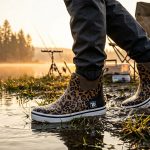
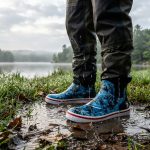
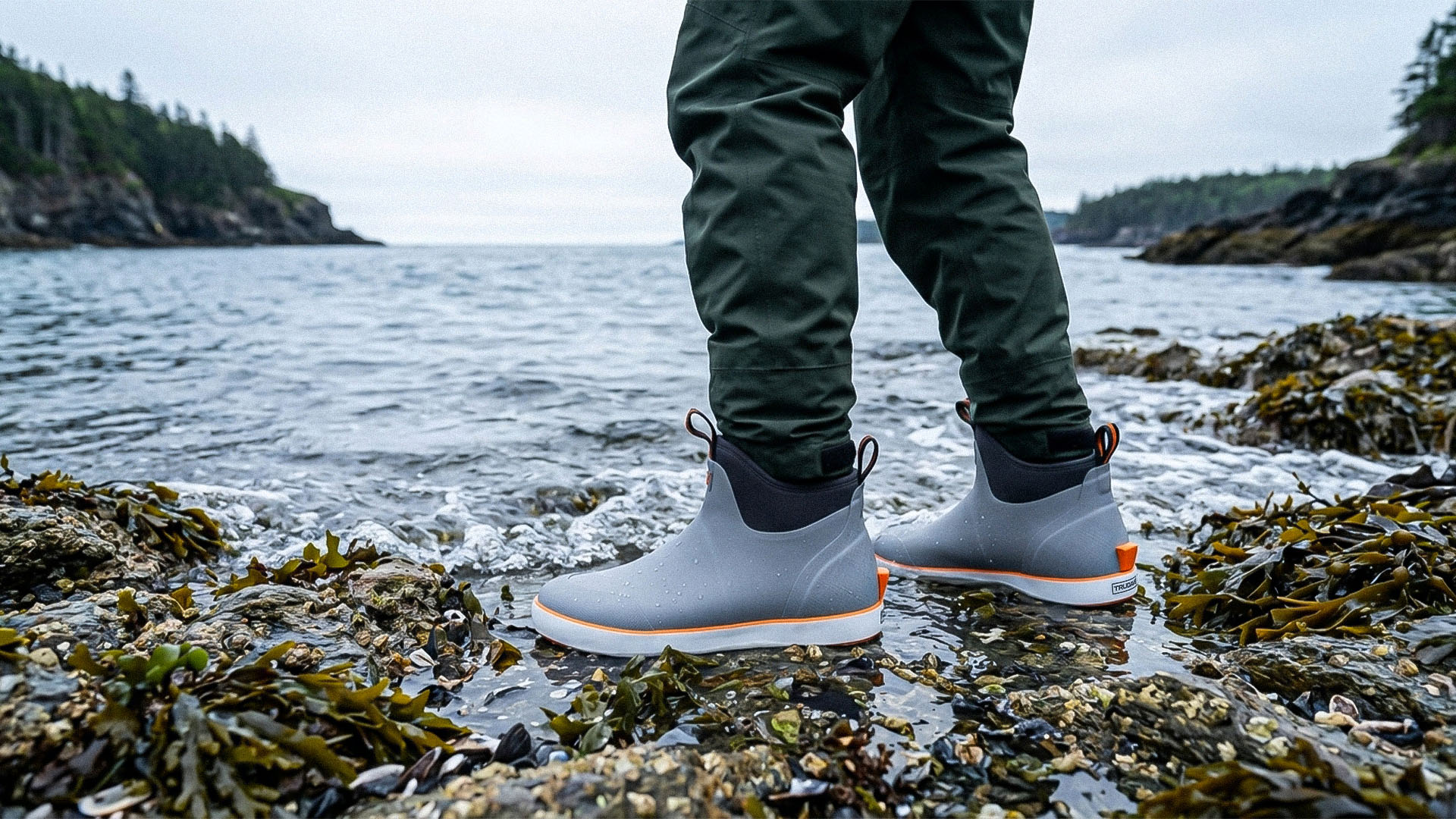
Striped bass fishing is one of the most popular saltwater fishing activities on the Atlantic coast.
From New England beaches to New Jersey surf zones, Chesapeake Bay channels, coastal inlets, bridges, and offshore structures, anglers target striped bass in many different environments.
That variety creates unique footwear challenges.
A striped bass trip may involve:
- Wet boat decks
- Surf spray
- Night fishing
- Bait handling
- Sand
- Mud
- Rocks
- Rain
- Fish slime
- Saltwater
- Long periods of standing
Some anglers spend hours casting from shore while others drift channels, fish bridges, or chase stripers from center consoles.
The best footwear depends heavily on the environment.
For boat-based striped bass fishing, lightweight waterproof deck boots are one of the most practical choices because they provide water protection, easy cleaning, and stable footing on wet surfaces.
For surf and rocky shore anglers, specialized footwear may be more appropriate.
This guide explains how to choose deck boots for striped bass fishing, when they work best, what conditions they handle well, and where another footwear type may be a better option.
Why Striped Bass Fishing Creates Difficult Footwear Conditions
Striped bass anglers often deal with constantly changing environments.
A single trip may include:
- Wet marina docks
- Boat spray
- Bait water
- Fish slime
- Saltwater
- Sand
- Mud
- Rain
- Cold mornings
- Long casting sessions
Footwear that works perfectly on a dry summer afternoon may fail when conditions become wet.
The biggest challenges are usually:
- Keeping feet dry
- Maintaining traction
- Staying comfortable for hours
- Cleaning saltwater and bait residue
Why Deck Boots Work Well for Boat-Based Striped Bass Fishing
Deck boots are especially useful when targeting striped bass from:
- Center consoles
- Bay boats
- Charter boats
- Party boats
- Inshore skiffs
They provide:
- Waterproof protection
- Closed-toe coverage
- Easy cleaning
- Wet-deck stability
- Comfortable standing support
They are particularly valuable during bait fishing, rainy conditions, and early-morning trips.
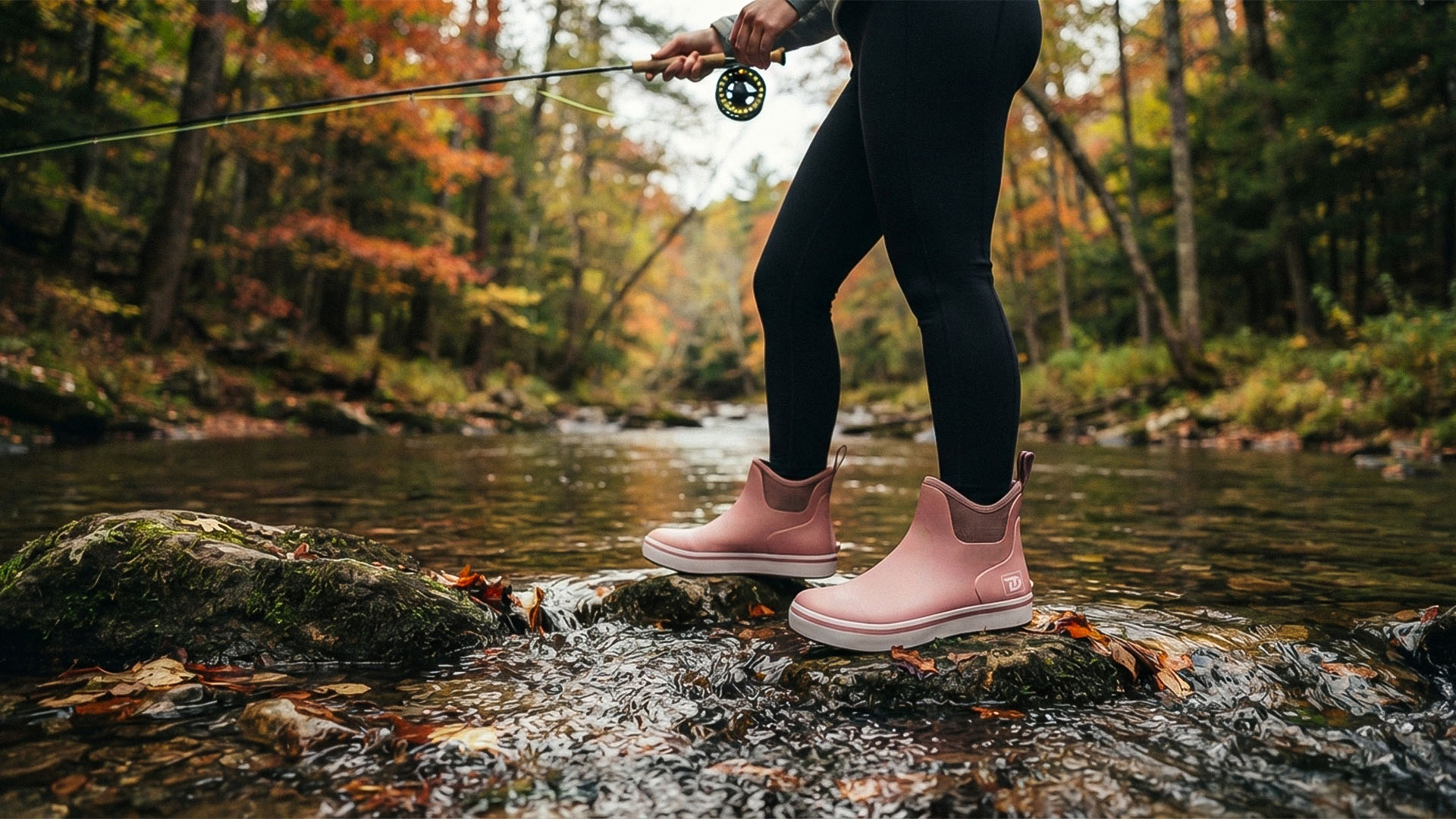
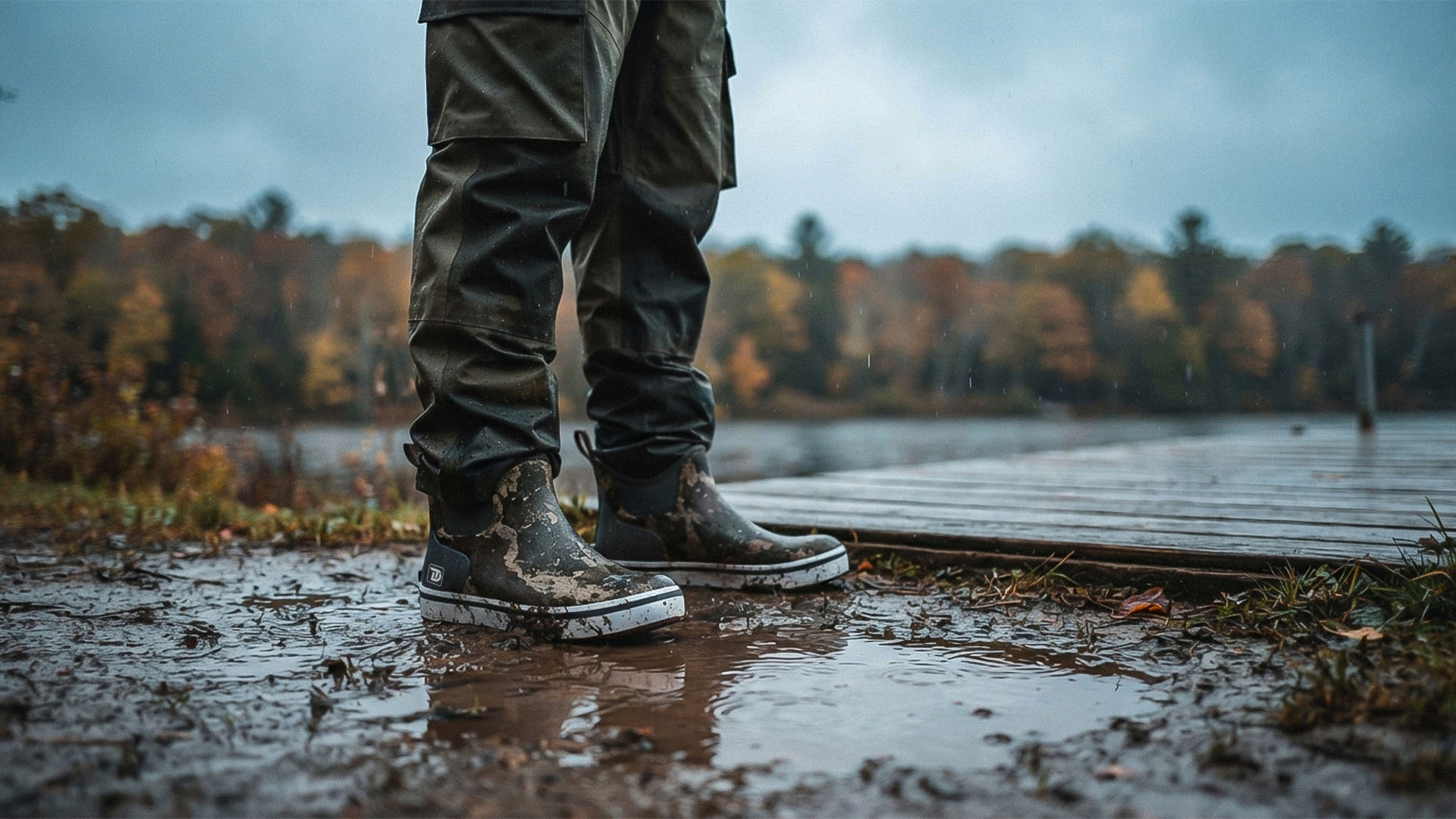
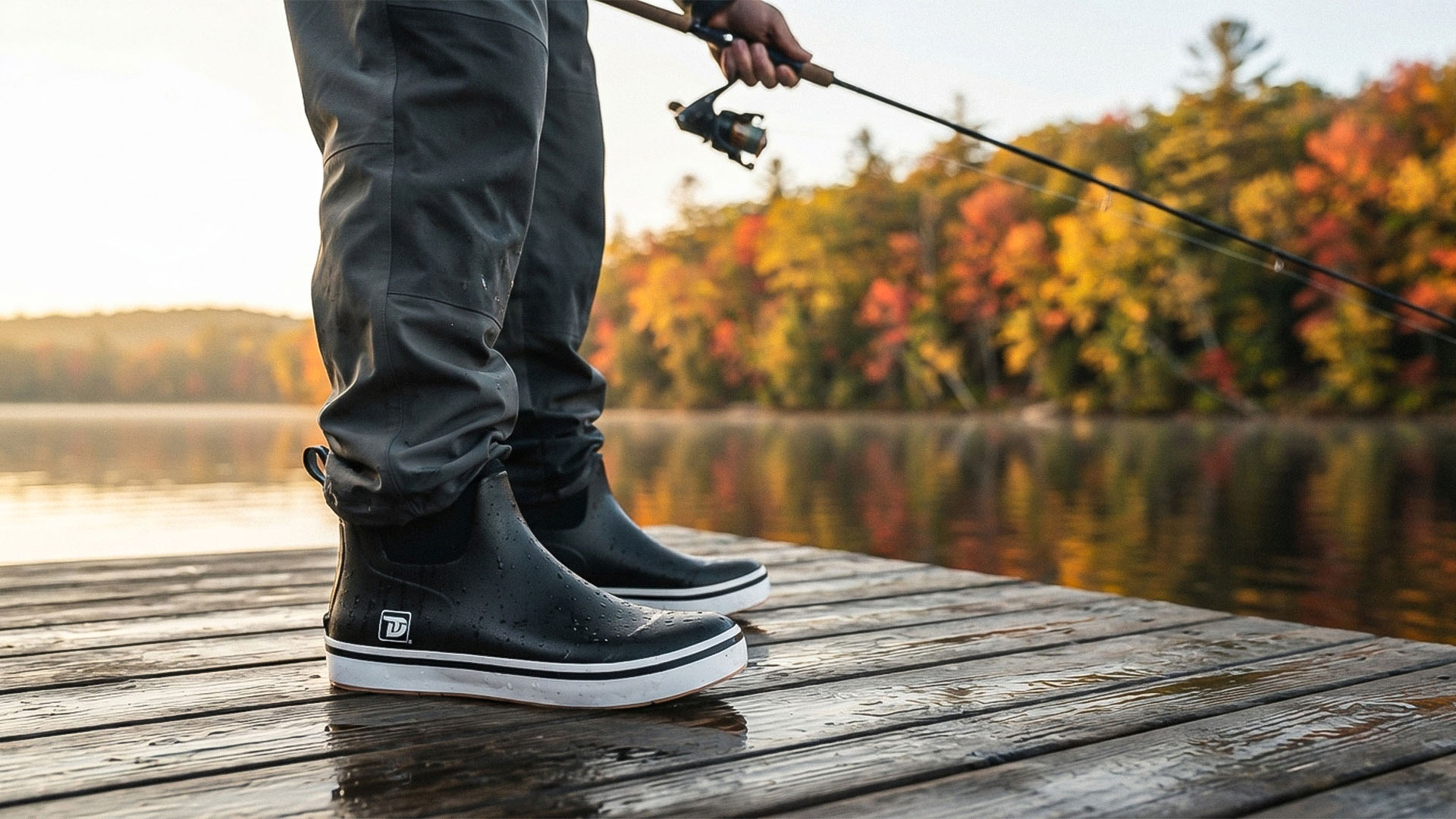
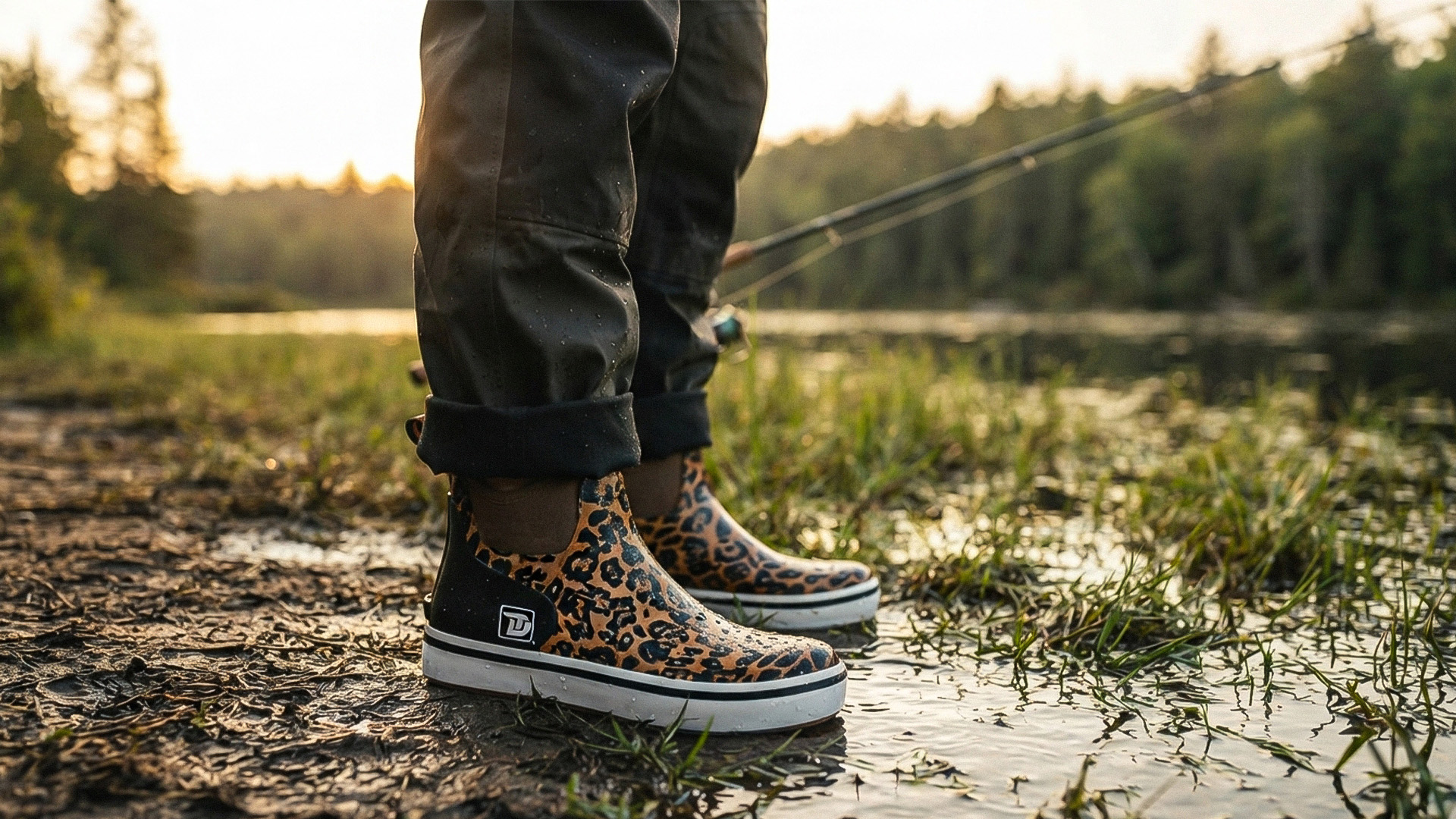
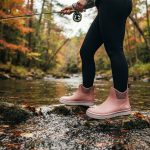
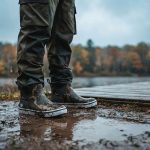
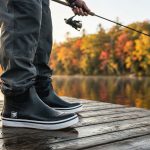
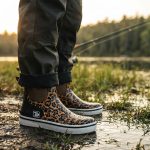
Anglers comparing marine footwear can evaluate TruDaveGear waterproof deck boots alongside other fishing options based on fit, outsole traction, cushioning, removable insoles, boot height, and seasonal conditions.
Boat Striped Bass Fishing
Boat-based striper fishing often involves moving around the cockpit while:
- Casting
- Drifting
- Trolling
- Setting bait
- Fighting fish
The deck may become wet from:
- Spray
- Rain
- Washdowns
- Fish handling
- Cooler drainage
Waterproof deck boots are designed for exactly this type of environment.
Wet Fiberglass Decks
Many striped bass boats use fiberglass decks.
These surfaces can become slippery because of:
- Water
- Fish slime
- Bait residue
- Sunscreen
- Soap
A good deck boot should have:
- Stable contact area
- Flexible outsole
- Good water drainage
- Secure heel fit
However, no boot is completely slip-proof.
Deck cleanliness remains important.
Striped Bass Bait Fishing
Many striped bass anglers use natural bait.
Common bait may include:
- Bunker
- Eels
- Clams
- Squid
- Other legal bait options
Natural bait creates moisture, slime, and odor.
Deck boots are easier to clean compared with fabric sneakers.
This is one of their biggest advantages for bait-focused anglers.
Live Bunker Fishing
Bunker is one of the most recognizable striped bass bait choices in many fisheries.
Handling live bait can create:
- Water spills
- Fish scales
- Slime
- Strong odor
A waterproof boot allows anglers to rinse away residue after the trip.
Fabric footwear may absorb bait water and become difficult to clean.
Eel Fishing for Stripers
Live eel fishing is popular in many striped bass fisheries.
Eels create:
- Water
- Slime
- Organic residue
around bait containers.
Waterproof deck boots make cleanup much easier.
After fishing, rinse the boots immediately to prevent odor buildup.
Night Striped Bass Fishing
Striped bass are often targeted after dark.
Night fishing introduces additional challenges:
- Poor visibility
- Wet decks
- Loose tackle
- Bait containers
- Hooks
- Rods
Closed-toe footwear becomes especially valuable.
However, good lighting and deck organization remain essential.
No boot can make a cluttered dark deck safe.
Cold Weather Striper Fishing
Striped bass fishing often extends into cooler months.
Depending on location, anglers may face:
- Cold wind
- Rain
- Spray
- Wet rocks
- Damp boats
Waterproof deck boots help keep feet dry.
Warmth can be adjusted through sock choice.
In many coastal areas, uninsulated boots paired with proper socks provide more versatility than heavily insulated footwear.
New England Striped Bass Fishing
New England striper anglers deal with:
- Cold mornings
- Tidal currents
- Rocky shorelines
- Wet boats
- Changing weather
Boat anglers may benefit from waterproof deck boots.
Shore anglers need to consider whether they require specialized surf or rock footwear.
New Jersey Striped Bass Fishing
New Jersey offers many striped bass opportunities including:
- Surf fishing
- Bays
- Inlets
- Bridges
- Boats
Boat anglers can benefit greatly from deck boots.
Surf anglers should choose footwear based on sand, waves, and walking distance.
Chesapeake Bay Striped Bass Fishing
Chesapeake Bay anglers often fish from:
- Center consoles
- Bay boats
- Flats boats
Conditions may include:
- Hot summers
- Cold mornings
- Wet decks
- Bait fishing
- Long hours standing
Lightweight uninsulated deck boots are often a practical option.
Surf Fishing and Deck Boots
Surf fishing is different from boat fishing.
Anglers may walk:
- Sand beaches
- Mud flats
- Rocks
- Jetties
Standard deck boots are generally not designed for long-distance surf walking.
Sand can enter easily, and ankle boots may not provide enough support for uneven terrain.
Choose footwear based on the actual environment.
Rocky Shore Fishing
Rocky shorelines create different demands.
You may encounter:
- Wet rocks
- Barnacles
- Uneven surfaces
- Slippery algae
Standard deck boots are not specialized rock shoes.
For technical rock fishing, use footwear designed specifically for that environment.
Bridge Striped Bass Fishing
Many striped bass anglers fish around bridges.
Boat and dock surfaces may become wet from:
- Spray
- Rain
- Tide
- Bait water
Deck boots work well on relatively flat marine surfaces.
Always be careful around wet algae-covered areas.
Long Casting Sessions
Striped bass fishing often involves repeated casting.
This means:
- Standing for hours
- Weight shifting
- Walking short distances
- Repositioning
A comfortable boot should provide:
- Heel support
- Cushioning
- Flexible forefoot
- Secure fit
Foot discomfort can reduce focus during long sessions.
Footwear Fit During Casting
Casting requires balance.
A boot that is too loose may cause:
- Heel movement
- Foot fatigue
- Reduced stability
A boot that is too tight may create:
- Pressure points
- Reduced circulation
- Toe discomfort
The ideal fit keeps the foot controlled without restricting movement.
Sand and Deck Boots
Deck boots can handle some sand exposure, especially around marinas and ramps.
However, sand can become annoying if:
- It enters through the opening
- It collects inside
- It damages boat flooring
After shore use, clean the boots before boarding.
Muddy Launch Areas
Many striped bass boats launch from areas with:
- Mud
- Wet grass
- Sand
- Puddles
Deck boots are useful during launching and retrieval.
They protect feet while keeping your main footwear dry.
Clean mud from the outsole before stepping onto the boat.
Rain During Striper Trips
Coastal weather changes quickly.
Rain can turn a comfortable fishing day into a wet one within minutes.
Waterproof deck boots provide protection during:
- Showers
- Spray
- Wet docks
- Boat washdowns
Wear rain pants outside the boot opening.
Rain Pants and Deck Boots
Do not tuck rain pants inside waterproof boots.
Water may run directly into the opening.
Instead:
- Keep pants outside
- Let the cuff overlap the boot
- Allow water to run down the exterior
This simple setup keeps feet much drier.
Best Socks for Striped Bass Fishing
Good sock materials include:
- Synthetic performance fibers
- Lightweight merino wool
- Merino blends
Avoid cotton.
Cotton absorbs moisture and dries slowly.
For cold mornings, adjust sock thickness rather than choosing extremely heavy boots.
Spare Socks
Bring an extra pair in waterproof storage.
They help after:
- Heavy rain
- Spray
- Water entering from above
- Long humid days
Dry socks can dramatically improve comfort.
Deck Boots vs. Fishing Shoes
Deck Boots Are Better For:
- Wet boats
- Bait fishing
- Rain
- Spray
- Fish slime
- Washdowns
Fishing Shoes Are Better For:
- Hot dry weather
- Long walking
- Maximum airflow
Many anglers choose based on the day’s conditions.
Deck Boots vs. Sneakers
Sneakers may feel comfortable at the beginning of a trip.
After exposure to:
- Saltwater
- Fish slime
- Bait
- Rain
they often become wet and unpleasant.
Deck boots are easier to clean and maintain.
Deck Boots vs. Waders
Waders are designed for entering water.
Deck boots are designed for wet surfaces.
They serve different purposes.
Do not use ankle deck boots for deep surf or extended wading.
Cleaning Striped Bass Slime
Striped bass create slime that can spread around:
- Deck
- Net
- Cooler
- Boots
Clean residue quickly.
Use:
- Fresh water rinse
- Mild soap if needed
- Soft brush
Pay attention to outsole grooves.
Saltwater Care
After every saltwater trip:
- Rinse boots
- Clean tread
- Remove bait residue
- Dry thoroughly
Salt buildup can affect materials over time.
Drying Deck Boots
After fishing:
- Remove insoles.
- Open boots.
- Allow airflow.
- Dry insoles separately.
Avoid:
- Clothes dryers
- Direct high heat
- Open flames
High heat can damage waterproof materials.
Odor Prevention
Striper fishing can create odor from:
- Bait
- Fish slime
- Sweat
- Saltwater
Prevent odor by:
- Cleaning immediately
- Removing insoles
- Drying completely
- Avoiding sealed wet storage
Clean Shoes for the Drive Home
Bring separate shoes for driving.
Store fishing boots in:
- Plastic tote
- Rubber tray
- Washable container
This keeps saltwater and bait residue away from vehicle interiors.
Best Deck Boot Features for Striped Bass Fishing
Look for:
Waterproof Construction
Protects against spray, rain, and bait water.
Lightweight Design
Useful during long casting sessions.
Secure Heel
Improves stability.
Marine Outsole
Helps on wet decks.
Comfortable Cushioning
Important for standing.
Removable Insoles
Improves drying and support.
Easy-Clean Exterior
Useful around bait and fish slime.
Appropriate Height
Ankle boots are usually enough for boat fishing.
Striped Bass Fishing Footwear Checklist
Before fishing:
- Check weather
- Inspect tread
- Choose proper socks
- Pack spare socks
- Organize hooks and rigs
- Bring rain gear
After fishing:
- Rinse saltwater
- Clean bait residue
- Remove slime
- Brush outsole
- Remove insoles
- Dry completely
Common Striped Bass Footwear Mistakes
Wearing Open Sandals Around Hooks and Sinkers
They provide limited protection.
Wearing Cotton Socks
They stay wet longer.
Using Deck Boots for Technical Rock Fishing
They are not specialized rock footwear.
Choosing Heavy Winter Boots for Summer
They create unnecessary heat.
Leaving Fish Slime in the Tread
It reduces traction.
Ignoring Wet Deck Hazards
Even good boots require careful movement.
Storing Wet Boots in a Closed Vehicle
Odor develops quickly.
Final Thoughts
Striped bass fishing covers a huge range of environments, from offshore boats and bridges to beaches and rocky shorelines.
That means footwear choice should match the fishing style.
For boat-based striped bass anglers, lightweight waterproof deck boots provide an excellent balance of protection, comfort, easy cleaning, and wet-deck performance.
They handle bait water, spray, rain, fish slime, and long hours standing better than ordinary sneakers.
Choose boots with a secure heel, stable outsole, comfortable cushioning, removable insoles, and enough room for the socks you plan to wear.
Remember that deck boots are not a replacement for specialized surf boots, wading boots, or rock-fishing footwear.
Use the right tool for the environment.
After every trip, rinse saltwater and bait residue, remove the insoles, and allow the boots to dry completely.
The best striped bass fishing footwear should keep you comfortable and confident while you focus on tides, bait movement, structure, and that unmistakable strike from a powerful coastal predator.
Frequently Asked Questions
Are deck boots good for striped bass fishing?
Yes, especially for boat-based striped bass fishing involving wet decks, bait, spray, and rain.
What boots should I wear for boat striper fishing?
Lightweight uninsulated ankle deck boots are a practical option for many boat trips.
Are deck boots good for surf striped bass fishing?
They can work in limited situations, but specialized surf footwear is often better for long beach walking or deep water.
Are deck boots good for night striped bass fishing?
Yes. Closed-toe waterproof footwear is useful during dark wet fishing conditions.
What socks should I wear with striper deck boots?
Use lightweight synthetic or merino-blend moisture-wicking socks.
Are deck boots good for bunker fishing?
Yes. Waterproof boots are easy to clean after bunker water, scales, and slime.
Can I wear sneakers for striped bass fishing?
You can, but they may absorb saltwater, bait residue, and fish slime.
Are deck boots hook-proof?
No. Keep hooks and rigs organized away from walking areas.
Can deck boots replace wading boots?
No. They are designed for wet surfaces, not extended underwater use.
Are ankle deck boots enough for boat striper fishing?
Yes. They provide good mobility and enough protection for most recreational boat conditions.
Should rain pants go inside deck boots?
No. Keep rain pants outside the boot opening.
How do I clean striped bass slime from deck boots?
Rinse with fresh water, use mild soap if needed, brush the outsole, remove insoles, and dry fully.
Are deck boots good for Chesapeake Bay striped bass fishing?
Yes. Their waterproof protection and comfort make them useful for many Bay boat conditions.
Are deck boots good for New Jersey striper fishing?
Yes for boats, docks, and wet marine environments. Surf anglers may need different footwear.
What is the biggest footwear mistake in striped bass fishing?
Using the wrong footwear for the environment—such as sneakers on wet bait boats or deck boots on technical rocky shorelines—is one of the most common mistakes.