




Meta Description: Learn why deck boots crack around the toe, sole, and ankle, how heat, sunlight, chemicals, poor storage, and wear cause damage, and how to prevent it.
Suggested URL Slug: why-do-deck-boots-crack
Primary Keyword: why do deck boots crack
Secondary Keywords: cracked deck boots, rubber fishing boots cracking, how to prevent deck boots from cracking, deck boot care, waterproof fishing boot damage, fishing boot flex cracks
Search Intent: Informational / Post-Purchase
Deck boots are designed to handle rain, ocean spray, fish slime, muddy boat ramps, wet docks, and repeated cleaning.
However, waterproof construction does not make them indestructible.
Over time, small lines may appear across the toe, around the ankle, near the outsole, or along other areas that bend during walking. Some marks remain cosmetic, while others gradually deepen until the boots begin leaking.
Cracking can result from ordinary wear, but it is often accelerated by heat, ultraviolet exposure, harsh cleaning chemicals, improper drying, poor storage, or using marine footwear on surfaces it was not designed to handle.
The material also matters.
Not every deck boot is made from traditional rubber. Some are constructed with EVA-based compounds, synthetic waterproof materials, neoprene, or combinations of several components. Each material responds differently to heat, flexing, cleaning products, and long-term storage.
This guide explains why deck boots crack, where damage commonly appears, how to distinguish harmless surface marks from structural failure, and how to extend the life of waterproof fishing footwear.
Are All Deck Boots Made From Rubber?
No.
The phrase “rubber fishing boots” is often used broadly, but modern deck boots may contain:
- Natural or synthetic rubber
- EVA-based foam compounds
- Neoprene
- Thermoplastic materials
- Synthetic waterproof uppers
- Rubber outsoles
- Foam midsoles
- Fabric linings
- Adhesives connecting multiple layers
A molded EVA-style boot may feel lighter and softer than a traditional rubber boot.
A neoprene-and-rubber model may offer additional flexibility or warmth.
A multi-part boot may include separate outsole, midsole, and upper materials.
Because construction varies, there is no single care treatment that is safe for every deck boot.
Before applying conditioners, adhesives, solvents, silicone sprays, or waterproof coatings, check the manufacturer’s care instructions.
Why Deck Boots Develop Cracks
Cracking usually occurs when the material can no longer bend and recover normally.
This may happen because of:
- Repeated flexing
- Material aging
- Heat exposure
- Direct sunlight
- Chemical damage
- Abrasive surfaces
- Improper drying
- Incorrect storage
- Poor fit
- Salt and organic residue
- Manufacturing defects
- Punctures that spread over time
Most cracks do not appear suddenly.
They often begin as a small stress line or damaged spot that expands after repeated use.
The Toe Flex Area Is a Common Problem
Every step bends the boot across the forefoot.
This makes the area behind the toes one of the most common places for cracks to develop.
Toe-flex damage may be accelerated by:
- Boots that are too large
- Boots that are too stiff
- Frequent squatting
- Kneeling during boat work
- Long walks on pavement
- Driving in the boots
- Material hardening
- Repeated exposure to heat
When boots are too long, the upper may bend in a location that does not match the natural flex point of the foot.
That creates unnecessary folding and stress.
Inspect the forefoot while gently bending the boot.
A line that opens during flexing may be more serious than a mark that remains closed.
Cracks Around the Outsole
Damage may also develop where the upper meets the outsole or midsole.
This area experiences:
- Repeated bending
- Side-to-side pressure
- Water exposure
- Dirt accumulation
- Adhesive stress
- Abrasion from docks and concrete
Early signs may include:
- Small gaps
- Dirt collecting along the edge
- Flexible sections
- Clicking while walking
- Moisture entering near the sole
- Visible separation
Outsole separation is not always the same as material cracking, but both can compromise waterproof performance.
Once a gap begins collecting water, salt, sand, and debris, the damage may progress more quickly.
Ankle and Collar Cracking
The ankle area bends when you:
- Walk
- Climb stairs
- Squat
- Drive
- Step over boat seats
- Use trolling-motor pedals
- Remove the boots
Cracking around the collar may be caused by repeated folding or pulling.
It may also happen when users step on the back of the boot instead of removing it correctly.
Pull tabs are designed to assist entry, but excessive force can damage the attachment area.
If the boots are difficult to put on or remove, the fit may be too tight around the instep.
Do not repeatedly force the material beyond its normal range.
Heat Is One of the Biggest Causes of Premature Damage
High temperatures can change the properties of rubber, foam, adhesives, and synthetic materials.
Repeated heat exposure may cause boots to:
- Harden
- Warp
- Shrink
- Lose flexibility
- Separate at bonded areas
- Develop surface cracks
- Change shape
- Become brittle
One of the most damaging storage locations is a closed vehicle.
A truck cab, car trunk, or enclosed cargo area can become much hotter than the outdoor temperature.
Leaving deck boots inside a vehicle for days or weeks may accelerate aging even when the boots are not being worn.
Do Not Leave Deck Boots Near a Heater
After a wet fishing trip, it may be tempting to place boots beside a space heater or heating vent.
This can dry the surface quickly, but it may also damage the structure.
Avoid placing deck boots:
- On radiators
- Beside space heaters
- Over floor vents
- Near wood stoves
- Near open flames
- Inside clothes dryers
- Under high-temperature hair dryers
Gentle airflow is safer than intense heat.
Remove the insoles and allow the interior to dry naturally or with a compatible no-heat boot dryer.
Direct Sunlight Can Age Boot Materials
Ultraviolet exposure may gradually affect rubber and synthetic compounds.
Long-term exposure can lead to:
- Fading
- Surface chalking
- Hardening
- Loss of flexibility
- Fine cracking
Wearing deck boots in sunlight during normal fishing is expected.
The larger problem is using direct sun as a permanent drying or storage method.
Do not leave boots on an exposed dock, porch, boat deck, roof, or truck bed for extended periods.
Dry and store them in a shaded location with airflow.
Saltwater Residue Can Contribute to Wear
Saltwater exposure alone does not mean deck boots will crack immediately.
The problem develops when salt residue is allowed to remain on the material.
As seawater evaporates, deposits may collect around:
- Flex points
- Tread grooves
- Boot openings
- Pull tabs
- Surface textures
- Outsole connections
Salt buildup can make surfaces feel rough or stiff.
It may also hide small defects.
Rinse boots with fresh water after every saltwater trip.
Cleaning makes it easier to inspect the material and prevents layers of residue from accumulating.
Fish Blood, Slime, and Bait Should Be Removed
Organic fishing residue can remain sticky or oily.
It may trap dirt and make cleaning more difficult later.
Residue can also collect inside existing cracks and outsole gaps.
After fishing:
- Rinse the boots with fresh water.
- Use a small amount of mild soap when necessary.
- Brush the outsole.
- Remove the insoles.
- Dry everything completely.
Avoid allowing fish blood, bait, or chum to dry on the footwear.
Harsh Cleaning Chemicals Can Damage Deck Boots
Strong cleaners may break down the compounds, coatings, or adhesives used in waterproof footwear.
Potentially damaging products include:
- Paint thinner
- Acetone
- Gasoline
- Brake cleaner
- Industrial degreasers
- Concentrated bleach
- Strong acids
- Undiluted household chemicals
- Unapproved mold removers
Some chemicals may make the material look clean temporarily while reducing flexibility or weakening bonded areas.
Use mild soap and fresh water for ordinary cleaning.
Use specialized products only when they are approved for the specific boot material.
Bleach Is Not a Universal Boot Cleaner
Bleach may seem useful for white boots, blood stains, or odor.
However, it can potentially affect:
- Color
- Linings
- Foam
- Rubber compounds
- Adhesives
- Elastic components
Do not use bleach simply because the exterior appears to be rubber.
Check the manufacturer’s recommendations first.
A cosmetic stain is usually less serious than structural damage caused by aggressive stain removal.
Random Rubber Conditioners May Cause Problems
Some rubber products benefit from specific conditioners.
Others may react poorly to oils, silicone, petroleum-based products, automotive protectants, or tire treatments.
An unapproved conditioner may:
- Change surface texture
- Attract dirt
- Soften material excessively
- Damage adhesives
- Make the outsole slippery
- Leave residue on boat decks
Never apply a conditioner to the outsole unless the product is specifically intended for that use.
A slippery treatment on marine tread can create a serious hazard.
Rough Concrete Wears Marine Footwear Faster
Deck boots are primarily designed for boats, docks, marinas, and other wet environments.
Repeated walking on rough concrete can cause:
- Outsole abrasion
- Thin tread
- Edge damage
- Increased flex stress
- Small cuts
- Uneven heel wear
Marina parking lots, sidewalks, warehouses, and concrete piers may wear softer marine compounds faster than boat decks.
When a long walk is required, consider wearing regular walking shoes and changing into deck boots at the boat.
This can preserve marine tread and reduce unnecessary flexing.
Rocks and Gravel Can Cut the Material
Sharp gravel, oyster shells, rocks, metal debris, and damaged docks can create small punctures or cuts.
A minor cut may expand when it is located near a flex point.
After walking through rough areas, inspect:
- Sidewalls
- Toe edges
- Heel edges
- Outsole grooves
- Lower upper material
Remove embedded stones and sharp objects carefully.
A hook or shell fragment left inside the tread may work deeper into the boot during future use.
Poor Fit Can Cause Cracking
Footwear that does not fit properly may bend in the wrong places.
Boots That Are Too Large
Oversized boots can create:
- Excessive forefoot folding
- Heel movement
- Sidewall collapse
- Uneven outsole wear
- Extra stress during stairs and squatting
Boots That Are Too Small
Tight boots can create:
- Material stretching
- Pressure around the instep
- Sidewall stress
- Difficulty putting them on
- Excessive pulling on tabs
- Pressure from toes against the front
Deck boots should fit securely without restricting circulation.
The toe box should provide movement without excessive empty space.
Thick Socks Can Change the Stress on the Boot
Adding very thick socks to a close-fitting boot may increase pressure against the upper.
This is especially important with insulated socks or layered winter sock systems.
Signs the setup is too tight include:
- Toe numbness
- Instep pressure
- Difficulty removing the boots
- Deep sock marks
- Feet becoming colder
- Material stretching around the opening
Choose a boot with appropriate internal volume rather than forcing thick socks into a tight size.
Incorrect Removal Can Damage the Heel
Some people remove pull-on boots by stepping on one heel with the other foot.
This can crush and deform the rear structure.
Repeatedly doing so may cause:
- Heel cracking
- Collar collapse
- Surface cuts
- Outsole separation
- Damaged pull tabs
Use your hands, a manufacturer-approved heel ledge, or a suitable boot jack.
Avoid using sharp tools to pry the boots off.
Folding Boots for Storage Creates Stress Lines
Deck boots should be stored in their natural shape.
Do not fold, roll, or crush them to save space.
Repeated folding can create permanent stress points that later crack.
Avoid placing heavy objects on top of the boots.
Store them:
- Upright
- In a cool location
- Away from direct sunlight
- Away from heaters
- With adequate airflow
- Separate from sharp equipment
Low-profile boots require less space than tall rubber boots, but they still need protection from crushing.
Storing Boots While Wet Causes More Than Odor
Damp storage is commonly associated with smell and mildew, but it can also affect material condition.
Water trapped inside may remain around:
- Linings
- Foam
- Insoles
- Outsole connections
- Small surface damage
Wet boots should not be stored inside:
- Sealed plastic bags
- Closed storage bins
- Vehicle trunks
- Unventilated boat lockers
- Gear bags
- Damp closets
Allow everything to dry before long-term storage.
Insulated Boots Need More Drying Time
Insulated deck boots contain additional materials that retain moisture.
The exterior may feel dry while the lining remains damp.
Before storage:
- Remove the insoles.
- Open the boots as much as possible.
- Use gentle airflow.
- Check the toe and heel areas.
- Confirm the insulation is fully dry.
Damp insulation can create odor, feel colder on the next trip, and hide developing damage.
Repeated Wet-and-Dry Cycles Cause Normal Aging
Fishing boots are designed to get wet.
However, repeated cycles of wetting, drying, bending, cleaning, heating, and cooling gradually affect the material.
This is normal aging.
You can slow the process by:
- Rinsing saltwater
- Avoiding harsh heat
- Drying fully
- Using the correct footwear for the terrain
- Storing properly
- Rotating pairs during frequent use
- Inspecting damage early
No cleaning routine can make deck boots last forever.
The goal is to prevent avoidable damage.
Material Aging Can Occur Even Without Heavy Use
A pair of deck boots may crack after years of storage even when it was not worn often.
Materials can change because of:
- Heat
- Ozone
- Ultraviolet light
- Humidity
- Chemical fumes
- Poor storage
- Natural aging
Garages and sheds may expose footwear to fuel, solvents, fertilizers, pesticides, and extreme temperature changes.
Store boots away from chemical containers and machinery exhaust.
Inspect seasonal footwear before relying on it offshore.
What Does Normal Surface Creasing Look Like?
Not every visible line is a structural crack.
Normal creasing may appear where the boot flexes during walking.
A surface crease usually:
- Remains shallow
- Does not open during flexing
- Does not expose another layer
- Does not allow water inside
- Does not grow rapidly
- Appears evenly across the flex area
Clean the boot and inspect it under good lighting.
Monitor the line over time.
Taking a photo can help you determine whether it is spreading.
What Does a Serious Crack Look Like?
A structural crack may:
- Open when the boot bends
- Extend through the upper
- Expose lining or foam
- Produce a leak
- Grow after each use
- Collect dirt inside
- Appear near sole separation
- Change the shape of the boot
A serious crack should not be ignored.
Water can enter gradually, and the damage may spread during a long trip.
Replace the boot when waterproof performance or structural stability can no longer be trusted.
How to Test Whether a Crack Is Leaking
Begin with clean, completely dry boots.
Inspect the suspected area.
A controlled shallow-water test may help, provided it is consistent with the manufacturer’s guidance.
Avoid filling or submerging the boot above its intended height.
Check for moisture around:
- Toe flex areas
- Sidewalls
- Heel
- Outsole connection
- Punctures
Remember that wet socks can also result from sweat or water entering through the opening.
Confirm the source before deciding the upper has failed.
Can Cracked Deck Boots Be Repaired?
Minor damage may be repairable when the manufacturer recommends a compatible product or process.
Repair success depends on:
- Material type
- Crack location
- Crack depth
- Flexing
- Surface preparation
- Adhesive compatibility
- Extent of damage
A patch on a non-flexing sidewall may perform differently from a repair across the toe crease.
Avoid using random super glue, construction adhesive, tire sealant, or household caulk.
These products may harden, separate, damage the boot, or create a sharp edge.
Repairs on Flex Areas Often Fail Faster
The forefoot bends during every step.
A repair material applied there must bend repeatedly without separating.
Rigid adhesives may crack immediately.
Soft adhesives may not bond to the specific boot compound.
A repaired boot may be acceptable for light yard work but unsuitable for offshore fishing, cold weather, or long trips where a failure would create a major problem.
Assess the risk, not just the appearance of the patch.
Outsole Separation Is Difficult to Repair Reliably
When the outsole begins separating from the upper, water and debris can enter the gap.
A home repair may not restore:
- Original alignment
- Full waterproofing
- Flexibility
- Traction
- Structural support
Manufacturer-approved repair may be possible for minor separation.
Major gaps, warped soles, or widespread adhesive failure usually indicate that replacement is the better option.
Do Not Repair Worn Tread With Coatings
Some products claim to add grip to worn footwear.
Applying an unknown coating to a marine outsole may create unpredictable traction.
It may:
- Peel off
- Become slippery
- Damage the rubber
- Leave residue on the deck
- Change flexibility
- Collect debris
When the tread is significantly worn, replace the boots.
Traction is a critical performance feature, not a cosmetic detail.
When Cracked Boots Should Be Replaced
Replace deck boots when:
- Cracks leak
- Cracks continue growing
- The material has become brittle
- The outsole is separating
- Tread is significantly worn
- The boot shape has collapsed
- Heel stability is reduced
- The lining is exposed
- Multiple cracks are present
- Repairs repeatedly fail
Do not keep unreliable boots for offshore or cold-weather use.
A small leak becomes a larger problem when the boat is far from shore.
Can Cracked Boots Be Used for Yard Work?
A worn pair may still be useful for light chores when:
- The tread remains stable
- The outsole is attached
- The boots are comfortable
- No safety hazard is present
- Waterproofing is not essential
Do not use cracked deck boots for:
- Chemical handling
- Electrical work
- Deep mud
- Industrial hazards
- Chainsaw work
- Severe weather
- Slippery marine decks
Old footwear should not be reassigned to work that requires greater protection than fishing.
How to Prevent Deck Boots From Cracking
Use these habits consistently.
Rinse After Saltwater Use
Fresh water removes salt and fish residue.
Use Mild Soap
Avoid aggressive chemicals unless approved.
Dry With Airflow
Remove the insoles and avoid high heat.
Store in the Shade
Protect boots from direct sunlight and vehicle heat.
Keep Their Natural Shape
Do not fold or crush them.
Wear the Correct Size
Poor fit creates abnormal flexing.
Use Them on Appropriate Surfaces
Limit unnecessary concrete and rocky walking.
Remove Them Correctly
Do not crush the heel.
Inspect Regularly
Small damage is easier to notice when boots are clean.
A Post-Fishing Care Routine
After each trip:
- Remove mud, fish scales, hooks, and debris.
- Rinse with fresh water.
- Apply mild soap when needed.
- Brush the outsole.
- Remove wet insoles.
- Inspect toe flex areas.
- Check the sole connection.
- Dry with shaded airflow.
- Store only when fully dry.
This routine takes less time than repairing neglected damage later.
A Monthly Inspection for Frequent Anglers
Anglers who fish weekly should perform a more detailed inspection.
Check:
- Toe creases
- Ankle flex areas
- Pull tabs
- Heel structure
- Outsole edges
- Tread depth
- Interior lining
- Insole compression
- Waterproof performance
Compare both boots.
Uneven wear may reveal a walking, driving, or boat-control pattern.
Seasonal Storage Checklist
Before storing boots for several months:
- Clean thoroughly
- Remove saltwater residue
- Dry the interior
- Dry the insoles
- Inspect for cracks
- Check outsole separation
- Store upright
- Keep away from sunlight
- Avoid hot garages when possible
- Keep away from chemicals
- Do not seal in plastic
At the beginning of the next season, inspect them again before the first trip.
Rotating Two Pairs Can Reduce Continuous Stress
Guides, captains, marina workers, and frequent anglers may benefit from rotating footwear.
A second pair allows each boot more time to:
- Dry
- Release moisture
- Recover from cushioning compression
- Be cleaned
- Be inspected
Rotation may also allow you to use different footwear for different conditions.
For example:
- Uninsulated ankle boots for warm weather
- Insulated boots for cold trips
- Hiking footwear for rough access
- Tall rubber boots for deep washdowns
Choosing Replacement Deck Boots
When replacing cracked footwear, consider why the original pair failed.
Ask:
- Were the boots left in a hot vehicle?
- Was the size correct?
- Did they bend in the wrong place?
- Were harsh chemicals used?
- Was the outsole used mostly on concrete?
- Were they stored while wet?
- Was the boot material appropriate for the climate?
- Was more height required?
- Was the boot used for industrial work?
Understanding the cause helps prevent the same problem with the next pair.
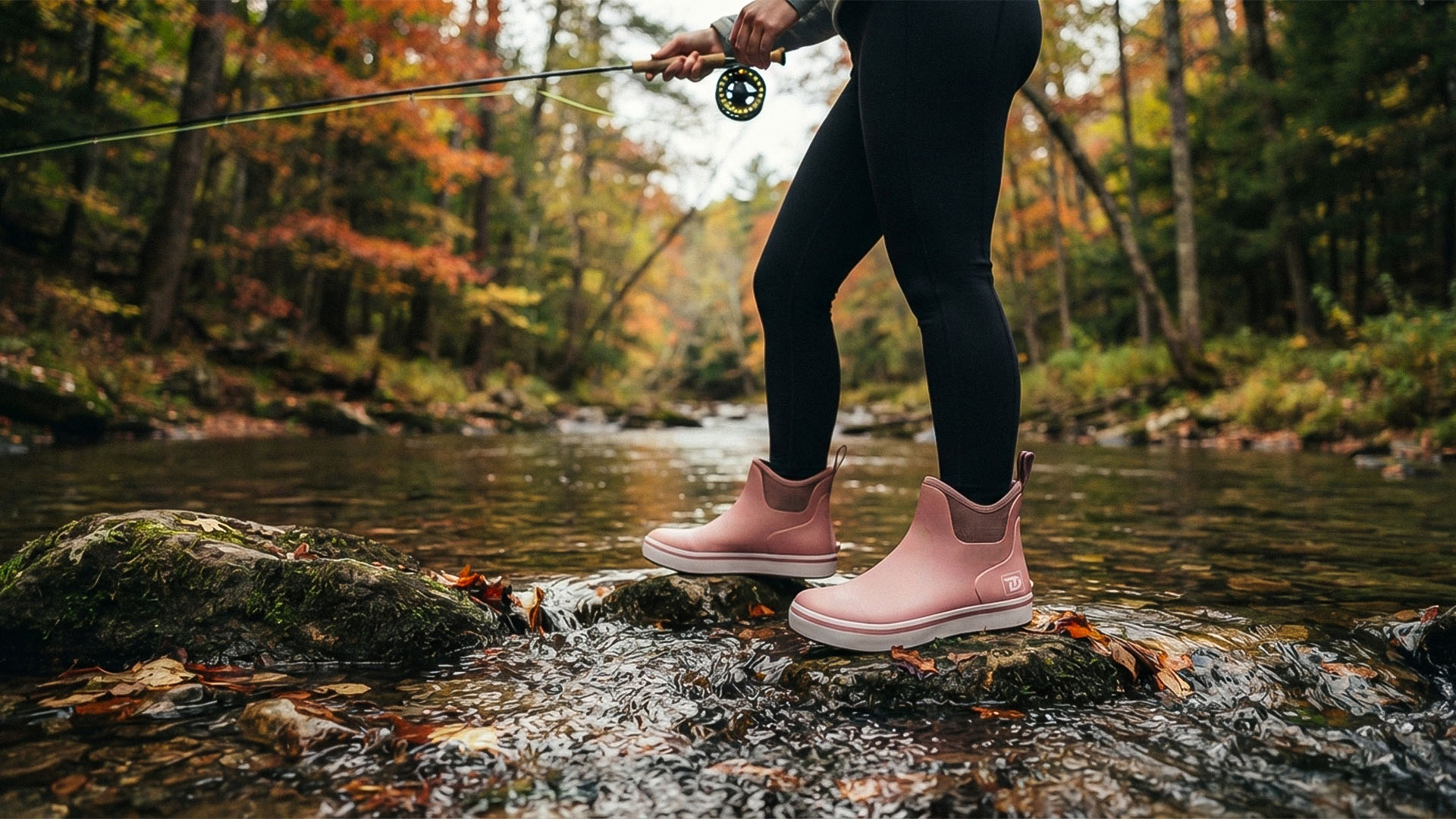
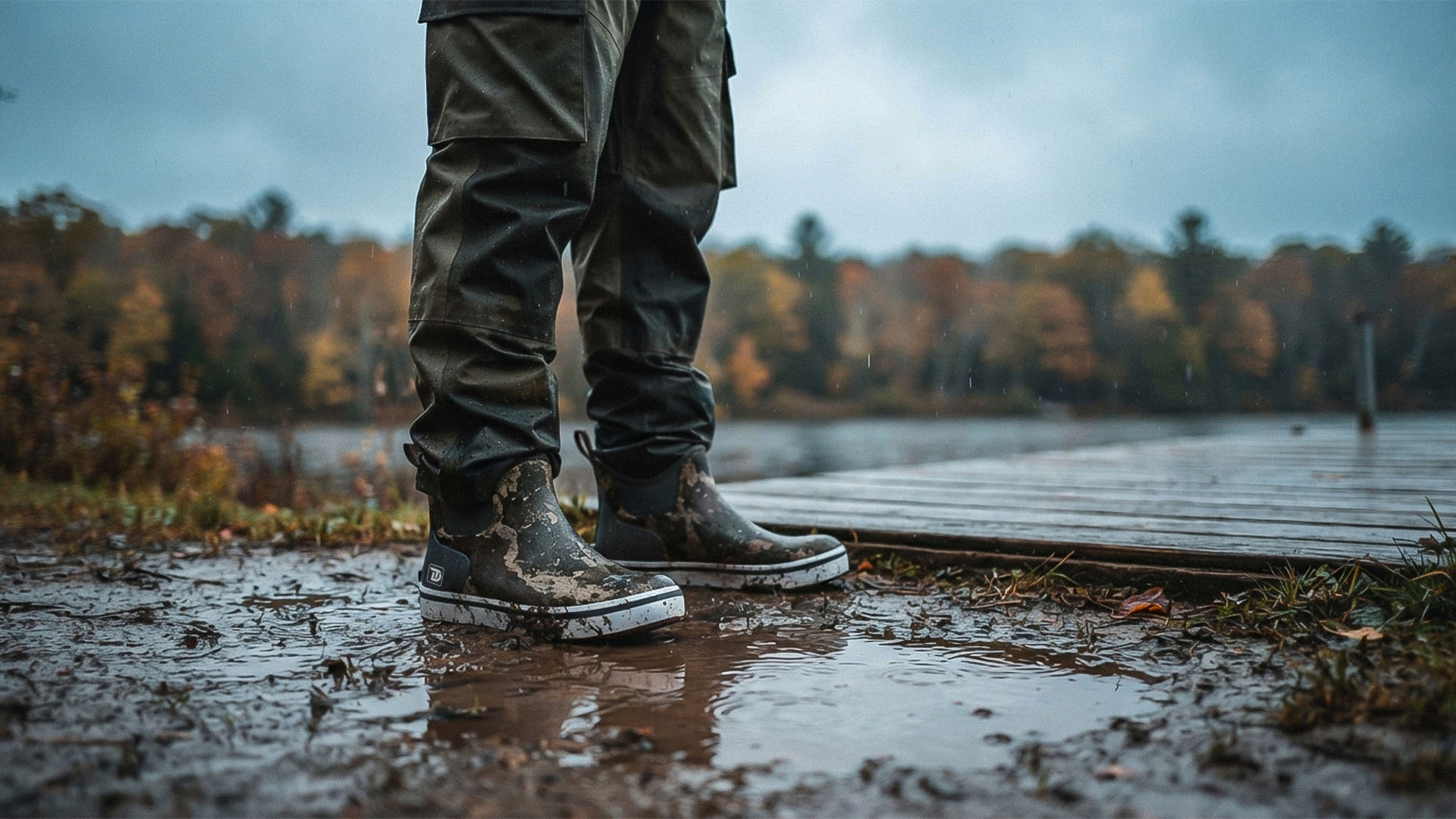
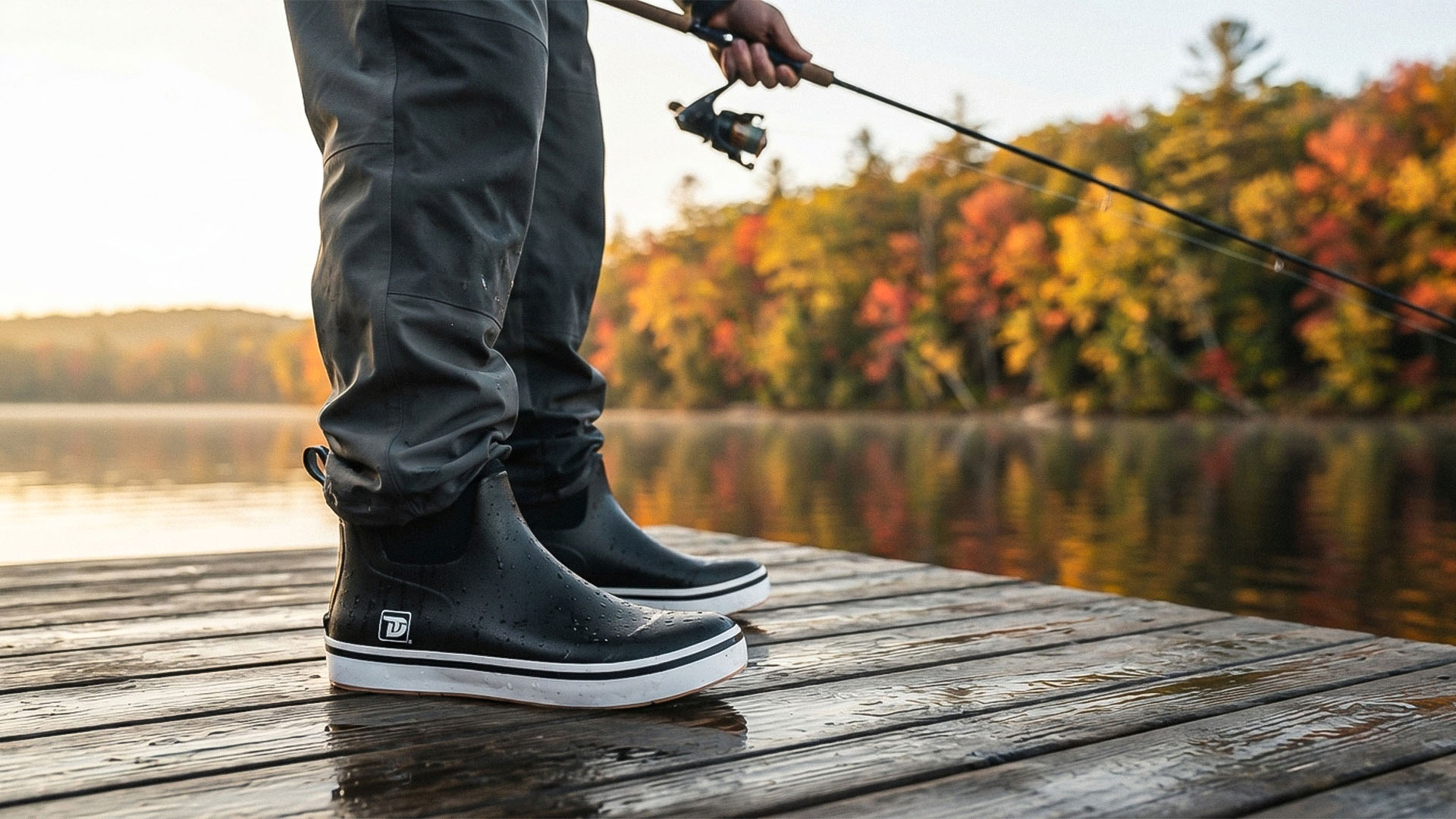
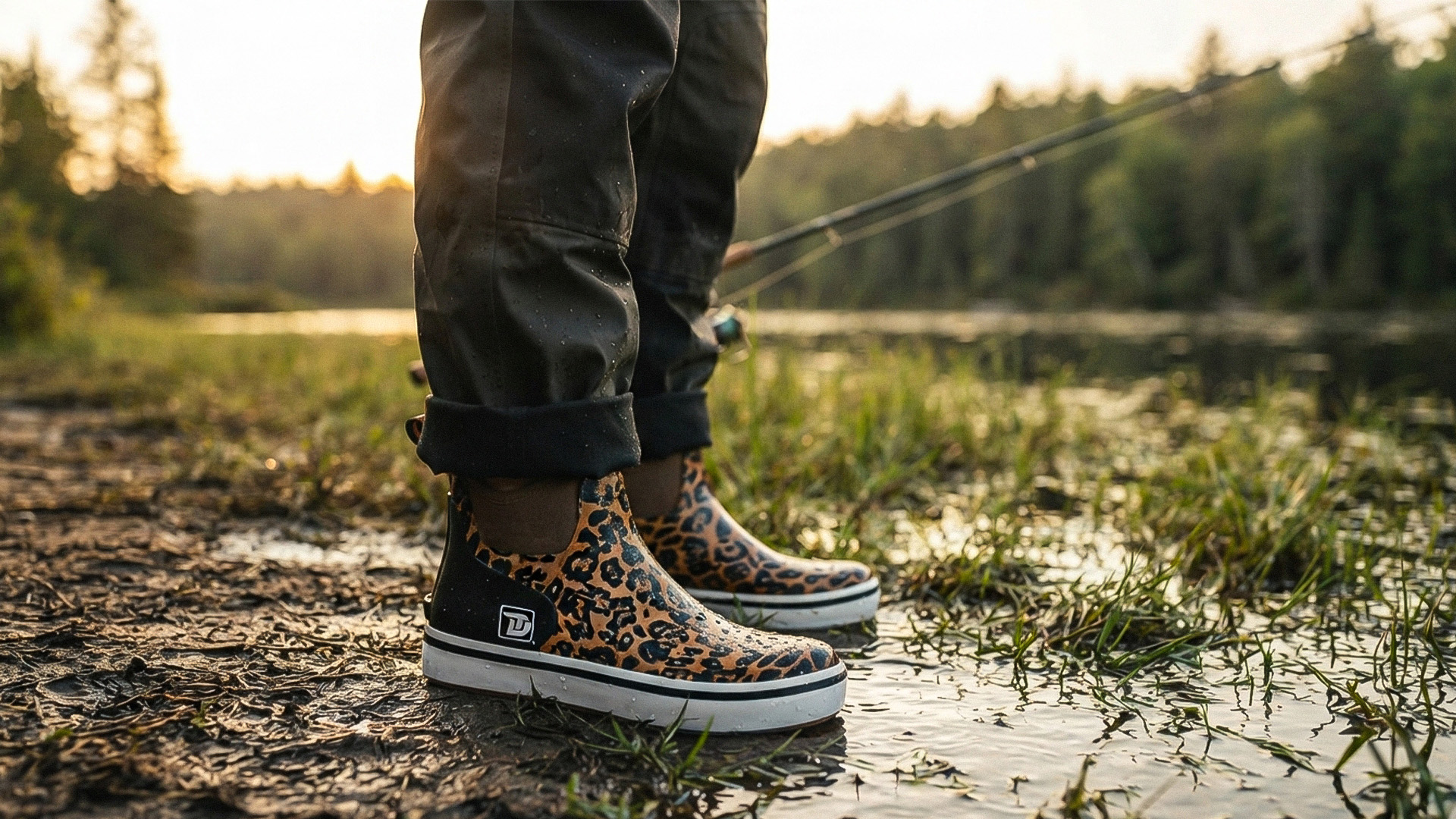
Anglers comparing replacement options can review TruDaveGear waterproof deck boots alongside other fishing-specific footwear based on construction, fit, outsole design, cushioning, boot height, and care requirements.
Deck Boot Buying Features That May Improve Longevity
Look for:
- Correct foot shape
- Secure heel cup
- Adequate toe room
- Flexible forefoot
- Removable insoles
- Appropriate outsole compound
- Easy-to-clean upper
- Strong pull tabs
- Clear care instructions
- Suitable warranty or return policy
The heaviest boot is not automatically the most durable.
A well-fitting boot used on its intended surface may last longer than a heavier model that bends incorrectly or creates excessive fatigue.
Common Deck Boot Cracking Mistakes
Leaving Boots in a Hot Vehicle
Heat can harden, warp, or weaken materials.
Drying Them Beside a Heater
Fast drying may damage the upper and adhesives.
Storing Them in Direct Sun
Ultraviolet exposure contributes to aging.
Using Harsh Solvents
Strong chemicals may reduce flexibility.
Folding Boots in a Storage Bin
Permanent stress lines can develop.
Buying the Wrong Size
Incorrect flex points increase wear.
Walking Long Distances on Concrete
Abrasive surfaces wear marine compounds.
Stepping on the Heel to Remove Them
The rear structure may collapse or crack.
Ignoring Small Cuts
Cuts near flex points may spread.
Repairing With Random Adhesive
The wrong product may make the damage worse.
Deck Boot Crack Inspection Checklist
Exterior
- Are there visible cracks?
- Do they open when flexed?
- Is the material hard or brittle?
- Are there cuts or punctures?
- Are pull tabs damaged?
Sole
- Is the outsole separating?
- Are tread grooves worn?
- Are edges peeling?
- Is the heel uneven?
- Is debris trapped in gaps?
Interior
- Is lining visible through a crack?
- Does the interior become wet?
- Is the heel structure collapsing?
- Are the insoles damaged?
Performance
- Do the boots leak?
- Is traction reduced?
- Has the fit changed?
- Do they feel unstable?
- Are they less comfortable than before?
Final Thoughts
Deck boots crack when the material loses its ability to bend and recover normally.
Some cracking results from ordinary aging and repeated use.
However, damage is often accelerated by high heat, vehicle storage, direct sunlight, harsh chemicals, aggressive drying, incorrect fit, rough concrete, sharp terrain, and folding or crushing the footwear.
Rinse deck boots after saltwater fishing.
Use mild soap.
Remove the insoles.
Dry everything with gentle airflow.
Avoid heaters, clothes dryers, strong solvents, and long-term storage in hot vehicles.
Store the boots upright in a cool, shaded, ventilated location.
Inspect the toe flex area, ankle, pull tabs, heel, tread, and outsole connection regularly.
A shallow surface crease may be normal.
A crack that opens, spreads, exposes internal material, or allows water inside is a sign of structural damage.
Minor manufacturer-approved repairs may work in limited situations.
Major cracks, brittle material, worn tread, and outsole separation usually require replacement.
Proper care cannot stop all aging, but it can prevent avoidable damage and help your deck boots remain waterproof, flexible, and dependable for more fishing seasons.
Frequently Asked Questions
Why are my deck boots cracking?
Common causes include repeated flexing, material aging, heat, sunlight, harsh cleaning products, incorrect sizing, rough walking surfaces, improper drying, and poor storage.
Why do deck boots crack across the toes?
The toe area bends during every step. Incorrect sizing, stiff material, excessive walking, squatting, and heat-related hardening can increase stress at the flex point.
Can cracked deck boots still be waterproof?
Small surface marks may not leak, but structural cracks can allow water inside. Inspect the area and perform only manufacturer-approved testing.
Can deck boot cracks be repaired?
Minor damage may be repairable with a product approved for the specific material. Cracks in high-flex areas, major leaks, and widespread damage are less likely to remain reliable.
Can I use super glue on cracked fishing boots?
Random household adhesives are not recommended. They may become rigid, fail during flexing, or damage the boot material. Follow manufacturer repair guidance.
Does saltwater cause rubber boots to crack?
Saltwater residue can contribute to buildup and material stress when it is not rinsed away. Wash boots with fresh water after saltwater trips.
Can sunlight make deck boots crack?
Long-term ultraviolet and heat exposure may cause some materials to fade, harden, and lose flexibility. Store boots away from direct sunlight.
Is it bad to leave deck boots in a truck?
Yes. Vehicle interiors can become extremely hot, potentially damaging rubber, foam, adhesives, and boot shape.
Can I dry deck boots beside a heater?
Direct heat is not recommended. Remove the insoles and use shaded airflow or a compatible no-heat boot dryer.
Why are my boots cracking near the sole?
Repeated flexing, abrasion, adhesive failure, heat, trapped debris, or outsole separation may cause damage near the sole connection.
Should I replace boots with small cracks?
Monitor shallow surface marks. Replace the boots when cracks open, grow, leak, expose internal material, or affect stability.
How should I store deck boots?
Store them clean, completely dry, upright, and away from sunlight, heaters, chemicals, heavy objects, and sealed containers.
Can rough concrete damage deck boots?
Yes. Repeated use on abrasive concrete may wear marine outsoles and increase stress on the upper.
Does folding deck boots cause cracking?
Repeated folding or crushing may create permanent stress points that later crack. Store boots in their natural shape.
How can I make deck boots last longer?
Use the correct size, rinse after fishing, clean with mild soap, dry without high heat, store in a cool shaded location, avoid rough surfaces, and inspect damage regularly.