Meta Description: Compare deck boots vs. muck boots for fishing, boating, yard work, mud, cold weather, rain, comfort, traction, and everyday outdoor use.
Suggested URL Slug: deck-boots-vs-muck-boots
Primary Keyword: deck boots vs muck boots
Secondary Keywords: deck boots or muck boots, fishing deck boots vs muck boots, waterproof boots for fishing, boots for muddy yard, deck boots for rain, best waterproof outdoor boots
Search Intent: Commercial Investigation / Informational
Deck boots and muck-style boots are both waterproof, pull-on footwear designed for wet outdoor conditions.
At first glance, they may appear to serve the same purpose.
Both can handle rain, mud, wet grass, puddles, and messy outdoor work. Both are easier to clean than ordinary fabric shoes. Both are commonly worn by anglers, boat owners, farmers, gardeners, hunters, and homeowners.
The difference is where each type performs best.
Deck boots are generally shorter, lighter, and designed for mobility on wet boat decks, docks, and hard surfaces. Muck-style boots are usually taller and built for mud, deeper water, cold weather, farms, and rougher outdoor conditions.
Choosing between deck boots and muck boots depends on how much water coverage you need, how far you plan to walk, the surfaces you encounter, and whether warmth or lightweight mobility matters more.
This guide compares deck boots vs. muck boots for fishing, yard work, rain, mud, cold weather, and everyday use.
What Are Deck Boots?
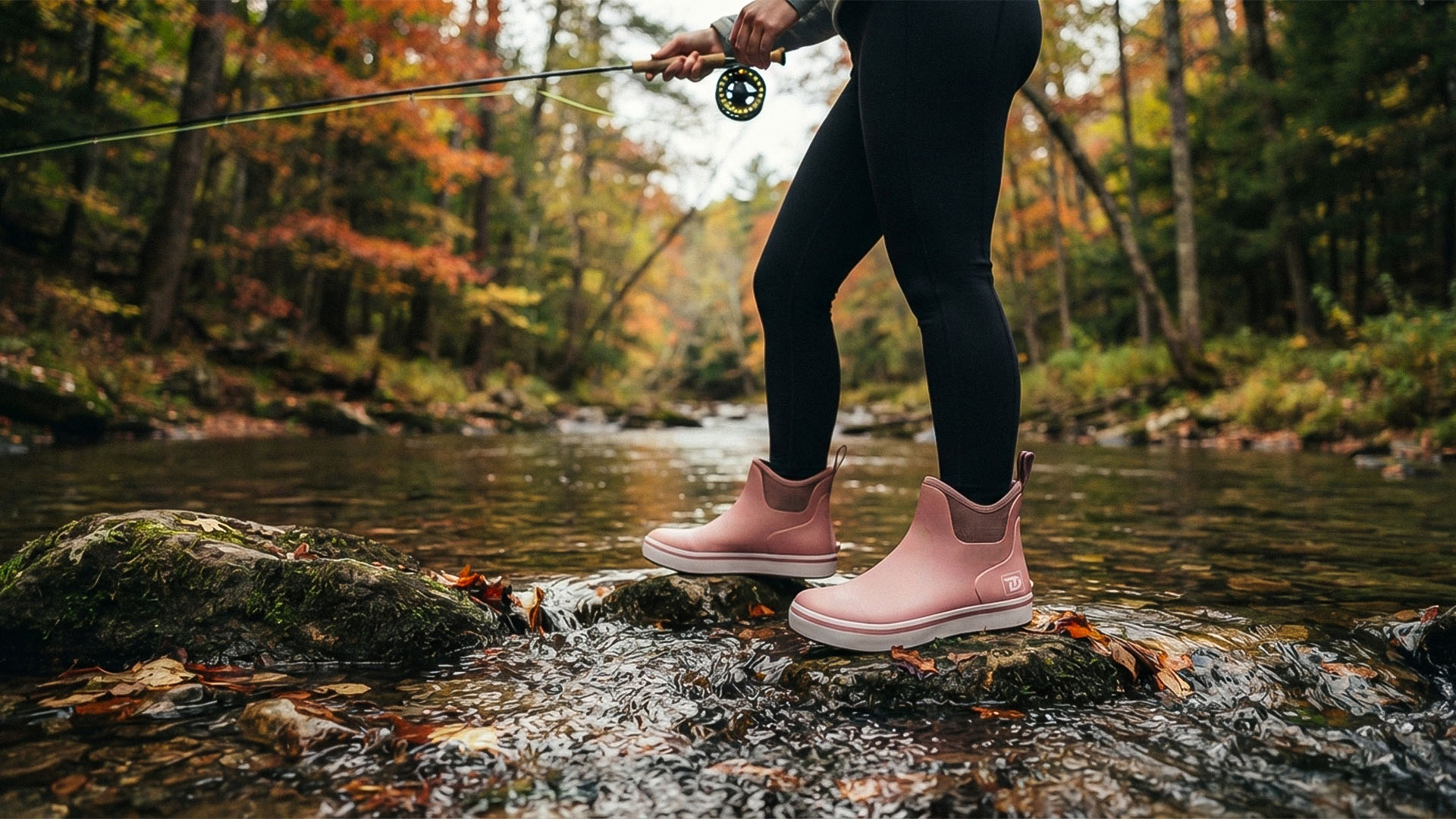
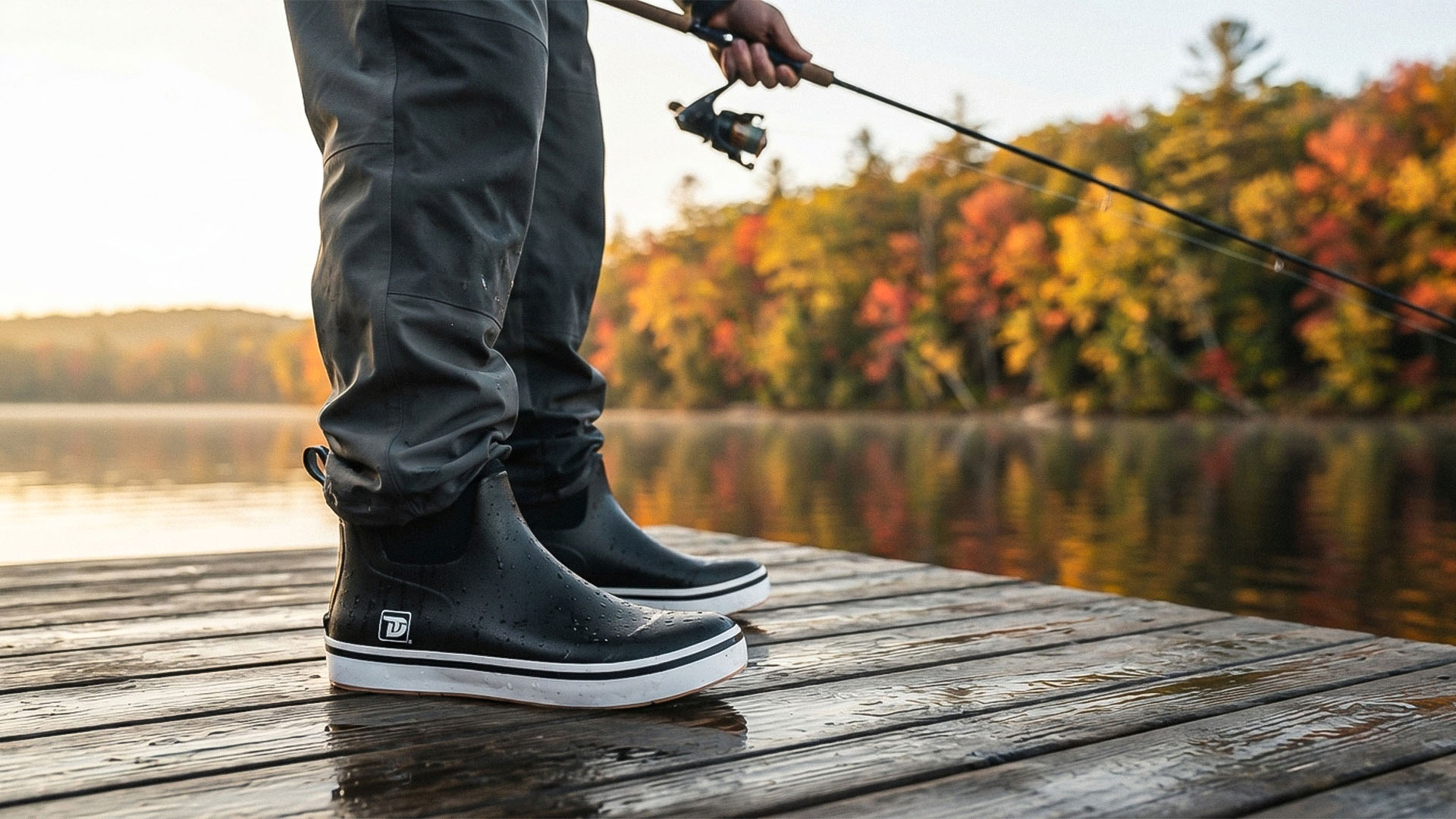
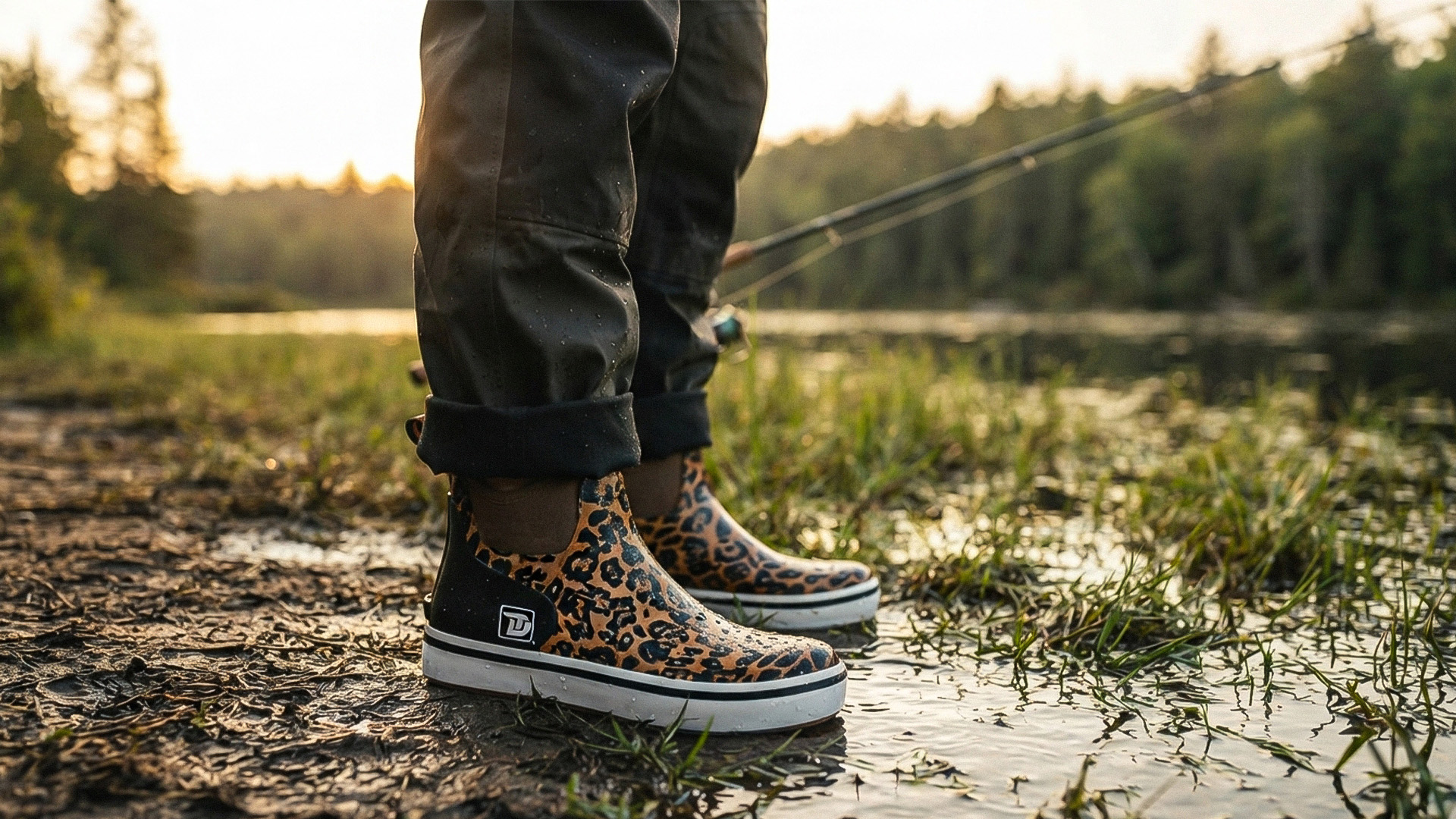
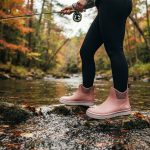
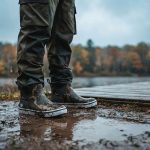
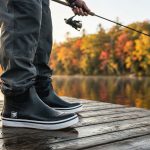
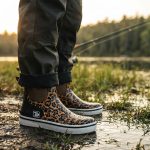
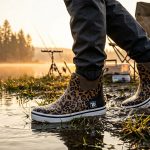
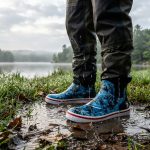
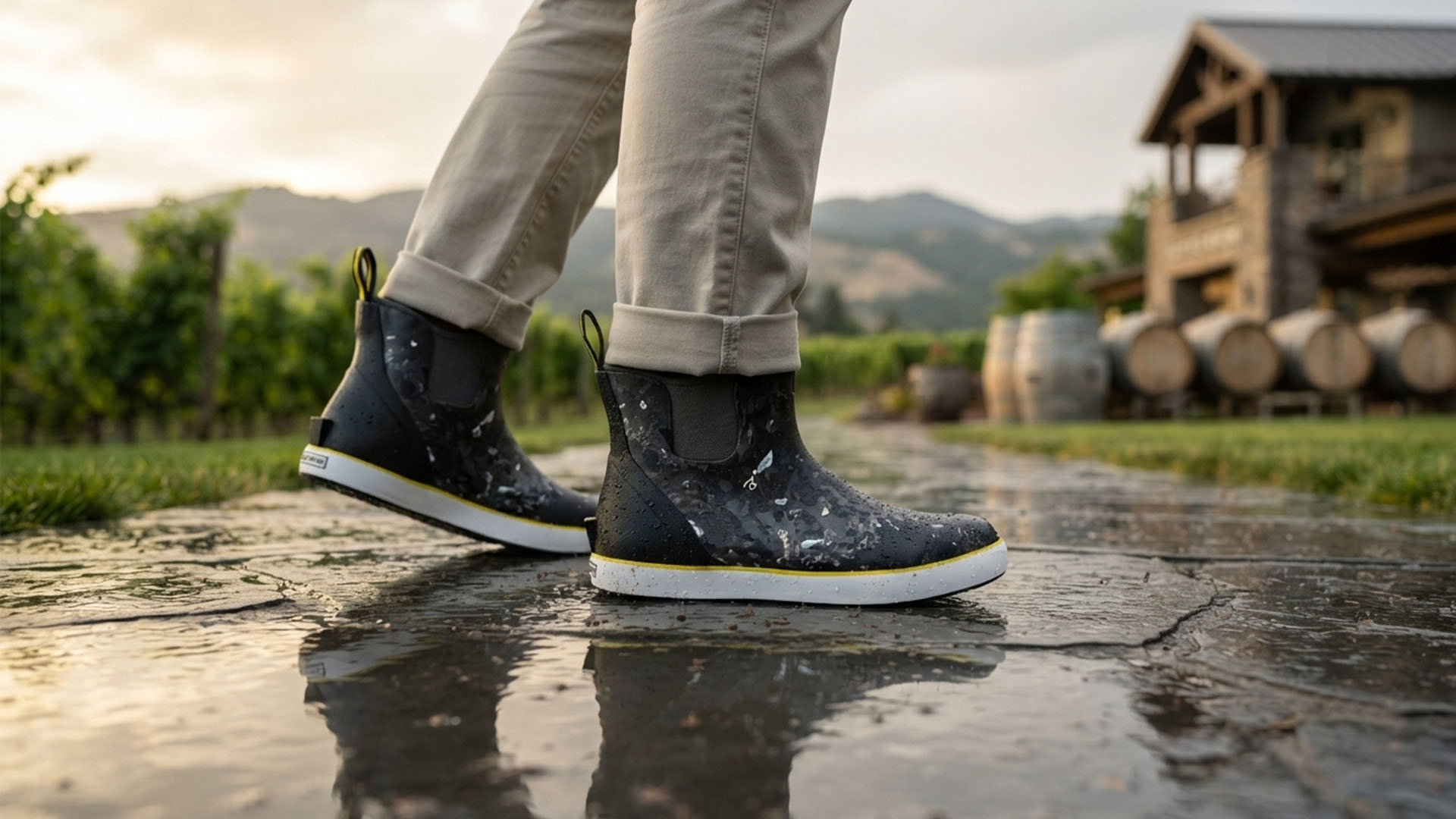
Deck boots are waterproof boots designed primarily for fishing, boating, and marine environments.
Most modern deck boots are ankle height, although taller versions are also available.
They are commonly worn around:
- Fishing boats
- Wet docks
- Marinas
- Boat ramps
- Offshore charters
- Fish-cleaning stations
- Coastal homes
- Rainy outdoor environments
Deck boots typically use a molded waterproof upper and an outsole designed to maintain contact with wet hard surfaces.
Their shorter height makes them easier to move in than traditional tall rubber boots.
Common deck boot features include:
- Ankle-height waterproof coverage
- Slip-on construction
- Pull tabs
- Wet-surface outsoles
- Removable insoles
- Cushioned footbeds
- Lightweight materials
- Easy-to-clean exterior surfaces
They are designed to handle rain, ocean spray, shallow standing water, fish slime, and routine deck washdowns.
What Are Muck Boots?
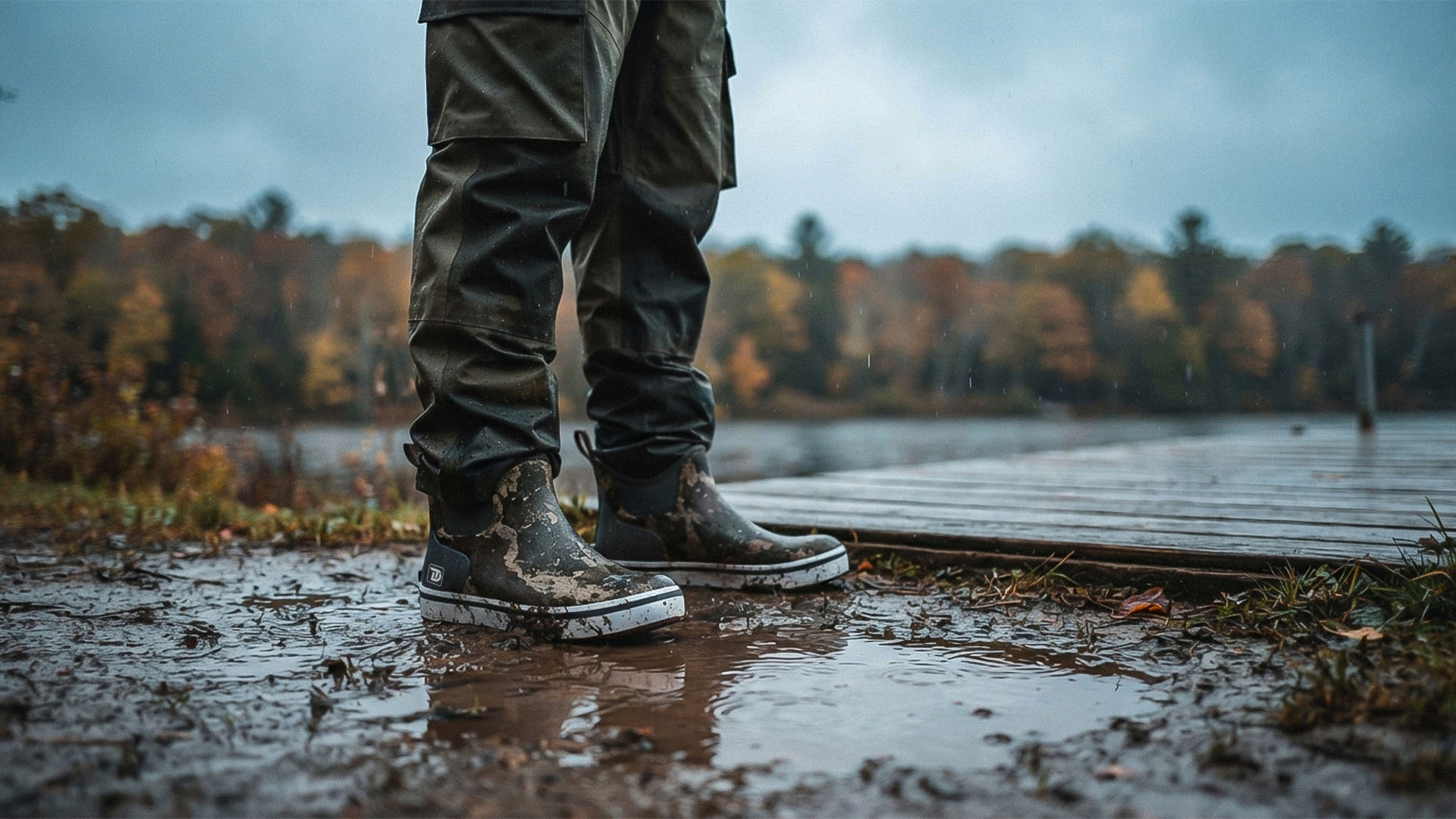
“Muck boots” is often used as a general term for tall waterproof boots designed for mud, farms, hunting, gardening, and demanding outdoor conditions.
Many muck-style boots combine a rubber lower section with a flexible neoprene or synthetic upper.
They usually extend to the mid-calf or knee.
These boots are commonly worn for:
- Farm work
- Barn chores
- Hunting
- Muddy fields
- Gardening
- Wet grass
- Snow
- Cold-weather chores
- Deep puddles
- Marshes
Their main advantage is coverage.
A taller shaft protects more of the lower leg from water, mud, vegetation, and cold conditions.
Common features include:
- Mid-calf or knee-high coverage
- Waterproof rubber lower section
- Flexible upper
- Insulated and uninsulated options
- Deep outdoor tread
- Mud protection
- Slip-on design
- Cold-weather models
Muck-style boots are designed more for soft ground and outdoor terrain than wet boat decks.
Quick Comparison: Deck Boots vs. Muck Boots
| Feature | Deck Boots | Muck Boots |
|---|---|---|
| Typical Height | Ankle to low calf | Mid-calf to knee |
| Best Surface | Wet decks and hard surfaces | Mud, grass, fields, soft ground |
| Weight | Usually lighter | Usually heavier |
| Mobility | Better | More restrictive |
| Deep Water Protection | Limited | Better |
| Warm-Weather Comfort | Usually better | Often warmer |
| Cold-Weather Options | Limited to moderate | Widely available |
| Boat Fishing | Excellent | Can feel bulky |
| Yard Work | Light to moderate | Excellent in mud |
| Long Walking | Depends on fit | Depends on model and weight |
| Easy Cleaning | Excellent | Excellent |
| Storage | Compact | Requires more space |
| Driving | Usually easier | Often more difficult |
Neither style is universally better.
The right option depends on the environment.
Which Is Better for Boat Fishing?
Deck boots are usually the better choice for recreational boat fishing.
Boat anglers need footwear that supports movement around:
- Rod holders
- Coolers
- Fish boxes
- Consoles
- Hatches
- Steps
- Narrow walkways
Ankle deck boots provide waterproof protection without adding unnecessary material around the lower leg.
They are useful when dealing with:
- Ocean spray
- Rain
- Shallow standing water
- Fish slime
- Wet fiberglass
- Deck washdowns
For anglers comparing lightweight waterproof footwear, [TruDaveGear deck boots] can be evaluated alongside other fishing-specific options based on fit, outsole traction, cushioning, and expected water exposure.
Muck boots can still be worn on fishing boats, especially during cold weather or when deeper standing water is expected.
However, tall shafts and heavier construction may feel bulky during active recreational fishing.
Which Is Better for Offshore Fishing?
For most recreational offshore fishing trips, deck boots offer a better balance of protection and movement.
Offshore anglers may spend hours:
- Standing at the rail
- Moving between rods
- Operating the boat
- Handling bait
- Cleaning the deck
- Climbing in and out of the vessel
A heavy tall boot may increase fatigue.
Ankle deck boots are generally easier to wear during long periods of movement.
Choose muck-style or tall fishing boots when:
- Conditions are extremely cold
- Water regularly rises above ankle height
- Heavy washdowns are common
- The work is commercial
- Greater lower-leg coverage is required
Boot height should match actual conditions rather than the most extreme situation you can imagine.
Which Is Better for Commercial Fishing?
Commercial fishing creates more demanding conditions than recreational fishing.
Workers may encounter:
- Deep standing water
- Repeated washdowns
- Cold temperatures
- Fish processing
- Long shifts
- Heavy equipment
- Severe weather
Tall waterproof boots may provide better coverage in these environments.
Muck-style boots can be useful when insulation and lower-leg protection are needed.
However, marine-specific commercial rubber boots may still be more suitable than general-purpose muck boots because outsole design and materials may be developed for wet working decks.
Ankle deck boots may be appropriate for:
- Captains
- Guides
- Marina workers
- Light-duty crew tasks
- Charter operations
- Areas with shallow water exposure
Professional users should choose footwear according to the exact job and applicable workplace requirements.
Which Is Better for Inshore Fishing?
Inshore anglers often deal with warm weather, shallow water, wet decks, and frequent movement.
Deck boots are usually the more convenient choice for fishing from:
- Bay boats
- Center consoles
- Skiffs
- Pontoons
- Small recreational boats
They provide enough protection for rain, spray, and washdowns while remaining relatively light.
Muck boots may be useful when launching boats from muddy banks or walking through marshy areas before boarding.
Some anglers may benefit from owning both styles:
- Muck boots for access through mud
- Deck boots for time on the boat
Which Is Better for Bank Fishing?
Muck boots are often better for bank fishing in muddy or wet terrain.
Bank anglers may walk through:
- Mud
- Tall grass
- Marsh edges
- Soft soil
- Shallow streams
- Wet vegetation
- Deep puddles
The taller shaft provides more protection than ankle deck boots.
Muck-style outsoles also tend to use more aggressive tread designed for soft ground.
Deck boots can work for flat, maintained shorelines or fishing piers, but they may not provide enough coverage or mud traction for difficult banks.
Which Is Better for Pier Fishing?
Deck boots are generally better for pier fishing.
Piers usually involve hard surfaces such as:
- Concrete
- Wood
- Composite decking
- Metal sections
Anglers may stand for several hours, so cushioning and lower weight matter.
Deck boots provide waterproof protection without the heat and bulk of tall outdoor boots.
Muck boots may be useful on cold, rainy piers but can feel unnecessarily heavy during mild weather.
Which Is Better for Kayak Fishing?
Deck boots and muck boots can both be too bulky for some kayaks.
Kayak anglers need footwear that allows:
- Easy entry
- Easy exit
- Pedal operation
- Flexible ankle movement
- Stable footing during launch
- Comfort in limited leg space
Low-profile deck boots may work in certain sit-on-top kayaks and cool conditions.
Tall muck boots can interfere with movement and may fill with water if submerged above the opening.
In warm weather, quick-draining fishing shoes are often the more practical option.
Cold-water kayak anglers should use a complete clothing and safety system appropriate for immersion risk.
Which Is Better for Yard Work?
Muck boots are generally better for heavy or muddy yard work.
Their height protects the lower legs from:
- Wet grass
- Deep mud
- Mulch
- Irrigation water
- Brush
- Leaves
- Shallow standing water
They work well for:
- Landscaping
- Mowing wet fields
- Clearing drainage areas
- Working around muddy gardens
- Storm cleanup
- Moving through tall vegetation
Deck boots are better for lighter yard tasks such as:
- Watering plants
- Washing patios
- Moving hoses
- Mowing slightly wet grass
- Cleaning outdoor furniture
- Quick backyard trips
Choose deck boots for convenience and mobility.
Choose muck boots for coverage and mud protection.
Which Is Better for Gardening?
The answer depends on how messy the work becomes.
Deck boots work well for:
- Container gardening
- Greenhouse work
- Light watering
- Weeding
- Short garden visits
- Working on firm soil
Muck boots are better for:
- Deep mud
- Heavy digging
- Wet garden beds
- Tall vegetation
- Working after heavy rain
- Extended garden work
Low deck boots may allow soil, mulch, and water to enter through the opening while kneeling.
Taller boots provide more protection around the lower leg.
Which Is Better for Dog Walking?
Deck boots are usually better for ordinary rainy dog walks.
They are lighter, faster to put on, and easier to drive in.
They work well for:
- Wet sidewalks
- Muddy parks
- Shallow puddles
- Damp grass
- Neighborhood walks
Muck boots are better when:
- Trails are extremely muddy
- Snow is deep
- Grass is tall and wet
- Puddles are deeper
- The weather is cold
- You are walking around rural property
For long-distance dog walks, consider support and heel fit.
Neither loose pull-on style may be as comfortable as a properly fitted waterproof hiking shoe.
Which Is Better for Hunting?
Muck-style boots are generally more suitable for hunting.
Hunting may involve:
- Mud
- Marshes
- Brush
- Long grass
- Cold conditions
- Uneven terrain
- Long periods of low movement
Tall waterproof boots provide greater coverage.
Many models also include insulation and outdoor-specific traction.
Deck boots may be useful around hunting camps, boats, docks, and vehicles.
They are not usually the best option for long-distance movement through rough hunting terrain.
Which Is Better for Wet-Weather Hunting From a Boat?
For boat-based waterfowl hunting, both styles may be useful.
Deck boots are practical inside the boat when water exposure remains shallow.
Muck boots are better when hunters need to:
- Step into muddy shorelines
- Launch boats
- Move through marsh edges
- Handle decoys in shallow water
- Walk through wet vegetation
Neither should replace waders when water depth exceeds boot height.
Which Is Better for Farm Work?
Muck boots are usually the better choice for farms and barns.
They provide more protection from:
- Mud
- Manure
- Wet grass
- Animal bedding
- Deep puddles
- Barn washdowns
Deck boots can work for quick, light chores on relatively clean surfaces.
They are not a replacement for tall agricultural boots in heavily contaminated environments.
Farm workers should also consider whether specialized safety or chemical-resistant footwear is required.
Which Is Better for Rainy Everyday Use?
Deck boots are generally more convenient for everyday rain.
They are easier to:
- Drive in
- Store
- Pack
- Wear around town
- Put on quickly
- Remove at the door
Their shorter height works well for shallow puddles and wet sidewalks.
Muck boots may feel excessive for ordinary errands but are useful during:
- Heavy storms
- Yard flooding
- Deep puddles
- Rural property work
- Muddy outdoor events
Which Is Better for Cold Weather?
Muck boots usually offer more cold-weather options.
Many are available with:
- Neoprene uppers
- Insulated linings
- Thermal footbeds
- Taller shafts
- Snow-oriented tread
Deck boots are available in insulated versions, but many popular models are designed for mild or warm fishing conditions.
When choosing cold-weather boots, consider:
- Air temperature
- Water temperature
- Activity level
- Sock thickness
- Time outdoors
- Amount of standing
- Wind exposure
Tall boots are not automatically warm.
An uninsulated rubber boot can become very cold.
Which Is Better for Hot Weather?
Deck boots are usually more comfortable in warm conditions.
Their lower height covers less of the leg and allows better movement.
Muck boots can trap significant heat, especially when using neoprene or insulation.
For hot-weather boat fishing, choose:
- Uninsulated deck boots
- Lightweight socks
- Moisture-wicking materials
- Lower boot height
If feet are expected to become wet, quick-draining shoes may be better than either boot style.
Which Is More Waterproof?
Both types can be fully waterproof below the opening.
Muck boots provide protection to a greater height.
Deck boots generally protect the foot and ankle.
The more important question is not which one is technically more waterproof.
It is whether the boot opening is high enough for your environment.
Choose deck boots for:
- Rain
- Spray
- Wet decks
- Shallow puddles
Choose muck boots for:
- Deep mud
- Taller wet grass
- Deeper puddles
- Marshy ground
- Greater lower-leg exposure
Once water enters through the top, waterproof construction can trap it inside.
Which Has Better Traction?
Traction depends on outsole design, not boot category alone.
Deck boot outsoles are usually designed for:
- Wet fiberglass
- Smooth marine surfaces
- Docks
- Hard flooring
- Boat decks
Muck boot outsoles are often designed for:
- Mud
- Soil
- Grass
- Fields
- Outdoor terrain
A deep, aggressive muck tread can collect debris on a clean boat deck.
A flatter marine outsole may not grip steep mud effectively.
Choose the outsole for the surface you use most.
No boot is slip-proof.
Which Is More Comfortable?
Comfort depends on fit, cushioning, weight, temperature, support, and activity.
Deck boots are often more comfortable for:
- Long periods on boats
- Frequent movement
- Driving
- Warm weather
- Hard surfaces
- Quick outdoor tasks
Muck boots may be more comfortable for:
- Cold weather
- Deep mud
- Wet fields
- Lower-leg protection
- Rural chores
A heavy boot that provides necessary protection may still be more useful than a lighter boot that allows water inside.
Which Is Better for Standing All Day?
Deck boots may have an advantage on hard surfaces because they are lighter and often include marine-focused cushioning.
They are useful for:
- Boat decks
- Marinas
- Piers
- Fish-cleaning stations
- Charter work
Muck boots may feel heavier during long standing periods.
However, cold-weather or farm users may prefer their coverage and insulation.
For either type, look for:
- Removable insoles
- Stable heel cushioning
- Correct width
- Secure fit
- Adequate toe room
- Supportive midsoles
Replace worn insoles before assuming the entire boot has failed.
Which Is Better for Walking?
For short walks, deck boots are usually easier.
They are lighter and allow more ankle movement.
For muddy rural walking, muck boots provide more protection.
Neither style is ideal for long technical hikes.
Long-distance walkers may prefer waterproof hiking footwear with:
- Laces
- Heel lockdown
- Ankle support
- Trail-specific tread
- Structured midsoles
Pull-on boots are convenient but offer less fit adjustment.
Which Is Easier to Put On?
Deck boots are generally easier to put on and remove because of their lower height.
Many include front and rear pull tabs.
Muck boots may require more effort, especially when:
- Socks are damp
- Feet are swollen
- The shaft fits closely
- Mud creates suction
- The boot is heavily insulated
Convenience matters for users who repeatedly move indoors and outdoors.
Which Is Easier to Clean?
Both styles are relatively easy to clean.
Deck boots have less surface area and may be faster to rinse.
Muck boots provide more protection but may hold mud in deeper tread patterns.
After use:
- Remove loose debris.
- Rinse with fresh water.
- Use mild soap when necessary.
- Clean outsole grooves.
- Remove insoles.
- Dry completely.
- Avoid high heat.
Saltwater should always be rinsed from either style.
Which Is Easier to Store?
Deck boots take up less space.
They fit more easily inside:
- Boat lockers
- Vehicles
- Entryway shelves
- Small closets
- Travel bags
Muck boots require more vertical storage.
Tall shafts may fold or collapse if stored improperly.
Keep both styles upright when possible and avoid placing heavy objects on top.
Which Is Better for Driving?
Deck boots are generally easier to drive in.
Their lower shaft allows better ankle movement, and they usually have less bulk around the pedals.
Muck boots may feel stiff or oversized, particularly when heavily insulated.
Before driving in either style, confirm that:
- The boot fits securely
- The outsole is clean
- Pedal control feels normal
- The heel does not move excessively
- The shaft does not restrict movement
Change footwear when necessary.
Which Is More Versatile?
Deck boots are more versatile for marine and everyday urban use.
Muck boots are more versatile for rural, muddy, and cold outdoor environments.
Deck boots can transition between:
- Boat
- Marina
- Vehicle
- Yard
- Store
- Home
Muck boots transition well between:
- Barn
- Field
- Garden
- Hunting area
- Muddy trail
- Rural property
Your lifestyle determines which form of versatility matters more.
Do You Need Both?
Some anglers and homeowners may benefit from owning both.
A two-boot setup can include:
Deck Boots
For:
- Boat fishing
- Marinas
- Rainy errands
- Dog walking
- Light yard work
- Boat cleaning
Muck Boots
For:
- Deep mud
- Farm chores
- Hunting
- Cold weather
- Tall wet grass
- Heavy yard work
Owning both prevents you from forcing one boot into situations where it performs poorly.
Deck Boots vs. Muck Boots for Men
Men should compare:
- Foot width
- Heel shape
- Sock thickness
- Work conditions
- Boot weight
- Required coverage
Men with wide feet should look for models with a broad toe box rather than simply sizing up.
Professional users should consider whether their job requires safety-rated footwear.
Deck Boots vs. Muck Boots for Women
Women may find some unisex pull-on boots too wide or high-volume through the heel.
Look for:
- Women-specific sizing
- Secure heel shape
- Appropriate toe-box width
- Lower internal volume
- Manageable weight
- Easy removal
A lighter deck boot may be more comfortable for everyday rain and boat use.
A taller muck boot may be more useful for gardening, farms, and cold rural conditions.
Sizing Differences to Consider
Deck boots often fit closer to casual footwear.
Muck boots may require more space for:
- Thick socks
- Insulation
- Lower-leg clothing
- Foot swelling
Try either style with the socks you plan to wear.
A small amount of heel movement may be normal, but significant lifting creates friction.
Do not buy painfully tight waterproof boots expecting them to stretch.
Should You Size Up?
Size up only when:
- The model runs small
- You are between sizes
- Thick socks are required
- Your feet need more width
- The manufacturer recommends it
A larger size can create excessive internal movement.
Whenever possible, choose the correct width rather than unnecessary extra length.
Which Lasts Longer?
Lifespan depends more on use and maintenance than boot category.
Deck boots may wear faster when used on:
- Rough concrete
- Rocky ground
- Construction surfaces
- Abrasive trails
Muck boots may wear faster from:
- Repeated shaft folding
- Deep mud
- Brush
- Farm chemicals
- Rough outdoor terrain
Inspect both styles for:
- Cracks
- Leaks
- Worn tread
- Outsole separation
- Damaged lining
- Compressed cushioning
- Loss of fit
Proper cleaning and storage can extend useful life.
Common Deck Boot Mistakes
Using Them in Water That Is Too Deep
Ankle height has clear limits.
Wearing Them for Technical Hiking
They may not provide enough support or trail grip.
Assuming Marine Traction Works in Mud
Outsole designs serve different surfaces.
Wearing Them Without Socks
This may increase friction and odor.
Choosing Style Over Fit
A poor fit affects comfort and stability.
Common Muck Boot Mistakes
Wearing Insulated Models in Hot Weather
Excess heat can create sweat and discomfort.
Using Them on Boats Without Checking the Outsole
Aggressive tread may hold mud and debris.
Buying More Height Than Necessary
Extra coverage adds weight and warmth.
Using Them for Long Walks Without Testing Fit
Heel movement can become uncomfortable.
Assuming They Are Safety Boots
Not every model includes workplace protection.
Deck Boot Buying Checklist
Choose deck boots when you prioritize:
- Boat use
- Wet hard surfaces
- Mobility
- Lower weight
- Easy driving
- Quick on and off
- Warm-weather comfort
- Compact storage
Check for:
- Correct fit
- Wet-surface outsole
- Removable insole
- Stable cushioning
- Waterproof construction
- Easy-clean materials
Muck Boot Buying Checklist
Choose muck boots when you prioritize:
- Mud protection
- Taller wet grass
- Cold weather
- Farms
- Hunting
- Deep puddles
- Lower-leg coverage
- Rural outdoor work
Check for:
- Appropriate insulation
- Outdoor tread
- Shaft flexibility
- Correct calf fit
- Enough sock room
- Easy cleaning
Final Verdict: Deck Boots or Muck Boots?
Choose deck boots if you primarily fish from boats, work around marinas, deal with rain and spray, or want lightweight waterproof footwear for everyday wet conditions.
Choose muck boots if you regularly work in deep mud, wet fields, tall grass, cold weather, farms, hunting areas, or conditions where water reaches higher on the leg.
Deck boots are lighter, easier to drive in, faster to put on, and better suited to wet hard surfaces.
Muck boots provide more coverage, more cold-weather options, and better performance in mud and rural terrain.
Neither is better in every situation.
The best choice depends on where your feet spend the most time.
For the boat, choose mobility and marine traction.
For the field, choose coverage and mud protection.
When your lifestyle includes both, owning one pair of each may be the most practical answer.
Frequently Asked Questions
Are deck boots better than muck boots for fishing?
Deck boots are generally better for recreational boat fishing because they are lighter, less restrictive, and designed for wet hard surfaces. Muck boots may be better for cold weather, muddy shore access, and deeper standing water.
Are muck boots good for boat fishing?
They can be used for boat fishing, especially in cold or extremely wet conditions. However, they may feel heavier and bulkier than ankle deck boots.
Which boots are better for yard work?
Muck boots are better for deep mud, wet grass, and heavy yard work. Deck boots are more convenient for watering, patio cleaning, light gardening, and quick outdoor chores.
Which boots are better for rain?
Deck boots work well for everyday rain, wet sidewalks, and shallow puddles. Muck boots provide better protection during heavy rain, deep puddles, and muddy conditions.
Are deck boots more comfortable than muck boots?
Deck boots are usually lighter and allow more ankle movement, which can improve comfort during boat fishing and everyday use. Muck boots may be more comfortable in cold or muddy environments because of their coverage.
Are muck boots warmer than deck boots?
Many muck-style boots offer neoprene uppers and insulation, making them warmer than standard uninsulated deck boots. Warmth varies by model.
Can you wear deck boots in mud?
Deck boots can handle shallow mud, but their low height and marine-style tread may not be ideal for deep or steep muddy terrain.
Can you wear muck boots on wet boat decks?
Yes, but check the outsole design. Aggressive mud tread may collect debris and may not perform the same way as marine-specific outsoles on wet fiberglass.
Which boots are easier to drive in?
Ankle deck boots are usually easier to drive in because they are shorter, lighter, and less restrictive around the ankle.
Should I buy deck boots or muck boots?
Buy deck boots for fishing boats, marinas, rainy errands, and light wet-weather chores. Buy muck boots for mud, farms, hunting, cold weather, and deeper water exposure.