Meta Description: Discover whether deck boots work for yard work, dog walking, gardening, rainy commutes, and everyday outdoor chores beyond fishing and boating.
Suggested URL Slug: can-you-wear-deck-boots-everyday
Primary Keyword: can you wear deck boots everyday
Secondary Keywords: deck boots for yard work, deck boots for dog walking, waterproof boots for everyday use, deck boots for gardening, rain boots for outdoor chores, ankle waterproof boots
Search Intent: Informational / Commercial Investigation
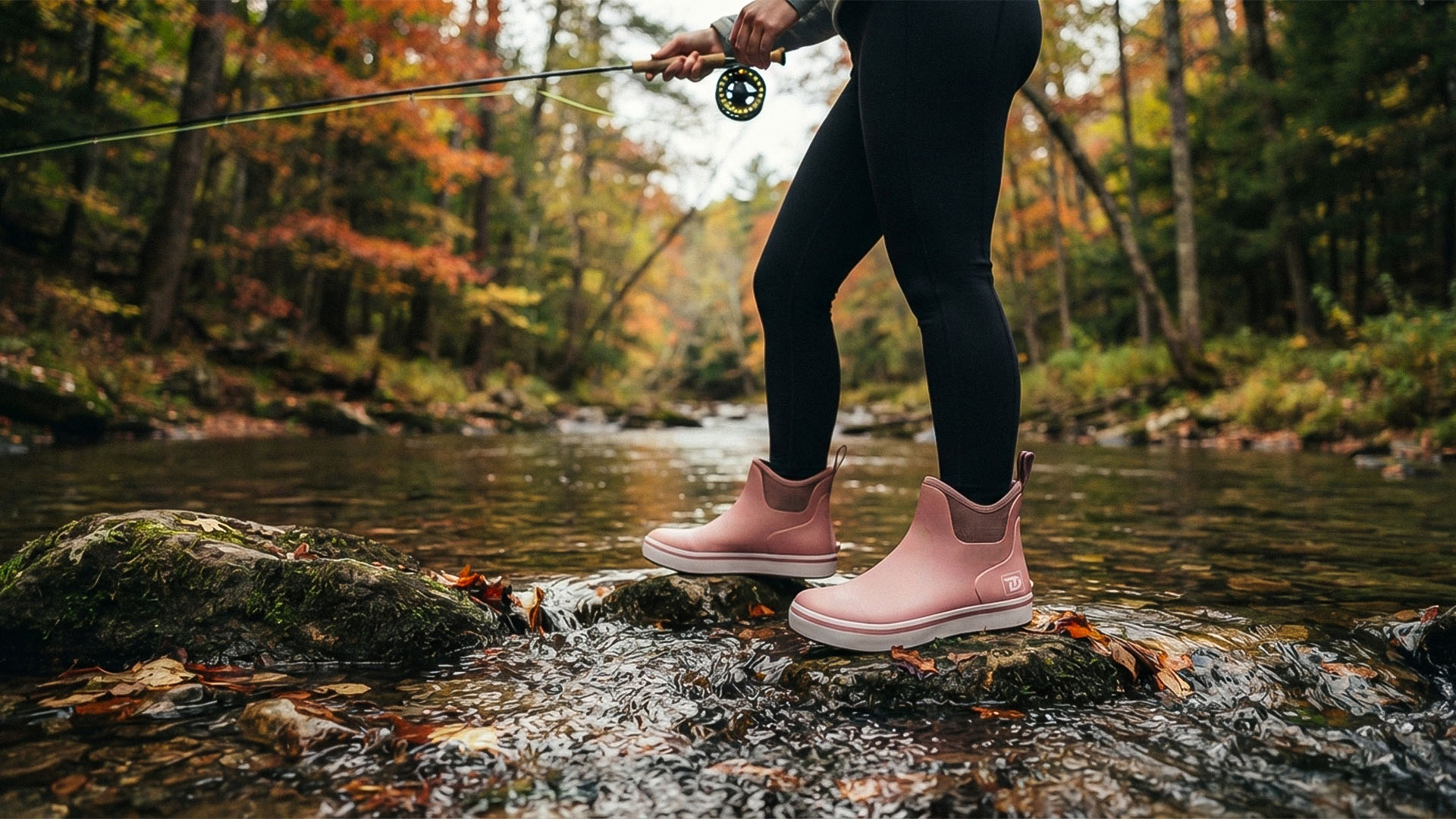
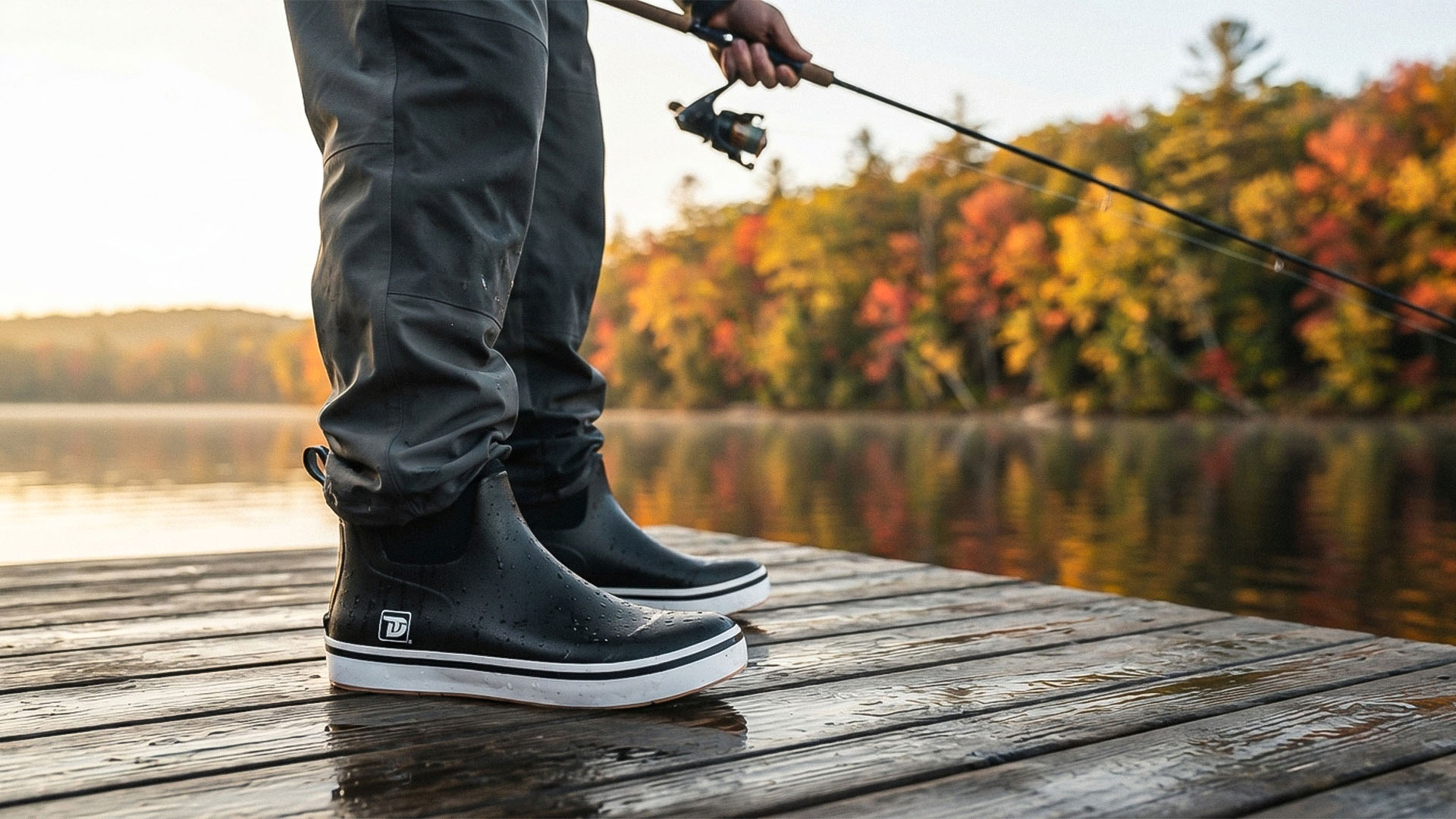
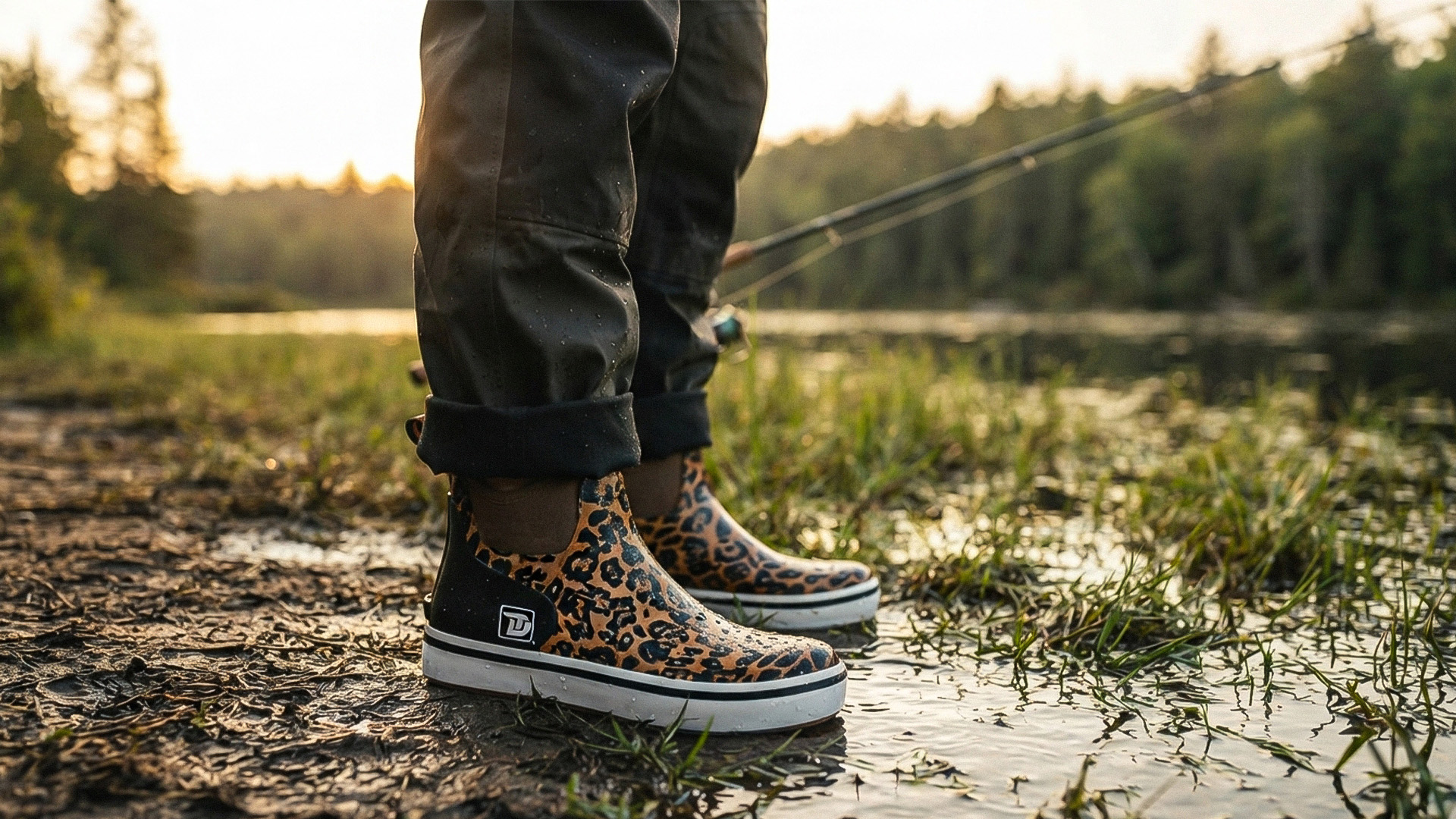
Deck boots are usually associated with fishing boats, marinas, and wet docks.
However, many of the features that make them useful on the water also make them practical for everyday outdoor tasks.
They are waterproof, easy to rinse clean, quick to put on, and generally lighter than traditional tall rubber boots. That combination can work well for muddy yards, wet sidewalks, dog walking, gardening, boat ramps, and chores around the house.
Still, deck boots are not the perfect choice for every activity.
They may perform well during a rainy walk but feel less suitable for long-distance hiking. They can handle wet grass and shallow mud, but they may not provide enough ankle support for uneven terrain. Their marine-style outsoles may also behave differently from aggressive work or hiking tread.
This guide explains when you can wear deck boots outside of fishing, where they work best, and when another type of footwear may be more appropriate.
What Makes Deck Boots Useful Beyond Fishing?
Modern deck boots are designed for environments where water, slippery surfaces, and frequent cleaning are common.
Typical features include:
- Waterproof construction
- Slip-on design
- Wet-surface traction
- Easy-to-clean materials
- Low ankle height
- Lightweight construction
- Removable insoles
- Pull tabs
- Flexible uppers
These features are not limited to boats.
They can also be useful anywhere you need quick waterproof protection without wearing tall rain boots.
Can You Wear Deck Boots Every Day?
Yes, deck boots can be worn for many everyday activities.
They work best when the activity involves:
- Rain
- Wet grass
- Mud
- Shallow puddles
- Outdoor chores
- Short walks
- Quick trips outside
- Easy cleaning
They are less suitable for activities requiring high ankle support, aggressive off-road traction, or long-distance walking.
The comfort of everyday use depends on the specific boot.
Some deck boots have enough cushioning for several hours of standing and walking. Others are designed primarily for short periods on wet surfaces.
Before using them as everyday footwear, consider fit, support, weight, and the type of surfaces you encounter.
Deck Boots for Dog Walking
Deck boots can be a practical choice for walking dogs in rainy or muddy weather.
Dog owners often need footwear that can be put on quickly, especially for early-morning or late-night walks.
Deck boots work well for:
- Wet sidewalks
- Rainy neighborhoods
- Muddy parks
- Wet grass
- Shallow puddles
- Quick backyard trips
- Cleaning up after dogs
Their slip-on design makes them more convenient than boots with laces.
Waterproof materials also help prevent wet socks during short walks.
Advantages for Dog Walking
Deck boots are easy to put on.
They are easy to rinse after muddy walks.
They provide more protection than sneakers.
They usually feel lighter than knee-high rain boots.
They can be stored near an entryway for quick use.
Limitations for Dog Walking
They may not provide enough support for long walks.
Some outsoles may not perform well on icy sidewalks.
Low boot openings can allow water inside during deep puddles.
Loose-fitting models may cause heel movement during fast walking.
For short neighborhood walks in wet weather, deck boots are often a good option.
For long hikes with a dog, waterproof hiking footwear may provide better support.
Deck Boots for Yard Work
Deck boots are useful for many light and moderate yard tasks.
They can protect feet from wet grass, mud, irrigation water, and damp soil.
Common yard activities include:
- Mowing wet grass
- Watering plants
- Cleaning gutters from the ground
- Washing outdoor furniture
- Moving hoses
- Light landscaping
- Cleaning patios
- Raking leaves
- Picking up yard debris
Smooth waterproof materials are easier to clean than fabric sneakers.
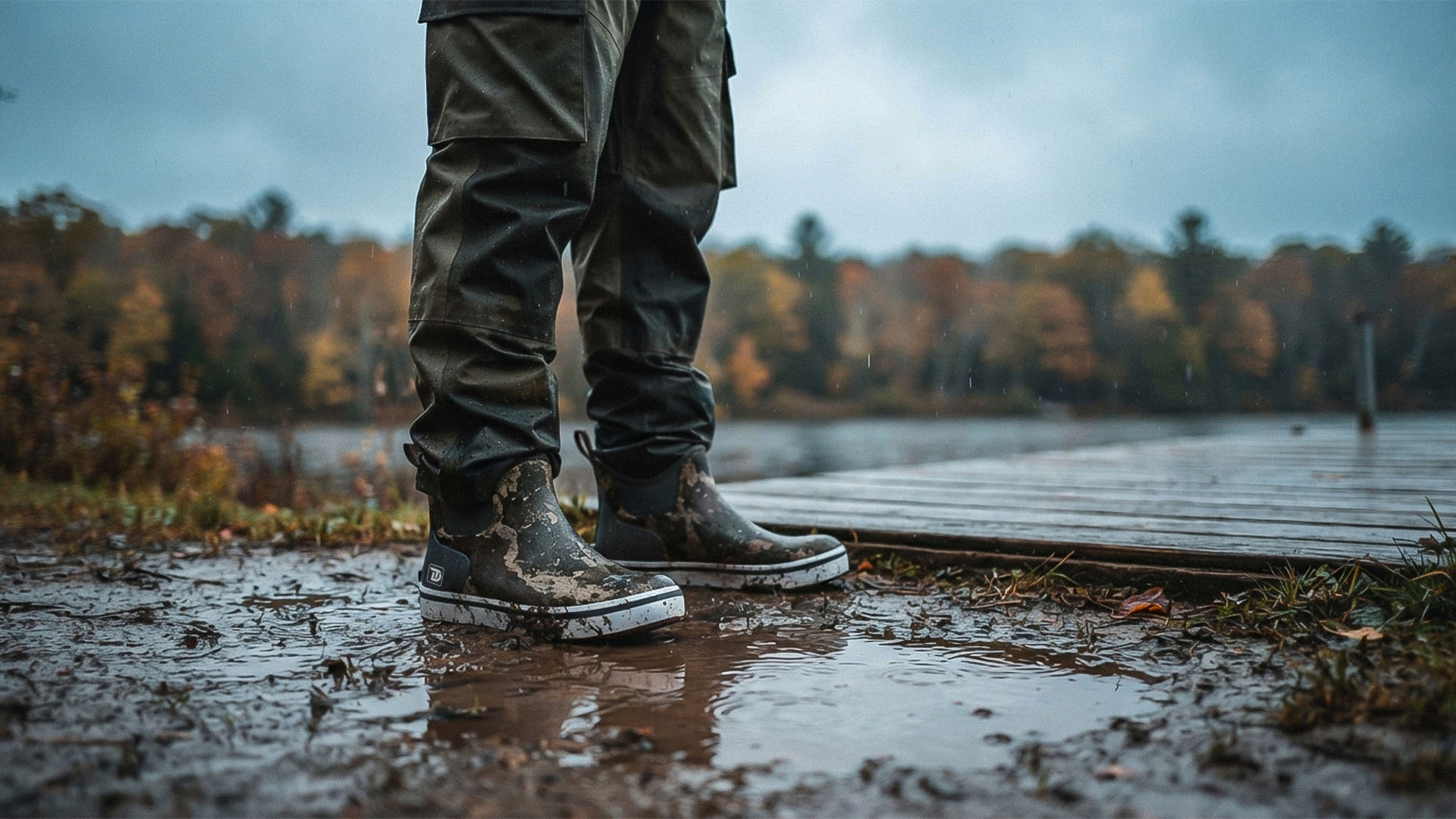
Mud, grass, and soil can usually be rinsed away with fresh water.
When Deck Boots Work Well for Yard Work
Use deck boots when the ground is wet but relatively stable.
They are also practical when you need to move between indoor and outdoor spaces.
Their shorter height makes them less restrictive than tall rubber boots.
When Deck Boots May Not Be Enough
Deck boots may not be suitable for:
- Chainsaw work
- Heavy construction
- Steep slopes
- Rocky terrain
- Working with sharp equipment
- Jobs requiring safety toes
- Deep mud
- Ankle-support-intensive tasks
They are waterproof outdoor footwear, not protective work boots.
Choose safety-rated footwear when the task involves heavy equipment, falling objects, or other workplace hazards.
Deck Boots for Gardening
Gardeners often work around wet soil, hoses, mulch, and mud.
Deck boots can be convenient for:
- Watering plants
- Planting flowers
- Light digging
- Weeding
- Greenhouse work
- Walking through wet grass
- Harvesting vegetables
- Cleaning garden tools
They are easier to rinse than fabric garden shoes.
The ankle-height design also allows more movement than tall rubber boots.
However, low boots may allow soil and mulch to enter through the opening when kneeling or digging.
For deeper mud or heavy garden work, tall boots may provide better coverage.
Deck Boots for Rainy Commutes
Deck boots can work for short rainy commutes, especially when walking between a car, parking lot, office, or store.
They offer protection from:
- Puddles
- Wet sidewalks
- Rain
- Road spray
- Damp parking areas
Ankle deck boots may be easier to wear in a vehicle than tall rain boots.
They generally take up less space and interfere less with driving.
However, consider the dress code at your destination.
Deck boots are casual outdoor footwear.
You may want to carry regular shoes for office or indoor use.
Can You Drive in Deck Boots?
Many ankle deck boots are flexible enough for driving.
Their low profile usually allows better ankle movement than tall rubber boots.
Before driving, make sure:
- The boots fit securely
- The outsole is not excessively bulky
- Mud is removed from the tread
- The heel does not lift excessively
- The boot does not interfere with pedal control
Avoid driving in footwear that feels loose, stiff, or unfamiliar.
If the boots are covered in mud or water, change footwear before entering the vehicle when possible.
Deck Boots for Washing Cars
Deck boots are a practical option for washing cars and trucks.
They protect feet from hose water, soap, and puddles.
Their easy-to-clean construction works well around driveways and garages.
Wear them when:
- Pressure washing
- Rinsing vehicles
- Cleaning wheels
- Washing boats
- Cleaning trailers
- Working around wet concrete
Be cautious on surfaces covered with soap.
Even footwear designed for wet conditions can become slippery when detergent is present.
Rinse the ground and move carefully.
Deck Boots for Boat Maintenance
Deck boots remain useful even when you are not actively fishing.
They work well for:
- Washing a boat
- Cleaning decks
- Loading gear
- Working at the marina
- Preparing trailers
- Launching boats
- Moving around wet docks
- Performing light maintenance
This is one of the most natural everyday uses for fishing footwear.
Anglers and boat owners comparing versatile waterproof options can review [TruDaveGear deck boots] alongside other ankle-height boots designed for wet environments.
The best option should combine secure fit, cushioning, wet-surface traction, and easy cleaning.
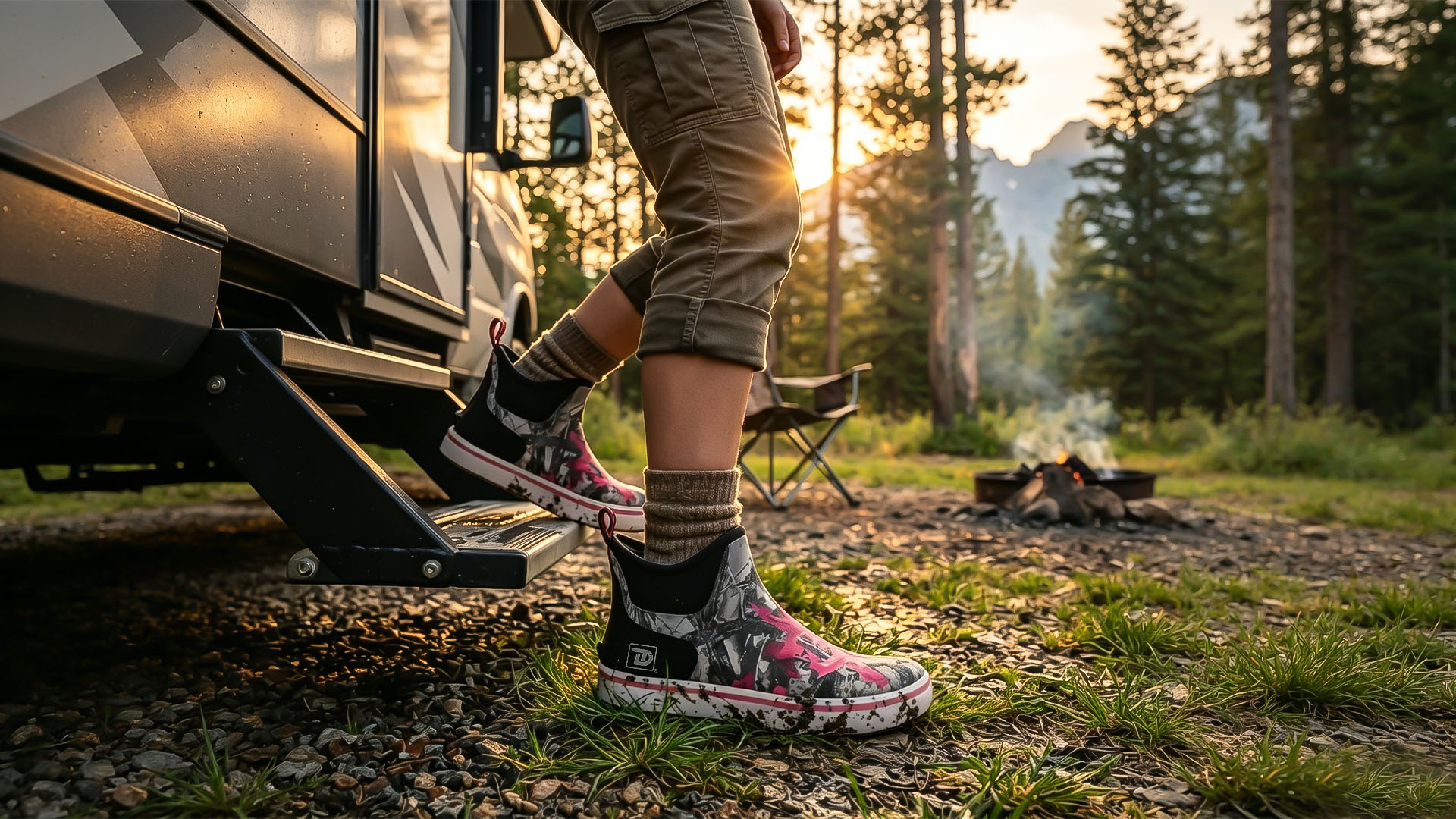
Deck Boots for Camping
Deck boots may be useful around campsites when conditions are wet.
They work well for:
- Walking around muddy campsites
- Setting up tents in rain
- Collecting firewood on wet ground
- Morning trips through dew-covered grass
- Cleaning gear
- Moving around near lakes
However, they are not a replacement for hiking boots.
Deck boots generally provide less ankle support and may use outsoles designed for hard wet surfaces rather than rocky trails.
Use them around camp, but switch to hiking footwear for long walks or difficult terrain.
Deck Boots for Beach Use
Deck boots can be useful on beaches during cool, rainy, or windy conditions.
They may help with:
- Launching boats
- Walking near wet sand
- Collecting fishing gear
- Surf fishing preparation
- Cleaning equipment
- Cold-weather beach walks
Sand can enter through the boot opening.
Fine sand may also collect inside tread grooves and around the insole.
Rinse the boots with fresh water after beach use.
For deep water or active surf fishing, specialized surf footwear or waders may be more appropriate.
Deck Boots for Farm and Barn Chores
Ankle deck boots may work for light farm and barn tasks involving shallow mud and water.
Examples include:
- Feeding animals
- Cleaning light spills
- Walking through wet grass
- Carrying supplies
- Washing equipment
- Short trips around barns
They are not ideal for deep manure, heavy mud, chemical exposure, or tasks requiring protective toes.
Tall agricultural boots provide more coverage for demanding conditions.
Choose footwear according to the level of contamination and physical risk.
Are Deck Boots Good for Snow?
Deck boots are waterproof, but that does not automatically make them good snow boots.
Most uninsulated deck boots are designed for wet marine environments rather than freezing temperatures.
They may work for:
- Light wet snow
- Short outdoor trips
- Slushy parking lots
- Mild winter rain
- Quick chores
They may not work well for:
- Deep snow
- Ice
- Extended cold exposure
- Winter hiking
- Standing outdoors for long periods
Their outsoles may also lack traction on ice.
For serious winter conditions, insulated boots with winter-specific tread are usually the better choice.
Are Deck Boots Good on Ice?
Deck boots should not be assumed to provide reliable ice traction.
Wet-deck traction and ice traction are different.
Rubber compounds that grip fiberglass may still slide on frozen surfaces.
When ice is present:
- Move slowly
- Use handrails
- Avoid steep surfaces
- Consider ice-specific footwear
- Use traction devices when compatible
- Follow manufacturer guidance
No ordinary rubber boot should be treated as slip-proof on ice.
Deck Boots for Hiking
Deck boots are generally not recommended for long hikes.
They may lack:
- Ankle support
- Trail-specific traction
- Structured lacing
- Rock protection
- Long-distance cushioning
- Secure heel lockdown
They can work for short walks on flat ground, but hiking shoes or boots are better for trails.
The slip-on design that makes deck boots convenient can become a disadvantage during steep climbs and uneven movement.
Deck Boots for Hunting
Deck boots may work for certain hunting-related tasks, especially around wet camps, boats, marsh edges, and vehicle access areas.
However, they are not ideal for most long-distance hunting.
Hunting footwear may require:
- Ankle support
- Insulation
- Quiet materials
- Aggressive terrain traction
- Scent control
- Protection from brush
- All-day walking comfort
Deck boots can be useful around camp or during waterfowl preparation but may not replace purpose-built hunting boots.
Deck Boots for Pressure Washing
Pressure washing involves water, detergent, debris, and slippery surfaces.
Deck boots help keep feet dry and are easy to clean afterward.
They may be useful for:
- Driveways
- Patios
- Decks
- Outdoor furniture
- Boats
- Siding
- Garage floors
Keep the spray away from the boot opening.
High-pressure water can force moisture into low boots.
Wear additional protective equipment when the task involves cleaning chemicals or flying debris.
Deck Boots for Cleaning Pools
Deck boots can protect feet while cleaning around pools.
They may help during:
- Pool deck washing
- Filter maintenance
- Hose work
- Removing debris
- Cleaning equipment
Pool chemicals can affect some footwear materials.
Rinse the boots with fresh water after exposure.
Follow manufacturer guidance when footwear contacts chlorine or cleaning products.
Deck Boots for Household Emergencies
A pair of waterproof slip-on boots can be useful during minor household water problems.
They may help when dealing with:
- Leaking hoses
- Wet basements
- Clogged outdoor drains
- Storm cleanup
- Shallow garage flooding
- Broken sprinklers
Do not use ordinary deck boots in water where electrical hazards, sewage, chemicals, sharp objects, or deep flooding may be present.
Serious cleanup situations require specialized protective equipment.
How Comfortable Are Deck Boots for Walking?
Walking comfort varies by design.
Some deck boots include cushioned insoles and flexible outsoles.
Others are more basic.
For short walks, most well-fitting deck boots are comfortable.
For long distances, look for:
- Secure heel fit
- Correct width
- Supportive insole
- Stable outsole
- Low weight
- Adequate toe room
- Minimal internal sliding
If the boots cause heel lift, hot spots, or arch pain, they are not suitable for extended walking.
Do Deck Boots Need to Be Broken In?
Most modern deck boots should feel reasonably comfortable from the beginning.
They may soften slightly with use, but waterproof molded materials usually do not stretch dramatically.
Wear new boots for short periods before using them all day.
Check for:
- Heel rubbing
- Toe pressure
- Excessive warmth
- Sock compatibility
- Difficulty removing the boots
- Foot sliding
Do not expect painful or tight boots to become perfect after weeks of use.
What Socks Should You Wear for Everyday Use?
For warm weather, wear lightweight synthetic socks.
For cooler conditions, use lightweight or medium merino wool socks.
Avoid cotton during wet activities because it absorbs moisture and dries slowly.
Crew-length socks usually work better than no-show socks because they extend above the boot opening.
Bring spare socks when you expect heavy rain or extended outdoor use.
How to Style Deck Boots for Casual Use
Deck boots are functional footwear, but they can also work with casual outdoor clothing.
Common combinations include:
- Jeans with a rain jacket
- Work pants with a flannel shirt
- Fishing pants with a hoodie
- Shorts with lightweight socks
- Outdoor pants with a waterproof shell
Avoid tucking loose pants deeply into ankle boots during rain.
Water may run down the fabric and enter the opening.
For wet weather, pants should generally overlap the outside of the boots.
Deck Boots vs. Traditional Rain Boots
Deck boots and rain boots are both waterproof, but they serve slightly different needs.
| Feature | Ankle Deck Boots | Tall Rain Boots |
|---|---|---|
| Mobility | Better | More restricted |
| Weight | Usually lighter | Usually heavier |
| Water Coverage | Shallow water | Deeper water |
| Driving | More convenient | Less convenient |
| Yard Work | Light to moderate | Heavy mud and tall grass |
| Dog Walking | Excellent for short walks | Better for deep puddles |
| Everyday Wear | Easier | Bulkier |
| Easy On and Off | Very easy | Usually easy |
| Warm Weather | More comfortable | Often hotter |
Choose deck boots when mobility and convenience matter.
Choose tall rain boots when you need more coverage.
Deck Boots vs. Waterproof Hiking Shoes
Waterproof hiking shoes provide better support and trail traction.
Deck boots provide easier cleaning and faster on-and-off use.
Choose hiking shoes for:
- Long walks
- Uneven terrain
- Steep slopes
- Rocky trails
- Extended support
Choose deck boots for:
- Wet sidewalks
- Boat use
- Yard chores
- Rainy errands
- Muddy parks
- Easy cleaning
Both can be useful, but they solve different problems.
Deck Boots vs. Work Boots
Work boots may provide safety toes, puncture resistance, electrical hazard protection, or ankle support.
Deck boots usually do not.
Choose work boots when the task involves:
- Heavy equipment
- Construction
- Falling objects
- Sharp materials
- Industrial hazards
- Workplace safety requirements
Choose deck boots for lower-risk wet environments.
Waterproofing alone does not make footwear appropriate for industrial work.
How to Clean Deck Boots After Everyday Use
Routine cleaning is simple.
After muddy or wet use:
- Remove loose dirt.
- Rinse with fresh water.
- Use mild soap when necessary.
- Clean tread grooves.
- Remove the insoles if wet.
- Dry the boots in a ventilated area.
- Avoid direct high heat.
- Store them away from sunlight.
Do not leave muddy boots inside a sealed vehicle or storage bin.
Drying prevents odor and helps preserve the interior.
How to Prevent Deck Boot Odor
Everyday use can create sweat and moisture inside the boots.
To reduce odor:
- Wear clean moisture-wicking socks
- Remove the insoles after wet use
- Dry boots completely
- Avoid leaving them in hot vehicles
- Do not store wet socks inside
- Rotate between footwear
- Use appropriate deodorizing products
- Clean mud and organic residue promptly
A waterproof boot can trap moisture just as effectively as it blocks outside water.
Airflow is essential.
How Long Can You Wear Deck Boots at One Time?
There is no universal limit.
Comfort depends on fit, cushioning, support, weather, and activity.
You may comfortably wear well-designed deck boots for several hours during light work or fishing.
However, they may feel less comfortable during long walks than athletic or hiking footwear.
Pay attention to:
- Heel pain
- Arch fatigue
- Toe pressure
- Numbness
- Blisters
- Excessive sweating
- Foot sliding
Change footwear when discomfort develops.
Common Mistakes When Using Deck Boots Every Day
Using Them for Long Hikes
Deck boots are not designed for technical trails.
Wearing Them in Deep Water
Ankle boots allow water in once the water level reaches the opening.
Assuming They Are Safety Boots
Most deck boots do not provide workplace protective ratings.
Wearing Cotton Socks
Cotton stays wet and increases friction.
Ignoring Mud in the Tread
Mud and debris can affect traction on hard surfaces.
Leaving Them in a Hot Car
Heat can damage materials and adhesives.
Wearing the Wrong Size
Loose boots create heel movement, while tight boots restrict circulation.
Using Them on Ice
Wet-deck traction does not guarantee ice traction.
Who Should Consider Everyday Deck Boots?
Deck boots may be useful for:
- Anglers
- Boat owners
- Dog owners
- Gardeners
- Homeowners
- Marina workers
- Coastal residents
- People living in rainy climates
- Campers
- Outdoor event workers
- People who need quick waterproof footwear
They are particularly convenient for people who move frequently between indoor and outdoor environments.
Who May Need Different Footwear?
Consider another option if you need:
- Heavy ankle support
- Safety-toe protection
- Winter insulation
- Deep-water coverage
- Ice traction
- Long-distance walking comfort
- Aggressive trail grip
- Chemical resistance
- Puncture protection
Deck boots are versatile, but they are not universal.
Everyday Deck Boot Buying Checklist
Before buying deck boots for multiple uses, consider:
Fit
- Correct length
- Correct width
- Minimal heel movement
- Comfortable toe room
- Space for appropriate socks
Comfort
- Removable insole
- Adequate cushioning
- Manageable weight
- Flexible forefoot
- Stable heel
Performance
- Waterproof construction
- Suitable tread
- Easy cleaning
- Durable pull tabs
- Appropriate boot height
Intended Uses
- Dog walking
- Yard work
- Gardening
- Boat maintenance
- Rainy errands
- Camping
- Car washing
- Light outdoor chores
The best everyday deck boot should handle your most common activities without feeling unnecessarily heavy or restrictive.
Final Thoughts
Deck boots are not limited to fishing boats.
Their waterproof construction, slip-on convenience, easy cleaning, and lightweight design make them useful for many everyday activities.
They can work well for dog walking, yard work, gardening, rainy commutes, boat maintenance, car washing, camping, and general outdoor chores.
However, they are not a replacement for every type of footwear.
They do not provide the same ankle support as hiking boots.
They may not include the protection required for industrial work.
They are not designed for deep snow, ice, or long-distance walking.
Use deck boots where their strengths matter most: wet conditions, shallow mud, quick outdoor tasks, and environments where easy cleaning is important.
Choose the right size.
Wear suitable socks.
Keep them clean and dry.
When matched to the right activity, a good pair of deck boots can become one of the most frequently used pieces of footwear near your door.
Frequently Asked Questions
Can you wear deck boots every day?
Yes. Deck boots can be worn for everyday rain, dog walking, yard work, gardening, boat maintenance, and other light outdoor activities. Comfort depends on fit, cushioning, and walking distance.
Are deck boots good for dog walking?
Deck boots are useful for short and moderate dog walks in rain, mud, wet grass, and shallow puddles. Waterproof hiking shoes may be better for long walks or uneven trails.
Can you use deck boots for yard work?
Yes. They work well for mowing wet grass, watering plants, gardening, cleaning patios, and light yard chores. Use safety-rated footwear for heavy equipment or hazardous work.
Are deck boots good for gardening?
Deck boots are easy to clean and protect feet from wet soil, grass, and shallow mud. Tall rubber boots may provide better coverage during deeper mud or heavy digging.
Can you drive while wearing deck boots?
Many ankle deck boots are flexible enough for driving. Make sure they fit securely, are not excessively bulky, and do not interfere with pedal control.
Are deck boots good for snow?
Uninsulated deck boots may work for light slush and short trips, but they are not ideal for deep snow, ice, or prolonged freezing temperatures.
Can deck boots be used for hiking?
Deck boots may work for short walks on flat ground, but they generally lack the ankle support and trail traction needed for longer or more difficult hikes.
Are deck boots the same as rain boots?
Both are waterproof, but deck boots are usually shorter, lighter, and designed for mobility on wet marine surfaces. Traditional rain boots provide more lower-leg coverage.
Can you wear deck boots without socks?
You can, but socks usually improve comfort, reduce friction, manage sweat, and protect the boot lining. Moisture-wicking socks are recommended for extended wear.
How do you clean deck boots after yard work?
Rinse away mud and grass with fresh water, use mild soap when needed, clean the tread, remove wet insoles, and dry the boots in a ventilated area away from high heat.