Meta Description: Compare deck boots, waders, waterproof shoes, and rubber boots to find the best footwear for fishing in the rain from boats, banks, piers, and shorelines.
Suggested URL Slug: best-footwear-for-fishing-in-the-rain
Primary Keyword: best footwear for fishing in the rain
Secondary Keywords: rain fishing footwear, waterproof fishing boots, deck boots for rain, fishing shoes for wet weather, waders vs waterproof boots, what shoes to wear fishing in rain
Search Intent: Commercial Investigation / Informational
Rain changes almost everything about a fishing trip.
Boat decks become slippery. Shorelines turn muddy. Socks get wet. Temperatures can drop, and footwear that felt comfortable at the start of the day may become cold and heavy after several hours of exposure.
The best footwear for fishing in the rain depends on where you fish and how much water you expect to encounter.
An angler fishing from a center-console boat may need lightweight waterproof deck boots. Someone standing in a river may require chest waders. A bank fisherman walking through shallow mud may prefer tall rubber boots, while a kayak angler in warm weather may be more comfortable in quick-draining shoes.
No single footwear style is best for every rainy fishing situation.
This guide compares deck boots, waders, waterproof shoes, and tall rubber boots so you can choose the right option for your fishing environment.
What Matters Most in Rain Fishing Footwear?
Rain protection is important, but waterproofing alone does not make footwear suitable for fishing.
Good wet-weather fishing footwear should balance several factors.
Waterproof Protection
The footwear should provide enough coverage for the amount of water you expect.
Rain falling from above is only one concern.
Water may also come from:
- Boat spray
- Standing water
- Mud
- Waves
- Deck washdowns
- Wet grass
- Shallow streams
- Water running down rain pants
The correct boot height matters as much as the waterproof material.
Wet-Surface Traction
Rain can make fiberglass, metal, wood, rocks, docks, and muddy banks difficult to walk on.
Choose an outsole designed for the surfaces you regularly encounter.
A deep hiking-style tread may work well in mud but collect debris on a boat deck.
A flatter marine outsole may perform better on wet fiberglass but offer less grip on steep, muddy banks.
Comfort
Rainy fishing trips can last for hours.
Footwear should fit securely, provide enough cushioning, and allow room for appropriate socks.
Heavy or stiff boots may become tiring during long periods of standing or walking.
Temperature Management
Waterproof footwear can trap heat and sweat.
In warm weather, this may make your feet almost as wet inside the boot as they would be from rain.
In cold weather, insufficient insulation can make wet conditions uncomfortable or unsafe.
Choose footwear according to both precipitation and temperature.
Mobility
Boat anglers, kayak fishermen, bank anglers, and wade fishermen move differently.
Footwear should allow the movement required by the fishing style.
A tall boot may provide more protection but reduce flexibility.
An ankle boot may improve mobility but allow water to enter in deeper conditions.
Quick Comparison of Rain Fishing Footwear
| Footwear Type | Best For | Main Advantage | Main Limitation |
|---|---|---|---|
| Ankle Deck Boots | Boat fishing, offshore trips, wet docks | Lightweight waterproof protection | Limited protection in deep water |
| Tall Rubber Boots | Mud, heavy rain, deeper puddles | Greater water coverage | Heavier and warmer |
| Waterproof Fishing Shoes | Light rain, walking, casual fishing | Comfortable and flexible | Water can enter from the top |
| Quick-Draining Shoes | Warm-weather kayak and wade fishing | Fast drainage and ventilation | Feet will get wet |
| Hip Waders | Shallow rivers and streams | Protection above the knee | Limited for deeper water |
| Chest Waders | Deep wading, rivers, surf fishing | Maximum lower-body protection | Bulkier and require more care |
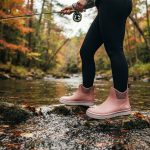
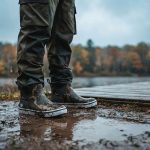
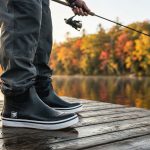
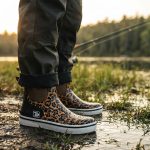
Deck Boots for Rainy Boat Fishing
Deck boots are one of the best options for anglers fishing from boats in wet weather.
They are typically waterproof, easy to clean, and designed for environments where rain, spray, fish slime, and standing water are common.
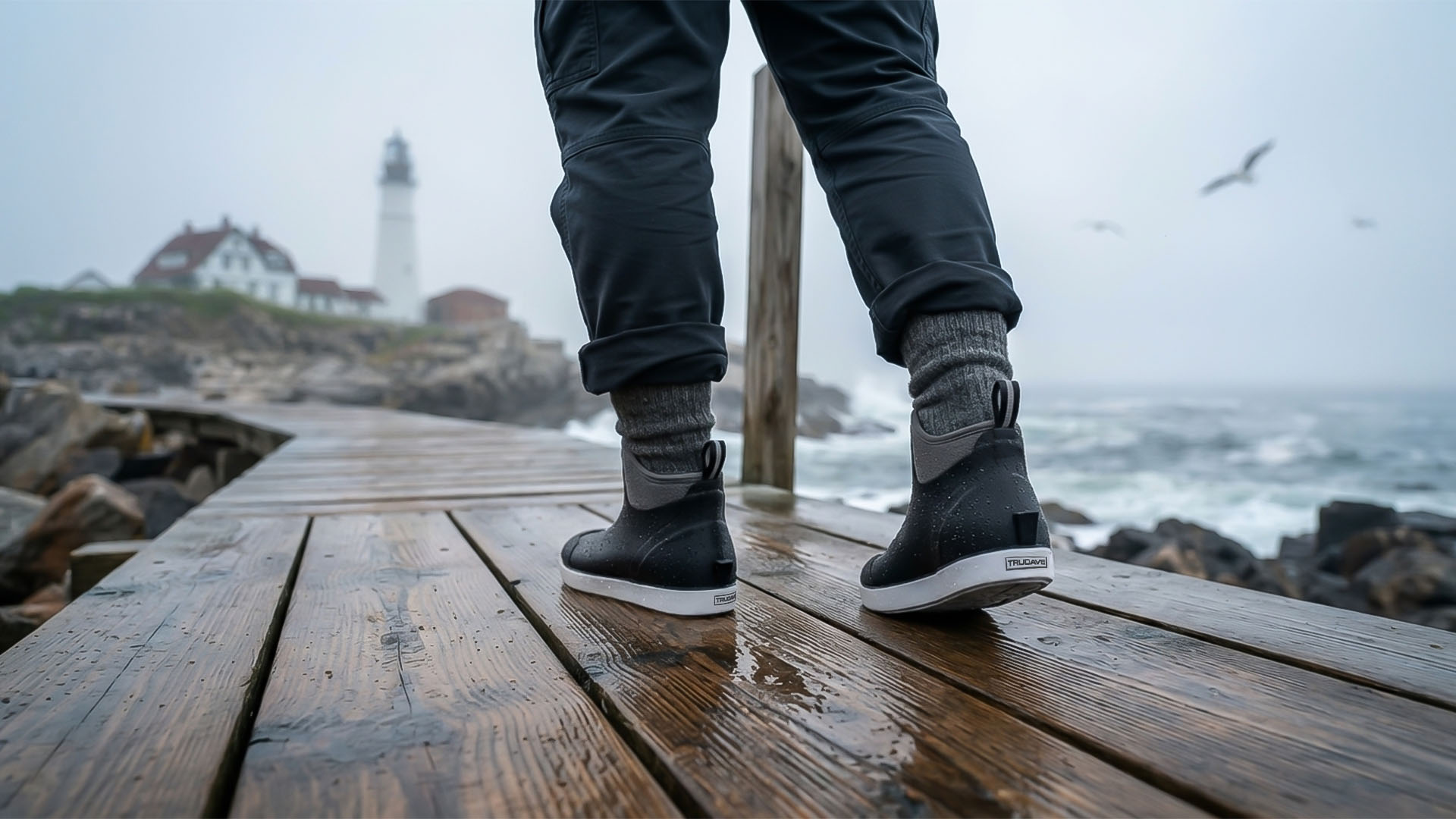
Ankle-height deck boots are especially popular because they provide protection without the bulk of tall rubber boots.
They work well for:
- Offshore fishing
- Inshore boat fishing
- Fishing charters
- Wet docks
- Boat launches
- Rainy marina conditions
- Routine deck washdowns
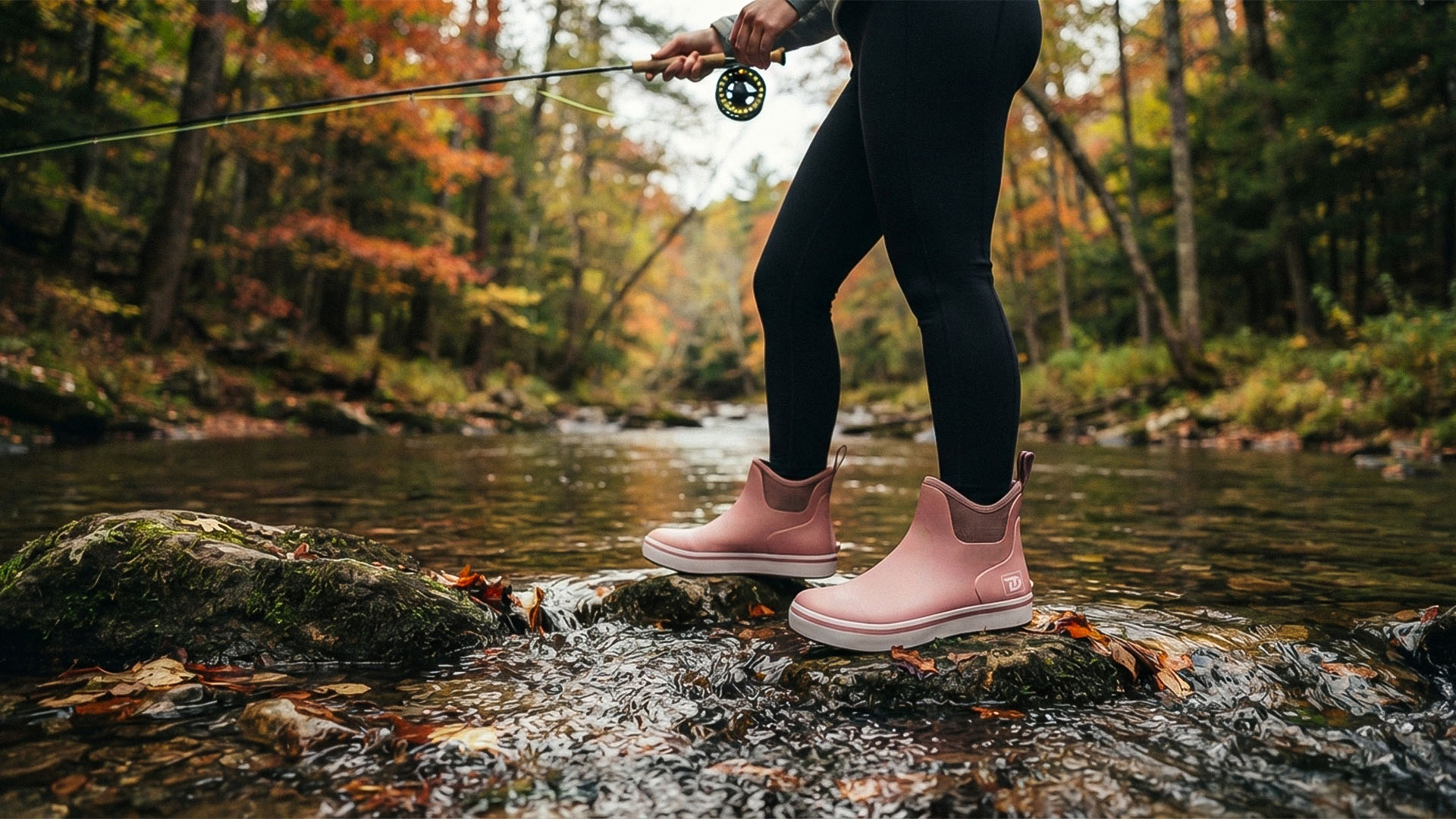
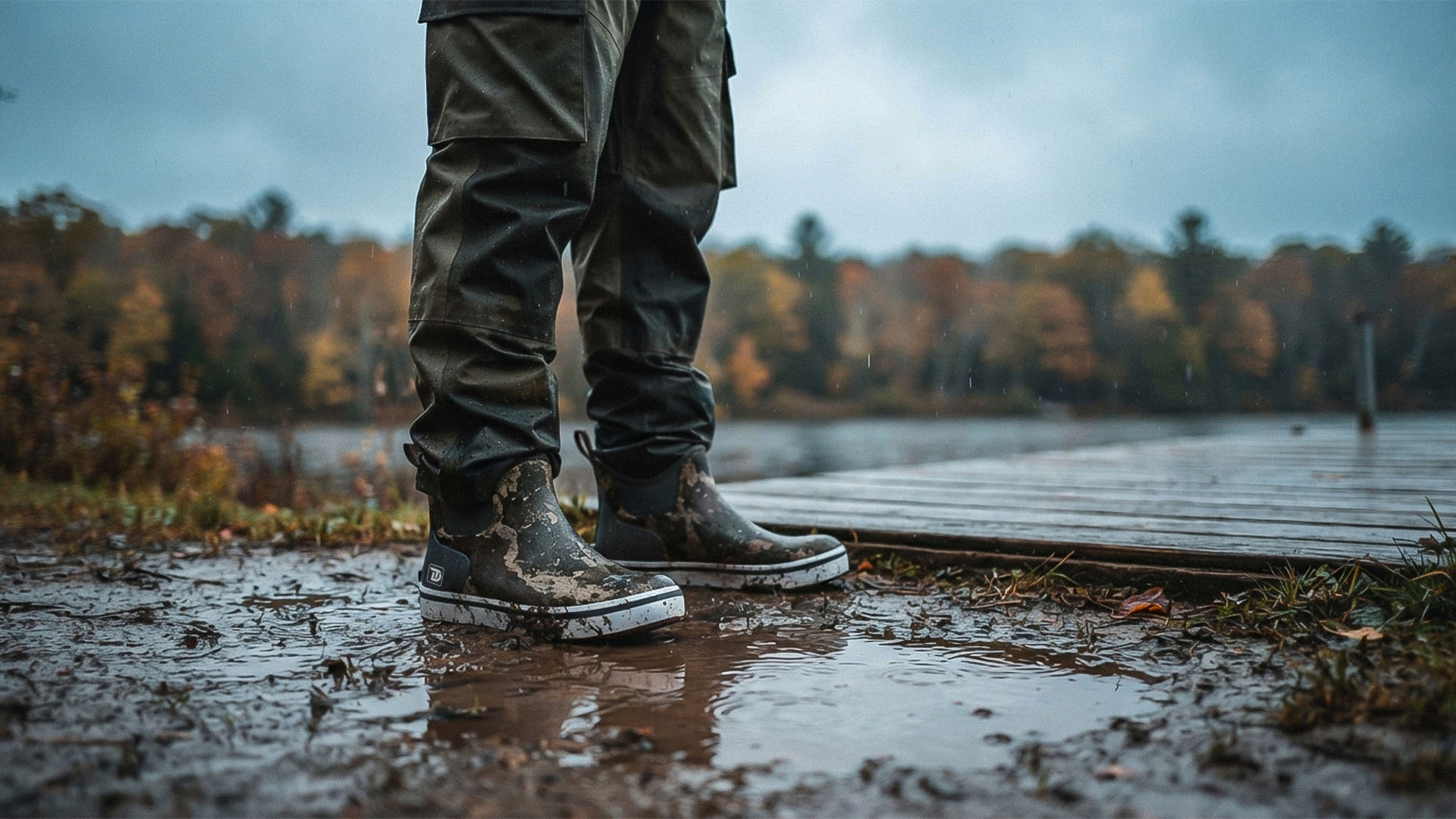
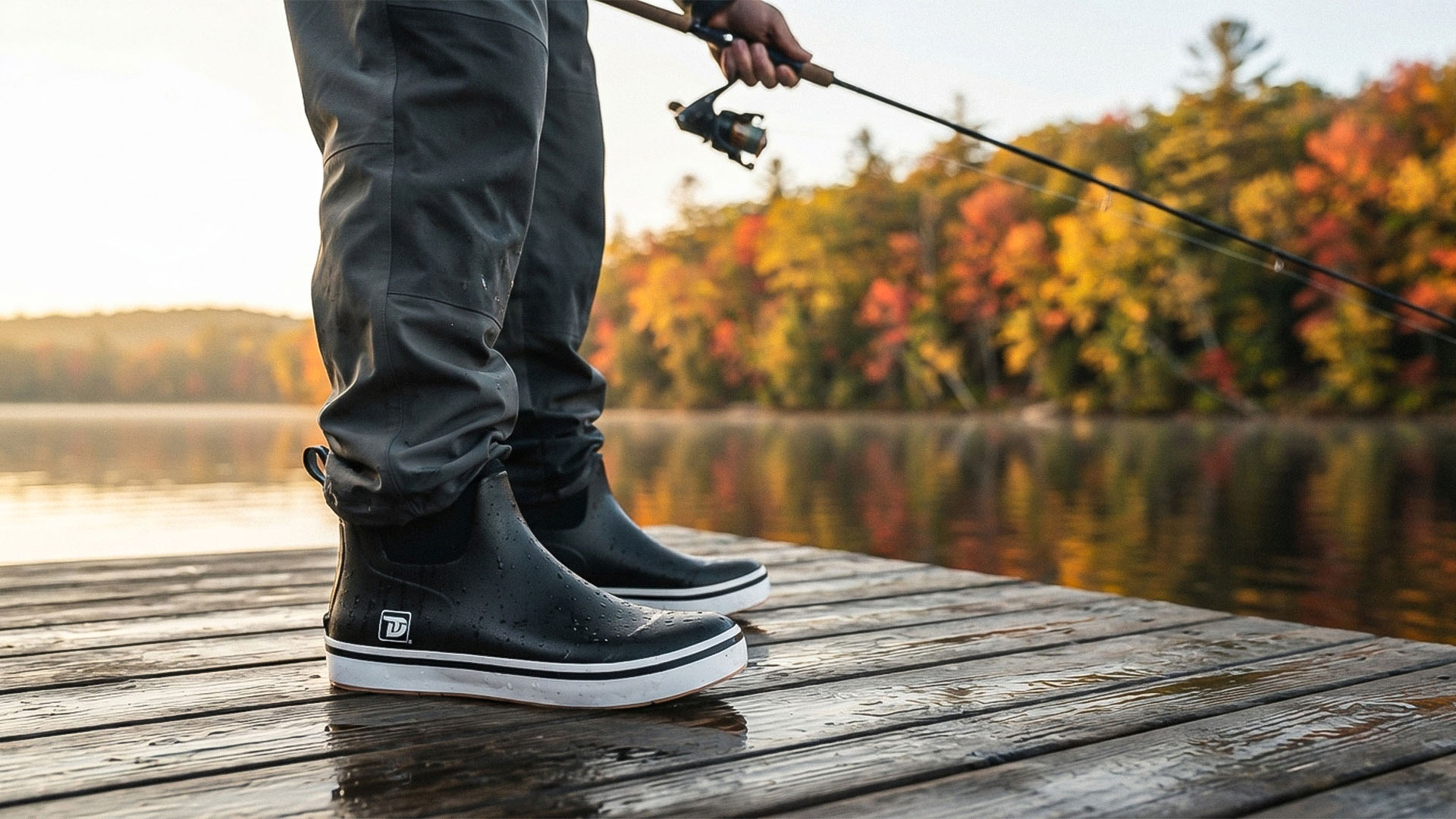
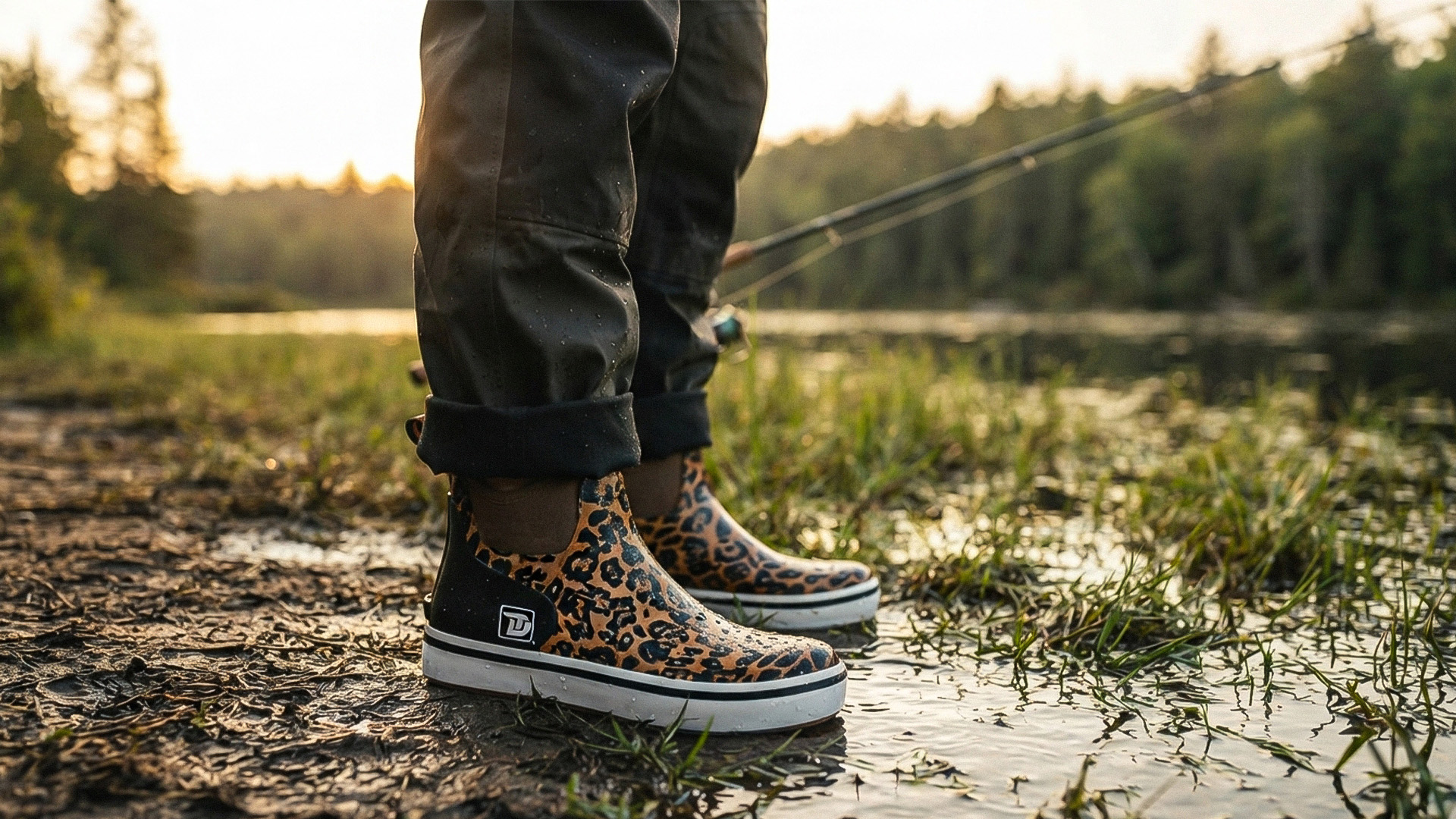
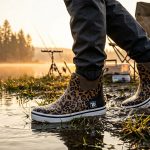
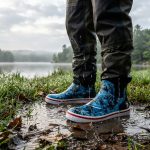
For anglers comparing footwear specifically for wet boat environments, [TruDaveGear waterproof deck boots] can be considered alongside other fishing-focused options.
The best deck boots should offer secure fit, wet-surface traction, cushioning, and enough room for the socks you normally wear.
Advantages of Deck Boots
Deck boots are easy to put on and remove.
They provide better mobility than most tall rubber boots.
They are usually easier to clean than fabric footwear.
They work well for shallow standing water and rain.
They are practical for long periods of standing.
Disadvantages of Deck Boots
Water can enter through the opening if rain pants are tucked inside the boots.
They are not suitable for deep water.
Uninsulated models may feel cold in low temperatures.
Fully waterproof construction can become warm during summer.
Tall Rubber Boots for Heavy Rain and Mud
Tall rubber boots provide more coverage than ankle deck boots.
They are useful when rain creates deeper puddles, mud, or standing water.
Bank fishermen, dock workers, commercial fishermen, and anglers fishing from rough shorelines may benefit from the additional height.
Tall rubber boots work well for:
- Heavy rain
- Muddy banks
- Deeper standing water
- Commercial fishing
- Boat ramps
- Marshes
- Fish processing
- Cold and wet environments
Advantages of Tall Rubber Boots
They provide greater lower-leg protection.
They are easy to rinse clean.
They help keep mud and water away from pants and socks.
They are available in insulated and uninsulated versions.
Disadvantages of Tall Rubber Boots
They are often heavier than ankle boots.
They can restrict movement.
They may become hot in warm weather.
Poorly cushioned models can be uncomfortable during long periods of standing.
Waterproof Fishing Shoes for Light Rain
Waterproof fishing shoes are useful when rain is light and deep water is unlikely.
They are often more flexible and comfortable for walking than rubber boots.
These shoes may work well for:
- Pier fishing
- Casual bank fishing
- Light rain
- Marina use
- Short fishing trips
- Walking between fishing locations
However, low-cut waterproof shoes have an obvious weakness.
Water can enter through the opening.
Once rain runs down your legs or you step into deeper water, the waterproof upper may not keep your socks dry.
Advantages of Waterproof Fishing Shoes
They are lightweight.
They feel more like ordinary athletic shoes.
They are practical for walking.
They can be more breathable than rubber boots.
Disadvantages of Waterproof Fishing Shoes
They provide limited water depth protection.
Fabric panels may be harder to clean.
Water entering from above can remain trapped inside.
They may take longer to dry than molded boots.
Quick-Draining Shoes for Warm Rain
Not every angler needs to keep water completely out.
In warm climates, quick-draining shoes may be more comfortable than waterproof boots.
These shoes allow water to enter and escape through drainage ports or mesh materials.
They are often used for:
- Kayak fishing
- Wade fishing
- Flats fishing
- Tropical fishing
- Warm-weather shoreline fishing
- Situations where feet will become wet anyway
Advantages of Quick-Draining Shoes
They are lightweight.
They offer good ventilation.
They dry faster than ordinary sneakers.
They are comfortable in warm weather.
Disadvantages of Quick-Draining Shoes
Your feet will get wet.
They provide little warmth in cold conditions.
Sand and debris may enter through drainage areas.
They may not protect against deep mud.
Hip Waders for Shallow Water
Hip waders extend up the legs and attach near the waist or belt area.
They are useful for anglers who wade into shallow rivers, streams, marshes, and shorelines.
Hip waders provide more protection than tall rubber boots without the full coverage of chest waders.
They work well for:
- Shallow stream fishing
- Creek fishing
- Marsh edges
- Shallow river crossings
- Launching small boats
Advantages of Hip Waders
They are lighter than chest waders.
They provide protection above the knee.
They are easier to put on than full waders.
They can be practical for shallow water.
Disadvantages of Hip Waders
They are not suitable for deep wading.
Water can enter if conditions exceed their height.
They provide less torso protection from rain and spray.
They may feel awkward during long walks.
Chest Waders for Deep Wading and Full Rain Protection
Chest waders provide the highest level of coverage among common fishing footwear systems.
They extend from the feet to the chest and are commonly used for river fishing, surf fishing, fly fishing, and cold-water wading.
Chest waders may use attached boots or stocking feet combined with separate wading boots.
They are useful for:
- River fishing
- Fly fishing
- Surf fishing
- Cold-water wading
- Deeper water
- Heavy rain
- Marsh fishing
Advantages of Chest Waders
They provide extensive waterproof protection.
They help keep the lower body dry.
They allow anglers to enter deeper water.
They work well in cold conditions when layered properly.
Disadvantages of Chest Waders
They are heavier and bulkier than boots.
They require more maintenance.
They can become hot in warm weather.
They may restrict movement.
They require careful fit and safe wading practices.
Waders vs. Deck Boots
Waders and deck boots solve different problems.
Deck boots are designed for wet surfaces and shallow water exposure.
Waders are designed for anglers entering the water.
Choose deck boots when:
- You are fishing from a boat
- Water exposure is mainly rain and spray
- You need mobility
- Standing water is shallow
- You want easy on-and-off footwear
Choose waders when:
- You need to stand in a river, stream, or surf
- Water will reach above boot height
- You need lower-body waterproof protection
- Conditions are cold
- Shore access requires wading
Wearing chest waders on a small recreational boat may be unnecessary and uncomfortable.
Wearing ankle deck boots in waist-deep water is obviously inadequate.
Match the footwear to the fishing method.
What to Wear for Boat Fishing in the Rain
For most rainy boat trips, a practical system includes:
- Waterproof jacket
- Waterproof bib pants or rain pants
- Ankle deck boots
- Moisture-wicking socks
- Warm mid layer when needed
- Spare socks
- Dry clothing stored in a waterproof bag
The pants should overlap the outside of the boot opening.
Do not tuck rain pants into ankle boots during heavy rain unless the clothing system is specifically designed that way.
Water running down the inside of pants can fill otherwise waterproof boots.
What to Wear for Bank Fishing in the Rain
Bank fishing involves more walking, mud, vegetation, and uneven ground than boat fishing.
Good options include:
- Tall rubber boots for mud and puddles
- Waterproof hiking-style fishing shoes for light rain
- Hip waders for shallow water access
- Chest waders for deeper rivers or streams
Consider the terrain.
A boot designed for smooth boat decks may not provide enough grip on steep mud.
Likewise, aggressive mud tread may hold dirt and feel unstable on a dock or boat.
What to Wear for Pier Fishing in the Rain
Pier anglers usually need protection from rain and puddles rather than deep water.
Suitable footwear includes:
- Waterproof fishing shoes
- Ankle deck boots
- Lightweight rubber boots
Choose footwear with enough cushioning for standing on concrete or wood for several hours.
Avoid open sandals during active fishing.
Hooks, bait knives, fish spines, and wet surfaces create unnecessary risks for exposed feet.
What to Wear for Kayak Fishing in the Rain
Kayak anglers should decide whether they want to keep water out or allow it to drain.
In warm weather, quick-draining shoes are often practical.
In cold weather, waterproof boots or appropriate dry systems may be necessary.
Consider:
- Water temperature
- Air temperature
- Launch conditions
- Likelihood of stepping into water
- Kayak design
- Time on the water
Avoid bulky footwear that makes entry, exit, or movement inside the kayak difficult.
What to Wear for Surf Fishing in the Rain
Surf fishing exposes anglers to waves, wet sand, rain, and changing water levels.
Common options include:
- Chest waders
- Tall surf boots
- Quick-draining shoes in warm weather
- Neoprene boots
Chest waders are useful in cold conditions, but they require careful use around waves and currents.
Never wade deeper than conditions and experience safely allow.
A waterproof boot does not protect against changing tides, strong currents, or unstable footing.
Should Rain Pants Go Inside or Outside Fishing Boots?
In most rainy fishing situations, waterproof pants should go over the outside of the boot opening.
This directs water down the exterior.
Tucking rain pants into boots may create a funnel that channels rain directly into the footwear.
Exceptions may exist for specialized wading systems or work environments.
For ordinary boat and bank fishing, overlapping the boots is generally the better setup.
What Socks Are Best for Rainy Fishing?
The right socks help manage moisture and temperature.
Synthetic Socks
Synthetic socks dry quickly and move moisture away from the skin.
They are useful in warm and moderate conditions.
Merino Wool Socks
Merino wool provides insulation and remains comfortable when slightly damp.
It is a strong option for cold-weather fishing.
Avoid Cotton
Cotton absorbs moisture and dries slowly.
Wet cotton socks can increase friction and make your feet feel colder.
Bring at least one spare pair in a waterproof bag.
Insulated or Uninsulated Boots?
Choose insulation based on temperature, not rainfall alone.
Choose Uninsulated Boots When:
- Fishing in warm climates
- Walking frequently
- Wearing thicker socks when needed
- Conditions are mild
- Overheating is a concern
Choose Insulated Boots When:
- Fishing in cold weather
- Standing still for long periods
- Fishing around cold water
- Temperatures are near freezing
- Wind and spray increase heat loss
Too much insulation can create sweat buildup.
A heavily insulated boot is not always more comfortable.
How to Prevent Water From Entering Rain Boots
Waterproof boots can still fill with water.
Use these strategies:
- Keep rain pants over the boot opening
- Choose appropriate boot height
- Avoid stepping into water deeper than the boot
- Inspect boots for cracks
- Use gaiters where appropriate
- Move carefully during washdowns
- Carry spare socks
- Keep backup footwear available
Once water enters a waterproof boot, it may remain trapped.
Address the problem early.
Common Rain Fishing Footwear Mistakes
Wearing Ordinary Sneakers
Most sneakers absorb water and take a long time to dry.
Their outsoles may not perform well on wet fishing surfaces.
Choosing Boots That Are Too Tall
Extra height adds weight and heat.
Use the lowest boot that provides enough protection.
Choosing Boots That Are Too Short
Ankle boots are not appropriate for deep mud, rivers, or standing water above the opening.
Ignoring Traction
A waterproof boot with poor grip is not good fishing footwear.
Wearing Cotton Socks
Cotton holds moisture and increases discomfort.
Tucking Rain Pants Into Boots
This can direct water into the footwear.
Forgetting Spare Socks
A dry pair can improve the rest of the trip.
Using Damaged Boots
Cracks, worn tread, and separating soles reduce protection.
How to Care for Fishing Footwear After Rain
Rainwater is less damaging than saltwater, but wet footwear still needs proper care.
After the trip:
Remove the insoles.
Rinse away mud, fish slime, and debris.
Wash with mild soap when necessary.
Dry the footwear completely.
Use gentle airflow.
Avoid high heat.
Store boots in a ventilated location.
If the boots were exposed to saltwater, rinse them with fresh water before drying.
Which Footwear Is Best for You?
Choose ankle deck boots when you fish from boats and mainly deal with rain, spray, and shallow water.
Choose tall rubber boots when you encounter mud, heavy rain, and deeper puddles.
Choose waterproof fishing shoes for light rain and walking.
Choose quick-draining shoes for warm-weather fishing where wet feet are expected.
Choose hip waders for shallow streams and marshes.
Choose chest waders for deep wading, cold rivers, and surf fishing.
The best footwear is not the option with the most waterproof coverage.
It is the footwear that matches your fishing style without adding unnecessary weight, heat, or restriction.
Final Thoughts
Rain does not have to ruin a fishing trip.
The right footwear helps you stay dry, maintain stable footing, and remain comfortable as conditions change.
Boat anglers will often be best served by lightweight waterproof deck boots.
Bank fishermen may need taller boots with better mud traction.
Kayak anglers in warm weather may prefer quick-draining shoes.
River and surf anglers may require hip or chest waders.
Consider water depth, temperature, walking distance, deck surface, terrain, and the amount of time you expect to fish.
Wear moisture-managing socks.
Keep rain pants outside the boot opening.
Carry spare dry clothing.
Inspect footwear before the trip.
Choose protection for the conditions you actually face.
Rain may change how you fish, but with the right gear, it does not have to send you home early.
Frequently Asked Questions
What is the best footwear for fishing in the rain?
The best option depends on the fishing environment. Deck boots are well suited for wet boats, tall rubber boots work for mud and deeper puddles, waterproof shoes are useful for light rain, and waders are necessary when entering deeper water.
Are deck boots good for rain?
Yes. Waterproof deck boots are useful for rainy boat trips, wet docks, shallow standing water, and ocean spray. Rain pants should overlap the boot opening to prevent water from entering from above.
Should I wear waders in the rain?
Waders are useful when fishing in rivers, streams, surf, or deep water. They may be unnecessary for ordinary boat or pier fishing where waterproof boots and rain pants provide enough protection.
Are waterproof shoes enough for fishing in rain?
Waterproof shoes can work in light rain and shallow conditions. Water may still enter through the opening, so they are less effective in heavy rain, deep puddles, or boat washdowns.
What socks should I wear for rainy fishing?
Wear synthetic moisture-wicking socks in mild or warm conditions. Merino wool socks are useful in colder weather. Avoid cotton because it absorbs moisture and dries slowly.
Should fishing rain pants go over boots?
In most situations, yes. Rain pants should overlap the outside of the boots so water runs down the exterior instead of entering through the boot opening.
Are tall rubber boots better than ankle deck boots?
Tall rubber boots provide greater water coverage and are better for deep puddles and mud. Ankle deck boots are lighter and often more comfortable for boat fishing and shallow water exposure.
Can I wear hiking boots for fishing in the rain?
Waterproof hiking boots may work for shore fishing and rough terrain, but they can be heavy, difficult to clean, and unsuitable for wet boat decks. Choose footwear based on the surface and fishing method.