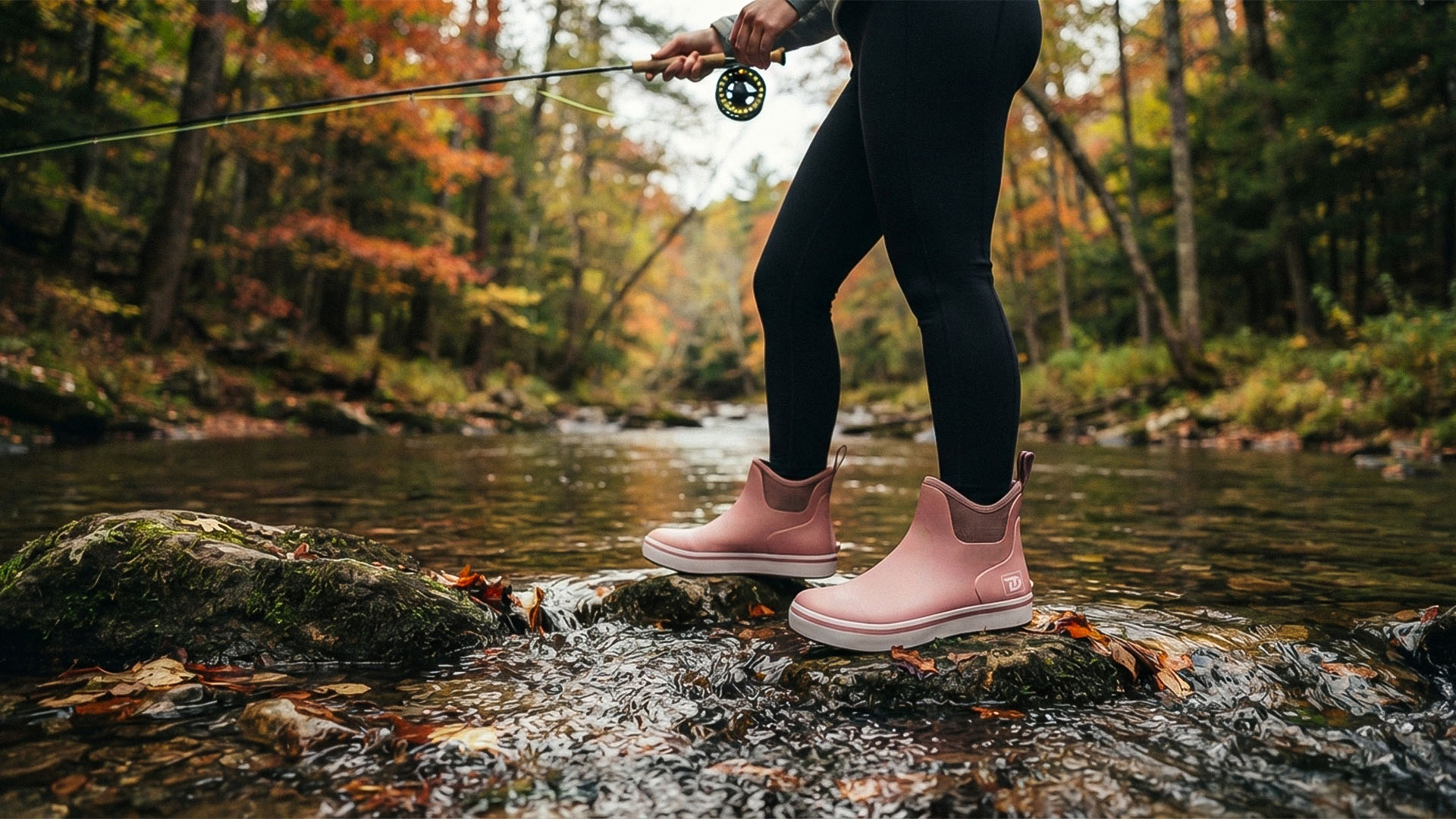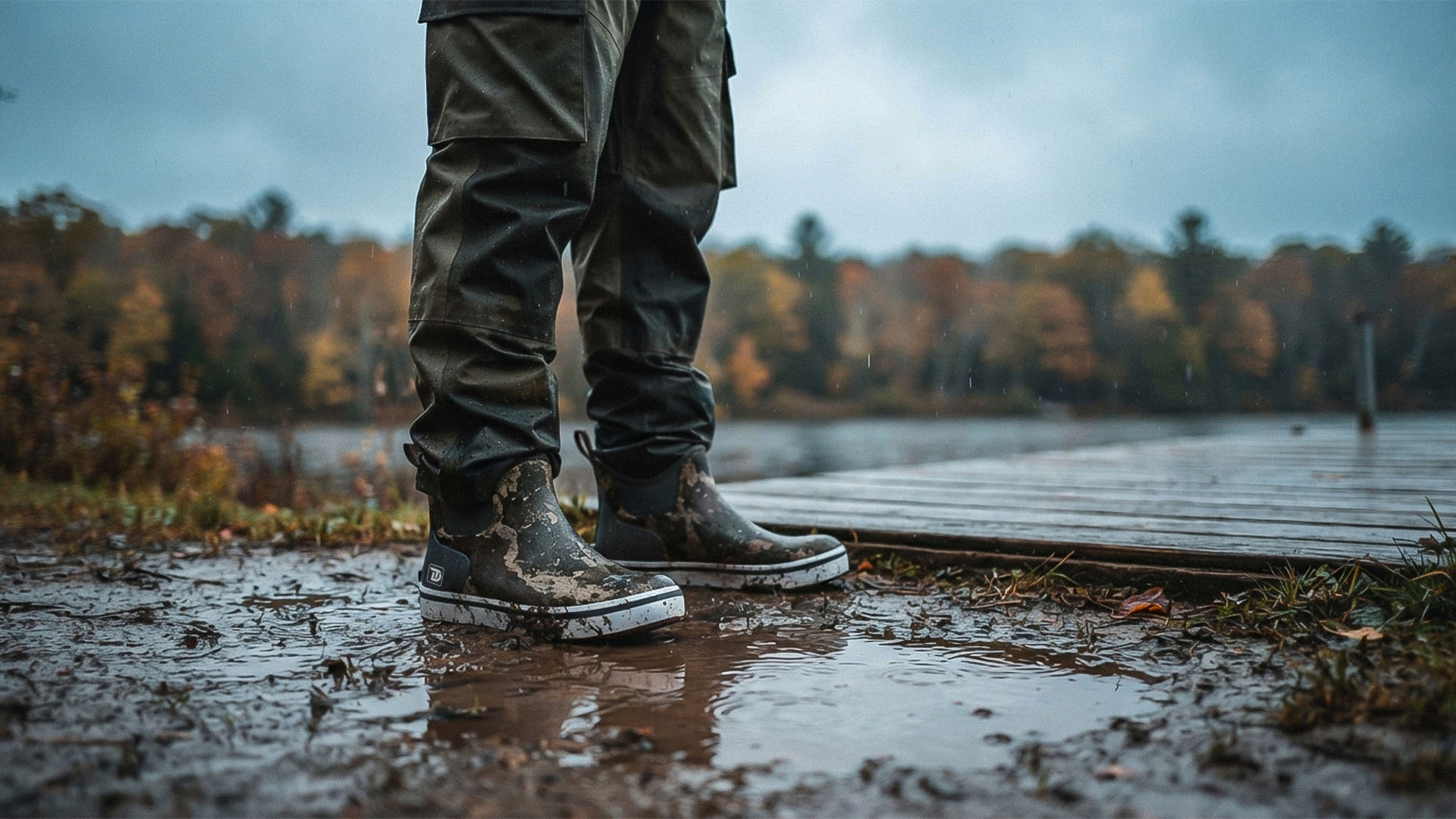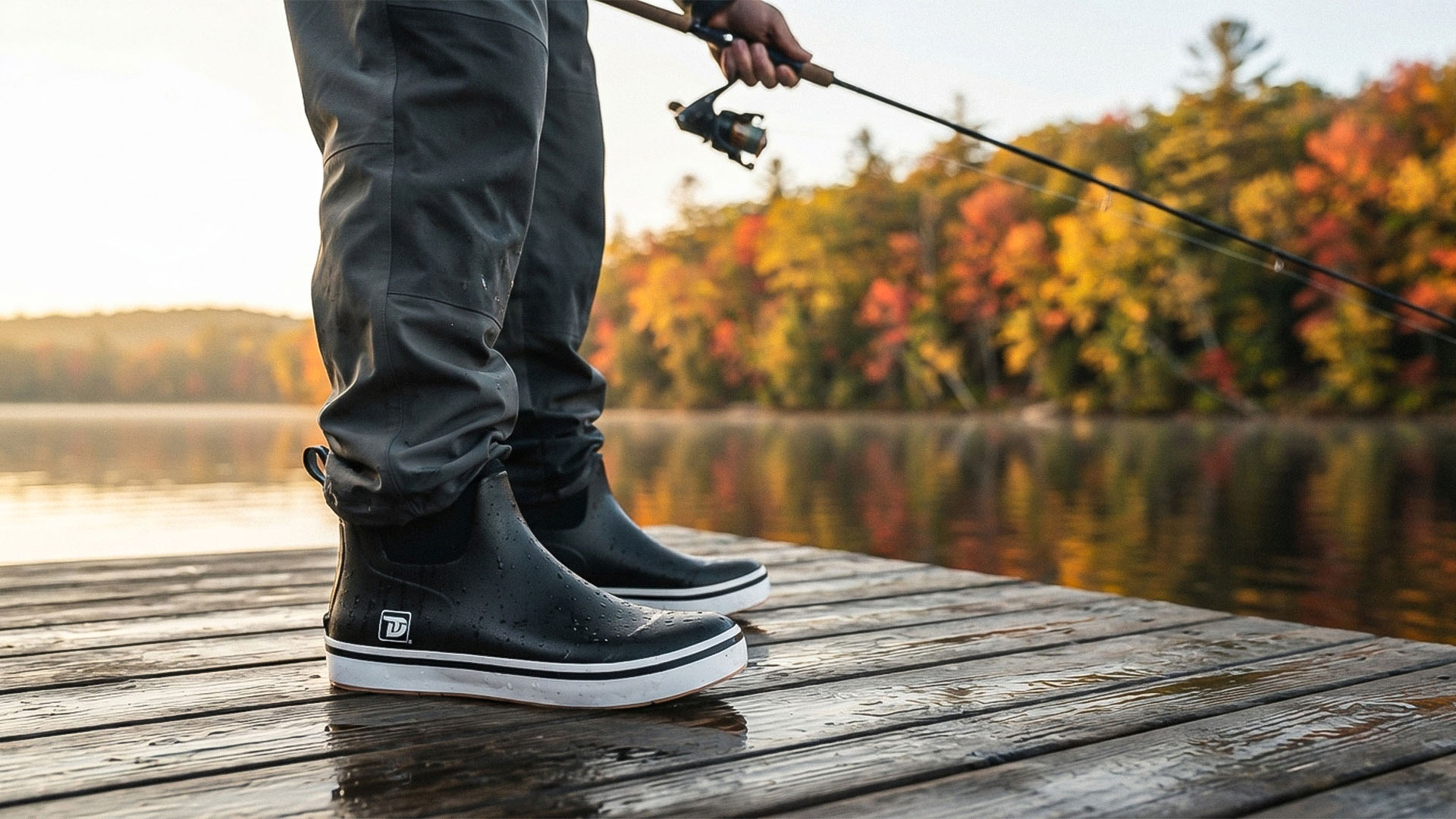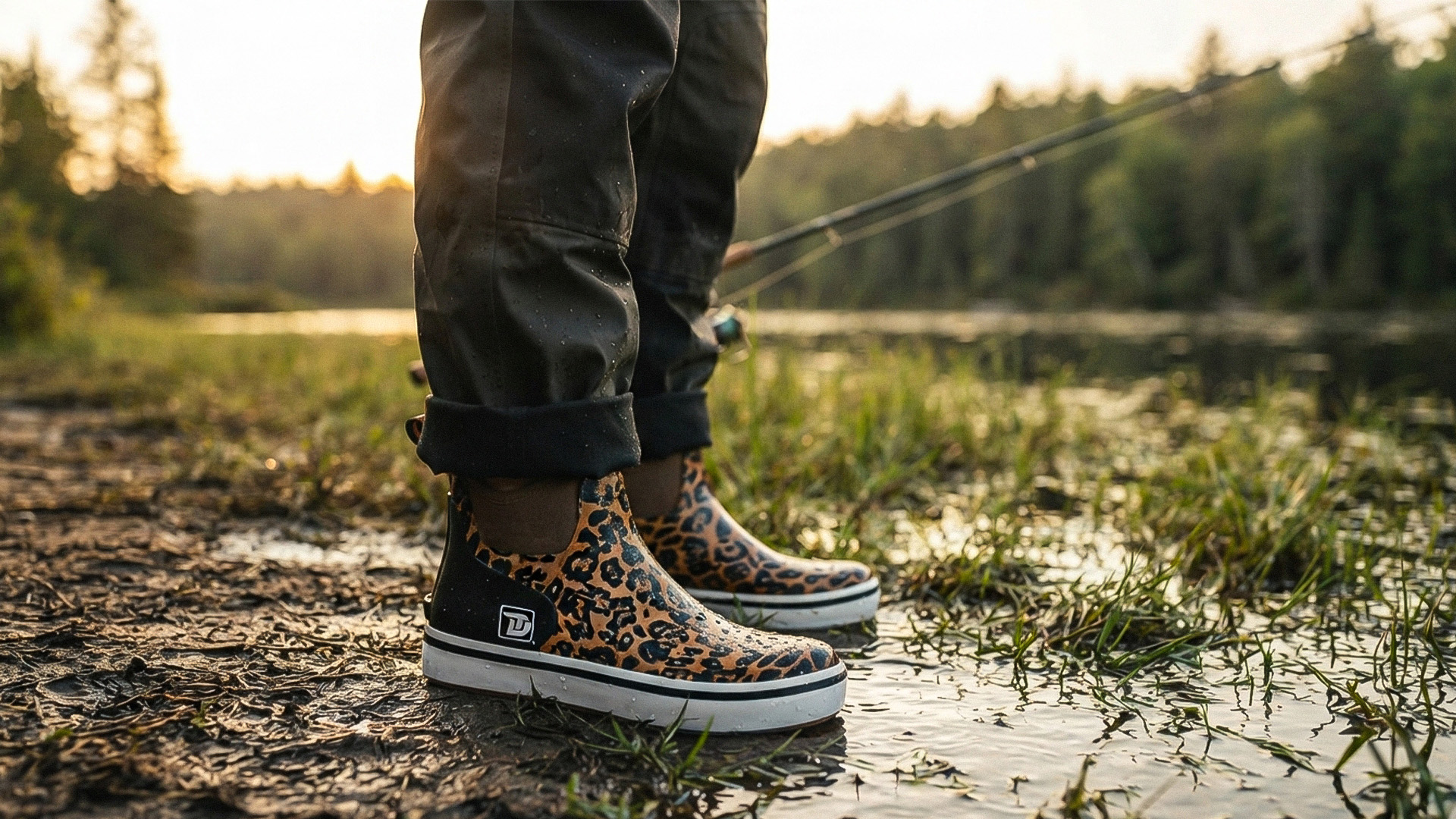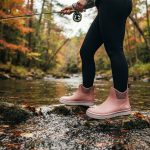
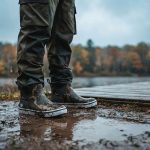
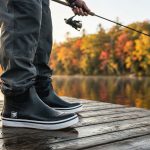
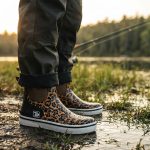
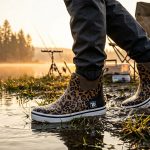
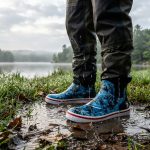
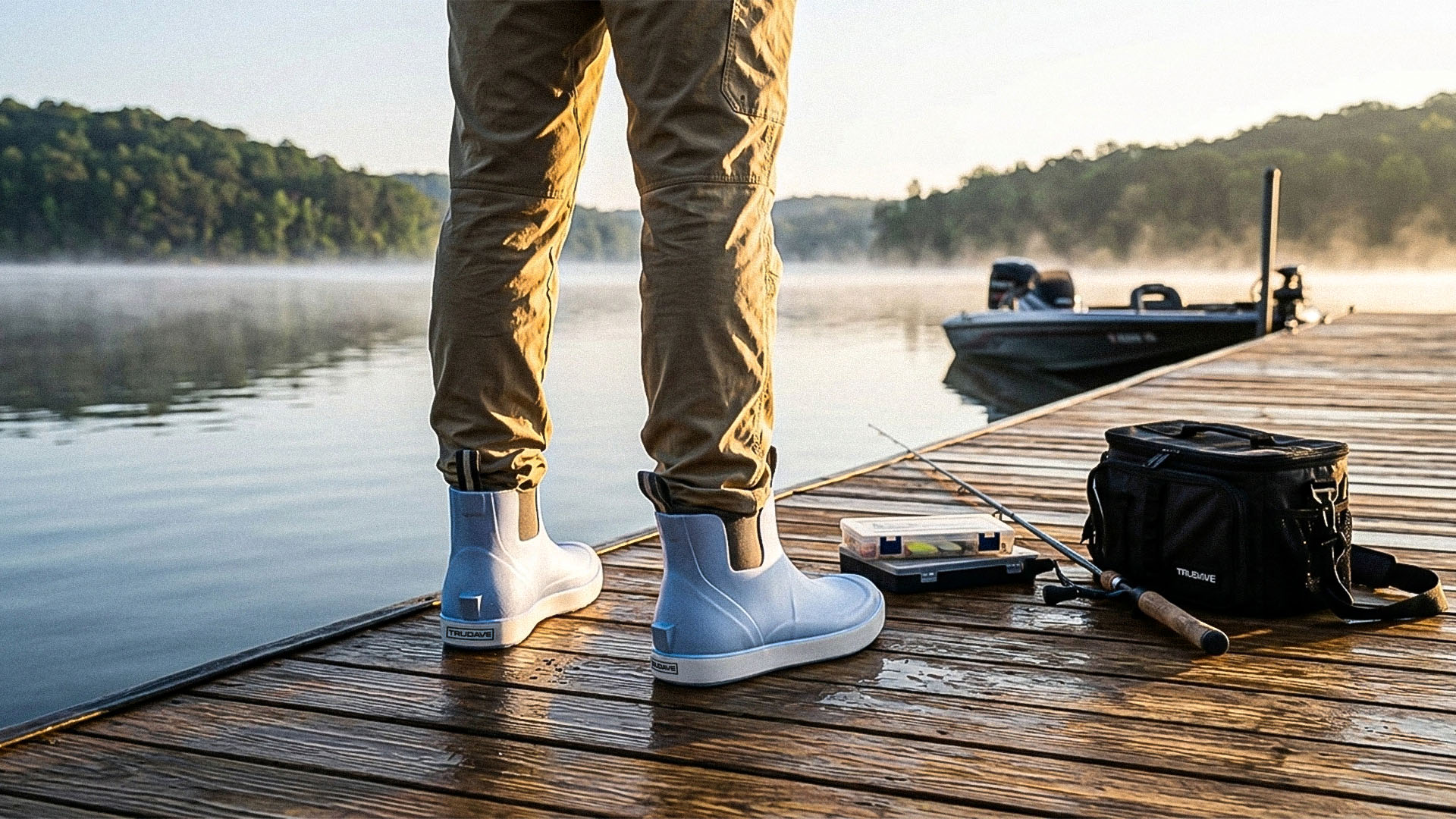
Musky fishing is not a casual footwear environment.
Anglers often spend long days casting oversized lures, moving around boats, handling large landing nets, fishing through cold wind and rain, and working around fish that can weigh more than many anglers expect.
The conditions can also be wet.
A musky boat may deal with:
- Rain
- Spray
- Wet nets
- Fish slime
- Livewell or cooler water
- Muddy ramps
- Cold boat decks
- Lake water
- Boat washdowns
Add long fall days and cold northern weather, and footwear becomes a major comfort decision.
The best deck boots for musky fishing should keep your feet dry, provide enough support for long periods of standing, stay secure during heavy casting and fish handling, and work well in cool or cold weather.
For many anglers, waterproof ankle or mid-height deck boots offer a strong balance between protection, comfort, and mobility.
This guide explains what to look for in musky fishing footwear, how cold weather changes boot choice, why large nets and oversized lures create additional safety concerns, and when insulated boots may be worth considering.
Why Musky Fishing Is Hard on Footwear
Musky anglers often fish longer and harder than casual freshwater anglers.
A typical day may involve:
- Hundreds of casts
- Large jerkbaits
- Bucktails
- Rubber baits
- Trolling
- Figure-eight retrieves
- Boat-side fish
- Large landing nets
- Long runs
- Cold wind
- Rain
Your feet may spend most of the day supporting constant casting and weight transfer.
That means footwear needs to handle both weather and fatigue.
Why Deck Boots Work Well for Musky Fishing
Waterproof deck boots offer several advantages:
- Protection from rain and spray
- Easy cleanup after fish slime
- Closed-toe coverage
- Secure boat-friendly design
- Comfortable standing support
- Easy pull-on construction
- Protection around muddy ramps
They are especially useful during spring and fall when cold, wet weather is common.
Anglers comparing freshwater fishing footwear can evaluate TruDaveGear waterproof deck boots alongside other options based on waterproofing, outsole design, fit, cushioning, removable insoles, boot height, and cold-weather comfort.
Musky Fishing Often Means Long Days
Musky fishing has a reputation for requiring patience.
You may cast for hours before seeing a fish.
That means your boots need to remain comfortable even when the action is slow.
Long standing can create:
- Heel fatigue
- Arch soreness
- Forefoot pressure
- Knee fatigue
- Lower-back discomfort
Look for footwear with:
- Stable cushioning
- Supportive footbeds
- Secure heel fit
- Comfortable toe room
The right boot should still feel good after hours of casting.
Heavy Casting Changes Footwear Needs
Musky lures are often much larger than normal freshwater lures.
Repeated casting creates significant movement through:
- Legs
- hips
- torso
- shoulders
Your feet act as the foundation.
Footwear should remain stable during:
- Weight transfer
- Long casts
- Side steps
- Boat turns
- Figure-eight movements
A loose boot may allow the foot to rotate inside the shell.
That can increase fatigue over time.
Figure-Eight Fishing at the Boat
Musky anglers often perform figure-eight retrieves near the boat.
This may require:
- Leaning
- Rotating
- Squatting slightly
- Moving around the edge of the deck
Footwear should remain secure during these movements.
Look for:
- Controlled heel fit
- Stable outsole
- Flexible forefoot
- Good side-to-side control
Oversized boots may feel awkward during boat-side movements.
Cold Fall Musky Fishing
Fall is one of the most important times for musky fishing.
It is also when footwear becomes especially important.
Conditions may include:
- Cold mornings
- Strong wind
- Rain
- Cold lake water
- Wet boat decks
- Rapid temperature drops
Waterproof footwear helps keep exterior moisture away.
Cold feet become uncomfortable quickly when rain or spray reaches ordinary sneakers.
Why Wet Feet Feel Worse in Cold Weather
Cold weather and wet socks are a bad combination.
Once moisture gets inside footwear, your feet may feel colder because:
- Evaporative cooling increases
- Socks lose warmth
- Long periods of standing reduce heat generation
- Cold decks pull heat from the foot
Keeping your feet dry is often more important than simply adding more insulation.
Insulated vs. Uninsulated Musky Boots
Insulated Deck Boots
Best for:
- Late fall
- Very cold mornings
- Cold northern lakes
- Long trolling days
- Anglers who get cold easily
Uninsulated Deck Boots
Best for:
- Spring
- Early fall
- Mild weather
- Active casting
- Multi-season use
For many anglers, uninsulated deck boots with quality socks provide enough warmth until conditions become very cold.
Best Socks for Musky Fishing
Good cold-weather socks should manage moisture and maintain warmth.
Choose:
- Merino wool
- Merino-synthetic blends
- Synthetic performance socks
Avoid cotton.
Cotton absorbs sweat and water and dries slowly.
For fall fishing, medium-weight merino socks are often a good choice.
For warmer conditions, switch to lighter socks.
Do Not Overstuff Boots With Thick Socks
A common mistake is wearing extremely thick socks inside boots that are already snug.
This can create:
- Toe compression
- Reduced circulation
- Instep pressure
- Cold feet
- Numbness
Your toes should still move naturally.
Warmth depends on both insulation and circulation.
Long Trolling Sessions
Some musky anglers troll for hours.
Trolling often means less body movement.
That can make feet feel colder than during active casting.
For trolling-heavy days, prioritize:
- Warm socks
- Stable cushioning
- Waterproof construction
- Enough underfoot insulation
- Comfortable standing support
Even anglers who normally prefer uninsulated boots may appreciate warmer footwear when they spend most of the day stationary.
Cold Boat Floors
Many musky boats use:
- Aluminum
- Fiberglass
- Vinyl
- Synthetic marine flooring
Cold decks can pull heat from your feet.
A supportive insole and adequate outsole thickness provide a layer between your foot and the boat.
Thin minimalist footwear may feel colder.
Wet Landing Nets
Musky landing nets are large.
Once used, they bring a significant amount of water onto the boat.
A wet net may drip across:
- Deck
- Cockpit
- fish-handling area
- boots
Waterproof deck boots are especially useful here.
Fabric shoes may become wet just from repeated fish landing.
Large Nets Create Deck Hazards
Musky nets take up a lot of space.
After landing a fish, the net may occupy:
- Cockpit floor
- bow deck
- side walkway
Keep the net controlled.
Do not leave it lying across major walking areas.
A wet net combined with loose tackle can create a serious trip hazard.
Good footwear helps, but organization matters more.
Musky Slime
Large muskies can leave a significant amount of slime around the fish-handling area.
Fish slime may reduce traction.
Try to:
- Keep the fish in the net
- Minimize time on dry surfaces
- Keep walking areas clear
- Rinse slime when safe
Waterproof deck boots are easy to clean afterward.
However, no boot is completely slip-proof on fish slime.
Catch-and-Release Handling
Many musky anglers practice catch and release.
Fish handling should prioritize:
- Minimizing time out of water
- Using proper tools
- Supporting the fish correctly
- Keeping fish wet
- Releasing quickly
Footwear should stay out of the fish-handling process.
Do not pin or control a musky with your boot.
Deck boots protect your feet; they are not fish-handling tools.
Large Lures Create Foot Hazards
Musky lures may carry large hooks.
Common lure types include:
- Bucktails
- Crankbaits
- Glide baits
- Jerkbaits
- Large rubber baits
- Topwaters
Many use large treble hooks.
This makes loose tackle around your feet dangerous.
Deck boots provide basic coverage but are not hook-proof.
Store lures securely.
Keep Treble Hooks Off the Deck
Use:
- Tackle boxes
- Lure hangers
- Hook protectors
- Dedicated storage
Do not leave large lures on the floor.
A heavy musky lure with exposed trebles can penetrate normal footwear.
The best protection is organization.
Hook Cutters and Release Tools
Musky anglers often carry specialized tools such as:
- Long-nose pliers
- Hook cutters
- Jaw spreaders where appropriate
- Measuring boards
Keep these tools in predictable locations.
Do not leave cutters or pliers loose near your feet.
A clean boat is safer during a high-energy fish landing.
Boat-Side Chaos
A musky strike near the boat can turn a quiet day into sudden action.
Anglers may need to:
- Move rods
- Grab the net
- Clear other lures
- Control the trolling motor
- Move between deck positions
Your footwear should not become part of the problem.
A secure boot should stay attached to your foot during quick movement.
Heel Fit
Heel control matters during heavy casting and sudden fish handling.
Too much heel movement can lead to:
- Blisters
- Sock movement
- Toe gripping
- Foot fatigue
- Reduced stability
Some heel lift is normal in pull-on boots.
Large movement is not.
Toe Room
Cold-weather anglers need enough toe room for:
- Socks
- Natural movement
- Mild swelling
- Circulation
Your toes should not touch the front.
Do not size down just to make the heel tighter.
Good fit should combine:
- Secure heel
- Stable midfoot
- Comfortable toe space
Wide Feet
Wide-footed musky anglers should look for:
- Roomy forefoot
- Wide toe box
- Enough instep volume
- Secure heel
Avoid sizing up excessively.
A longer boot may create instability during casting.
Choose a model that matches foot width rather than simply increasing length.
High Instep
Pull-on deck boots can be challenging for anglers with high insteps.
Signs of poor fit include:
- Pressure across the top of the foot
- Numbness
- Difficulty entering
- Difficulty removing
Look for:
- Higher internal volume
- Removable insoles
- Strong pull tabs
- Comfortable boot opening
Removable Insoles
Removable insoles are especially useful for musky anglers because trips may be long and wet.
They help with:
- Drying
- Odor control
- Cushioning replacement
- Arch support
- Seasonal adjustments
After fishing, remove the insoles and dry them separately.
Replacement Insoles for Long Casting Days
Musky fishing places more repetitive load on your feet than many people realize.
An aftermarket insole may help when the factory footbed does not provide enough:
- Heel support
- Arch support
- Cushioning
Use only one properly fitted insole.
Do not stack multiple footbeds.
That can make the boot too tight.
Wet-Deck Traction
A musky boat may become wet from:
- Rain
- Spray
- Landing nets
- Fish slime
- Boat cleaning
Look for an outsole with:
- Broad contact area
- Flexible rubber
- Water channels
- Stable heel platform
- Cleanable grooves
No deck boot is completely slip-proof.
Keep both deck and tread clean.
Rainy Musky Days
Musky anglers often fish through poor weather.
Waterproof footwear becomes particularly valuable when rain continues for hours.
Pair deck boots with:
- Waterproof jacket
- Bibs
- Rain pants
Keep rain-pant legs outside the boot opening.
This prevents rainwater from running directly inside.
Fishing Bibs and Deck Boots
The correct layering arrangement is:
- Sock
- Deck boot
- Bib leg over boot
The pant leg should overlap the boot collar.
Do not tuck waterproof bibs inside unless the clothing system specifically requires it.
Wind and Spray
Large northern lakes can produce strong wind.
Even if it is not raining, spray may reach the deck during boat runs.
Waterproof boots provide better protection than fabric shoes.
This is especially valuable when water temperatures are cold.
Great Lakes Musky Fishing
Great Lakes musky anglers may face:
- Open water
- Strong wind
- Large waves
- Cold spray
- Long boat runs
Footwear should prioritize:
- Waterproof protection
- Stable fit
- Warm sock compatibility
- Cushioning
- Reliable construction
A long offshore-style run on freshwater can still make footwear wet and cold.
Minnesota Musky Fishing
Upper Midwest anglers often fish through changing seasonal conditions.
A September day may be mild.
A November day may involve freezing temperatures.
Footwear should change with the season.
A practical system may include:
- Uninsulated deck boots for early season
- Warmer insulated boots for late fall
Wisconsin Musky Fishing
Similar conditions apply across many northern musky fisheries.
Cold mornings, wind, and rain make waterproof boots especially useful.
Anglers who fish several seasons may benefit from owning more than one footwear setup.
Canadian Musky Fishing
Northern fisheries can involve even colder conditions.
If your trip includes remote or very cold environments, prioritize proper cold-weather clothing in addition to waterproof footwear.
Deck boots are only one part of the system.
Summer Musky Fishing
Summer conditions may make deck boots feel warm.
Use:
- Lightweight uninsulated boots
- Thin moisture-wicking socks
- Ankle-height models
For dry, hot weather, breathable fishing shoes may be more comfortable.
Choose based on conditions rather than species alone.
Spring Musky Fishing
Where regulations and seasons allow spring musky fishing, conditions may include:
- Cold rain
- Muddy ramps
- Cool water
Uninsulated waterproof boots with medium-weight socks often provide a good balance.
Fall Musky Fishing
Fall is where deck boots become most useful.
You may face:
- Rain
- Cold spray
- low temperatures
- Wet decks
- Long days
Choose footwear that prioritizes dry feet and enough warmth.
Muddy Boat Ramps
Cold fall rain can make ramps muddy and slick.
Deck boots are useful for:
- Shallow mud
- Wet grass
- Puddles
- Trailer areas
Before boarding, remove mud from the tread.
Mud can reduce traction on the boat.
Algae on Ramps
Algae-covered submerged concrete can be extremely slippery.
No deck boot is guaranteed to grip it safely.
Move carefully and avoid unnecessary steps into the water.
Use railings or trailer supports when appropriate.
Deck Boots vs. Sneakers for Musky Fishing
Deck Boots Are Better For:
- Rain
- Cold mornings
- Wet nets
- Mud
- Spray
- Fall fishing
Sneakers Are Better For:
- Hot dry weather
- Maximum ventilation
- Long walking
During traditional fall musky conditions, waterproof deck boots often have the advantage.
Deck Boots vs. Hiking Boots
Waterproof hiking boots offer:
- More ankle support
- Better trail performance
- Lace adjustment
Deck boots offer:
- Easier cleanup
- Faster entry
- Better wet-boat convenience
- Less fabric to absorb fish slime
Choose based on whether the day involves more boat time or walking.
Deck Boots vs. Tall Rubber Boots
Tall rubber boots provide more coverage but may be:
- Heavier
- warmer
- less flexible
For most recreational musky boats, ankle or mid-height deck boots are easier to move in.
Tall boots make more sense for extremely wet or work-style conditions.
Night Musky Fishing
Some anglers fish muskies after dark.
At night, footwear should remain secure because visibility is reduced.
Keep:
- Lures
- Nets
- tools
- line
off walking areas.
Use good deck lighting.
Large hooks and poor visibility are a dangerous combination.
Trolling Motor Compatibility
Casting anglers may spend hours using a foot-controlled trolling motor.
Look for:
- Flexible forefoot
- Ankle mobility
- Secure heel
- Low bulk
A stiff boot can make pedal use uncomfortable.
Test the boots on your boat before relying on them during a long trip.
Standing on Carpet
Some musky boats use carpet.
Wet carpet can remain damp after:
- Rain
- Net water
- Fish handling
Deck boots keep socks dry.
However, clean ramp mud and gravel from the outsole before stepping onto carpet.
Synthetic Boat Decks
EVA or synthetic flooring can provide extra cushioning.
Still, inspect the outsole for:
- Gravel
- Sharp debris
- Mud
before boarding.
Trapped grit can damage softer deck materials.
Cleaning Musky Slime From Boots
After fishing:
- Rinse with fresh water.
- Remove visible slime.
- Use mild soap if needed.
- Brush the outsole.
- Rinse thoroughly.
- Remove the insoles.
- Dry everything separately.
Do not let fish residue sit for days.
Cleaning Mud
Ramp mud should be removed before it dries.
Use:
- Fresh water
- Boot brush
Pay attention to outsole grooves.
Check for hooks before cleaning by hand.
Drying Deck Boots
After fishing:
- Remove insoles
- Open the boot tops
- Use gentle airflow
- Dry footbeds separately
Avoid:
- Clothes dryers
- Heat guns
- Radiators
- Open flames
High heat can damage waterproof materials, foam, and adhesives.
Odor Control
Musky boots can develop odor from:
- Sweat
- damp insoles
- fish slime
- wet storage
Prevent odor by:
- Wearing clean moisture-wicking socks
- Removing insoles
- Cleaning fish residue
- Drying boots completely
- Avoiding hot sealed storage
Two-Pair Strategy for Serious Musky Anglers
Frequent anglers may benefit from:
- Lightweight uninsulated deck boots
- Cold-weather insulated boots
This lets you match footwear to conditions.
It also provides a backup when one pair is still drying.
Musky Fishing Footwear Checklist
Before fishing:
- Check weather
- Inspect outsole
- Confirm boots are dry
- Select proper socks
- Pack spare socks
- Check trolling motor comfort
- Organize large lures
- Keep hook cutters accessible
- Bring rain gear
After fishing:
- Rinse mud
- Clean fish slime
- Brush tread
- Remove insoles
- Dry completely
- Inspect wear
Best Deck Boot Features for Musky Fishing
Look for:
Waterproof Construction
Protects against rain, spray, and wet nets.
Stable Outsole
Important on wet boat surfaces.
Secure Heel
Supports heavy casting and sudden movement.
Comfortable Toe Box
Allows long wear and cold-weather socks.
Removable Insoles
Improves drying and support.
Stable Cushioning
Helps during long casting days.
Flexible Forefoot
Useful for trolling motor operation.
Easy-Clean Upper
Helpful after fish slime.
Appropriate Insulation
Choose according to season.
Common Musky Fishing Footwear Mistakes
Wearing Mesh Sneakers in Cold Rain
Wet shoes can become miserable quickly.
Wearing Cotton Socks
Cotton holds moisture.
Wearing Boots Too Tight With Fall Socks
Compression can make feet colder.
Leaving Large Treble Hooks on the Deck
Deck boots are not hook-proof.
Wearing Oversized Boots
Loose footwear reduces stability during casting.
Ignoring Net Water
Wet nets can keep the deck damp all day.
Bringing Ramp Mud Onto the Boat
Mud reduces traction.
Using Summer Boots in Late-Fall Cold
Insufficient warmth can become a distraction.
Wearing Heavy Insulated Boots in Warm Weather
Overheating causes sweat.
Not Testing Trolling Motor Comfort
Stiff boots may interfere with pedal use.
Final Thoughts
Musky fishing demands footwear that can handle long casting days, cold weather, wet nets, rain, large fish, muddy ramps, and sudden movement around the boat.
For many anglers, waterproof deck boots are an excellent choice—especially during fall.
Choose boots with a secure heel, stable outsole, comfortable toe room, removable insoles, and enough cushioning for long periods of standing and casting.
Use uninsulated boots during mild weather.
Use warmer or insulated options when late-fall temperatures demand more protection.
Wear moisture-wicking synthetic or merino-blend socks instead of cotton.
Keep large lures, treble hooks, nets, and release tools organized.
Standard deck boots are not hook-proof and should never be treated as protection from oversized musky tackle.
Keep rain pants over the boot openings so water stays outside.
After fishing, rinse mud and fish slime, clean the tread, remove the insoles, and dry everything thoroughly.
The best musky footwear should keep your feet dry and comfortable enough that you can stay focused through hundreds of casts.
Because when the fish of 10,000 casts finally shows up beside the boat, your attention should be on the fish—not cold toes, wet socks, or sore feet.
Frequently Asked Questions
Are deck boots good for musky fishing?
Yes. Deck boots are especially useful for rainy, cold, wet, and fall musky fishing conditions.
What boots should I wear for fall musky fishing?
Waterproof deck boots with warm moisture-wicking socks are a practical choice. Very cold conditions may require insulated footwear.
Do I need insulated boots for musky fishing?
Not always. Uninsulated boots are more versatile, while insulated boots are useful during very cold late-season fishing.
What socks should I wear for musky fishing?
Wear merino wool, synthetic, or merino-blend moisture-wicking socks. Avoid cotton.
Are deck boots good for casting all day?
Yes, if they provide secure fit, stable cushioning, and enough forefoot flexibility.
Can I use deck boots with a trolling motor?
Yes. Look for ankle-height boots with a flexible forefoot and test them with your pedal system.
Are deck boots safe around large musky hooks?
They provide basic foot coverage but are not hook-proof. Keep large treble hooks off the deck.
Can I wear sneakers for musky fishing?
Yes in warm dry weather, but waterproof deck boots are usually more practical in rain, cold spray, and wet fall conditions.
Are deck boots good for Great Lakes musky fishing?
Yes. Waterproof boots can be useful during windy, wet, and cold open-water trips.
Are deck boots good for wet landing nets?
Yes. Waterproof deck boots keep net water from soaking into fabric footwear.
How do I clean musky slime from deck boots?
Rinse with fresh water, use mild soap if needed, brush the upper and outsole, rinse thoroughly, remove the insoles, and air dry.
Should I bring spare socks on a musky trip?
Yes, especially during long fall, rainy, or cold-weather trips.
Should rain pants go inside deck boots?
No. Keep rain pants outside the boot opening so water runs down the exterior.
Are ankle deck boots warm enough for fall musky fishing?
They can be with appropriate socks in mild to cool conditions. Colder weather may require insulated boots.
Why are removable insoles useful for musky fishing?
They improve drying, odor control, support replacement, and all-day comfort.
How should musky fishing boots fit?
They should hold the heel securely while allowing enough toe room for natural movement and seasonal socks.
What is the biggest footwear mistake in musky fishing?
Wearing absorbent footwear in cold wet weather—or leaving large hooks and tackle loose around your feet—are two of the most common mistakes.