


Meta Description: Compare cheap vs. premium deck boots for fishing, including waterproofing, traction, comfort, durability, insoles, odor control, and long-term value.
Suggested URL Slug: cheap-vs-premium-deck-boots
Primary Keyword: cheap vs premium deck boots
Secondary Keywords: are expensive deck boots worth it, cheap fishing boots, premium deck boots, best deck boots for fishing, waterproof fishing boots, deck boots buying guide, fishing boot value
Search Intent: Commercial Investigation / Buying Guide
Deck boots can range from budget-friendly to surprisingly expensive.
At first glance, many pairs look similar. They are waterproof, pull-on, ankle-height, easy to rinse, and designed for wet boat decks. If they all keep water out, why pay more?
That is the question many anglers ask before buying their first pair.
The answer depends on how you fish.
A cheap pair of deck boots may be enough for occasional light use, short inshore trips, casual boat cleaning, or anglers who only need basic waterproof protection a few times per season.
Premium deck boots usually provide better long-term comfort, more stable traction, improved cushioning, better fit, stronger materials, better odor control, and more reliable performance during long days on wet decks.
The difference is not always obvious in the product photo.
It often appears after several hours of standing, after repeated saltwater trips, after walking on concrete docks, after washing fish slime from the outsole, or after a full season of use.
This guide compares cheap vs. premium deck boots so anglers can understand what they actually get for the money and when it makes sense to upgrade.
Why Deck Boot Price Varies
Deck boot prices vary because brands make different choices in:
- Waterproof materials
- Outsole rubber
- Tread design
- Cushioning
- Insoles
- Fit structure
- Lining comfort
- Pull-tab strength
- Weight
- Durability
- Odor control
- Quality control
- Brand support
- Design testing
- Target user
Two boots may both be waterproof when new, but that does not mean they will feel the same after a long offshore trip.
Price is not everything.
An expensive boot is not automatically the best boot for every angler.
But the cheapest boot is not always the best value either.
Cheap Deck Boots: What They Usually Offer
Budget deck boots usually focus on basic waterproof protection.
They may work well for:
- Occasional fishing
- Light boat cleaning
- Short dock use
- Rainy chores
- Casual boating
- Backup footwear
- First-time charter passengers
- Limited seasonal use
A cheap pair can be a reasonable choice when you do not fish often and only need simple protection from water, mud, and wet decks.
The main advantage is upfront cost.
If you are unsure how often you will use deck boots, an affordable pair may help you test whether this footwear style works for you.
Premium Deck Boots: What They Usually Offer
Premium deck boots are usually designed for anglers who spend more time around water.
They often focus on:
- Better all-day comfort
- More stable wet-deck traction
- Improved heel cushioning
- Removable insoles
- Better fit control
- More durable materials
- Easier cleaning
- Better odor management
- Lower fatigue during long standing
- More reliable construction
- Longer useful life
Premium does not mean indestructible.
All deck boots wear out eventually.
But a better-built pair may remain comfortable, supportive, and reliable for more trips.
The Biggest Difference Is Usually Comfort
Many cheap boots feel acceptable when tried on for a few minutes.
The problem often appears later.
After several hours, anglers may notice:
- Heel fatigue
- Arch soreness
- Forefoot pressure
- Hot spots
- Sock bunching
- Knee tiredness
- Lower-back fatigue
- Excessive heel slip
- Thin cushioning
- Hard footbeds
Premium boots usually invest more in footbed design, cushioning, heel stability, and all-day standing comfort.
This matters because fishing often involves long periods of standing on hard surfaces.
A comfortable boot is not a luxury when you are offshore for eight hours.
It is part of your fishing system.
Waterproofing: New vs. Long-Term Performance
Most deck boots are marketed as waterproof.
The real question is how long they stay that way.
Cheap boots may keep water out when new but can become less reliable after repeated exposure to:
- Saltwater
- Flexing
- Heat
- UV light
- Mud
- Fish slime
- Boat cleaning chemicals
- Concrete abrasion
- Poor drying
- Heavy use
Premium boots may use better materials, stronger construction, and more durable bonding around high-stress areas.
Look closely at:
- Forefoot flex zone
- Sidewalls
- Outsole bonding
- Heel area
- Toe bend
- Pull-tab attachments
- Boot collar
Waterproofing is only valuable if it lasts through real fishing use.
Traction: Outsole Design Matters
Wet-deck traction is one area where boot quality can matter a lot.
A good marine outsole should provide:
- Water-channeling grooves
- Stable heel platform
- Broad contact area
- Flexible rubber
- Cleanable tread
- Controlled forefoot flex
- Reliable contact on wet hard surfaces
Cheap boots may use simpler tread patterns or harder rubber that performs less consistently on wet fiberglass, aluminum, docks, or ramps.
Premium boots often put more effort into outsole shape, rubber compound, and stability.
No deck boot is completely slip-proof.
Fish slime, soap, oil, algae, and ice can still create hazards.
But a better outsole can make movement feel more predictable in ordinary wet-deck conditions.
Tread Durability
The outsole is one of the first areas to inspect when comparing value.
A cheaper boot may wear down faster if used on:
- Concrete piers
- Boat ramps
- Parking lots
- Gravel
- Rough docks
- Fish-cleaning stations
- Marina walkways
Once tread channels become smooth, wet-deck performance may decline.
Premium boots may use more durable outsole materials, but even premium marine tread will wear faster on rough concrete than on boat decks.
If you walk long distances on pavement, outsole durability matters.
Cushioning and Support
Cheap deck boots often include simple flat insoles.
That may be fine for short use, but it can become uncomfortable during long standing.
Better deck boots usually provide:
- More stable heel cushioning
- Better underfoot support
- More comfortable footbeds
- Better shock absorption
- Removable insoles
- More consistent midfoot feel
- Improved pressure distribution
If you have flat feet, high arches, heel pain, or plantar fasciitis, removable insoles become especially important.
A premium boot with a removable footbed gives you more flexibility to customize support.
Removable Insoles Add Real Value
Removable insoles are one of the most important features to look for.
They help with:
- Drying
- Odor control
- Support replacement
- Comfort adjustment
- Cleaning
- Moisture management
- Orthotic compatibility
- Long-term boot life
A cheaper boot with a fixed, thin, non-removable footbed may become uncomfortable or smelly faster.
A boot with removable insoles can often be refreshed by replacing the footbed.
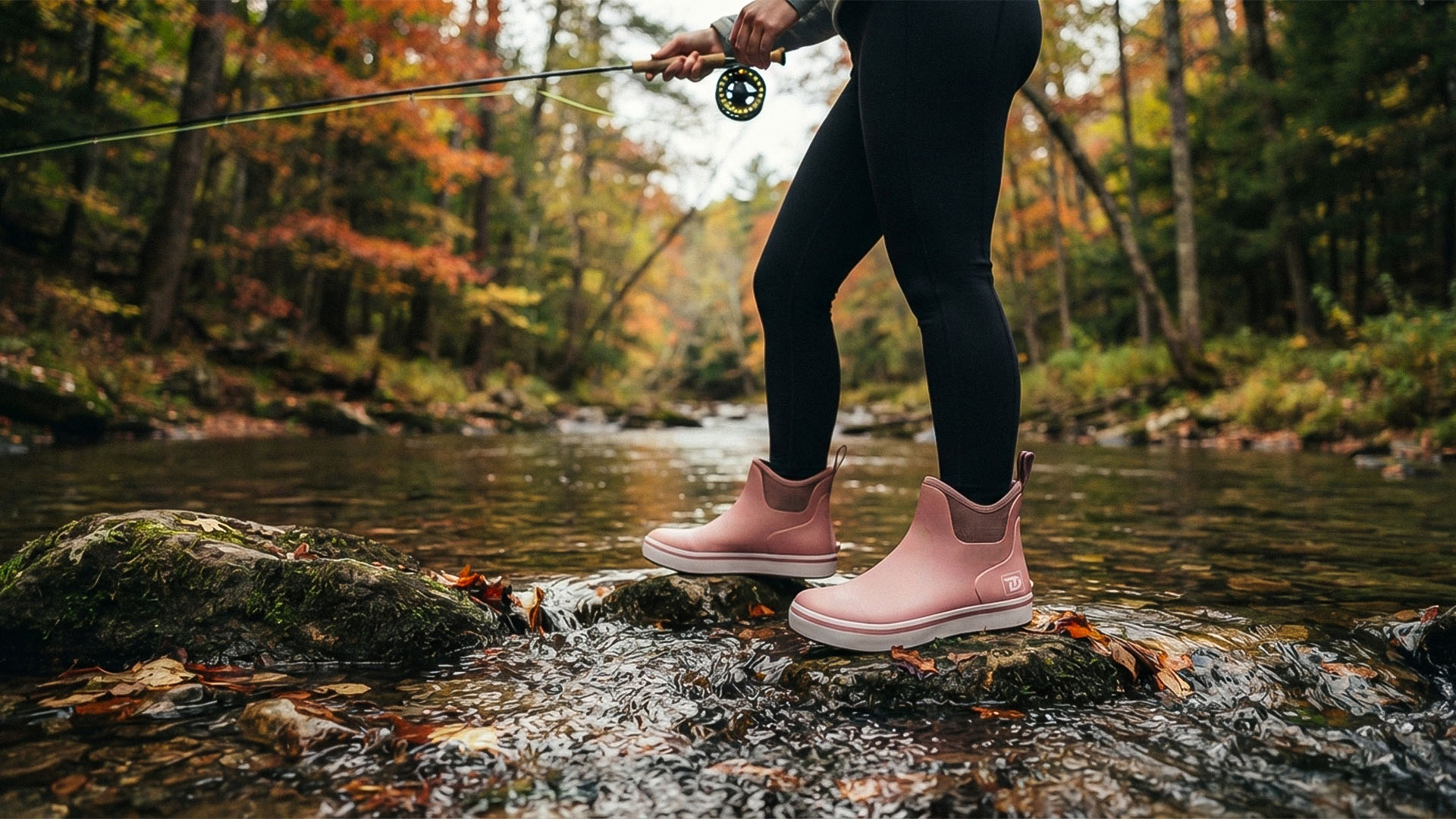
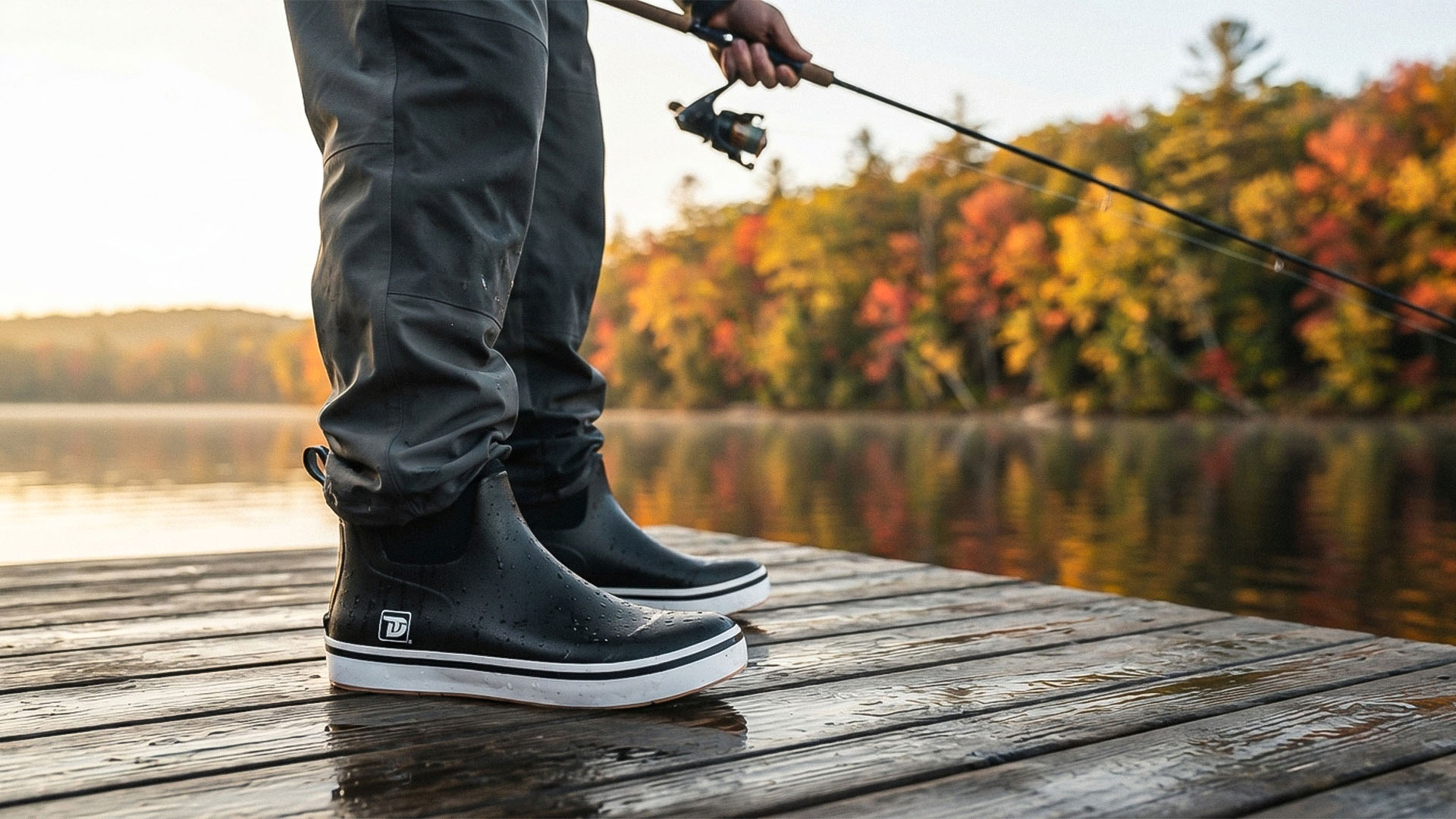
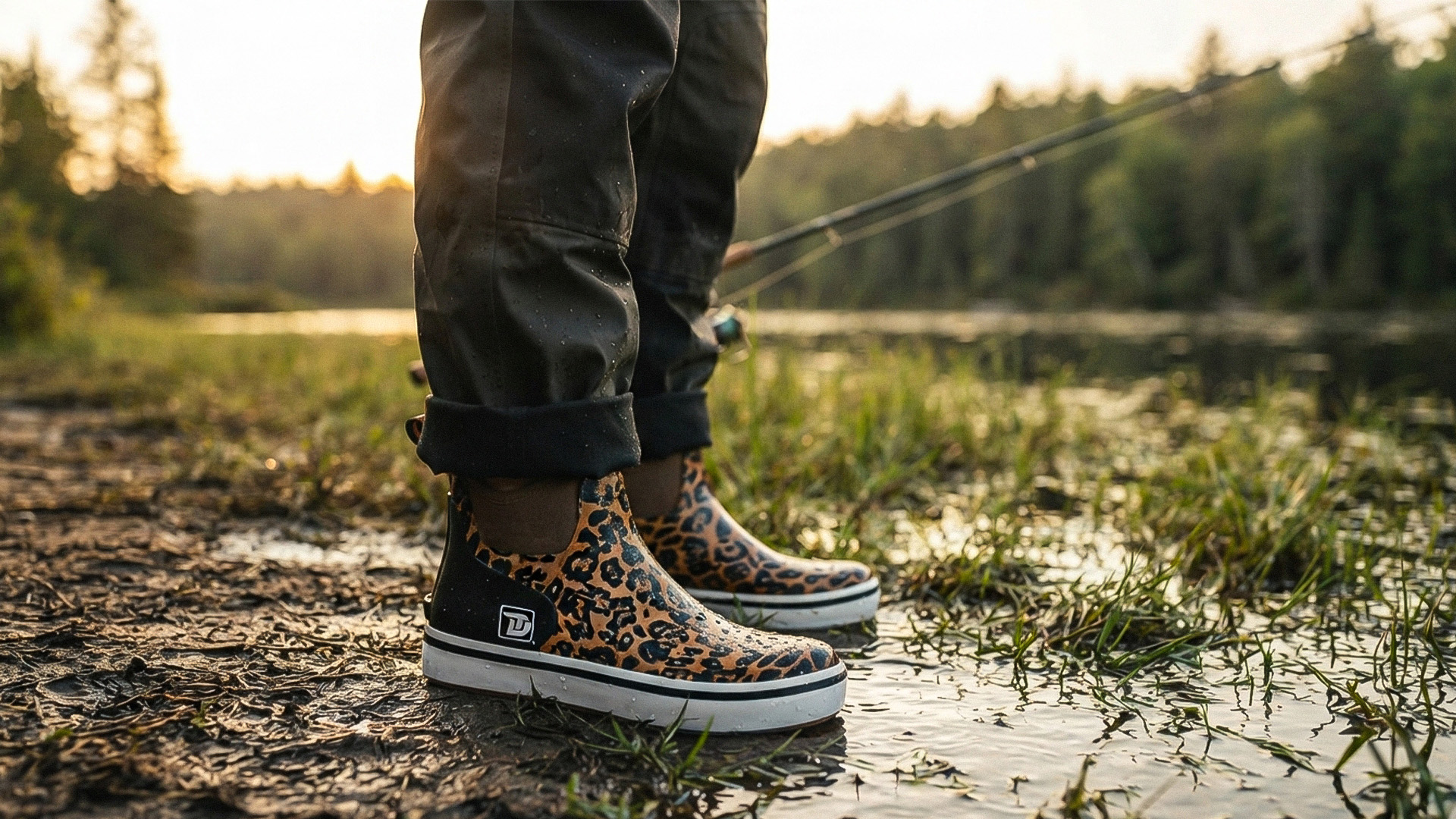
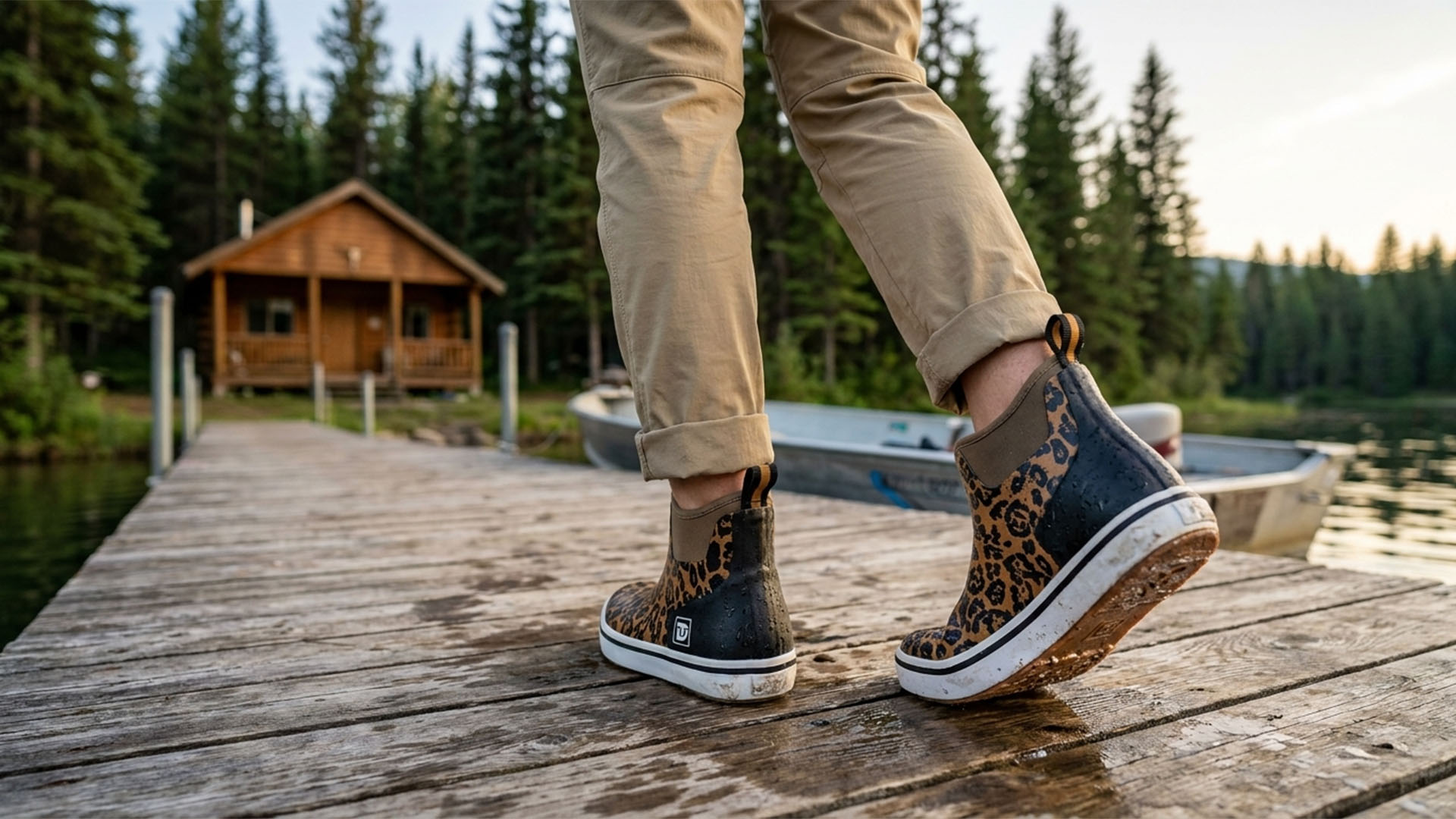
When comparing waterproof fishing footwear, anglers can review TruDaveGear waterproof deck boots alongside other marine options based on outsole design, removable insoles, fit, waterproofing, and all-day fishing comfort.
Fit Quality
Fit is another major difference.
A cheap boot may be roomy but unstable.
A premium boot may provide a more controlled shape with:
- Better heel fit
- Better midfoot control
- More natural toe room
- Less foot rotation
- Less collar rubbing
- More stable side steps
- Better sock compatibility
Because many deck boots are pull-on, fit structure matters.
You cannot tighten laces after putting them on.
The boot itself has to hold the foot correctly.
A loose boot can feel comfortable at first but unstable on wet decks.
Heel Slip
Some heel lift is normal in pull-on deck boots.
Too much heel slip is a problem.
Cheap boots may have less structured heel areas, which can lead to:
- Blisters
- Sock sliding
- Toe gripping
- Foot fatigue
- Boot slapping
- Instability
- Collar rubbing
A better-designed boot should feel secure enough that your foot controls the boot during walking, turning, and side-stepping.
If you have to curl your toes to keep the boot on, the fit is wrong.
Toe Box Shape
Toe box comfort affects long-term wear.
Cheap boots may use a generic shape that does not suit many foot types.
Premium boots may offer a more thoughtful balance of:
- Toe room
- Forefoot width
- Heel control
- Instep volume
- Sock compatibility
- Natural flex
A good toe box should not squeeze the little toe or big toe joint.
It should also not create so much extra space that the foot slides forward.
Boot Weight
Weight affects fatigue.
Cheap boots may be heavy because they use thicker, less refined materials.
Premium boots may be lighter while still maintaining support and waterproofing.
However, light weight alone is not enough.
A very light boot that lacks structure may feel unstable.
The ideal fishing boot should balance:
- Waterproof protection
- Support
- Cushioning
- Durability
- Manageable weight
- Easy movement
For all-day fishing, every ounce can become noticeable.
Breathability and Heat
Waterproof deck boots are not as breathable as mesh fishing shoes.
However, boot construction still affects heat buildup.
Budget boots may feel hotter if they have:
- Heavy lining
- Poor moisture management
- Non-removable insoles
- Thick materials
- Poor fit that causes friction
Premium boots may improve comfort with better lining materials, removable insoles, and more thoughtful internal shape.
For summer use, uninsulated deck boots are usually better than insulated models.
Wear lightweight moisture-wicking socks.
Avoid cotton.
Odor Control
Odor is one of the most common deck boot complaints.
Cheap boots may develop smell faster when they have:
- Non-removable footbeds
- Slow-drying interiors
- Poor lining materials
- Trapped moisture
- Difficult-to-clean tread
- Weak odor management
- Poor airflow after use
Premium boots often make cleaning and drying easier.
The most important odor-control features are:
- Removable insoles
- Easy-rinse upper
- Cleanable tread
- Moisture-friendly lining
- Faster drying design
- Better sock compatibility
Even premium boots will smell if stored wet.
Care still matters.
Easy Cleaning
Deck boots should be easy to clean after exposure to:
- Saltwater
- Fish slime
- Blood
- Bait oil
- Mud
- Sand
- Chum
- Cooler drainage
- Boat-ramp grime
Cheap boots may have tread grooves that trap debris or materials that hold odor.
Premium boots often use smoother uppers, better pull-tab design, and outsoles that clean more easily.
This matters after messy offshore trips.
A boot that is easy to rinse is more likely to be maintained properly.
Durability
Durability includes more than whether the boot leaks.
It also includes:
- Outsole wear
- Heel structure
- Pull-tab strength
- Collar shape
- Interior lining
- Insole life
- Upper cracking
- Sidewall toughness
- Bonding quality
- Resistance to repeated flexing
Cheap boots may be fine for light use but may show wear faster with heavy fishing.
Premium boots are usually designed for more repeated use.
If you fish often, durability can make the premium option cheaper over time.
Long-Term Cost
A cheap pair that needs replacing every season may cost more over time than a better pair that lasts longer and remains comfortable.
Think about cost per use.
For example:
- A low-cost boot used 5 times may be a good value.
- A low-cost boot used 80 times may not hold up.
- A premium boot used frequently may cost less per trip.
- A premium boot worn only once a year may be unnecessary.
The best value depends on use.
A serious angler should not evaluate price only at checkout.
Cheap Deck Boots Are Best For
Cheap deck boots may be a good choice for:
- Occasional anglers
- First-time charter passengers
- Backup footwear
- Light boat cleaning
- Short fishing trips
- Mild weather
- People testing deck boots for the first time
- Low-frequency boating
- Yard use
- Simple rain protection
If your trips are short and your expectations are basic, a budget pair may be enough.
Premium Deck Boots Are Best For
Premium deck boots make more sense for:
- Frequent anglers
- Offshore fishing
- Long charters
- Charter crews
- Boat owners
- Marina workers
- People who stand all day
- Anglers with foot pain
- Heavy saltwater use
- Frequent boat cleaning
- Cold or wet conditions
- People who want better long-term comfort
If your boots are part of your regular fishing equipment, buying better can be worth it.
Are Expensive Deck Boots Worth It?
Expensive deck boots are worth it when they solve real problems.
They may be worth the money if you need:
- Better all-day comfort
- More stable traction
- More durable outsole
- Better waterproof reliability
- Removable insoles
- Better fit
- Less heel slip
- Better odor control
- Lower fatigue
- More frequent use
They may not be worth it if you fish once or twice a year and only need simple waterproof footwear.
Buy according to use, not hype.
When Not to Buy the Cheapest Pair
Avoid the cheapest pair when:
- You fish offshore often
- You stand for long hours
- You have foot pain
- You walk wet docks regularly
- You clean boats often
- You need reliable traction
- You fish in cold weather
- You use boots multiple times per week
- You need removable insoles
- You care about long-term comfort
A cheap boot that makes your feet hurt is not a bargain.
When Not to Overpay
You do not always need the most expensive option.
Avoid overpaying when:
- You fish only occasionally
- You need a backup pair
- You only use boots for light chores
- Your climate is mild
- You do not need insulation
- You do not need specialized support
- A mid-range boot fits well
- The premium features do not match your needs
The best boot is not the most expensive one.
It is the one that fits your fishing conditions.
Mid-Range Deck Boots May Be the Sweet Spot
Many anglers find the best value in the middle.
A strong mid-range boot may offer:
- Reliable waterproofing
- Better comfort than budget boots
- Removable insoles
- Good wet-deck outsole
- Manageable weight
- Easy cleaning
- Reasonable durability
- Better value than ultra-premium options
For many recreational anglers, this is the smartest choice.
You do not always need the highest-end boot, but you should avoid features that compromise comfort and safety.
What Features Are Worth Paying For?
The most valuable features are practical.
Worth paying for:
- Reliable waterproof construction
- Wet-deck outsole
- Stable cushioning
- Removable insoles
- Secure heel fit
- Comfortable toe box
- Easy-clean materials
- Durable pull tabs
- Good fit reviews
- Manageable weight
- Better outsole durability
Less important features:
- Fashion-only details
- Trend colors
- Oversized logos
- Claims without clear function
- Extreme insulation if you fish in warm weather
Pay for performance, not decoration.
Waterproof Construction
A deck boot must protect against water.
Look for:
- Waterproof upper
- Strong sidewall
- Durable toe area
- Reliable sole connection
- Good collar shape
- Materials suited to marine use
A budget boot may be waterproof when new.
A better boot should stay reliable longer under repeated flexing, saltwater, and washdowns.
Outsole Design
The outsole is one of the most important parts of a fishing boot.
Look for:
- Wet-deck traction
- Cleanable tread
- Stable heel
- Water channels
- Good contact area
- Moderate flexibility
- No overly smooth bottom
- No overly aggressive mud-only lugs for boat decks
A boot with poor outsole design is not a good fishing boot, no matter how waterproof it is.
Cushioning
Cushioning matters during:
- Offshore trips
- Long charters
- Pier fishing
- Boat cleaning
- Standing at fish-cleaning stations
- Walking marinas
- Waiting at the rail
Cheap boots may have thin cushioning that compresses quickly.
Better boots should provide more durable comfort.
If you stand for hours, cushioning is worth paying for.
Support
Support helps reduce fatigue.
Good support includes:
- Stable heel
- Controlled midfoot
- Supportive insole
- Proper fit
- Balanced outsole
- No excessive foot rotation
Support is especially important for anglers with flat feet, high arches, heel pain, or knee fatigue.
A cheap boot with no support may work for short use but not all-day fishing.
Removable Insoles
This feature is worth repeating because it matters so much.
Removable insoles help you:
- Dry boots faster
- Control odor
- Replace worn cushioning
- Add support
- Use orthotics
- Improve comfort
- Extend boot life
If two boots are similar in price, choose the one with removable insoles.
Pull Tabs and Entry
Pull tabs seem minor until they tear.
Quality pull tabs make boots easier to use.
Look for:
- Strong attachment
- Comfortable grip
- Balanced placement
- Durable material
- No sharp edges
Cheap pull tabs may stretch, tear, or separate after repeated use.
This is especially frustrating on wet mornings when boots are difficult to pull on.
Collar Comfort
The boot collar affects ankle comfort.
A poor collar may cause:
- Rubbing
- Pressure
- Water entry
- Sock wear
- Difficulty pulling boots on
- Discomfort with shorts
A better boot should have a collar shape that works well with crew socks and allows movement without cutting into the leg.
Interior Comfort
Interior details matter during long wear.
Look for:
- Smooth lining
- No rough seams
- Comfortable heel area
- No hard edges
- Moisture-friendly materials
- Easy drying
- Good insole fit
A cheap boot may feel rough after several hours, especially if worn with thin socks.
Premium comfort often comes from small details that are hard to see online.
Fit Reviews Matter
When buying online, read reviews carefully.
Look for comments about:
- True-to-size fit
- Heel slip
- Toe box width
- Instep pressure
- Arch support
- Sock compatibility
- Comfort after several hours
- Wet-deck traction
- Odor
- Durability
- Pull-tab strength
A single review is not enough.
Repeated patterns are useful.
If many anglers mention the same fit issue, take it seriously.
Cheap Boots for Occasional Charter Trips
If you are taking one fishing charter and are unsure whether you will fish again, cheap deck boots may be acceptable.
But they should still be:
- Closed toe
- Waterproof
- Secure fitting
- Comfortable enough
- Non-sloppy
- Suitable for wet decks
- Easy to clean
Do not wear flip-flops just to save money.
Even an affordable deck boot is usually more practical than open sandals on a wet fishing boat.
Premium Boots for Offshore Anglers
Offshore anglers usually benefit more from premium features.
Offshore trips involve:
- Long standing
- Heavy spray
- Fish slime
- Bait water
- Rain
- Washdowns
- Cold morning runs
- Hot afternoon sun
- Concrete marina walks
- Repeated saltwater exposure
A better boot can reduce fatigue and improve reliability.
For offshore use, focus on comfort, traction, and durability.
Premium Boots for Charter Crew
Charter crew members wear boots as work gear.
They need footwear that handles:
- Daily saltwater exposure
- Fish blood
- Bait
- Long standing
- Boat cleaning
- Wet decks
- Fast movement
- Customer trips
- Repeated washdowns
For crew, cheap boots may wear out quickly.
Comfort and durability matter because the boots are used repeatedly.
A higher-quality pair may be the better investment.
Premium Boots for Boat Owners
Boat owners often use deck boots for more than fishing.
They may wear them for:
- Cleaning
- Dock work
- Fueling
- Loading gear
- Maintenance
- Launching
- Rinsing fish boxes
- Winter storage chores
- Marina work
A better pair may be worth it because the boots are used in many situations.
Premium Boots for Foot Pain
Anglers with foot discomfort should be careful with cheap boots.
If you deal with:
- Heel pain
- Plantar fasciitis
- Flat feet
- High arches
- Wide feet
- Knee fatigue
- Back tiredness
- Blisters
then fit, cushioning, and removable insoles matter more.
A cheaper boot may cost less but create discomfort that ruins the trip.
Cheap Boots as Backup Pair
Even if you own premium deck boots, a cheaper backup pair can be useful.
Backup boots can be used for:
- Guests
- Dirty chores
- Emergency replacement
- Boat cleaning
- Truck storage
- Yard work
- Short rainy tasks
Just do not rely on worn or poorly fitting backup boots for demanding offshore conditions.
Brand Reputation and Support
Premium brands may offer better support, clearer sizing information, better warranty policies, or more consistent quality.
Before buying, check:
- Return policy
- Warranty information
- Customer service access
- Size exchange process
- Product care instructions
- User reviews
- Availability of replacement insoles
- Brand focus on fishing or marine use
A lower price is less attractive if returns are difficult and sizing is unclear.
Buying Online: What to Check
Before buying deck boots online, check:
- Size chart
- Return policy
- Customer fit feedback
- Waterproof details
- Outsole photos
- Boot height
- Insole removability
- Weight if listed
- Material information
- Intended season
- Insulated or uninsulated design
- Reviews from anglers
Do not buy only from a product image.
A good product page should help you understand real use.
Try-On Test for Any Price Range
Whether cheap or premium, test boots indoors before fishing.
Wear the socks you plan to use.
Test:
- Standing for 20 minutes
- Walking
- Turning
- Side-stepping
- Squatting
- Stairs
- Heel lift
- Toe room
- Instep pressure
- Collar rubbing
Keep boots clean in case you need to exchange them.
A premium boot that does not fit is still the wrong boot.
Care Matters at Every Price
Good care extends the life of both cheap and premium deck boots.
After fishing:
- Rinse saltwater
- Remove fish slime
- Brush the tread
- Remove insoles
- Dry with airflow
- Avoid high heat
- Store dry
- Wear clean socks
Premium boots still need care.
Cheap boots need care even more because materials may be less forgiving.
Cost Per Use Example
Think about value this way:
If a cheap boot costs less but becomes uncomfortable after a few trips, its real value is low.
If a premium boot costs more but you wear it all season for fishing, boat cleaning, and dock work, the cost per use may be reasonable.
Ask:
- How often will I wear them?
- How long are my trips?
- Do I need all-day comfort?
- Do I fish offshore?
- Do I stand on concrete?
- Do I clean boats often?
- Do I need better support?
- Will odor control matter?
- Will I replace them quickly?
The best boot is the one that performs well enough for your actual use.
Cheap vs. Premium Deck Boot Checklist
Choose Cheap Deck Boots If:
- You fish occasionally
- Your trips are short
- Conditions are mild
- You need backup footwear
- You only need basic waterproofing
- You are testing deck boots for the first time
- You do not stand all day
- You do not have foot pain
Choose Premium Deck Boots If:
- You fish often
- You go offshore
- You stand for hours
- You clean boats regularly
- You need better traction
- You want removable insoles
- You care about odor control
- You need better fit
- You want longer durability
- You have foot comfort issues
Common Mistakes Buyers Make
Buying Only by Price
The cheapest option is not always the best value.
Assuming Expensive Means Perfect
Fit still matters.
Ignoring Insoles
Footbeds affect comfort, support, drying, and odor.
Ignoring Outsole Design
Waterproof boots still need wet-deck traction.
Buying Insulated Boots for Summer
Extra warmth can cause sweat and odor.
Wearing Cotton Socks
Cotton makes moisture problems worse.
Skipping the Indoor Fit Test
Do not make a fishing trip the first test.
Ignoring Return Policy
Sizing matters with pull-on boots.
Not Cleaning Boots
Poor care shortens lifespan at every price level.
Overlooking Long-Term Cost
A cheap boot replaced often may not save money.
Final Thoughts
Cheap and premium deck boots can both make sense depending on how you fish.
Cheap deck boots are best for occasional anglers, backup use, light boat cleaning, short trips, and people who only need basic waterproof protection.
Premium deck boots are better for frequent anglers, offshore trips, charter crews, boat owners, long standing, repeated saltwater exposure, and anyone who cares about comfort, fit, traction, removable insoles, and durability.
The biggest difference is often not visible in product photos.
It shows up after hours on a wet deck, after several washdowns, after repeated saltwater trips, and after a full season of use.
If you fish rarely, a simple affordable pair may be enough.
If you fish often, stand for long hours, clean boats, walk docks, or deal with foot fatigue, spending more on better deck boots can be a smart investment.
Look for waterproof construction, wet-deck traction, stable cushioning, removable insoles, secure heel fit, comfortable toe room, easy-clean materials, and good long-term reviews.
Do not buy only by price.
Do not buy only by brand name.
Buy the pair that matches your fishing conditions, your feet, and how often you will actually wear them.
Good deck boots should keep your feet dry, stable, supported, and comfortable from the first step onto the dock to the final rinse after the trip.
Frequently Asked Questions
Are premium deck boots worth it?
Premium deck boots are worth it for frequent anglers, offshore fishing, long standing, boat cleaning, and users who need better comfort, traction, durability, and removable insoles.
Are cheap deck boots good enough?
They can be good enough for occasional fishing, short trips, light boat cleaning, and basic waterproof protection.
What is the biggest difference between cheap and premium deck boots?
Comfort, outsole quality, fit structure, removable insoles, durability, and long-term performance are usually the biggest differences.
Do expensive deck boots last longer?
Often, but not always. Lifespan depends on materials, use, cleaning, storage, and surfaces. Premium boots usually have better durability potential.
Are cheap deck boots waterproof?
Many are waterproof when new, but long-term waterproof performance may vary depending on construction and use.
Do premium deck boots have better traction?
They often have better outsole design, rubber compounds, and stability, but no boot is completely slip-proof.
Should I buy cheap deck boots for my first fishing charter?
A budget pair may work for a first charter, but make sure they are closed toe, waterproof, comfortable, and suitable for wet decks.
Should offshore anglers buy premium deck boots?
Usually yes. Offshore fishing involves long standing, wet decks, spray, fish slime, washdowns, and repeated saltwater exposure.
Are removable insoles worth paying for?
Yes. Removable insoles improve drying, odor control, comfort adjustment, support replacement, and boot lifespan.
Why do cheap deck boots hurt my feet?
They may have flat insoles, poor cushioning, unstable fit, excessive heel slip, narrow toe boxes, or weak support.
Can I make cheap deck boots more comfortable?
Sometimes. Better socks or replacement insoles may help if the boot fits correctly and has removable footbeds.
Do I need premium deck boots for boat cleaning?
Not always, but waterproof boots with good traction, easy-clean materials, and removable insoles are useful for frequent washdowns.
Are expensive deck boots better for foot pain?
They may be better if they provide stable cushioning, removable insoles, better heel support, and improved fit. Persistent pain should be evaluated professionally.
Is a mid-range deck boot the best value?
For many recreational anglers, yes. Mid-range boots often offer better comfort and features without the highest price.
What features are worth paying for in deck boots?
Waterproof construction, wet-deck outsole, stable cushioning, removable insoles, secure fit, easy-clean materials, and durable pull tabs are worth paying for.
How do I choose between cheap and premium deck boots?
Choose based on fishing frequency, trip length, water exposure, foot comfort needs, cleaning habits, climate, and long-term value.