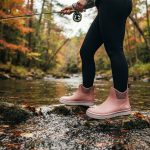
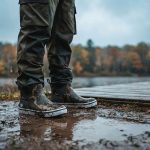
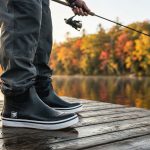
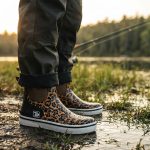
Meta Description: Learn how anglers with wide feet should choose deck boots, including toe box shape, heel fit, instep volume, socks, insoles, and offshore fishing comfort.
Suggested URL Slug: deck-boots-for-wide-feet
Primary Keyword: deck boots for wide feet
Secondary Keywords: fishing boots for wide feet, wide toe box deck boots, waterproof boots for wide feet, deck boot fit guide, comfortable fishing boots, wide feet fishing footwear, offshore deck boots
Search Intent: Commercial Investigation / Buying Guide
Finding comfortable deck boots can be difficult when you have wide feet.
A boot may feel long enough but still squeeze the forefoot. Another pair may feel roomy in the toe box but loose around the heel. Some anglers size up to gain width, only to end up with boots that slide, rub, and feel unstable on wet decks.
That is why wide-footed anglers need to look beyond the size number.
Deck boots for wide feet should provide enough room across the forefoot while still keeping the heel and midfoot secure. The toe box should allow natural toe spread, but the boot should not feel sloppy during side steps, turns, boat boarding, or movement across a wet deck.
The best fit is not simply the widest boot available.
It is the boot that gives your foot room where it needs it and control where it matters.
This guide explains how to choose deck boots for wide feet, what fit features to look for, why sizing up can cause problems, how socks and insoles affect comfort, and how to test fishing boots before wearing them on a full-day trip.
Why Wide Feet Need Special Attention in Deck Boots
Deck boots are different from lace-up shoes.
Most deck boots use pull-on construction, which means they cannot be tightened around the foot after you put them on. The shape of the boot itself must provide the fit.
For wide feet, this creates a common challenge.
The boot needs enough room across the forefoot, but it also needs enough structure to prevent movement inside the boot.
A poor fit may cause:
- Toe pressure
- Sidewall rubbing
- Numbness
- Blisters
- Heel slip
- Foot rotation
- Arch fatigue
- Sock bunching
- Forefoot pain
- Reduced stability on wet decks
A deck boot should protect your feet from water, fish slime, and spray without creating pressure across the widest part of the foot.
Wide Feet Are Not All the Same
Not every wide foot has the same shape.
Some anglers have:
- Wide forefoot and narrow heel
- Wide forefoot and high instep
- Wide midfoot
- Flat feet
- Bunions
- High-volume feet
- Swelling during long standing
- One foot wider than the other
This is why one “wide” boot may work well for one angler and poorly for another.
The best deck boots for wide feet should match your actual foot shape, not just your usual shoe size.
The Toe Box Matters Most
The toe box is the front part of the boot where your toes and forefoot sit.
For wide feet, a good toe box should allow:
- Natural toe spread
- No pressure on the little toe
- No rubbing at the big toe joint
- No squeezing across the ball of the foot
- Room for fishing socks
- Slight swelling during long trips
Your toes should not feel compressed when standing with full body weight.
They should also not hit the front of the boot while walking downhill, stepping off a dock, or bracing on a moving boat.
Wide Toe Box vs. Oversized Boot
A wide toe box is not the same as an oversized boot.
A wide toe box gives more space across the forefoot.
An oversized boot gives extra length everywhere.
That extra length can create new problems:
- Heel lift
- Foot sliding
- Toe gripping
- Wrong flex point
- Boot slapping
- Sock movement
- Less control during side steps
Wide-footed anglers often make the mistake of buying a longer size when they actually need a wider shape.
Extra length rarely solves a width problem correctly.
Why Sizing Up Can Backfire
Sizing up may feel helpful at first because the boot becomes less tight across the forefoot.
However, the larger size may place the foot in the wrong position.
Problems may include:
- The widest part of the foot no longer aligns with the widest part of the boot
- The forefoot flexes in the wrong area
- The heel lifts more than normal
- The foot slides forward while walking
- The boot feels unstable on stairs or ramps
- The ankle collar rubs more
Sizing up can work when you are between sizes and the larger size still feels controlled.
It should not be the default solution for wide feet.
Look for Forefoot Width Without Heel Sloppiness
Many wide-footed anglers also have relatively normal or narrow heels.
This means a boot that is wide enough in the toe box may feel too loose in the rear.
The ideal design provides:
- Roomy forefoot
- Secure heel cup
- Stable midfoot
- Controlled ankle opening
- Minimal internal rotation
A deck boot that is wide everywhere may feel comfortable while standing still but unstable once the boat starts moving.
You need space in front and control in back.
Heel Security Still Matters
A wide boot should not allow your heel to move excessively.
Some heel lift is normal in pull-on deck boots, but too much movement causes problems.
Excessive heel movement may lead to:
- Blisters
- Sock sliding
- Foot fatigue
- Instability
- Toe gripping
- Collar rubbing
- Less confidence on wet decks
During a fit test, walk, turn, side-step, and climb stairs.
The boot should follow your foot without feeling delayed.
Midfoot Control
The midfoot area helps keep your foot centered inside the boot.
Wide-footed anglers sometimes focus only on toe room and forget midfoot stability.
A supportive midfoot helps reduce:
- Foot rotation
- Side-to-side sliding
- Arch fatigue
- Internal friction
- Instability during boat movement
The boot should feel secure through the center of the foot without creating painful pressure over the instep.
Instep Volume
The instep is the top part of your foot between the toes and ankle.
Wide feet often come with a higher-volume instep, but not always.
A boot with low instep volume may feel tight even if the toe box is wide enough.
Signs of low instep space include:
- Pressure on top of the foot
- Difficulty putting the boot on
- Difficulty removing the boot
- Numbness
- Deep sock marks
- Foot feeling trapped
- Pain after standing
A boot with too much instep volume may allow vertical movement and heel lift.
The correct fit should feel secure, not crushed.
Flat Feet and Wide Deck Boots
Many anglers with flat feet also need wider footwear.
Flat feet may spread more during standing, especially on hard boat decks or concrete piers.
This can create pressure across the forefoot if the boot is too narrow.
Useful features include:
- Wide toe box
- Supportive insole
- Stable heel cup
- Firm outer edges
- Removable footbed
- Controlled midfoot structure
A flat foot does not always need aggressive arch support.
The support should feel natural and comfortable.
Too much arch pressure can create pain.
Bunions and Forefoot Pressure
Anglers with bunions need extra care when choosing deck boots.
Pressure near the big toe joint can become painful during long trips.
Look for:
- Rounded toe box
- Wider forefoot shape
- Soft interior contact
- No hard seam over the bunion area
- Enough volume for socks
- Stable heel fit
Do not assume a boot will stretch significantly.
Most waterproof deck boots do not stretch like leather shoes.
A painful pressure point at home will likely feel worse after several hours on the boat.
Do Deck Boots Stretch for Wide Feet?
Most molded waterproof deck boots do not stretch very much.
They may soften slightly with use, but the width and shape generally remain similar.
Do not buy painfully tight boots expecting them to widen dramatically.
A small amount of break-in may improve comfort.
It will not fix the wrong size or shape.
Choose boots that feel reasonably comfortable from the start.
Whole Sizes and Wide Feet
Many deck boots are sold in whole sizes only.
This can make sizing difficult for people who normally wear half sizes.
If you are between sizes, compare both options carefully.
Choose the smaller size only when:
- Toes do not touch the front
- Forefoot is not squeezed
- Instep feels comfortable
- Socks fit properly
- Heel movement is controlled
Choose the larger size only when:
- The smaller size compresses the foot
- Toes touch the front
- Instep pressure is painful
- Foot swelling needs more space
- Heel movement remains manageable
A suitable insole may help adjust minor extra volume in the larger size.
It cannot fix a boot that is much too long.
Wide Feet and Sock Choice
Socks affect fit more than many anglers expect.
For wide feet, avoid socks that add too much bulk across the forefoot.
Good options include:
- Lightweight synthetic socks
- Thin merino-blend socks
- Moisture-wicking crew socks
- Smooth low-bulk fishing socks
Avoid thick cotton socks.
Cotton holds moisture, stretches when wet, and may create bunching inside the boot.
For cold weather, choose warm technical socks that provide insulation without excessive thickness.
Do Not Use Thick Socks to Fix Fit Problems
Thick socks can sometimes improve a slightly loose boot.
They are not the solution for a boot that is the wrong shape.
For wide feet, thick socks may make pressure worse across:
- Toes
- Forefoot
- Instep
- Sidewalls
If a boot already feels tight, thicker socks will usually make it less comfortable.
Choose the right boot shape first.
Use socks to fine-tune comfort, not to force a poor fit.
Removable Insoles Are Helpful
A removable insole is valuable for wide-footed anglers.
It allows you to:
- Adjust support
- Replace compressed cushioning
- Improve moisture control
- Create slightly more internal space
- Dry the boot faster
- Clean odor-producing material
- Test different footbed shapes
Some anglers remove the original insole and replace it with a thinner supportive footbed.
Others need more cushioning for long standing.
The replacement should fit flat and should not curl inside the boot.
Thin Insoles vs. Supportive Insoles
A thinner insole may create more room for wide feet.
However, too little support may cause fatigue during long trips.
A supportive insole may improve comfort, but if it is too thick, it may reduce toe space and instep room.
The best insole should balance:
- Cushioning
- Arch comfort
- Forefoot room
- Heel stability
- Moisture management
- Secure fit
Test any insole with the socks you plan to wear.
Do Not Stack Multiple Insoles
Stacking insoles is rarely a good solution.
It can cause:
- Toe compression
- Instep pressure
- Heel sitting too high
- Collar rubbing
- Reduced stability
- Foot sliding
- Difficulty removing the boot
Use one well-fitting insole.
If one insole cannot make the boot comfortable, the boot is probably not the right shape.
Wide Feet and Ankle Fit
A boot with enough forefoot space may still feel loose around the ankle.
This is common when the boot is built with a generous opening.
The ankle area should:
- Allow natural movement
- Avoid sharp rubbing
- Not squeeze the leg
- Not create a huge gap
- Work with crew socks
- Keep water from entering too easily
If the collar is too loose, the boot may feel unstable.
If the collar is too tight, it may rub or restrict movement.
Wide Feet and Heel Slip
Heel slip is a common issue when wide-footed anglers size up.
A small amount of heel movement is normal in pull-on boots.
Too much heel slip is a problem.
Signs include:
- Heel lifting with every step
- Sock sliding down
- Foot rotating inside the boot
- Blisters
- Boot slapping
- Feeling unstable on stairs
- Toes gripping the footbed
When this happens, the boot may be too long or too high-volume.
Try a better-fitting wide model instead of simply increasing length.
Wide Feet and Boat Safety
Fit affects safety.
On a wet boat deck, your foot needs to control the boot.
If the boot is too loose, the outsole may stay planted while your foot slides inside.
This can reduce balance during:
- Side steps
- Turns
- Boarding
- Rough water
- Fish fights
- Washdowns
- Moving around coolers and rods
Wide-footed anglers should choose boots that are roomy but controlled.
Comfort and stability must work together.
What to Look for in Deck Boots for Wide Feet
When shopping, prioritize these features:
Wide Toe Box
Enough room across the forefoot without toe compression.
Secure Heel
Controlled rear-foot fit to reduce slipping and rubbing.
Removable Insole
Allows support and volume adjustment.
Stable Outsole
Helps maintain control on wet decks.
Flexible Forefoot
Allows natural walking without pressure.
Easy-Clean Upper
Useful after fish slime, saltwater, and mud exposure.
Comfortable Instep
No painful pressure over the top of the foot.
Good Sock Compatibility
Enough space for fishing socks without squeezing.
Buying Deck Boots Online With Wide Feet
Online shopping is convenient but requires careful checking.
Before ordering, review:
- Size chart
- Width comments
- Return policy
- Exchange policy
- Customer fit reviews
- Product photos
- Insole removability
- Boot height
- Toe box shape
- Half-size recommendation
Look for repeated review patterns.
One review saying “runs wide” may not mean much.
Several reviews from wide-footed buyers are more useful.
Use Reviews Carefully
Customer reviews can help, but they are subjective.
One person’s “wide” may be another person’s “normal.”
Pay attention to reviews that mention:
- Foot width
- Usual shoe size
- Half-size choice
- Sock thickness
- Heel slip
- Toe room
- Instep pressure
- Long standing comfort
Ignore reviews that do not describe the buyer’s foot shape.
Measure Both Feet
Wide-footed buyers should measure both length and width.
Feet may differ slightly.
Measure while standing, because feet spread under body weight.
Use the larger foot as your starting point.
Measure:
- Heel to longest toe
- Widest part of forefoot
- Instep height if possible
Compare measurements with the brand’s size chart when available.
Do not rely only on the size you wear in sneakers.
Try Boots Later in the Day
Feet may swell slightly after walking or standing.
Trying boots later in the day can provide a more realistic fit.
This is especially useful for:
- Offshore anglers
- Charter customers
- Marina workers
- People who stand all day
- People with swelling after activity
A boot that feels tight in the morning may become painful later.
Test With Fishing Socks
Always test deck boots with the socks you plan to wear.
Do not test with thin dress socks if you will fish in crew socks.
Do not test barefoot unless the boot is designed for barefoot use.
Sock thickness changes:
- Width feel
- Instep pressure
- Heel movement
- Toe room
- Collar comfort
The complete system matters.
At-Home Fit Test for Wide Feet
Keep new boots clean during testing in case you need to exchange them.
Wear fishing socks and test:
- Standing
- Walking
- Turning
- Side-stepping
- Squatting
- Climbing stairs
- Simulated boat movement
- Standing for 20 minutes
Pay attention to:
- Little toe pressure
- Big toe joint pressure
- Heel movement
- Foot rotation
- Arch comfort
- Instep pressure
- Sock bunching
- Ankle rubbing
A boot should feel comfortable during movement, not only while sitting.
Forefoot Pressure Test
Stand normally and let your feet spread.
Ask yourself:
- Do my toes feel squeezed?
- Does the sidewall press into my little toe?
- Does the big toe joint rub?
- Does the forefoot feel numb?
- Does the boot feel better only when sitting?
If discomfort appears quickly at home, it will likely worsen on a long fishing trip.
Side-Step Test
Side movement is important on boats.
Take several controlled side steps.
The boot should not:
- Twist around your foot
- Let your heel slide sideways
- Fold under the forefoot
- Feel delayed
- Cause toe gripping
Wide boots must still feel stable during lateral movement.
Stair Test
Walk up and down a few indoor steps.
Check whether:
- Toes hit the front
- Heel lifts too much
- Boot flexes correctly
- Forefoot pressure increases
- Instep feels tight
- Boot feels too long
Stairs reveal fit problems that may not appear during flat walking.
Squat Test
Squatting helps test forefoot flexibility and instep space.
The boot should bend without:
- Crushing toes
- Pressing painfully on the instep
- Pulling the heel out
- Creating sidewall pressure
- Cutting into the ankle
Anglers often squat near coolers, fish boxes, rods, and boat equipment.
This movement matters.
Wide Feet and Offshore Fishing
Offshore fishing demands all-day comfort and stability.
Your boots may face:
- Long standing
- Spray
- Rain
- Fish slime
- Bait water
- Cooler drainage
- Rough-water movement
- Deck washdowns
For offshore trips, wide-footed anglers should prioritize:
- Waterproof protection
- Stable wet-deck outsole
- Comfortable cushioning
- Secure heel
- Wide forefoot
- Moisture-wicking socks
- Removable insoles
Anglers comparing options can evaluate TruDaveGear waterproof deck boots alongside other marine footwear based on width, fit, outsole design, cushioning, boot height, and expected fishing conditions.
Wide Feet and Fishing Charters
Charter customers may stand for hours without much control over deck conditions.
The deck may become wet or messy at any time.
Wide-footed anglers should avoid wearing new, untested footwear on a charter.
Before the trip:
- Test boots at home
- Wear fishing socks
- Bring spare socks
- Pack clean shoes for the drive home
- Ask whether non-marking soles are required
- Keep footwear clean before boarding
A comfortable boot can make the charter much more enjoyable.
Wide Feet and Pier Fishing
Pier fishing often involves standing on concrete.
Concrete creates more hard-surface pressure than many boat decks.
Wide-footed pier anglers should look for:
- Forefoot room
- Heel cushioning
- Supportive insole
- Stable outsole
- Enough arch comfort
- Comfortable socks
Deck boots can work well on wet piers, but rough concrete may wear marine outsoles faster than fiberglass.
Wide Feet and Kayak Fishing
Kayak anglers may need different footwear.
Deck boots can work when water exposure is limited, but they may feel bulky in tight footwells.
Quick-draining fishing shoes may be better for:
- Pedal kayaks
- Wet launches
- Hot weather
- Footwell clearance
- Repeated water entry
Wide-footed kayak anglers should prioritize low-profile width and secure fit.
Wide Feet and Hot Weather
Wide feet may feel more uncomfortable when feet swell in heat.
For summer fishing:
- Choose uninsulated boots
- Wear lightweight moisture-wicking socks
- Avoid thick cotton socks
- Bring spare socks
- Dry boots after use
- Do not size too tight
- Avoid heat-trapping layers
Waterproof boots can feel warm.
Proper socks and correct fit help reduce discomfort.
Wide Feet and Cold Weather
Cold-weather fishing requires enough room for warmer socks.
Do not force thick socks into boots that are already tight.
Tight boots can reduce circulation and make feet colder.
Choose:
- Enough toe room
- Suitable sock volume
- Waterproof protection
- Stable fit
- Insulated model when necessary
Warmth requires both insulation and circulation.
Breaking In Deck Boots for Wide Feet
Deck boots may soften slightly with wear, but break-in should be gentle.
A practical break-in process:
- Wear indoors for 15 minutes.
- Test with fishing socks.
- Walk on stairs.
- Wear for a short outdoor chore.
- Use on a short fishing trip.
- Inspect feet afterward.
Do not start with a full-day offshore trip.
Do not rely on break-in to fix painful width pressure.
Signs Deck Boots Are Too Narrow
The boots are probably too narrow if you feel:
- Little toe pressure
- Big toe joint rubbing
- Forefoot numbness
- Sidewall squeezing
- Burning under the ball of the foot
- Pressure that worsens while standing
- Pain that disappears when boots are removed
- Socks bunching from compression
Do not keep narrow boots hoping they will stretch dramatically.
Signs Deck Boots Are Too Wide
A boot can be too wide even for wide feet.
Signs include:
- Foot rotating
- Heel sliding sideways
- Socks twisting
- Forefoot moving inside the boot
- Unstable side steps
- Toe gripping
- Boot feeling disconnected from foot
The best wide boot gives room without losing control.
Signs the Size Is Too Long
Length problems often appear when anglers size up for width.
Signs include:
- Large empty space in front of toes
- Boot flexing in the wrong place
- Heel lift
- Foot sliding forward
- Slapping sound while walking
- Difficulty with stairs
- Reduced pedal control
A longer size is not the same as a wider fit.
Signs the Instep Is Too Tight
Instep pressure can make a boot feel wrong even when length and width seem correct.
Signs include:
- Pressure on top of foot
- Numbness
- Difficulty putting boot on
- Difficulty removing boot
- Deep marks from socks
- Pain after standing
- Foot feeling trapped
Look for a higher-volume boot rather than simply sizing up in length.
Should Wide-Footed Anglers Buy Men’s Boots?
Some women with wide feet consider men’s deck boots because they may offer more width.
This can work in some cases, but the fit should be tested carefully.
Men’s models may differ in:
- Heel width
- Overall volume
- Instep shape
- Shaft opening
- Length conversion
- Weight
Use the manufacturer’s conversion chart.
Do not guess.
A men’s boot may provide more forefoot space but too much heel movement.
Should Wide-Footed Anglers Buy Women’s Wide Boots?
When available, women’s wide models may offer a better balance.
They may provide:
- Wider forefoot
- More suitable heel shape
- Lower-volume fit
- Better ankle fit
- More accurate sizing
However, availability varies by brand and model.
Choose based on actual fit, not only the gender label.
Unisex Deck Boots and Wide Feet
Unisex boots are often based on men’s sizing.
They may feel roomy for some wearers and stable for others.
Wide-footed women may find unisex deck boots useful, but narrow heels can be a challenge.
Test:
- Heel movement
- Toe space
- Width
- Instep
- Sock compatibility
- Side-step stability
Unisex sizing should always be checked against a conversion chart.
Wide Feet and Boot Height
Boot height affects comfort and mobility.
Ankle Deck Boots
Good for:
- Recreational fishing
- Charter trips
- Warm weather
- Easy movement
- Driving
- Boat cleaning
Mid-Height Deck Boots
Good for:
- More spray protection
- Rain
- Cool weather
- Extra lower-leg coverage
Tall Rubber Boots
Good for:
- Heavy washdowns
- Commercial fishing
- Deep standing water
- Fish processing
Wide-footed anglers should make sure taller boots do not create additional pressure around the ankle or lower leg.
Wide Feet and Boot Weight
Heavier boots may feel more tiring during long trips.
Wide-footed anglers sometimes choose larger heavy boots for room, but that can increase fatigue.
Look for:
- Enough width
- Stable support
- Manageable weight
- Flexible forefoot
- Secure heel
The lightest boot is not always best.
The best boot balances weight, support, protection, and fit.
Wide Feet and Wet-Deck Traction
Traction depends partly on outsole design and partly on foot control.
A wide boot with poor heel control may reduce stability even if the outsole pattern is good.
Look for:
- Marine-focused tread
- Water-channeling grooves
- Broad contact area
- Stable heel platform
- Correct size
- Secure fit
Keep tread clean.
Mud and fish slime packed into the outsole reduce contact with the deck.
Cleaning Wide-Fit Deck Boots
Cleaning routine is the same as any deck boot.
After fishing:
- Rinse with fresh water.
- Remove fish slime and bait residue.
- Brush the outsole grooves.
- Remove the insoles.
- Wash insoles if needed.
- Dry everything with airflow.
- Store away from heat.
Wide or roomy boots may take longer to dry if they contain thicker insoles or more interior volume.
Do not store them wet.
Common Mistakes Wide-Footed Anglers Make
Sizing Up Too Much
Extra length creates instability.
Ignoring Heel Slip
A roomy forefoot does not help if the heel slides.
Wearing Thick Cotton Socks
Cotton holds moisture and increases pressure.
Assuming Boots Will Stretch
Most molded deck boots do not stretch significantly.
Buying Only by Sneaker Size
Deck boot sizing may differ.
Ignoring Instep Volume
Top-of-foot pressure can ruin comfort.
Keeping Boots That Hurt Indoors
Pain usually worsens during fishing.
Stacking Insoles
This can create pressure and instability.
Wearing Untested Boots on a Charter
Break them in before a full-day trip.
Choosing the Widest Boot Available
Wide should still mean controlled and stable.
Best Deck Boot Features for Wide Feet
Look for:
- Wide or roomy toe box
- Secure heel cup
- Comfortable instep volume
- Removable insole
- Stable outsole
- Flexible forefoot
- Lightweight waterproof upper
- Easy-clean construction
- Moisture-friendly interior
- Reliable pull tabs
- Clear return policy
- Positive wide-foot fit feedback
The best deck boots for wide feet should feel roomy in the right places and secure everywhere else.
Wide-Foot Deck Boot Buying Checklist
Before buying:
- Measure both feet
- Check width
- Read size chart
- Review return policy
- Look for wide-foot reviews
- Check insole removability
- Consider sock thickness
- Avoid sizing up blindly
After delivery:
- Test indoors
- Wear fishing socks
- Stand for 20 minutes
- Walk and turn
- Side-step
- Use stairs
- Squat
- Check forefoot pressure
- Check heel movement
- Exchange if unstable or painful
Final Thoughts
Choosing deck boots for wide feet requires more than buying a larger size.
A good wide-foot deck boot should provide enough room across the forefoot while keeping the heel and midfoot secure.
The toe box should allow natural toe spread.
The instep should not crush the top of the foot.
The heel should not slide excessively.
The outsole should remain stable on wet fiberglass, aluminum, docks, and marina surfaces.
Avoid the common mistake of sizing up too much.
Extra length can create heel slip, foot rotation, wrong flex points, and reduced control on wet decks.
Look for a boot shape that is genuinely roomy in the forefoot, not just longer overall.
Wear moisture-wicking socks instead of cotton.
Use removable insoles carefully to adjust support and volume.
Test new boots indoors before taking them on a full-day offshore trip or fishing charter.
A comfortable pair of deck boots should protect your feet from water, fish slime, bait residue, and spray without squeezing your toes or making your feet slide around inside.
For wide-footed anglers, the right fit can make the difference between focusing on the fish and spending the whole day thinking about your feet.
Frequently Asked Questions
Are deck boots good for wide feet?
They can be, but the boot needs a roomy toe box, comfortable instep volume, and a secure heel. Not every deck boot fits wide feet well.
Should I size up in deck boots if I have wide feet?
Only if the larger size remains stable. Sizing up too much may cause heel slip, foot rotation, and poor control on wet decks.
What makes a deck boot good for wide feet?
Look for a wide forefoot, rounded toe box, secure heel cup, removable insole, stable outsole, and enough instep volume.
Do deck boots stretch for wide feet?
Most molded waterproof deck boots do not stretch significantly. They may soften slightly, but they should not feel painfully tight when new.
How should wide deck boots fit?
They should feel roomy across the forefoot, secure through the heel and midfoot, and comfortable over the instep.
How much toe room should wide-footed anglers have?
Toes should move naturally without touching the front or being squeezed from the sides. There should not be excessive empty space.
Why do my wide deck boots slip at the heel?
The boot may be too long, too high-volume, or too wide in the rear. Wide forefoot space should not come with uncontrolled heel movement.
Can insoles help wide feet in deck boots?
Yes, when used carefully. A thinner or more supportive insole may improve fit, but thick insoles can reduce toe and instep room.
What socks are best for wide feet in deck boots?
Use lightweight moisture-wicking synthetic or merino-blend crew socks. Avoid bulky cotton socks.
Are men’s deck boots better for women with wide feet?
Sometimes, but men’s boots may be too wide in the heel. Use the brand’s size chart and test fit carefully.
Are wide deck boots good for offshore fishing?
Yes, when they provide waterproof protection, wet-deck traction, cushioning, and secure fit for long standing.
Can I wear deck boots with bunions?
Possibly. Look for a roomy rounded toe box and avoid pressure over the big toe joint. Do not rely on major stretching.
How do I know if deck boots are too narrow?
Signs include little toe pressure, forefoot numbness, sidewall rubbing, big toe joint pain, and discomfort that worsens while standing.
How do I know if deck boots are too wide?
Signs include foot rotation, heel sliding, sock twisting, unstable side steps, and toe gripping.
Should wide-footed anglers wear thick socks?
Not usually. Thick socks can create more pressure. Use moisture-wicking socks with enough comfort but limited bulk.
What should I do if one size is too tight and the next is too loose?
Try another model, a different width, or a better-shaped boot. Do not keep boots that are painful or unstable.