Meta Description: Learn what to wear creek fishing around wet rocks, mud, shallow water, brush, and changing weather, including boots, wading shoes, pants, socks, and rain gear.
Suggested URL Slug: what-to-wear-creek-fishing
Primary Keyword: what to wear creek fishing
Secondary Keywords: creek fishing clothes, best shoes for creek fishing, small stream fishing gear, footwear for rocky creeks, shallow water fishing boots, creek fishing outfit, what to wear stream fishing
Search Intent: Informational / Commercial Investigation
Creek fishing often looks simple from a distance.
The water is usually smaller than a river, the fishing spots may be close to the road, and anglers often carry only one rod and a compact tackle bag.
The terrain, however, can be surprisingly demanding.
A productive creek may require walking across wet rocks, soft mud, exposed roots, steep banks, shallow water, fallen branches, and thick vegetation. Some sections may be dry and easy to cross, while the next bend may force you to step into water or climb around a washed-out bank.
That makes clothing and footwear especially important.
Ordinary sneakers may become soaked after the first crossing. Heavy rubber boots can feel awkward on rocks. Low-cut water shoes may drain quickly but provide limited protection from sharp stones, cold water, and brush.
The best creek fishing outfit should help you move safely, stay comfortable, and adjust when the route changes.
This guide explains what to wear creek fishing in warm, cool, rainy, and cold conditions, including how to choose footwear for rocks, mud, shallow water, and long walks.
Start With the Type of Creek
Not every creek requires the same gear.
Before choosing your outfit, consider the water and surrounding terrain.
Ask:
- Is the creek shallow enough to cross on foot?
- Is the bottom rocky, sandy, or muddy?
- Will you stay on the bank?
- Are there steep slopes?
- How far will you walk?
- Is the water cold?
- Is the vegetation thick?
- Are snakes, ticks, or insects common?
- Is rain expected?
- Are waders necessary?
A maintained urban creek with concrete access is very different from a remote mountain stream.
Choose clothing for the most difficult section you expect to encounter.
Common Creek Fishing Conditions
Creek anglers may deal with:
- Slippery rocks
- Muddy banks
- Wet grass
- Shallow crossings
- Sand and gravel
- Tree roots
- Fallen branches
- Thorns
- Tall weeds
- Cold water
- Changing shade and sunlight
- Sudden rain
Footwear needs to handle both the water and the approach.
A shoe that performs well while standing in the creek may be uncomfortable during a two-mile walk.
A waterproof boot that keeps your feet dry may feel unstable on algae-covered rocks.
There is always a tradeoff.
Best Footwear for Creek Fishing
The right footwear depends on whether you expect to stay dry, step into shallow water, or wade for extended periods.
Common options include:
- Waterproof hiking boots
- Wading boots
- Ankle deck boots
- Tall rubber boots
- Quick-draining fishing shoes
- Neoprene wading shoes
- Hip or chest waders
Each works best in different conditions.
Waterproof Hiking Boots
Waterproof hiking boots are one of the best choices when most of the fishing takes place from the bank.
They are especially useful for:
- Rocky approaches
- Long walks
- Steep banks
- Exposed roots
- Loose gravel
- Carrying gear
- Cool weather
- Wet grass
Their lace-up construction helps hold the heel securely.
Structured soles also provide better support than most pull-on boots.
The main limitation is water depth.
Waterproof hiking boots may handle rain, wet grass, and brief shallow crossings, but water can enter through the collar.
Once saturated, padded hiking boots may take a long time to dry.
Wading Boots
Wading boots are designed specifically for walking in streams and rivers.
They are commonly worn with stockingfoot waders, although some wet-wading systems use specialized socks or liners.
Wading boots may provide:
- Structured foot support
- Rock protection
- Secure lacing
- Drainage
- Stream-focused outsoles
- Better stability in moving water
They are useful when you expect to spend significant time standing or walking in the creek.
Outsole regulations may vary by location.
Some areas restrict certain sole materials because of concerns about transferring invasive organisms.
Check local rules before fishing.
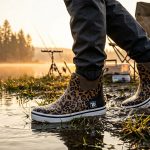
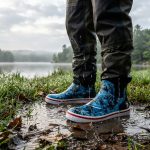
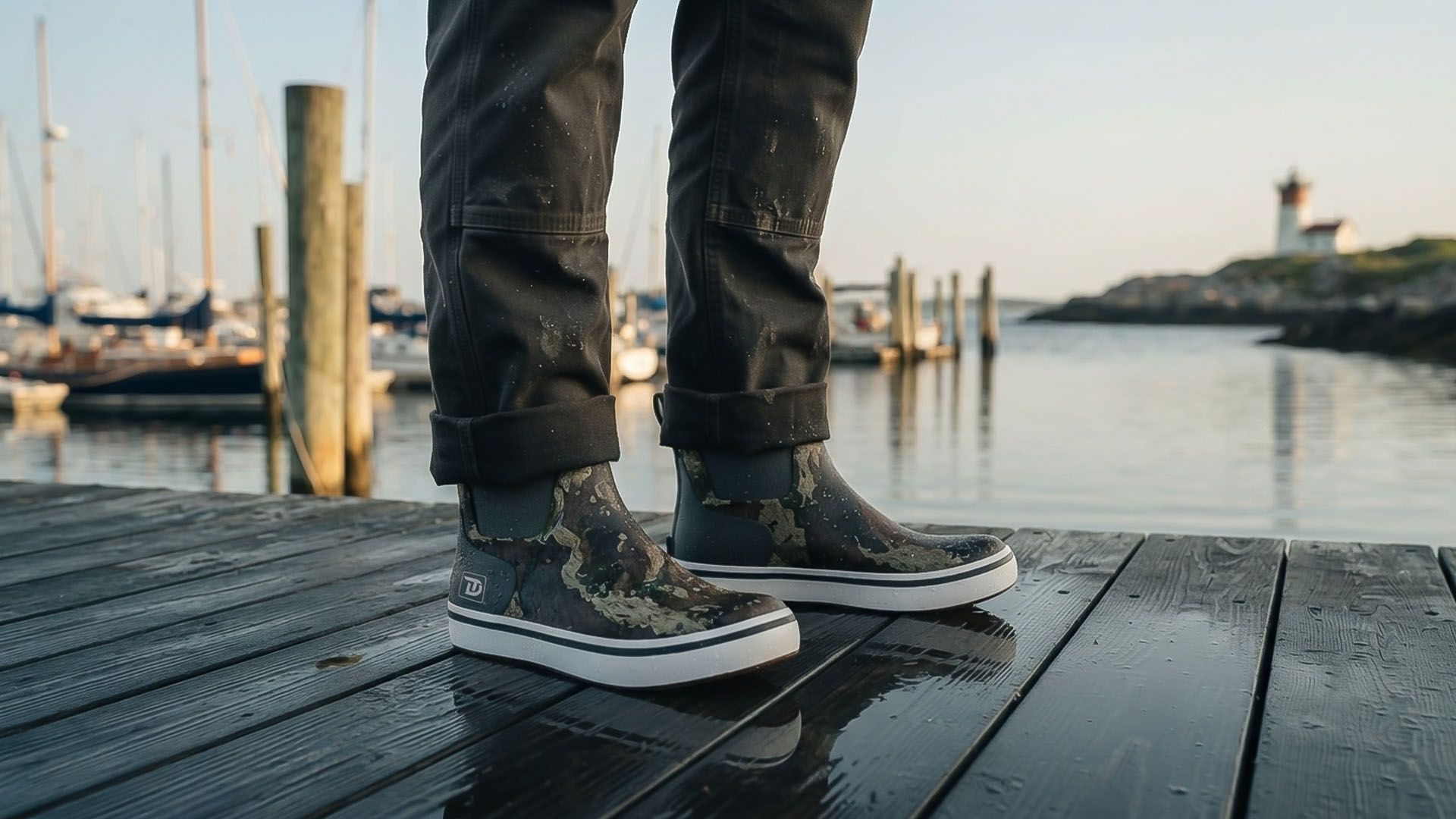
Ankle Deck Boots
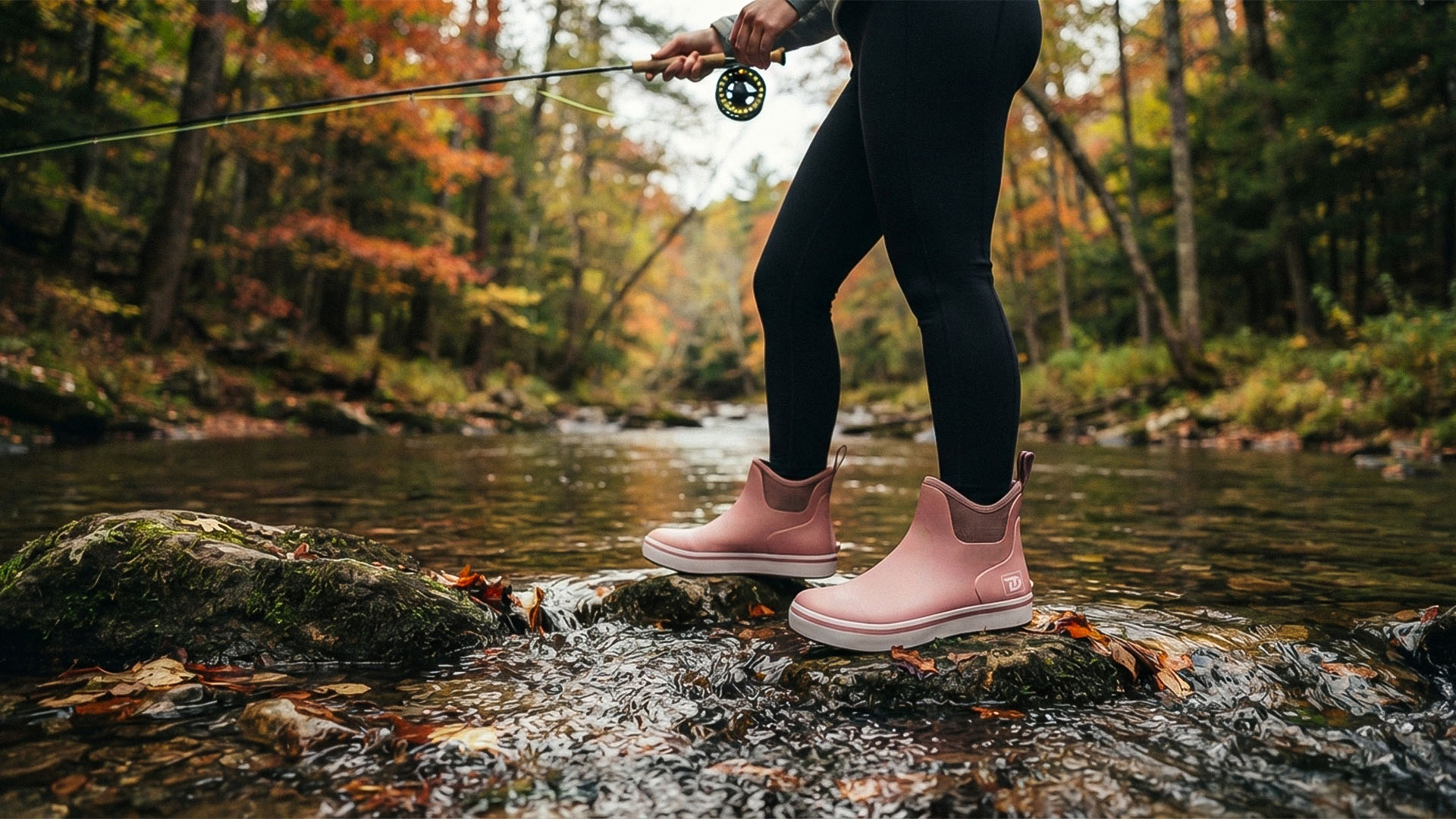
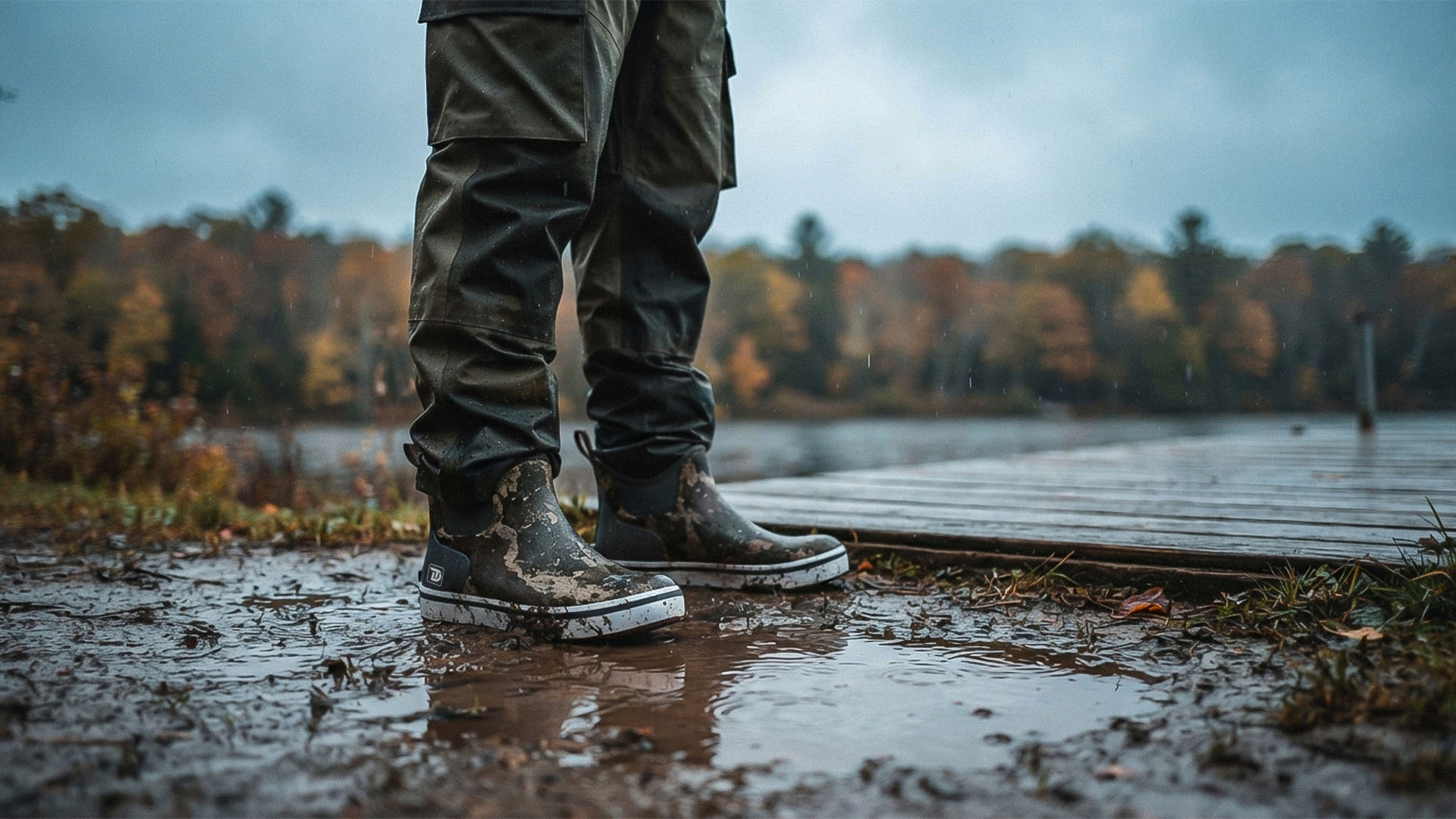
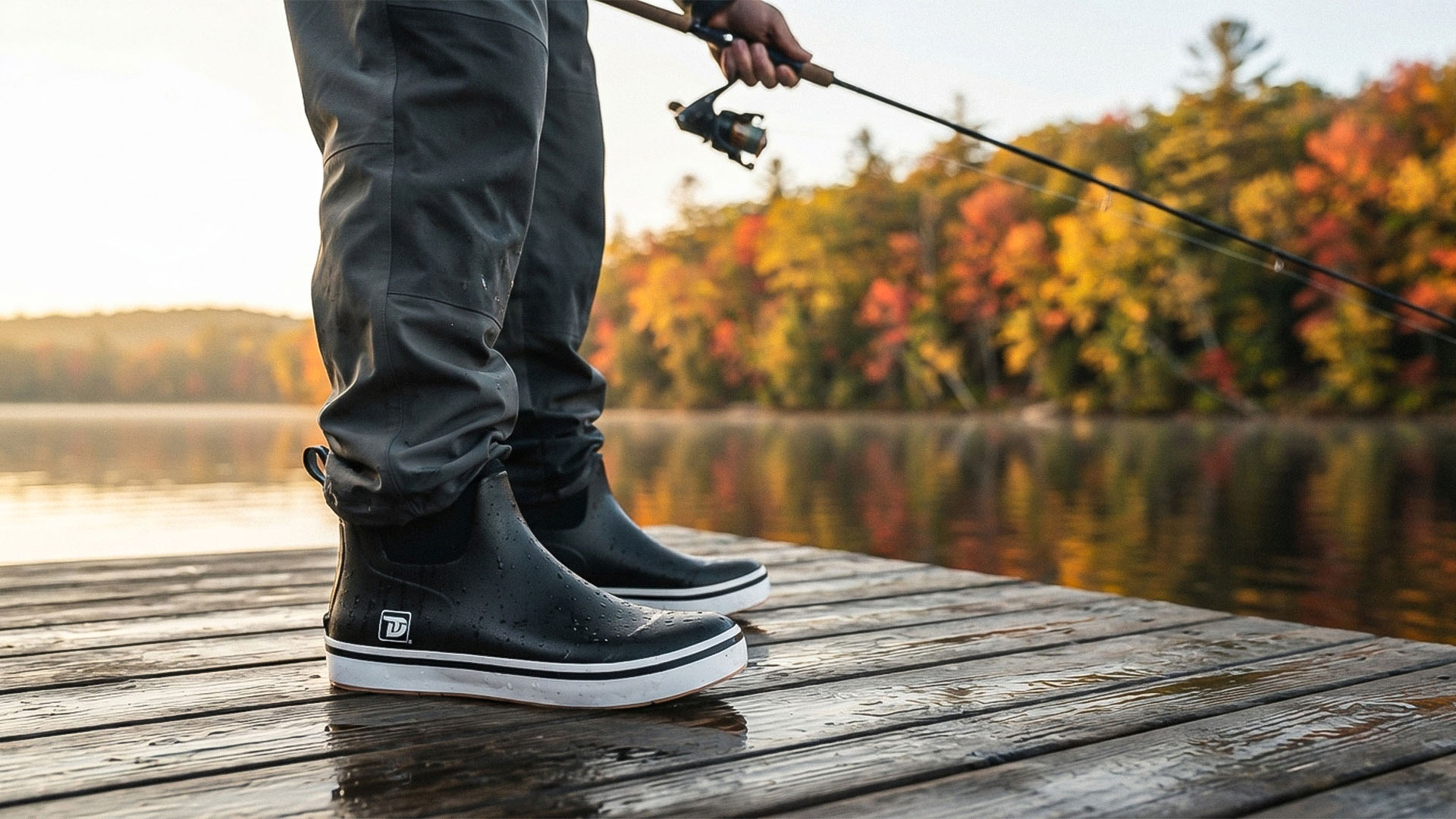
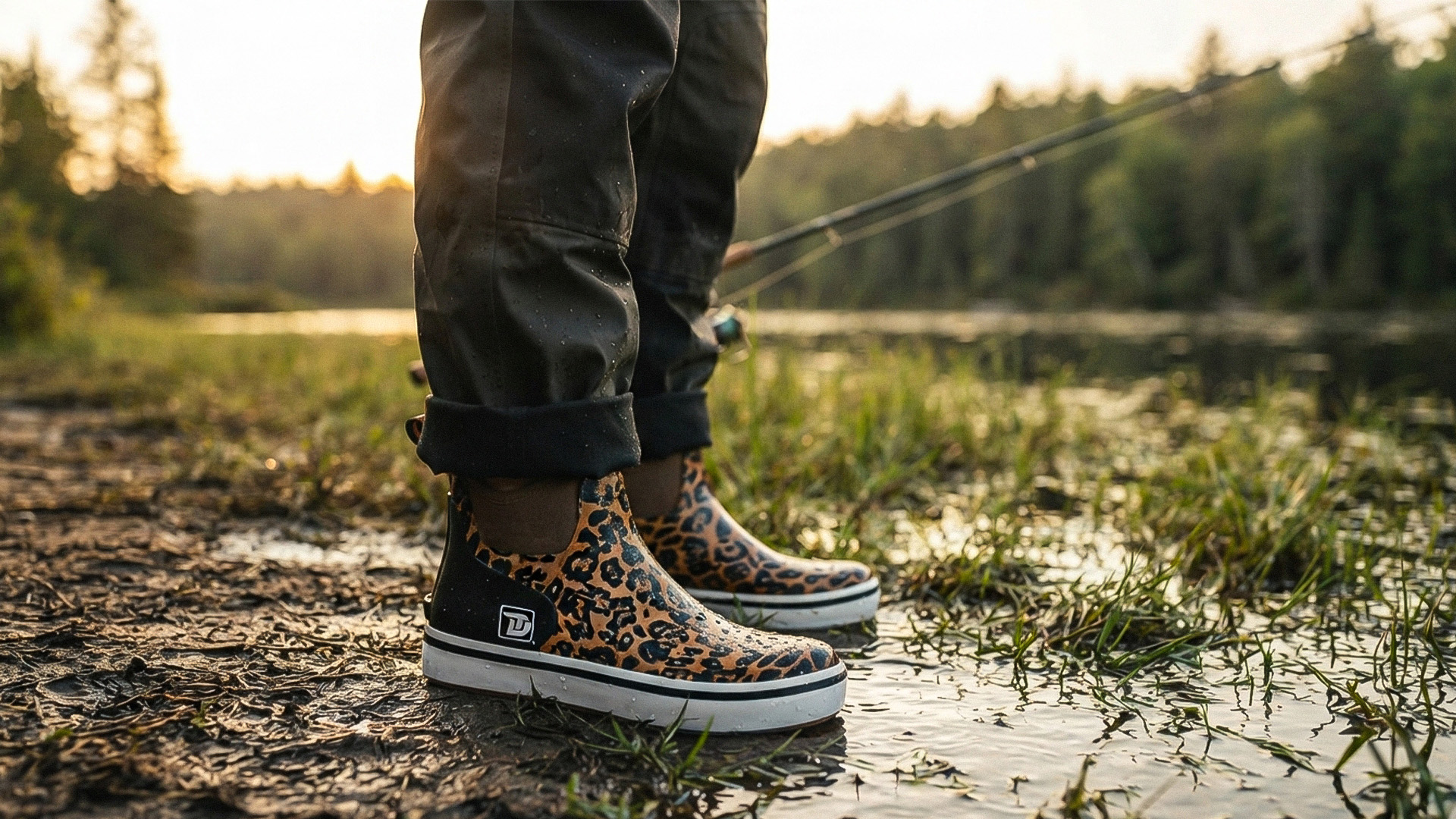
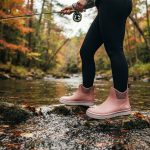
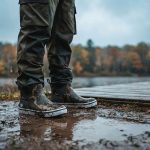
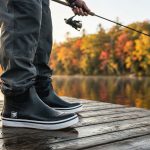
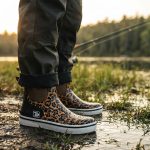
Waterproof ankle deck boots can work well for creek fishing when water exposure remains shallow and the surrounding terrain is relatively flat.
They are useful for:
- Wet grass
- Muddy access points
- Shallow puddles
- Maintained creek banks
- Fishing platforms
- Short walks
- Light rain
Their waterproof construction and easy-clean materials make them convenient.
Anglers comparing lower-profile waterproof footwear can review [TruDaveGear deck boots] alongside other fishing-specific options for shallow mud, wet banks, and everyday outdoor use.
However, deck boots are designed primarily for wet hard surfaces rather than uneven creek rocks.
They may provide less ankle support and terrain grip than hiking or wading boots.
Use them when the main problem is moisture, not difficult terrain.
Tall Rubber Boots
Tall rubber boots provide more water coverage.
They are useful around:
- Muddy lowland creeks
- Marshy banks
- Deep puddles
- Wet fields
- Slow-moving shallow water
- Farm access routes
They are easy to rinse and keep mud away from the lower leg.
However, tall rubber boots can be:
- Heavy
- Warm
- Loose around the heel
- Less stable on rocks
- Difficult to walk in for long distances
They are better for mud than for technical rocky terrain.
Quick-Draining Fishing Shoes
Quick-draining shoes are practical for warm-weather creek fishing when your feet are expected to get wet.
They work well for:
- Summer wet wading
- Sandy creeks
- Shallow water
- Kayak access
- Warm climates
- Short fishing trips
Instead of keeping water out, they allow it to drain.
Good models should provide:
- Secure fit
- Toe protection
- Drainage
- Quick-drying materials
- Enough traction for the creek bottom
Avoid loose water shoes that can be pulled off by mud or current.
Thin soles may also provide insufficient protection from sharp rocks.
Neoprene Wading Shoes and Socks
Neoprene footwear can provide warmth and protection during wet wading.
It is useful when the water is cool but full waders are unnecessary.
Neoprene options may include:
- Wading socks
- Booties
- Low-profile water boots
- Gravel guards
These systems are common among anglers who regularly enter shallow water.
Fit should be secure.
Loose neoprene can collect sand and small stones, creating friction.
Waders
Waders are appropriate when water regularly rises above boot height.
Options include:
- Hip waders
- Waist-high waders
- Chest waders
Waders provide more coverage but also require greater care and safety awareness.
They may be useful for:
- Cold water
- Deeper crossings
- Extended wading
- Larger streams
- Brushy shorelines
- Heavy rain
Do not wear more coverage than necessary.
Chest waders can become hot and restrictive in small warm creeks.
Quick Footwear Comparison
| Footwear Type | Best For | Main Strength | Main Limitation |
|---|---|---|---|
| Waterproof Hiking Boots | Banks, trails, rocks | Support and terrain traction | Slow drying when flooded |
| Wading Boots | Extended stream use | Stability and rock protection | Specialized and heavier |
| Deck Boots | Wet grass, shallow mud | Waterproof and easy to clean | Limited support on rocks |
| Tall Rubber Boots | Mud and deeper puddles | Greater water coverage | Heavy and less stable |
| Draining Shoes | Warm wet wading | Lightweight and quick drying | Feet remain wet |
| Neoprene Booties | Cool shallow water | Warmth and flexibility | Limited support |
| Waders | Deeper or cold water | Maximum water protection | Hotter and bulkier |
What Shoes Are Best for Rocky Creeks?
Waterproof hiking boots or purpose-built wading boots are generally the better choices for rocky creeks.
Look for:
- Secure heel fit
- Strong toe protection
- Stable midsole
- Appropriate outsole
- Good lateral support
- Correct width
- Enough room for socks
Rocks may be covered with algae or smooth sediment.
No outsole can guarantee traction.
Test each step before transferring your full weight.
Avoid jumping between wet rocks while carrying exposed hooks or heavy gear.
What Shoes Are Best for Muddy Creeks?
Tall rubber boots or secure waterproof hiking boots usually work better in deep mud.
Ankle deck boots are useful when the mud is shallow and the bank is flat.
Choose based on depth:
Shallow Mud
Use ankle waterproof boots or hiking boots.
Moderate Mud
Use mid-calf or tall rubber boots.
Deep Mud
Use tall boots, waders, or another access route.
Mud can create suction.
Loose footwear may remain stuck while your foot lifts out.
A secure fit is essential.
How to Walk Safely on Wet Creek Rocks
Wet rocks are one of the biggest challenges in creek fishing.
Use the following habits.
Take Short Steps
Short steps help keep your center of gravity over your feet.
Test the Surface
Place your foot lightly before committing your full weight.
Keep Your Knees Bent
A flexible stance helps you respond when the surface shifts.
Avoid Algae When Possible
Dark green or brown growth may be extremely slippery.
Use a Wading Staff
A dedicated staff provides another point of contact.
Do not use a fishing rod as a walking stick.
Keep One Hand Free
Use a backpack or shoulder strap for gear.
Move Across the Current Carefully
Avoid turning your body suddenly while standing on unstable rocks.
Should You Wear Felt-Sole Wading Boots?
Felt soles have traditionally been used for traction on certain wet rock surfaces.
However, some jurisdictions restrict or prohibit them because felt can retain moisture and potentially transfer invasive species between waters.
Rules can change.
Check current local fishing regulations before using felt soles.
When moving between waterways, clean, drain, and dry footwear according to local environmental guidance.
What Pants Should You Wear Creek Fishing?
Creek fishing pants should protect against brush, insects, water, and abrasion while allowing easy movement.
Good options include:
- Lightweight hiking pants
- Quick-drying fishing pants
- Convertible pants
- Soft-shell pants in cool weather
- Wading pants
- Waterproof overpants
Avoid heavy denim.
Jeans become uncomfortable when wet and restrict movement.
Choose pants that fit securely without loose fabric around hooks, branches, and brush.
Should You Wear Shorts Creek Fishing?
Shorts can work in warm, maintained creeks with little vegetation.
They are less suitable around:
- Thorns
- Tall grass
- Ticks
- Mosquitoes
- Poisonous plants
- Sharp rocks
- Cold water
- Mud
Lightweight pants usually provide the most versatile protection.
For warm wet wading, some anglers wear quick-drying shorts over compression shorts or specialized liners.
Consider sun and insect exposure before leaving the legs uncovered.
What Shirt Should You Wear?
A lightweight long-sleeve fishing shirt is useful in most creek environments.
It provides protection from:
- Sun
- Insects
- Brush
- Light rain
- Cool shade
- Minor scratches
Choose a quick-drying material.
Creeks often alternate between open sunlight and shaded areas.
A long-sleeve shirt provides more consistent protection than repeatedly applying sunscreen and insect repellent to exposed skin.
What to Wear Creek Fishing in Summer
Summer creek fishing often involves heat, humidity, insects, and warm shallow water.
A practical outfit includes:
- Lightweight long-sleeve sun shirt
- Quick-drying pants or shorts
- Thin synthetic socks
- Draining shoes or lightweight hiking footwear
- Hat
- Polarized sunglasses
- Neck gaiter
- Sunscreen
- Insect repellent
- Lightweight rain shell
If wet wading, choose footwear that drains and remains secure.
Do not wear ordinary cotton socks inside constantly wet shoes.
They hold water and increase friction.
What to Wear Creek Fishing in Spring
Spring creeks may be cold, muddy, and affected by higher water levels.
Wear:
- Moisture-wicking base layer
- Lightweight fleece
- Waterproof shell
- Quick-drying pants
- Waterproof hiking boots or waders
- Merino or synthetic socks
- Hat
- Gloves when needed
Water temperature may remain low even when the air feels warm.
Prepare for cold feet and changing weather.
What to Wear Creek Fishing in Fall
Fall can provide comfortable temperatures, but leaves may hide rocks, holes, and mud.
A useful outfit includes:
- Long-sleeve base layer
- Lightweight fleece
- Wind-resistant shell
- Durable fishing pants
- Waterproof hiking boots
- Medium-weight socks
- Hat
- Light gloves
Wet leaves can be extremely slippery.
Move carefully on wood bridges, rocks, and clay banks.
What to Wear Creek Fishing in Winter
Winter creek fishing requires protection from cold air, cold water, and reduced activity.
Wear:
- Thermal base layers
- Insulating mid layer
- Waterproof outer shell
- Insulated pants or appropriate waders
- Warm socks
- Insulated waterproof footwear
- Warm hat
- Gloves
- Neck gaiter
- Spare dry clothing
Avoid footwear that becomes too tight with thick socks.
Restricted circulation can make feet colder.
Cold-water conditions require conservative movement and appropriate safety planning.
Sock Selection for Creek Fishing
Sock choice depends on whether you plan to stay dry or wet wade.
Waterproof Boots and Hiking Boots
Use synthetic or merino wool socks.
Wet Wading
Use synthetic socks, neoprene socks, or products designed for wet conditions.
Cold Conditions
Use merino wool socks with enough footwear volume.
Avoid cotton.
Cotton stays wet, increases friction, and loses insulating performance.
Use Gravel Guards
Gravel guards fit around the lower leg and top of the boot.
They help prevent:
- Sand
- Small stones
- Mud
- Plant debris
- Gravel
from entering footwear.
They are especially useful with wading boots and neoprene socks.
Some waders include built-in gravel guards.
Small stones inside footwear can cause blisters quickly, so stop and remove them as soon as possible.
How to Keep Water Out of Short Boots
Short waterproof boots only work while water remains below the opening.
To reduce water entry:
- Use appropriate boot height
- Wear pants over the opening
- Avoid deep crossings
- Step away from splashing water
- Use gaiters
- Inspect for leaks
- Move slowly through mud
Once water enters, waterproof boots may hold it inside.
Carry spare socks.
How to Cross a Shallow Creek
Before crossing:
- Check the current.
- Estimate depth.
- Look for stable entry and exit points.
- Use a staff.
- Secure gear.
- Keep hooks covered.
- Loosen backpack straps when appropriate for safety.
- Avoid crossing alone in risky conditions.
Cross diagonally only when the route is safe.
Do not assume shallow water is harmless.
Strong current, slippery rocks, hidden holes, and unstable bottoms can create serious hazards.
When Not to Cross
Do not cross when:
- Water is rising
- The current feels strong
- The bottom cannot be seen or tested
- Rocks are extremely slippery
- The exit bank is unstable
- You are carrying too much equipment
- Cold water creates unacceptable risk
- Local rules prohibit access
- You are uncertain about depth
Find another route or fish from the current side.
Use a Small Backpack
A compact backpack keeps both hands available.
It can carry:
- Tackle
- Water
- Rain shell
- Spare socks
- Small towel
- First-aid supplies
- Snacks
- Dry bag
- Insect repellent
- Sunscreen
Avoid carrying unnecessary equipment.
Heavy loads increase fatigue and make creek crossings more difficult.
Secure Fishing Hooks During Travel
Hooks can become dangerous during slips and falls.
Use:
- Hook keepers
- Lure covers
- Tackle boxes
- Rod sleeves
- Secure tool storage
Do not walk through brush with exposed treble hooks swinging from a rod.
Keep pliers and sharp tools inside closed pockets or sheaths.
Wear Polarized Sunglasses
Polarized sunglasses reduce glare and help anglers evaluate:
- Water depth
- Submerged rocks
- Fish
- Current seams
- Gravel
- Drop-offs
- Underwater branches
They also protect the eyes from hooks, branches, and insects.
Use a secure retainer strap.
Protect Against Insects and Ticks
Creeks often run through shaded vegetation and damp ground.
These environments may contain mosquitoes, ticks, biting flies, and other insects.
Wear:
- Long sleeves
- Long pants
- Closed footwear
- Higher socks
- Hat
- Appropriate insect repellent
Check clothing and skin after fishing.
Pay attention to waistbands, socks, behind the knees, and other concealed areas.
Watch for Poisonous Plants and Thorns
Dense creek banks may contain poison ivy, poison oak, briars, and sharp vegetation.
Wear durable long pants and sleeves.
Learn to recognize common plants in the region.
Clean clothing, tools, and footwear after contact.
Plant oils may remain on gear and cause exposure later.
Use Gloves When Moving Through Brush
Lightweight gloves can help protect hands from:
- Thorns
- Rough branches
- Cold
- Fish spines
- Mud
- Wet rocks
They should still allow you to operate tackle.
Carry a dry pair in cool conditions.
What Rain Gear Is Best?
A packable waterproof jacket is useful even when heavy rain is not forecast.
Creeks often run through areas where weather changes are difficult to see.
Look for:
- Secure hood
- Adjustable cuffs
- Lightweight construction
- Enough room for layers
- Easy packing
- Good range of motion
Waterproof pants may be useful in persistent rain or wet vegetation.
Do not allow pant legs to direct water into short boots.
Bring Spare Dry Clothing
At minimum, carry:
- Dry socks
- Dry shirt
- Small towel
Keep them inside a waterproof bag.
For cold or remote trips, bring more complete backup layers.
Wet clothing can become a serious problem when temperatures fall.
What to Wear at an Urban Creek
Urban creeks may have:
- Concrete paths
- Bridges
- Maintained grass
- Riprap
- Mud near drainage areas
- Limited shoreline access
Wear:
- Lightweight fishing shirt
- Quick-drying pants
- Waterproof shoes or ankle deck boots
- Hat
- Sunglasses
Be cautious around stormwater structures and contaminated runoff.
Follow posted access rules.
What to Wear at a Mountain Creek
Mountain creeks usually require more supportive footwear.
Wear:
- Hiking or wading boots
- Quick-drying hiking pants
- Long-sleeve base layer
- Lightweight fleece
- Rain shell
- Merino or synthetic socks
- Hat
- Sunglasses
Temperatures can change quickly with elevation and shade.
Pack insulation even when the parking area feels warm.
What to Wear at a Farm Creek
Farm access may involve:
- Tall grass
- Mud
- Fences
- Livestock
- Uneven fields
- Wet vegetation
Wear:
- Long pants
- Long sleeves
- Tall waterproof boots or hiking boots
- Higher socks
- Hat
- Insect protection
Always obtain permission.
Follow the landowner’s instructions and avoid damaging crops, gates, or fencing.
What to Wear at a Wooded Creek
Wooded creeks often require protection from vegetation.
Wear:
- Durable lightweight pants
- Long-sleeve shirt
- Hiking or wading boots
- Hat
- Gloves
- Insect repellent
- Eye protection
Avoid loose clothing that catches on branches.
Choose quiet, controlled movement rather than forcing through dense brush.
Creek Fishing Footwear Maintenance
After the trip:
- Remove mud and gravel.
- Rinse footwear with fresh water.
- Clean outsole grooves.
- Remove insoles.
- Dry completely.
- Inspect for cracks and damage.
- Clean wading equipment according to local environmental guidance.
- Avoid high heat.
If footwear was used in multiple waters, follow appropriate cleaning and drying procedures to reduce the spread of invasive organisms.
Common Creek Fishing Clothing Mistakes
Wearing Ordinary Sneakers
They become soaked, provide limited protection, and may dry slowly.
Wearing Smooth-Soled Boots on Rocks
Waterproofing does not guarantee rock traction.
Using Tall Rubber Boots for Long Rocky Walks
They may feel heavy and unstable.
Wearing Cotton Socks
Cotton stays wet and increases friction.
Wearing Shorts Through Dense Brush
This increases exposure to insects, thorns, and plants.
Carrying Too Much Gear
Heavy loads reduce balance.
Entering Water Without Testing Depth
Creek bottoms can change suddenly.
Forgetting Dry Socks
Wet feet can ruin the rest of the trip.
Ignoring Water Temperature
Cold water can create risk even on a warm day.
Creek Fishing Clothing Checklist
Warm Weather
- Lightweight long-sleeve shirt
- Quick-drying pants or shorts
- Draining shoes or lightweight boots
- Synthetic socks
- Hat
- Sunglasses
- Sunscreen
- Insect repellent
Cool Weather
- Moisture-wicking base layer
- Lightweight fleece
- Rain shell
- Fishing pants
- Waterproof hiking or wading boots
- Merino socks
- Hat
- Light gloves
Wet Wading
- Secure draining footwear
- Neoprene or synthetic socks
- Quick-drying pants or shorts
- Gravel guards
- Wading staff
- Dry clothes
Cold Water
- Appropriate waders
- Thermal layers
- Insulating socks
- Wading boots
- Waterproof shell
- Warm hat
- Gloves
- Complete dry clothing backup
Final Thoughts
The best creek fishing clothing depends on the water depth, bottom type, walking distance, weather, and surrounding vegetation.
Use waterproof hiking boots when the route involves rocks, steep banks, and long walks.
Use wading boots when you expect to spend significant time in the water.
Use ankle waterproof boots for wet grass, shallow mud, maintained banks, and short approaches.
Use tall rubber boots for deeper mud and lowland creeks.
Use quick-draining footwear for warm wet wading.
Wear lightweight long sleeves and quick-drying pants for protection from sun, insects, and brush.
Choose socks that manage moisture.
Carry spare dry clothing.
Keep your hands free.
Move carefully around wet rocks and current.
Creek fishing rewards anglers who travel light and adapt to changing terrain.
Dress for the route, not just the fishing spot.
The right gear makes it easier to reach quiet water, move safely, and spend more time making casts instead of dealing with wet socks, blisters, or unstable footing.
Frequently Asked Questions
What should I wear creek fishing?
Wear quick-drying pants, a moisture-wicking shirt, appropriate boots or wading shoes, moisture-managing socks, a hat, polarized sunglasses, and weather protection. Add insect and brush protection when necessary.
What shoes are best for creek fishing?
Waterproof hiking boots are best for rough banks and long walks. Wading boots are better for extended stream use, while ankle waterproof boots work for shallow mud and maintained access.
Can you wear deck boots creek fishing?
Yes, when the bank is flat and water exposure remains shallow. They are less suitable for slippery rocks, steep terrain, and long trail approaches.
Are hiking boots good for creek fishing?
Yes. Waterproof hiking boots provide support and traction for rocky approaches, wet grass, roots, gravel, and steep banks. Water can still enter through the collar during deeper crossings.
Do I need waders for creek fishing?
Waders are useful when water regularly rises above boot height, temperatures are cold, or extended wading is required. They may be unnecessary for small shallow creeks.
What should I wear for wet wading?
Wear secure quick-draining shoes or wading boots, synthetic or neoprene socks, quick-drying pants or shorts, and gravel guards. Avoid cotton.
Are rubber boots good for creek fishing?
Rubber boots work well in mud and shallow water but may feel unstable on rocks and uncomfortable during long walks.
What socks are best for creek fishing?
Use synthetic socks in warm weather and merino wool socks in cool conditions. Neoprene socks are useful for wet wading. Avoid cotton because it dries slowly.
How do I walk safely on slippery creek rocks?
Take short steps, test each surface, keep your knees bent, use a wading staff, keep one hand free, and avoid algae-covered rocks when possible.
Should I wear shorts creek fishing?
Shorts work in warm, maintained areas. Lightweight pants provide better protection from insects, thorns, sun, mud, and cold water.
What should I bring in case my clothes get wet?
Carry dry socks, a dry shirt, a small towel, and additional warm layers in a waterproof bag. Cold or remote trips may require a complete change of clothing.